
Baked Sweet Potato Fries

Medically reviewed by Christiana George Updated Date: June 8, 2023
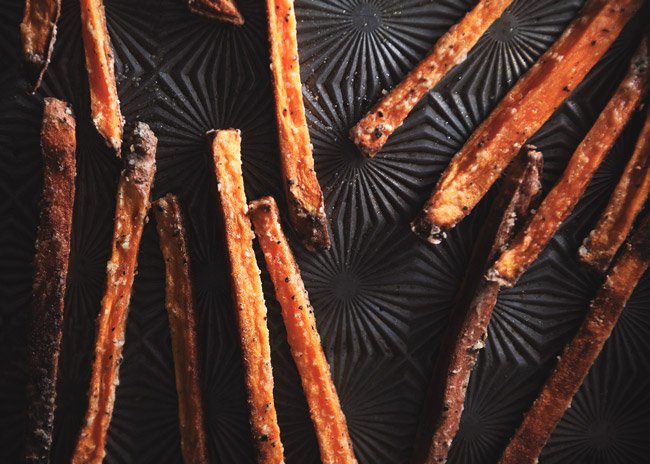
I started wearing close-toed shoes a couple weeks ago. If that’s not a sign that fall has arrived, I don’t know what is.
Unfortunately, I’ve been in something of a denial about the season up until now, mostly revolving around the (very very bitter) fact that I didn’t get my fill of summer produce (seeing that most of the season was spent eating Trader Joe’s-branded cereal). I wanted to be a glutton come summer, you know?
Eat way more tomatoes than my stomach could possibly bear, stuff myself with watermelon, incorporate corn and zucchini and eggplant into every single meal. That sort of thing. Because that’s what you’re supposed to do when nature presents you with all this amazing stuff ONCE a year. No, I don’t feel I reached my potential.
What turned me around in the end was these. Did I ever mention how much I love fall fashion? I’m pretty certain everyone loves fall fashion, but in my case, a beautiful pair of boots is enough to get me excited about the chilly days ahead.
I’m also deliciously contemplating a new coat, the excuse to whip out leather gloves, and woolly socks! Don’t get me started on how much I love my woolly socks. I also can’t wait to head upstate to see the fall foliage (which was beautiful last year), take brisk walks through Central Park (so quintessentially New York, no?), and sip on cups of hot apple cider while strolling through the farmer’s market.

I’m also finding myself drawn to using my oven once more. It’s funny how something as innocent as the temperature of the air can dictate one’s desires. I couldn’t have imagined anything more unpleasant than turning on the oven just a couple months back—like NO foods were worth it, not even cookies—and yet, here I am, craving oven-baked sweet potato fries.
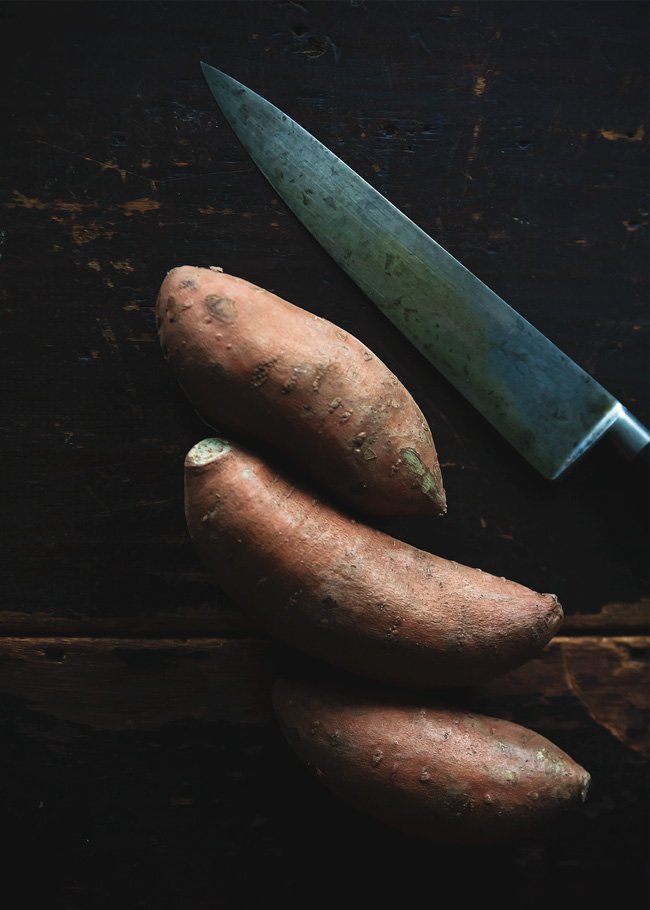
My head is a jumble of half-thought-out recipes, but before we get to the aspirational ones, let’s focus, for once, on what I actually eat pretty regularly, or rather, started eating pretty regularly (well, until summer hit, ha) after Amy laid out the steps to the best baked sweet potato fries half a year ago.
There is so much discussion on the web about how to achieve that Platonian ideal of the faux-deep-fried sweet potato fry. I’m actually more opposed to the mess caused by deep-frying than anything else. It’s a proven fact that oil spatters rise (or else explain to me why the things I store above the cabinets are perennially covered in a layer of grime), and I try to make it easy for my better half (better because he does the cleanup, you see) so I’ll save deep-frying for things like, I dunno, donuts? Churros? They’re worth the grease-stained stovetop.
Anyway, I got a taste of this raging debate after Googling the topic. Let me tell you, it is clearly the heyday of the sweet potato fry. People have thought of everything! To the mushy fry, space them apart while baking, to the soggy fry, rinse and let them dry before tossing them with oil and seasonings, to the burned fry and the undercooked fry, cut all your fries the same size. And most importantly, coat them! Coat them with a thin layer of corn starch or cornmeal or semolina, which tricks your tastebuds into believing you’re actually eating something really crispy and, therefore, fried, even if you’re not. Honestly, I don’t have much more to add. Just follow Amy’s advice. Although I do love the cornmeal/semolina coating just as much as the corn starch because it creates this texturally pleasing layer that crunches inside your mouth.
Now that I feel I’ve finally made peace with fall, I’ve got some season-appropriate recipes to start planning!
P.S. Yogurt + honey + a pinch of cinnamon makes a damn good dip.


BAKED SWEET POTATO FRIES
Adapted from The Moveable Feasts
Serves 1, generously
Ingredients:
1 sweet potato, washed and scrubbed
2 Tbsp olive oil
1 Tbsp corn starch, semolina, or cornmeal
salt, pepper, and other spices (paprika, cayenne pepper, cinnamon, cumin, etc.) to flavor
Directions:
Preheat your oven to 400 degrees F.
Slice the sweet potato into sticks that are about the same in size (I aim for more than 1/4″ but less than 1/2″ square cross sections). Rinse them in a bowl of water and lay them out to dry. When dry, toss the fries in olive oil, corn starch/semolina/cornmeal, salt, and whatever other spices you’re using. Lay them out on a baking sheet in one layer (I don’t bother with parchment paper or anything), leaving a little space around each one. Bake about 30 minutes.
Simple dipping sauce: 1/4 cup Greek yogurt, 1 heaping tsp honey, a pinch of cinnamon
Related Posts




Subscribe for New Racipies
Get mental health tips, updates, and resources delivered to your inbox.
Biscoff Bourbon Rice Krispie Treats



OK, so I’ve been playing around with Biscoff and Bourbon a little too much lately. However, I did come up with some good results. This week I made you some Biscoff Bourbon Rice Krispie Treats. ‘Cause you know sometimes, you just have to add a little booze to your Rice Krispies. You don’t always have to make sweets for the kids. My kids get enough sweets as it is. These crispy, crunchy treats that combine the sweetness of Biscoff with the oaky flavor of Bourbon and are topped of with a chocolate bourbon drizzle are for adults only.
Now, I am not the kind of person to drink bourbon straight up, but I do love it in my desserts. It enhances the other flavors. I think alcohol and sweets go well together.

These treats are just as easy to make as regular Rice Krispie treats. Just two extra ingredients. Mmmm, look at that. Don’t ya want a bite?

I couldn’t put a whole lot of bourbon in the marshmallow treats without them being too soft, so I added more bourbon to the chocolate drizzle. I just adapted the recipe for the chocolate whiskey sauce I used on my Triple Irish Krispie Pie. Both sauces are delicious. I kinda got lazy at this point and just used my measuring cup to pour on the chocolate sauce instead of using a piping bag. It still worked. I also sprinkled a bit of sea salt on top of the chocolate before it set. You don’t have to, but it does taste good.
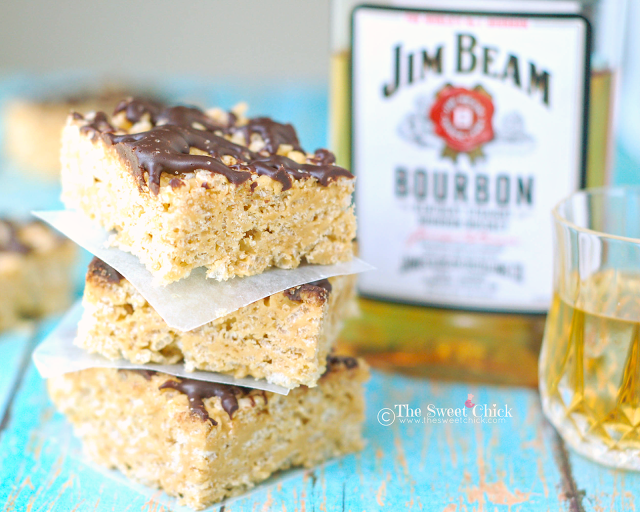
You are going to love the flavors and textures in these Biscoff Bourbon Rice Krispie Treats. They are soft, but crunchy, sweet and salty, with a little bit of alcohol. They would be perfect to bring to your Father’s Day gathering. Just keep them away from the kids. They can eat the plain boring Rice Krispie Treats.
Biscoff Bourbon Rice Krispie Treats
by The Sweet Chick
Prep Time: 15-20 minutes
Cook Time: 5 minutes
Keywords: no bake stove top dessert snack bourbon whiskey biscoff marshmallows rice krispies Father’s Day bars rice krispie treats American
Ingredients (24 squares)
For the treats
- 3 tablespoons butter
- 4 cups mini marshmallows
- 1/2 cup Biscoff spread
- 1 tablespoon bourbon
- 6 cups Rice Krispies cereal (or generic brand)
For the topping
- 1/2 cup semi-sweet chocolate chips
- 1/4 cup heavy cream
- 2 teaspoons bourbon
Optional toppings
- sea salt
- sprinkles
Instructions
For the treats
In a large sauce pan, melt butter and marshmallows over low heat. Stir until completely melted.
Remove from heat and add Biscoff and bourbon. Stir until completely mixed.
Then add the Rice Krispie cereal. Mix until all is well incorporated.
Then pour the mixture into a greased 9 x 13 pan or a cookie sheet and spread it evenly with a piece of waxed paper.
Place in fridge to cool and set.
For the topping
Place the chocolate chips in a glass measuring cup with a spout. Set aside.
In a small sauce pan, bring cream to a boil over medium heat.
Pour cream over the chocolate and let it sit for about two minutes, then stir with a small spatula or fork until mixture becomes smooth and glossy.
Add bourbon and mix well.
Remove the cooled treats from the fridge and drizzle the sauce over the treats. I just poured it with the measuring cup, but you can use a fork or spoon.
I put the treats back in the fridge to set the chocolate before cutting them into squares.
Once they are cut, you don’t need to keep them in the fridge.
Optional toppings
If you want to add a little sea salt or sprinkles, do so before the chocolate sets.
Related Posts



Subscribe for New Racipies
Get mental health tips, updates, and resources delivered to your inbox.