
Spelt Focaccia With Rosemary, Garlic, And Pecorino

Medically reviewed by Christiana George Updated Date: June 8, 2023
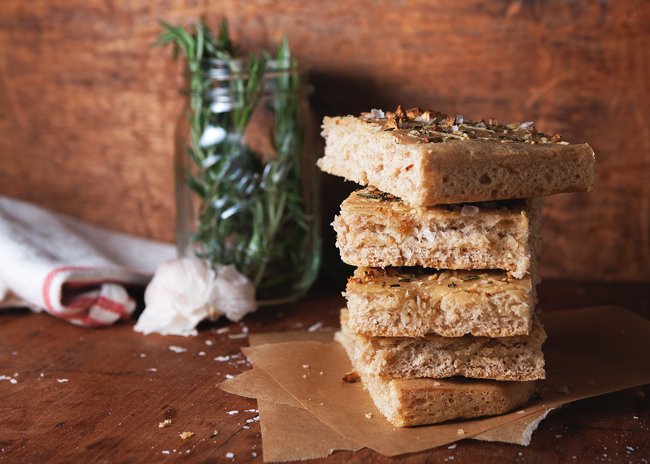
I made buttermilk pancakes the other day and substituted a little of the all-purpose flour for spelt. They were so good! It made me realize that it’s been a long time since I baked with whole grain flours (hard to believe that it had been my sole obsession three years ago). Also, yikes, I just realized the last recipe featured on this blog containing a flour other than all-purpose was way back in November! They’re really good cookies by the way.

I decided to remedy this immediately. As usual, I pulled out my battered copy of Good to the Grain. The recipes coupled with the photography always fill me with this longing to lead a more wholesome life, with no greasy take-out food, no indoor pants, and fresh air coursing through the rooms at all times. Let’s address why these are impossibilities.
First, there’s no way I could do away with my comfort food burritos, which are filled to the brim with rice, beans, meat (MEAT), and other stuff that’s good for the soul but not so much for the waistline (it feels weird writing about waistlines, as I don’t think I’ve ever given mine any proper thought). Secondly, I hate wearing jeans, which is something about me you would never guess because I ALWAYS WEAR JEANS. But it’s true. I’d much rather have my legs be swathed in loose, silky, comfortable pants when there’s no one to impress.
And finally, it’s still 40 degrees out, yo! Despite the fact that both Chris and I think of our heating as the devil because it makes the apartment unbearably stuffy, it only turns on twice a day, so to open the windows would be wasting the heated air.
I think the point I’m trying to make is that the healthful life I dream about is probably largely illusory. Though I enjoy baking with whole grain flours, and eating vegetables with all my meals (well, not breakfast—I do give myself a break then), and going to the gym thrice weekly, I’m not perfect.
Anyway, the focaccia called to me.
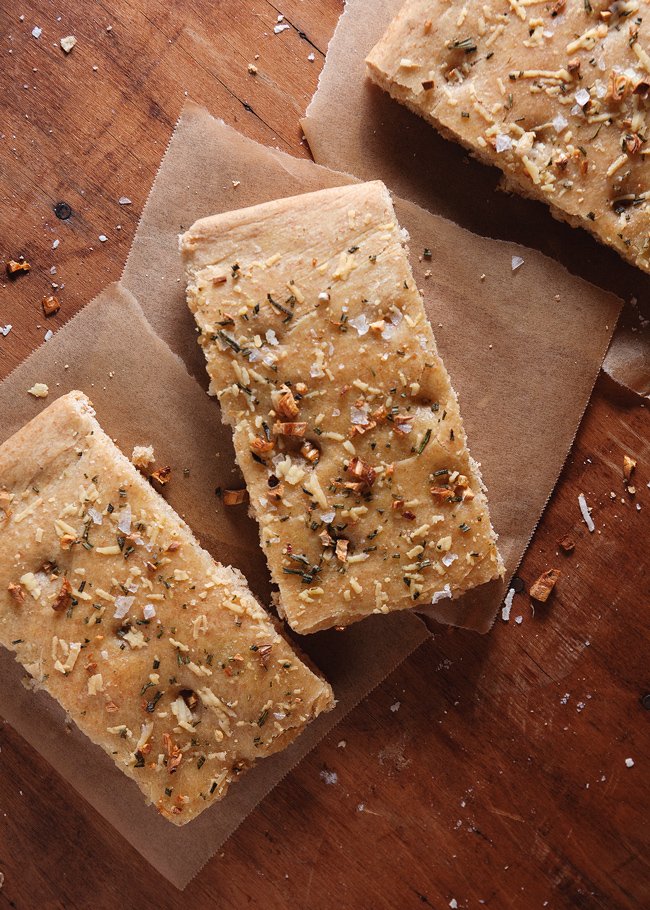
Spelt foccacia is less springy than regular foccacia, of that I’m sure. Since spelt contains low amounts of gluten, doughs containing it don’t rise as well and result in a lack of the same effervescence as all-purpose doughs. Hence, a slightly denser texture and less sticky.
On the other hand, spelt has a great flavor that I think came through in this recipe. It was kind of hard to tell, with such strong-flavored toppings all competing for attention, but I detected a wheat-flour like taste, with that signature nuttiness I really love.
What disappointed me the most about this recipe was probably due to the overall crappiness of my oven, but my focaccia refused to golden-brown properly! Very disappointing, especially because, I’d kept it in there for so long that the garlic and rosemary started burning. It’s alright. I don’t think the taste suffered too much, but it made for a slightly less attractive presentation.
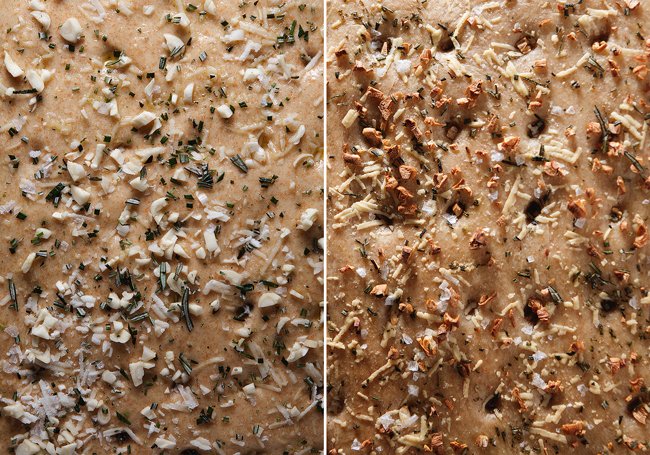
I don’t need to tell you what to do with focaccia. Neither do I need to tell you how to top it. But, I will add, rosemary is one of my favorite herbs, and it really suits breads, spelt, and garlic and pecorino. With that said, a simple sea salt topping would be enough to make me a happy sailor, and I would gladly eat this focaccia in any form it was offered. In my case, it went perfectly alongside leftover soup (third batch and still going strong), always a winning combination.
(I should also add, I accidentally bought 2 pounds of active dry yeast, so I think I’m going to take up bread-making as a hobby for the foreseeable future. Focaccia is only the beginning, my friends!)
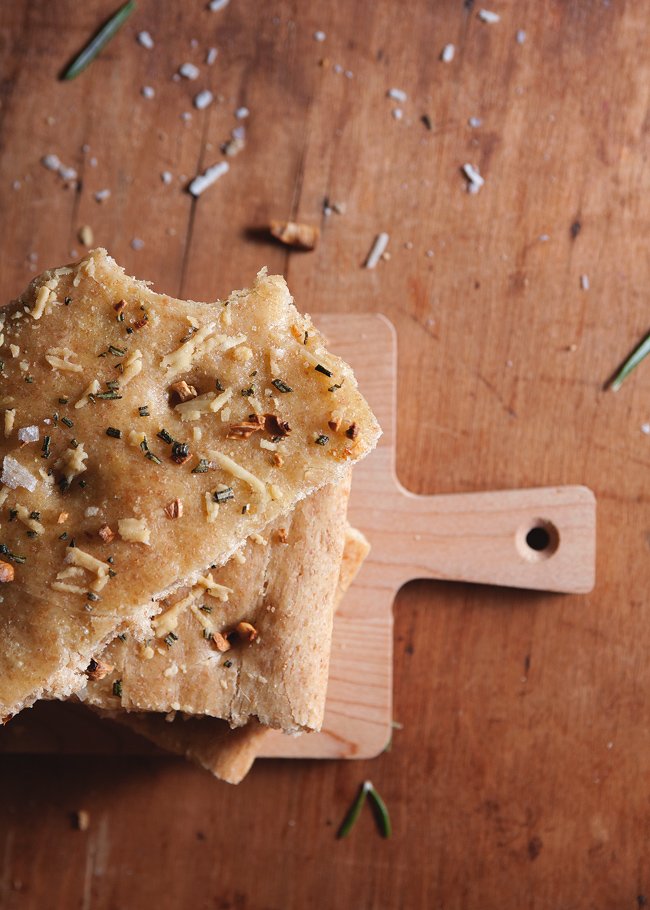
SPELT FOCACCIA WITH ROSEMARY, GARLIC, AND PECORINO
Adapted from Good to the Grain
Makes 1 rectangular focaccia
Ingredients:
1 package active dry yeast (2-1/4 tsp)
Pinch of sugar
1 cup spelt flour
2 cups all-purpose flour, plus more for kneading
1 T kosher salt
1/4 cup plus 2 T olive oil (plus more for greasing)
garlic, herbs, spices, coarse salt, cheese, and any other toppings of choice
Directions:
Lightly rub a large bowl with olive oil. Add 1-1/4 cups of warm water, yeast, and sugar to another large bowl. Stir, and allow the yeast to bloom for about 5 minutes (should start bubbling). Add the flours, salt, and 2 T olive oil and stir to combine. Pour the dough onto a lightly floured surface and begin kneading, adding up to 1/2 cup of all-purpose flour if needed (depending on the manageability of the dough, as it’s quite sticky). Knead for about 10 minutes until the dough is elastic and supple (you’ll start to feel the difference—just keep kneading!)
Put the dough in the oiled bowl, turning it so it’s lightly covered with the olive oil. Cover with a towel and let rise for about 2 hours, or until doubled in size.
Generously oil a baking sheet with olive oil. Place the risen dough onto the baking sheet and stretch it so it fills the pan. Dimple it with your thumb, then cover with a towel and let rise for about an hour.
Preheat your oven to 400 degrees F. Now it’s time to top the dough. First, brush a 1/4 cup of olive oil onto the dough, then sprinkle with the toppings of your choice. Bake for 22 to 25 minutes until golden brown. Allow the bread to cool slightly before slicing and serving.
As a note, you can store the dough in the fridge after the first rise. Just cover it tightly with plastic wrap and make sure to let it come to room temperature before continuing on with the recipe.
Related Posts

Subscribe for New Racipies
Get mental health tips, updates, and resources delivered to your inbox.
Goat Cheese, Roasted Grape, And Walnut Bruschette

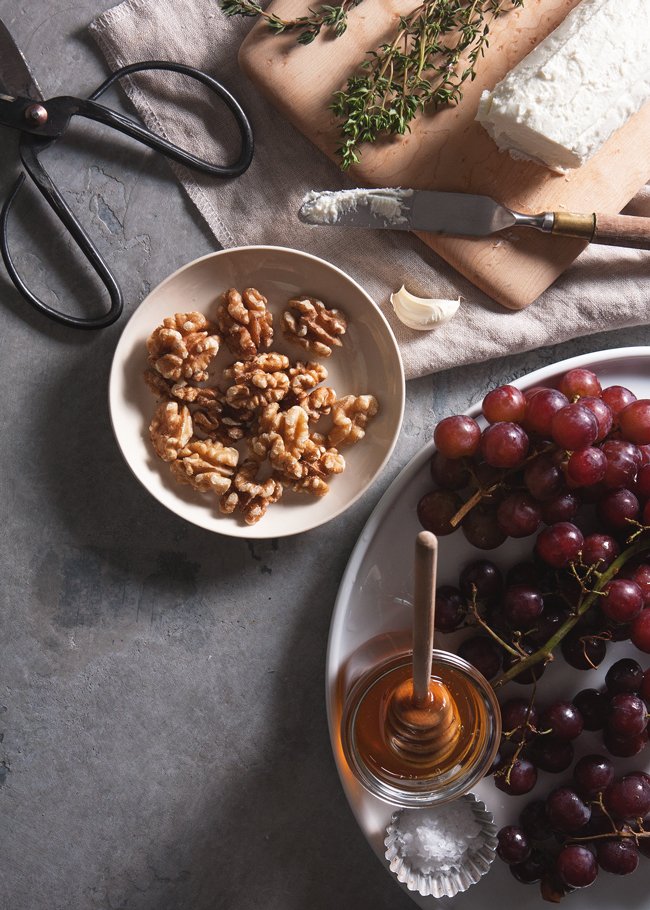
In the fall, you’ll find pounds and pounds and pounds of grapes in my fridge. Until last October, the idea of roasting them would have been preposterous to me, not to mention kind of disgusting. Why would someone do such a thing? What could possibly beat the taste of a fresh Concord or Muscat grape fresh off the vine?
Of course, Concords and Muscats aren’t just any old grape, and if I ever come into a significant amount of money, I’ll probably buy a vineyard where I will plant acres and acres and acres of heirloom varieties that will be grown exclusively to be eaten. And I’ll eat them all, don’t think I won’t. (Question: would it still be considered a vineyard if I wasn’t planning on producing wine?) Regular supermarket grapes are just okay in comparison, but I still enjoy eating them plain when they’re extra-firm and tightly clustered.
After trying chicken roasted with grapes a few months ago, however, I’ve finally come around to the roasting camp. I really liked the way the heat turned the grapes into hot bursts of sweetness.
(I realize I may have made a huge deal over a seemingly insignificant issue, but given how ardently I’d felt about grapes and the only correct way of eating them this was a revelation for me.)
(An aside: a friend of mine called me a grape snob a few years back, and the barb continues to sting. Is it really snooty to be obsessed with heirloom grape varieties? I don’t think so.)

I recently, and finally, got around to buying Polpo, A Venetian Cookbook (Of Sorts). My God is it beautiful. From the cover to the binding to the gorgeous, ethereal photos, its looks are enough reason to buy the book. Hint: flip through it if you’re in need of inspiration. It’s eye fuel, if you will.
But beyond its aesthetically pleasing appearance, it is filled with the most tenderly-chosen recipes. Or so I believe. While they’re nothing revolutionary, each has been jotted down with just the barest of guidelines, suggesting an intuitive understanding—and deep love—of the food. My mom passes tried-and-true recipes on to me that are just as vague, just as instinctive.
But I’m not here to write a cookbook review. I just wanted to share with you the results of my first stab at a recipe, a bruschette (ever since Emiko’s post, I’ve never been able to pronounce ‘bruschette’ the same way again), made with seedless red grapes, goat cheese, walnuts, honey, and thyme.
It isn’t something that can quickly be thrown together, as it does require briefly roasting the grapes and the walnuts in the oven (in two separate pans, what’s more), but the final product is a feast of incongruous elements: hot, juicy grapes ready to burst and bordering on raisin, the oddness of goat cheese mellowed out by floral honey, roasted walnut that’s almost kind of melted yet pleasingly chewy, thyme with all its connotations of warm lovely peasant food, and the underlying scent and taste of garlic, which tips it over the edge, if you ask me. Altogether, wonderful. Make it! For lunch, as an afternoon snack, as an elegant appetizer at a posh dinner party. It will wow you as it will wow guests.
I love how food blogging makes me that much more open to trying new things. Roasted grapes, what an idea.
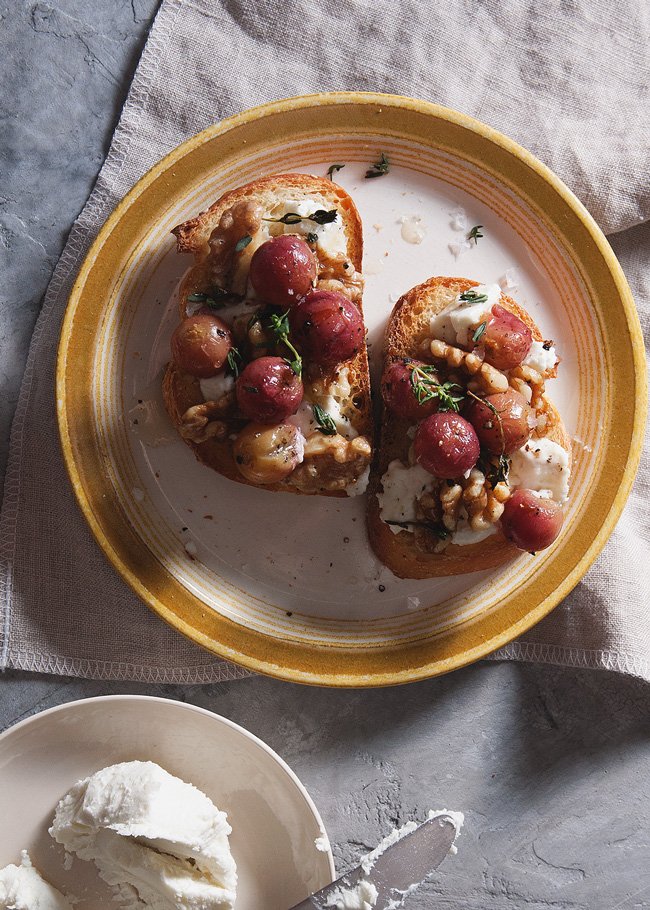
GOAT CHEESE, ROASTED GRAPE, AND WALNUT BRUSCHETTE
From Polpo, A Venetian Cookbook (Of Sorts)
Serves 2
I’m following the format of the book by providing vague measurements. You know what tastes good, so go with your intuition!
Ingredients:
- 10 grapes – any seedless variety
- Small handful of picked thyme leaves
- Extra virgin olive oil
- Sea salt and black pepper
- 10 wanut halves
- 2 thick slices of bread (I used semolina bread)
- 1 garlic clove
- Large handful of crumbly goat cheese
- Honey
Directions:
Preheat the oven to 375 degrees F. In a baking pan, toss the grapes with most of the thyme, olive oil, salt, and pepper. Pop it in the oven for 10 to 15 minutes. In another baking pan, toss the walnuts with some olive oil, and slide it into the oven during the last 5 minutes of roasting the grapes. Remove both from the oven and set aside.
Toast the bread so that it’s pleasantly toasted, but still pliant. Rub the garlic clove into the bread much like you’re using a crayon. Drizzle with some olive oil.
Crumble or smear some goat cheese onto the bread. Add the grapes and walnuts, garnish with some small sprigs of thyme, and drizzle with honey.
Related Posts
Subscribe for New Racipies
Get mental health tips, updates, and resources delivered to your inbox.