
Honey Cupcakes With Lemon Cream Cheese Frosting

Medically reviewed by Christiana George Updated Date: June 8, 2023
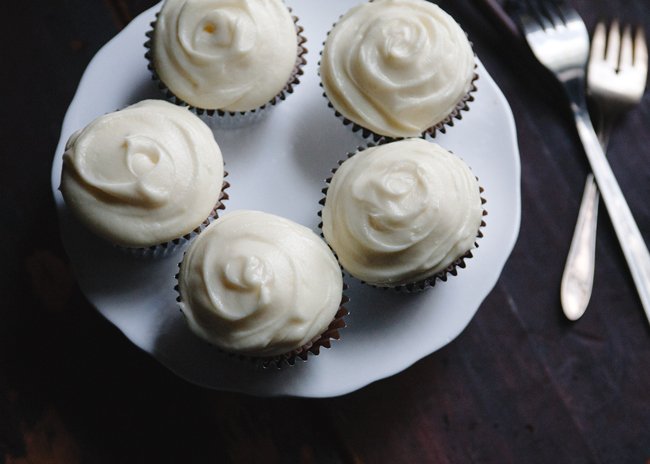
Saturday afternoon had me knee-deep in frosting. There was frosting in the sink, on the floor, in my fingernails. My hands smelled like butter, which, if you know me, is akin to having butter-smelling perfume sprayed directly into my nose. Or worse, cologne. Like a really obnoxious-smelling cologne. I have a sensitive sense of smell.
For my friend’s birthday, I’d originally intended to make lavender frosting because lavender is her favorite flavor ever, which is why I made honey-flavored cupcakes. Honey and lavender—they seem a fine pair, don’t they? But, me being me, I didn’t begin looking for the lavender until the last minute, the morning of her party in fact, which is how I ended up with a botched Swiss meringue buttercream frosting hanging stickily in pots and pans all around the kitchen: lavender was nowhere to be found, at least in my immediate vicinity, so I switched to the buttercream, and subsequently flubbed it. I’m not an experienced frosting maker, if you can’t tell.
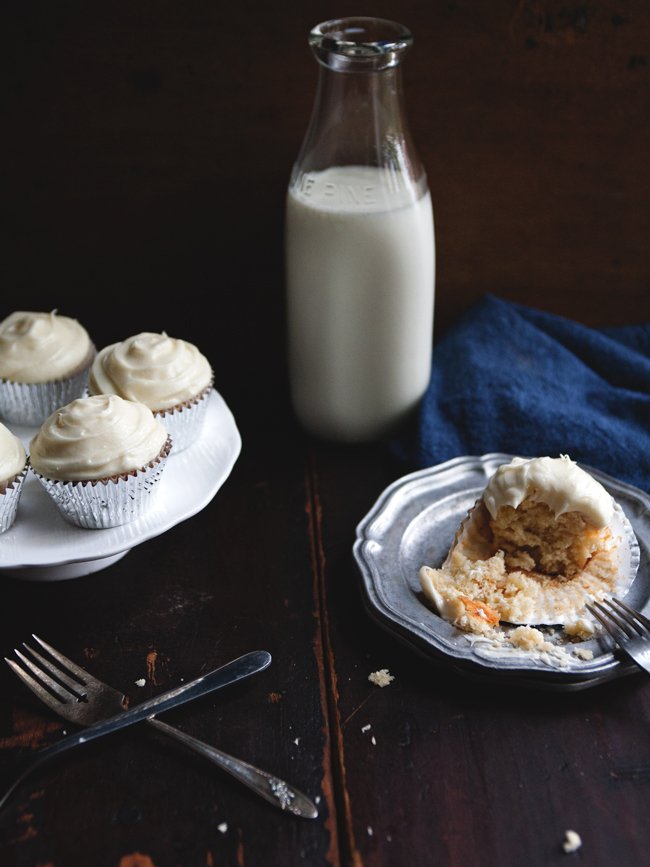
So I guess you could call the creation of the lemon cream cheese frosting a metaphorical throwing in of the towel. I mean, I did throw a dish towel at the counter in disgust after the buttercream underperformed (fine, I underperformed), and even contemplated showing up at my friend’s place with unfrosted cupcakes. But just like bestowing a cake upon a friend with a slice cut out for the sake of my food blog would be a violation of a basic human right, showing up with plain cupcakes would be, well, just plain pathetic.
That is how I ended up with a lemon zest-spiked cream cheese frosting. I was happy with my decision in the end. It may have been a safe and easy choice, but it was SO good. And I don’t even like lemon.
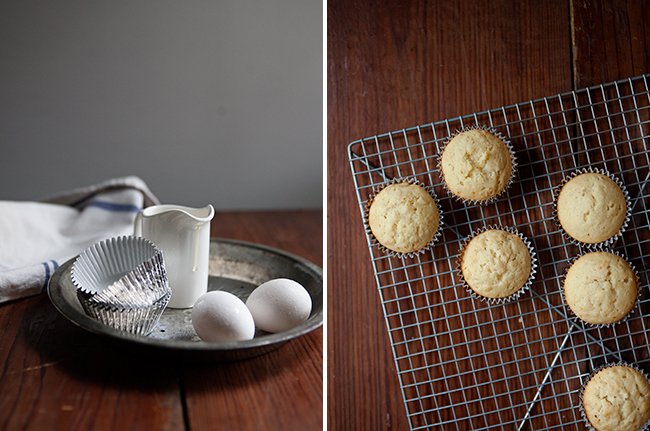
Unfortunately, the honey cupcakes turned out kind of dry. I might try swapping out the butter for canola oil if I ever make them again. But a delicious, complementary frosting is usually compensation enough, no? And I do believe that honey and lemon work wonderfully together.
I’ll have to practice my Swiss meringue buttercream craft the next time a birthday comes around. But only if there’s ample time to spare and I’ve prepped my ingredients earlier.
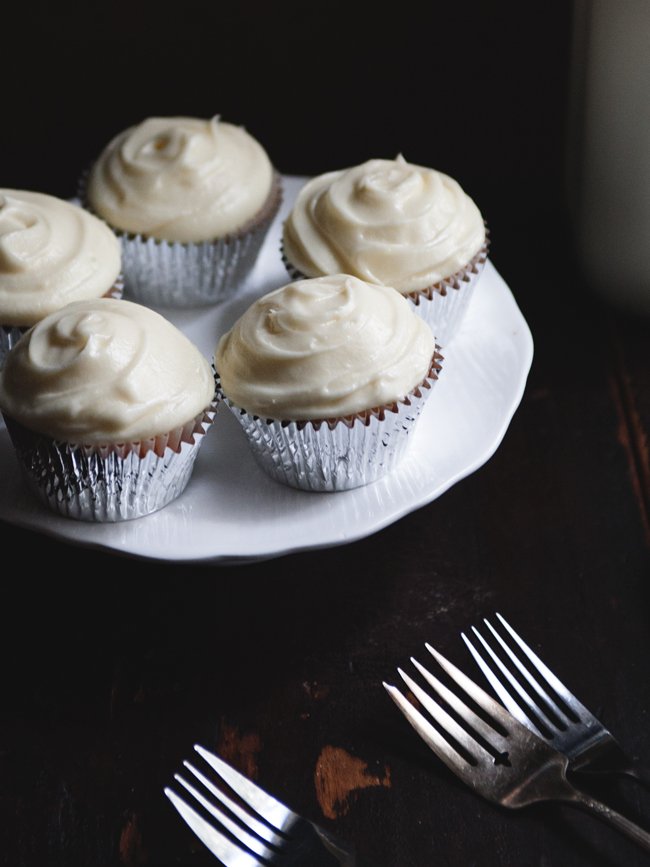
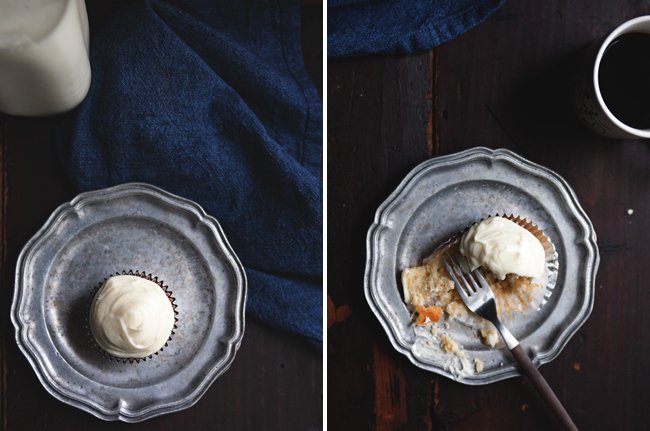
Honey Cupcakes With Lemon Cream Cheese Frosting
Adapted from Half-Baked, the Cake Blog
Makes a dozen cupcakes
Ingredients:
For the cupcakes:
1 stick butter, room temperature
3/4 cup sugar
2 eggs
1-1/2 cups all-purpose flour
1 tsp baking powder
1/2 tsp salt
1/2 cup buttermilk
1/4 cup honey
1 tsp vanilla extract
For the frosting:
1-1/2 sticks unsalted butter, room temperature
4 oz. cream cheese, softened
3 cups confectioners sugar
3 Tbsp honey
Grated zest from 1 lemon
Directions:
For the cupcakes:
Preheat oven to 350 degrees. Line 12 muffin cups with liners.
In medium bowl mix together flour, baking powder and salt, and set aside. In small bowl mix together buttermilk, honey and vanilla, and set aside. In bowl of stand mixer cream butter and sugar on medium speed until combined. Add eggs, one at a time beating well after each addition and scraping down sides of bowl as needed. Gradually add the dry and wet ingredients, alternating starting and ending with dry ingredients. Don’t overmix.
Fill the liners 2/3 full. Bake 18-20 minutes or until tops are golden.
For the frosting:
In a large bowl, cream butter and cream cheese until combined. Gradually add confectioner’s sugar and continue to mixing scraping down sides of bowl as needed. Mix in honey and lemon zest. Frost the cupcakes.
Related Posts


Subscribe for New Racipies
Get mental health tips, updates, and resources delivered to your inbox.
Honey Thyme Ice Cream, And A Countdown


If you follow me on Pinterest, you’ll have noticed that the activity on my Wedding board has increased lately (mostly because it used to consist of nothing).
Bouquets, dresses, venues, they’re kind of the topic du jour. Du année is more like it. Chris and I are supposedly getting married next summer.
I would understand if nobody believed us. After all, ‘we’re getting married… soon’ is becoming something of a party line, a slogan of sorts. It’s good for when our moms call, or when our friends inquire—although I have noticed that the asking of the question has trailed off as of late. See, nobody believes us anymore.
Though we got engaged last summer, we decided to postpone our wedding by a year because we knew that 2012 was going to be extremely tumultuous: we both quit our jobs, went on an extended backpacking trip, then moved across the country. Who has time for wedding planning among all of that action?
Anyway, we’ve agreed to start planning in September, a prospect I’m not really looking forward to. All the details and the spreadsheets (I’m a Type-A wannabe), the tracking of said details, the eventual arrival at the point where I realize I can’t stop thinking about the details. And there will be lists, and the honing of lists, and the further honing of lists. Finally, the horrifying realization that we’re probably going to spend more on this one day than the two of us did during the whole four months that we spent backpacking through South America. Times two. Or three. I won’t let it reach three, I promise.
Below is one last ice cream recipe to mark our loss of innocence. Before we become initiated to the world of on-site versus off-site catering, sweetheart versus wedding party table, sleek versus poofy (dress, of course), signature cocktail versus open bar, and much, much more. All to come, my friends, all to come… (don’t worry, I promise I won’t inundate you with wedding details.)
Or maybe this recipe just marks the end of the summer months, and a successful conclusion to our very first summer in New York City.
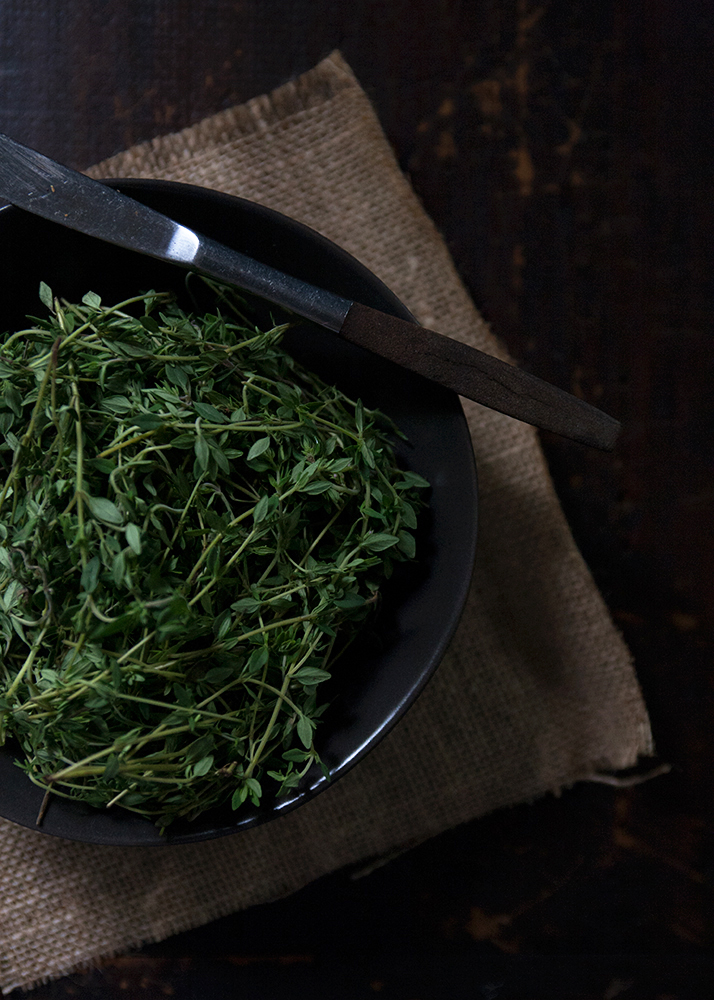
I love the interplay of sweet and savory and this ice cream is both subtle and satisfying. I can’t decide if the thyme amplifies the honey or the honey amplifies the thyme, but it has a very distinct flavor I enjoy very much. Honey ice cream on its own tastes so pure to me: it loses its super-concentrated sweetness, and becomes creamy and floral and light. Thyme is by no means heavy-tasting, but it adds just that touch of… darkness, moodiness, a slightly off-kilter note that’s therefore more complex. An olfactory play on chiarascuro?
Here’s to the end of August, and the beginning of a countdown. 12 months, 11, 10….until I get hitched!

HONEY THYME ICE CREAM
From The New York Times
Makes about 1 quart
Ingredients:
1 cup whole milk
2 cups heavy cream
6 large sprigs fresh thyme
4 egg yolks
3/4 cup honey
Directions:
Combine the milk and cream in a saucepan and add the thyme. Bring to a boil. Remove from the heat, cover and let stand for 20 minutes. Strain and return the mixture to the saucepan.
Meanwhile, whisk the egg yolks in a bowl. Slowly pour in the cream mixture a little bit at a time, whisking constantly. After adding a cup, whisk in the honey and add the rest of the cream. Pour the mixture back into the saucepan, cook over low heat and stir constantly until the mixture is thick enough to coat the back of a spoon. Cool, then refrigerate until cold, 2 hours to overnight. Freeze in an ice-cream machine according to manufacturer’s instructions.
Note: The type of honey you use probably matters very much because there are so few ingredients. Mine was light, kind of a general all-purpose honey. I wonder if the buckwheat honey I tried at the farmer’s market, which was a little too bitter for everyday use, might not work well in this recipe? Also, this ice cream melts quickly. Maybe the honey’s chemical composition lowers the frozen custard’s freezing point? I’m not sure, but if serving to a group, you might want to pass out the bowls as you scoop.
Related Posts

Subscribe for New Racipies
Get mental health tips, updates, and resources delivered to your inbox.