
Miniature Panettone

Medically reviewed by Christiana George Updated Date: June 8, 2023
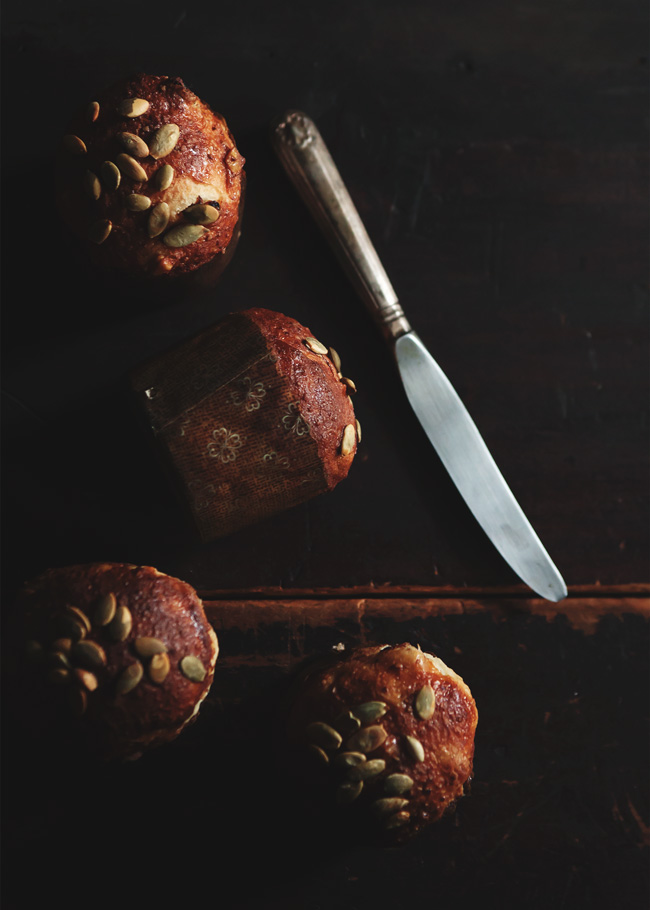
While this recipe would’ve come in handy before Christmas, I hope you’ll allow me this grace period, as my brain’s been off on holiday since December 20th and doesn’t feel like exerting itself until after the new year. Preferably January 6th. By then, I’ll have accepted that another year has come and gone, and hopefully prepared myself for the fact that… 2014′s GOING TO BE THE BEST YEAR EVER!

Or not. In truth, that kind of mindless optimism is a huge turn off to me. It’s too peppy, too simplistic. Maybe it’s just me, but I don’t feel like every single year of my life has to improve upon the last? I’m not wishing horrible things to happen to myself obviously, but I’m also not expecting to figure everything out in the span of a year, for the figurative pieces to fall into place. I want to have a little faith that whatever grand plan is in place for me will reveal itself through small nudges and gentle prods, even if they come in the form of hardships and disappointments.
In other words, I’m ready for you 2014.
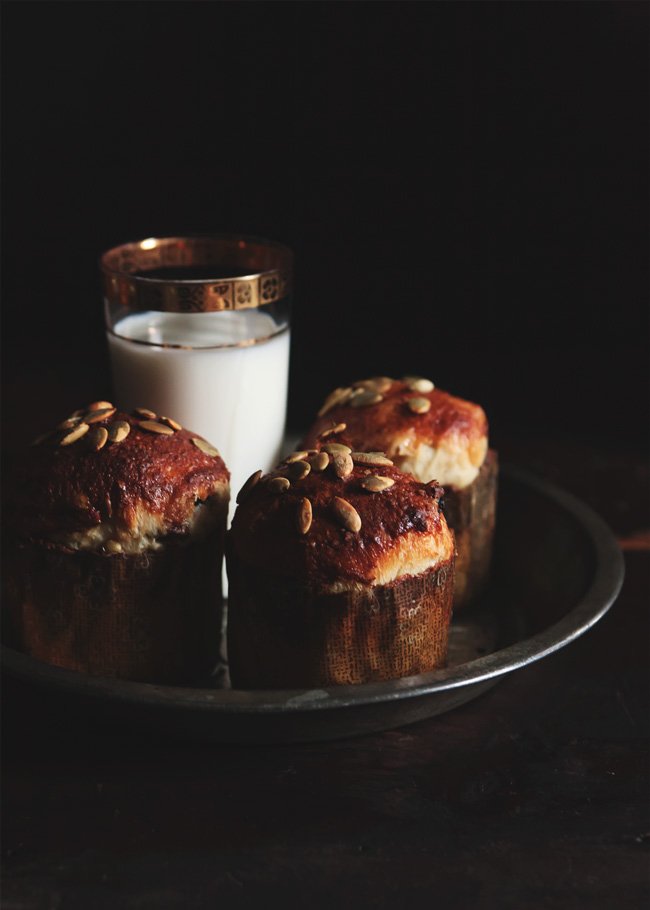

MINIATURE PANETTONE
Makes 10 2.75″ rolls
Adapted from Sullivan Street Bakery and Wild Yeast
Apparently, this recipe is THE recipe, at least according to the discerning folks (reviewers) at Epicurious.com who swear by this version. It’s by Peter Lahey, therefore no kneading required. On the other hand, it takes some pretty careful planning to see it through. Here’s my suggested timeline: in the morning on a day before a free day (so like a Friday or Saturday), prep the raisins. That evening, around 8 or 9 say, get the dough ready for its first rise. The next AM, prep the dough for the second rise. The panettone should be ready by that evening. By the way, the glaze is sticky and delicious and I highly recommend you give it a try. If you decide not to, snip a little X on top of each roll and place a nubbin of cold butter in the fold before placing them in the oven. This will prevent a skin from forming, which would inhibit its rise.
Ingredients:
- 1 cup raisins
- 2 Tbsp light rum (I used Grand Marnier)
- 2 Tbsp hot water plus 2/3 cup tepid water, divided
- 3 3/4 cup all-purpose flour
- 2/3 cup sugar
- 1/2 tsp salt
- 1/2 tsp active dry yeast
- 1/4 tsp grated lemon zest
- 3 large eggs, at room temperature for 30 minutes
- 1 Tbsp mild honey
- 1/2 tsp vanilla extract
- 10 1/2 Tbsp butter, softened and cut into 1 Tbsp pieces, plus 1 Tbsp melted butter
- 2/3 cup candied citron, chopped into small pieces
For the glaze:
- 1/4 cup granulated sugar
- 1-1/2 tsp almond meal
- 1 tsp vegetable oil
- 2 tsp corn starch
- 3/4 tsp cocoa powder
- 1 egg white
- 1/2 tsp vanilla extract
- Slivered almonds for sprinkling on top (I used pumpkin seeds)
Directions:
Soak raisins in rum and 2 Tbsp hot water at room temperature, stirring occasionally, until raisins are plump and most of the liquid has been absorbed, 8 hours.
Mix flour, sugar, salt, yeast, and lemon zest on low speed in a stand mixer until combined. In a small bowl, whisk together tepid water (2/3 cup), eggs, honey, and vanilla extract. With the mixer still on low, slowly pour the egg mixture into the flour mixture. Increase speed to medium-low and mix to combine. Add softened butter one Tbsp at a time, waiting for each piece to be thoroughly mixed before adding the next. Increase speed to medium-high and mix until smooth and elastic, about 8 minutes. Drain liquid from raisins and stir in candied citron and 1 Tbsp melted butter into the same bowl. Stir into dough with a wooden spoon. Transfer dough to a large bowl (I kept mine in the stand mixer bowl), cover with a kitchen towel, and place in a cool oven to rise until almost tripled in size, 12 to 15 hours.
Sprinkle dough lightly with flour and scrape onto a lightly floured surface. Cut dough into 10 equal pieces (I used my scale to ensure they all weighed about the same) and with each one, gently fold edges into center and place, seam side down, in a panettone mold. Cover with a towel and let rise at room temperature for 3 to 4 hours, until the dough has risen to the top of the mold.
Shortly before the dough is ready, preheat oven to 350 degrees. Make the glaze by combining all the ingredients except for the slivered almonds. When the panettone is ready, brush the glaze on tops of all the panettone, and sprinkle almonds on top. Place on a baking sheet. Bake for 25 to 35 minutes, or until a wooden skewer inserted in the center comes out moist but not wet.
As soon as the panettone is cool enough to handle, pierce a wooden skewer all the way through each (I was able to pierce 2 per skewer) and hang the panettone upside down (I perched the skewers on a chair and a table) to let cool completely, 4 hours to overnight. This step is important as the panettone finishes up its cooking while cooling. It’ll become dense if you let it cool upright.
Related Posts
Subscribe for New Racipies
Get mental health tips, updates, and resources delivered to your inbox.
Homemade Yeasted Apple Cider Doughnuts (Fluffy & Fried)

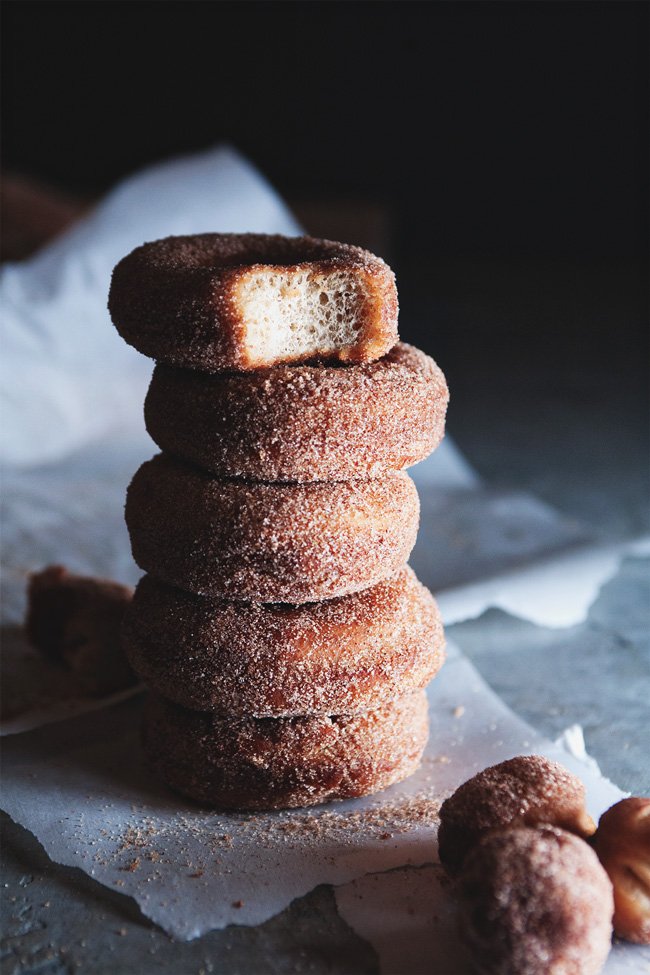
These soft, fluffy yeasted apple cider doughnuts are the perfect autumn treat. Infused with fresh apple cider and rolled in cinnamon sugar, this recipe brings the best of the farmers’ market right to your kitchen.
Capturing the Flavors of Fall
The last couple of weeks: Full of visitors, mostly conversation, and good food too. The three always happen to coincide, don’t they?
Earnest walks, feet pounding pavement to the tune of miles of city blocks, great big swathes of condensation disappearing into the air as we talk, scarves up to our ears, gloved hands stuffed into pockets. The cold is omnipotent and inescapable.
The couch served double-duty as a bed, throws unfolded and refolded, and finally heaped together over the rip in the couch. Towels bunched up on the rack, foreign toothbrushes and contacts, and creams on the counter.
Squished together like sardines around the table. Plates and bowls cycled over and over. Coffee and coffee and coffee and coffee. The twice-daily sauna turns us into captives of the heat, shedding layers as if on cue as the radiator whistles on.

And then there was Thanksgiving…
And then there was Thanksgiving. I can’t even think about it. So much food. My role as the preparer of brussels sprouts, though, thankfully, not much else. Watching as the guys prepared the turkey, standing on tiptoes with my cameraphone poised above the headless carcass.
It was salted, backbone cut out, pushed down hard until its breastbone cracked. Piercing it with a meat thermometer a million and one times, unsure why its internal body temperature kept vacillating. As a result, dry white meat but done in 90 minutes.
For dessert, a pumpkin pie. There was also homemade cinnamon ice cream—thanks, Alanna, for implanting the idea in my mind! It tasted just like Cinnamon Toast Crunch.
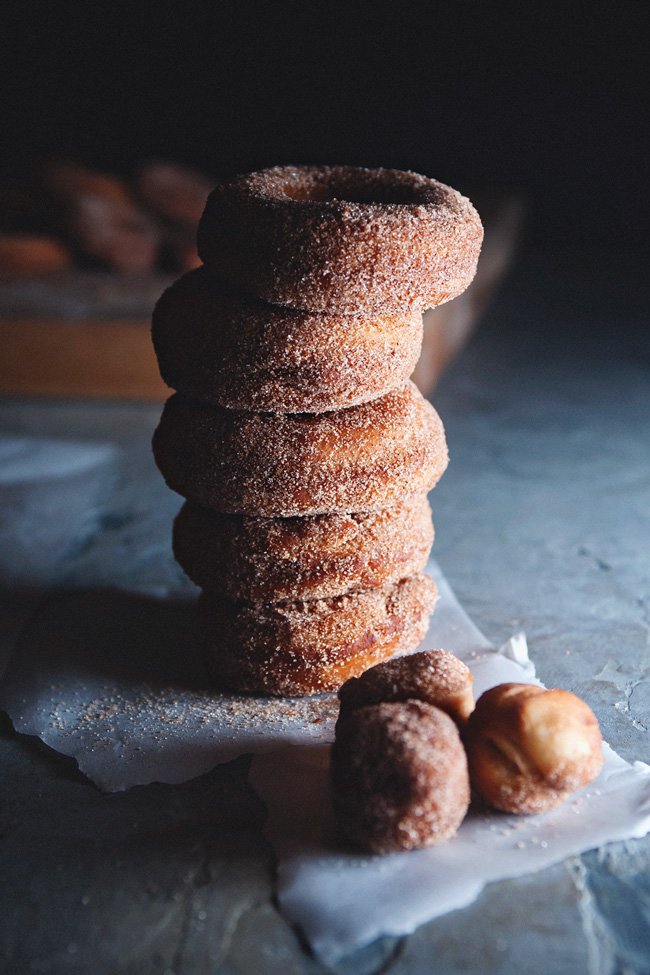
Discovering the Perfect Apple Cider Doughnut
The return to normalcy. Decompression. Time once again ours. Sleeping in and in and in. Leftovers. Sitting on the couch, which was once again a couch, and streaming Breaking Bad until Walt started getting annoying.
Christmas tree shops set up on street corners, and wreaths, big ones and decorated ones and plain ones too. I cracked open my computer for the first time in what felt like weeks. Black Friday emails are days late, but overflowing my inbox nonetheless. I also ate my first apple cider doughnut.
And then I had to make them.
Because what I ate was cushiony and soft, full of air pockets, a real treat for gluten-vores. It was also heady with autumn spices and dusted with coarse sugar, really underscoring the apple cider flavor just like they should. In short, it was completely unlike anything I’d expected, and it was amazing.
Yeast vs. Cake Doughnuts: Why Yeast Wins
I’m not usually a fan of cake doughnuts. In fact, I’m not sure the doughnut I had on Saturday was a cake doughnut – it was far too luscious and fluffy. But I love anything apple cider flavored, so I decided to make my own version with yeast.
This recipe is close. It’s not fluffy enough in my opinion, but then again, I wonder if the doughnut of my dreams is exactly that: not real. Nevertheless, there’s something really exciting about making doughnuts at home (another one of those look-what-I-made! foods), and these taste delicious when they’re fresh out of the, um, fryer?
Is that what you call your pot when you’re using it for deep-frying? Not every person is ready to spend a lot of money at an online casino, and it is okay. For those of you who want to play slot machines with a small deposit, our friends from Fancasinos.com have created a rating of minimum deposit casinos in 2023. People are able to play there with $10 and get a bonus.
Tips for Frying Homemade Doughnuts
Monitor the Heat: Use a candy thermometer to keep oil at 360°F.
Don’t Overcrowd: Fry 2-3 doughnuts at a time to maintain oil temperature.
The Flip: Use chopsticks for an easy, gentle flip.
YEASTED APPLE CIDER DOUGHNUTS
Makes 12 doughnuts plus 12+ doughnut holes
Adapted from Chow
Ingredients:
- 2-1/2 cups all-purpose flour, plus extra for rolling out
- 1-1/2 tsp ground cinnamon
- 1/2 tsp freshly grated nutmeg
- 1/2 tsp fine salt
- 2-1/4 tsp active dry yeast
- 1/4 cup plus 1 tsp granulated sugar
- 3/4 cup apple cider
- 2 large egg yolks
- 1 Tsp vegetable oil
- 1 tsp vanilla extract
- 1 Tsp unsalted butter, room temperature
Neutral oil for frying
1/2 cup sugar (optional)
1 Tbsp ground cinnamon (optional)
Directions:
Whisk the flour, cinnamon, nutmeg, and salt in a large bowl to combine, and set aside.
In a medium bowl, mix the yeast and 1 tsp of sugar. Heat 1/2 cup of the apple cider until it’s warm but not hot, and add it to the yeast mixture. Stir to combine. Let it sit until it’s foamy, about 5 minutes.
Then, add the remaining 1/4 cup sugar, remaining 1/4 cup apple cider, egg yolks, oil, and vanilla and whisk to combine. Add this mixture to the flour mixture and stir with a wooden spoon until the dough comes together and begins to form a ball.
Transfer the dough to a lightly floured work surface. Scatter the butter pieces over the dough and knead until the butter is fully incorporated and the dough is smooth and elastic, about 6 to 8 minutes. You might need to add up to 1/4 cup of additional flour to keep the dough from being too sticky.
Oil the sides of a large bowl. Form the dough into a ball, and place it in, turning to coat. Cover the bowl and let the dough rise in a warm place until doubled in size, about 2 hours.
Line a baking sheet with parchment paper. Punch down the dough, transfer it to a lightly floured work surface, and roll it out until it’s about 1/2 inch thick. Using a 3-inch round cutter, stamp out as many dough rounds as you can.
Use a 1-inch round cutter to make the inner hole (or, in my case, an icing tip that was about 1.5″ in diameter) and place the doughnuts and doughnut holes on the prepared baking sheet. Gather the dough scraps and repeat.
Discard any remaining dough scraps. Cover the doughnuts and let them proof until they’re about 3/4 inches in height, 30 minutes to an hour.
Fill a heavy-bottomed pot with about 2 inches of neutral oil. Clap a candy thermometer on the side. Heat the oil on medium heat until it reaches 360°F.
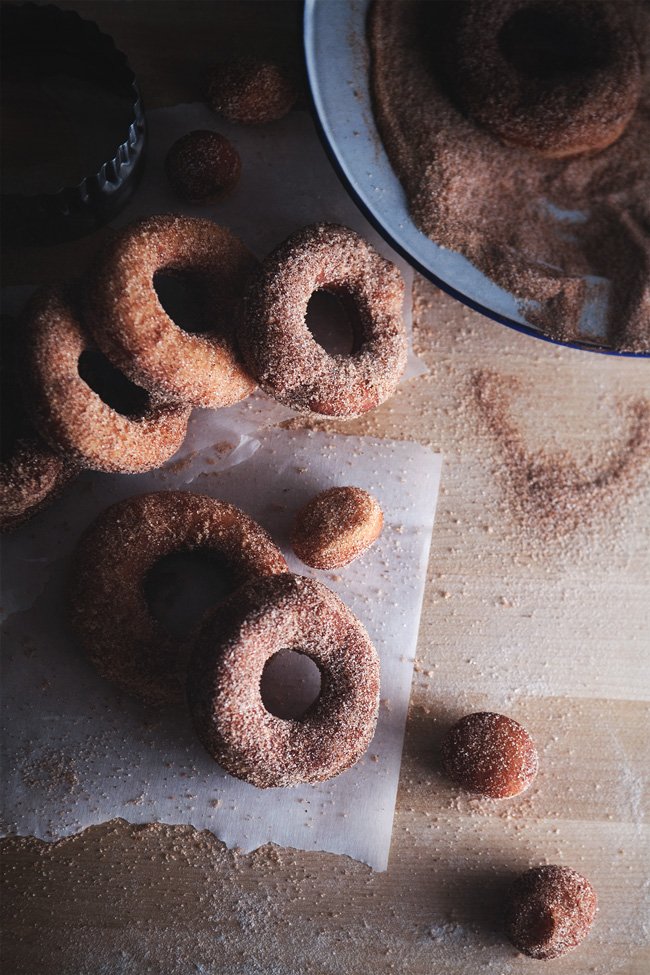
It should take a little while, so in the meantime, prepare a rack where the doughnuts will drain by laying over it a few sheets of paper towels. If you’re planning on topping the doughnuts, prepare the cinnamon sugar in a large plate and set it close by.
Once the oil is ready, add the first doughnut. Fry until golden brown, about 30 seconds, then flip it over (I used chopsticks). Add the second doughnut and repeat. Move the first one to the rack when it’s ready, and continue frying the rest.
I was able to balance frying three at a time. Once the doughnut has cooled a little, dip it in the cinnamon sugar until it’s generously covered. Move on to the doughnut holes.
Related Posts
Subscribe for New Racipies
Get mental health tips, updates, and resources delivered to your inbox.