
Lavender Macarons With Honey Buttercream

Medically reviewed by Christiana George Updated Date: June 8, 2023
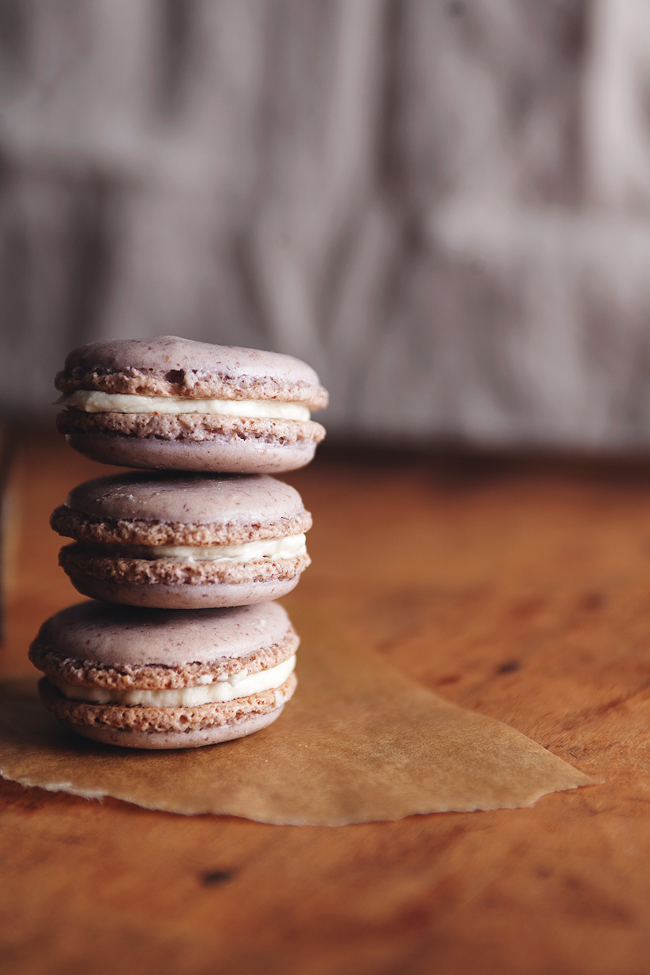
Girls are… sugar and spice and everything nice. Lavender would fall into the latter category, and coincidentally, it makes me feel so so girly. While girly is not my natural state, my friend, who also happens to be an appreciator of the finer things in life, is, and it was for her that these macarons, which combine both sophistication (like all things French, no?) with femininity, were originally intended. Lavender is her favorite flavor.
These are celebratory macarons, job-well-done macarons, pat-on-the-back macarons, because she just finished her second year of law school (congratulations M!) and only has one year left to go.
Of course, I didn’t bother coordinating her schedule with her, and found out later that she flew home, to California. It’s probably a good thing she’s not around to be a recipient, because my latest batch came out, for the most part, cracked, oozed over, and unkempt in all the ways imaginable.
I’ve rationalized this disappointment by telling myself that I’m just honing my skills until she returns, which is when I will present her a box of perfect macarons, all tied up with a shiny pink ribbon. (First though, I need to get over this spring cold that makes me drowsy and achey and bleary-eyed.)
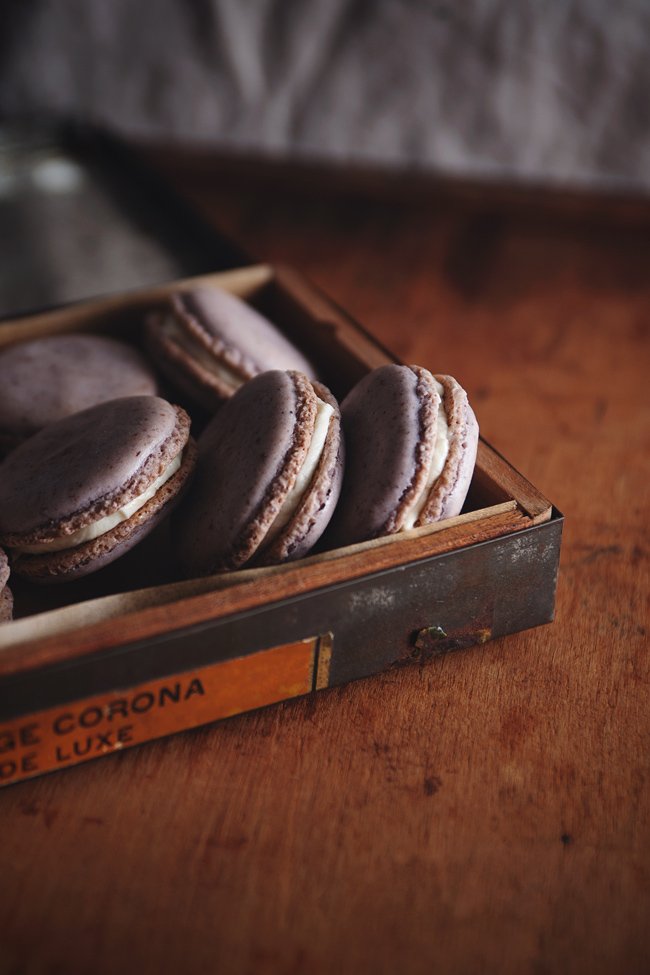
What frustrates me the most about the outcome of this recipe is that I didn’t deviate far from my recipe for plain almond shells. There was the addition of one tablespoon (tablespoon!) of dried lavender, and two drops (drops!!) of violet gel food coloring. And yet, what a difference they made. My yield from the two batches I baked: about 20 mediocre shells (only mediocre), and 60 that could’ve filled a textbook with examples of Failed Macarons. Is the batter so sensitive that the tiniest addition of liquid completely changed its chemistry? I have no definitive answer, but it does seem the case. Or maybe I overmixed the batter, or undermixed it, or should’ve used aged egg whites, or failed to let the shells sit out long enough before sliding them into the oven. But I refuse to believe they are that fussy!


LAVENDER MACARONS WITH HONEY BUTTERCREAM
Makes about 40 shells, or 20 macarons
Adapted from Brave Tart
For the macarons:
Ingredients:
- 1 cup confectioners sugar
- 1 Tbsp dried lavender buds
- 3/4 cup almond meal
- 2 egg whites
- 3 Tbsp sugar
Directions:
Preheat your oven to 300 degrees F. Line two baking sheets with parchment paper.
Blend the confectioners sugar, lavender, and almond meal in a food processor until fine, then whisk everything into a large bowl.
In the bowl of a stand mixer with the whisk attachment affixed, add the egg whites and sugar. Turn the mixer on to power level 4 and whisk the mixture together for 3 minutes. Next, turn the power up to 7 and whisk an additional 3 minutes. Turn the power up to 8 and whisk an additional minute or two. By now, there should be a stiff meringue in the bowl. Feel free to mix in the food coloring at this point and whisk at 8 speed for an additional minute to incorportae the color. Knock the meringue that’s trapped in the whisk back into the bowl.
Now, add the almond meal mixture into the bowl all at once. Stella’s instructions:
Use both a folding motion (to incorporate the dry ingredients) and a rubbing/smearing motion, to deflate the meringue against the side of the bowl.
The dry ingredients/meringue will look hopelessly incompatible at first. After about 25 turns (or folds or however you want to call “a single stroke of mixing”) the mixture will still have a quite lumpy and stiff texture. Another 15 strokes will see you to “just about right.” Keep in mind that macaronage is about deflating the whites, so don’t feel like you have to treat them oh-so-carefully. You want to knock the air out of them.
You don’t need to be too gentle with the batter. By the time it’s ready, its consistency will be runnier than you’d think, closer to pancake batter than cake batter. Check out 5:10 in this video to see how it should look.

Fill a pastry bag with the batter. You can use a pastry bag with just a coupler, or with a tip. I used an Ateco 806 tip, which resulted in shells on the larger side. Pipe your shells onto the parchment-paper lined baking sheets, a little more than a quarter (US currency) in size (about 2 cm. or 1 inch), spacing them about 1 inch apart.
When you’re done piping, pick up the pan and whack it down hard against your counter. Do this another time, then rotate the pan 90 degrees and do the same thing twice. You might see tiny air bubbles appear on the top of the rounds, a good sign because they could be potentially damaging if buried within the batter. Repeat with the other pan.
Slide the pans into the oven and bake for about 15 minutes, at which point the shells should be able to be cleanly picked off the parchment paper.
Let the shells come to room temperature, then fill your macarons with the honey buttercream (recipe below). I used a pastry bag, but a spoon should work as well.
For the honey buttercream:
Makes enough to fill about 40 macarons (feel free to halve this recipe—my mixer doesn’t handle small quantities well)
Ingredients:
- 1/2 cup butter (1 stick)
- 1 cup confectioner’s sugar
- 2 Tbsp honey
Directions:
In the bowl of a stand mixer, beat the butter using the whisk attachment for about 2 minutes. Slowly add the confectioner’s sugar, and whisk until everything is incorporated. Do the same with the honey. Beat another minute or so to get everything well incorporated.
Related Posts
Subscribe for New Racipies
Get mental health tips, updates, and resources delivered to your inbox.
Pumpkin Spice Marshmallow Puffs

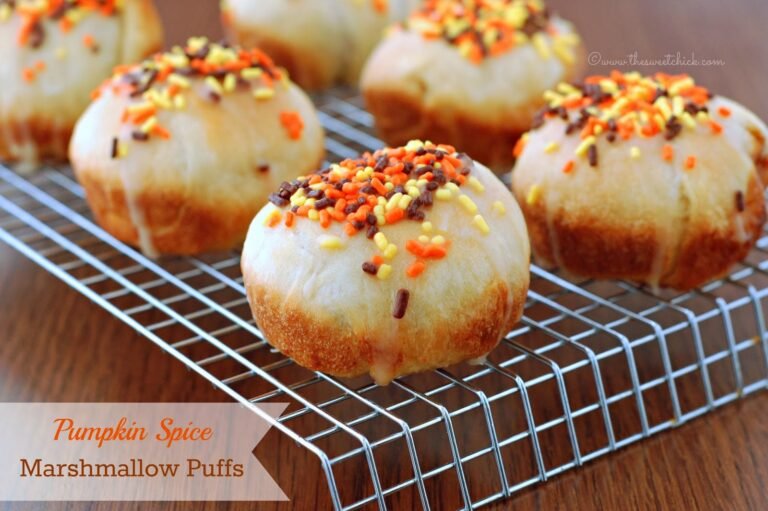
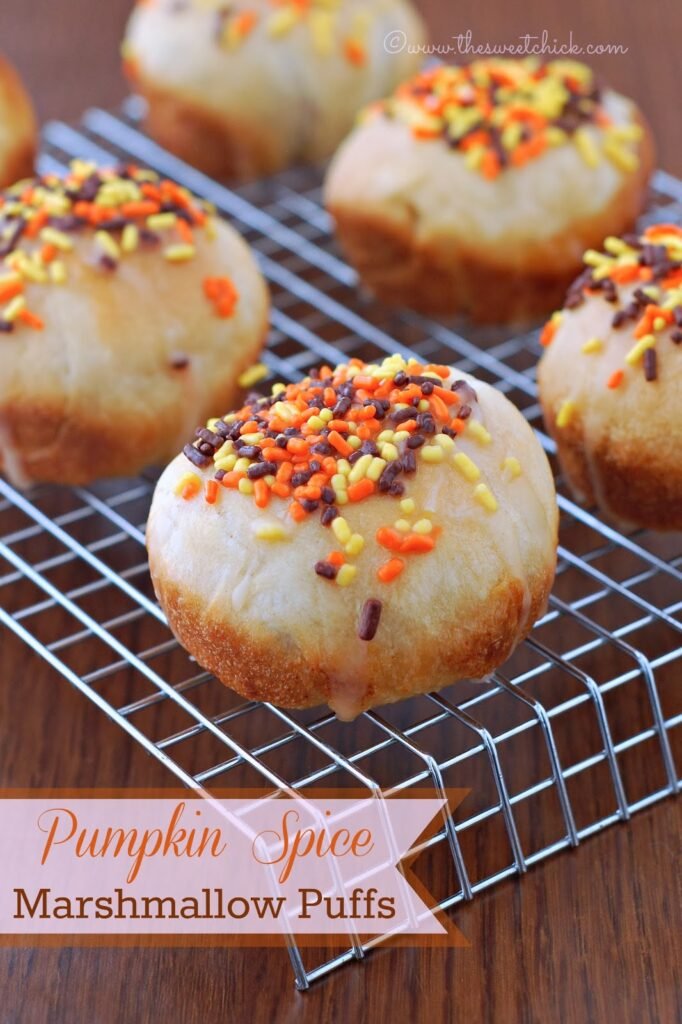
I was watching the Pillsbury Bake-off Contest 2013 all weekend via Instagram. There were a lot of my favorite bloggers in attendance. The whole event looked a lot of fun from their media perspective, but I couldn’t imagine how much pressure the contestants were feeling trying to win $1 million dollars. That’s just crazy. I don’t think I could perform under that kind of pressure. But I would love to know how it feels to win. Perhaps someday I will enter. In the meantime, I was inspired to whip up these little treats for the family this weekend.
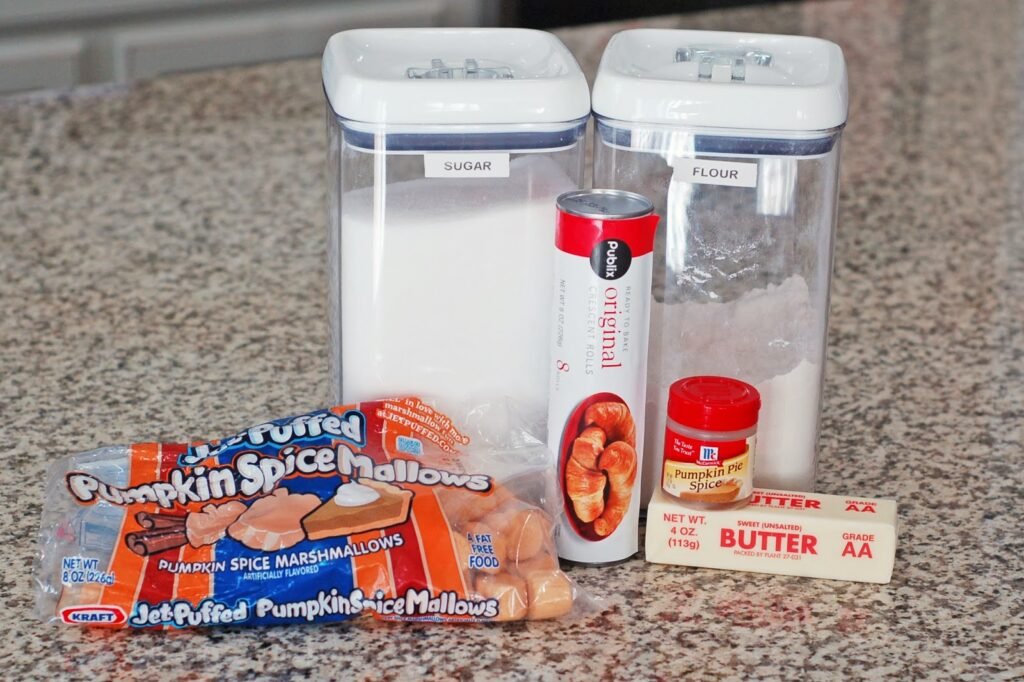
This recipe is adapted from the 1969 Pillsbury Bake-Off Contest winning recipe, the Magic Marshmallow Crescent Puffs. I had some leftover Jet-Puffed Pumpkin Spice Mallows in the pantry and didn’t want them to go to waste. I actually never made the marshmallow puffs before.

My daughter had a blast helping out. They are easy enough for a 7 year old to put them together.

Just dip the marshmallows in the butter and in the sugar mixture. Then roll them up in the crescent. Since the Pumpkin Spice Mallows are smaller than a regular marshmallow, I used two. And I rolled them up from the wide end of the crescent instead of the narrow end. I just folded the sides in over the marshmallows and then rolled them up.

Then you need to make sure all the edges are sealed. I just pinched them a little with my fingers.

Don’t forget to dip the bottoms in the remaining butter. This helps a lot if the crescents leak and makes a sticky mess.

I did have a couple of the puffs leak out a little filling, but since I had greased my pan well and with the added butter, they came out of the pan easily.
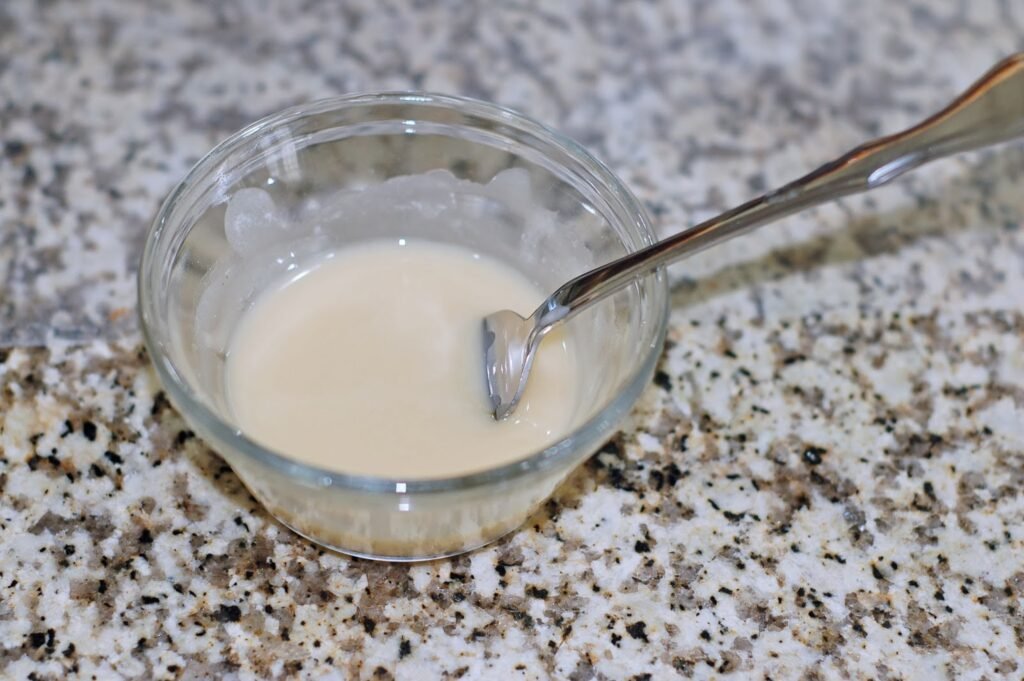
I added a little maple syrup to the glaze for a some extra flavor. And for fun, I added some sprinkles. I like how the marshmallows melt away and leave behind a sweet, gooey filling. The maple glaze topped it off just right.
hese are a great after school treat for the kids or you can double up the recipe for a party. Enjoy!
Pumpkin Spice Marshmallow Puffs
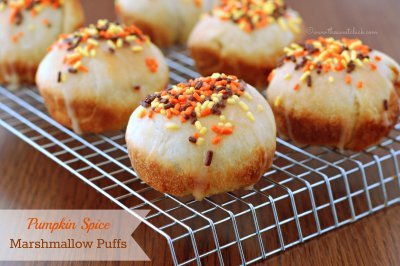
by The Sweet Chick
Prep Time: 15-20 minutes
Cook Time: 12-15 minutes
Keywords: bake dessert snack crescent rolls pumpkin spice pumpkin spice marshmallows maple syrup crescent rolls American fall
Ingredients (8 servings)
For the puffs
- 2 tablespoons sugar
- 1 tablespoon all purpose flour
- 1/2 teaspoon pumpkin pie spice
- 1 can (8 oz.) ready to bake crescent rolls
- 16 Jet-Puffed Pumpkin Spice Mallows
- 2 tablespoons butter, melted
For the glaze
- 1/4 cup powdered sugar
- 1 teaspoon pure maple syrup
- 1 tablespoon milk
Optional toppings
- sprinkles
Instructions
For the puffs
Preheat oven to 375º F.
In a small bowl, mix together the sugar, flour and spice.
Separate crescent rolls into 8 triangles and lay on a flat surface.
First dip each marshmallow in the melted butter, then dip each in the sugar mixture and coat evenly.
Place 2 marshmallows side by side at the widest end of the crescent roll. Wrap the side inwards over the marshmallows then roll until marshmallows are completely covered.
Pinch all seam with fingers to make sure they are sealed. Repeat process for all marshmallows until all crescent rolls are filled.
Dip bottoms of each filled crescent roll in the remaining butter and place buttered side down into a greased muffin pan. You may place muffin pan on a cookie sheet in case of spillage.
Bake at 375ºF for 12-15 minutes or until tops are golden.
Remove from oven and let the crescent puffs cool for 1-2 minutes.
Then remove them from the pan and place them on a cooling rack with a wax paper underneath and prepare the glaze.
For the glaze
in a small bowl mix together the sugar, syrup, and milk until smooth.
Then drizzle evenly over the crescent rolls with a spoon and let the glaze set.
For the toppings
If you want to add sprinkles, add them before the glaze sets.
You can serve these warm or at room temperature. Either way they are just as tasty. And they still taste good the second day if placed in an airtight container.
Related Posts
Subscribe for New Racipies
Get mental health tips, updates, and resources delivered to your inbox.