
Pumpkin Biscotti With Cranberries And Almonds

Medically reviewed by Christiana George Updated Date: June 8, 2023
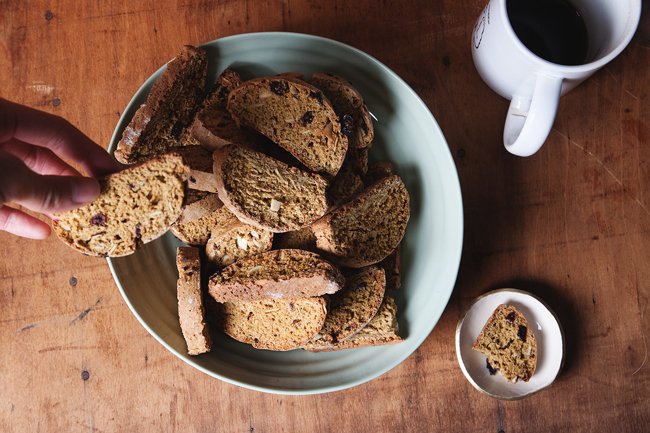
Apparently I’m on a pumpkin spree.
Allow me to grin sheepishly and assure you that pumpkin puree season is almost over, a fact that makes me feel both sad and just a little relieved. For Chris, at least. His pumpkin fatiguée has never run so high. (Although one serving of pumpkin pie should cure him of that.)
And admittedly, even my tolerance is beginning to wane. I tend towards the obsessive in many aspects of my life, and pumpkin is one of these things. As well as listening to the same song/album on repeat, wearing the same shirt for weeks on end, wanting to eat at the same restaurant every time I go out, etc. etc. The inevitable result of such overload is almost criminally tragic: after such sensory gluttony, said objects/activities become warped, twisted. I can never view them the same way again.
That early magic is so transcendent, yet transient. Like the first time I heard the song “Weird Fishes by Radiohead.” God, I was moved. It haunted me. I still love it—and the entire album for that matter—but how I wish I could hear it again for the first time. (You can.)
So seasonality may not be such a bad thing after all. I mean, I wouldn’t mind having access to perfectly ripe peaches the entire year round. But I’d be losing the experience of the anticipation, and the unadulterated captivation of the first bite. Which means more to me than you can know.
With all that being said, it’s almost time to retire pumpkin. Almost. After all, there’s still pumpkin pie to be had.

Traditional Italian biscotti is not the buttery, cake-y creations we have today. They’re supposed to be biscuits after all, and biscuits do not connote dessert. It was made exclusively with flour, sugar, eggs, almonds (not roasted or skinned), and pine nuts. And meant to last a long time. Centuries, if stored carefully, according to Pliny the Elder.
Purists would call the recipe below a bastardization then. At the same time, I didn’t want to make anything too extravagant, too rich, too filling. I didn’t want to dip my biscuits in chocolate, or adorn them knee-deep with toppings, or have them leave behind butter stains on my finger. Rather, I was craving a sensible, no-nonsense, pumpkin-flavored treat to eat alongside my mid-morning coffee.
And that’s how these biscotti came out.

Of course, my few modest additions helped ever so much with the flavor, if I do say so myself. Dried cranberries to make it feel more festive, slivered almonds because they were one of the original ingredients, cinnamon, ground ginger, and cardamom because why the hell not. I dusted the top with black sesame seeds, bird food really, and into the oven my fat little loaf went.
Twice.
Because that’s how you make biscotti. You bake it twice.

PUMPKIN BISCOTTI WITH CRANBERRIES AND ALMONDS
Adapted from The New Best Recipe
Makes about 50
Ingredients:
- 1-1/2 cups all-purpose flour
- 1 cup whole wheat flour
- 1 tsp baking powder
- 1/2 tsp baking soda
- 1/4 tsp salt
- 1 tsp cinnamon
- 1/2 tsp ground ginger
- 1/4 tsp cardamom
- 3/4 cup pumpkin puree
- 1 cup brown sugar
- 2 large eggs
- 1 tsp vanilla extract
- 1/2 cup slivered almonds
- 1/2 cup dried cranberries
- black sesame seeds for topping
Directions:
Preheat oven to 350 degrees F. Line a large baking sheet with parchment paper.
Whisk the flours, baking powder, baking soda, salt, and spices together in a medium bowl. Set aside. In a larger bowl, whisk the pumpkin puree, sugar, and eggs together until smooth. Stir in the vanilla extract, almonds, and cranberries. Pour the dry ingredients over the egg mixture and fold until just combined.
Halve the dough and turn each half onto the prepared baking sheet. Using floured hands, stretch each half into a long loaf about 12 inches. Shape and pat each one smooth. Sprinkle liberally with black sesame seeds.
Bake until the loaves begin to crackle on top, about 25 minutes. Rotate the pan halfway through baking. Remove from the oven and let the pan cool for about 10 minutes. Meanwhile, reduce the oven temperature to 325 degrees F.
Transfer the loaves onto a cutting board. Using a serrated knife, cut each loaf diagonally into thin slices, about 1/2-inch. Lay the slices back on the baking sheet and return them to oven. Bake until crisp and golden-brown on both sides, about 15 minutes. Halfway through baking, turn the cookies over and rotate the baking sheet.
Remove from oven, and let cool. Store in an airtight container.
Related Posts
Subscribe for New Racipies
Get mental health tips, updates, and resources delivered to your inbox.
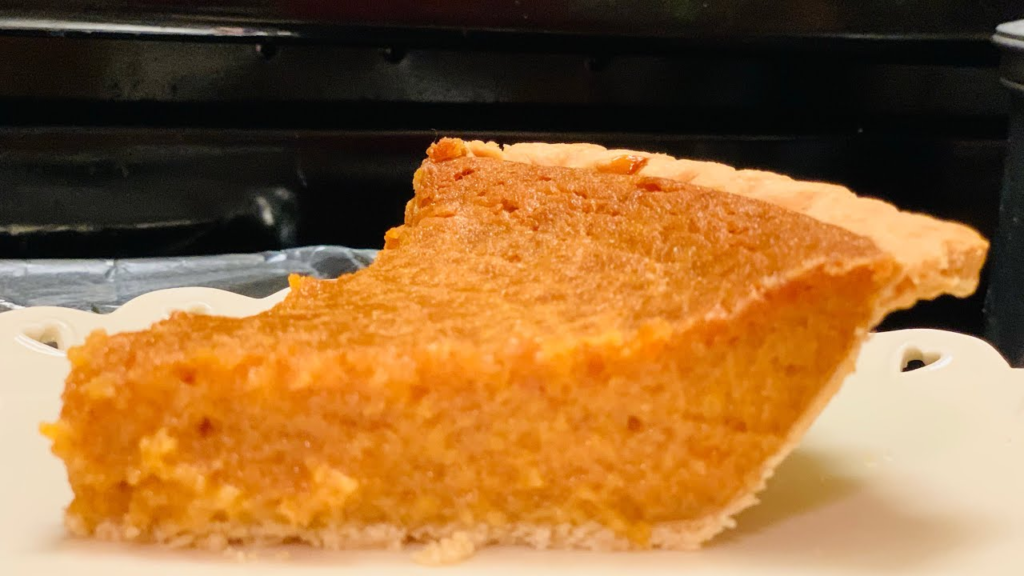
Grandma Old Fashioned Sweet Potato Pie Recipe

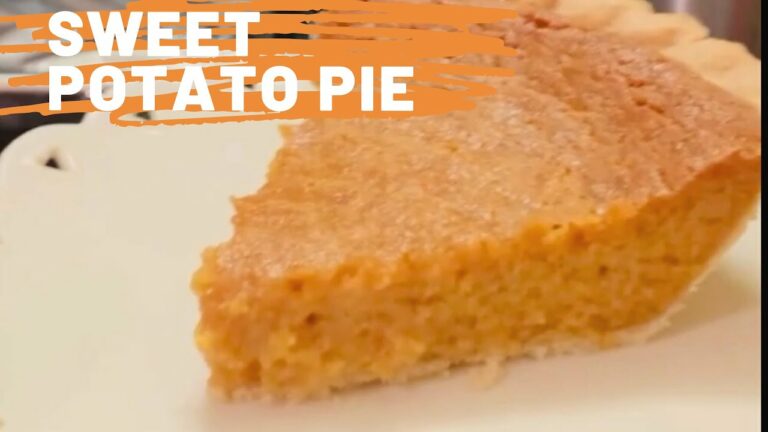
Few things conjure up feelings of warmth and nostalgia like an Old Fashioned Sweet Potato Pie, a classic favorite that has been cherished in family gatherings for generations. This delicious dessert often brings to mind cozy family dinners, laughter around the table, and stories from the past.
What if you could recreate this mouthwatering delight, just like grandma used to make? Today, we’re going to do just that! This article will introduce you to Grandma’s old-fashioned sweet potato pie recipe that will bring you back to those beautiful memories of yesteryears.
Grandma’s Recipe
A Culinary Journey into the Past: We know that the best recipes are those that have stood the test of time, and grandma’s old-fashioned sweet potato pie is a shining example. This delicacy is not just a pie; it’s a narrative of generations, woven with love, warmth, and of course, unbeatable flavors.
How Sweet Potato Pie Became a Classic?
Sweet potato pie is a Southern delicacy that has been loved for centuries. It’s believed to have originated from African-American culture during the era of slavery, as an alternative to the European-style pumpkin pie. Over the years, it has become a favorite, especially during holidays like Thanksgiving and Christmas. Grandma’s old-fashioned sweet potato pie recipe is a testament to this culinary tradition.
How to Make Grandma’s Old Fashioned Sweet Potato Pie?
Creating this nostalgic treat is a labor of love, as it involves careful preparation and attention to detail. Here’s a step-by-step guide to making your own old-fashioned sweet potato pie, inspired by grandma’s recipe.
Ingredients:
- 2 cups mashed sweet potatoes (about 3-4 medium-sized sweet potatoes)
- 1 cup granulated sugar
- 1/2 cup unsalted butter, melted
- 1/2 cup milk
- 2 large eggs
- 1 teaspoon vanilla extract
- 1/2 teaspoon ground cinnamon
- 1/4 teaspoon ground nutmeg
- 1/4 teaspoon salt
- 1 unbaked 9-inch pie crust
For the whipped cream (optional):
- 1 cup heavy cream
- 2 tablespoons powdered sugar
- 1/2 teaspoon vanilla extract
Instructions:
- Preheat your oven to 350°F (175°C).
- Peel the sweet potatoes and cut them into chunks. Place them in a large pot of boiling water and cook until tender, about 15-20 minutes. Drain the sweet potatoes and mash them using a potato masher or fork until smooth. Let them cool for a few minutes.
- In a large mixing bowl, combine the mashed sweet potatoes, sugar, melted butter, milk, eggs, vanilla extract, cinnamon, nutmeg, and salt. Stir well until all the ingredients are fully combined and the mixture is smooth.
- Place the unbaked pie crust in a 9-inch pie dish. Pour the sweet potato mixture into the pie crust, smoothing the top with a spatula or the back of a spoon.
- Bake the pie in the preheated oven for about 55-60 minutes or until the center is set and the pie is golden brown. You can test for doneness by inserting a toothpick into the center of the pie – if it comes out clean, the pie is ready.
- Remove the pie from the oven and let it cool completely on a wire rack. Once cooled, refrigerate for a few hours or overnight to allow the flavors to meld together.
- If desired, prepare the whipped cream. In a chilled bowl, beat the heavy cream, powdered sugar, and vanilla extract together using an electric mixer on medium-high speed until soft peaks form.
- Serve the sweet potato pie chilled or at room temperature, topped with a dollop of whipped cream if desired. Enjoy your grandma’s old-fashioned sweet potato pie!
Note: This recipe is for a single 9-inch pie. If you want to make multiple pies, you can adjust the ingredient quantities accordingly.
Conclusion
There you have it, Grandma’s old-fashioned sweet potato pie recipe! This isn’t just any dessert—it’s a piece of history, a comforting treat that carries the flavors of love, tradition, and nostalgia. Whether you’re a novice baker or a seasoned chef, this recipe will help you create a timeless delicacy that is sure to impress. From the aroma that fills your kitchen to the sweet, rich taste in every bite, you’ll see why this pie has been a cherished dessert for generations.
Remember, like any traditional recipe, you can add your own touch to this old-fashioned sweet potato pie. Maybe you’ll even start a new family tradition. We’d love to hear about your experience and how you made this recipe your own. So, put on your apron and get ready to enjoy the taste of tradition—happy baking!
Related Posts




Subscribe for New Racipies
Get mental health tips, updates, and resources delivered to your inbox.