
Roasted Asparagus With Miso Butter And A Poached Egg

Medically reviewed by Christiana George Updated Date: January 6, 2026
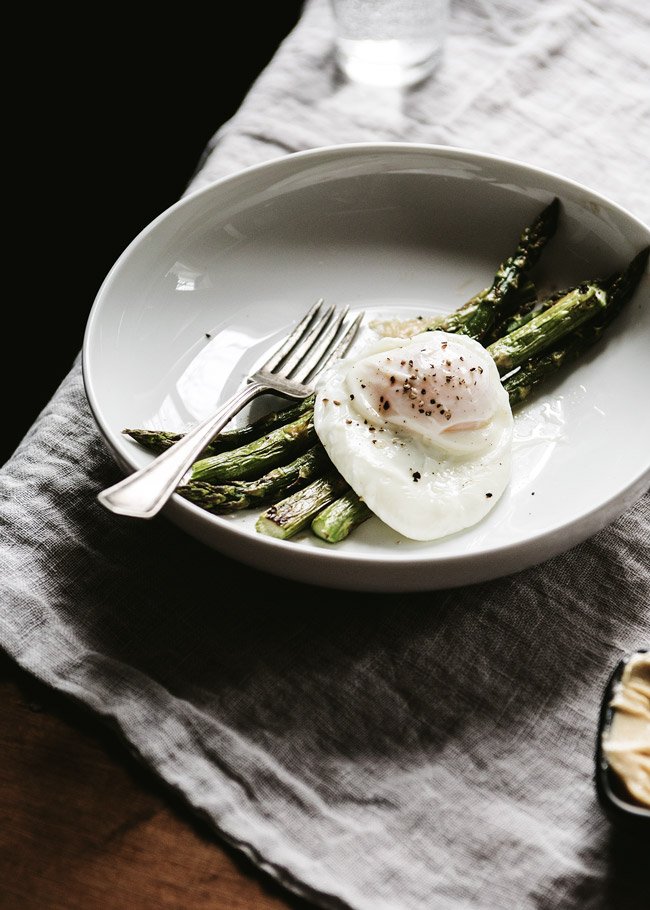
1. This is what happens when an unseasonably warm day comes along, the first in what has felt like a very long winter, the first where you could leave the house with nothing but a light jacket on, the first where a cold beer actually sounded like a good idea: you jump the gun just a bit while also taking some liberties with your convictions. A twofer, and I’ll let myself have it.
I usually stick to eating what’s in season, or at least I try to stick to eating what’s in season, but the asparagus on sale at the market called out my name. “Lindaaaaaa, buy uuuuuus,” they squeaked. Or are asparagus not squeakers? Whatever the case, I’m gonna be honest here: I’m not the perfect locavore. I buy tomatoes in the winter, okay? I eat watermelon pretty much all year round. And if strawberries are on sale tomorrow, I’ll snatch them up, dangit! (But I know they won’t be good, let’s just be clear about that.)

2. An exemplary egg is a sight to behold. If this isn’t the most ravishing yolk you’ve ever seen and the highest-shouldered whites (it’s an egg term), then you must point me in the direction of an egg purveyor easy reachable by the New York subway system. (These eggs are from the Northshire Farm stand at the Union Square Greenmarket, by the way. Highly recommended.).
I made it to the farmer’s market for the first time this year last Saturday. Do you ever do that thing where, if you can’t find what you needed to buy, you find something to buy anyway? It’s how I’ve ended up with some of the more random ingredients in my pantry: juniper berries, chocolate sprinkles, rock sugar, chickpea flour, and bags of frozen bird’s eye chilis, all of which have (mostly) gone untouched.
This isn’t to say that eggs are unusual, but $5 for a dozen goes outside my normal comfort zone. (I have spent $6 for half a dozen, but how can anyone refuse such beauties?)
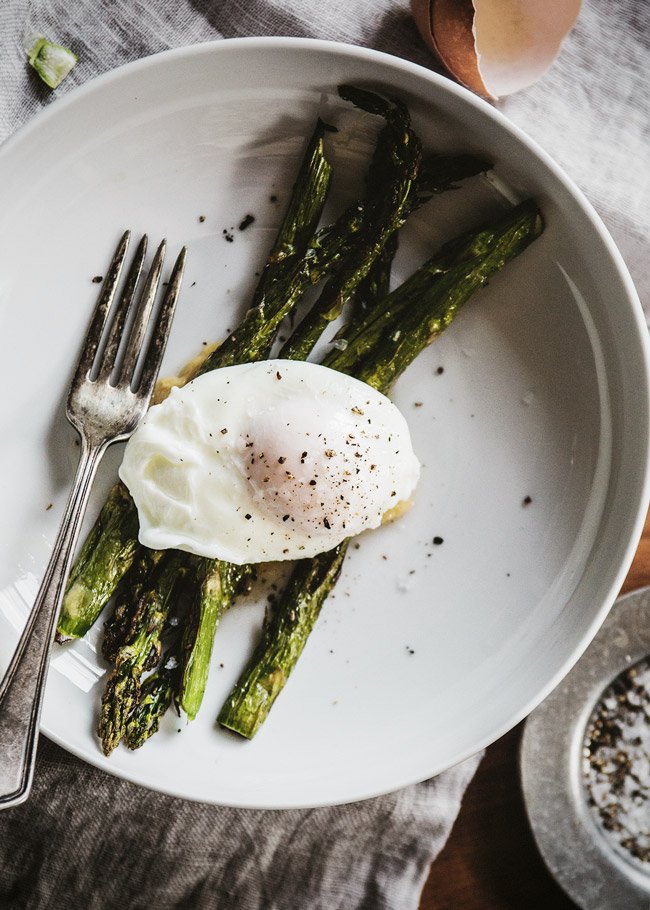
3. Miso butter. Misobuttermisobuttermisobuttermisobutter. MISO BUTTER! It’s a word to scream out from rooftops, songs should be written about it (sung by squeaky asparagus[es?]), trees and forearms should get it tattooed into their flesh, except I don’t like the thought of cutting into a tree with a sharp object.
Okay, fine, you want concreteness, I get it. In short: if any vegetarian ever complains about missing bacon, point them in the direction of this genius pairing. Miso butter is meaty and rich and lip-smackingly salty. It almost reminds me of MSG-laden Asian snack foods, which I realize isn’t exactly a positive description to most of you, but that’s because you only found out about it after it had gone on the blacklist. I grew up eating MSG like it was no big thing, just a magic seasoning that perked up most meals and made them more flavorful and delicious. Get it? Got it? Good.
For more miso butter ideas, check out Kristy’s ideas. I can’t wait for fresh corn season!
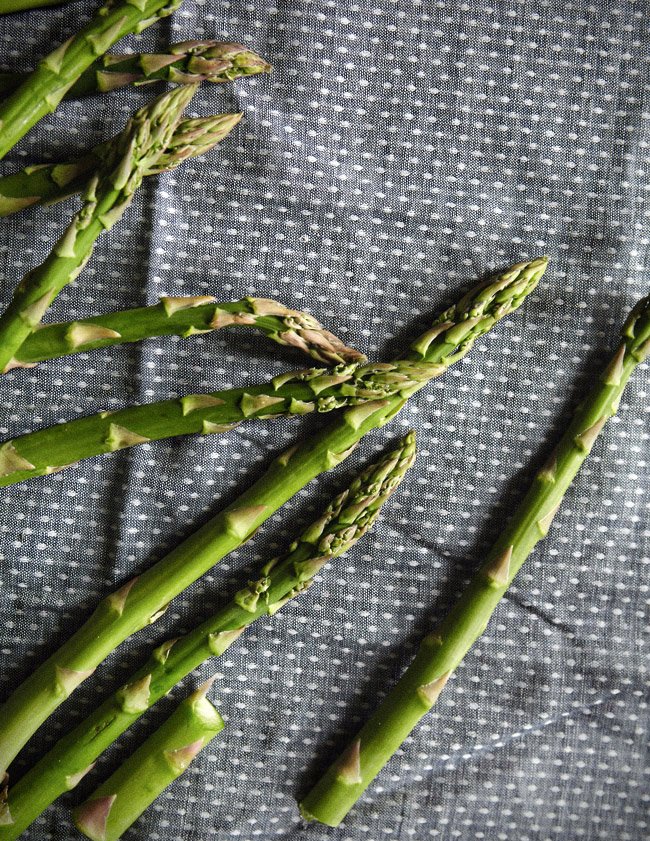
So there you have it: how I arrived at this dead-simple recipe, in three disjointed parts. Just to let you know, this last week so far has been kicking my butt. I’m going to blame it on the switch to Daylight Saving time, which I wouldn’t have even known about if the cashier ringing me up while I was buying the asparagus hadn’t mentioned it. (Instead, I would’ve entertained some indulgent fantasy about how I was under the weather, and spent half a morning hiding under the covers while drinking boatloads of coffee—someone pull me out from under my rock please?)
But things are looking up and up—like the mercury! Happy early spring!
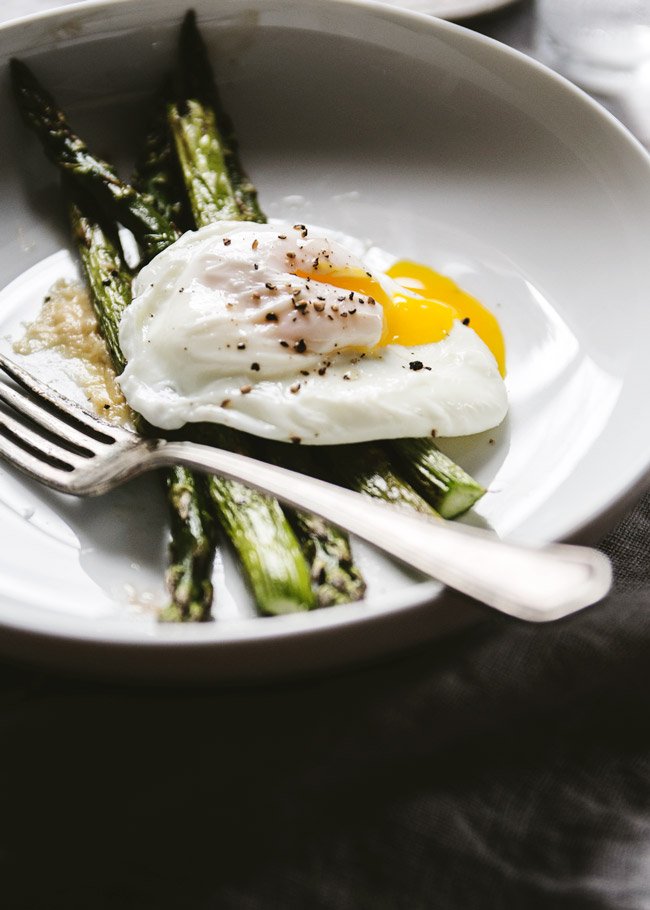
ROASTED ASPARAGUS WITH MISO BUTTER AND A POACHED EGG
Adapted from Momofuku by David Chang
I wouldn’t call this recipe a recipe so much as a jumping off point. The miso butter’s the real novelty here, and I’d hate to give an exact quantity that you have to make as you can totally make a batch, store it in the fridge, and use it up gradually with anything and everything. I started off with half a cup (8 Tbsp) of butter and 1/4 cup (4 Tbsp) of miso paste.
Also, miso paste varies in saltiness but is usually quite salty, so a little miso butter goes a long way. Make sure to use unsalted butter!
Ingredients:
- 2 parts unsalted butter, room temperature
- 1 part white miso paste
- Asparagus
- Eggs, poached
Directions:
Whisk the butter and miso paste together until well combined.
For a plate of roasted asparagus with miso butter and a poached egg:
Roast a handful of asparagus per person (6 to 10 spears maybe?) at 475 degrees F for around 10 minutes (don’t forget the light coat of olive oil, salt and pepper).Meanwhile, toast some bread.
I know most of you have your poaching technique down, but if not, I’ve found that really fresh room temperature eggs poach the best. Also, I don’t ever add salt or vinegar to the water. Rather, I a) crack the egg into an espresso cup, b) after the water comes to a boil, I decrease the temperature to a simmer and use a chopstick to make a small vortex in the middle of the pot, c) quickly tip the egg out of the cup and into the middle of the pot. The spinning water molds the egg whites so they don’t go all over the place once they’ve hit the water. Keep the water at a simmer and remove the egg with a slotted spoon once the whites have set sort of firmly. I don’t think this ever takes longer than 2 to 3 minutes.
Finally, plating: set a pat of miso butter in the middle of a plate. Lay however many spears of asparagus you want to eat on top. Finally, lay the poached egg over the asparagus, sprinkle a little salt and pepper on it, and serve with the toasted bread. Enjoy!
Related Posts






Subscribe for New Racipies
Get mental health tips, updates, and resources delivered to your inbox.
Are Green Olives Acidic? The Truth About Olives and Acid Reflux


Green olives are loved for their briny tang and versatility, whether tossed in salads, served as snacks, or blended into tapenade. But if you suffer from acid reflux, you might hesitate before reaching for a handful, wondering if their acidity could set off symptoms.
Here’s the scoop: Green olives do have a mild acidic quality due to their fermentation process. However, they are far less acidic than many fruits or vinegar-based foods often associated with reflux. Plus, olives are packed with healthy fats and antioxidants, which promote good digestion and may even soothe inflammation in the esophagus.
For those with reflux, the key is moderation and preparation. Eating too many olives in one sitting or consuming them with heavily spiced or acidic dishes may cause discomfort. Instead, try adding a few olives to a salad with alkaline ingredients like cucumbers or leafy greens. Opt for low-sodium varieties, as excessive salt can sometimes worsen reflux symptoms.
Green olives can be enjoyed even with GERD when included thoughtfully as part of a balanced, reflux-friendly diet.
The Acidity of Green Olives: A Deep Dive
Are green olives acidic or alkaline?
Green olives are mildly acidic. Their acidity primarily comes from the fermentation and brining process, where lactic acid and other compounds develop to preserve and flavor the olives. On the pH scale, green olives generally range between 3.5 and 4.6, placing them on the acidic side.
However, green olives are far less acidic than citrus fruits, vinegar, or pickles, which are often culprits in triggering acid reflux. This makes them relatively milder on the stomach compared to many other preserved foods.
How olives affect acid reflux symptoms?
For acid reflux sufferers, understanding how certain foods affect their symptoms is crucial. While green olives are acidic, they don’t necessarily exacerbate reflux for everyone. Here’s why:
- Healthy Fats: Olives contain monounsaturated fats, which promote digestion and reduce inflammation in the digestive tract. Unlike fatty or fried foods, these fats do not relax the lower esophageal sphincter (LES), the muscle that prevents stomach acid from backing up into the esophagus.
- Antioxidants: Green olives are rich in antioxidants like vitamin E and polyphenols. These compounds combat oxidative stress, which can contribute to inflammation in the esophagus and stomach lining.
- Salt and Acid Combination: The brine used in curing olives may contain high sodium levels, which can be irritating for some reflux sufferers. Excess salt can increase water retention and pressure in the stomach, potentially worsening GERD symptoms.
Ultimately, whether green olives trigger reflux depends on individual tolerance and portion size.
Can GERD Patients Safely Eat Green Olives?
Research suggests that green olives can be included in a GERD-friendly diet, provided certain precautions are taken.
How to Safely Enjoy Green Olives with GERD
- Portion Control: Stick to a handful (4–5 olives) per serving to avoid overwhelming your stomach. Overeating can increase pressure on the LES and trigger reflux.
- Low-Sodium Options: Choose low-sodium olives or rinse regular olives to reduce their salt content.
- Combine with Alkaline Foods: Pair olives with alkaline vegetables like cucumbers, leafy greens, or bell peppers to balance their acidity.
- Avoid Spicy or Acidic Pairings: Skip combining olives with acidic dressings, tomatoes, or hot spices, which can irritate the stomach lining.
By consuming green olives mindfully, GERD patients can enjoy their unique flavor without risking flare-ups.
The pros and cons of green olives for digestion
Pros
- Promote Healthy Digestion: Green olives contain dietary fiber, which supports regular bowel movements and prevents bloating.
- Anti-Inflammatory Properties: The antioxidants in olives reduce inflammation, a key factor in managing GERD symptoms.
- Rich in Nutrients: Green olives provide vitamin E, iron, and copper, all essential for overall health.
Cons
- High Sodium Content: The salt in brined olives can irritate reflux-prone individuals if consumed in large amounts.
- Acidic Nature: While mild, the natural acidity of olives may trigger symptoms for highly sensitive individuals.
Balancing these pros and cons is key to determining whether green olives work for you.
Are black olives better or worse for acid reflux?
Black olives, like their green counterparts, are acidic but less tangy due to their riper state at harvest. They are also typically cured differently, with some black olives containing lower sodium levels.
Black vs. Green Olives for GERD
- Black Olives: Lower in acidity and sometimes salt, making them a slightly gentler choice for sensitive stomachs.
- Green Olives: Higher in acidity but also richer in certain antioxidants.
Both can be enjoyed in moderation, but black olives may be a better option if you are particularly sensitive to acidic foods.
Olives vs. Other Pickled Foods: What to Avoid
Comparing green olives, pickles, and other acidic snacks
Green olives fall somewhere in the middle of the acidity spectrum when compared to other pickled or fermented foods.
- Pickles: Often soaked in vinegar, making them highly acidic and more likely to trigger reflux.
- Capers: Similar to olives but saltier and more acidic due to heavy brining.
- Sauerkraut: High in lactic acid, which can aggravate acid reflux.
Are pickles bad for acid reflux?
Yes, pickles are generally worse for acid reflux than green olives due to their higher acidity and vinegar content. GERD sufferers should limit pickles or choose naturally fermented varieties with less vinegar.
Creative Ways to Enjoy Olives Without Heartburn
Green olives can add flavor to your meals without triggering reflux when used thoughtfully.
GERD-Friendly recipes with green olives
- Mediterranean Salad: Toss green olives with cucumbers, spinach, and a light olive oil dressing.
- Olive Tapenade: Blend green olives with basil, garlic (if tolerated), and olive oil for a GERD-friendly spread.
- Roasted Vegetables with Olives: Add chopped green olives to roasted zucchini, bell peppers, and carrots for a savory dish.
Tips for balancing olives in your diet
- Pair olives with alkaline ingredients to counteract their acidity.
- Use olives as a garnish or flavor enhancer, rather than a main ingredient.
- Enjoy olives during daytime meals to allow your stomach more time to digest before bedtime.
FAQs
What are the best vegetables for acid reflux?
Leafy greens (spinach, kale), cucumbers, zucchini, and carrots are excellent options. These are alkaline and easy on the stomach, helping neutralize acid.
Are green olives bad for acid reflux?
Not necessarily. Green olives are mildly acidic, but can be safe when eaten in moderation and paired with alkaline foods.
Can I eat olives with GERD?
Yes, but choose low-sodium varieties, avoid overeating, and combine them with reflux-friendly ingredients to minimize discomfort.
Conclusion
Green olives, while mildly acidic, can be part of a GERD-friendly diet when consumed thoughtfully. Their healthy fats, antioxidants, and low-calorie profile make them a nutritious addition to meals, especially when paired with alkaline ingredients. By choosing low-sodium varieties, controlling portions, and avoiding overly acidic accompaniments, you can enjoy green olives without triggering acid reflux.
Ultimately, the key is moderation and mindful eating. Experiment with different olive varieties and preparation methods to find what works best for you!
Related Posts






Subscribe for New Racipies
Get mental health tips, updates, and resources delivered to your inbox.