
Korean Fried Chicken

Medically reviewed by Christiana George Updated Date: January 2, 2026
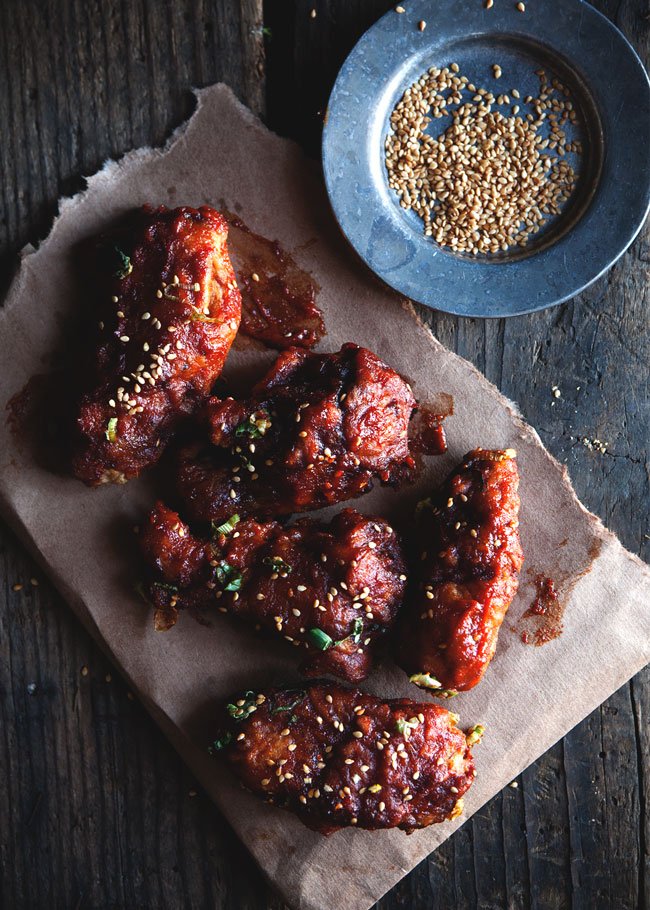
I have had the most incredible hankering for Korean food recently. I can’t explain it, except that this current weather makes me want to cuddle up with a bowl of soondubu and freshly cooked rice, made in a stone pot of course. I also just recently discovered Maangchi, who is just about the cutest woman alive other than my mom. They remind me an awful lot of each other actually.
Maangchi doesn’t do anything in half measures, meaning everything she cooks is in huge quantities. She whips out 10 pounds of kimchi at a time, fries huge basins of japchae. I can’t imagine the number of people she cooks for, but in the case of the recipe I’m sharing today, she deep-fried three pounds of chicken wings. For Chris and me, two to three wings/drumettes each, so maybe half a pound of chicken total, is sufficient. Although maybe we’re just light eaters. It’s hard to say.
But hold it! I’m misleading you, aren’t I? I actually didn’t end up following Maangchi’s recipe. It was pretty good, but I found that I preferred Saveur’s version better. The two taste totally different; I just found her version to be a bit cloying. (Also, I don’t understand why corn syrup seems to end up in a lot of Korean dishes—is it a common ingredient? And why?)

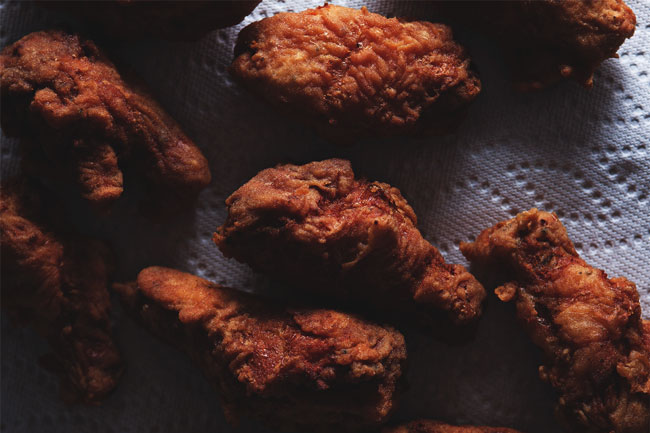
What the two versions have in common—and what makes Korean fried chicken so dang addictive—is that the chicken is fried twice. This results in a Seriously Crispy Crust. It’s the difference between a weak handshake and a firm one, sallow and sturdy. A robust crust, if you will. I think it’s dead simple and pretty genius. (The only downside is that you have to withstand being barraged by oil twice as long. Actually, come to think of it, that’s a pretty big downside. Deep-frying is freaky. Make sure you wear long sleeves. And gloves. And clear everything away around the perimeter of the pot because it’s going to get dirty.) And then you smother it in a hot-garlicky-mouth-puckering sauce and away you go!
(On an unrelated note, if you follow me on Instagram, you might know that I was in California last week, where I got to meet the newest generation of the Anderson clan, aka Chris’s brother’s four-and-a-half month old son and our nephew! I get a little giddy calling him this, because it didn’t really occur to me that he WAS related to me until Chris’s sister-in-law [which makes her my sister-in-law?] called me Aunt Linda. Aunt Linda! That’s so exciting! And now that I’ve seen him and fallen in love, I want to buy him things like this onesie. What do you think? Isn’t it adorable?? [Now my mom thinks I want to start popping them out. Ha. Ha ha ha. Sorry Mom. You’ll have to give me time.])

KOREAN FRIED CHICKEN (aka KFC)
From Saveur
Makes 16 pieces
Ingredients:
- 5 cloves garlic, chopped
- 1 (1.5″) piece peeled ginger, chopped
- 3 Tbsp soy sauce
- 3 Tbsp gochujang
- 1.5 Tbsp rice vinegar
- 1 Tbsp Asian sesame oil
- 1 Tbsp honey
- 2/3 cup flour
- 1 Tbsp cornstarch
- 2/3 cup water
- 16 chicken wingettes/drumettes (from 8 chicken wings)
- Canola oil, for frying
- Sesame seeds and chopped green onions for topping
Directions:
Make the sauce: process the garlic, ginger, soy sauce, gochujang, rice vinegar, sesame oil, and honey with a food processor/immesion blender until blended (or mince the garlic and ginger and whisk the ingredients together by hand).
For the chicken: in a bowl, whisk the flour, corn starch, and water. Add the chicken and toss. In a medium-sized heavy-bottomed pot, pour about 2 inches of oil. Clip a candy thermometer onto the side of the pot and heat the oil until it reaches a temperature of 350 degrees F. Add the chicken pieces gently, but don’t crowd the pot; you’ll have to work in two or three batches. Fry chicken until golden, about 6 to 8 minutes. Drain on paper towels. Reheat the oil to 350 degrees and fry chicken again until crisp and medium brown, 6 to 8 minutes. Drain.
In a large bowl, toss the chicken pieces with the sauce, top with sesame seeds and green onions if using, and serve. With lots of napkins.
Related Posts

Subscribe for New Racipies
Get mental health tips, updates, and resources delivered to your inbox.
Blood Orange Curd

I realized yesterday that our living room is just about about the size of the island in Chris’s aunt’s kitchen. Granted, her kitchen is super-sized, but that still tells you something, doesn’t it?
Currently, a huge piece of surface material is taking up about a quarter of the total space, smack in the middle of it all. It makes getting around the apartment challenging. You have to shimmy around it, but mind the wires!, because you might trip like I did this morning, knocking over a speaker that had been playing Lykke Li. (I don’t think it’s broken.)
Chris likes to joke that the entire apartment has become my studio, and he’s not kidding. Lining one wall are foamboards and reflectors and all kinds of surfaces. Lining the opposite wall are stacks of bowls, plates, jars, glassware, silverware, pots, pans, and other props. It’s a delicate situation.
The kitchen is no exception, both in the fact that it’s tiny (I’ve touched on this before), and that I treat it as an extension of my studio. Open any drawer and you’ll discover the tricks of my trade: a rolling pin balanced precariously atop a couple mortars, pestles off to the side, an entire drawerful of random shiny gizmo-gadgets: biscuit cutters, the candy thermometer, a milk frother. And watch out if you want to grab a baking sheet: you’ll have to dig through a mountain of metallica, maneuvering your hand through tiny crevices and odd corners.
Oh, the life of a food blogger.
The truth is, despite having all this stuff lying around, I still find myself gravitating towards simple recipes, today’s being no exception. I like using ingredients that are in season (well, I guess that’s true of many of us), and I like being able to really taste their essence.
Maybe that makes me lazy. Or maybe it makes me a faux-Alice Waters in training? I’ll let you decide.
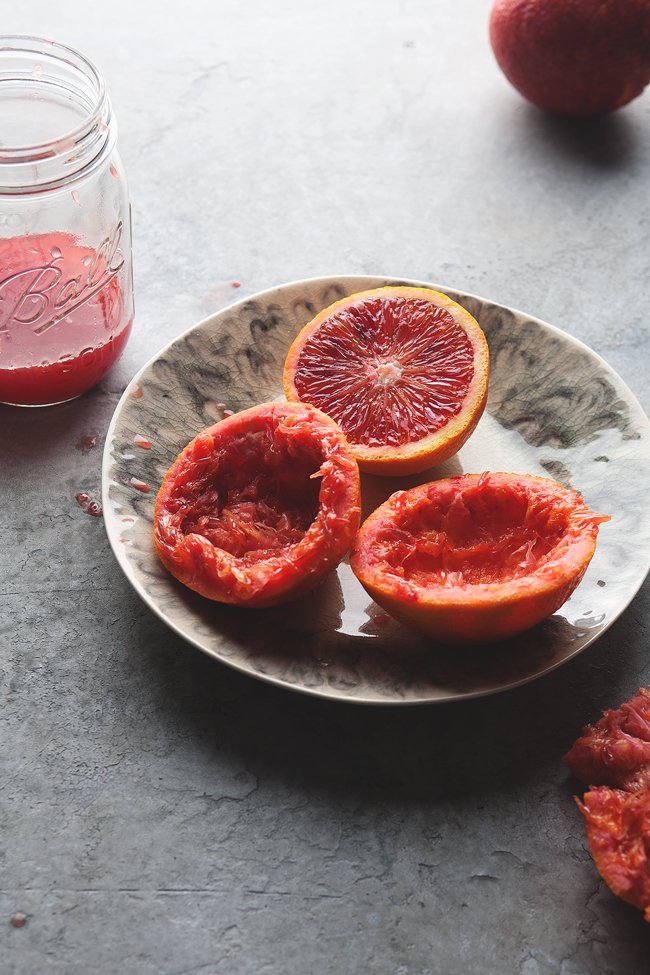
To tell you the truth, being newly open to baking with citruses and all, I had planned on preparing something a little more ambitious for today. In my head, I envisioned perfect mini tarts filled with silky caramel and topped with this blood orange curd, glistening of course. I really intended to stun you all away with my baking prowess.
But: a) and mostly importantly, I have no baking prowess, and b) there are bills to pay (also very important, come to think of it), so I let my intentions dwindle into this blood orange curd, which ended up being a real treat.

I’m with Kate on this one. The word ‘curd’ just doesn’t do it for me. It rhymes with ‘turd’ for one thing, and ugh, the tongue seems to linger on that ‘r,’ drawing it out so it sounds like you’re insulting someone.
Anyway, as you can see, the citrus obsession continues. (Amy! I’m filling your plate with more citrus!) Please don’t let its name detract from what it is, because that would be doing a great disservice to this recipe.
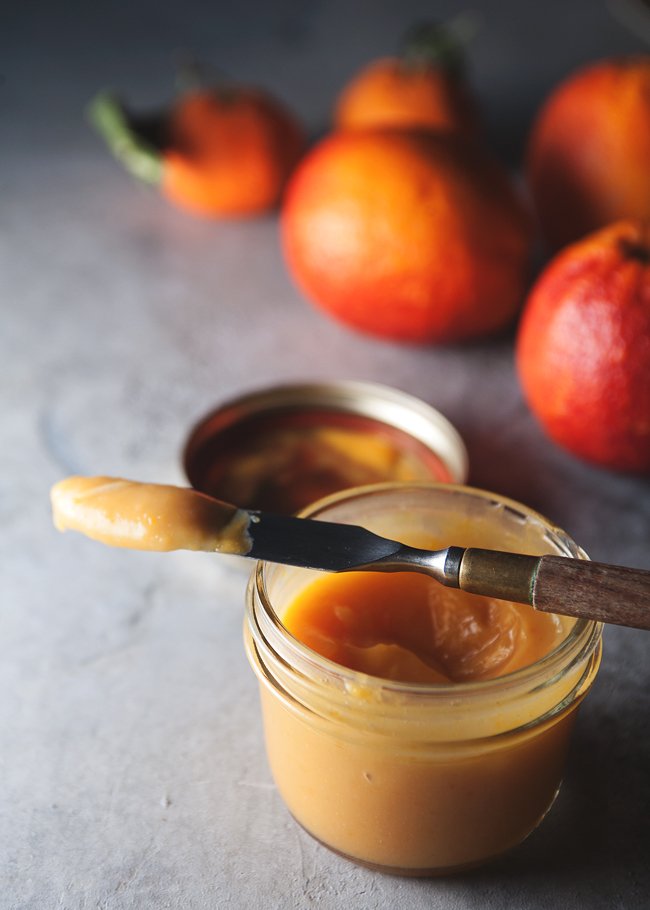
Though the butter and egg yolk have the effect of mellowing out the acidity of the orange, the citrus flavor really comes through. I like how blood oranges aren’t super sweet; it really helps keep the sweetness factor in check. And I like how the curd is creamy, like a buttery jam. It tastes really good on plain toast (in particular, it pairs really well with this poppy seed bread we have in the house).
I was surprised with how the color turned out, because the juice was such a vivid coral, but again, mellowing occurred and the pinkish-red turned into a pretty pastel orange. Don’t you love lovely-looking food?
Other ways in which to use your curd (ugh, that sounds so dirty):
These shortcakes via Bon Appétit
This chiffon cake via Eat the Love (gorgeous photos!)
These bars via White on Rice Couple (with a brown butter crust, yum)
In other words, you can pretty much do whatever you feel like with the stuff. So go, go and make your blood orange caramel tarts, see if I care!

BLOOD ORANGE CURD
Makes about 1 pint
Ingredients:
- 12 egg yolks
- 3/4 cup freshly-squeezed blood orange juice (from around 3 blood oranges)
- 1/4 cup lemon juice
- 1 cup sugar
- 1/2 cup butter (8 Tbsp), cut into Tbsp pieces
Directions:
Place the egg yolks, sugar, blood orange juice, and lemon juice in a medium saucepan and turn the heat on to low. Whisk constantly (or the yolks will curdle), for about 10 minutes. At this point, the curd should become really foamy, then thicken up. When it’s thick enough to coat the back of a spoon, run the ingredients through a sieve into a medium bowl. Immediately stir in the butter a little at a time until it all melts and becomes incorporated. Let cool and refrigerate.
Related Posts



Subscribe for New Racipies
Get mental health tips, updates, and resources delivered to your inbox.