
Pork Meatball Banh Mi, Or Just Do As I Say

Medically reviewed by Christiana George Updated Date: June 8, 2023

I’m very much a product of both my parents, which is hard to imagine because they’re pretty different from each other. My mom is one of those people who tells people what to do. I’m not sure she likes it so much as it’s imprinted into her genetic coding. And this is not limited to just family, or friends even. She will vocalize her opinion to everyone. On the other hand, my dad’s the reticent one. Even among his own family he’s quiet and earnest and not very expressive.
Sometimes I feel like these two sides are waging a war inside me. Should I intrude? Or should I not intrude? Should I let the French tourists sitting beside me, the ones I’ve been eavesdropping on for the last 10 minutes (I always eavesdrop), commit the terrible mistake of going to Little Italy where they believe good New York style pizza will be found? Mom won. I intruded.

All of that is to say, I’m debating just how forcefully I should tell/order you to make this recipe for pork meatball banh mi, or Vietnamese sandwiches.
I could make a few mild-mannered observations about how delightful the sandwiches turned out, with their flavorful, tender meatballs. And the spicy mayonnaise and quick-pickled carrots were quite tasty, all of it perfectly complemented by freshly sliced jalapeno and cilantro, and fresh French bread. These assertions are dad-like: humbly-put and modestly understated. And maybe they will be enough to convince you to make these.
But there’s the side of me that just wants to command you to make these sandwiches right now. NOW. Because they are that good, probably my favorite recipe yet (and there have been some unforgettable ones). Listen, just make them. DO IT. I’m telling you what to do, but I really don’t think you’ll bear any resentment towards me for being bossy. They are incredible!
(The danger of acting like my mom is that you’ll want to be all contrarian, the way I am when she becomes too naggy. Promise me you won’t. It’s for your own good.)

Looking through the list of ingredients, I think you can probably skip making the chili mayonnaise and just use regular mayonnaise (even though the chili is really tasty). And the original recipe actually called for both carrots and daikon, but I omitted the daikon and it was fine. The cilantro is crucial, however—I feel like it’s one of the underpinnings of the taste of banh mi.

Have a great week, y’all. And happy September!

PORK MEATBALL BANH MI (Vietnamese sandwiches)
Serves 4 (to 6—each sandwich is big)
Adapted from Bon Appétit
Ingredients:
For the chili mayonnaise:
1/2 cup mayonnaise
2 green onions, finely chopped
1+ Tbsp of hot chili sauce (sriracha works. I use sambal oelek.)
For the pickled carrots:
4 cups of carrots, julienned
1/4 cup rice vinegar
3 Tbsp sugar
1 tsp salt
For the meatballs:
1 lb. ground pork
1/4 cup fresh basil, finely chopped
4 cloves garlic, minced
4 scallions, finely chopped
1 Tbsp fish sauce
1 Tbsp hot chili sauce
1 Tbsp sugar
2 tsp corn starch
1 tsp salt
1 tsp freshly ground black pepper
1 Tbsp sesame oil
For the sandwich:
4 mini baguettes (about 10″ long each) or about 40″ of baguette (from 2 baguettes) cut into 4 (to 6) portions
Thinly sliced jalapeno slices
Large sprigs of cilantro
Directions:
For the chili mayonnaise:
Stir all ingredients in small bowl. Season with salt. Cover and chill.
For the pickled carrots:
Toss the ingredients in a medium bowl. Let stand at room temperature for about an hour, tossing occasionally.
For the meatballs:
Gently mix all the ingredients except the sesame oil together. Then shape them into balls of about 1 Tbsp each (I made about 30). Heat the sesame oil in a large skillet on medium-high heat. Add the meatballs in without crowding them (you may have to cook the meatballs in separate batches). Saute them until they are brown and cooked through, 10 to 15 minutes.
To assemble the sandwiches:
Cut the baguettes in half lengthwise. Pull out bread from the center so that each side is about 1/2″ thick. On one half, slather on the mayo, followed by slices of jalapeno followed by the pickled carrots followed by the cilantro followed by the meatballs (eyeballing an equal amount for each portion). Press on the other half of the baguette, cut the baguettes in half if necessary, and serve! I personally found one half plenty filling, which is why I think this recipe can serve up to 6.
Related Posts





Subscribe for New Racipies
Get mental health tips, updates, and resources delivered to your inbox.
Is kiwi Acidic? Is it good for You?

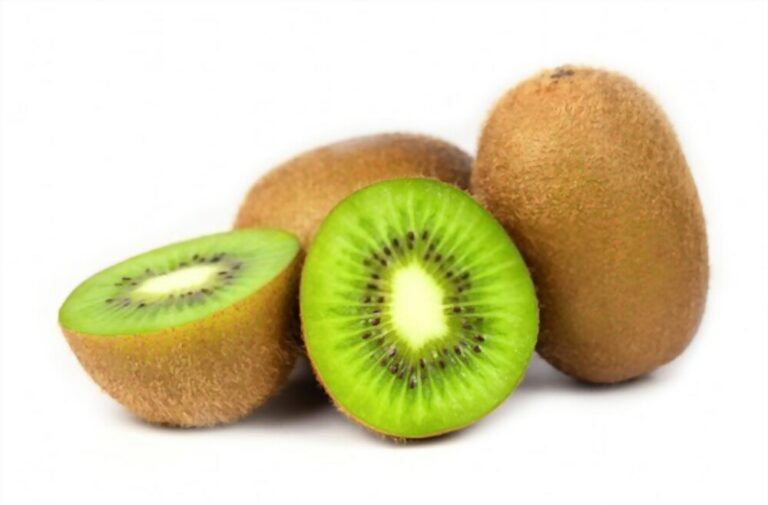
Kiwi fruit has a mesmerizing tangy taste with a unique and attractive appearance. It has furry brownish-green skin and an oval shape. Kiwi smoothies and kiwi in salads are very popular throughout the world.
However, a question often comes to mind while eating this tasty fruit: is kiwi acidic?
The short answer is yes, kiwi is acidic. All types of kiwi have a pH under 4, mostly in the range of 3.1 to 3.96. Anything with a pH less than 7 is acidic, and things with a pH less than 4 is moderately to highly acidic. Kiwis contain quinic, citric, and malic acids, which are responsible for the fruit’s level of acidity. Because of the acidity of this fruit, it may not be the best choice for people suffering from acid reflux.
In this article, let’s discuss some interesting facts about Kiwi fruit.
Kiwi Fruit – Acidic, Alkaline, or Neutral?
The categorization of compounds as acidic, alkaline, or neutral depends entirely on the pH of the compound. Anything with a pH less than 7.0 is acidic, and the lower the pH, the more acidic it is. Anything with a pH higher than 7.0 is alkaline, and the higher the pH, the more alkaline the compound is.
Acidic foods are acidic because of the individual compounds they contain. In the case of kiwis, they contain acids including citric acid, quinic acid, and maleic acid.
Malic acid comprises about 10% of the acids in kiwi, and the remainder is split fairly evenly between citric acid (40 to 60%) and quinic acid (40 to 60%).
pH of Kiwi
Not all kiwi have exactly the same pH. The pH of a kiwi varies by the variety of kiwi, and also how ripe the fruit is. pH values of kiwi ranges from 3.1 to 3.9. Let’s look at these values in more detail.
| Name | pH range |
| Green Kiwi Fruit | 3.1 to 3.4 |
| Golden Kiwi | 3.7 |
| Kiwi Berries | 3.1 to 3.9 |
| Hardy Kiwi | 3 |
| Red kiwi | 3.1 to 3.9 |
Are kiwis good for you? (5 Reasons You Should Eat Kiwis)
In short, yes! Kiwi is good for you. It is an essential source of vitamins and minerals. Several of the reasons that we should eat kiwi are that it can increase heart health, digestive health, and even the body’s immunity against diseases. So let’s take a brief look at the five most attractive benefits.
#1 Assist in Weight loss
Kiwi contains high levels of dietary fiber and is fairly low in calories. Therefore, it is an ideal fruit for people on a diet. Eating a reasonable proportion of kiwi daily can be very helpful in their weight loss journey.
#2 Blood Pressure Control
Kiwi is a very beneficial fruit for people with high blood pressure. One study showed that people who ate kiwis demonstrated a reduction in their blood pressure. So, patients known to have high blood pressure can drink kiwis smoothies or eat kiwi in salads as a way to help control their blood pressure. An added benefit is that kiwi has a fairly high water content, which makes it a hydrating food.
#3 Increase immunity
Kiwi is a fantastic source of vitamin C. Vitamin C is essential to strengthening the body’s immunity system, and its ability to fight various diseases. The immune system is important to fighting off viral, bacterial, and fungal infections. People who would like to strengthen their immune system should consider adding kiwi as an excellent source of vitamin C.
#4 Healthy skin
As we said above, kiwi is an excellent source of vitamin C. Kiwi also contains antioxidants. Both of these types of compounds are known to be good for the skin. Eating kiwi is one way to achieve healthy glowing skin. In addition to eating kiwi, kiwi is in some cosmetics and skin products. It is thought to have moisturizing and rejuvenating properties, which are characteristics many people are fond of.
#5 Prevention of constipation
Constipation can be a really uncomfortable condition. But, you can avoid it. How? Kiwi smoothies and raw kiwi can prevent constipation. Kiwi is a rich source of dietary fiber and water, which are two of the most important elements in treating constipation. So, kiwi is a great choice for people suffering from constipation.

| Nutrient | Concentration in 1 Kiwi (69g) |
| Dietary Fiber | 2.1 gram |
| Vitamin C | 64 mg |
| Carbohydrates | 10.1 gram |
| Energy | 42 calories |
| Calcium | 23.5 mg |
| Vitamin E | 1.0 mg |
| Potassium | 215 mg |
Does kiwi affect acid reflux?
People who have acid reflux should avoid Kiwi; you may wonder why. The reason behind this is that Kiwi is an acidic fruit. Kiwi can increase acidity in the stomach of acid reflux patients.
The elevated amount of acid can cause a burning sensation, vomiting, and irritation of the esophagus. According to healthcare professionals, Kiwi does affect acid reflux.
Sometimes, patients who eat Kiwi with acid reflux complain about gassy bloating in the stomach, a bitter taste, and irritation in the lining of their esophagus. It is due to the backward movement of acid from the stomach to your mouth.
Anything you eat can have either a positive or negative effect on your body. It is important to make choices that have the most positive effect on your body. For those with reflux, kiwi may not be the best choice.
Is yellow kiwi fruit acidic?
Yes, yellow kiwi fruit is acidic. However, it is somewhat less acidic than green kiwi. Yellow kiwi is sweet, and not as tangy as green kiwi, which has a more tangy taste.
Research has shown that yellow kiwi has a pH of 3.7, which means that yellow kiwi is also an acidic fruit. Therefore, you can get the nutritional benefits of kiwi from a slightly less acidic fruit by eating yellow kiwi instead of green ones.
Is golden kiwi acidic?
Yes, golden kiwi is also an acidic fruit. According to some people, their taste is intermediate between the taste of mangoes and strawberries. But don’t be fooled by their sweet taste. It doesn’t mean that golden kiwi is not acidic. Like green kiwi fruit, gold kiwi also contains citric acid, quinic acid, and malic acid, and is definitely acidic.
Are kiwi berries acidic?
Kiwi berries are also acidic, like kiwi fruit. They’re juicy with a sweet and tangy taste. In appearance, kiwi berries look like miniature kiwi fruits. Like kiwi fruit, they have a high citric acid content, which means they are acidic as well. They are used as a snack around the world. They are quite popular because they are low in calories but high in nutrition.
FAQs
Is kiwi acidic food?
Kiwi fruit is acidic food. It contains a high concentration of citric acid, malic acid, quinic acid, and folic acid. It is about as acidic as an orange, but less acidic than lemons and limes. Due to its acidic nature, it has specific effects on the human body. It can increase acidity in the stomach, which results in exacerbating symptoms of acid reflux.
Does Kiwi have lots of acids?
Yes, kiwis do have lots of acids. As a breakdown of the acid content, about 40 to 60 percent is citric acid, nearly 40 to 60 percent is quinic acid, and the remaining 10 percent or so is malic acid. The presence of these acids indicates kiwis are acidic. Their pH range is around 3.
Which fruit is most alkaline?
Watermelon is one of the most alkaline fruits. Most fruit is at least somewhat acidic, but watermelon is very close to neutral. In addition to this, coconut, bananas, and papayas are close to neutral.
Can you eat kiwi fruit with acid reflux?
You cannot eat kiwi fruit with acidic reflux because kiwi is a fairly acidic fruit. Therefore, if a person with acidic reflux consumes kiwis, he or she is likely to face the bitter consequences of it. In addition, the burning sensation in the esophagus, commonly known as heartburn, may increase.
What are the disadvantages of kiwi fruit?
Kiwi fruit has certain disadvantages. It can cause hives in people. It can cause severe allergic reactions to those who are allergic to fruits. Although Kiwi is healthy fruits, they have many adverse effects as well on the body.
Bottom Line
To conclude, Kiwi is a beneficial fruit for our health with a unique sweet and tangy taste. The main point of the above discussion is the question, “are kiwis acidic?” And to answer this, yes, kiwis are acidic, and for this reason, patients with acidic reflux should avoid eating them. It can increase their acidic reflux and bring discomfort to them. It should now be clear that kiwi does affect acidic reflux. A healthy person, without any symptoms of GERD, can add kiwi to his balanced diet, and enjoy the health benefits of doing so.
Related Posts

Subscribe for New Racipies
Get mental health tips, updates, and resources delivered to your inbox.