
Brioche Hamburger Buns, Or Let’s Get That Grill Fired Up

Medically reviewed by Christiana George Updated Date: June 8, 2023

I don’t know about you, but I’ve always viewed hamburger buns as purely functional things. They’re receptacles, carb-wrappers, so you don’t get your hands dirty while eating the truly desirable bits within. Cheese, for instance, and grilled onions, and sauteed mushrooms. Oh right, and the patty too.
Buns are integral to the entire structure of the burger, yet they’ve done little to niggle my desire, warrant my enthusiasm, or raise lustful thoughts (and shouldn’t they? Given their namesake and all). Until now, that is.
These buns—blogged about by Deb and later Sara—are dreamy: as in, they bake like a dream, come together in a cinch, and their ingredients can be found in most anyone’s pantry. They’re also versatile: I chose all-purpose, whole wheat, and rye flour to go in mine, and they came out hearty but light, soft but complex. But most importantly, they raise the hamburger bun to a higher echelon, one that will no longer be left until the end as an afterthought. And is there anything worse than forcing yourself to eat afterthoughts?
You’ll be ready to fire up your grill after making these.
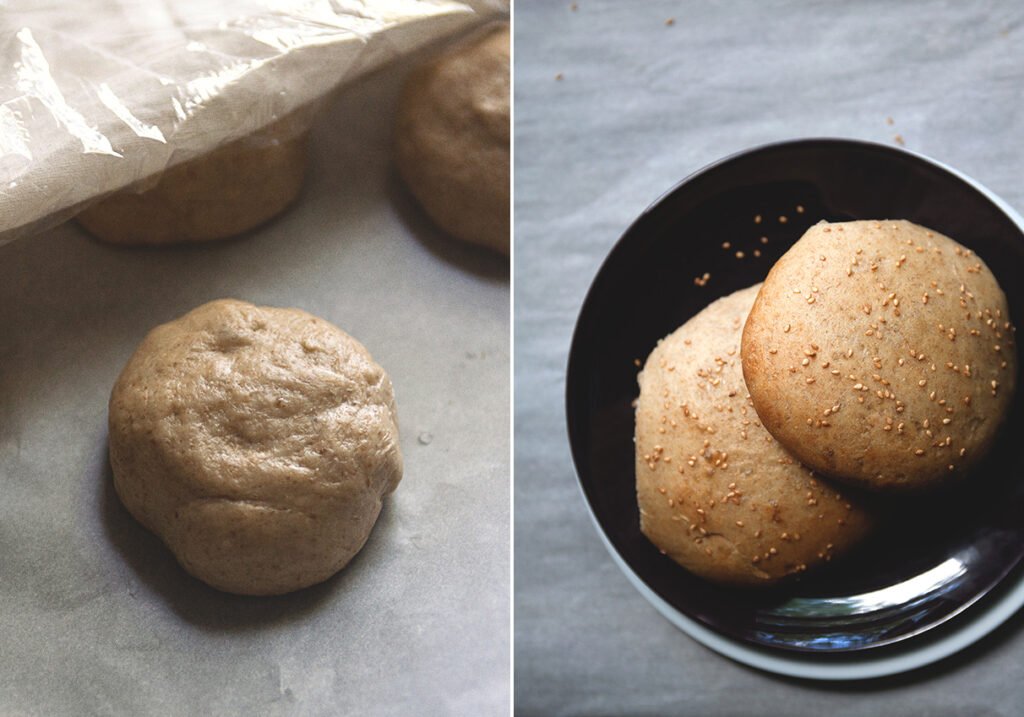
BRIOCHE HAMBURGER BUNS
Adapted from Smitten Kitchen and Sprouted Kitchen
Makes 8 regular-sized buns
Ingredients:
3 Tbsp warm milk
2 tsp active dry yeast
2-1/2 Tbsp sugar
2 large eggs
1/2 cup whole wheat flour
1/2 cup rye flour
2-1/3 cups all-purpose flour
1-1/2 tsp salt
2-1/2 Tbsp unsalted butter, softened
sesame seeds (if desired)
Directions:
In a glass measuring cup, combine one cup warm water, milk, yeast and sugar. Let stand until foamy, about five minutes. Meanwhile, beat one egg.
In a large bowl, whisk the flours with the salt. Add the butter by rubbing it into the flour between your fingers, making crumbs. Stir in the yeast mixture and beaten egg until a dough forms. Scrape onto a clean, well-floured counter and knead (by scooping it, slapping it onto the counter, and turning) until smooth and elastic (8 to 10 minutes). It should be sticky, so try not to knead in too much flour.
Shape the dough into a ball and return it to the bowl. Cover it with plastic wrap and let it rise until doubled (1 to 2 hours).
Line a baking sheet with parchment paper. Divide the dough into 8 equal balls. Gently roll each ball and arrange them 2 to 3 inches apart. Cover the baking sheet loosely and let the dough rise until doubled (1 to 2 hours).
Set a shallow pan with water in it on your oven floor or lower rack. Preheat the oven to 400 degrees Fahrenheit. Beat the other egg with 1 Tbsp of water and brush the egg wash onto the buns. Sprinkle sesame seeds on top, if using. Put the baking sheet in the oven and bake for about 15 minutes (turning halfway through), until the buns are golden-brown. Transfer to a rack and cool.
Note: I kept them in the fridge for about a week after I baked them and they still tasted good. Just heat them up on the grill or toast them right before eating.
Related Posts





Subscribe for New Racipies
Get mental health tips, updates, and resources delivered to your inbox.
Is Cottage Cheese Good for GERD? A Guide for Heartburn Relief


Cottage cheese is a versatile and nutritious dairy product loved for its creamy texture and high protein content. It’s often included in weight-loss diets, meal prep plans, and quick snacks. However, for individuals with GERD (gastroesophageal reflux disease) or frequent acid reflux, questions often arise about whether cottage cheese is a safe choice.
In this article, we’ll explore the connection between cottage cheese and GERD, its potential benefits and risks, and how to include it in your diet without triggering symptoms. Additionally, we’ll provide practical tips for making reflux-friendly choices when it comes to this popular dairy product.
What is GERD, and How Do Foods Impact It?
GERD is a chronic digestive condition where stomach acid flows back into the esophagus, causing symptoms such as heartburn, regurgitation, chest discomfort, and bloating.
Certain foods can worsen GERD symptoms by:
- Relaxing the lower esophageal sphincter (LES), the muscle that prevents acid from rising into the esophagus.
- Increasing stomach acid production.
- Triggering bloating, which adds pressure to the stomach.
Understanding whether cottage cheese fits into a GERD-friendly diet requires looking at its acidity, fat content, and individual tolerability.
Is Cottage Cheese Acidic?
Cottage cheese is mildly acidic, with a pH range between 4.7 and 5.4. This acidity level is relatively low compared to other dairy products, such as yogurt, but still falls within the acidic range.
However, the acidity of cottage cheese is not the sole factor determining its effect on GERD. Other elements, such as fat content and portion size, play significant roles in its impact on acid reflux symptoms.
Can Cottage Cheese Trigger GERD Symptoms?
Cottage cheese can either alleviate or worsen GERD symptoms, depending on how it’s consumed. Let’s examine its potential effects:
1. High-Fat Cottage Cheese and GERD
Full-fat cottage cheese contains more fat, which can relax the LES and increase the likelihood of acid reflux. For GERD sufferers, high-fat foods are a known trigger.
2. Low-Fat or Non-Fat Cottage Cheese
Low-fat or non-fat cottage cheese is less likely to trigger GERD symptoms because it has a reduced fat content. It provides a lighter option for those sensitive to high-fat foods.
3. Lactose Sensitivity
Some individuals with GERD also have lactose intolerance, which can lead to bloating and stomach discomfort when consuming dairy products like cottage cheese. This may indirectly worsen GERD symptoms.
4. Portion Size Matters
Eating large quantities of cottage cheese in one sitting can overfill the stomach, increasing the risk of acid reflux.
Why Cottage Cheese May Be Good for GERD?
For many GERD sufferers, cottage cheese can be a safe and even beneficial food choice when consumed in moderation. Here’s why:
1. High in Protein
Cottage cheese is an excellent source of protein, which helps keep you full and satisfied without causing a rapid increase in stomach acid.
2. Low in Spices and Additives
Plain cottage cheese is a simple food that doesn’t contain reflux triggers like spicy seasonings or acidic preservatives, making it a neutral choice for sensitive stomachs.
3. Calcium and Magnesium Content
The calcium and magnesium in cottage cheese can promote muscle health, including the proper functioning of the LES.
4. Easy to Digest
Cottage cheese is softer and easier to digest compared to other types of cheese, reducing the risk of bloating or irritation.
Tips for Including Cottage Cheese in a GERD-Friendly Diet
To enjoy cottage cheese without triggering GERD symptoms, follow these practical tips:
1. Choose Low-Fat or Non-Fat Options
Opt for low-fat or non-fat cottage cheese to reduce the risk of LES relaxation and acid reflux.
2. Pair with Alkaline Foods
Combine cottage cheese with non-acidic, reflux-friendly foods like:
These foods help balance the acidity of cottage cheese and create a more neutral meal.
3. Avoid Acidic Add-Ins
Refrain from mixing cottage cheese with acidic ingredients like tomatoes, vinegar, or citrus fruits, as these can aggravate reflux symptoms.
4. Eat Small Portions
Stick to moderate servings of cottage cheese—about 1/2 to 1 cup—to avoid overloading the stomach.
5. Monitor Your Body’s Reaction
Everyone’s tolerance to foods differs. Start with a small amount of cottage cheese and observe how your body reacts before increasing your intake.
Reflux-Friendly Cottage Cheese Recipe
Here’s a quick, GERD-friendly recipe to try:
Cottage Cheese and Banana Bowl
Ingredients:
- 1/2 cup low-fat cottage cheese
- 1 medium banana, sliced
- 1 teaspoon honey (optional)
- A sprinkle of cinnamon (optional)
Instructions:
- Scoop the cottage cheese into a bowl.
- Top with banana slices.
- Drizzle with honey and sprinkle with cinnamon, if desired.
- Enjoy as a light and satisfying snack or breakfast.
This dish combines the mild flavor of cottage cheese with the alkalinity of bananas, making it a soothing option for those with GERD.
FAQs About Cottage Cheese and GERD
1. Is cottage cheese good for GERD?
Low-fat or non-fat cottage cheese can be a GERD-friendly food due to its high protein content and mild flavor. However, full-fat versions may trigger symptoms in some individuals.
2. Can cottage cheese cause acid reflux?
Cottage cheese may cause acid reflux if it’s high in fat, consumed in large portions, or paired with acidic or spicy ingredients.
3. What’s the best type of cottage cheese for acid reflux?
Non-fat or low-fat plain cottage cheese is the best option for those with acid reflux, as it’s less likely to relax the LES or increase stomach acid.
4. How much cottage cheese is safe to eat with GERD?
A moderate serving of 1/2 to 1 cup of low-fat cottage cheese is typically safe for individuals with GERD.
5. Are there any alternatives to cottage cheese for GERD sufferers?
If cottage cheese doesn’t work for you, try other reflux-friendly protein sources like plain Greek yogurt (low-fat), tofu, or scrambled egg whites.
Conclusion
Cottage cheese can be a healthy and GERD-friendly food when consumed mindfully. Its high protein content, mild acidity, and versatility make it a suitable choice for many individuals with acid reflux. However, it’s important to choose low-fat or non-fat varieties, avoid acidic pairings, and eat in moderation.
By incorporating cottage cheese into a balanced, reflux-friendly diet, you can enjoy its nutritional benefits without discomfort. If you’re unsure how your body reacts to it, start with a small serving and monitor your symptoms. For more tips on managing GERD through diet, explore our other articles and recipes for heartburn relief!
Related Posts






Subscribe for New Racipies
Get mental health tips, updates, and resources delivered to your inbox.