
Crepes

Medically reviewed by Christiana George Updated Date: December 17, 2022


Growing up in a household with Canadian parents, crepes were pretty much a staple. My mom made them for us all the time. I remember coming in from playing out in the snow with my brothers and my mom would make us crepes and hot chocolate. Mmmm. My mom’s recipe was flour, eggs, and milk. I tried to get the combo right, but my crepes never came out as good as hers. They were always too thick, not light and fluffy. That is until I found the recipe that works for me. I found it in one of the flyers the grocery gives out. Simple ingredients, great taste.
Crepes
adapted from Big Y
1 1/4 cups milk
1 cup all purpose flour
1 egg
1 tsp vegetable oil
1/4 tsp baking powder
2 tsps pure vanilla extract
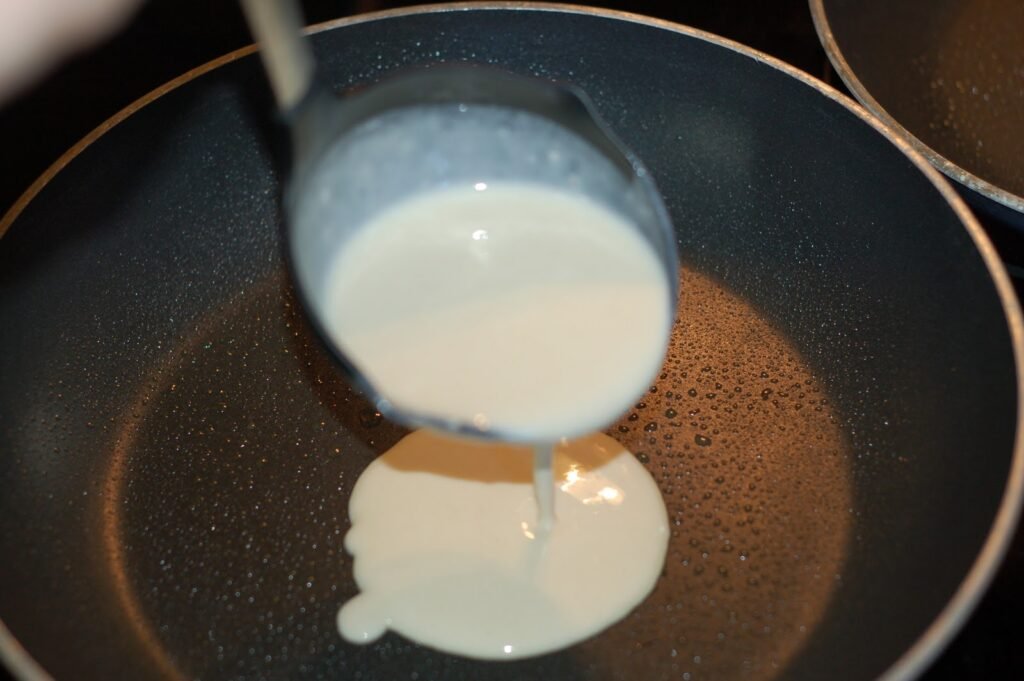
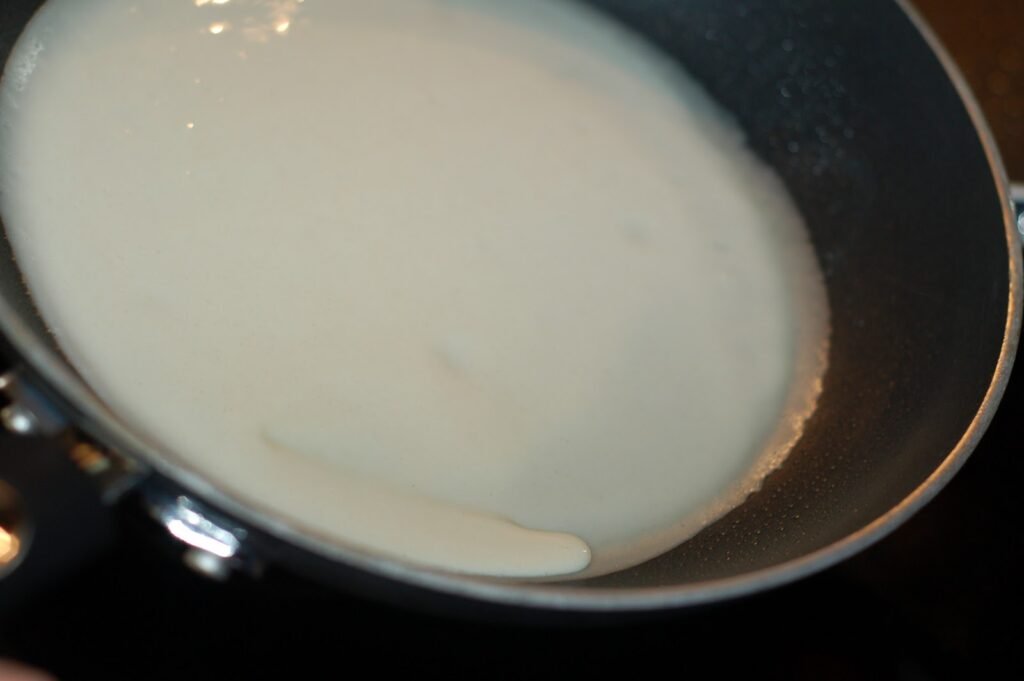
In a blender or with hand mixer, combine all ingredients. Blend until smooth. Heat a nonstick skillet with flared sides over medium-high heat. Remove from heat. Pour 1/4 cup batter into skillet; lift and tilt the skillet to spread batter evenly across bottom of skillet. Return to heat. Cook about 1 minute or until light brown. Flip crepe with a spatula and cook the other side for about 30 seconds. Cool crepe on paper towels. Repeat with remaining batter. Makes about 12 crepes.
I love crepes they are so versatile. We usually eat them for breakfast with pure maple syrup (no Aunt Jemina stuff). My husband is Argentinian so he grew up eating them with dulce de leche. They are also great with Nutella and bananas or just plain fruit. I have even used them for dinner in place of pasta when making manicotti. Oh the taste is incredible. So much better than pasta. I just leave out the vanilla extract.
Related Posts





Subscribe for New Racipies
Get mental health tips, updates, and resources delivered to your inbox.
Pumpkin Spice Oreo Truffles

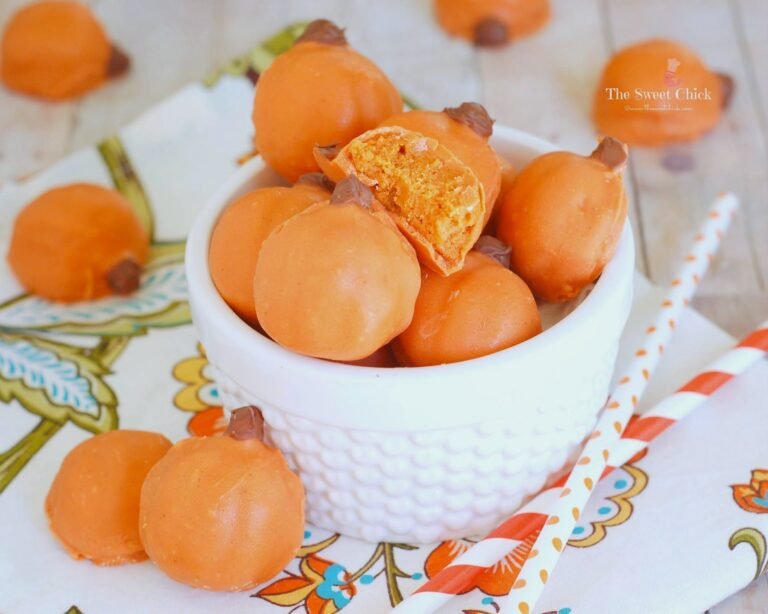
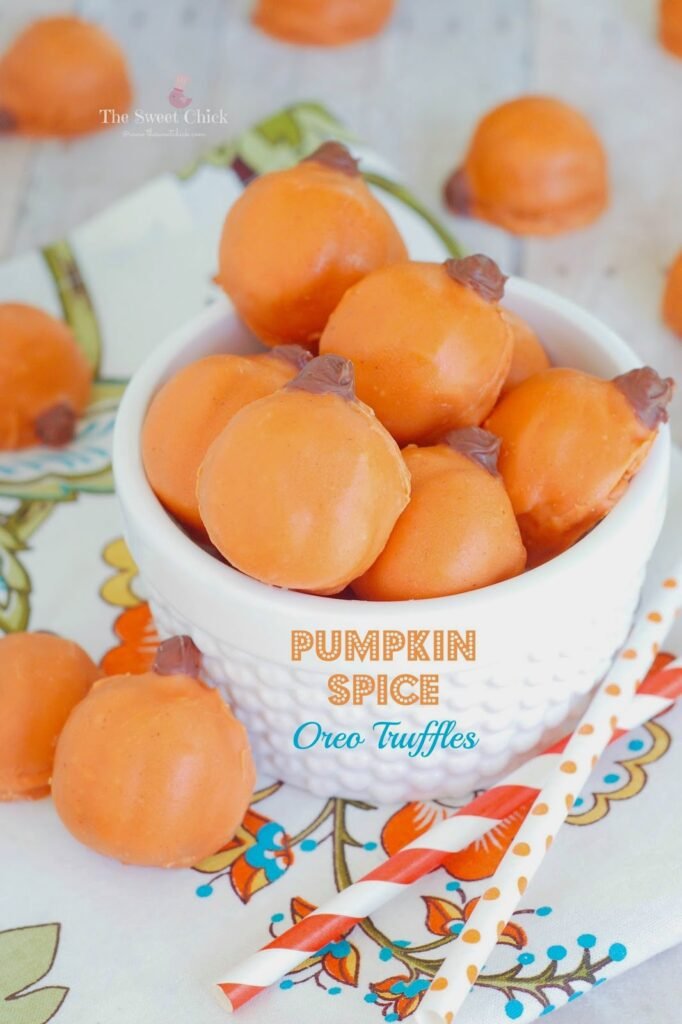
Well, I had to find something to do with the leftover Pumpkin Spice Oreos I had from last week’s Krispie Pumpkin Spice Oreo Tartlets, so I made some truffles. I love Oreo truffles. They are so easy to make and with all the different Oreos that keep coming out, there is a flavor for everyone’s liking. And you can shape the dough in a variety of ways. I used a pumpkin ice cube tray to shape these pumpkin truffles.

The Pumpkin Spice Oreos and the silicone pumpkin ice cube trays were purchased at Walmart. The Wilton’s Pumpkin Spice candy melt is from Michael’s.
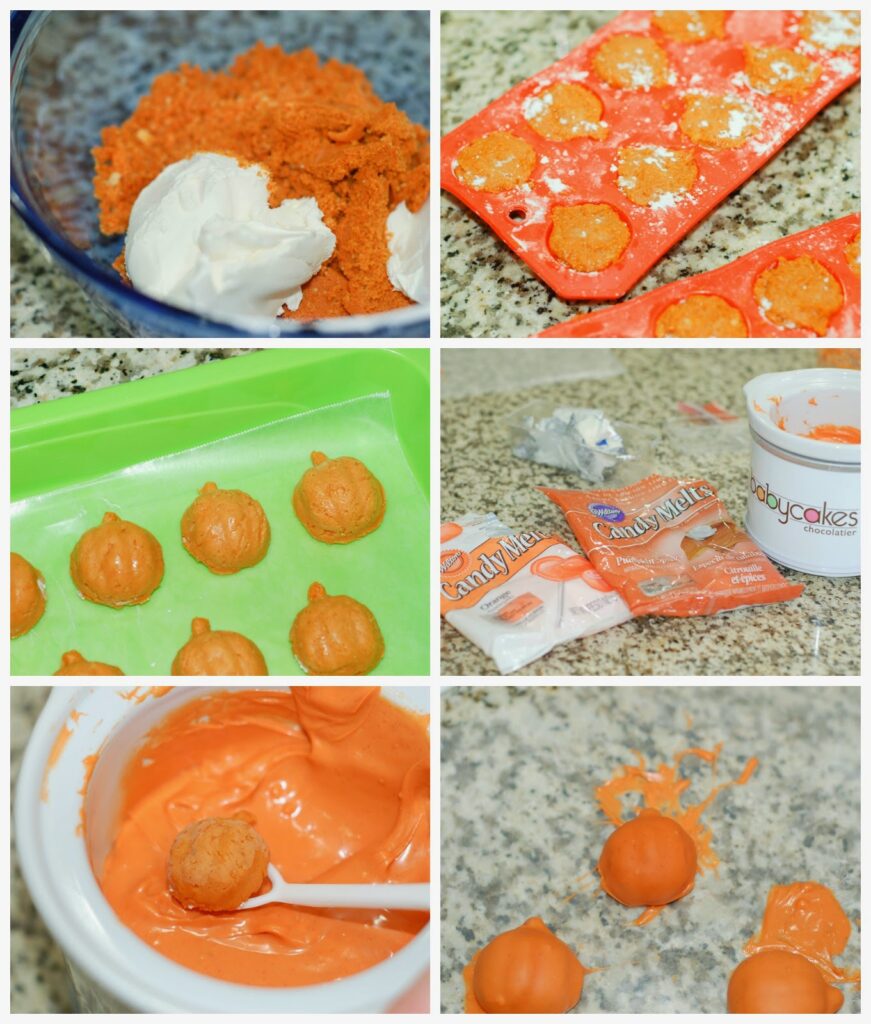
You could just go the easy route and make traditional round truffles, but I thought pumpkins would be cute. I dusted the silicone trays with some powdered sugar to keep the dough from sticking. I pressed the dough into the pumpkin cavities by hand, making sure it was pressed down firmly. Then I popped them into the freezer overnight. The pumpkins came out pretty easy from the molds. What gave me the most problems was the Pumpkin Spice candy melt. I don’t know if I got a bad batch or I had water in my container, but the candy wouldn’t melt. I tried adding vegetable shortnening and that didn’t work. So then I pulled out my Babycakes chocolatier to melt it and added some orange candy melt I had to the batch. Finally, that worked and the candy melt still had plenty of pumpkin spice flavor and came out a brighter shade of orange. So all worked out well.

For the stems, I just melted a few bits of chocolate chips in the microwave and painted the chocolate on with one of my cake decorating paint brushes. You could also use a regular clean paint brush. You could also paint on some vines and leaves with some green candy melt like I did for my Maple Pumpkin Rice Krispie Treats. Either way they taste awesome.
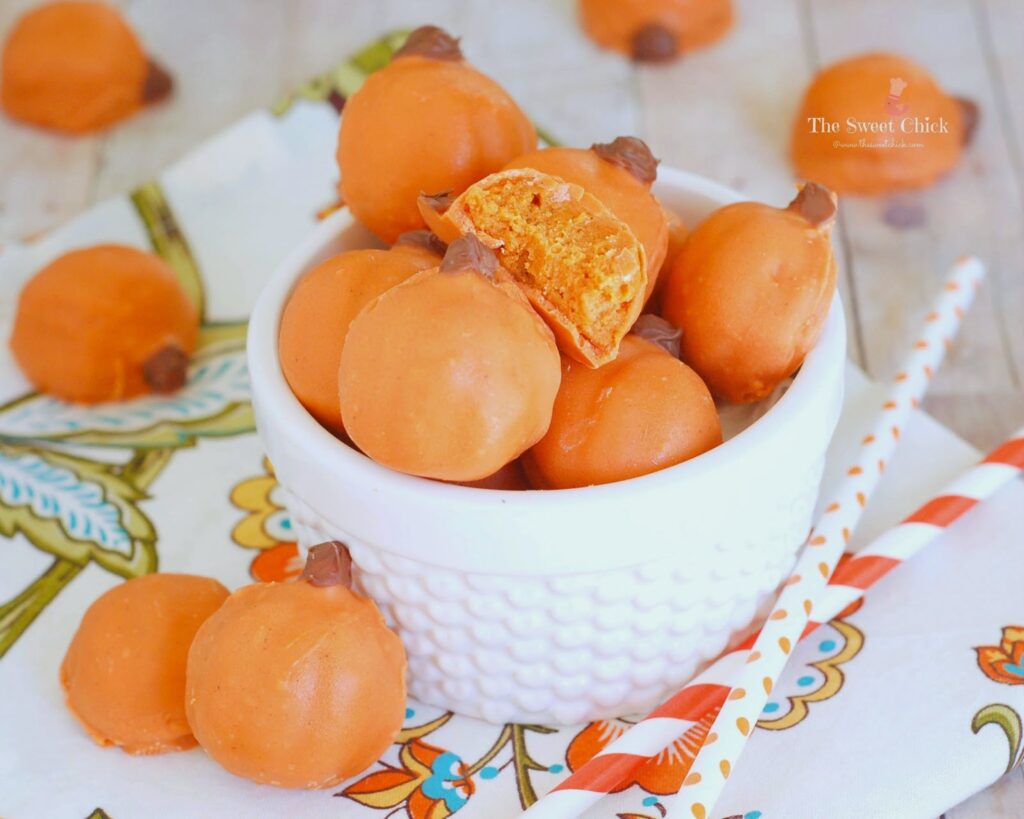
I just love a crunchy outer shell with a creamy, flavorful center. The pumpkin spice in the Oreos and in the candy melt worked really well together. And I think the little pumpkins came out cute. The kids sure did like them.
Pumpkin Spice Oreo Truffles
by The Sweet Chick
Prep Time: 1.5hs w/freezer time
Keywords: no bake dessert snack pumpkin spice oreos cream cheese candy melt Halloween truffles American fall
Ingredients (20 truffles)
For the truffles
- 12 Pumpkin Spice Oreos
- 4 oz. cream cheese, softened
For the coating
- 1/2 package (5 oz.) Wilton’s Pumpkin Spice candy melts
- 1/2 package (5 oz.) Wilton’s candy melts, orange
- 8-10 Ghirardelli milk chocolate chips
Instructions
For the truffles
Crush Oreo cookies in a food processor until they are a dirt like consistency.
In a medium bowl, mix the crushed Oreos and cream cheese until completely combined.
Lightly dust your silicone molds with powdered sugar or flour, removing any excess.
Add a small amount of Oreo dough to each cavity pressing down with your fingers until cavity is full.
Place the molds in the freezer for at least 1 hour to set. (I left mine overnight.)
For the coating
Combine and melt all the candy melt according to the instructions on the package. You may wish to place the melted candy into a warmer like the Babycakes Chocolatier to keep it from hardening up on you.
Once the candy melt is ready, remove one tray at a time from the freezer and pop out the pumpkin truffles.
With a fork or candy dipping tool, dip the truffles one at a time into candy coating mixture until all covered.
Once covered, remove and softly tap until excess candy melt falls off. Then place the truffles on wax paper until the candy melt hardens. You can place the truffles in the fridge to quicken the process.
Once the candy melt is set, you can paint on the stems. Simply place the chocolate chips in a microwave safe container and microwave for 20-30 seconds.
Using a clean paintbrush, paint the melted chocolate onto the stems of the pumpkin truffles and let it set.
Keep truffles refrigerated until ready to serve.
Notes
It is best to have the dough as frozen as possible when dipping, so that it doesn’t come apart.
If your candy melt does not melt smoothly, you can add 1/2 teaspoon of vegetable shortening at a time to it until it becomes the right consistency for dipping.
If the bottoms of the truffles don’t get fully covered with candy melt, you can always dip them again.
These truffles can be made ahead of time and refrigerated for 3-4 days.
Related Posts
Subscribe for New Racipies
Get mental health tips, updates, and resources delivered to your inbox.