
Lemon Meringue Rice Krispie Treats

Medically reviewed by Christiana George Updated Date: January 6, 2026


These bright and cheerful beauties came about after I found a bag of lemon meringue marshmallows at Walmart. I thought, hmmm, lemon meringue Rice Krispie treats? Yep, that sounded like a good idea. By adding fresh lemon juice and rind, I achieved a nice tartness. And the meringue balanced it off with a little bit of sweetness. If you love lemon meringue pie, you are going to love these fun, easy treats.
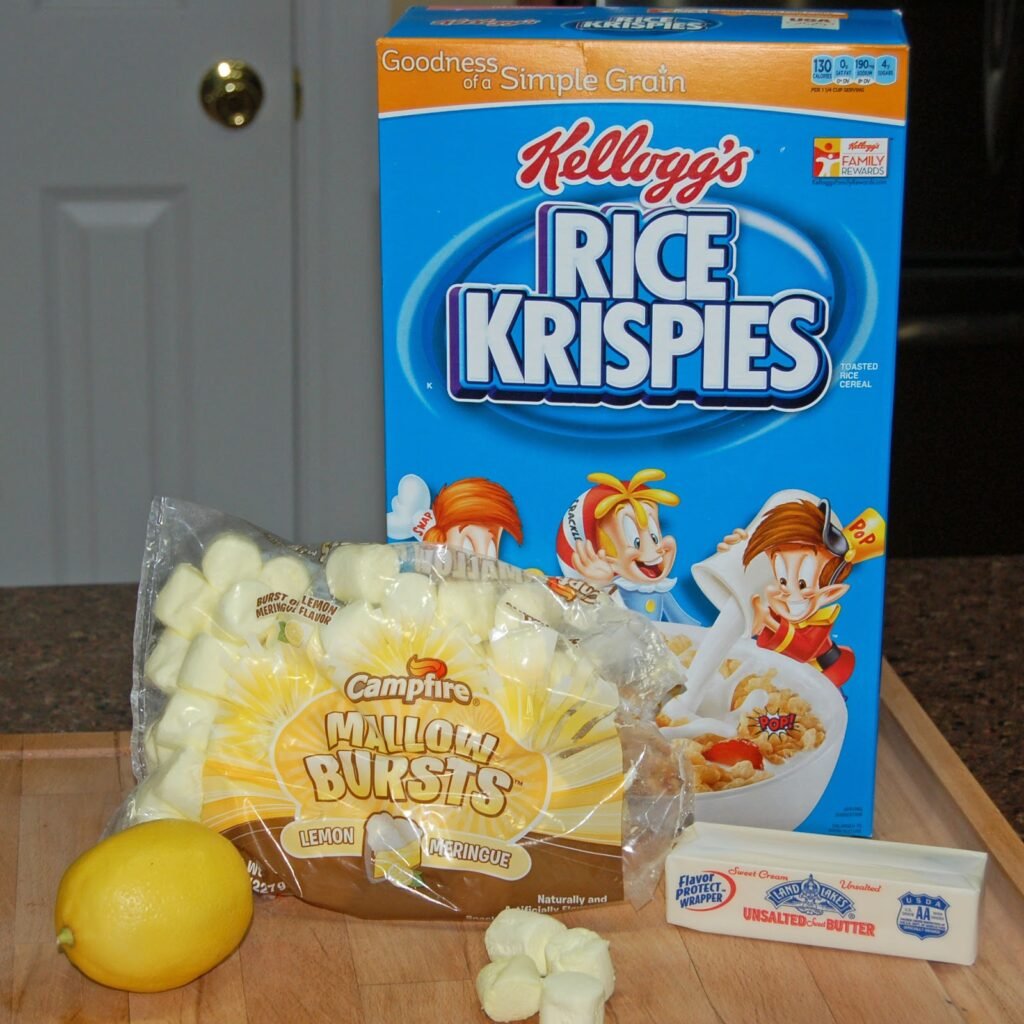
The Rice Krispie bars are pretty basic…cereal, marshmallows, butter, and some lemon juice and rind.
For the meringue, I made a Swiss Meringue. I kind of combined Martha Stewart’s recipe and Sweetapolita’s intructions. I did heat my egg whites and sugar in my stand mixer bowl over a pot of water. And I heated them to 160º F.

I did not however, have any cream of tartar, so I skipped on that. But the meringue did hold up anyway.

I did my little happy dance when it all worked out. I really didn’t feel like going out to the store at night just for cream of tartar.

At this point you can spread this delicious marshmallowy goodness on top of the Rice Krispie treats and cut into squares.
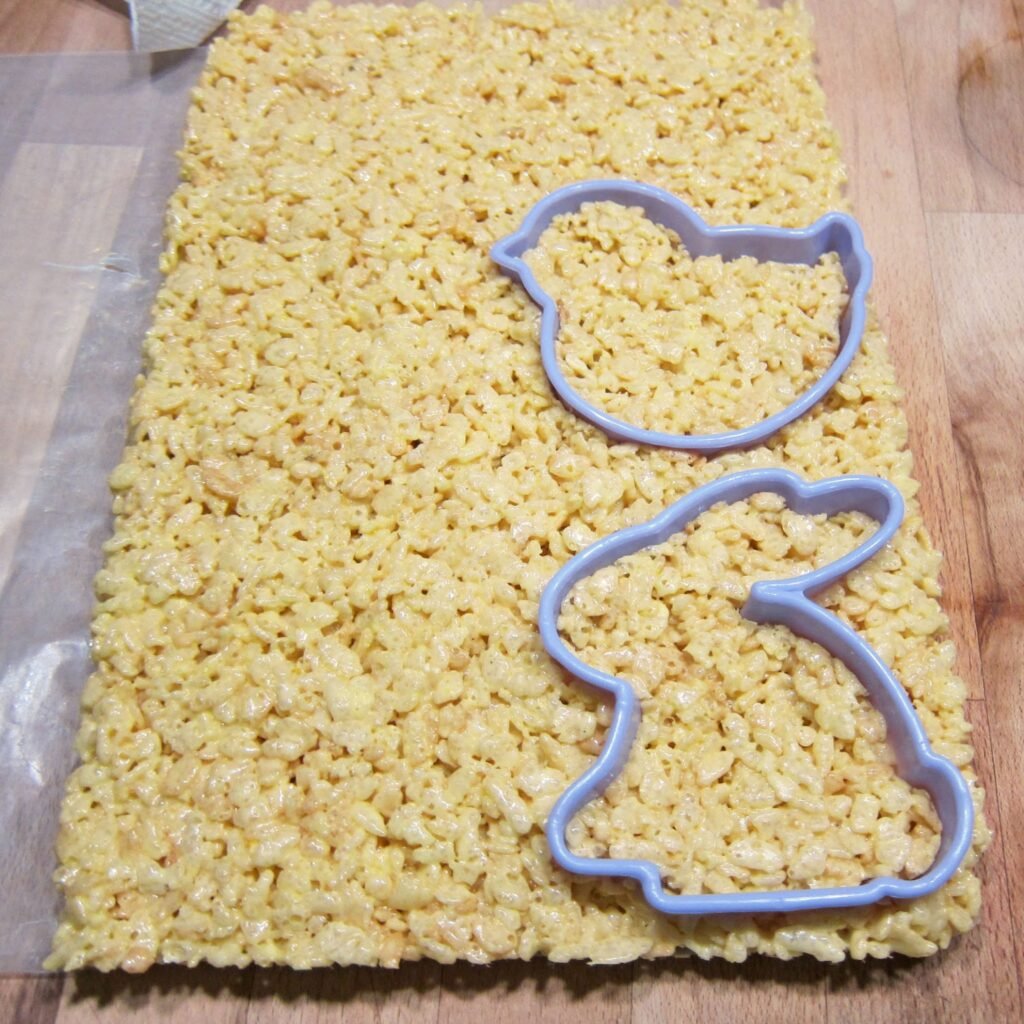
Or, if you feel creative, you can pull out your cookie cutters and cut out cute Easter shapes, then spread them with the meringue.
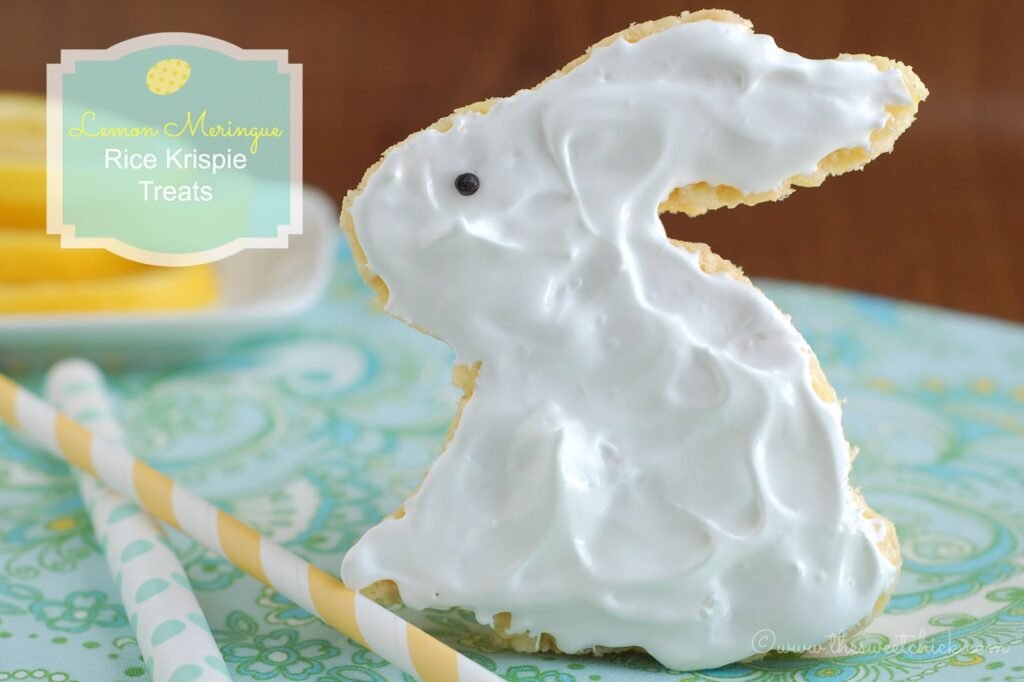
For the bunny, I left the meringue white and I added a dab of Wilton’s black decorating frosting that I used here.
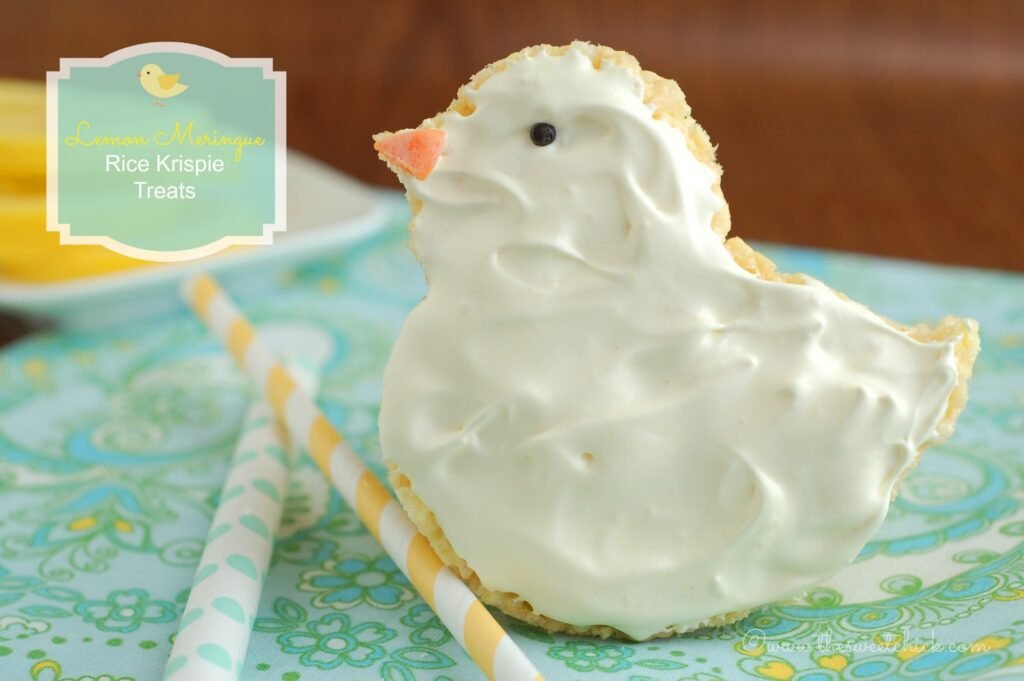
For the chickie, I added a bit of Wilton’s yellow gel food coloring to the meringue. And I cut a wedge of an orange candy melt wafer to make the beak. You can probably use an orange gummy candy also.
Also for added interest, if you have a kitchen hand torch, you can torch the tops of the meringue to give it that “baked”look. Don’t worry , they still taste the same whether you torch them or not.
Lemon Meringue Rice Krispie Treats
by The Sweet Chick
Prep Time: 20 minutes
Cook Time: 10 minutes
Keywords: stove top dessert snack lemon rice krispies meringue Easter bars rice krispie treats American
Ingredients (24 squares)
For the treats
- 3 tablespoons butter
- 1 bag (8 oz.) Campfire Lemon Meringue Mallow Bursts
- 1 teaspoon fresh lemon juice
- 1 teaspoon lemon zest
- 5 cups Rice Krispie cereal
For the meringue
- 2 egg whites
- 1/2 cup sugar
- 1/4 teaspoon vanilla extract
Instructions
For the treats
In a large sauce pan, melt butter and marshmallows over low heat. Stir until completely melted.
Remove from heat and add lemon juice and zest. Stir until completely mixed.
Then add the Rice Krispie cereal. Mix until all is well incorporated.
Then pour the mixture into a greased 9 x 13 pan or a cookie sheet and spread it evenly with a piece of waxed paper.
Place in fridge to cool and set.
For the meringue
Fill a medium saucepan with about 1 inch of water and bring to a simmer over medium heat.
Place egg whites and sugar in a metal stand mixer bowl and clip on a candy thermometer. Place bowl over simmering pot of water.
Whisk egg whites/sugar mixture constantly until the temperature reaches 160º F on the thermometer.
Then remove bowl from stove and attach to stand mixer with whisk attachment.
Starting at medium/low speed, begin to whisk egg whites/sugar mixture for about 2 minutes.
Then increase to a medium/high speed and whisk until mixture thickens and the mixer bowl is cool to the touch, about 10 minutes. Then add vanilla extract and give it one more good whisking to blend well.
The texture of the meringue should be fluffy and it should have a glossy finish. (It should look like marshmallow fluff you buy in a jar.)
With a spatula, spread meringue over the cooled Rice Krispie treats, cut into squares and enjoy!
Note: the Rice Krispies can be made ahead of time, but the meringue needs to be made the day of or the night before you plan to serve it. The meringue can be kept in an airtight container in the fridge for about one day, but after that it will become dry.
Related Posts

Subscribe for New Racipies
Get mental health tips, updates, and resources delivered to your inbox.
Pumpkin Spice Marshmallow Puffs

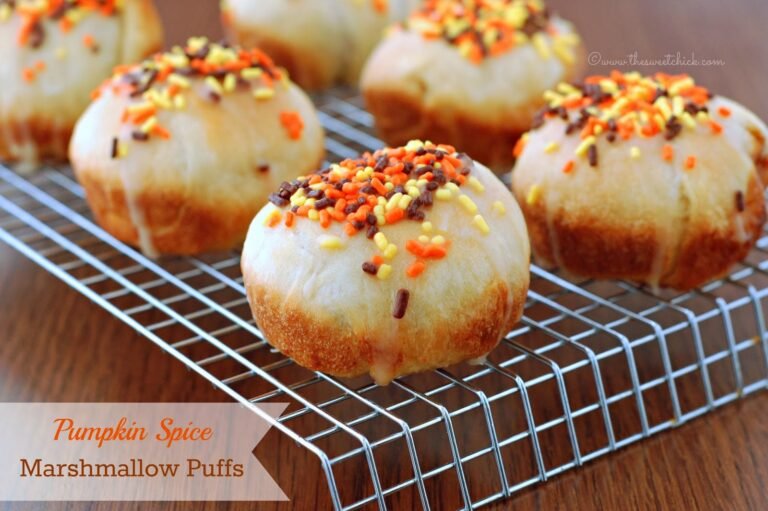
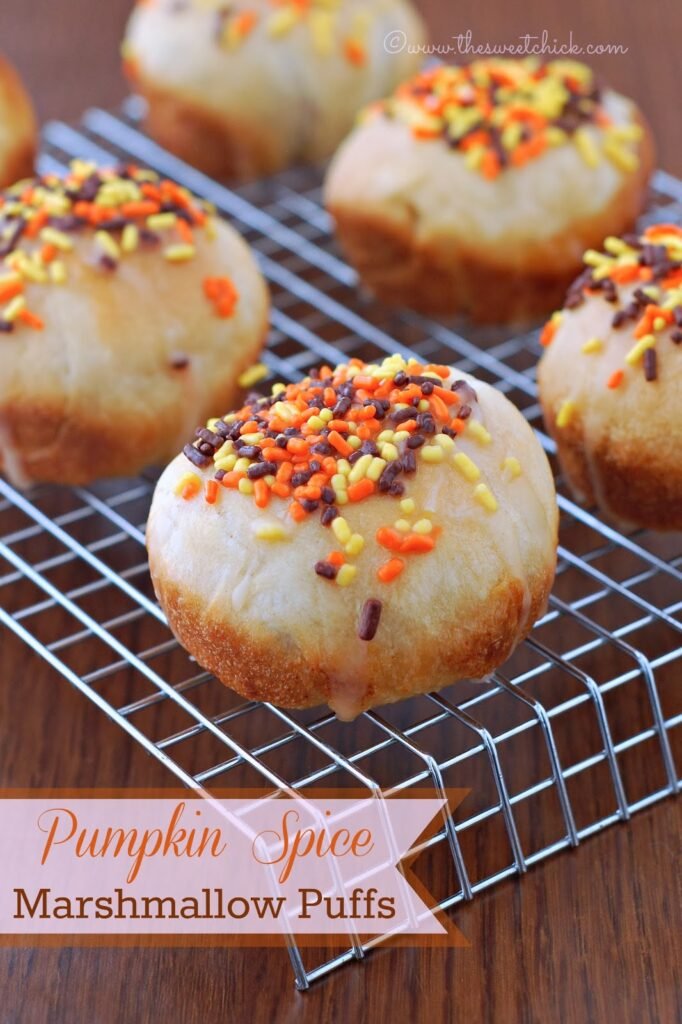
I was watching the Pillsbury Bake-off Contest 2013 all weekend via Instagram. There were a lot of my favorite bloggers in attendance. The whole event looked a lot of fun from their media perspective, but I couldn’t imagine how much pressure the contestants were feeling trying to win $1 million dollars. That’s just crazy. I don’t think I could perform under that kind of pressure. But I would love to know how it feels to win. Perhaps someday I will enter. In the meantime, I was inspired to whip up these little treats for the family this weekend.
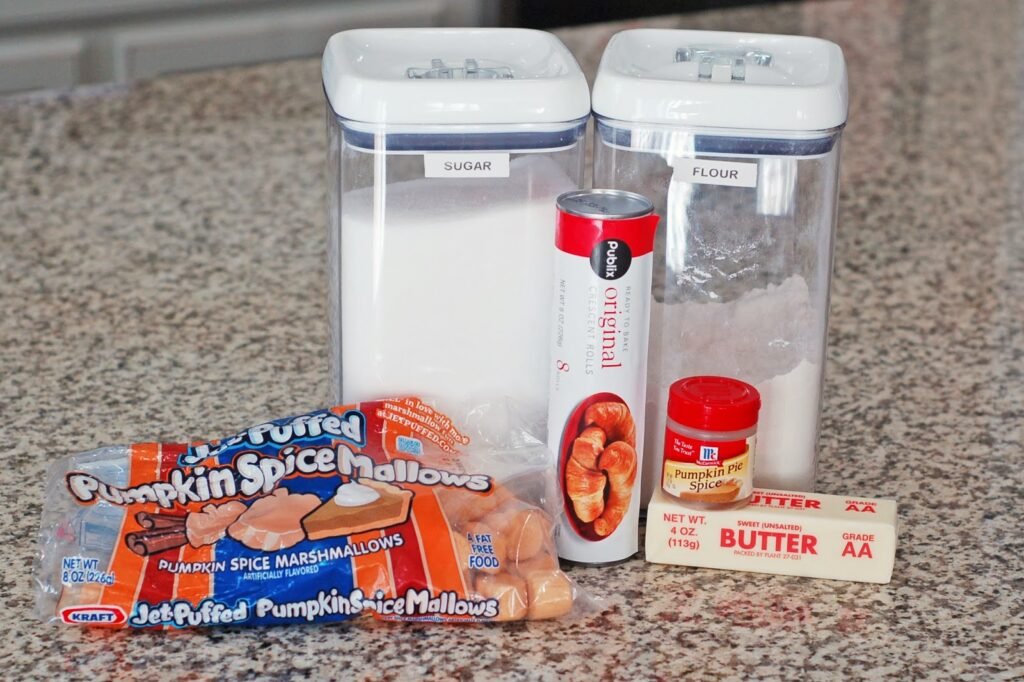
This recipe is adapted from the 1969 Pillsbury Bake-Off Contest winning recipe, the Magic Marshmallow Crescent Puffs. I had some leftover Jet-Puffed Pumpkin Spice Mallows in the pantry and didn’t want them to go to waste. I actually never made the marshmallow puffs before.

My daughter had a blast helping out. They are easy enough for a 7 year old to put them together.

Just dip the marshmallows in the butter and in the sugar mixture. Then roll them up in the crescent. Since the Pumpkin Spice Mallows are smaller than a regular marshmallow, I used two. And I rolled them up from the wide end of the crescent instead of the narrow end. I just folded the sides in over the marshmallows and then rolled them up.

Then you need to make sure all the edges are sealed. I just pinched them a little with my fingers.

Don’t forget to dip the bottoms in the remaining butter. This helps a lot if the crescents leak and makes a sticky mess.

I did have a couple of the puffs leak out a little filling, but since I had greased my pan well and with the added butter, they came out of the pan easily.
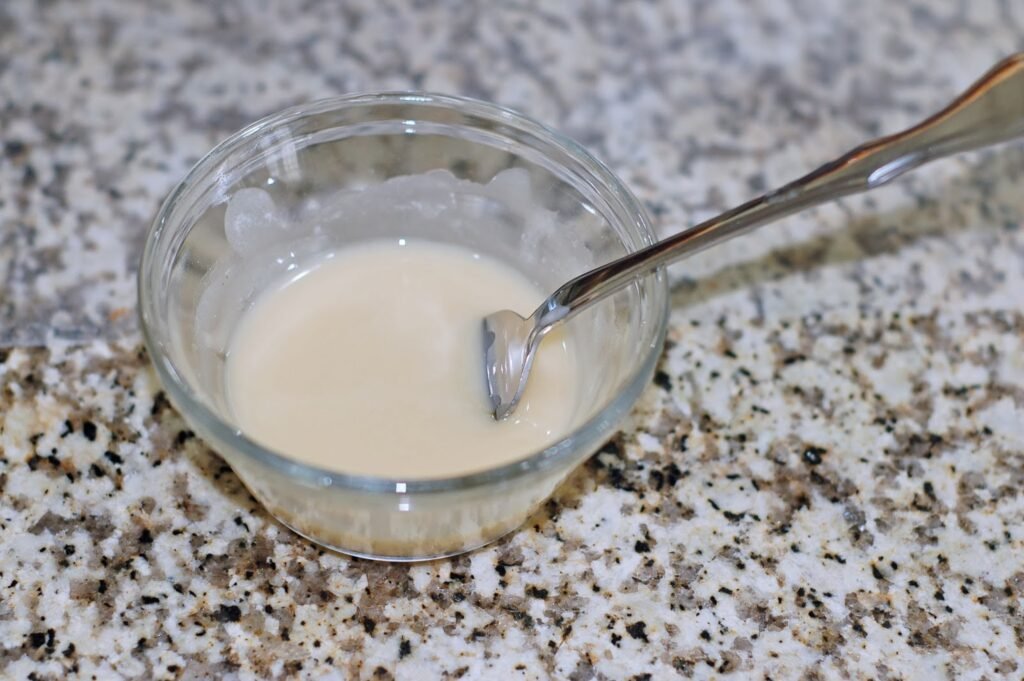
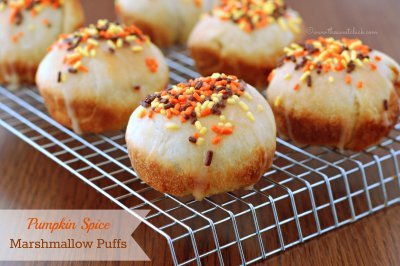
I added a little maple syrup to the glaze for a some extra flavor. And for fun, I added some sprinkles. I like how the marshmallows melt away and leave behind a sweet, gooey filling. The maple glaze topped it off just right.
hese are a great after school treat for the kids or you can double up the recipe for a party. Enjoy!
Pumpkin Spice Marshmallow Puffs
by The Sweet Chick
Prep Time: 15-20 minutes
Cook Time: 12-15 minutes
Keywords: bake dessert snack crescent rolls pumpkin spice pumpkin spice marshmallows maple syrup crescent rolls American fall
Ingredients (8 servings)
For the puffs
- 2 tablespoons sugar
- 1 tablespoon all purpose flour
- 1/2 teaspoon pumpkin pie spice
- 1 can (8 oz.) ready to bake crescent rolls
- 16 Jet-Puffed Pumpkin Spice Mallows
- 2 tablespoons butter, melted
For the glaze
- 1/4 cup powdered sugar
- 1 teaspoon pure maple syrup
- 1 tablespoon milk
Optional toppings
- sprinkles
Instructions
For the puffs
Preheat oven to 375º F.
In a small bowl, mix together the sugar, flour and spice.
Separate crescent rolls into 8 triangles and lay on a flat surface.
First dip each marshmallow in the melted butter, then dip each in the sugar mixture and coat evenly.
Place 2 marshmallows side by side at the widest end of the crescent roll. Wrap the side inwards over the marshmallows then roll until marshmallows are completely covered.
Pinch all seam with fingers to make sure they are sealed. Repeat process for all marshmallows until all crescent rolls are filled.
Dip bottoms of each filled crescent roll in the remaining butter and place buttered side down into a greased muffin pan. You may place muffin pan on a cookie sheet in case of spillage.
Bake at 375ºF for 12-15 minutes or until tops are golden.
Remove from oven and let the crescent puffs cool for 1-2 minutes.
Then remove them from the pan and place them on a cooling rack with a wax paper underneath and prepare the glaze.
For the glaze
in a small bowl mix together the sugar, syrup, and milk until smooth.
Then drizzle evenly over the crescent rolls with a spoon and let the glaze set.
For the toppings
If you want to add sprinkles, add them before the glaze sets.
You can serve these warm or at room temperature. Either way they are just as tasty. And they still taste good the second day if placed in an airtight container.
Related Posts
Subscribe for New Racipies
Get mental health tips, updates, and resources delivered to your inbox.