
Does Brisk Tea Have Caffeine? (Full Guide by Flavor, Sugar, and Health Impact)

Medically reviewed by Dr. Aris Thorne Updated Date: May 14, 2026
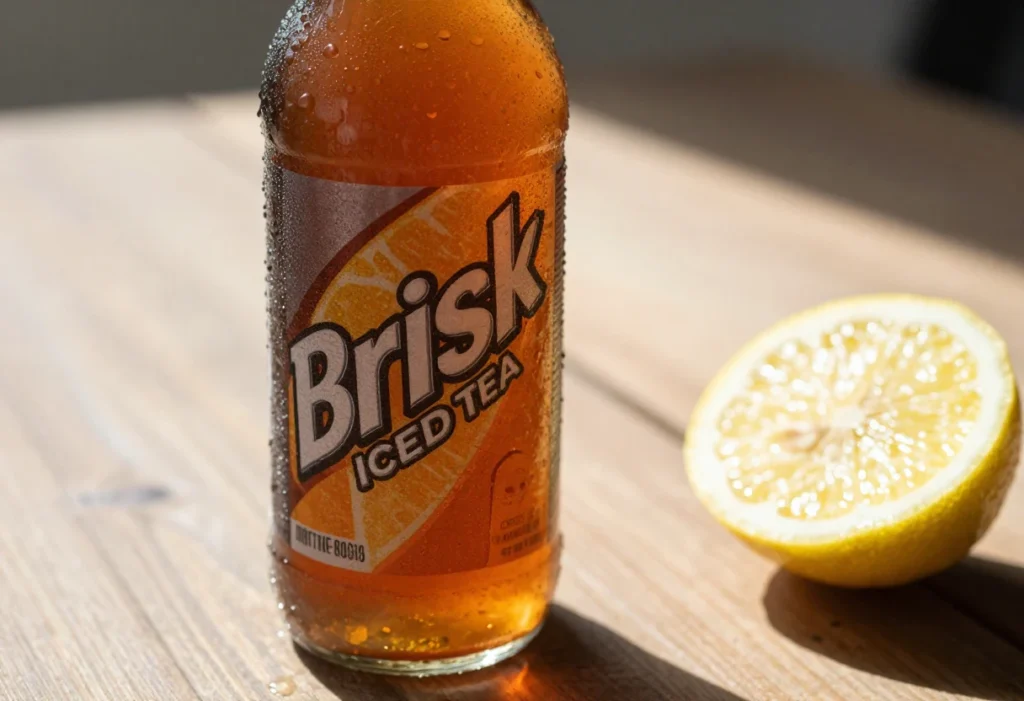
Yes, Brisk Iced Tea does contain caffeine. Most tea-based flavors deliver roughly 5 to 15 milligrams per 12-ounce serving — a mild dose compared to coffee but still worth tracking if you are sensitive or monitoring your daily intake.
Every week, millions of Americans reach for a cold Brisk Iced Tea without giving its ingredients a second thought. It is convenient, affordable, and widely available — a staple in gas stations, grocery stores, and fast food restaurants across the country. But does Brisk tea have caffeine? The answer is yes, and understanding exactly how much — and what else is in the bottle — matters more than most people realize.
Brisk is not just flavored water. It uses real black tea extract as a base ingredient, which means the caffeine that naturally occurs in tea leaves carries through into the final product. The levels are modest, but they are real — and for certain groups including children, pregnant individuals, and people sensitive to stimulants, even small amounts add up across a full day of eating and drinking.
Furthermore, the sugar content in most Brisk varieties tells a nutritional story that goes well beyond caffeine. This guide covers every flavor, the Zero Sugar line, the lemonade exception, how Brisk compares to competitor brands, and what the research says about regular consumption of sugary iced teas.
TL;DR — Quick Facts
- Most Brisk tea flavors contain approximately 5 to 15 milligrams of caffeine per 12-ounce serving
- Pure lemonade versions contain zero caffeine — they use no tea extract
- The Zero Sugar version retains the same caffeine level as the original
- Brisk is the mildest caffeinated tea brand compared to Snapple and Arizona
- The bigger health concern is sugar — a standard bottle contains 30 to 40 grams of added sugar
- Caffeine levels are low enough that most healthy adults can consume Brisk without concern
Caffeine in Brisk Tea by Flavor
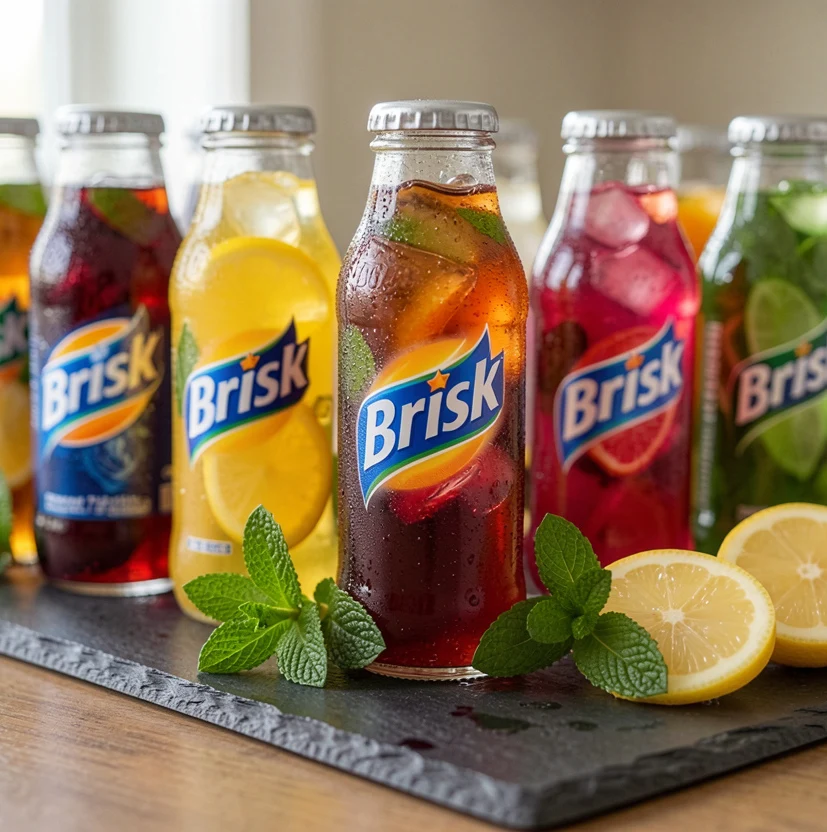
Most Brisk iced tea flavors share a consistent caffeine profile because they all use the same black tea extract base. The caffeine content does not vary dramatically across the lineup — what changes is primarily the flavoring, sweeteners, and colorings used in each variety.
According to PubMed research on caffeine content in commercial tea beverages, black tea extract used in bottled teas typically delivers between 5 and 20 milligrams of caffeine per 12-ounce serving depending on the concentration of extract used. Brisk consistently falls toward the lower end of that range. Here is a flavor-by-flavor breakdown of what to expect.
Classic Lemon Flavor
The classic lemon variety is Brisk’s most recognizable product. A standard 12-ounce serving delivers approximately 5 to 15 milligrams of caffeine. That is a genuinely mild amount — for comparison, a standard 8-ounce cup of brewed coffee contains around 95 milligrams according to the FDA’s caffeine guidance page. Brisk lemon delivers roughly one-tenth of that in a full can.
Raspberry Flavor
The raspberry variety follows the same caffeine profile as the classic lemon — approximately 5 to 15 milligrams per 12-ounce serving. The raspberry flavoring is artificial and does not contribute any additional stimulant activity. The caffeine comes entirely from the black tea extract base shared across the product line.
Sweet Tea Flavor
Brisk’s sweet tea variety also falls within the standard 5 to 15 milligram range. Sweet tea uses a more concentrated tea flavor profile, but the caffeine content remains consistent with the rest of the lineup. The primary nutritional difference in this variety is the sweetness level — it typically contains a higher sugar load than the lemon or raspberry flavors. If you are watching your daily sugar intake, our guide on foods to avoid with Trulicity covers how high-sugar beverages fit into a broader metabolic health picture.
Blood Orange and Peach Flavors
The blood orange and peach varieties both use the same black tea extract base as the rest of the lineup. Caffeine content remains in the 5 to 15 milligram range per 12-ounce serving. These flavors are among the more recently introduced varieties and have gained popularity as alternatives to the original lemon profile.
The Lemonade Exception
Pure Brisk Lemonade — the variety that contains no tea extract whatsoever — is completely caffeine-free. This is the one product in the Brisk lineup that genuinely delivers zero milligrams of caffeine per serving. It is made entirely from water, high fructose corn syrup, citric acid, and natural flavors — no tea, no caffeine. For anyone looking to avoid stimulants entirely, this is the only Brisk variety that achieves that goal.
Brisk Zero Sugar Caffeine Content
Switching to Brisk Zero Sugar does not reduce your caffeine intake. The Zero Sugar versions retain the same 5 to 15 milligrams of caffeine per serving as their full-sugar counterparts. The only meaningful difference is the replacement of high fructose corn syrup with artificial sweeteners — typically sucralose or acesulfame potassium — which eliminates the caloric and glycemic load without touching the caffeine profile.
This is a pattern worth understanding across the entire diet and zero sugar soda category. As our guide on does Pepsi Zero have caffeine explains, removing sugar from a caffeinated beverage does not remove its stimulant content. If caffeine reduction is your goal, the only effective strategy is choosing a genuinely caffeine-free product — not a diet version of a caffeinated one.
How Brisk Compares to Other Iced Tea Brands
Brisk actually sits at the lower end of the caffeine spectrum when compared to its main competitors in the bottled iced tea category. Understanding where it falls relative to Snapple and Arizona helps put the numbers in perspective.
| Brand | Serving Size | Caffeine Content |
|---|---|---|
| Brisk Iced Tea | 12 oz | 5–15 mg |
| Arizona Iced Tea | 12 oz | 15–20 mg |
| Snapple Iced Tea | 16 oz | 30–40 mg |
| Brisk Lemonade | 12 oz | 0 mg |
| Brisk Zero Sugar | 12 oz | 5–15 mg |
For a broader comparison of caffeine levels across popular beverages, our guide on what soda has the most caffeine puts these numbers alongside sodas, energy drinks, and coffee for full context. If you want to track your total daily caffeine from all sources, our caffeine calculator makes it straightforward.
How Caffeine From Tea Works in the Body
Caffeine from tea behaves somewhat differently than caffeine from coffee — and understanding why helps explain why Brisk produces such a mild effect even in people who are sensitive to coffee.
Black tea contains an amino acid called L-theanine alongside its caffeine content. According to NIH research on L-theanine and caffeine interaction, this combination produces a calmer, more sustained alertness compared to the sharper spike associated with coffee caffeine alone. L-theanine modulates the stimulant effect, reducing jitteriness and producing what many people describe as a smoother energy lift.
In a bottled product like Brisk, however, the tea extract concentration is low enough that this effect is quite subtle. The caffeine dose of 5 to 15 milligrams is genuinely mild — well below the threshold at which most healthy adults experience any noticeable stimulant effect at all. According to research published on PubMed on caffeine thresholds, meaningful alertness effects in adults typically require doses above 40 milligrams. Brisk rarely approaches that level even in a full serving.
The Sugar Content Problem in Brisk Tea
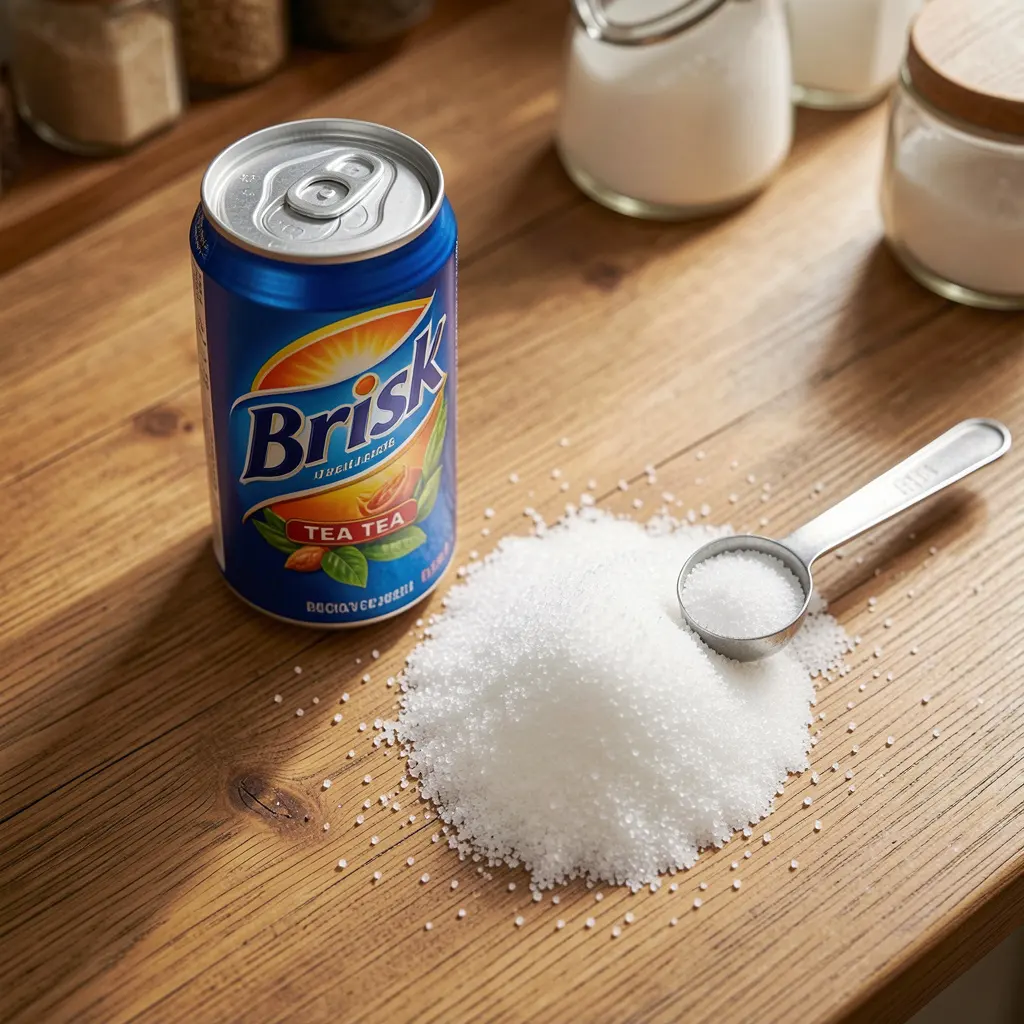
Caffeine is not the primary nutritional concern with regular Brisk iced tea. Sugar is. A standard 12-ounce serving of original Brisk contains approximately 23 to 25 grams of added sugar — almost entirely from high fructose corn syrup. Scale that up to a 20-ounce bottle, which is the most common retail size, and the sugar content jumps to approximately 34 to 40 grams in a single sitting.
The WHO’s guidelines on daily sugar consumption recommend that adults consume no more than 25 grams of free sugars per day for optimal health benefits. A single large Brisk already pushes past that threshold before you have eaten anything else.
Regular consumption of sugar-sweetened beverages is linked to a range of metabolic consequences. According to NIH research on sugar-sweetened beverage consumption, habitual intake is associated with increased risk of weight gain, type 2 diabetes, cardiovascular disease, and dental erosion. Liquid sugar is particularly problematic because it bypasses the satiety mechanisms that solid food activates — meaning it is easy to consume a significant caloric load from beverages without feeling full afterward.
The acidic nature of Brisk — from citric acid used as a flavoring agent — compounds the dental concern. Citric acid lowers the pH in the mouth, creating an environment that accelerates erosion of tooth enamel over time. This is a concern shared across most commercial iced teas and sodas, not unique to Brisk specifically.
Brisk Tea and Specific Health Considerations
For most healthy adults consuming Brisk occasionally, the caffeine content is not a meaningful concern. However, certain groups benefit from being more thoughtful about their intake.
Children and Teenagers
Children metabolize caffeine differently than adults and have lower body weights, meaning even small doses produce proportionally larger effects. According to NIH research on caffeine in children and adolescents, regular caffeine consumption in young people is associated with disrupted sleep patterns, increased anxiety, and potential effects on cardiovascular function. While 15 milligrams is a genuinely low dose, it still contributes to a child’s daily total — and the sugar content in Brisk is a far more significant concern for pediatric metabolic health.
Pregnant Individuals
Current guidance recommends limiting caffeine to under 200 milligrams per day during pregnancy. Brisk’s caffeine content is low enough that a single serving poses minimal concern from a stimulant standpoint. However, the high sugar content in the original varieties warrants more careful attention during pregnancy, where blood sugar management becomes particularly important.
People With Caffeine Sensitivity or Anxiety
Some individuals are genuinely sensitive to even small amounts of caffeine. According to PubMed Central research on caffeine sensitivity and anxiety, people with certain genetic variants metabolize caffeine more slowly, meaning even modest doses linger in the system longer and produce more pronounced effects. For these individuals, tracking caffeine from all sources — including mild ones like Brisk — is worthwhile.
People Managing Blood Sugar
For anyone managing diabetes or insulin resistance, the sugar content in original Brisk is the primary concern. The high fructose corn syrup delivers a rapid glycemic load with no fiber to slow absorption. The Zero Sugar version eliminates this concern from a blood sugar standpoint, though the artificial sweeteners used warrant their own consideration. Our article on are apples good for diabetics explores similar themes around glycemic impact of common foods and beverages.
Does Brisk Tea Contain Alcohol
This question comes up more often than you might expect, likely because of the growing popularity of hard iced teas and canned cocktails that use similar branding aesthetics. To be clear — standard Brisk Iced Tea contains absolutely no alcohol. It is a non-alcoholic soft drink suitable for all ages. The confusion stems from similarly named adult beverages in the same refrigerated section of many stores, but Brisk itself is entirely alcohol-free across its full product lineup.
Smart Ways to Enjoy Brisk Tea
Brisk can fit into a balanced diet when consumed thoughtfully. Choosing the Zero Sugar varieties eliminates the added sugar concern while keeping the familiar flavor profile. Alternating Brisk with water throughout the day helps manage both sugar and caffeine intake without requiring complete elimination.
For those who enjoy iced tea but want more control over ingredients, homemade iced tea brewed from tea bags and lightly sweetened with a small amount of honey or left unsweetened entirely is a straightforward alternative. It delivers the same tea flavor with full control over sweetness and caffeine levels. If you enjoy experimenting with homemade beverages, our yerba mate recipe and citrus pomegranate mint tea are both worth exploring as flavorful low-sugar alternatives.
For a broader look at how popular beverages compare nutritionally, our guides on does Arizona tea have caffeine sit alongside as useful companion reads for anyone navigating the bottled tea aisle.
Frequently Asked Questions
Does Brisk Iced Tea Contain Caffeine?
Yes, most Brisk iced tea flavors contain caffeine. Standard tea-based varieties deliver approximately 5 to 15 milligrams per 12-ounce serving, sourced from black tea extract used as a base ingredient. This is a genuinely mild amount compared to coffee or energy drinks. The one exception is Brisk Lemonade, which contains no tea extract and is completely caffeine-free across all its varieties.
Which Brisk Flavor Has No Caffeine?
Brisk Pure Lemonade is the only variety in the lineup that contains zero caffeine. It uses no tea extract whatsoever, relying entirely on citric acid and natural flavors for its taste profile. All other Brisk varieties — including raspberry, sweet tea, blood orange, and peach — use black tea extract as a base and therefore contain small amounts of caffeine in every serving.
Does Brisk Zero Sugar Have Caffeine?
Yes, Brisk Zero Sugar contains the same caffeine as the original version — approximately 5 to 15 milligrams per 12-ounce serving. Switching to the zero sugar variety reduces calorie and sugar intake significantly but does not affect caffeine content at all. The caffeine comes from the tea extract, which remains unchanged regardless of whether the product uses sugar or artificial sweeteners.
How Does Brisk Compare to Coffee for Caffeine?
Brisk contains significantly less caffeine than coffee. A 12-ounce serving of Brisk delivers 5 to 15 milligrams, while an 8-ounce cup of brewed coffee typically contains around 95 milligrams. That makes coffee roughly six to ten times stronger per ounce than Brisk iced tea. For people trying to reduce caffeine intake, switching from coffee to Brisk represents a substantial reduction in daily stimulant consumption.
Is Brisk Iced Tea Safe for Children?
Brisk’s caffeine content is low enough that occasional consumption by older children is unlikely to cause stimulant-related concerns. However, the high sugar content in original varieties — approximately 23 to 25 grams per 12-ounce serving — is a more meaningful health consideration for children. Regular consumption of sugar-sweetened beverages in childhood is linked to increased risk of obesity, tooth decay, and metabolic issues in later life.
Conclusion
Brisk iced tea occupies an interesting middle ground in the beverage landscape. Its caffeine content is genuinely mild — low enough that most healthy adults will not notice any stimulant effect from a single serving. In that sense, it is one of the more forgiving caffeinated beverages available, particularly compared to coffee, energy drinks, or even competitor tea brands like Snapple.
The more meaningful nutritional conversation around Brisk centers on sugar. Regularly consuming 30 to 40 grams of added sugar from a single beverage — before accounting for anything else eaten or drunk that day — adds up quickly and carries real long-term metabolic consequences that go well beyond a caffeine discussion.
For most people, Brisk works perfectly well as an occasional treat rather than a daily habit. Choosing the Zero Sugar varieties, alternating with water, and being aware of total daily sugar intake are all practical steps that let you enjoy the flavor without the downsides. Does Brisk tea have caffeine? Yes — but in amounts that most people handle easily. The sugar is the part worth watching closely.
References
- U.S. Food and Drug Administration — Spilling the Beans: How Much Caffeine is Too Much? — https://www.fda.gov/consumers/consumer-updates/spilling-beans-how-much-caffeine-too-much
- NIH PubMed Central — Sugar-Sweetened Beverages and Health Consequences — https://www.ncbi.nlm.nih.gov/pmc/articles/PMC6163457/
- NIH PubMed — Caffeine and the Central Nervous System: Mechanisms of Action — https://pubmed.ncbi.nlm.nih.gov/1356551/
- NIH PubMed Central — L-Theanine and Caffeine in Combination — https://www.ncbi.nlm.nih.gov/pmc/articles/PMC4480845/
- NIH PubMed Central — Caffeine Use in Children and Adolescents — https://www.ncbi.nlm.nih.gov/pmc/articles/PMC4462044/
- World Health Organization — Healthy Diet Fact Sheet — https://www.who.int/news-room/fact-sheets/detail/healthy-diet
- NIH PubMed Central — Caffeine and Anxiety — https://www.ncbi.nlm.nih.gov/pmc/articles/PMC6007565/
- NIH PubMed — Caffeine Content of Commercial Tea Beverages — https://pubmed.ncbi.nlm.nih.gov/2912010/
- NIH PubMed Central — Caffeine Dose and Alertness: Threshold Effects in Healthy Adults — https://www.ncbi.nlm.nih.gov/pmc/articles/PMC4462044/
- NIH PubMed Central — Health Effects of High Fructose Corn Syrup — https://www.ncbi.nlm.nih.gov/pmc/articles/PMC5836186/
Related Posts

Subscribe for New Racipies
Get mental health tips, updates, and resources delivered to your inbox.
Matchstick Fries, and Lately I’ve Been Loving, Part 2


Apologies to those who want me to get straight to the food commentary. (Although it’s becoming apparent that I’m always kind of long-winded when it comes to writing about food, isn’t it?) Feel free to jump past this section, of course.
To all you others, lately I’ve been loving…
– Jeni’s Splendid Ice Cream, lemon and blueberry fro-yo to be exact. I had the pleasure of trying the salted caramel flavor this weekend, and while it was delicious and pleasantly salty, the lemon was stunning. Luckily the recipe can be found online.
– Niagara grapes, a replacement to the Muscats I can’t get on this coast.
– The perfect wedding ring has been found. It was love at first sight; I was mesmerized by the shine and didn’t want to take it off.
– The Book Thief may fall in the YA category, but it was so creative and lovingly written. Apparently, 1,249 people agreed, yowza.
– Fashion Week street style. I can’t help loving the grand display those fashion insiders put on twice a year.
– Jeanne Damas. Specifically, I love her hair. So much so, I was inspired to carve out a set of bangs for myself the other day. It soon became clear that I’m rusty in the bangs-cutting department. They turned out shorter than I would’ve liked. A LOT shorter, and crooked too. This is why there are professionals to do this sort of thing—but surely I’m not the only person in the world staunchly opposed to forking over money simply to get my bangs cut?
And the latest Pinterest love:
– This photo pretty much captures love, don’t you think?
– The perfect wedding takes place in the forests of Northern California. (I want a forest wedding!)
– This wedding veil is utterly romantic. I must get it.
– One of my favorite food photos as of late. It is so moody and evocative.

On to today’s recipe. Chris and I got home famished, after an afternoon rummaging through the Brooklyn Flea. I remembered that we had been given a bunch of potatoes, big dusty Idahos, that had been sitting on the counter for awhile. We hardly ever have potatoes in the house, because neither of us really like them except when they’re deep-fried.
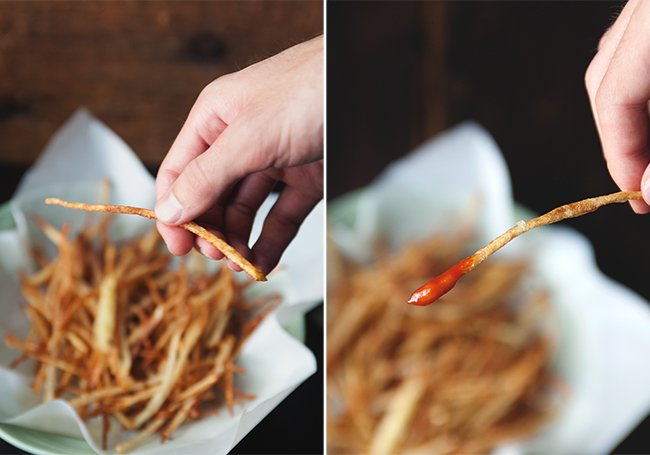
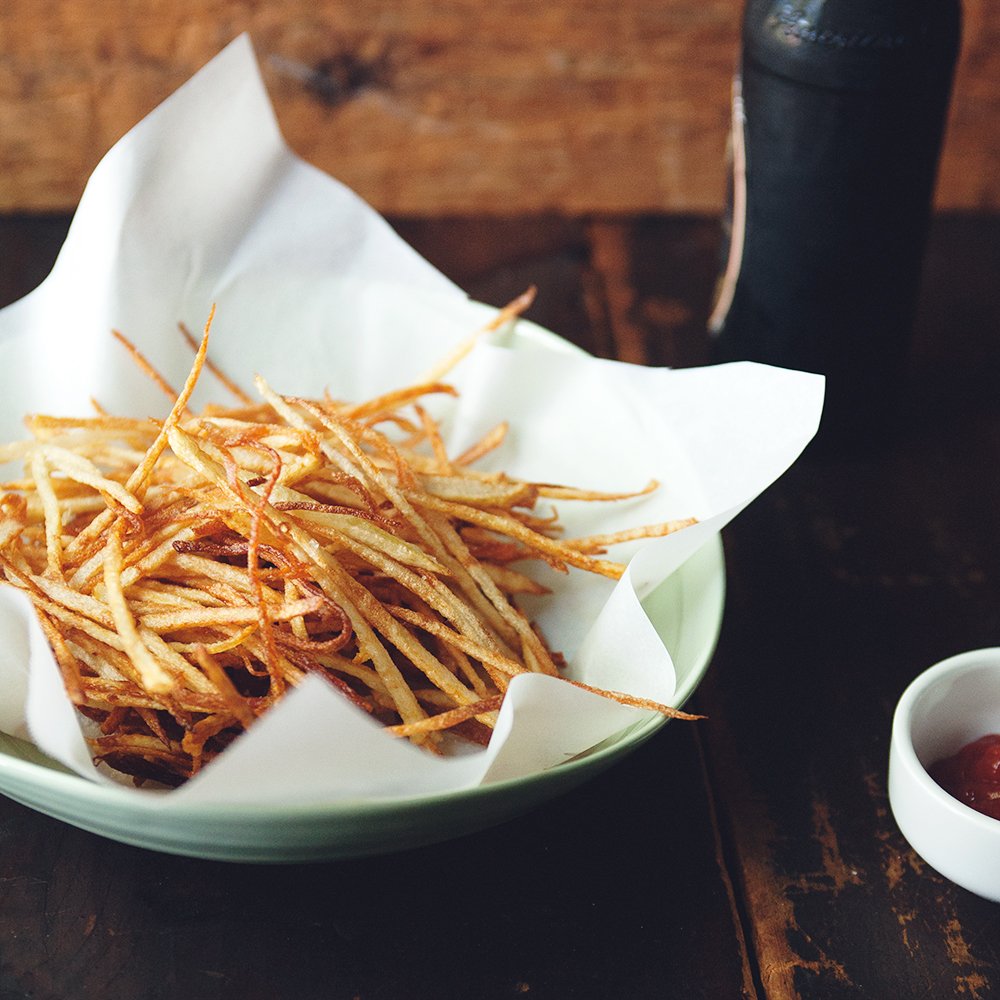
So that’s what I decided to do. I whipped up a batch of these matchstick fries in no time, doused them in salt, pulled out a couple beers from the fridge, and suddenly, happy hour had been transported home with us. Minus the lack of seats.
MATCHSTICK FRIES
Recipe adapted from Barefoot Contessa
Serves 2
Ingredients:
Vegetable oil
1 Idaho potato, peeled
Salt
Directions:
Slice the potato into matchsticks of about 1/8″ thick. You can use a mandoline, but I just hand-sliced without too much difficulty.
Heat about 1/2-inch of oil on medium heat in a medium saucepan with steep sides.
When the oil starts to shimmer, gently drop enough potatoes in the pan so it’s full but not overcrowded (overcrowding will cause the potatoes to stick together). Cook until they turn golden brown, about 5 minutes. Remove them with a slotted spoon and drain them on a paper towel. Continue cooking batches until you run out of potatoes.
Serve with your favorite condiments. Chris likes them as simple as can be, amply salted, and I like them with ketchup.

Related Posts
Subscribe for New Racipies
Get mental health tips, updates, and resources delivered to your inbox.