
Goat Cheese, Roasted Grape, And Walnut Bruschette

Medically reviewed by Christiana George Updated Date: June 8, 2023
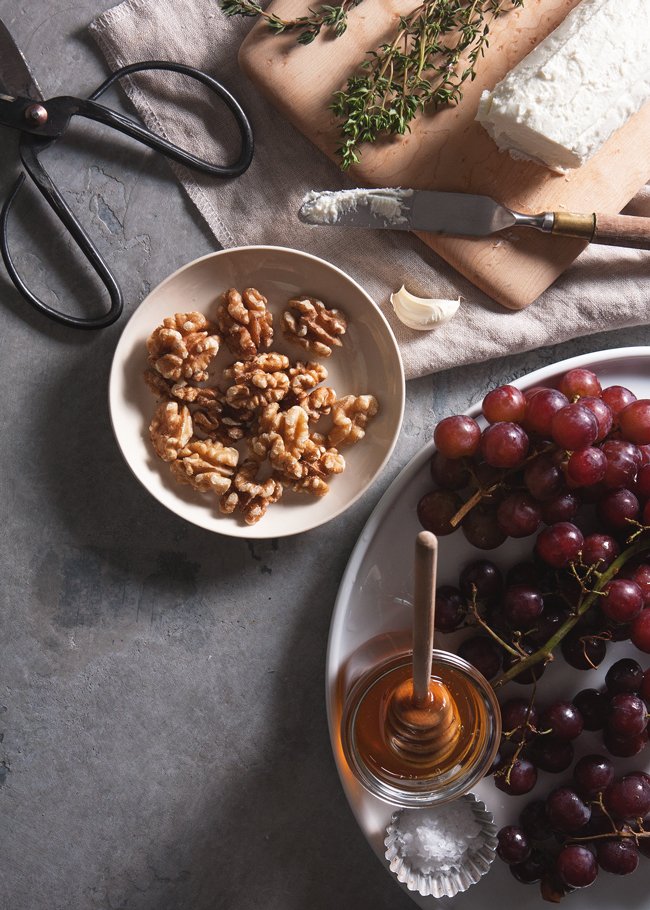
In the fall, you’ll find pounds and pounds and pounds of grapes in my fridge. Until last October, the idea of roasting them would have been preposterous to me, not to mention kind of disgusting. Why would someone do such a thing? What could possibly beat the taste of a fresh Concord or Muscat grape fresh off the vine?
Of course, Concords and Muscats aren’t just any old grape, and if I ever come into a significant amount of money, I’ll probably buy a vineyard where I will plant acres and acres and acres of heirloom varieties that will be grown exclusively to be eaten. And I’ll eat them all, don’t think I won’t. (Question: would it still be considered a vineyard if I wasn’t planning on producing wine?) Regular supermarket grapes are just okay in comparison, but I still enjoy eating them plain when they’re extra-firm and tightly clustered.
After trying chicken roasted with grapes a few months ago, however, I’ve finally come around to the roasting camp. I really liked the way the heat turned the grapes into hot bursts of sweetness.
(I realize I may have made a huge deal over a seemingly insignificant issue, but given how ardently I’d felt about grapes and the only correct way of eating them this was a revelation for me.)
(An aside: a friend of mine called me a grape snob a few years back, and the barb continues to sting. Is it really snooty to be obsessed with heirloom grape varieties? I don’t think so.)

I recently, and finally, got around to buying Polpo, A Venetian Cookbook (Of Sorts). My God is it beautiful. From the cover to the binding to the gorgeous, ethereal photos, its looks are enough reason to buy the book. Hint: flip through it if you’re in need of inspiration. It’s eye fuel, if you will.
But beyond its aesthetically pleasing appearance, it is filled with the most tenderly-chosen recipes. Or so I believe. While they’re nothing revolutionary, each has been jotted down with just the barest of guidelines, suggesting an intuitive understanding—and deep love—of the food. My mom passes tried-and-true recipes on to me that are just as vague, just as instinctive.
But I’m not here to write a cookbook review. I just wanted to share with you the results of my first stab at a recipe, a bruschette (ever since Emiko’s post, I’ve never been able to pronounce ‘bruschette’ the same way again), made with seedless red grapes, goat cheese, walnuts, honey, and thyme.
It isn’t something that can quickly be thrown together, as it does require briefly roasting the grapes and the walnuts in the oven (in two separate pans, what’s more), but the final product is a feast of incongruous elements: hot, juicy grapes ready to burst and bordering on raisin, the oddness of goat cheese mellowed out by floral honey, roasted walnut that’s almost kind of melted yet pleasingly chewy, thyme with all its connotations of warm lovely peasant food, and the underlying scent and taste of garlic, which tips it over the edge, if you ask me. Altogether, wonderful. Make it! For lunch, as an afternoon snack, as an elegant appetizer at a posh dinner party. It will wow you as it will wow guests.
I love how food blogging makes me that much more open to trying new things. Roasted grapes, what an idea.
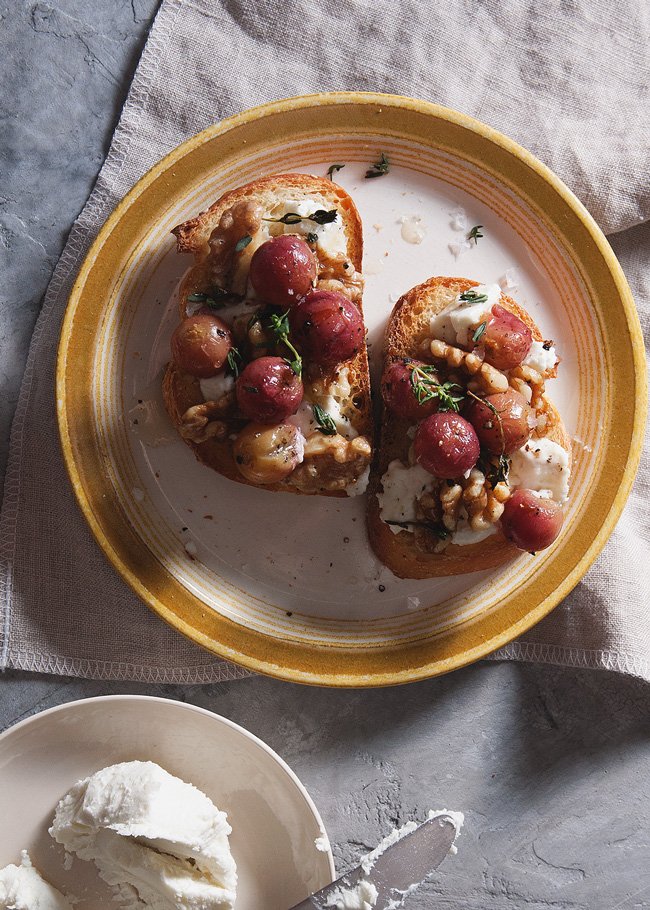
GOAT CHEESE, ROASTED GRAPE, AND WALNUT BRUSCHETTE
From Polpo, A Venetian Cookbook (Of Sorts)
Serves 2
I’m following the format of the book by providing vague measurements. You know what tastes good, so go with your intuition!
Ingredients:
- 10 grapes – any seedless variety
- Small handful of picked thyme leaves
- Extra virgin olive oil
- Sea salt and black pepper
- 10 wanut halves
- 2 thick slices of bread (I used semolina bread)
- 1 garlic clove
- Large handful of crumbly goat cheese
- Honey
Directions:
Preheat the oven to 375 degrees F. In a baking pan, toss the grapes with most of the thyme, olive oil, salt, and pepper. Pop it in the oven for 10 to 15 minutes. In another baking pan, toss the walnuts with some olive oil, and slide it into the oven during the last 5 minutes of roasting the grapes. Remove both from the oven and set aside.
Toast the bread so that it’s pleasantly toasted, but still pliant. Rub the garlic clove into the bread much like you’re using a crayon. Drizzle with some olive oil.
Crumble or smear some goat cheese onto the bread. Add the grapes and walnuts, garnish with some small sprigs of thyme, and drizzle with honey.
Related Posts

Subscribe for New Racipies
Get mental health tips, updates, and resources delivered to your inbox.
Brioche Hamburger Buns, Or Let’s Get That Grill Fired Up


I don’t know about you, but I’ve always viewed hamburger buns as purely functional things. They’re receptacles, carb-wrappers, so you don’t get your hands dirty while eating the truly desirable bits within. Cheese, for instance, and grilled onions, and sauteed mushrooms. Oh right, and the patty too.
Buns are integral to the entire structure of the burger, yet they’ve done little to niggle my desire, warrant my enthusiasm, or raise lustful thoughts (and shouldn’t they? Given their namesake and all). Until now, that is.
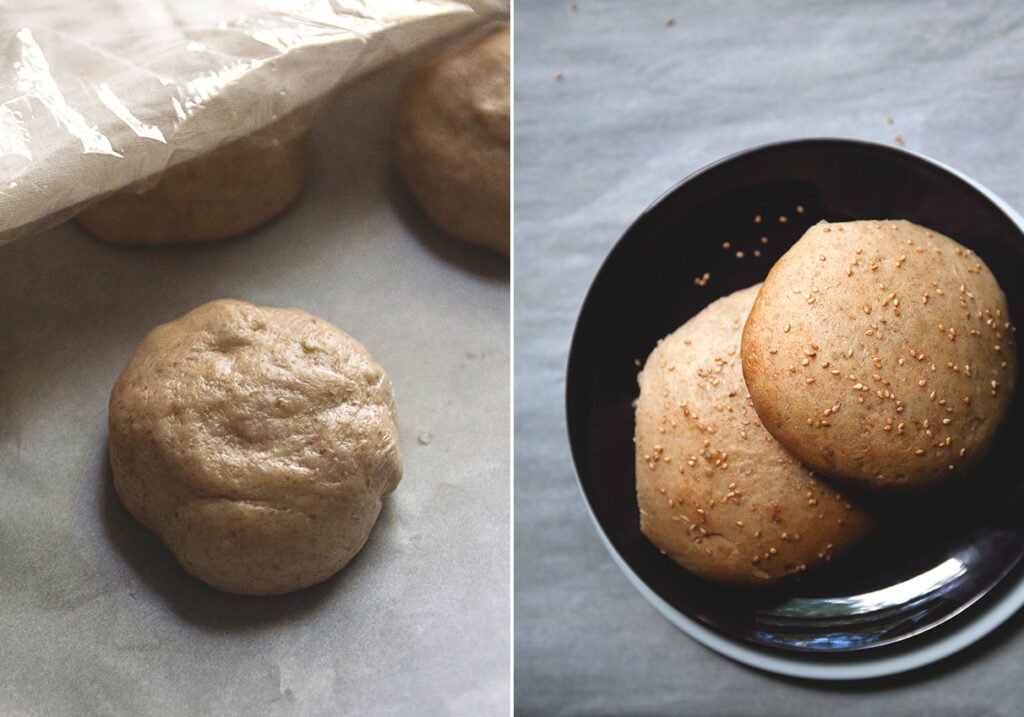
These buns—blogged about by Deb and later Sara—are dreamy: as in, they bake like a dream, come together in a cinch, and their ingredients can be found in most anyone’s pantry. They’re also versatile: I chose all-purpose, whole wheat, and rye flour to go in mine, and they came out hearty but light, soft but complex. But most importantly, they raise the hamburger bun to a higher echelon, one that will no longer be left until the end as an afterthought. And is there anything worse than forcing yourself to eat afterthoughts?
You’ll be ready to fire up your grill after making these.
BRIOCHE HAMBURGER BUNS
Adapted from Smitten Kitchen and Sprouted Kitchen
Makes 8 regular-sized buns
Ingredients:
3 Tbsp warm milk
2 tsp active dry yeast
2-1/2 Tbsp sugar
2 large eggs
1/2 cup whole wheat flour
1/2 cup rye flour
2-1/3 cups all-purpose flour
1-1/2 tsp salt
2-1/2 Tbsp unsalted butter, softened
sesame seeds (if desired)
Directions:
In a glass measuring cup, combine one cup warm water, milk, yeast and sugar. Let stand until foamy, about five minutes. Meanwhile, beat one egg.
In a large bowl, whisk the flours with the salt. Add the butter by rubbing it into the flour between your fingers, making crumbs. Stir in the yeast mixture and beaten egg until a dough forms. Scrape onto a clean, well-floured counter and knead (by scooping it, slapping it onto the counter, and turning) until smooth and elastic (8 to 10 minutes). It should be sticky, so try not to knead in too much flour.
Shape the dough into a ball and return it to the bowl. Cover it with plastic wrap and let it rise until doubled (1 to 2 hours).
Line a baking sheet with parchment paper. Divide the dough into 8 equal balls. Gently roll each ball and arrange them 2 to 3 inches apart. Cover the baking sheet loosely and let the dough rise until doubled (1 to 2 hours).
Set a shallow pan with water in it on your oven floor or lower rack. Preheat the oven to 400 degrees Fahrenheit. Beat the other egg with 1 Tbsp of water and brush the egg wash onto the buns. Sprinkle sesame seeds on top, if using. Put the baking sheet in the oven and bake for about 15 minutes (turning halfway through), until the buns are golden-brown. Transfer to a rack and cool.
Note: I kept them in the fridge for about a week after I baked them and they still tasted good. Just heat them up on the grill or toast them right before eating.
Related Posts



Subscribe for New Racipies
Get mental health tips, updates, and resources delivered to your inbox.