Asparagus Tempura

Medically reviewed by Christiana George Updated Date: January 2, 2026
Asparagus Tempura

I hated asparagus as a kid. My mom would often force unfair amounts on my sister and me that we would then have to choke down. Despair, that was the theme of those meals. (Not that we ever complained. My mom made sure there were no picky eaters in her house.) I also hated—and excuse me for saying this but I feel like it’s the white elephant in the room—how it made my urine smell.

The odor was so freakish, like did it really come out of my body? (I really hope this phenomenon isn’t unique to me, because it would be really embarrassing for me to admit this fact only to learn that no one experiences the same… issue.)

Someone once asked me in fifth grade what vegetable I would choose to be if I had to be a vegetable, and without even hesitating, I said asparagus. “Because it tastes gross, so nobody would want to eat me,” I explained. Come to think of it, I said this before my entire class, and my teacher, Mr. Ford, laughed heartily. Kids say the darndest things, and always with such earnestness.


Asparagus Tempura

Since then, I’ve come to a peaceful truce with the vegetable. It makes its appearance at just the right time every year, right around when my body starts calibrating for the changing season. You know how it goes. There’s the reappearance of green, the sudden bursting of the world into a verdant, shady paradise, and your palate, without warning, shifts gears, and desires all things vegetal.

Oh wait. Spring, with all its connotations of reawakening and rejuvenation, stretching out and the wiping clean of slates, is actually a pretty new experience for me. California winters are hardly unendurable, therefore I’ve never truly appreciated the depths from which one can emerge. Nonetheless, despite having just been initiated to the full effect of this glorious season, the tug for fresh produce is instinctual and urgent.
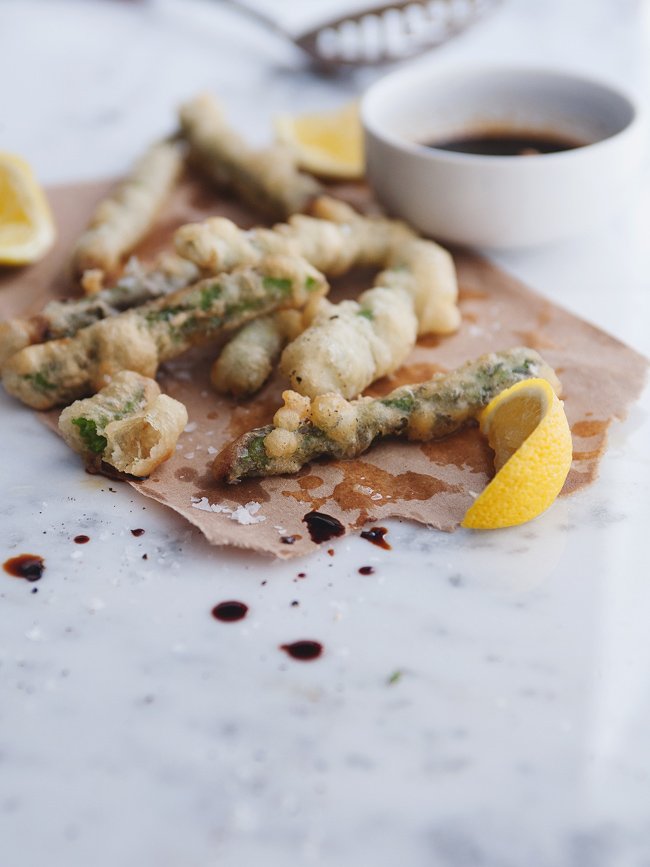
Asparagus Tempura

So far into this season, we’ve been enjoying asparagus steamed or parboiled. While these are the most straightforward of preparations, with nothing but a dash of soy sauce or a sprinkle of salt for flavor, they are usually the most satisfying. I love having asparagus as a side to a bowl of rice or noodles.

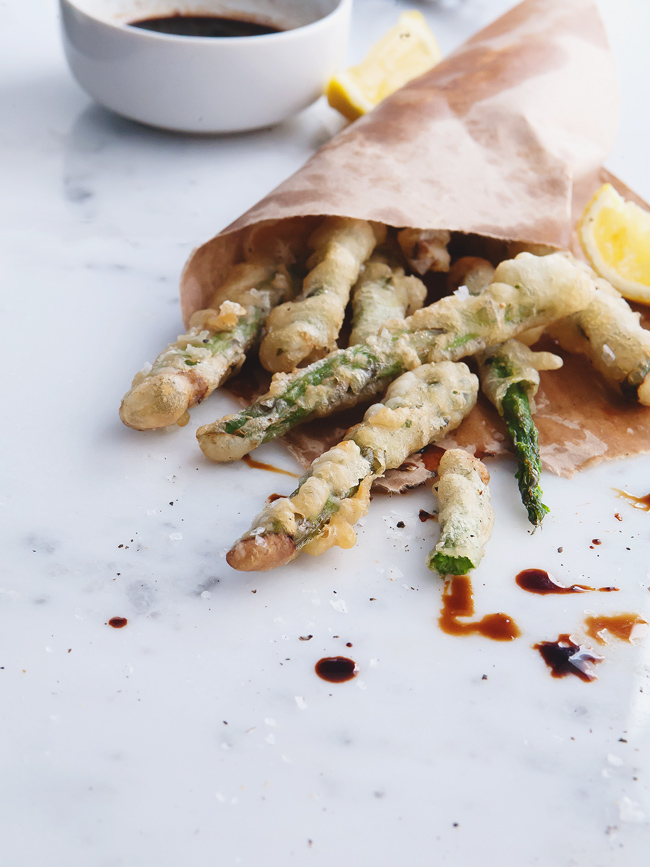
This tempura, though less virtuous, is still elegantly simple. Equal amounts of flour and mineral water result in a light, crisp top layer covering a steaming, sumptuous mass of asparagus underneath. Post-deep-fry, the vegetable has a melt-in-the-mouth quality, which I like contrasted against a soy sauce and ginger dipping sauce.

Also, FYI, tempura can be reinvigorated with some time in the oven. I tossed some—hours-old, mind you, and soggy—onto a pizza, and it tasted great.

Asparagus Tempura

ASPARAGUS TEMPURA

Serves 4

Adapted from Goop


Ingredients:

  • 12 medium stalks of asparagus, trimmed, dried, and sliced in half
  • Vegetable oil for frying
  • 2/3 cup all-purpose flour
  • 2/3 cup sparkling water
  • sea salt & freshly-ground pepper
  • lemon wedges

Directions:

Fill a medium heavy saucepan with about three inches of oil. Heat it up to 375 degrees F.

Place the flour in a medium bowl, then slowly whisk in the water until a smooth paste forms. Do this right before you start deep-frying so that the batter retains the carbonation from the water (which results in a light, airy tempura).

When ready, coat the asparagus in the batter, then gently place it in the oil. Don’t crowd the pan or the asparagus pieces will stick together. Fry until golden, about 2 minutes, then place on a paper towel and sprinkle with salt and pepper. Serve immediately with lemon wedges and soy sauce/ponzu sauce/etc.


Subscribe for New Racipies

Get mental health tips, updates, and resources delivered to your inbox.

Are Eggs Acidic or Alkaline? What Science Says About Eggs and Acidity

Christiana George
Are-Eggs-Acidic-or-Alkaline

TL;DR Summary: Are Eggs Acidic?

  • Chemically: Eggs are slightly acidic. A whole egg’s pH is between 6.0 and 7.0, making it mildly acidic (a pH of 7 is neutral).
  • For Acid Reflux: Eggs are not considered a trigger for most people. In fact, boiled, poached, or scrambled (without fat) eggs are a staple of acid reflux-friendly diets.
  • In the Body (Metabolic): Eggs are considered mildly acid-forming. This does not mean they cause acidity in your stomach or change your blood’s ph. It refers to their “Potential Renal Acid Load” (PRAL), or the metabolic waste they produce, which your kidneys easily manage.

Quick Answer: The 3 Truths About Egg Acidity

The confusion around eggs and acidity is understandable. Let’s clear it up.

  1. Chemical Acidity (Food pH): This is the literal pH of the egg itself. Fresh eggs are very close to neutral.
  2. Symptom Acidity (Acid Reflux): This is the feeling of “acidity” or heartburn (GERD). For most people, eggs do not cause this.
  3. Metabolic Acidity (Body pH): This refers to the “alkaline diet” concept. Here, eggs are mildly acid-forming (but this is not bad for you).

Here is a simple breakdown of the egg’s chemical pH, which is what most people are asking about first.

Egg Type / PreparationApproximate pHAcidic/Alkaline Classification
Raw Egg White7.6 – 8.0 (fresh)Slightly Alkaline
Raw Egg Yolk6.0 – 6.4Mildly Acidic
Raw Whole Egg (Blended)6.5 – 7.0Slightly Acidic to Neutral
Hard-Boiled Egg~6.0 – 6.5Mildly Acidic
Scrambled Egg (Cooked)~6.0 – 6.5Mildly Acidic
Poached Egg~6.0 – 6.5Mildly Acidic

As you can see, the egg itself is chemically mildly acidic, with a pH very close to neutral (7.0). This level of acidity is far less than other breakfast staples like coffee (pH 4.5) or orange juice (pH 3.5).


Understanding the “Acidic vs Alkaline” Concept

To understand where eggs fit, we must define the two different types of “acidity” people talk about.

1. Chemical pH (The Food Itself)

The pH scale runs from 0 (highly acidic) to 14 (highly alkaline), with 7 being neutral.

  • Acidic: Lemon juice (pH 2-3), Vinegar (pH 2-3), Coffee (pH 4.5)
  • Neutral: Pure Water (pH 7)
  • Alkaline: Baking Soda (pH 9), Broccoli (pH 6.9-7.2)

Based on this, an egg (pH ~6.5) is chemically acidic, but about 1,000 times less acidic than a lemon.

2. Metabolic Acid Load (What Happens After Digestion)

This is the central concept of the “alkaline diet” and is much more complex. It’s measured by a value called PRAL (Potential Renal Acid Load).

  • Alkaline-Forming Foods (Negative PRAL): When you digest foods like fruits and vegetables, they leave behind alkaline minerals like potassium and magnesium. This results in a negative acid load for your kidneys to process.
  • Acid-Forming Foods (Positive PRAL): When you digest foods high in protein and phosphate—like meat, cheese, and grains—they leave behind byproducts like sulfuric acid and phosphoric acid. This results in a positive acid load for your kidneys.

Where do eggs fit? Eggs have a moderate PRAL score (around 8.0), making them mildly acid-forming. This is simply because they are a rich source of sulfur-containing amino acids (like methionine), which are essential for your health.

The Great pH Myth: You Cannot Change Your Blood pH

This is the most important fact I can share as a physician: You cannot and do not want to change your body’s blood pH with food.

Your body is not a swimming pool. It is a highly advanced system. Your lungs and kidneys work 24/7 to keep your blood pH in a critically tight, slightly alkaline range of 7.35 to 7.45.


If your blood pH were to move even slightly outside this range, you would be in a state of metabolic acidosis or alkalosis and would require emergency medical attention.

When you eat an “acid-forming” food like an egg or “alkaline-forming” food like spinach, you are not changing your blood pH. You are only changing the pH of your urine—which is precisely your kidneys’ job! Seeing a change in urine pH simply proves your body is working perfectly.

Do Eggs Cause Acidity or Acid Reflux?

This is the most common reason people search “are eggs acidic.” You’re not asking about PRAL; you’re asking, “Will eating eggs give me that awful burning sensation?”

The short answer: For most people, no. Eggs are considered a GERD-friendly food.

The Real Mechanism of Acid Reflux

Acid reflux (GERD) is not caused by eating “acidic” foods (though they can aggravate an already-irritated esophagus). Reflux is a mechanical problem.

  1. You have a muscular valve called the lower esophageal sphincter (LES) between your esophagus and your stomach.
  2. This valve is supposed to stay tightly shut to keep stomach acid (which has a brutally low pH of 1.5-3.5) in your stomach.
  3. Reflux happens when this valve relaxes or weakens, allowing acid to splash up into your esophagus, which has no protection against it.

The main dietary triggers for reflux are foods that relax the LES or delay stomach emptying (making your stomach fuller for longer).

Common Triggers:

  • High-fat foods
  • Chocolate
  • Peppermint
  • Caffeine
  • Alcohol
  • Spicy foods

Eggs Are Reflux-Friendly, But Your Cooking Method Isn’t

Eggs themselves are low in fat and high in protein. They do not appear on the list of common triggers for relaxing the LES. However, this is where the confusion about “are eggs high in acidity” comes from.


  • Boiled or Poached Eggs are Reflux-Friendly: This is the egg in its purest form—high protein, low fat. They are easy to digest and very unlikely to cause symptoms.
  • Fried or Creamy Egg Dishes Can Worsen Reflux: The problem isn’t the egg; it’s the fat you cook it with.
    • Fried eggs (in oil or butter)
    • Scrambled eggs (with lots of butter, cream, or cheese)
    • Omelets (loaded with full-fat cheese and bacon)

These high-fat preparations can dramatically slow down gastric emptying and relax the LES, leading to a night of heartburn. So, if you’re asking, “does egg cause acidity,” the answer is: the egg itself, no; the grease you cook it in, yes.

Are Hard-Boiled, Scrambled, or Poached Eggs Acidic?

Let’s break down the most popular ways to eat eggs and their impact on your body and your symptoms.

Hard-Boiled Eggs

  • Are hard-boiled eggs acidic? Yes, like all cooked eggs, they are chemically mildly acidic (pH ~6.0-6.5).
  • Reflux-Friendly? Yes. This is one of the best ways to eat eggs if you have GERD. They contain zero added fat, are easy to digest, and the high-quality protein can help you feel full, which prevents overeating (a major reflux trigger).

Poached Eggs

  • Acidity: Chemically mildly acidic (pH ~6.0-6.5).
  • Reflux-Friendly? Yes. Like hard-boiled eggs, poached eggs have no added fat. They are gentle on the stomach and an excellent choice for an acid reflux-friendly diet.

Scrambled Eggs

  • Are scrambled eggs acidic? The eggs themselves are mildly acidic (pH ~6.0-6.5).
  • Reflux-Friendly?It depends entirely on the preparation.
    • GERD-Safe: Scramble eggs in a non-stick pan with a splash of water or low-fat milk. Do not add butter or oil.
    • GERD Trigger: Scramble eggs with multiple tablespoons of butter, heavy cream, or large amounts of cheese. This becomes a high-fat meal that can easily trigger reflux symptoms.

Egg Whites vs. Egg Yolks

  • Egg Whites: Fresh egg whites are naturally alkaline (pH 7.6-8.0) and become more alkaline as the egg ages (up to 9.7). They contain high-quality protein and almost zero fat. For people with severe GERD, egg whites are often the safest food to eat.
  • Egg Yolks: Yolks are mildly acidic (pH 6.0-6.4). They contain all the egg’s fat and are also where the acid-forming sulfur compounds are concentrated. If you are extremely sensitive, you may find that the yolk is a mild trigger, but this is rare. For most, the fat in the yolk is not enough to cause a problem unless more fat is added during cooking.

Comparison: Cooking Method and Reflux Risk

Cooking MethodChemical pHMetabolic Load (PRAL)Acid Reflux (GERD) Risk
Hard-BoiledMildly AcidicMildly Acid-FormingVery Low
PoachedMildly AcidicMildly Acid-FormingVery Low
Scrambled (No Fat)Mildly AcidicMildly Acid-FormingLow
Fried (in Oil/Butter)Mildly AcidicMildly Acid-FormingHigh
Omelet (with Cheese)Mildly AcidicAcid-FormingHigh

Are Eggs Acidic in the Morning?

This is a common search, and it’s less about the egg and more about the timing.

The idea that an egg is “more acidic” in the morning is a myth. The egg’s pH is constant. What is different is your body.

After an overnight fast, your stomach is empty and the acid (pH 1.5-3.5) is highly concentrated. Eating any food will cause the stomach to produce more acid to digest it.

If you experience reflux in the morning after eating eggs, it’s more likely due to one of these factors:

  1. You fried the eggs in butter or oil (the fat is the trigger).
  2. You paired the eggs with known triggers like coffee, orange juice, or a greasy breakfast sausage.
  3. You ate too quickly or too large a portion, overwhelming your stomach.

Expert Tip: To create a perfectly balanced, reflux-friendly breakfast, pair your eggs with alkaline-forming foods. The “alkaline” (negative PRAL) foods will help buffer the “acid” (positive PRAL) from the eggs.

  • Try this: A two-egg scramble (no fat) with a large handful of spinach (highly alkaline) and a side of avocado (alkaline). This is a nutrient-dense, GERD-friendly, and pH-balanced meal.

Alkaline vs. Acidic Foods — Where Eggs Fit In

If you are following an alkaline diet, it’s important to understand that the goal isn’t to only eat alkaline foods. The goal is to achieve a balance. A healthy ratio is often cited as 70-80% alkaline-forming foods and 20-30% acid-forming foods.

Eggs fall into the mildly acid-forming category. They are far less acid-forming than red meat, processed cheese, or sugary sodas.


Here is a simplified list to help you visualize:

Alkaline-Forming Foods (Negative PRAL)Acid-Forming Foods (Positive PRAL)
Vegetables: Spinach, Kale, Broccoli, CucumberHigh-Protein: Red Meat, Poultry, Fish
Fruits: Avocado, Lemon, Lime, Banana, Melons*Dairy: Cheese (especially hard cheeses)
Nuts/Seeds: Almonds, FlaxseedGrains: White Bread, Processed Grains, Rice
Other: Herbal Tea, Ginger, Sweet PotatoesOther: Soda, Sugar, Alcohol, Coffee
EGGS (Mildly Acid-Forming)

*Yes, lemons are chemically acidic (pH 2) but are metabolically alkaline-forming (negative PRAL). This is the classic example of the two concepts.

What Foods Have No Acid in Them? (and pH-Neutral Pairings)

If you are suffering from GERD, you’re often looking for “safe” foods. While very few foods are perfectly neutral, many are low-acid and well-tolerated.

Low-Acid & Reflux-Friendly Foods:

  • Bananas
  • Melons (Cantaloupe, Honeydew)
  • Oatmeal
  • Spinach and Kale
  • Cauliflower
  • Potatoes and Sweet Potatoes
  • Almond Milk
  • Avocado
  • Lean Poultry (chicken, turkey)
  • Fish (not fried)
  • Boiled or Poached Eggs

Acid Reflux-Friendly Breakfast Ideas (Snippet Target)

  1. The Safe Scramble: Two eggs scrambled with spinach and a splash of almond milk (cooked in a non-stick pan).
  2. The Classic: Two hard-boiled eggs with a side of oatmeal (made with water or almond milk).
  3. The Modern: One poached egg on top of avocado toast (using whole-grain, non-sourdough bread).

Are Eggs Bad for Acid Reflux? A Clinical Take

As a doctor, my answer is no, eggs are not inherently bad for acid reflux. They are a highly nutritious, affordable, and convenient source of high-quality protein.

The fat content in the yolk can be a mild trigger for highly sensitive individuals because fat delays gastric emptying. However, for 9 out of 10 patients, the problem is not the egg; it’s the added fat.

If you have GERD, follow these practical tips:

  • Cook smart: Boil, poach, or scramble without butter or oil.
  • Avoid trigger pairings: Do not eat your eggs with bacon, sausage, or home fries.
  • Portion control: Eat a smaller meal. Instead of a 3-egg omelet, have 2 boiled eggs.
  • Stay upright: Do not lie down for at least 2-3 hours after eating to let gravity help keep acid down.

Alkaline Alternatives to Eggs

If you find that eggs (even boiled) still trigger your symptoms, or if you’re looking for vegan, alkaline-forming breakfast options, here are some excellent alternatives:

  • Tofu Scramble: Firm tofu is a great, high-protein substitute. When crumbled and sautéed with turmeric (for color) and spinach, it’s a fantastic, alkaline-forming meal.
  • Chickpea Flour Omelet: Chickpea flour is high in protein and alkaline-forming. You can make a batter that fries up just like an omelet.
  • Green Smoothies: Blend spinach, kale, avocado, half a banana, and almond milk for a highly alkaline, easy-to-digest liquid breakfast.

Related Topics – Acidic Foods to Limit

Your search for “are eggs acidic” shows you’re building a mental list of safe and unsafe foods. Let’s tackle a few more.


  • “Is chicken acidic?”
    • Chemical: Mildly acidic (pH ~6).
    • GERD: An excellent, lean protein. One of the best foods for a GERD diet (when baked or grilled, not fried).
    • PRAL: Acid-forming (like all meat).
  • “Is fish acidic?”
    • Chemical: Mildly acidic (pH ~6.2-6.6).
    • GERD: A fantastic choice. Low-fat fish (cod, tilapia) are extremely safe. Even fattier fish (salmon) is high in anti-inflammatory omega-3 fats and well-tolerated by most.
    • PRAL: Acid-forming (like all meat).
  • “Is bread acidic?”
    • Chemical: Yes, most bread is acidic (pH 5.0-6.0), especially sourdough.
    • GERD: Can be a trigger for some. Processed white bread can be G-I-irritant.
    • PRAL: Acid-forming (like all grains).

How to Tell If Your Body Is Acidic or Alkaline

This is a critical, and often misunderstood, question. As I mentioned earlier, you cannot tell if your “body” is acidic, because your body’s blood pH is not changeable by diet.

You may have seen urine pH test strips. Urine pH does not equal body pH.

Your urine’s pH changes throughout the day based on what you eat, what you drink, and your metabolism.

  • Eat a big steak? Your urine will become more acidic as your kidneys excrete the acid load.
  • Eat a huge spinach salad? Your urine will become more alkaline.

This is not a sign of your overall health; it’s a sign your kidneys are working. Please do not waste your time or money chasing a “target” urine pH. Instead, focus on the habits that actually support your body’s natural balance:

  • Eat a balanced diet rich in fruits and vegetables.
  • Stay hydrated with water.
  • Get regular exercise.
  • Prioritize sleep.

Your kidneys and lungs will handle the rest.

Medical Expert Opinion: Are Eggs Healthy Overall?

Yes. Eggs are one of the most nutrient-dense foods on the planet.

For decades, eggs were unfairly villainized for their cholesterol content. However, extensive research, including a 2020 report from the American Heart Association, has shown that for most people, dietary cholesterol from eggs does not significantly raise blood cholesterol or increase the risk of heart disease.

One large egg contains:

  • ~6 grams of high-quality protein
  • 13 essential vitamins and minerals
  • Choline: A vital nutrient for brain health and development.
  • Lutein and Zeaxanthin: Antioxidants crucial for eye health.
  • Vitamin D

For most people, eggs are a healthy, non-problematic, and highly beneficial food.

Summary: Should You Eat Eggs If You’re Concerned About Acidity?

Let’s recap the key takeaways:


  1. Eggs are mildly acidic (pH ~6.5), but this chemical pH has little to no effect on your body or symptoms.
  2. Eggs do not cause acid reflux (GERD) for most people. The fat they are cooked in (butter, oil, cheese) is the real culprit.
  3. Choose your preparation wisely: Stick to hard-boiled, poached, or no-fat-scrambled eggs if you have GERD.
  4. Eggs are “acid-forming” (PRAL) in the metabolic sense, but this is a normal process and does not make your body “acidic.”
  5. You cannot change your blood pH with food. Your kidneys and lungs are in full control.
  6. Eggs are a nutritional powerhouse. Unless you have a specific allergy or sensitivity, they are a healthy and safe part of a balanced diet.

Final Verdict: Listen to your body. If you eat two hard-boiled eggs and feel great, you have your answer. If you eat a greasy, cheesy omelet and get heartburn, don’t blame the egg—blame the add-ins.

References:

  1. NIH (National Institutes of Health): “Diet and GERD: What We Eat.” (Discusses triggers like fat, caffeine).
  2. PubMed: “Dietary acid load and its association with blood pressure and other cardiovascular risk factors.” (Explains PRAL).
  3. PubMed: “The effect of a high-fat meal on lower esophageal sphincter function in healthy subjects.
  4. Mayo Clinic: “GERD: Lifestyle and home remedies.” (Recommends low-fat foods).
  5. USDA FoodData Central: (Database for food pH and nutritional content).
  6. American Heart Association: “Dietary Cholesterol and Cardiovascular Risk.” (2020).
  7. Journal of the American College of Nutrition: “The role of eggs in a balanced diet.”
  8. World Health Organization (WHO): “Nutrition and a balanced diet.”


Subscribe for New Racipies

Get mental health tips, updates, and resources delivered to your inbox.