
Fava Bean Salad With Mint And Ricotta Cheese

Medically reviewed by Christiana George Updated Date: June 8, 2023
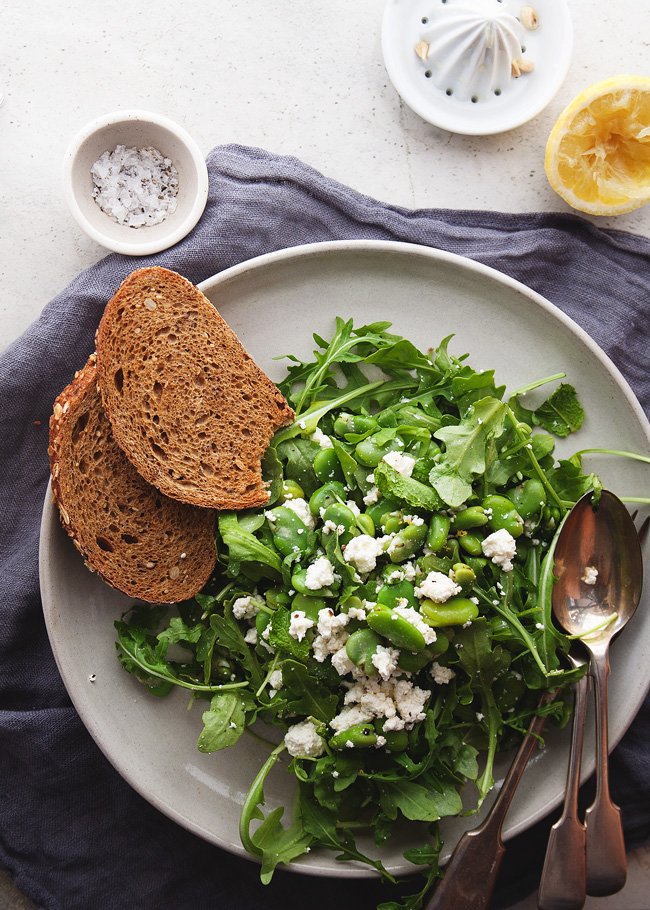
Alright folks, I’m calling a temporary hiatus on the sweet and the sugary, buttery and just plain fattening. I’m on a diet! It’s not one of those diets where I want to gradually lose weight by crafting a healthy, sustainable lifestyle. No no no, I need to drop pounds quickly because I’m getting married in exactly two months!!! (The invitations went out last week; we’ve officially mobilized the troops. Gulp.)
For the record, because I know there are those of you reading this who know me in real life (hi Jeannie!), I am not overweight. But the food bloggers among you might be a little more understanding. After all, we make food, and lots of it. And unless your will is made of steel, you’re bound to eat more than you’d like. (My will is made primarily of marshmallows.) I tried on a few shirts the other day, shirts that fit me perfectly fine last summer, and realized that they’d grown a little snug. Not good, not good at all.
So that’s the story behind this recipe. As I’ve never seriously undergone a diet before, I’m not sure how to approach this new way of eating. It’s not like I eat unhealthily most of the time, ya know? So I’ll rely on common sense rather than the dictates of an official Diet, that is, lots of vegetables, lots of fruit, smaller portions, etc. etc. Nothing revolutionary or dramatic. We don’t even own a scale.


I absolutely love fava beans. After receiving my copy of Polpo awhile back, I’d made a note to myself to make a certain broad bean, mint, & ricotta bruschette as soon as broad beans (also known as fava beans) were in season. The time has come. But instead of serving the bruschette on toasted bread, I decided to toss it on a bed of arugula instead, thereby turning it into a vegetable-packed and therefore very wholesome meal.
It’s the trinity of fava beans, mint, and lemon zest that serve as the backbone to this salad’s flavor. Or rather, the mint and lemon zest do wonders to the flavor of the fava bean, brightening its somewhat stodgy taste. (You know what I mean, right? It’s part of the reason why I love fava beans.) With the roundness of ricotta cheese and the sharpness of arugula, I think this recipe came out really well-balanced and flavorful. (Although, and I’m realizing this only now, I do believe fava beans might be out of season… are they? They came exceptionally late to our farmer’s markets this year, and I held onto this recipe for a bit longer than I should have. Sorry!)

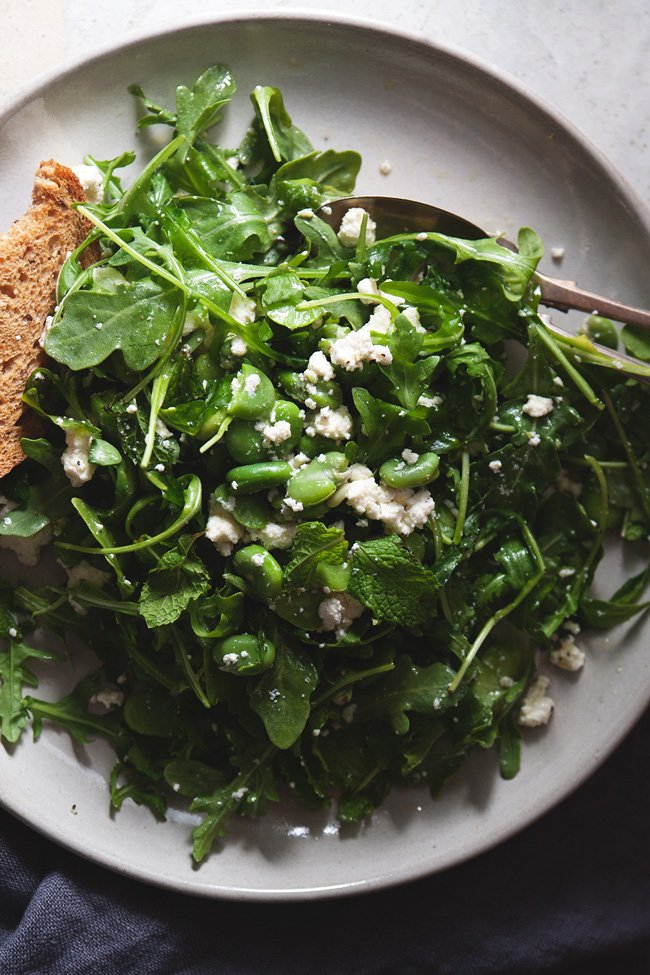
So if everything goes as planned, in two months’ time, I’ll be ready to face the people. (Yes, some part of me realizes how melodramatic I sound. But please don’t get me started on how ridiculous the societal pressures on the bride-to-be are. A wedding is supposed to be about the witnessing of a spiritual union between two people who’ve made a committment to spend the rest of their lives together. So why do I feel like I’m supposed to present myself at my most beautiful and blushing? How have I lose sight of the whole point? Why do I care so much?! … I’ll have all the answers when this is all over.)
FAVA BEAN SALAD WITH MINT AND RICOTTA CHEESE
Adapted from Polpo
Serves 2 pretty hefty portions
Ingredients:
- 2 cups podded fava beans
- 1/2 cup ricotta cheese (preferably homemade—easy as pie, promise!)
- 30 mint leaves
- 3 handfuls arugula
- 2 Tbsp olive oil
- Zest of one lemon and a good squirt of lemon juice
- Salt and fresh pepper to taste
Directions:
Place the fava beans in boiling water for a couple minutes, then plunge into cold water, drain, and remove their skin. Toss the beans carefully with the cheese, and mint leaves, and arugula. Then mix in the olive oil and lemon zest/juice until combined.
Serve with salt and pepper, and any kind of bread.
Related Posts


Subscribe for New Racipies
Get mental health tips, updates, and resources delivered to your inbox.
Maple Dumplings

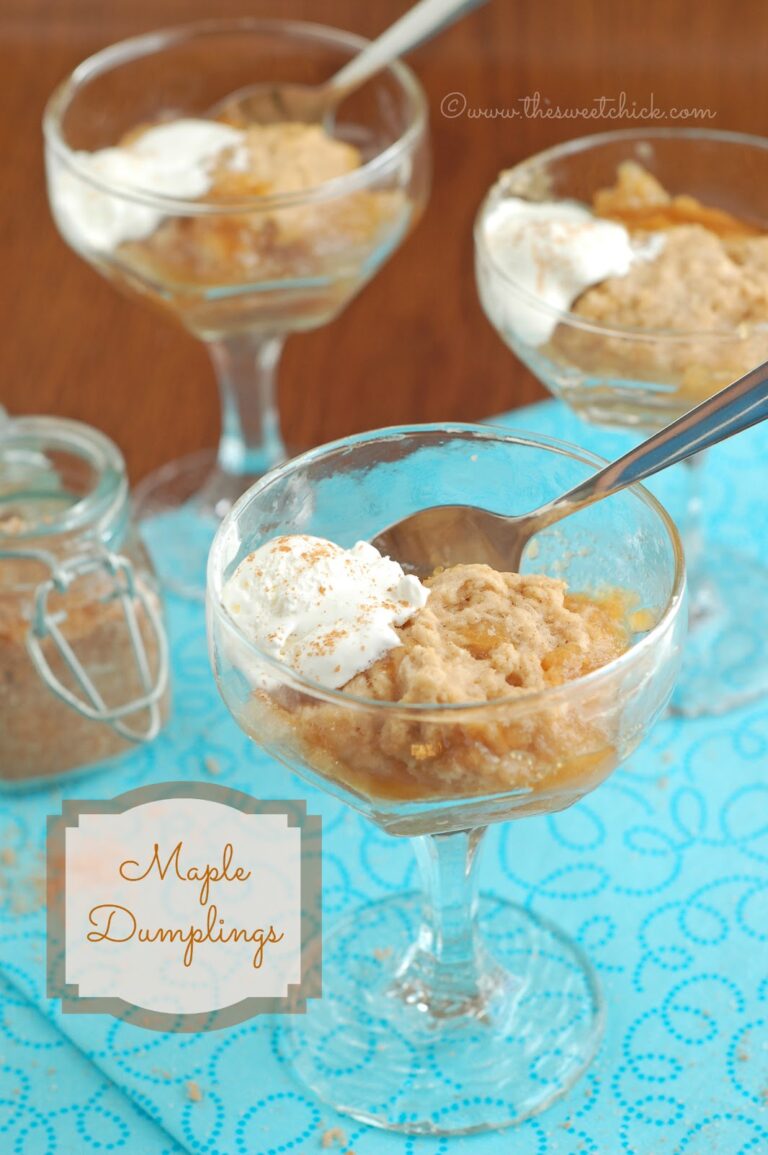
Maple season is over in our parts and I have lots of maple syrup to use to make goodies. This recipe is one that my mom used to make us all the time while growing up. It’s quick, easy, and it’s full of maple syrup. Of course, I called my mom for her recipe , but she was not very specific on measurements. And she calls back later to say she forgot one ingredient. Don’t worry mom, I Googled it.
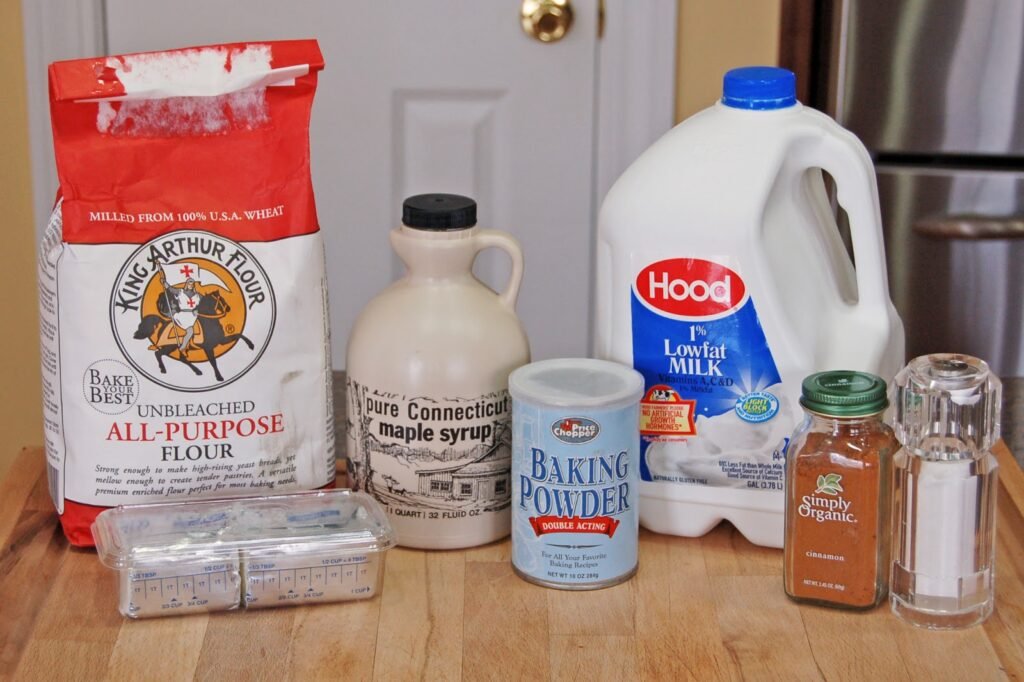
I found a recipe that closely resembled my mom’s. In Quebec this dish is called Grand-Père dans le Sirop. I just replaced the butter with Crisco, because that it what mom uses and I baked it in the oven instead of cooking it on the stove-top, just like mom. Then I added some cinnamon to the dough, because I felt like it. I happen to enjoy the taste of cinnamon and maple.
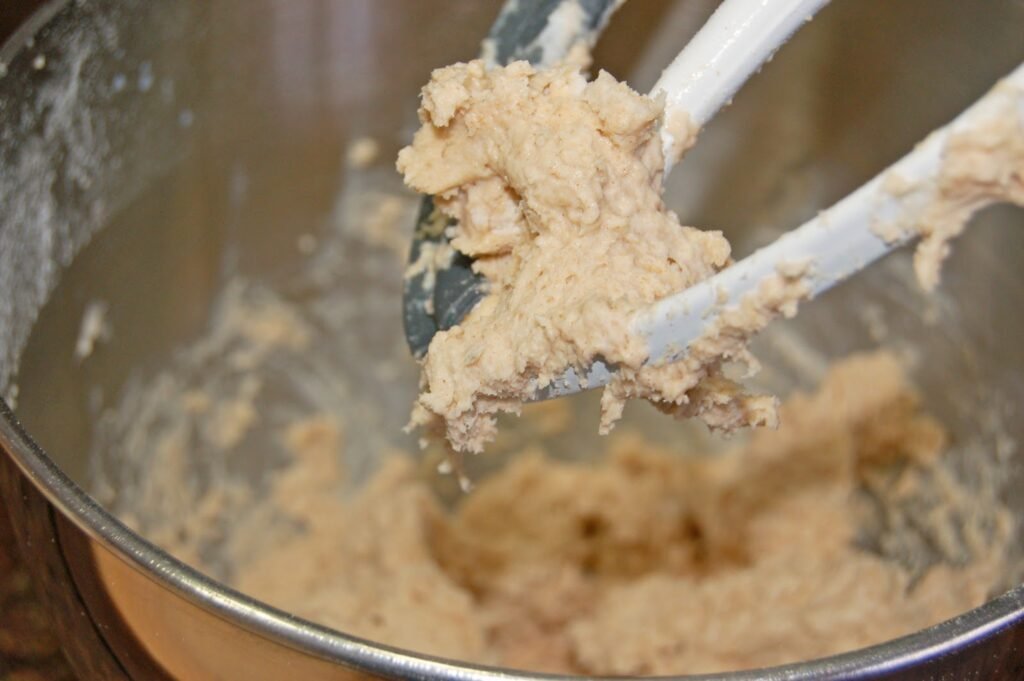
The dough needs to be on the thick side, because you need to form it into balls and line them up in a 9×13 glass dish.
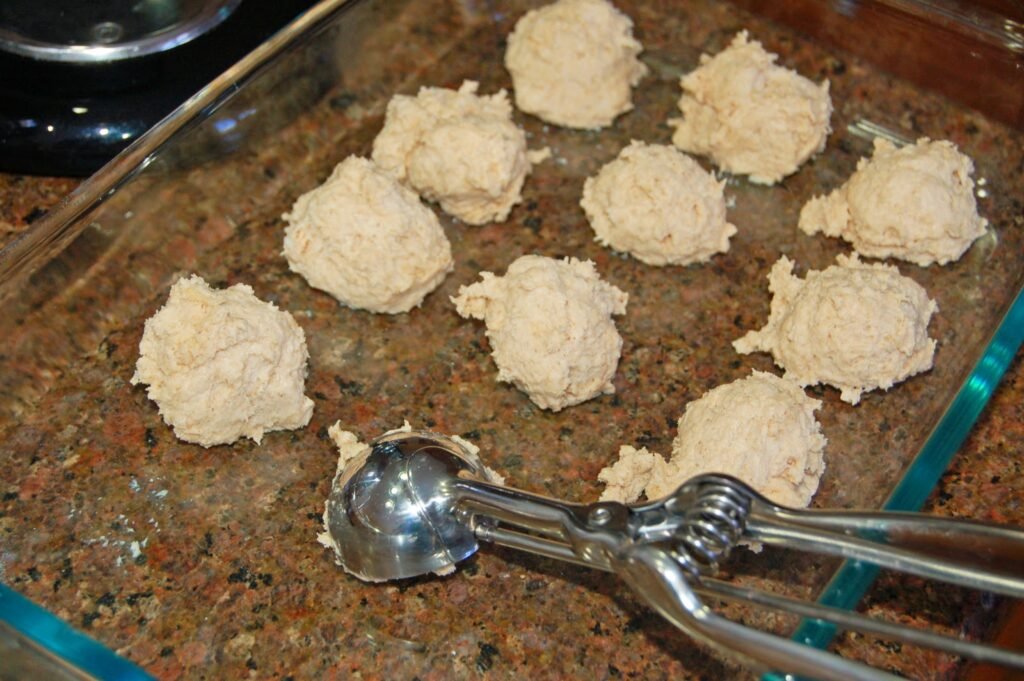
I used a large scoop, about the size of a scoop of ice cream. The dough will puff up and spread, so no need to be perfect.
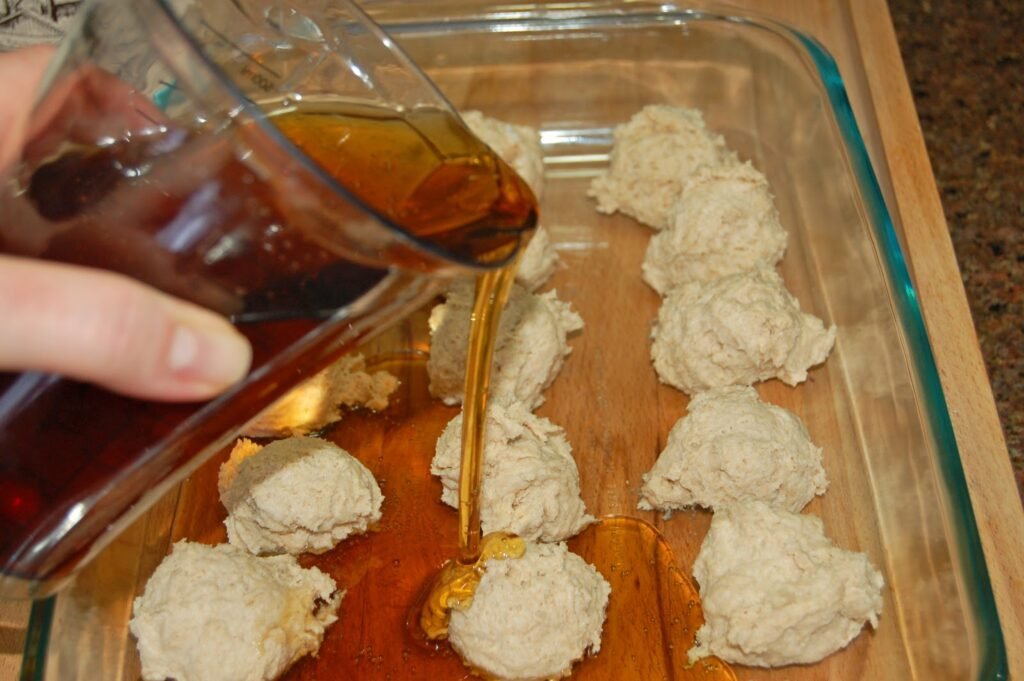
And then the best part, pour the pure maple syrup over all the dough and bake it in the oven.
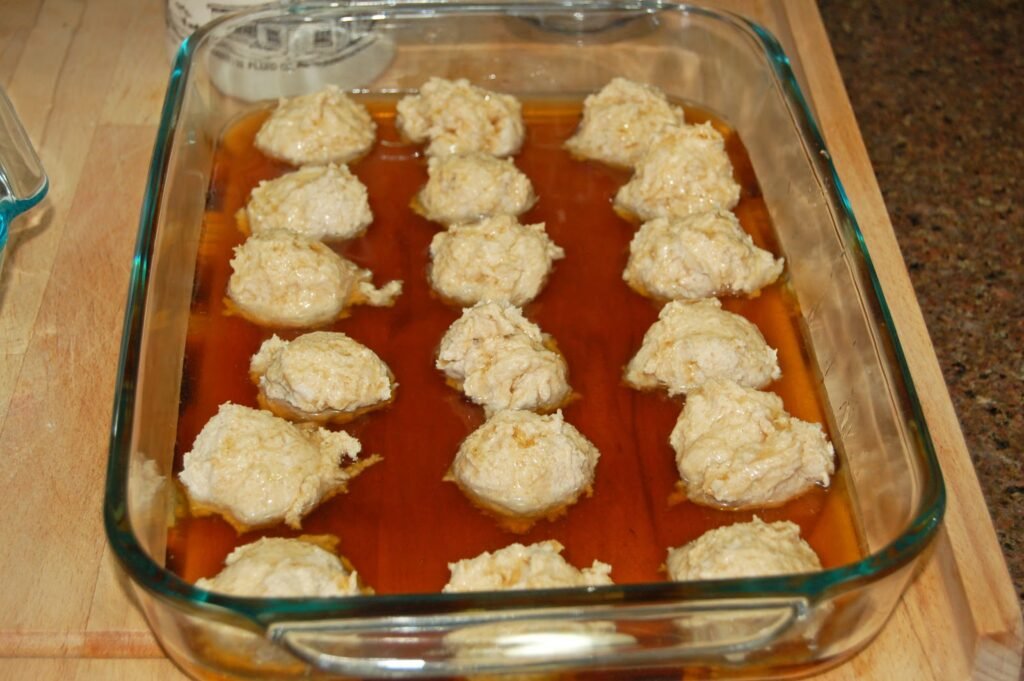
See, I told you it was easy. You’ll love the smell that baking this treat brings to your kitchen.
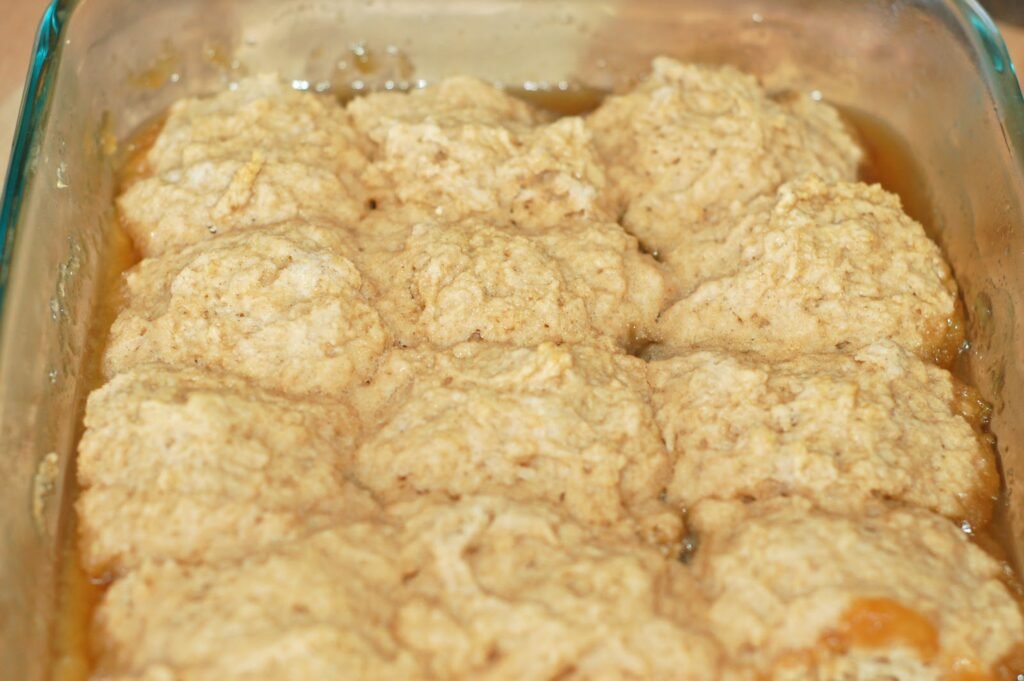
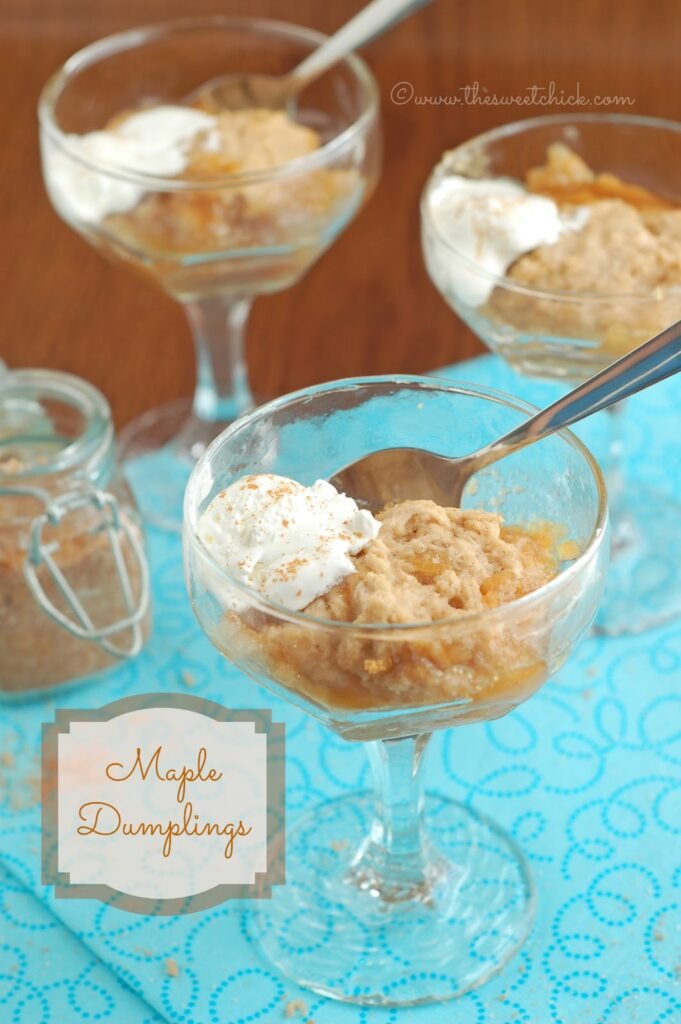
When it comes out of the oven the dough will have absorbed a lot of the maple syrup . The top of the dough will have a slight crispness to it, but the bottom is where the treasure is. The bottom of the dough will be soft and soaked with sweet maple syrup. The remaining syrup in the dish will have thickened and you can pour it over the dough. This dish is best served warm with a scoop of vanilla ice cream or whipped cream.
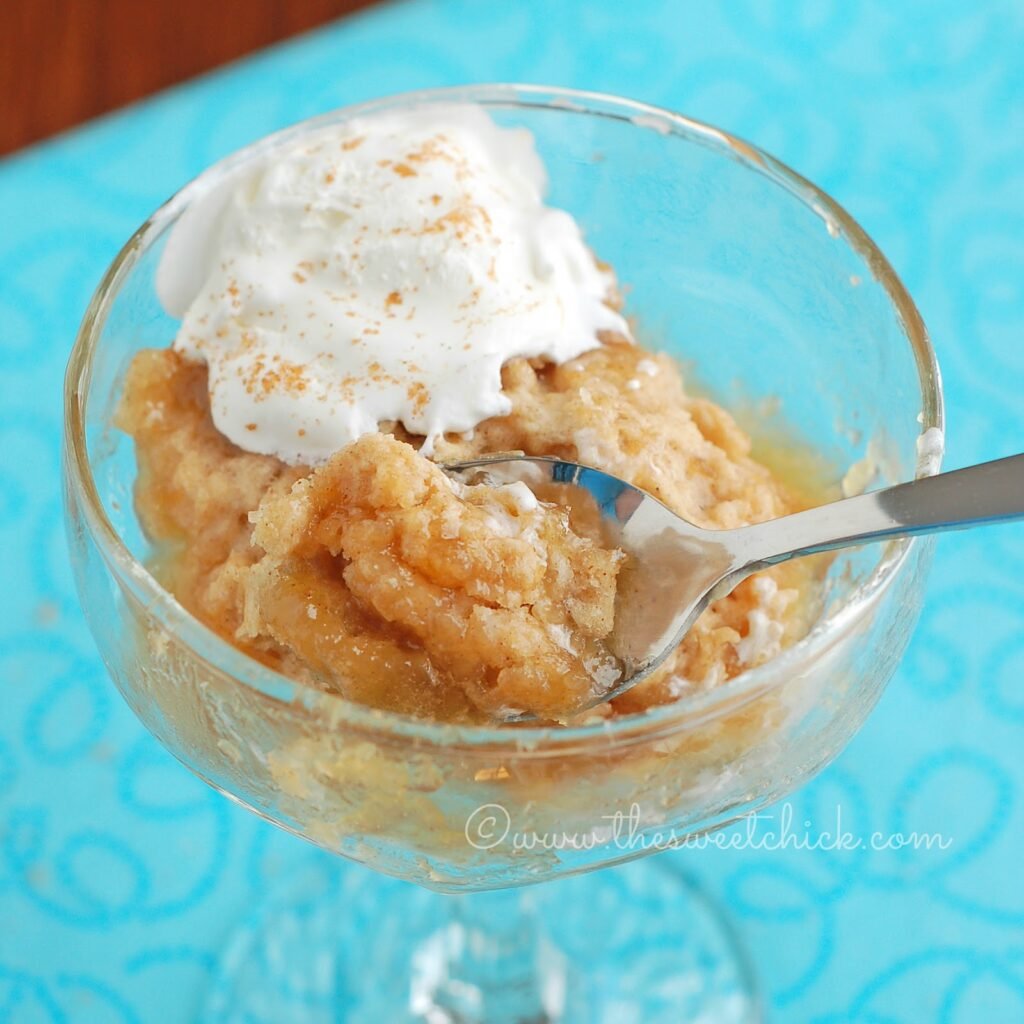
Just look at all that maple gooeyness at the bottom. That’s where all the flavor is. And yes, the addition of cinnamon was the right choice. I even sprinkled some cinnamon sugar on the whipped cream.
Maple Dumplings
by The Sweet Chick
Prep Time: 10 minutes
Cook Time: 20-25 minutes
Keywords: bake dessert maple syrup dumplings casserole French Canadian spring
Ingredients (18 servings)
- 2 cups all purpose flour
- 1 cup milk
- 4 teaspoons baking powder
- 4 tablespoons vegetable shortening (Crisco)
- 1 pinch salt
- 1 teaspoon cinnamon
- 2 cups maple syrup
- 1/2 cup water
Instructions
Preheat oven to 350º F
In a stand mixer combine the flour, milk, baking powder, vegetable shortening, salt and cinnamon. Mix on low until all incorporated and dough forms. Scrape sides of bowl as needed.
With a large scoop, scoop dough into even balls and place in a 9 x 13 glass dish.
Pour maple syrup over the balls of dough, then pour the water over the syrup.
Bake at 350º F for 20-25 minutes or until a toothpick inserted in the dough comes out clean.
Related Posts


Subscribe for New Racipies
Get mental health tips, updates, and resources delivered to your inbox.