
Are Sumo Wrestlers Healthy? [Not What You Think]

Medically reviewed by Christiana George Updated Date: June 8, 2023
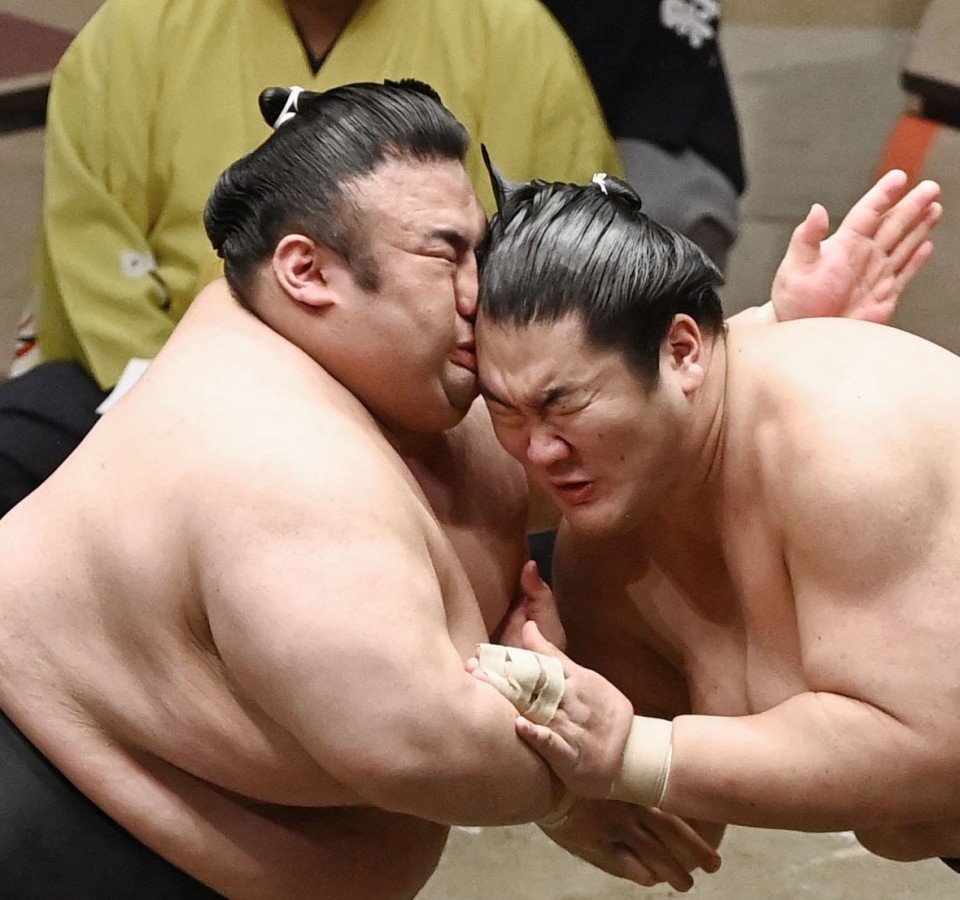
You’re passing your time changing the TV channels. Suddenly, a wrestling show gets your attention. Big wrestlers trying their best to push their opponents.
But wait, they don’t have muscles like the WWE stars. Rather they look more like some unhealthy and overweight people.
Suddenly, the question comes into your mind- Are sumo wrestlers healthy?
Yes, sumo wrestlers are healthy for their intense physical activities. Despite consuming around 7,000 calories per day, they train for almost 5 hours a day. This intense training helps them keep their body fat away from their vital organs. But, if they stop training, they’re likely to become obese.
You may be wondering how their training keeps them healthy despite being that fat. Don’t stress out. By the end of this content, you’ll have all your confusion clarified.
Let’s start the discussion.
Are Sumo Wrestlers Healthy?
Sumo wrestlers have a surprisingly high BMI. However, they’re healthy as their excess fat doesn’t rack up around their crucial organs. Their excess fat is mainly stored under their skin. Hence, this fat doesn’t contribute to any cardiovascular diseases. As a result, they stay healthy in spite of being extremely overweight.
Now, it’s time to find out how sumo wrestlers stay healthy despite being so overweight.

Before going further, we need to clarify that you understand what obesity is.
What Is Obesity?
Most of us get confused between obesity and being overweight. Well, there’s more to it.
You can’t call every overweight person obese. The crucial factor is where those excess fats are stuck in the body.
If most of the excess fat is accumulated under the belly, that’s obesity. Those fatty layers stick around the major organs like the liver and pancreas.
These fats are not only unhealthy for the organs but also responsible for blood pollution. Hence, it causes several health problems like type-2 diabetes, high blood pressure, and heart diseases.
Another key point is that obese people tend to be physically inactive in their daily lives.
So, we now know that being overweight is one of the key factors to being unhealthy or obese.
How Do Sumo Wrestlers Stay Healthy?
An average 5’7” person typically weighs around 160 pounds. But you’ll be shocked knowing that an average sumo wrestler weighs around 400 pounds. Having a BMI value of more than 50 and still being healthy is not a joke.
Despite being that overweight, they manage to stay healthy with their unbelievably active lifestyle. These include intense and long practice sessions.
Let’s find out the lifestyle of sumo wrestlers.
Sumo wrestlers lead an unbelievably active lifestyle. They wake up at 5 in the morning and are trained for almost 5 hours.
These training sessions are not like those you see in your local fitness clubs. Even most of the gym trainers will not be able to withstand the intense sumo wrestlers’ training.
Besides that, the long training sessions have little to no breaks.
Now, you might be thinking how training keeps sumo wrestlers healthy.
Well, long and intense training sessions increase the level of a vital hormone called adiponectin. This hormone is responsible for guiding fats and glucose out of their bloodstream. Also, it doesn’t let the excess fat accumulate around their vital organs.
So, where do these fats and glucose rack up then? They rack up under the skin.
Usually, sumo wrestlers have more fat under their skin than average adults. And, this doesn’t harm their bodies.
As they don’t have fat around their organs, they’re free from fat borne diseases. And, inflammation, heart diseases, and type-2 diabetes are some of the most common fat borne diseases.
Another key benefit of these training sessions is that they keep their cholesterol levels under control. Hence, they are unlikely to encounter strokes, heart attacks, and other heart diseases.
Till now, we’ve talked a lot about intense training sessions. But you may be wondering what kinds of training sumo wrestlers do in those sessions.
Let’s talk about some of the training exercises sumo wrestlers commonly perform.
Butsurkari-Geiko Exercise
In the butsurkari-geiko exercise, two sumo wrestlers make a pair and perform two types of physical activities.
- Pushing: A wrestler pushes his opponent from one end to the other of the dohyo. The other tries his best not to move, thus making it harder for the pusher. They take turns pushing each other for a session.
- Pulling: This is like the previous one. The only difference is that they now pull each other instead of pushing.
This exercise continues until both of the wrestlers lose all their stamina and fall into the ground.
Sanban-Geiko Exercise
Sanban-geiko is a type of training where wrestlers take their stamina to the breaking point.
Two wrestlers fight each other repeatedly in this workout to tire each other down. This allows wrestlers to perfect their techniques against opponents of various types.
Taking all of this into account, experts think Sumo wrestlers are genuinely healthy.
They stay healthy because of their physical activities. Now, what happens to their health when they grow older? Curious enough to know? Let’s dive in..
What Happens When Sumo Wrestlers Retire?
Physical ability declines with age. And it’s no different for sumo wrestlers as well.
Their stamina and strength levels gradually decrease as they grow older. Their bodies can’t move as fast as what is required for wrestling. As a result, they retire at a certain age.
When they retire, most of them don’t continue physical exercise as they used to do. Hence, they need to drastically cut down on their calorie intake.
But it’s not as easy as you think. In most cases, their bodies can’t cope with the reduced calorie intake. Hence, they can’t reduce their calorie consumption as required.
So, what happens next?
Well, this high calorie consumption and low physical activity put them at a risk of cardiovascular disease.
According to studies, sumo wrestlers have a much lower life expectancy than the general people.
Japanese males have an average life expectancy of 85 years. Sumo wrestlers in Japan, in contrast, have an average life expectancy of 60-65 years.
You see the difference, right? It’s almost 20-25 years less than the normal people of Japan.
When they retire, they suffer from various health issues. These include heart disease, high blood pressure, and other cardiovascular diseases.
So, don’t ever think that you’ll stay as healthy as sumo wrestlers if your BMI is that high. Normal people like us just can’t even think about doing that much physical activity.
Hence, if your BMI is going anywhere above 25, try to cut down on your fat asap.
There are some supplements that can burn your excess fat in no time. Here are some of our top picks.
| Old School VINTAGE BURN | Check details |
| Apple Cider Vinegar Capsules Plus Keto BHB | Check details |
FAQs
Do Sumo Wrestlers Drink Alcohol?
Sumo wrestlers don’t drink alcohol. Sumo wrestlers consume about 7,000 calories per day. To eat this much food, they need to have a good appetite. Hence, they drink beer a lot. Beer is one of the most famous drinks to enhance the taste of food. Thus, they drink beer instead of alcohol.
Is Sumo Wrestling An Olympic Event?
Sumo wrestling is not an Olympic event. In 2018, the International Olympic Committee approved sumo wrestling as a sport. However, they’re yet to be included in the Olympic Games. However, the Japan Sumo Association is attempting to include this sport in the Olympics.
Is Sumo Wrestling Still Popular in Japan?
Sumo wrestling is still one of the most popular sports in Japan. There are 6 tournaments held every year for sumo wrestlers in Japan. 3 of them are held in the capital, Tokyo. The Japan Sumo Association is one of the country’s oldest sporting organizations.
Do Sumo Wrestlers Have Breakfast?
Sumo wrestlers don’t have breakfast. This is because skipping breakfast makes their body hold tight to the fat. However, sumo wrestlers take around 7,000 calories a day. Hence, although they skip their breakfast, they have a high-calorie launch after their training.
Final Thoughts
We hope this content helped you to get your answer of “are sumo wrestlers healthy”.
The summary here is that sumo wrestlers are healthy despite being overweight because of their active lifestyle. However, when they stop their physical activities, they are more likely to suffer from obesity. Hence, they become unhealthy when they retire from wrestling.
Anyway, have a good day and enjoy a good sumo match!
Related Posts



Subscribe for New Racipies
Get mental health tips, updates, and resources delivered to your inbox.
S’Mores Oreo Cookie Dough Treats



Looking to keep the kids busy during summer vacation? Try making these S’mores Oreos Cookie Dough Treats with them. There is no baking involved, so you can keep the house cool. And they combine two favorite flavors into one, cookie dough and s’mores. They are half crunchy, half chewy, and 100% addictive. You can decorate them with some cute red, white, and blue sprinkles and make them in time for your Fourth of July celebration. The kids and the adults will love them!
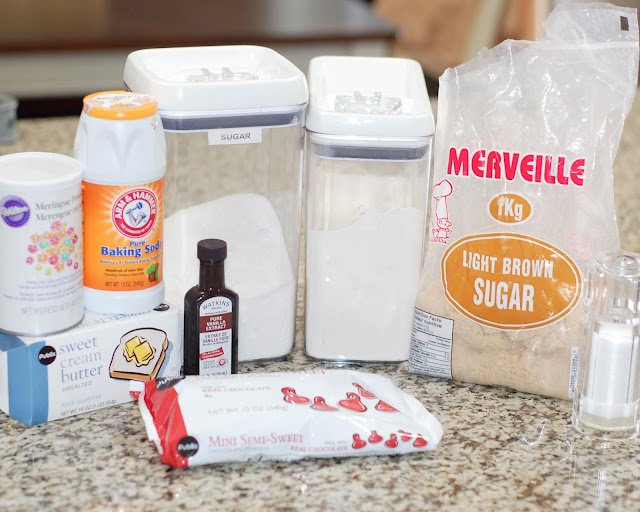
Here are the ingredients you’ll need to make the eggless cookie dough. The meringue powder is the egg substitute, you just mix it with water. I use this recipe all the time and it never fails to make people happy. I love to eat raw cookie dough, and at least this way I know I won’t get sick. Unless of course I eat the entire batch in one sitting.
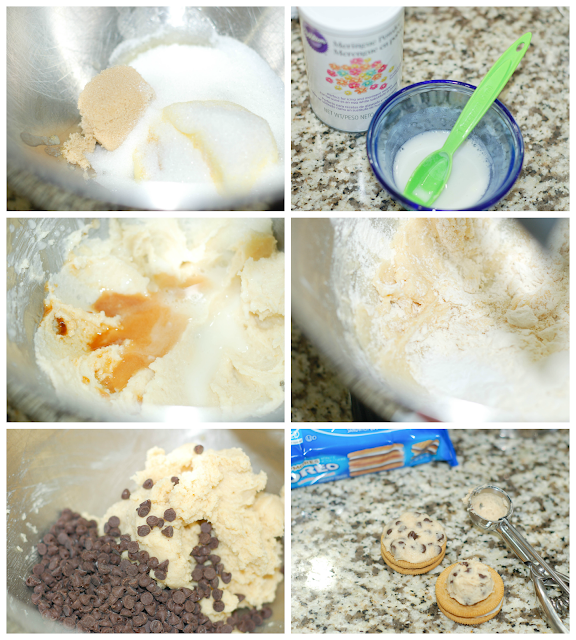
I used my mini scoop to evenly distribute the cookie dough onto all the S’mores Oreo Cookies. You will need to packages of the Oreos for this recipe, but there will be leftover cookies for you to taste test by themselves. You can find these Oreos at Target.
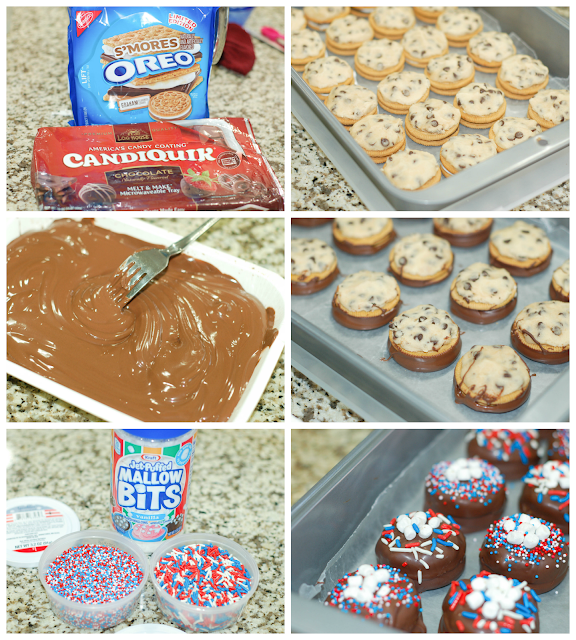
After the treats took a quick trip to the freezer, I used Candiquik Candy Coating to cover them in chocolate. It melts smoothly and you can melt it in the microwave in the cardboard container it comes in. Less mess to clean up. I also decided not to stress myself and try to dip the whole cookie and cookie dough at the same time. Instead, I dipped the bottoms first and then placed them back in the freezer before dipping the tops and decorating. I did it in small batches, so that by the time I was done dipping all the bottoms, I started taking out the previous batches and dipping the tops.

I found the sprinkles in the dollar bins at Target. The Jet-Puffed Mallow Bits are from Target also. I try to pick up a container each time I go because the kids love it on their cereal, ice cream, or as a snack. I love how the sprinkles look like exploding firecrackers on these treats.

Let me just say, s’mores and cookie dough go very well together, not to mention the added chocolate and mini marshmallow bits just make it even better. You can still clearly taste the different flavors. I kept my treats in the fridge because the heat wave down here has been awfully brutal. And I was pleasantly surprised that the cookies remained crunchy and the treats tasted just as good cold as at room temperature. S’Mores Oreo Cookie Dough Treats were a definite winner in our household.
S’Mores Oreo Cookie Dough Treats
by The Sweet Chick
Prep Time: 45 min-1 hr
Keywords: no bake freeze dessert snack S’mores Oreos Cookie dough candy coating July 4th cookie treat American summer
Ingredients (35 treats)
For the cookie dough
- 1/3 cup butter, room temperature
- 1/8 cup brown sugar
- 1/4 cup granulated sugar
- 1/2 teaspoon vanilla extract
- 1 teaspoon meringue powder
- 1 tablespoon water
- 3/4 + 2 tablespoons all purpose flour
- 1/4 teaspoon baking soda
- 1/4 teaspoon salt
- 1/2 cup mini chocolate chips
For the treats
- 2 packages (10.7 oz.) S’Mores Oreo cookies
- 2 packages (16 oz.) Candiquik Chocolate candy coating
Optional toppings
- Jet-Puffed Mallow Bits
- Sprinkles
Instructions
For the cookie dough
In a stand mixer, cream together the butter and sugars.
In a small bowl mix together the meringue powder and water, then add it to the mixer bowl, along with the vanilla and mix well.
In a medium bowl combine the flour, baking soda, and salt.
Next, add the dry ingredients to the mixer bowl a little at a time while mixing on low until dough starts to form.
Last, add the chocolate chips and mix until all incorporated.
For the treats
Using a mini scoop, top each Oreo cookie with a scoop of cookie dough and flatten out evenly.
Place treats in an airtight container lined with wax paper and place in the freezer for 1/2 hour to 1 hour until firm.
Once treats are ready, melt chocolate candy coating according to instructions on the package.
Dip the bottoms of the treats in the chocolate all the way up to the top of the Oreo cookie. ( I recommend doing this in small batches so the treats stay firm.)
Place the treats back into the wax paper lined container and place back into the freezer until the chocolate is set.
Once coating is hardened, dip the tops of the treats in the chocolate and allow the chocolate to set.
Optional toppings
If you are adding Mallow Bits or sprinkles to the tops of your treats, do so before the chocolate coating hardens.
Notes
Keep your treats in an airtight container. They do not need to be refrigerated, but you may do so if you like. You can always bring them back to room temperature to eat, or you can eat them cold.
Make sure you line your container with wax paper when placing the candy coated treats in it. Otherwise when the chocolate sets, it will completely stick to the container. Trust me.
Related Posts




Subscribe for New Racipies
Get mental health tips, updates, and resources delivered to your inbox.