
Are Waffles Healthy? Exploring Expert Insights for Nutritious Choices

Medically reviewed by Christiana George Updated Date: January 7, 2026

Waffles are a time-savior in the busy mornings when you want something quick, delicious, and easy to have as breakfast. You may also think they are healthy too. But just because they are not deep-fried doesn’t mean they are healthy. If you do happen to indulge in them, you may want to reconsider your lifestyle! So, are waffles healthy?
No, they are not. Waffles are made with refined flour. They’re often loaded with unhealthy toppings like butter, syrup, and whipped cream. Most importantly, they don’t have any beneficial nutrients like fibers, vitamins, or minerals. On top of that, they are loaded with calories and cholesterol.
Waffles have become an increasingly popular choice, but before you decide that waffles can be part of your healthy diet, read out why waffles aren’t the healthiest breakfast food.
Are Waffles Healthy? – 5 Reasons Why They Are Not
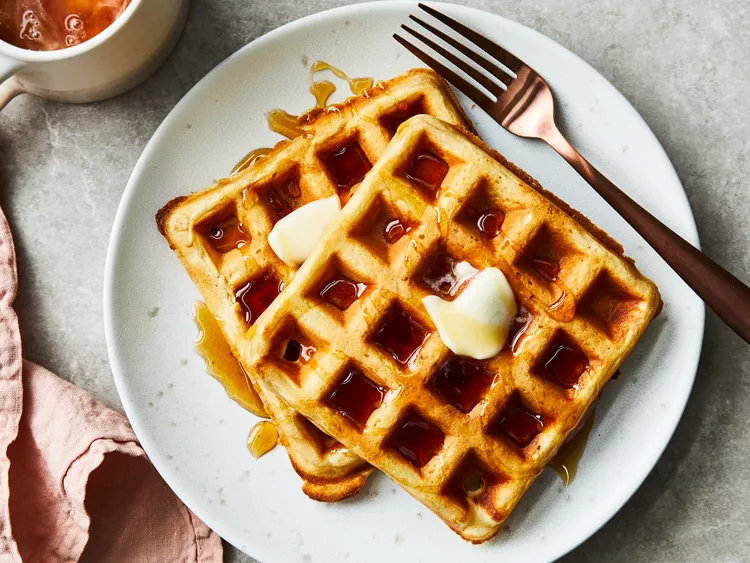
Waffles are delicious, but if you’re watching your weight or want to eat healthier, it’s good to know what nutrition waffles contain and what effects they have on your body.
The following top 5 reasons why waffles aren’t the healthiest breakfast food can help you make an informed decision about whether or not you should include waffles in your diet.
They Contain Gluten
Gluten is a protein found in wheat, and its flour is the main ingredient of waffles. It’s what gives waffles a slightly chewy texture and fluffs them up.
People who have celiac disease or non-celiac gluten sensitivity (NCGS), will suffer from several digestive issues from gluten-rich foods like waffles. Even if you don’t have these diseases, eating a glutinous breakfast in the morning slows down your metabolism.
Waffles Have High-Calorie Count
A single waffle can have upwards of 200 calories, and that’s what you get, not including any toppings you might add. And since most people don’t stop at just one waffle, it’s easy to see how the calorie count can quickly add up.
Waffles are often slathered in butter and syrup, making them more unhealthy than you think. As a result, they become high in saturated fats leading to obesity and weight gain. Of course, it won’t happen in a single day or two; but it will happen in the long run.
Waffle Makers Are Terrible For You
The non-stick coating on most waffle makers is made of a substance called polytetrafluoroethylene (PTFE) or Teflon. When this substance is heated to high temperatures, it can release toxins into the air.
Ingesting PTFE particles from cooking with these pans has been linked to lung and brain cancer in lab animals. There are more than 15 toxic particles that have been linked to an increased risk of cancer over time.
Waffle Iron Cooking Spray Is A No Go
Waffle iron cooking spray is one of the worst things you can put on your waffle iron. The chemicals in the spray can seep into your food and make it unhealthy. Also, some brands contain trans fats that are linked to heart disease.
So clean your waffle maker with soap and water before making waffles to remove any potential contaminants from previous meals.
Related Article: Are Ritz Crackers Healthy? Expert Insights and Tips
Nutritional Value of Waffles
Let us look at the nutrition chart of plain waffles to give you more idea of how unhealthy it is to consume them as breakfast every day.
Nutritional fact: for 1 round waffle (75 gram).
Ingredients: batter, water.
| Calories | 218 |
| Total fat Saturated fat | 11 g 2.1 g |
| Cholesterol | 51.8 mg |
| Sodium | 383.3 mg |
| Potassium | 11.3 mg |
| Total carbs | 25 g |
| Protein. | 6 g. |
As we can see from the chart above, eating a piece of plain waffle is no less than eating a cake. And, if you top it off with more unhealthy toppings like maple syrup, chocolate sauce, and cream cheese- you can think of the consequences.
Just one single waffle has over 200 calories, almost 10% saturated fat, 15% sodium, 17% cholesterol, and 8% carbohydrate. Although, you may still point out that one positive side to eating waffles – is the protein content. Unfortunately, the unhealthy amounts of calories, saturated fats, and sodium outweigh that one good thing.
Moreover, the carbs content of waffles is simple carbs, which are the bad type of carbs. These carbs digest quickly. They will provide you with instant energy and make your stomach feel fuller for a short period. As soon as the carbs digest, they will make you feel hungry instantly, leading to overeating and weight gain.
Also, there is an unusual amount of sodium content just for a piece of waffle. So, if you eat 2/ 3 for breakfast, you already intake 50-60% of your daily sodium requirement, let alone the other meals of the day.
Nonetheless, a single serving of a regular frozen waffle contains up to 25 grams of fat and 350 calories – that’s about 20% of your daily intake!
Are Eggo Waffles Healthy?

Are Eggo waffles your regular quick, and easy breakfast option? If yes, trust me, you are not making the healthiest choice. This waffles mix is mainly made from all-purpose or refined flour, sugar, artificial flavor, substantial amounts of sodium, and vegetable oil.
I am not saying it; the packaging says it in the ingredient section.
Nutritional value of Kellog’s Eggo waffles (2 waffles, 70 grams)
| Calories | 195 |
| Total fat Saturated fat | 7 g 1.8 g |
| Cholesterol | 18.2 mg |
| Sodium | 410.2 mg |
| Potassium | 60.2 mg |
| Total carbs | 28 mg |
| Protein | 4.6 g |
You may want to read the nutritional facts before putting it into your grocery basket next time.
If you want healthier versions of Eggo waffle mix, opt for their whole-grain frozen waffles. At least you won’t be consuming refined carbs!
Related Article: Are Pretzels Healthy? – Pros, Cons and Healthy Alternative
Healthy Substitute of Waffles
Waffles are often thought of as a healthy breakfast food, but they are actually loaded with sugar and unhealthy fats. But who said there aren’t many tasty options for breakfast? I have some better yet healthy alternatives to waffles.
An Oatmeal Bowl
A better option would be to make a healthy smoothie or bowl of oatmeal with nuts, chia seeds, and honey (if you want sweetness) toppings. These options will provide you with more fiber, vitamins, and minerals for a healthier start to your day.
Eat Fruits Instead Of Waffles
Fruit is packed with vitamins, minerals, and fiber that your body needs to function properly. Waffles, on the other hand, are made from flour and sugar – a lot of sugar. Flour is just wheat gluten with some starch mixed in for texture, while sugar provides flavor as well as sweetness.
You can pair the fruits with yogurt and make a yogurt bowl for a delicious and filling breakfast. To save time in the morning, pre-chop the fruits at night.
Eggs And Avocado Toast
Waffles are often loaded with sugar and unhealthy fats, making them a less than ideal choice for breakfast. On the other hand, eggs and avocado toast are packed with protein and healthy fats that will help keep you feeling full and satisfied all morning long.
Toast Will Do Better Than This Carb Fest
Waffles are loaded with unhealthy simple carbs. They’ll give you a quick burst of energy, but you’ll crash soon after. Plus, all that syrup is just empty calories.
If you’re going to eat something carb-heavy for breakfast, reach for whole grain toast instead of this sugary option. Pair the toast with raw honey, unsalted peanut butter, or even yogurt spread.
How to Make Healthy Waffle?
Finding store-bought ‘healthy’ waffle mix is equivalent to finding pearls in the ocean. Therefore, if you cannot resist having waffles, make some healthy versions of them at home.
The best you can do is change its batter base. Instead of refined white flour, try making them with whole wheat flour or oats at home. You don’t need to add salt to the batter. But even if you do, it shouldn’t be more than a pinch.
Avoid using syrups on your waffles. Syrup is one of the unhealthiest toppings you can put on your waffle. It has a ton of sugar, which is bad for you. It will raise your blood sugar levels and make you hungry more often.
The syrup also has a lot of preservatives, which are not good for you either. Instead, try the followings.
- Top them with fresh fruit and natural nut butter to give your waffles some extra nutritional value.
- You can also top with honey as a sweetener if you don’t like plain waffles.
Still, if you want syrup, get the all-natural version that doesn’t have any artificial colors or flavors.
FAQs
Are wholewheat waffles healthy?
Whole wheat waffles may be a healthier option than regular waffles. Whole wheat waffles do not contain gluten or refined carbs and have slightly lesser calories and more fiber than waffles made from all-purpose flour.
Are waffles healthier than pancakes?
Waffles may be perceived as the healthier option, but when you take a closer look, they’re not as healthy as you might think. Both of them have the same base, more or less, which are refined four, sugar, and salt with little to no nutritional value. We cannot say that one is healthier than the other; both are the same- unhealthy!
Are waffles good for weight loss?
No, waffles are not good for weight loss at all! They are high in calories, simple carbs, and saturated fat. Increased consumption of waffles regularly will lead to weight gain instead.
Final Thought
So, there you have it, are waffles healthy – not in the closest. And you have those reasons why they aren’t the healthiest breakfast food – refined four, sugar, salt, simple carbs, and little to no nutritional value.
But that doesn’t mean you can’t enjoy them occasionally. Just be aware of what they’re made with (read the labels of packaged mixes) and keep in mind how many calories are in each serving!
After all, you don’t want to end up gaining weight or undoing all your hard work by being too indulgent.
Related Posts





Subscribe for New Racipies
Get mental health tips, updates, and resources delivered to your inbox.
Roasted Corn Pico De Gallo, Or A Battle Of The Elements

You might’ve guessed that I have quite an affinity for tart foods, given my blog name and all. But unbeknownst to you, this “like” is actually superseded quite a bit by my love for all things spicy. It’s part of my heritage. My family comes from Sichuan, a province in China famous for its spicy women (heh, it would be up to Chris to say whether or not this is true), Sichuan peppercorn, and such delights as spicy fried chicken bits, meat/seafood boiled in spicy broth, spicy noodles, mapo style tofu, cold spicy tripe, and the ultimate, Chongqing hot pot (the red side).
When you think about it, preparing spicy food, just like eating it, requires a certain amount of… physical endurance. One of my favorite cuisines is Mexican food, and I have to fortify myself, mentally, before commencing the process of prepping. The ingredients have such interesting(ly painful) defense mechanisms to avoid being eaten. Onions make your eyes water, limes infiltrate breaches such as hangnails and papercuts, and jalapeno, well, let’s just say my fingers are still ringing from the memory of contact.


I was originally intending to make this recipe since we had a couple (gorgeous) ears of corn lying around, but that idea never took off. The topping however did.
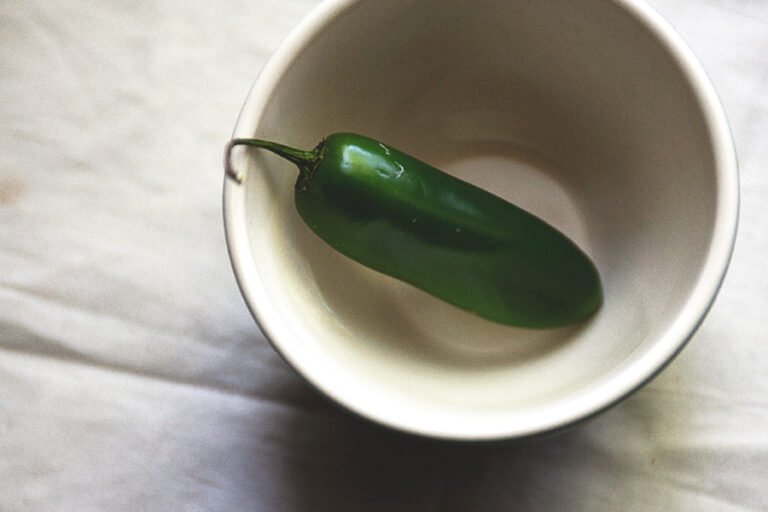
I was particularly intrigued by the idea of baking corn until it caramelized, sweetened, and became slightly tacky. So, with a few adjustments, I ended up making what became a roasted corn pico de gallo, a fresh salsa filled with the usual suspects: red onion, cilantro, lime juice, tomato, and jalapeno. If you like heat, I would recommend using the entire jalapeno, including the seeds, but it’s a move not for the faint of heart. Each mouthful is charged with flavor. But it’s good, it’s really good, and if you know what’s good for you, you’ll set it aside and let the flavors mingle for a bit. Then start topping.

CORN PICO DE GALLO
Makes about 2 cups
Ingredients:
- 3 fresh ears of corn or 2 cups of frozen corn, defrosted
- 1 Tbsp olive oil
- salt and pepper to taste
- 1 Tbsp red onion, finely chopped
- 2 Tbsp fresh cilantro, finely chopped
- juice from 2 limes
- 1 jalapeno, destemmed and finely chopped
- 1 medium tomato
- 1/2 tsp sugar
Directions:
Preheat oven to 425 degrees F. Line a baking sheet with aluminum foil or parchment paper. Toss the corn with oil, salt, and pepper, and spread it evenly on the sheet. Roast for about 20 minutes until the corn turns a golden brown and blisters and pops (and caramelizes!).
Combine the red onion, cilantro, lime juice, jalapeno, tomato, and sugar in a bowl.
When the corn is ready, let it cool, then toss it in the bowl. Let it sit for about half an hour so the flavors can combine.
Related Posts





Subscribe for New Racipies
Get mental health tips, updates, and resources delivered to your inbox.