
Sugar Cookie Rice Krispie Treats

Medically reviewed by Christiana George Updated Date: December 19, 2022
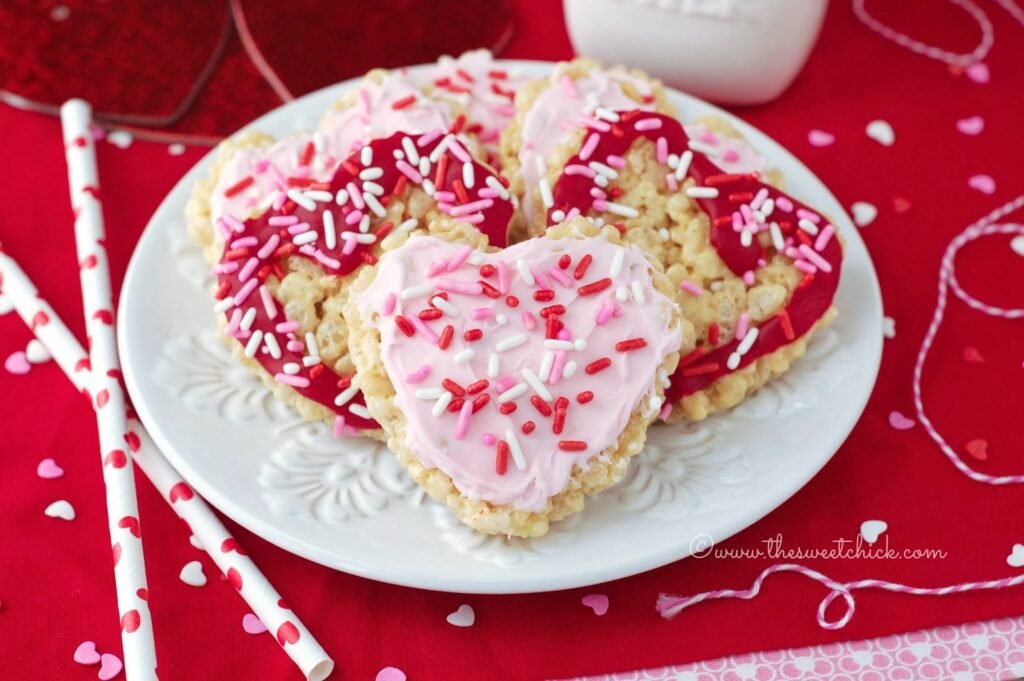

Well, the weather looks a little more promising for the weekend. The Weather Channel says it’s going to be 70°F on Saturday. I’ll take that. Although it is supposed to rain. Oh well, nothing is perfect. It will give me time to keep emptying out my pantry from holiday overflow. I still had a little bit of sugar cookie mix left over from my Mini Sugar Cookie Donuts, so I made some more Valentine inspired treats. Speaking of Valentine’s, if you haven’t checked out the Target $1 bins, you have to go. They have so many cute things, like this mini chalkboard and red with white hearts washi tape.
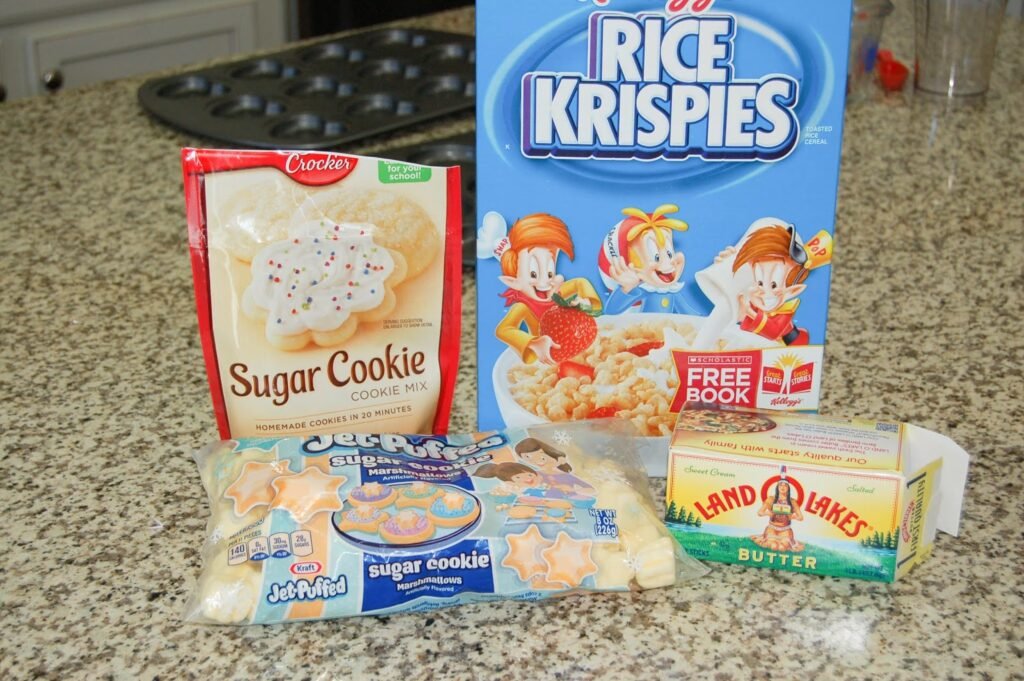
Besides buying sugar cookie mix, I had also found these Sugar Cookie marshmallows by Jet-Puffed. They always have the best flavors!

They are shaped like snowflakes and are sugar coated. They are sweeter than regular marshmallows.

You can never have too much sugar cookie. I mixed in some dry sugar cookie mix to the marshmallows and butter.
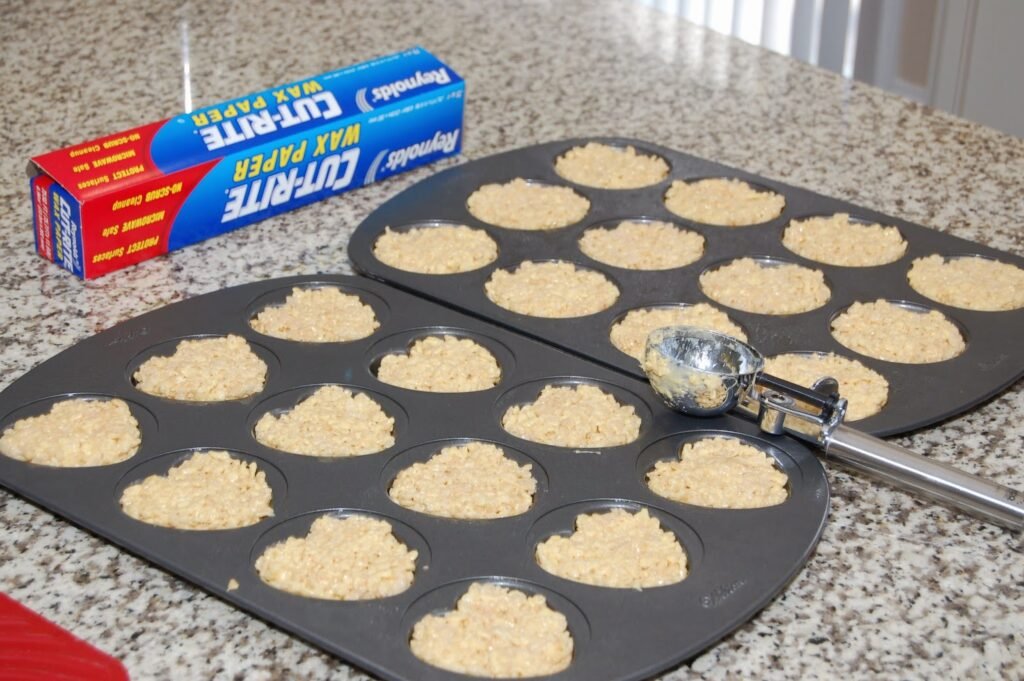
I decided to try something different this time. Instead of making the treats and then cutting out shapes with a cookie cutter, I greased up some of my Wilton’s pans. I had a regular Whoopie Pie pan and a Heart Shaped Whoopie Pie pan. I just used my large scoop to dump the Rice Krispie mixture into the cavities, then used a piece of wax paper to press the mixture into the shapes. Then I let them set as normal. It actually worked out very well, the treats were easy to remove from the pans and kept their shape.
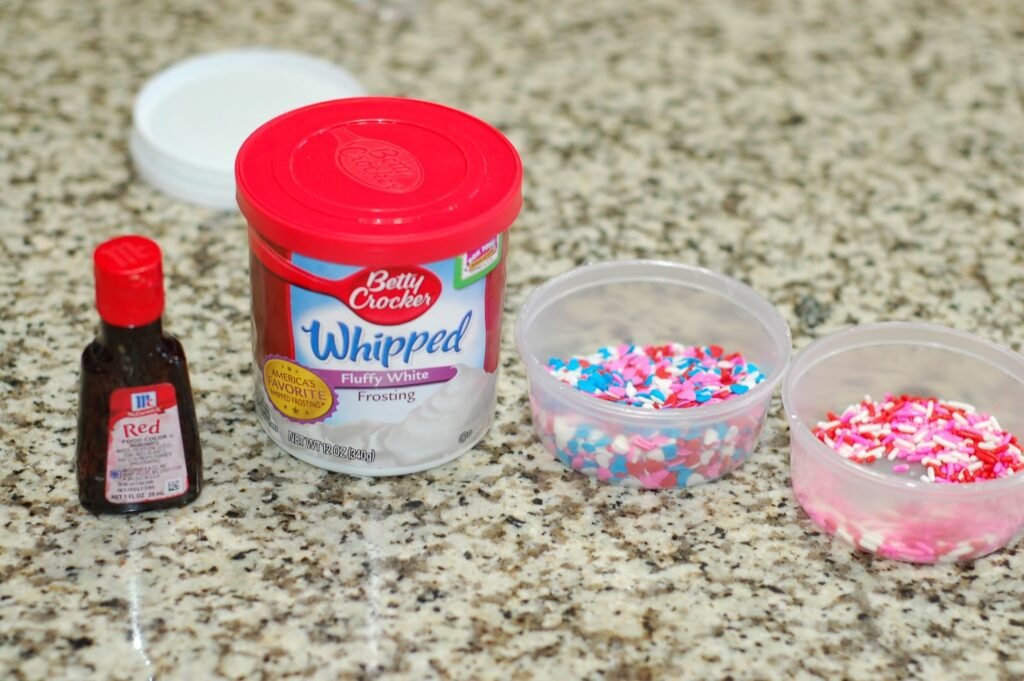
For decorating, I wanted a soft topping. I had some canned frosting that I just added some food coloring to. You can make your own sugar cookie frosting or use some premade sugar cookie frosting if you like. It’s all about fun. Kids would love this project.
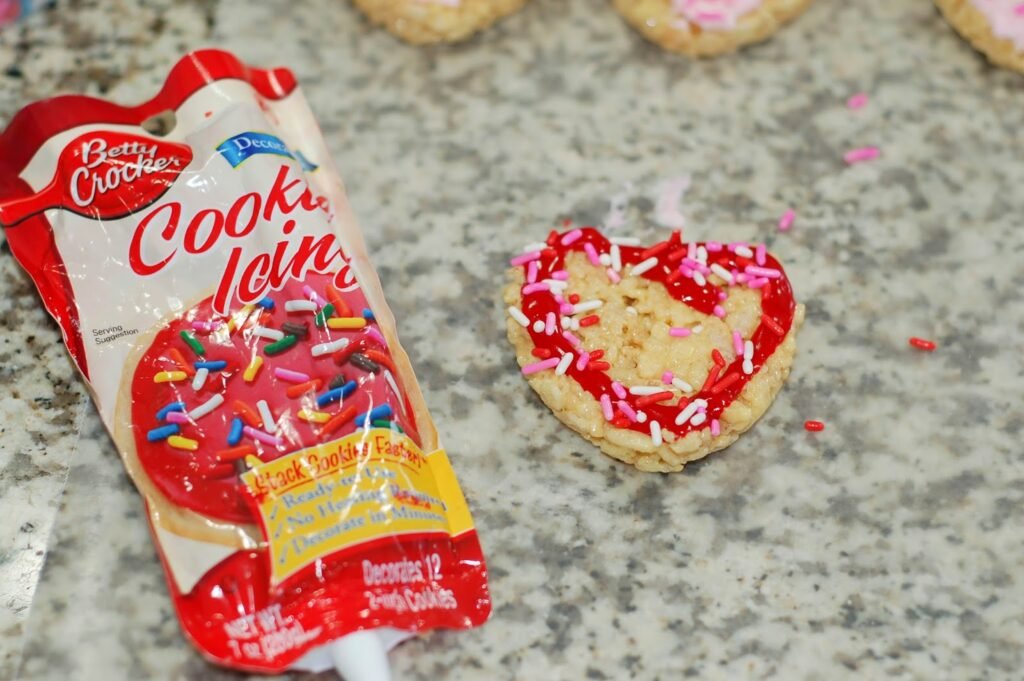
I did find some left over cookie icing that I used on a few of the heart shaped treats. The sprinkles I found last year in the Target $1 bins. They have some cute ones this year too. Those $1 bins always suck up all my money. There are just too many good deals and cute stuff. You can check out my Instagram feed to see the other things I found.

As you can see, I was experimenting with different techniques. I still like the frosted ones the best.
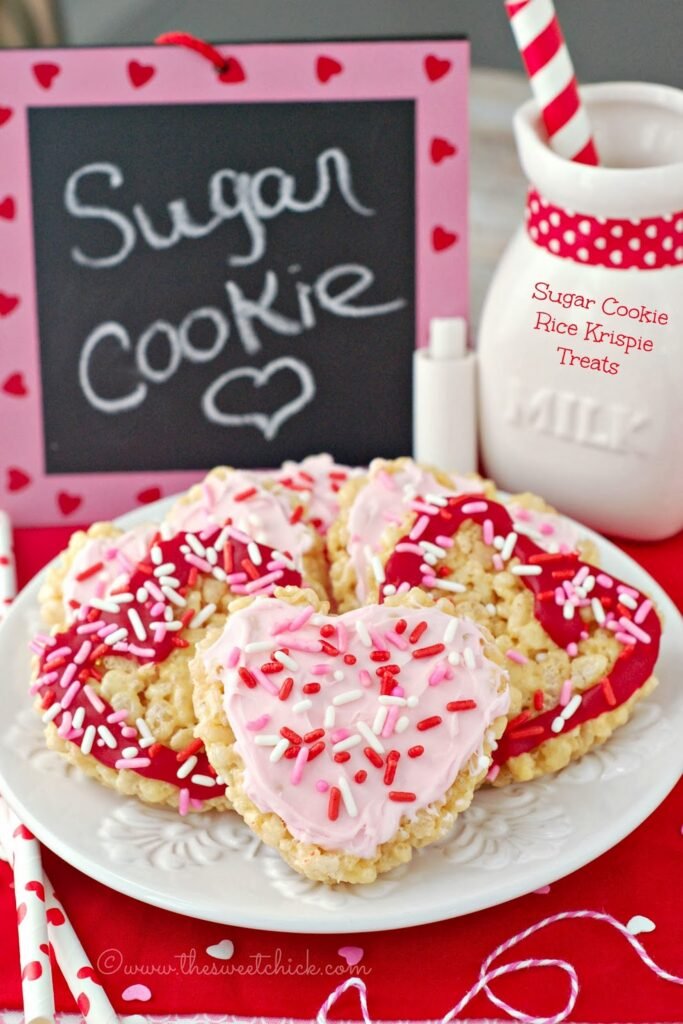
Here are the heart shaped ones. These would be perfect for a Valentine’s party at school.
The Rice Krispie treats came out yummy, but did not have a very heavy sugar cookie taste. They were sweeter than regular Rice Krispies though and with the addition of the frosting, they were plenty sweet.
Sugar Cookie Rice Krispie Treats
by The Sweet Chick
Prep Time: 15-20 minutes
Cook Time: 5 minutes
Keywords: no bake dessert snack rice krispies sugar cookie mix sugar cookie marshmallows rice krispie treats American winter
Ingredients (24 servings)
For the treats
- 3 tablespoons butter
- 1 package (8 oz.) Jet Puffed Sugar Cookie Marshmallows
- 1/3 cup Betty Crocker Sugar Cookie mix (dry)
- 5 cups Rice Krispie cereal
For the toppings
- 1 container (12 oz.) Betty Crocker Frosting (fluffy white or vanilla)
- 1-2 drop red food coloring
- sprinkles
Instructions
For the treats
In a large sauce pan, melt butter and marshmallows over low heat. Stir until completely melted.
Remove from heat and add sugar cookie mix. Stir until mixture is smooth.
Next add Rice Krispies and stir until completely blended.
With a large scoop, place mixture by scoopful into each cavity of two greased whoopie pie pans (or 9 x 13 pan) and spread evenly with a piece of greased waxed paper to form the shape of the cavity.
Place in fridge to cool and set.
When set, carefully remove each treat from the whoopie pie pan.
For the toppings
Empty frosting into a small bowl and add 1-2 drops of red food coloring to achieve desired colored. Mix until all blended.
With a spatula frost each shaped treat and add sprinkles.
This post may be shared at these fabulous link parties.
Related Posts


Subscribe for New Racipies
Get mental health tips, updates, and resources delivered to your inbox.
Honeycrisp Apple Salad With Walnuts And Pumpkin Seeds

Hello November. Your arrival marks the end of the surrealness that was the last half week. Subways are once again open with limited service, supermarkets are operating in full swing, fallen trees are finally being cleared from roads that have been mostly empty for the last few days.
While those of us living in the Brooklyn area were lucky enough to experience very little damage from the hurricane, the pictures tell a different story. I think they’re what lends to the unrealness of the situation: the incongruity between what we witnessed firsthand and the chaos documented elsewhere. Most of you saw a coast that was being battered by unrelenting forces of nature. On the other hand, many of us sat around all of Tuesday night waiting for the power to go out, which didn’t happen, and trees to topple, which did, but only a little.
I feel fortunate that I could tell our friends and family that we were fine. I know that many weren’t as lucky, and my thoughts go out to them.
As soon as the markets re-opened today, I rushed out and bought fresh produce. Because in our rush to pick up emergency supplies, like bottled water and canned beans and vienna sausages (which are dirt cheap compared to Spam—why is that?), we’d forgotten that what we would probably need the most was food to get us through the next couple days.
Hahaha, riiiight.
So, hello November. Let’s start you out right. With a salad, because salads usually do the trick. Especially ones that contain bits of fruit.
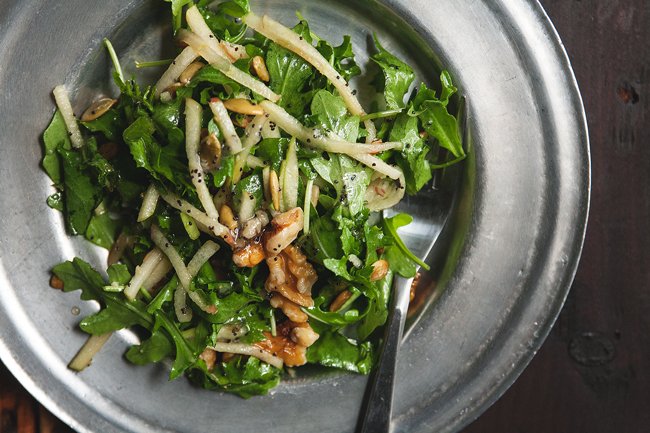
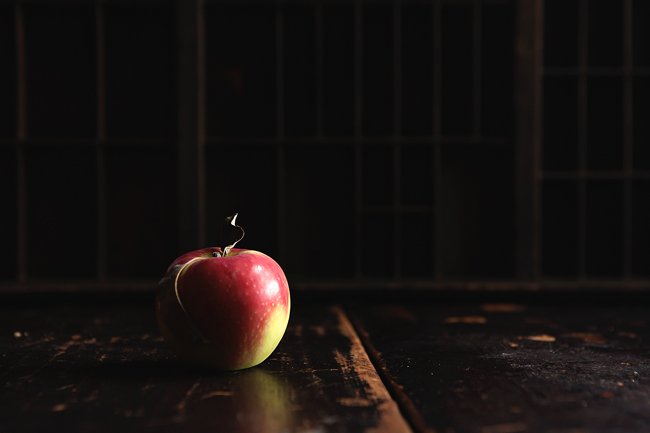
Have you ever had a honeycrisp apple? I don’t know how I’ve never heard of them before, because they’re lovely. Maybe because I’ve never been an apple connoisseur; Fujis have always suited me just fine. But I’m seriously digging the crisp/tart/perfect flesh of the honeycrisp. Paired with arugula, walnuts, and pumpkin seeds, not to mention a cider vinegar, honey, and poppy seed dressing, the salad is light and fresh and perky.
For many who were shaken by the storm, light and fresh and perky may be way to start out on the right foot.
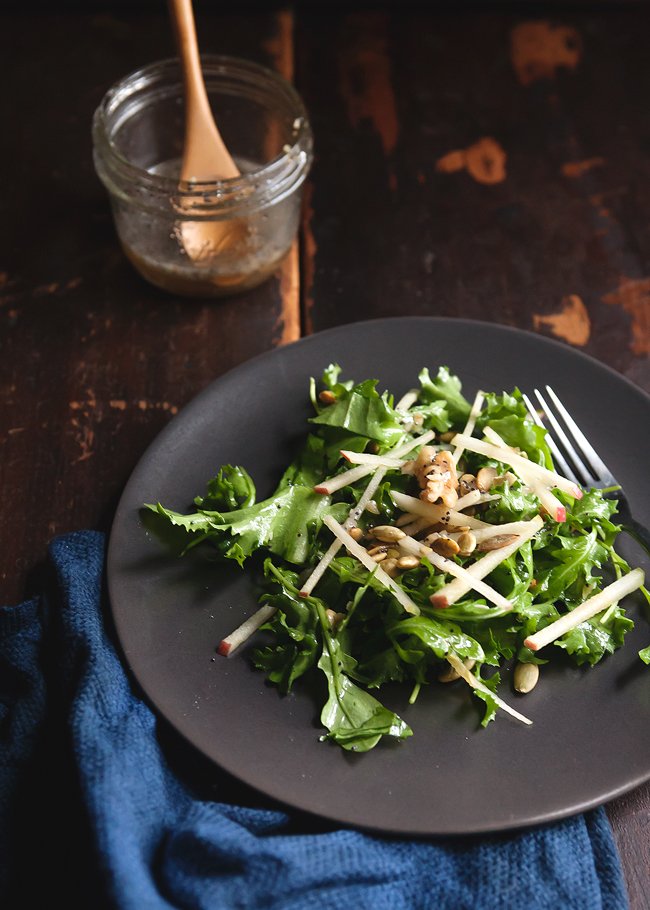
HONEYCRISP APPLE SALAD WITH WALNUTS AND PUMPKIN SEEDS
Adapted from The Cozy Apron
Serves 4 to 6
Ingredients:
For the vinaigrette:
- 6 Tbsp apple cider vinegar
- 1 Tbsp finely chopped walnuts
- 3 Tbsp honey
- 2 tsp poppy seeds
- pinch cumin
- salt & pepper to taste
- 6 Tbsp olive oil
For the salad:
- 2 cups arugula
- 4 cups escarole, cut into bite-sized pieces
- 1 honeycrisp apple, sliced into thin matchsticks
- 1/2 cup roasted pumpkin seeds
- 1/2 cup roasted walnuts
Directions:
For the vinaigrette, mix all the ingredients but the olive oil together well in a jar with a lid. Pour in the olive oil, close the jar, and shake it until the dressing is emulsified.
For the salad, in a large bowl, combine the arugula, escarole, half the apples sticks, and half the pumpkin seeds and walnuts. Lightly drizzle with the dressing. Serve the salad onto individual serving plates, and garnish each with the remaining apples, pumpkin seeds, and walnuts. Drizzle on more dressing as desired.
Related Posts



Subscribe for New Racipies
Get mental health tips, updates, and resources delivered to your inbox.