
Mini Sugar Cookie Donuts

Medically reviewed by Christiana George Updated Date: December 14, 2022
It’s crazy the amount of time we spend organizing, prepping, and stressing about Christmas. I do enjoy most of it, but I also enjoy when it over and I can let out a sigh of relief. The best part is seeing the look of amazement on my kids faces on Christmas morning when they see what Santa has left for them. It makes me feel like a kid again. It’s then that I know all the craziness was worth it. Now it’s time to get ready for the new year.
I still have a lot of left over baking goods in the pantry that I didn’t get to use during the holiday season. So now I am in the process of cleaning out the pantry. I had an extra package of sugar cookie mix. Yes, I do use mixes sometimes, especially for cut out cookies. I don’t seem to have much luck with these kinds of cookies otherwise. I don’t know why that is. I have such luck with all other cookies.
Anyway, I have seen a lot of food bloggers using cake mixes in their recipes, so I thought why not cookie mix. I’ll admit, I wasn’t sure it was going to work, but hey, you won’t know if you don’t try, right?
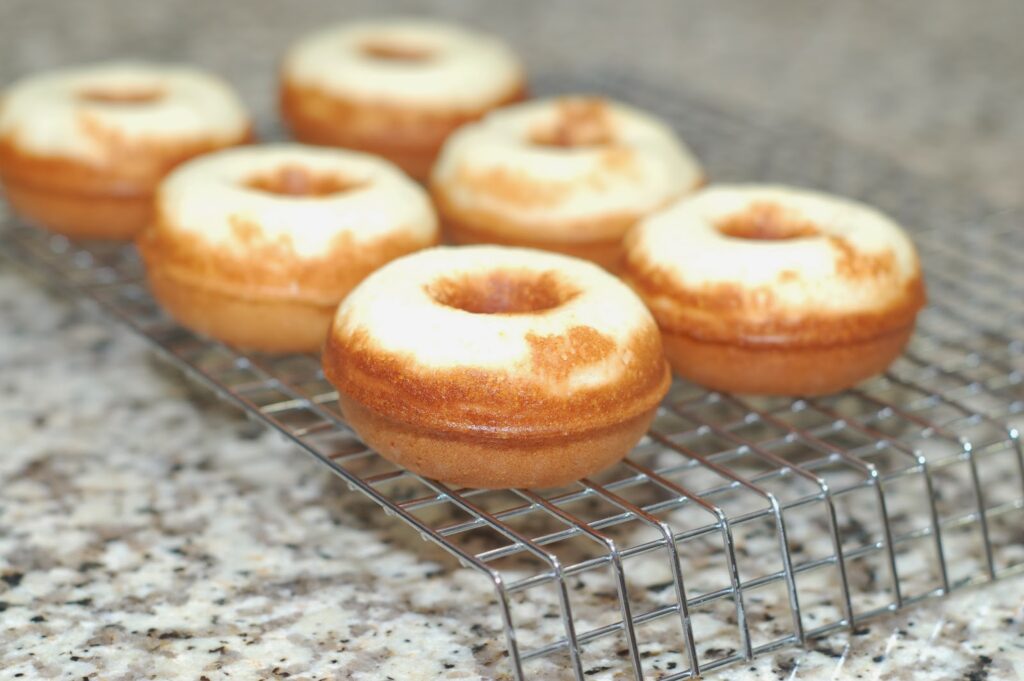
Well, it worked. I was pleasantly surprised and excited. You do have to be careful not to over bake them though. I used my Babycakes Donut Maker Machine, but I didn’t go by the timer on the machine which is usually four minutes baking time. I only baked the Sugar Cookie Donuts for three minutes each batch. Anymore than that and the bottoms get too hard when cooled. Three minutes was perfect for a nice soft, fluffy donut. The bottoms did have a slight crisp to them, kind of like a Belgian waffle does, but that is just from the sugar in the mix.
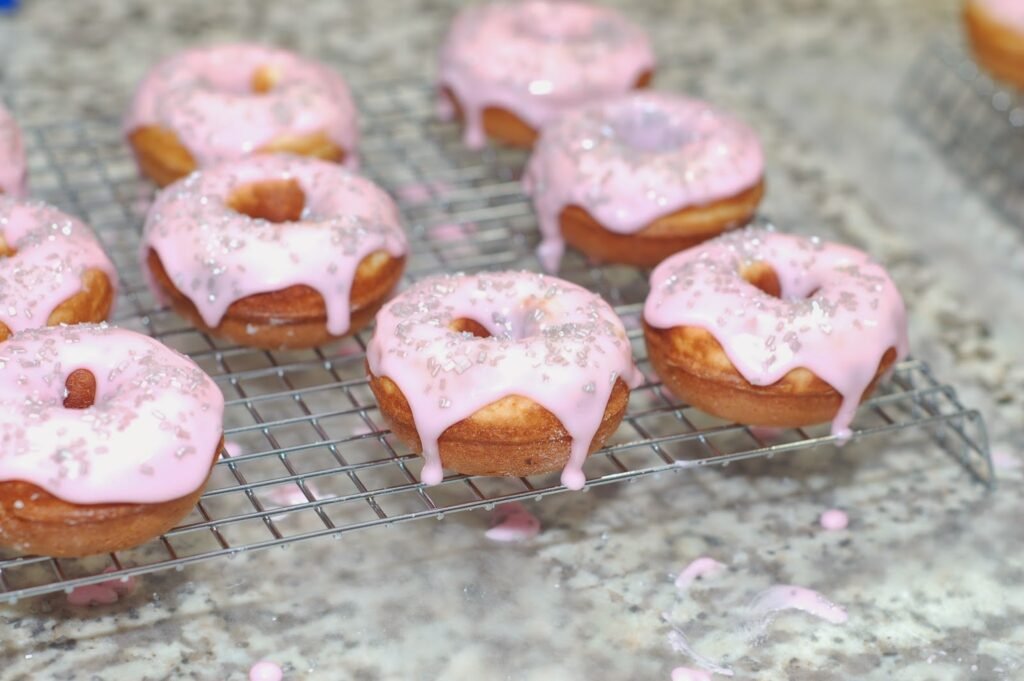
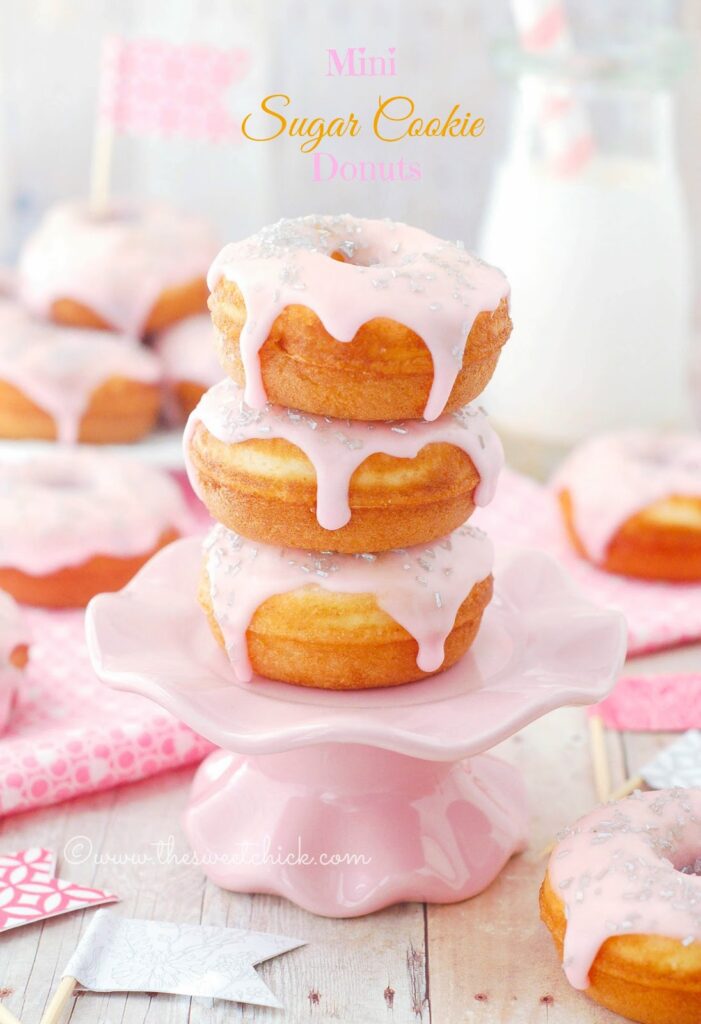
I covered them in a simple powdered sugar glaze with a drop of red food coloring for some extra excitement, but you can just make a white glaze or any other color you like. You can also buy some sugar cookie icing to spread on top instead.
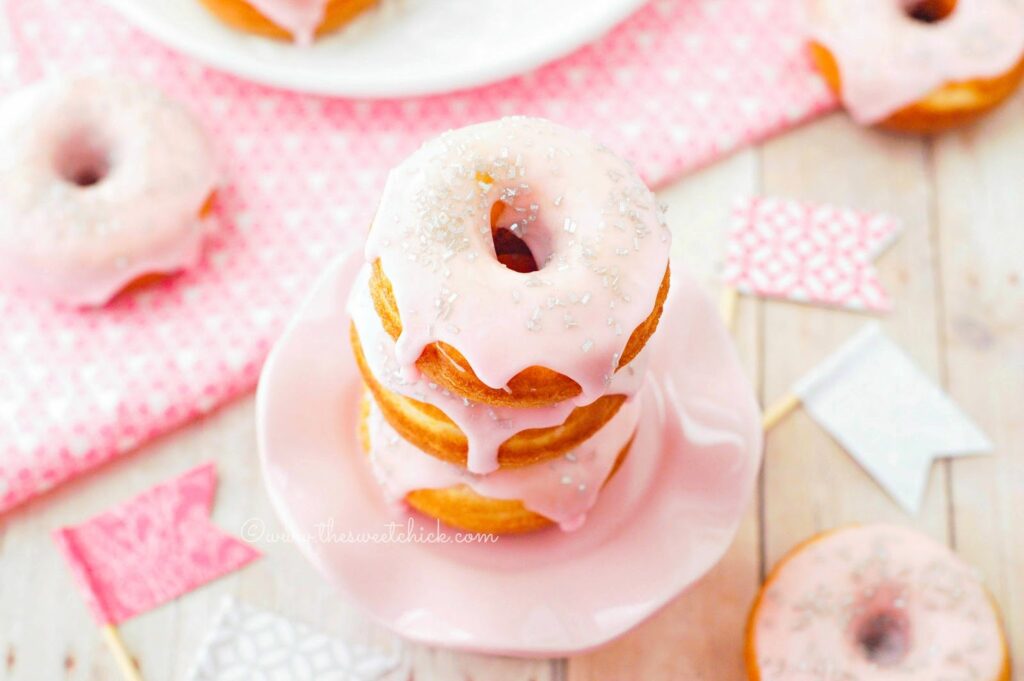
I love that they did come out tasting like a sugar cookie. The flavor is not as strong as it would be for a regular cookie, but the taste is there and in donut form. How cool is that? These would be great to make for a New Year’s party, or any party.

Mini Sugar Cookie Donuts
by The Sweet Chick
Prep Time: 15 minutes
Cook Time: 3 minutes
Keywords: bake dessert sugar cookie mix birthday donuts American
Ingredients (20 mini donuts)
- For the donuts
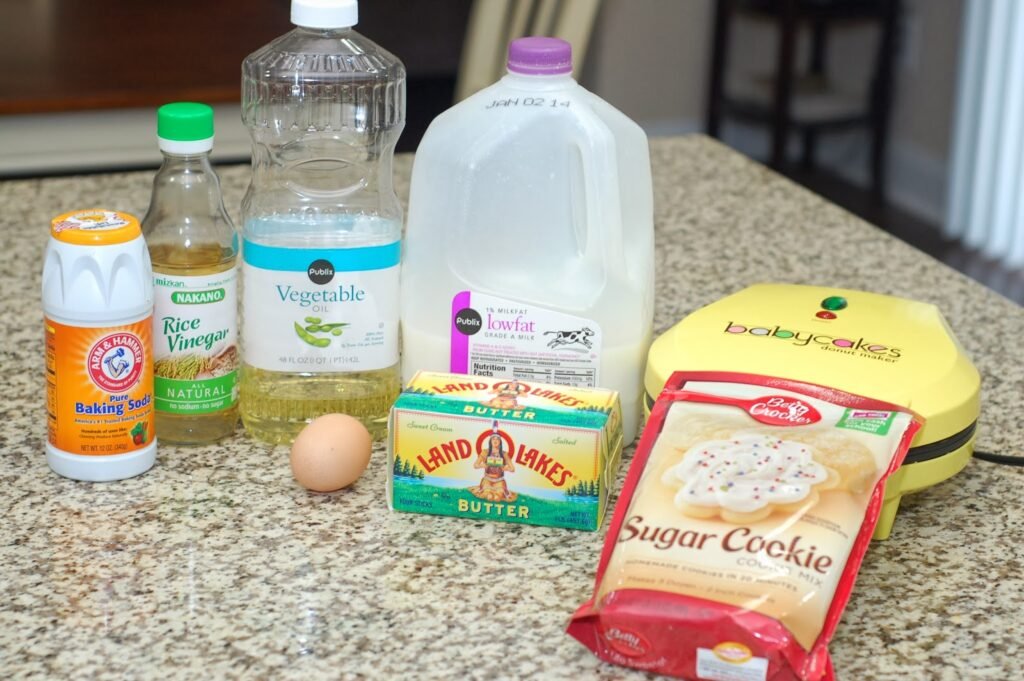
- 2 cups dry sugar cookie mix
- 1/4 teaspoon baking soda
- 1 egg, beaten
- 1 tablespoon butter, melted
- 1 tablespoon vegetable oil
- 1/2 cup milk
- 1 tablespoon vinegar
For the glaze
- 1 cup powdered sugar
- 2 tablespoons milk
- 1 teaspoon vegetable shortening
- 1 drop red food coloring (optional)
Optional topping
- sprinkles
Instructions
For the donuts
Preheat your Babycakes Donut Maker.
Mix together milk and vinegar and set aside for a few minutes while it curdles (a replacement for buttermilk).
In a medium bowl, mix together the dry sugar mix, and baking soda.
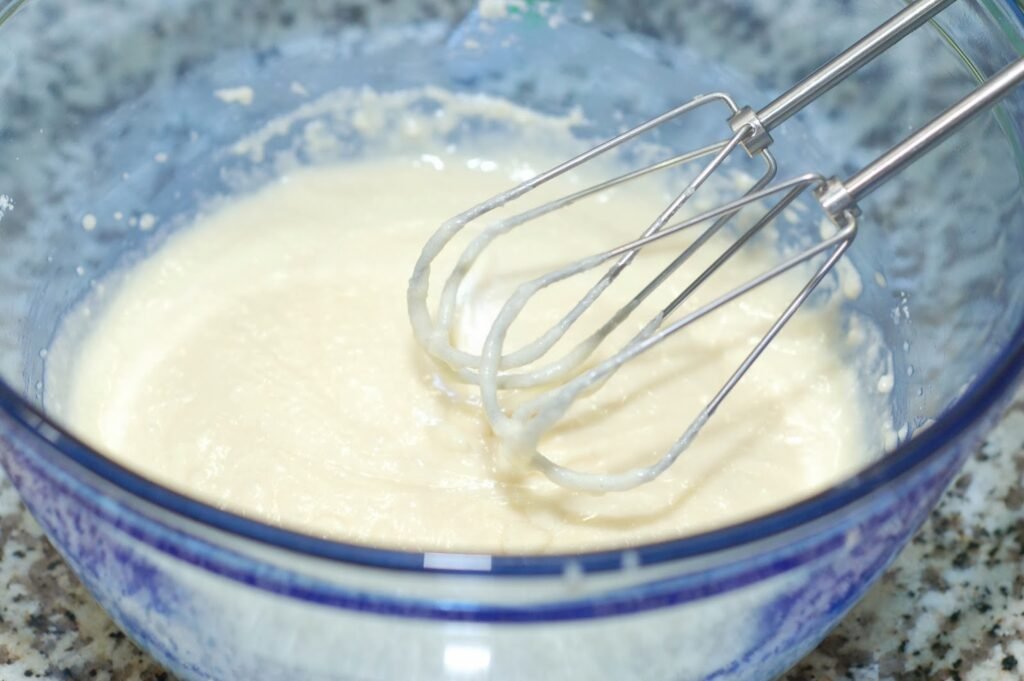
Then add the egg , butter, oil, and curdled milk. Mix until completely blended.
Use a piping bag, a Ziplock bag with tip cut off, or a pancake pen, fill each donut reservoir with about 2 tablespoons of batter.
Bake for about 3 minutes (do not use timer on machine) or until toothpick inserted in center of donut comes out clean.
Place hot donuts on cooling rack with a wax paper underneath and prepare the glaze.
For the glaze
In a small bowl whisk together powdered sugar, milk, vegetable shortening, and food coloring until smooth.
Dip the tops of each cooled off donut in the mixture ,then place back on the cooling rack until the glaze is dry.
For the topping
Add your sprinkles before the glaze dries to be sure they will stick.
Related Posts

Subscribe for New Racipies
Get mental health tips, updates, and resources delivered to your inbox.
Very Decadent Hot Chocolate

How do I love thee? Let me count the ways.
I love thee to the depth and breadth and height
of a cup of City Bakery hot chocolate,
crowned with a giant marshmallow
whose bottom disappears from sight
into chocolate-y depths I cannot fathom.
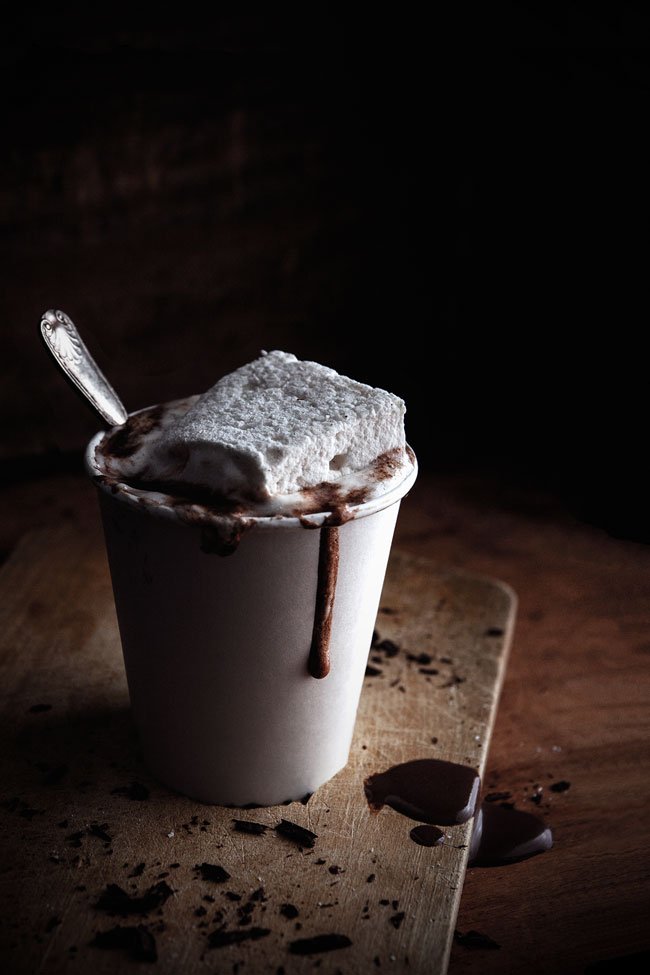
A worthy riff on a famous poem, no? I’m kidding. But for those of you familiar with City Bakery’s hot chocolate, maybe it’s not such a stretch comparison after all. You have to love the thought of pure viscous decadence though, complete and unadulterated hedonism in a cup. And you have to love chocolate.
Luckily, chocolate is something both Chris and I love, as well as marshmallows, and post-shopping breaks spent perched on stools on the mezzanine at the Bakery. We stopped in for a snack the other day and ended up whiling away a good chunk of the afternoon nibbling on food and drink, him with his latest haul from the Strand and me with the February issue of Bon Appetit. Time well spent, I say.

Which brings me to today’s post. I love love love the hot chocolate at City Bakery and have been wanting to replicate it at home for some time now. But with a recipe shrouded in secrecy, and a taste that’s like a word on the tip of the tongue—not quite placeable—the best I can do is create the tastiest, creamiest, thickest hot chocolate possible and nestle in it a giant, fluffy homemade marshmallow. The marshmallow will melt, improving the taste/creaminess/thickness even more, and all will be right with the world.
That being said, there’s a difference between hot chocolate meant to be drunk and dipping hot chocolate. Have you ever tried Spanish churros with chocolate? Yeah, that stuff is THICK. This (pointing to the cup of hot chocolate above) is not that.
The attack was three-fold: for the taste, I used good dark chocolate (the last of my Guittard) and balanced it with a pinch of sea salt, a spoonful of sugar, and a splash of vanilla; for the creaminess, whole milk (this might demonstrate a sign of restraint as I could’ve gone the heavy cream route, but see the note above about Spanish hot chocolate; also, do you really want to drink ganache?); and for the thickness, corn starch, whisked in with the milk and slowly heated.

Next, the marshmallows. They are a recipe worth bookmarking unto themselves. City Bakery’s marshmallows are incredibly fresh, soft, and airy, and I found that whipped egg whites helped achieve that dreamy texture. They’re also large, so that each customer is awarded one per cup. You have to take a spoon to yours, slowly carving away at it, smothering each bite with a pool of liquid chocolate so that it melts away in your mouth. It’s an experience over which I dare you not to linger.
And hey, Valentine’s Day is coming up! How convenient. Or not. Just sayin’.

VERY DECADENT HOT CHOCOLATE
Serves 2
Ingredients:
4 oz. dark chocolate, chopped
2 cups whole milk
2 tsp corn starch
about 2 Tbsp sugar
generous pinch sea salt
splash vanilla extract
Directions:
In a small heavy-bottomed saucepan, melt the dark chocolate with a splash of milk over medium-low heat. Stir. Whisk corn starch with rest of milk (vigorously or else you’ll end up with clumps of corn starch in your drink) and slowly add it to the melted chocolate. Add sugar to taste. Keep stirring until it reaches a low simmer and becomes thick enough to coat the back of a spoon. Remove from heat and stir in salt and vanilla.
Divide between two cups. Top with giant marshmallows (see below).
GIANT MARSHMALLOWS
Adapted from Gourmet via Smitten Kitchen
Makes 16 2″ marshmallows
Ingredients:
2 Tbsp plus 2-1/2 tsp unflavored gelatin
1 cup cold water, divided
2 cups granulated sugar
1/2 cup light corn syrup
1/4 tsp salt
2 large egg whites
1 Tbsp vanilla
confectioner’s sugar mixed with corn starch (about 75%/25%) for dusting
Directions:
Oil bottom and sides of 8- or 9-inch square pan. Dust with confectioner’s sugar.
In the bowl of a stand mixer, sprinkle gelatin over 1/2 cup water. Set aside. In a 3-quart heavy-bottomed saucepan, cook granulated sugar, corn syrup, second 1/2 cup of cold water, and salt over low heat, stirring with a wooden spoon, until sugar is dissolved. Increase heat to moderate and boil mixture, without stirring, until a candy or digital thermometer registers 240°F, about 12 minutes. Remove pan from heat and pour sugar mixture over gelatin mixture, stirring until gelatin is dissolved. With stand mixer, beat on high speed until white, thick, and nearly tripled in volume, about 6 minutes.
(This part is kind of annoying, but it’s worth it!) With a clean whisk, whisk 2 egg whites in a medium bowl until stiff peaks form. Fold egg whites and vanilla into marshmallow mix until just combined. Pour mixture into prepared pan. Sift confectioner’s sugar/corn starch over top, and let stand for about 4 hours or up to 24 hours until firm.
When cutting the marshmallows into pieces, have a lot of the confection’s sugar mix ready. Gently remove the marshmallow from the pan and set on a large cutting surface. Your knife will stick to the marshmallows with the first cut, but sprinkle the powder mix on it and it’ll be easier to cut subsequent pieces.
Related Posts





Subscribe for New Racipies
Get mental health tips, updates, and resources delivered to your inbox.