
Almond Oil and Acid Reflux: Is It Acidic or a Soothing Remedy?

Medically reviewed by Aneeza Pervez Updated Date: January 1, 2026

Introduction: Almond Oil—A Kitchen Staple with Growing Popularity
Almond oil is a beloved ingredient in many households, known for its nutty flavor and wide-ranging health benefits. Whether used for cooking, skincare, or medicinal purposes, it’s hailed as a versatile, nutrient-packed oil. However, for those suffering from acid reflux, one burning question often arises: Is almond oil acidic, and can it aggravate reflux symptoms?
Diet plays a crucial role in managing acid reflux, and understanding the acidity or alkalinity of foods is essential. This article dives deep into the properties of almond oil, its effects on acid reflux, and how it can be safely incorporated into a reflux-friendly diet. By the end, you’ll know whether almond oil is a friend or foe for your digestive health.
What Makes Almond Oil Unique?
What Is Almond Oil? A Nutritional Overview
Almond oil is extracted from almonds, either by cold-pressing or refining methods. The result is a light, golden oil with a mild, nutty flavor. There are two main types of almond oil:
- Sweet Almond Oil: Commonly used in cooking and baking, as well as in skincare products.
- Bitter Almond Oil: Typically used in medicinal applications and not recommended for consumption.
Sweet almond oil, the focus of this article, is rich in monounsaturated fats, vitamins, and antioxidants, making it a popular choice for heart-healthy diets and natural remedies. Its nutritional profile is often touted for promoting skin health, reducing inflammation, and supporting weight management.
Nutritional Profile of Almond Oil
Almond oil is not only flavorful, but also packed with nutrients that make it beneficial for overall health. Its key components include:
- Healthy Fats: High in monounsaturated fats (approximately 70%) and low in saturated fats, almond oil supports heart health.
- Vitamin E: A powerful antioxidant that helps protect cells from oxidative stress.
- Omega-9 Fatty Acids: Linked to reducing inflammation and supporting brain health.
While almond oil lacks fiber or protein (unlike whole almonds), its healthy fats and antioxidants can support digestion and reduce inflammation, both of which are important for acid reflux sufferers.
Is Almond Oil Acidic or Alkaline?
The pH of Almond Oil: Acidic, Neutral, or Alkaline?
When it comes to pH levels, almond oil is considered neutral to mildly alkaline. Unlike acidic foods that can irritate the esophagus and worsen reflux symptoms, almond oil is less likely to cause discomfort.
Almond oil’s alkalinity makes it a potential soothing agent for the digestive tract, helping to balance stomach acidity. However, the way it interacts with acid reflux largely depends on how it’s consumed and paired with other foods.
Acidic vs. Alkaline Foods: Why It Matters for Acid Reflux?
Acid reflux occurs when stomach acid flows back into the esophagus, causing symptoms like heartburn, regurgitation, and chest discomfort. Acidic foods, such as citrus fruits and tomatoes, can worsen these symptoms by increasing stomach acidity or irritating the esophageal lining.
Alkaline foods, on the other hand, help neutralize stomach acid and reduce the risk of reflux episodes. Almond oil’s neutral to mildly alkaline nature makes it less likely to trigger acid reflux, especially when consumed in moderation.
Author Tip: 7 Kinds of Foods to Avoid with GERD
How Almond Oil Affects Acid Reflux?
Benefits of Almond Oil for Acid Reflux
Research suggests that almond oil can offer several benefits for individuals managing acid reflux:
- Soothing Properties: Its mild alkalinity can help neutralize excess stomach acid, reducing reflux symptoms.
- Anti-Inflammatory Effects: Almond oil contains antioxidants and healthy fats that may reduce inflammation in the esophagus caused by acid exposure.
- Support for Digestion: Healthy fats in almond oil promote smooth digestion, which can lower the risk of reflux.
Additionally, almond oil is easy to incorporate into a reflux-friendly diet due to its versatility in cooking and baking.
When Almond Oil Might Worsen Symptoms?
While almond oil is generally safe for acid reflux sufferers, it may not be suitable for everyone. Here’s why:
- Overconsumption: High-fat foods, even healthy ones, can relax the lower esophageal sphincter (LES), allowing stomach acid to flow back into the esophagus.
- Individual Sensitivities: Some individuals may find that even neutral foods like almond oil trigger symptoms.
- Pairing with Trigger Foods: Almond oil used with acidic or spicy ingredients may still aggravate reflux.
Tips for Adding Almond Oil to a Reflux-Friendly Diet
Choose the Right Type of Almond Oil
Opt for high-quality, cold-pressed almond oil, as it retains more nutrients and is free from harmful additives. Avoid bitter almond oil, as it is not meant for culinary use and may contain toxic compounds.
Use Almond Oil in Cooking
Here are some reflux-friendly ways to incorporate almond oil into your diet:
- Drizzle on Salads: Use almond oil as a mild dressing paired with alkaline vegetables like cucumbers and spinach.
- Cooking Oil Substitute: Replace butter or other high-fat oils with almond oil for sautéing or baking.
- Smoothies: Add a teaspoon of almond oil to smoothies with alkaline ingredients like bananas and almond milk.
Practice Portion Control
Stick to small amounts of almond oil (1–2 teaspoons per meal) to avoid overloading your digestive system. Moderation is key to reaping the benefits of almond oil without triggering reflux symptoms.
Alternative Oils for Acid Reflux Sufferers
Reflux-Friendly Oils to Consider
If almond oil doesn’t suit your needs, there are other oils that are reflux-friendly:
- Olive Oil: A staple in Mediterranean diets, known for its mild flavor and high monounsaturated fat content.
- Avocado Oil: Neutral in flavor and rich in healthy fats, perfect for high-heat cooking.
- Coconut Oil: While higher in saturated fats, it can be used in moderation for those who tolerate it well.
Oils to Avoid for Acid Reflux
Not all oils are created equal. High-fat or heavily processed oils like palm oil, butter, and margarine can trigger reflux symptoms and should be avoided by sensitive individuals.
Lifestyle Tips to Manage Acid Reflux Alongside Almond Oil
Adopt Healthy Eating Habits
- Eat smaller, more frequent meals to prevent overeating.
- Avoid lying down immediately after meals to minimize reflux episodes.
- Chew your food thoroughly to aid digestion.
Identify and Avoid Triggers
Common acid reflux triggers include spicy foods, caffeine, chocolate, and alcohol. Identifying and minimizing these triggers can make a significant difference in managing symptoms.
Incorporate Physical Activity
Regular exercise can improve digestion and help maintain a healthy weight, both of which are crucial for reducing reflux episodes. Opt for low-impact activities like walking or yoga to avoid putting pressure on the abdomen.
Conclusion: Is Almond Oil Safe for Acid Reflux?
Almond oil is a nutrient-rich, versatile oil that is neutral to mildly alkaline, making it a generally safe choice for acid reflux sufferers. Its anti-inflammatory properties, healthy fats, and soothing effects on the digestive tract make it a valuable addition to a reflux-friendly diet.
However, like any food, it’s essential to consume almond oil in moderation and pay attention to how your body reacts. By choosing high-quality almond oil and using it in reflux-friendly recipes, you can enjoy its benefits without triggering uncomfortable symptoms.
FAQs: Almond Oil and Acid Reflux
Q1: Is almond oil acidic or alkaline?
Almond oil is neutral to mildly alkaline, making it a safer option for acid reflux sufferers compared to acidic oils.
Q2: Can almond oil worsen acid reflux?
Almond oil is unlikely to worsen acid reflux when consumed in moderation. However, overconsumption or pairing it with trigger foods may cause discomfort.
Q3: How should I use almond oil if I have acid reflux?
Use almond oil in small amounts for sautéing, as a salad dressing, or blended into smoothies with alkaline ingredients.
Q4: Are there other oils better than almond oil for acid reflux?
Olive oil and avocado oil are excellent alternatives for acid reflux sufferers due to their mild flavor and healthy fat content.
Q5: Should I avoid all oils if I have acid reflux?
No, not all oils need to be avoided. Focus on healthy, reflux-friendly oils like almond oil, olive oil, and avocado oil, and practice portion control.
Related Posts



Subscribe for New Racipies
Get mental health tips, updates, and resources delivered to your inbox.
Biscoff Bourbon Rice Krispie Treats



OK, so I’ve been playing around with Biscoff and Bourbon a little too much lately. However, I did come up with some good results. This week I made you some Biscoff Bourbon Rice Krispie Treats. ‘Cause you know sometimes, you just have to add a little booze to your Rice Krispies. You don’t always have to make sweets for the kids. My kids get enough sweets as it is. These crispy, crunchy treats that combine the sweetness of Biscoff with the oaky flavor of Bourbon and are topped of with a chocolate bourbon drizzle are for adults only.
Now, I am not the kind of person to drink bourbon straight up, but I do love it in my desserts. It enhances the other flavors. I think alcohol and sweets go well together.

These treats are just as easy to make as regular Rice Krispie treats. Just two extra ingredients. Mmmm, look at that. Don’t ya want a bite?

I couldn’t put a whole lot of bourbon in the marshmallow treats without them being too soft, so I added more bourbon to the chocolate drizzle. I just adapted the recipe for the chocolate whiskey sauce I used on my Triple Irish Krispie Pie. Both sauces are delicious. I kinda got lazy at this point and just used my measuring cup to pour on the chocolate sauce instead of using a piping bag. It still worked. I also sprinkled a bit of sea salt on top of the chocolate before it set. You don’t have to, but it does taste good.
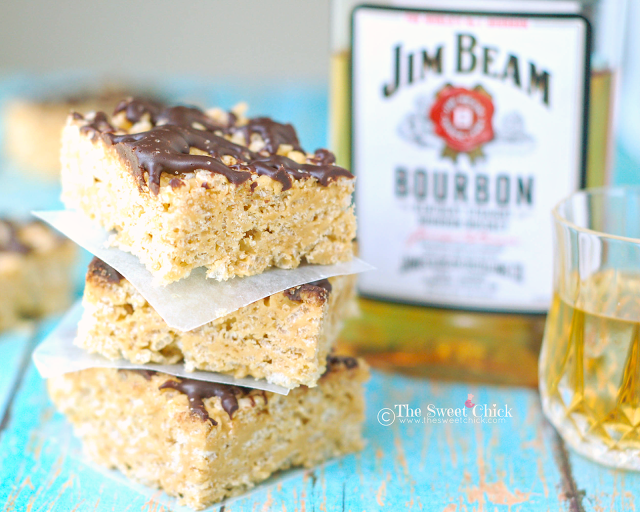
You are going to love the flavors and textures in these Biscoff Bourbon Rice Krispie Treats. They are soft, but crunchy, sweet and salty, with a little bit of alcohol. They would be perfect to bring to your Father’s Day gathering. Just keep them away from the kids. They can eat the plain boring Rice Krispie Treats.
Biscoff Bourbon Rice Krispie Treats
by The Sweet Chick
Prep Time: 15-20 minutes
Cook Time: 5 minutes
Keywords: no bake stove top dessert snack bourbon whiskey biscoff marshmallows rice krispies Father’s Day bars rice krispie treats American
Ingredients (24 squares)
For the treats
- 3 tablespoons butter
- 4 cups mini marshmallows
- 1/2 cup Biscoff spread
- 1 tablespoon bourbon
- 6 cups Rice Krispies cereal (or generic brand)
For the topping
- 1/2 cup semi-sweet chocolate chips
- 1/4 cup heavy cream
- 2 teaspoons bourbon
Optional toppings
- sea salt
- sprinkles
Instructions
For the treats
In a large sauce pan, melt butter and marshmallows over low heat. Stir until completely melted.
Remove from heat and add Biscoff and bourbon. Stir until completely mixed.
Then add the Rice Krispie cereal. Mix until all is well incorporated.
Then pour the mixture into a greased 9 x 13 pan or a cookie sheet and spread it evenly with a piece of waxed paper.
Place in fridge to cool and set.
For the topping
Place the chocolate chips in a glass measuring cup with a spout. Set aside.
In a small sauce pan, bring cream to a boil over medium heat.
Pour cream over the chocolate and let it sit for about two minutes, then stir with a small spatula or fork until mixture becomes smooth and glossy.
Add bourbon and mix well.
Remove the cooled treats from the fridge and drizzle the sauce over the treats. I just poured it with the measuring cup, but you can use a fork or spoon.
I put the treats back in the fridge to set the chocolate before cutting them into squares.
Once they are cut, you don’t need to keep them in the fridge.
Optional toppings
If you want to add a little sea salt or sprinkles, do so before the chocolate sets.
Related Posts






Subscribe for New Racipies
Get mental health tips, updates, and resources delivered to your inbox.