
Trulicity For Weight Loss: Uses, Dosages, Side Effects & More

Medically reviewed by Christiana George Updated Date: May 13, 2026
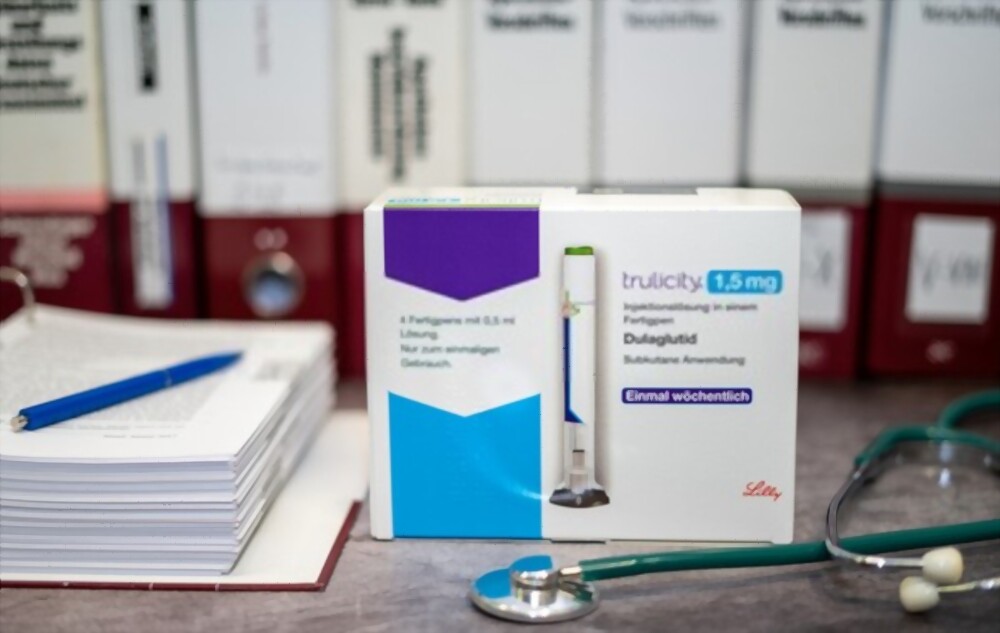
Weight loss is an obsession of many people these days. Around half of the US population tries to lose weight each year. Maintaining a normal weight is important because obesity increases the risk of many health conditions, including heart attacks, strokes, and type 2 diabetes. To try to lose weight, some people opt to try various weight loss medications. And Trulicity for weight loss is one of these.
Trulicity (dulaglutide) is an FDA-approved injectable medication to treat type 2 diabetes. It regulates blood sugar levels when used in conjunction with diet and exercise. The amount of trulicity one should use for weight loss depends on the dosage of drugs the individual is taking.
Although Trulicity is not a weight loss medication, it can help some people lose weight. Continue reading to learn more about Trulicity and how it may be able to help you lose weight.
Does Trulicity Work for Weight Loss?
Trulicity contains glucagon-like peptide 1 (GLP-1 ) agonists. It is an incretin hormone that regulates blood sugar levels. Your body releases incretin naturally after you eat. It stimulates the release of insulin from the pancreas (an organ next to the liver). This prevents blood sugar (glucose) levels from getting too high. Incretins help your body in digestion and provide a feeling of satiety after eating.

GLP-1 releases insulin by binding to GLP-1 receptors (chemical binding sites) in the pancreas. Trulicity works by mimicking the actions of GLP-1. It activates (turns on) the GLP-1 receptor, which signals the pancreas to release more insulin and less glucagon. The result is a decrease in blood sugar levels.
Is Trulicity Approved For Weight Loss?
Trulicity (an injectable medication ) is not FDA-approved for treating type 2 diabetes. But weight loss may be an additional benefit for people taking Trulicity to help manage their type 2 diabetes. It is necessary to follow a healthy eating regimen and exercise along with Trulicity to receive the maximum benefits from this medication.
How Does Trulicity Lead To Weight Loss?
Trulicity can help with weight loss for people with type 2 diabetes. Trulicity generally regulates blood sugar levels in patients with type 2 diabetes. This is because our bodies have a hormone called incretin. When we eat food, our stomach releases the incretin hormone. It helps regulate blood sugar levels by assisting cells in absorbing maximum glucose to convert into energy forms.

Type 2 diabetes patients are deficient in this hormone. The use of Trulicity, in this case, is to regulate blood sugar levels.
The actual mechanism of action of Trulicity is:
Trulicity and the incretin hormone act on the body and reduce gut motility. This combination slows down the process of emptying the gastrointestinal tract. As a result, the food remains in the GI tract longer. This prolongation of food keeps us full for a long time. This feeling of fullness suppresses our feeling of hunger, and this decrease in appetite causes a person to eat less. That’s how trulicity helps with weight loss.
How Much Weight Do You Lose With Trulicity?
Several studies found that the rate of weight loss depends on the dose of Trulicity you take. A research study concluded that after about 9 months of treatment, people taking 4.5 mg of Trulicity experienced more weight loss (about 10 pounds) than people taking 1.5 mg of Trulicity, who lost just under 7 pounds.

People lost an average of two to six pounds while taking Trulicity for weight loss.
However, between 15 and 30% of people gained weight. One of the ways Trulicity works is by helping you feel full after a meal. Among the people most likely to lose weight are those with a higher starting weight and a longer duration of GI side effects.
What Is the Dose of Trulicity for Weight Loss?
Trulicity’s maker, Eli Lilly, reported a 36-week clinical study in people with a BMI (body mass index) either greater than or less than 33.2. During the study, researchers gave different Trulicity doses (0.75 mg, 1.5 mg, 3.0 mg, or 4.5mg) to people.
The study showed the differential outcomes of Trulicity doses for weight loss. People with higher starting BMIs who took higher doses of Trulicity had the greatest weight loss, measured in pounds lost from baseline. The average weight loss for the highest dose of Trulicity (4.5 mg) was 10.1 lbs.
| Trulicity Dosage | Potential Weight Loss |
| 0.75 mg | 4.5 pounds |
| 1.5 mg | 6-7 pounds |
| 3 mg | 8.5 pounds |
| 4.5 mg | 10.1 pounds |

How Much Trulicity Is Safe to Consume?
The recommended dose of Trulicity is 1.5 mg once a week. For people who are most susceptible to high doses, 0.75 mg once weekly may be considered as the starting dose. For added glycemic control, the 1.5 mg dose can be increased to 3 mg per week after at least 4 weeks on the lower dose.
How To Use Trulicity For Weight Loss?
Specific investigations discovered that the amount of weight loss and improvement in blood glucose levels was portion related.
This implies that individuals on Trulicity 4.5 mg had more weight reduction (around 10 lbs) than individuals on Trulicity 1.5 mg (somewhat less than 7 lbs) after around nine months of treatment.
Higher doses of Trulicity additionally brought down blood glucose more than lower dosages. Trulicity comes as a single-portion infusion pen. There are four pen doses available:
- 0.75 mg
- 1.5 mg
- 3 mg
- 4.5 mg
Always inject the medicine subcutaneously (under the skin) in the following regions:
- Upper arm
- Thigh
- Midsection
You’ll have to inject Trulicity once each week. You should change your injection site weekly to allow the previous injection site to heal.
For people who are prone to weight loss medication. The initial dose of Trulicity is 0.5 mg once a week. If blood sugars remain high for the subsequent seven days, the dose can be raised to 1.5 mg per week.
If blood sugar values remain high on 1.5 mg per week, your physician may raise your dose to 3 mg per week, and if your blood sugars are still high, they can raise your dose to 4.5 mg per week. This is the highest dose available.
How To Increase Trulicity Benefits?
Trulicity is a once-a-week diabetes medication. It reduces the risk of cardiovascular problems. It is not safe to take Trulicity for weight loss more frequently than once per week.
You can use Trulicity at any time of the day, regardless of the timing of your meals. Try not to mix up Trulicity with different medications like insulin. Each pen contains a single dose of a drug and is for one-time use only. Keep in mind the following measures to increase the benefits of Trulicity.
- Keep your Trulicity in the refrigerator. Take it out shortly before your injection to allow it to come to room temperature prior to injection.
- Avoid eating grapefruit or drinking grapefruit juice with Trulicity.
- Avoid or really limit your caffeine intake.
- Avoid the use of alcohol while on Trulicity as it can cause stomach upset, loose stools, and vomiting.
Weight loss with any medication is possible. Your physician can give you additional advice, such as dietary guidance and exercise recommendations.
Trulicity Alternatives For Weight Loss
With the advancement of science and invention, new medications are continuously being developed and becoming available on the market. I have listed many alternatives to Trulicity that are available. These alternatives work exactly like Trulicity. Have a look at them!
Trulicity Vs Ozempic For Weight Loss: Is Ozempic A Good Alternative To Trulicity?
Ozempic is an injectable prescription drug manufactured by Novo Nordisk. It is FDA-approved for weight loss. Just like Trulicity, it is injected subcutaneously. It is available in doses of 0.25mg, 0.5mg, and 1mg. Ozempic is also taken once a week and it is also used to treat type 2 diabetes.
| Dosage | Potential Weight Loss |
| 0.25 mg | 6.2 lbs |
| 0.5 mg | 9.3 lbs |
| 1 mg | 12.8 lbs |
Wegovy Vs Trulicity For Weight Loss: Is Wegovy A Good Alternative To Trulicity?
Wegovy is an injectable medication that works exactly like Trulicity. The FDA has approved Wegovy for weight loss. However, the only contradiction is that the salt in wegovy has higher potency than trulicity. It is available in doses of 0.25mg, 0.5mg, and 1mg. Just like Trulicity, Wegovy is also taken once a week, and it is also used to treat type 2 diabetes.
| Dosage | Potential Weight Loss |
| 0.25 mg | ~ 8 lbs |
| 0.5 mg | ~ 15 lbs |
| 1 mg | ~ 17 lbs |
| 1.7 mg | ~ 19 lbs |
| 2.4 mg | 20-30 lbs |
Trulicity vs Victoza for Weight Loss: Is Victoza a Good Alternative to Trulicity?
Victoza is also manufactured by Novo Nordisk. It contains liraglutide as an active ingredient. In contrast with Trulicity, it is available in doses of 0.6 mg, 1.2 mg, and 1.8 mg. Victoza should be taken once daily. Victoza helps regulate blood sugar levels in people with type 2 diabetes.
| Dosage | Potential Weight Loss |
| 0.6 mg | 4 lbs |
| 1.2 mg | 5.9 lbs |
| 1.8 mg | 7.3 lbs |
Trulicity Vs Metformin For Weight Loss: Is Metformin A Good Alternative To Trulicity?
Like Trulicity, metformin is a diabetes medication. It helps control blood sugar levels in people with type 2 diabetes. The amount of weight loss that occurs as a result of taking metformin is generally fairly small. This medication can be taken once or twice a day. Your doctor can prescribe both drugs if you need to lower your blood sugar level.
| Dosage | Potential Weight Loss |
| 500 mg | ~ 2-3 lb |
| 750 mg | ~4 lbs |
| 850 mg | 5.9 lb |
| 1000 mg | ~ 8 lbs |
| 2000 mg | ~15 lbs |
Trulicity Vs Liraglutide For Weight Loss: Is Liraglutide (Saxenda) A Good Alternative To Trulicity?
Saxenda is an injectable medication. Liraglutide helps people lose weight by suppressing your appetite. Its chemical structure is 97% similar to trulicity. Both these medications release Glucagon-like peptide-1 (GLP-1), a hormone in response to food intake to produce feelings of fullness and satiety. Take one dose of liraglutide daily.
| Dosage | Potential Weight Loss |
| 1.2 mg | 16 lbs |
| 1.8 mg | 17.1 lbs |
| 2.4 mg | 19 lbs |
| 3 mg | 17.6 lbs |
Trulicity Vs Mounjaro For Weight Loss: Is Mounjaro A Good Alternative To Trulicity?
Just like Trulicity, Monjaro is an injectable prescription drug used along with diet and exercise to improve blood sugar (glucose) levels in adults with type 2 diabetes mellitus. Although, it is not a weight-loss drug, many people experience weight loss with continuous use. It is available in doses including 2.5 mg, 5 mg, and 7.5 mg.
| Dosage | Potential Weight Loss |
| 2.5 mg | ~8 lbs |
| 5 mg | ~12 lbs |
| 7.5 mg | 16 lbs |
| 15 mg | 25 lbs |
Some Other Side Effects Of Trulicity
Trulicity helps lower blood sugar levels in patients with type 2 diabetes. Sometimes people take a higher dose of Trulicity than required by the body. This can cause blood sugar levels to drop too much. This also causes an unhealthy rate of weight loss.
So, we recommend you start Trulicity at a low dose of 0.75 mg or 1.5mg. If no noticeable side effects occur, you can increase your dose to the amount required at that time.
Your physician will determine the proper starting dose for you, and will increase your dose if and when it becomes necessary.
The most well-known side effects of Trulicity are gastrointestinal (GI) side effects. Individuals typically experience GI side effects within a few days of using Trulicity. Examples of symptoms include.
- Feeling sick to one’s stomach
- Loose bowels
- Vomiting
A rare but serious incidental effect is low blood glucose (hypoglycemia). Hypoglycemia is characterized by blood glucose levels under 70 mg/dL. A few signs and symptoms of hypoglycemia include:
- Unsteadiness
- Rapid pulse
- Sweating
- Hunger
- Feeling uneasy
- Drowsiness
- Feeling feeble
- Shivering
Check your blood glucose immediately if you experience any of these side effects. Adhere to your physician’s instructions for treating hypoglycemia, (for example, the “15-15 Rule”) and inform your doctor quickly.
FAQs
What Is Dulaglutide Used For?
It is an injectable medication for people with diabetes. It is necessary to accompany dulaglutide use with a healthy eating and exercise routine for maximum benefits. Dulaglutide controls blood sugar levels in patients with type 2 diabetes (a state in which the body is unable to regulate blood sugar levels appropriately).
Can I Use Trulicity With Insulin?
Yes, you can use them together. You just need to reduce the quantity of insulin. Trulicity and insulin jointly increase the regulation of blood sugar levels. Hence, more glucose is converted into energy. But only people with type 2 diabetes can use trulicity.
Does Dulaglutide Cause Weight Loss?
Although it is not a weight loss medication specifically, it just suppresses your appetite. A person taking trulicity can lose an average of 3-4 pounds. However, some people have experienced 15-30% weight gain.
Can Non-diabetic Patients Take Trulicity for Weight Loss?
People who don’t have diabetes should not take trulicity just for the sake of weight loss. Weight loss by trulicity is a concept that depends on your overall metabolic rate and food intake.
What Foods Should You Avoid While Taking Trulicity?
Avoid eating fatty foods and high-sugar foods. They slow your metabolic rate and are difficult to digest. Most commonly, these foods cause nausea when taken along with trulicity.
Bottom Line
Trulicity for weight loss is a GLP-1 agonist that treats type 2 diabetes when used with diet and exercise. It is also helpful in treating heart problems in people with type 2 diabetes, existing coronary disease, or risk factors for coronary disease.
While Trulicity isn’t FDA-approved for weight loss, it helps assist individuals to shed a few pounds, particularly at a dose of 4.5 mg each week. The most widely recognized side effects include stomach upset, nausea, and heaving.
Individuals without type 2 diabetes should not use Trulicity. Other GLP-1 agonists like Wegovy and Saxenda are FDA-approved for weight loss at times. Speak with your physician if you’re keen on using a GLP-1 agonist for weight loss.
Related Posts



Subscribe for New Racipies
Get mental health tips, updates, and resources delivered to your inbox.
Maple Apple Muffins



My 6 year old daughter had been begging all last week to bake something. She wanted to make some apple cupcakes. She took out a page of her recipe book and wrote down all the ingredients and handed it to me. When I asked her how much of each ingredient, she didn’t have an answer. So I had to explain to her that recipes are not just about ingredients, they are all about measurements. So she started pulling out her measuring spoons and put one next to each ingredient. It was really cute, but then I had to explain to her that when you don’t know what you are doing, it is best to start with a base recipe and adapt it from there.

I found a recipe on the Food Network website for Apple Coffee Cake with Crumble Topping that sounded good. It was by Emeril Lagasse, you can’t go wrong with any of his recipes. I didn’t want a heavy cupcake and I wasn’t in the mood for frosting. So I convinced my daughter we should try to make this recipe as muffins in cute cupcake liners. She was happy. I had most of the ingredients except for sour cream, but I had some Vanilla Chobani yogurt on hand. I also wanted to add a touch of maple, so I replaced some of the sugar for maple syrup.

Just look at those chunks of apples sitting in that fluffy maple cloud. Don’t you just want to dive right in?

Here my assistant in sprinkling the crumble on top of the muffins before putting then in the oven.

We did not go overboard on the crumble, just a little to give the muffins a little crunch. I used some maple butter that I had made before to make the crumble and keep with the maple flavor.

The end result was a light, airy muffin. Not to sweet, but full of maple and apple flavor with a slightly crunchy topping. Perfect to go with coffee, tea, or a glass of milk. I’d share, but sadly they are all gone.
Maple Apple Muffins
by The Sweet Chick
Prep Time: 15 minutes
Cook Time: 12-20 minutes
Keywords: bake dessert snack breakfast apple maple syrup muffin
Ingredients (24 muffins)
For the muffins
- 8 tablespoons(1 stick) butter
- 1 cup light brown sugar
- 2 large eggs
- 1 cup all purpose flour
- 1 cup whole wheat flour
- 1 teaspoon baking soda
- 1 teaspoon cinnamon
- 1/2 teaspoon salt
- 1/2 cup Greek yogurt (vanilla or plain)
- 1 teaspoon vanilla extract
- 1/2 cup pure maple syrup
- 2 cups chopped apples
For the topping
- 1/2 cup light brown sugar
- 1/4 cup flour
- 1/4 cup quick oats
- 1/2 teaspoon cinnamon
- 4 tablespoons butter (or maple butter)
Instructions
For the muffins
Preheat oven to 350º F. Fill muffin tins with liners.
In a stand mixer, cream together the brown sugar and the butter. Then add the eggs and mix on low until well blended.
In a large bowl sift together flours, baking soda, cinnamon and salt. Then slowly add the dry ingredients to the butter mixture while mixing on low.
Add yogurt and vanilla extract. Then add maple syrup and continue to mix on low until all ingredients are well incorporated.
Lastly, add the chopped apples and mix until apple pieces are well distributed.
Evenly distribute the batter into the muffin liners. Then make the topping.
For the topping
In a small bowl mix together the sugar, flour, oatmeal, and cinnamon. Blend with a fork, making sure there are no lumps.
Melt the butter in a glass container in the microwave for about 20 seconds. Then pour over the dry mixture. Blend with a fork until mixture becomes crumbly.
Evenly distribute the crumble mixture over muffin batter.
Then place muffin tins in the oven and bake at 350º for 15-20 minutes, or until toothpick inserted in center comes out dry.
Related Posts






Subscribe for New Racipies
Get mental health tips, updates, and resources delivered to your inbox.