
Quinoa With Corn, Mint, And Scallions, Or, Think of The Peasants Linda!

Medically reviewed by Christiana George Updated Date: June 8, 2023

I pride myself on how cleanly I can eat corn on the cob. In one miraculous maneuver (if I do say so myself), my head moving left to right like a typewriter, I consume the entire thing without leaving a single kernel behind. They are so detached so neatly that all that remains are long, empty furrows.
It’s a strange thing to be proud of, no? I learned this skill from my mom, the Queen of Economy, who never wasted so much as a single kernel of corn. She instilled this mindset in my sister and me to an almost obsessive degree. Case in point: at the end of dinner, a quick examination of the bowls would reveal three—mine, my mom’s, and my sister’s—to be completely spotless. Not a single grain of rice, a single grain of rice, left to speak of. My dad’s, on the other hand, is usually coated with a thin layer of the stuff, stained with residue from the meal. Oh Dad.
Like the children in Africa, us Chinese have our nongming, peasant class, to think of: every grain of rice left behind represents wasted toil on the part of the rice farmer. Of course, my dad comes from a family of rice farmers and he clearly isn’t heartbroken over the squandered rice. My mom has a retort to that though—his family had pigs to feed.
Anyway, whenever I use corn in recipes, I think about how my mom would have a fit seeing how much of the cob I waste when sawing off the kernels. All that wasted sustenance, Linda!
It’s a good thing I keep my cooking to a minimum when I’m visiting.
Today’s recipe is healthy and delicious, and comes with a huge serving of corn, which, when in season, glows, lovely and diffuse. I love eating it raw, and I think you will too, especially if you can get it fresh. While quinoa isn’t the most dazzling base for a summer side, this quinoa is light and fluffy, effervescent even, AND comes dressed in lemony butter. I’m sure you can imagine just what an effect lemony butter can have. Finally, the fresh mint and fresh scallion insert themselves—in their own unique ways—quite winningly, adding refreshing and ever-so-pungent notes (respectively) to the dish. All in all, I highly recommend making this as a counterbalance to a hefty platterful of meat.
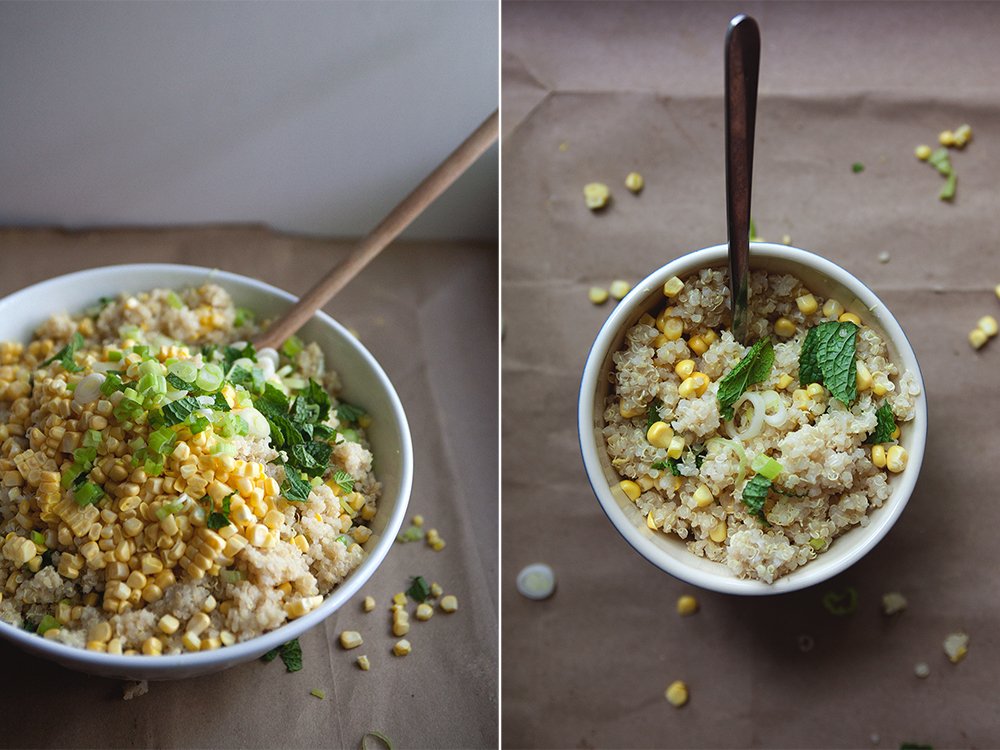
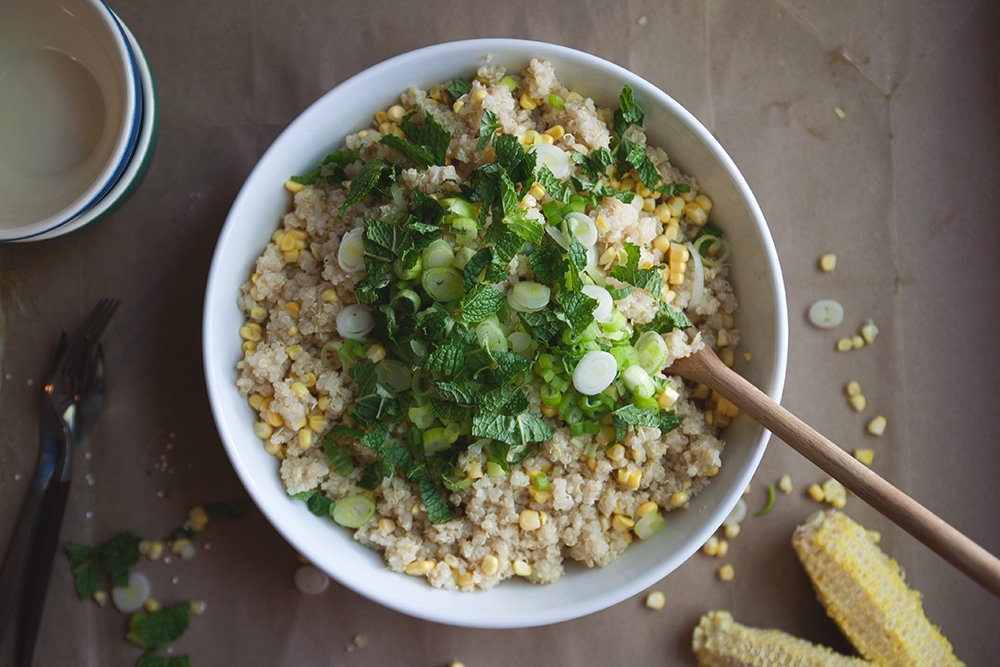
QUINOA WITH CORN, MINT, AND SCALLIONS
Adapted from Gourmet
Serves 8
Ingredients:
4 ears corn, shucked
Zest from 1 lemon
Juice from 1 lemon
1/2 stick butter (1/4 cup), melted
1 Tbsp mild honey
Salt & pepper to taste
2 cups quinoa
4 scallions, chopped
1/2 cup chopped fresh mint
Directions:
Since it’s the season, simply cut the corn kernels off the cob with a heavy knife. Otherwise, put corn in a 5- to 6-quart wide pot, add water to cover, and bring to a boil, covered. Remove from heat and let stand, still covered, for 5 minutes. Transfer corn with tongs to a cutting board. When cool enough to handle, cut kernels off cobs with a knife.
In a (very) large bowl, whisk the lemon juice and zest, butter, honey, and salt/pepper until combined.
Cook the quinoa in a 4- to 5-quart pot of boiling salted water, uncovered, until almost tender, about 10 minutes. Drain in sieve, then set sieve over same pot with 1 inch of simmering water (water should not touch bottom of sieve). Cover quinoa with a folded kitchen towel, then cover sieve with a lid and steam until quinoa is tender, fluffy, and dry, about 5 minutes. Remove from heat and let stand (still covered) 5 minutes.
Add quinoa to dressing and toss until dressing is absorbed. Then toss in scallions, mint, and more salt and pepper if needed.
Note: Unless you’re planning on feeding a crowd, I would highly recommend halving this recipe. It makes a lot more than you’d think.
Share on your social page if you like it!
Related Posts




Subscribe for New Racipies
Get mental health tips, updates, and resources delivered to your inbox.
The Spice Debate – Is Black Pepper Acidic?


Black pepper, often dubbed the “king of spices,” is a staple ingredient in nearly every cuisine worldwide. Its sharp and pungent flavor has made it a favorite for seasoning everything from hearty soups to crisp salads. However, this beloved spice has sparked a growing curiosity among health enthusiasts and those with digestive concerns. One of the most debated questions is whether black pepper is acidic and how it interacts with the body, particularly for individuals with acid reflux or sensitive stomachs.
For many, spices are a double-edged sword: they add flavor but can sometimes irritate the digestive system. Black pepper’s role in acidity and acid reflux has garnered attention due to its potential to trigger symptoms. Could this kitchen favorite be silently contributing to your discomfort? Let’s unravel the facts about black pepper’s acidity and its overall impact on your health and diet.
Black Pepper and pH: Is It Acidic or Alkaline?
Understanding Black Pepper’s Chemical Composition
Black pepper is composed of several active compounds, most notably piperine, which gives it its characteristic heat and health benefits. Piperine, along with black pepper’s essential oils, contributes to its flavor and potential acidity. Its chemical makeup leans slightly toward the acidic side of the pH scale, though it isn’t as harshly acidic as vinegar or citrus fruits.
Is Black Pepper Acidic or Alkaline?
While black pepper is not strongly acidic, it does fall slightly on the acidic side of the spectrum. Its acidity level depends on how it’s consumed—alone or combined with other foods. In the digestive system, black pepper can stimulate stomach acid production, which aids in breaking down food. However, this effect can sometimes cause irritation for individuals with conditions like GERD or hyperacidity.
Comparison with Other Spices
When compared to other common spices, black pepper holds a middle ground. Spices like chili powder and cayenne pepper are much more likely to cause irritation due to their intense heat and acidity, while milder seasonings like turmeric or coriander are gentler on the stomach. Black pepper’s acidity is less extreme but can still affect sensitive individuals when consumed in large quantities.
The Relationship Between Black Pepper and Acid Reflux
Does Black Pepper Cause Acid Reflux?
For some people, black pepper can act as a trigger for acid reflux. Its spiciness may irritate the esophagus, particularly if the lower esophageal sphincter (LES)—a muscle that prevents stomach acid from rising—is already weakened. This irritation can lead to symptoms such as heartburn, regurgitation, and bloating. While not as potent a trigger as chili or hot sauce, black pepper’s spiciness can still contribute to discomfort in sensitive individuals.
How Spicy Foods Affect Stomach Acid Levels
Spicy foods, including black pepper, can stimulate the production of gastric acid in the stomach. While moderate gastric acid is essential for digestion, excessive production can worsen conditions like GERD. Black pepper’s unique compounds, while beneficial in small amounts, may irritate the stomach lining when consumed in excess, leading to increased acid reflux symptoms.
Author Tip: Are Red Peppers Acidic?
Is Black Pepper Acidic for Acid Reflux?
Yes, black pepper can be mildly acidic and may contribute to acid reflux symptoms, particularly when consumed in large amounts or alongside other acidic foods. However, it’s not solely its acidity but also its spiciness and irritant properties that make it a potential issue for those with GERD.
The Pros and Cons of Black Pepper in Your Diet
Is Black Pepper Good for You?
Black pepper is more than just a seasoning—it’s a nutritional powerhouse. It contains antioxidants that help fight free radicals, compounds that can damage cells and contribute to aging and disease. Additionally, black pepper enhances the bioavailability of other nutrients, such as curcumin in turmeric, making it an excellent companion spice for healthy recipes.
Black Pepper Disadvantages
While black pepper has numerous health benefits, it’s not without its downsides. For individuals with sensitive stomachs or pre-existing gastric issues, its spiciness can cause irritation. Consuming large quantities of black pepper can also overstimulate gastric acid production, leading to discomfort or exacerbating conditions like ulcers.
Is Black Pepper Good for Gastric Issues?
In moderate amounts, black pepper can support digestion by stimulating digestive enzymes and gastric juices. However, excessive consumption may irritate the stomach lining and worsen conditions like gastritis. As with any food, balance is key.
Black Pepper and Health-Specific Impacts
The following are the health benefits of black pepper:
Benefits for Women’s Health
For women, black pepper offers unique advantages. It supports calcium absorption, which is crucial for maintaining bone density, particularly during menopause. Its anti-inflammatory properties may also help alleviate symptoms of PMS or hormonal imbalances. Additionally, black pepper contains compounds that may support skin health and promote a youthful complexion.
Benefits of Black Pepper Sexually
In traditional medicine, black pepper has been revered as a natural aphrodisiac. It is believed to stimulate circulation and enhance sensory perception, which may contribute to improved libido. While scientific evidence is limited, its general health benefits make it a worthy addition to a balanced diet.
Is Black Pepper Bad for Your Kidneys?
For individuals with healthy kidneys, black pepper is generally safe in moderation. However, its oxalate content could pose risks for those prone to kidney stones. People with existing kidney conditions should consult a healthcare provider before increasing their intake.
How Much Black Pepper Is Safe?
Recommended Daily Intake
Experts suggest limiting black pepper intake to 1–2 teaspoons per day. This amount is sufficient to provide its health benefits without overstimulating the digestive system. For those with sensitive stomachs, even smaller quantities may be advisable.
Tips for Safe Consumption
- Combine black pepper with foods high in fiber to minimize irritation.
- Avoid adding black pepper to already spicy or acidic dishes.
- Opt for freshly ground black pepper to maximize its health benefits and flavor.
FAQs
How acidic is black pepper?
Black pepper is mildly acidic but not strongly enough to cause issues for most people unless consumed in excess.
Is black pepper acidic for acid reflux?
Yes, its mild acidity and spiciness can trigger acid reflux in sensitive individuals, particularly if consumed in large quantities.
Is black pepper good for gastric?
In moderation, black pepper can support digestion by stimulating gastric juices, but excessive use may irritate the stomach lining.
Does black pepper cause acid reflux?
Black pepper may cause acid reflux in some people due to its spiciness and ability to stimulate gastric acid production.
The Final Verdict on Black Pepper’s Acidity
Black pepper is a versatile spice with significant health benefits, from enhancing nutrient absorption to providing antioxidant protection. While it leans slightly acidic, its impact on digestion largely depends on individual tolerance and the amount consumed.
For those prone to acid reflux or sensitive stomachs, moderation is crucial. Enjoy black pepper as part of a balanced diet, and if discomfort arises, consult a healthcare professional for tailored advice.
Related Posts





Subscribe for New Racipies
Get mental health tips, updates, and resources delivered to your inbox.