
How To Make Paneer?

Medically reviewed by Christiana George Updated Date: June 8, 2023

Over Thanksgiving weekend, we went to an all-you-can-eat Indian restaurant, one of those fancy kinds with cloth napkins and unlimited mimosas. I was surprised actually; it was a kind wholly new to me. I’m so used to grungy hole-in-the-walls, where you grab a stack of napkins and silverware from a nearby dolly and a carafe of water from the fridge, and juggle everything back to your seat.
The last time I ate Indian food was more than a year ago in Cusco, Peru. Random? It certainly had been to me. The restaurant had been largely empty, although a steady stream of South Asian-looking patrons suggested that it was one of the better spots in town to procure Indian food maybe? I don’t know. It hadn’t been very good. And they hadn’t served naan, which is a dealbreaker.
So subpar experiences aside, I hadn’t eaten Indian food since I moved out of San Francisco. Which is a pity really. I’d forgotten how much I love the cuisine.
This buffet had all the goodies—namely chicken tikka masala (who doesn’t want to lick their plate after eating it?) as well as my other favorite, chana aloo, chickpea and potato curry. And there was naan! Lovely pieces of naan. And mango lassi. And chai. Check, check, check, all my favorite things were represented. What really stood out to me, however, was the palak paneer, spinach curry with cheese. The rediscovery of this humble little dish has stuck with me, demanding to be made.

So I thought I’d begin my forays into Indian cooking on this blog with paneer, Indian cheese. I guess paneer is essentially compacted cottage cheese, similar to queso fresco, but it’s so distinctly Indian to me. It’s great as a vegetarian base for lots of curry dishes, like palak paneer, but I’ve seen it in salads, in soups. It would taste great grilled, or in a wrap.
It’s also incredibly easy to make, requiring nothing more than whole milk and some kind of acid—in my case, lemon juice—to separate the curds from the whey. And that’s it! I love how you can get such great results from making it at home. It definitely convinces me to make it once a week just so I can have it on hand.

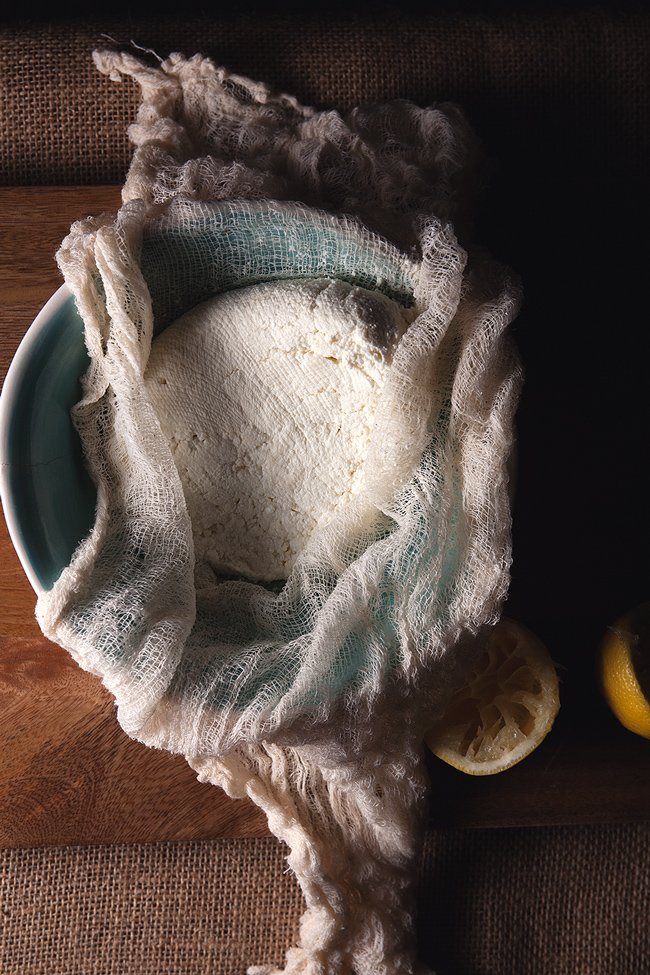
HOW TO MAKE PANEER?
From Aarti Sequeira for the Food Network
Makes about 12 oz.
Ingredients:
1 cheesecloth
8 cups whole milk (a half gallon)
about 1/4 cup lemon juice
Directions:
Line a large colander with a large double layer of cheesecloth, and set it in your sink.
In a large wide pot, bring the milk to a gentle boil over medium heat, stirring frequently so the bottom doesn’t burn, about 10 minutes. Add the lemon juice and turn the heat to low. Stir gently for about 30 seconds. The curds (white milk solids) and whey (greenish liquid) should start to separate immediately. If not, add a little more lemon juice
Remove the pot from the heat and carefully pour the contents into the cheesecloth-lined colander. Gently rinse with cool water to get rid of the lemon flavor. Grab the ends of the cheesecloth and twist the ball of cheese to squeeze out the excess whey. Tie the cheesecloth to your kitchen faucet and allow the cheese to drain for about 5 minutes.
Twisting the ball to compact the cheese into a roundish block, place it on a plate with the twisted part of the cheesecloth on the side. Set another plate on top. Weigh the second plate down with something heavy, like a can of beans. Move to the refrigerator and let sit for about 30 minutes to 1 hour.
Related Posts






Subscribe for New Racipies
Get mental health tips, updates, and resources delivered to your inbox.
Rosemary Sage Pork Chops & Sage-Braised Tomatoes

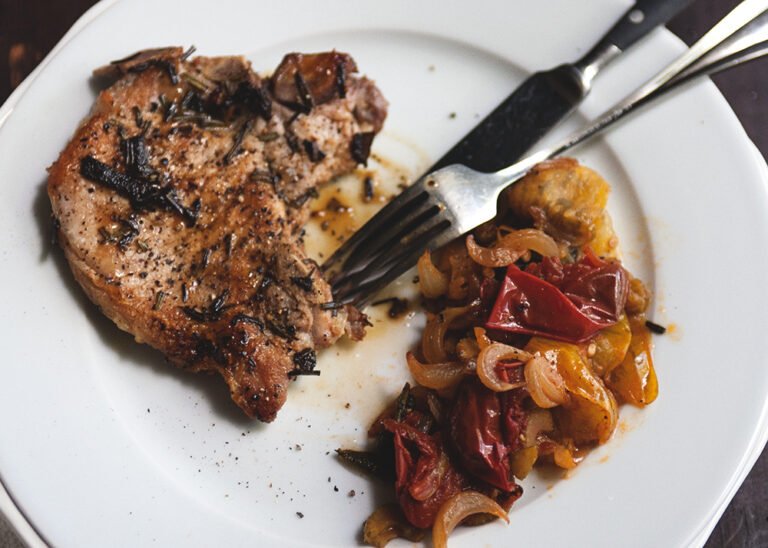
When Chris got back from California, I found myself seriously craving meat. After all, for the past week, I’d basically subsisted on eggs and cheese. And vegetarian I am not.
It’s not like Chris or I are huge meat eaters—in fact, we’re in agreement that large chunks of it, like in steaks or, er, roasts or whatever (I don’t even know any of the correct terminology to talk about meat), just don’t taste good. Furthermore, we rarely venture beyond ground turkey or chicken, out of ignorance I guess. I just don’t know how to handle anything else. (I aim to learn though, as a consequence of this blog!)
But, I do eat it more often than not, in slivers or in other bite-sized morsels, and for dinner usually. In fact, and this relates back to the difference between cooking for myself and cooking for my significant other and me, Chris thinks “eggs” and “cheese” are a poor substitute for meat. They’re not as filling. Or satisfying, I suppose. And that’s cool, we’re in accord. We’re totally in accord. We’re lucky how much in accord we are. In matters of taste, that is.
I could never be a vegetarian. Maybe a part-timer though.

These pork chops cook up beautifully. Was it the sage? The rosemary? The wonderfully aromatic flavor of the garlic? They were the only three ingredients after all, although I also attribute the chops’ satisfying (and not dry!) taste to the hot stove and the lid that kept all the moisture in.
And yes, I was totally sated afterward. I forget how much I like pork.

Avert your eyes if you find raw meat unappetizing!

heirloom tomatoes, condensation and all

I decided to cook up some tomatoes as well. I know, it’s blasphemy to apply heat to heirloom tomatoes. But I expect they’ll be in my kitchen pretty much nonstop for the rest of the summer, so I figured I could spare a few to go alongside the meat. (but I’ll be damned if I ever do anything to watermelon other than eat it in freshly-cut slices! I feel very strongly about this.) I’ll attribute this sentiment to Rose Carrarini of Rose Bakery—she seems to have a good eye for preparing vegetables deliciously.
I love the sweetness of cooked tomatoes. I mean, these guys were tender; they melted in my mouth; they accompanied the pork wonderfully.

ROSEMARY SAGE PORK CHOPS
Serves 2
From Big Oven
Ingredients:
2 pork chops, bone-in, about 8 ounces
2 Tbsp olive oil
2 Tbsp fresh sage, chopped
2 Tbsp fresh rosemary, chopped
2 large cloves of garlic, thinly sliced
salt and pepper to taste
Directions:
Pat dry pork chops and season with salt and pepper.
Heat the oil on medium in a skillet that will contain the pork chops. When the oil starts to shimmer, add the sage, rosemary, and garlic, and cook for 2 to 3 minutes, stirring. Increase the heat to medium-high and add the pork chops on top of the garlic mix. Cover and let cook undisturbed for about 5 minutes. Flip chops, re-cover the pan, and reduce heat to medium, for another few minutes, until the chops have cooked through.
SAGE-BRAISED TOMATOES
Serves 2
Ingredients:
2 Tbsp olive oil
1 medium onion
2 medium tomatoes
1 stalk celery
3 cloves garlic, crushed
8 to 10 leaves of sage
1/2 cup water or stock
Directions:
Heat olive oil in medium saucepan and cook onions until softened, about 5 minutes.
Add garlic, tomatoes, and celery and cook over medium heat for 2 minutes. Add water and sage and turn heat to low. Continue cooking until tomatoes are very soft and liquid has been reduced.
Related Posts





Subscribe for New Racipies
Get mental health tips, updates, and resources delivered to your inbox.