
Pear And Blue Cheese Tart

Medically reviewed by Christiana George Updated Date: June 8, 2023
Oops, an unintentional hiatus. And now an entire week has passed with hardly a check-in.
Weeks like the last can feel strange once they’re over. It was busy. BUSY. So that all other activities fell by the wayside. I don’t think I touched the stove at all except to heat up some canned soup (again, clam chowder). I also didn’t get the chance to take any photos for myself. Not even yesterday, when we ventured out of the city to go hiking in Cold Spring, New York.
Let me tell you, the fall foliage is stunning! We hiked to the top of a hill, where we stopped for lunch and peered down into the valley. Total tableau moment. A mottled, vibrantly-colored blanket of trees that swooped down into the valley, the Hudson River, gleaming and wide and slow, train tracks leading to the small town of Cold Spring along the shores of the river. And gosh, the town was cute. Do all New England towns look like this? Are they all so picturesque? It’s utterly foreign, just like the sight of palm tree-lined roads might be foreign to some of you. But they really do exist in California, even in random, unglamorous suburbs.
I can see why people love this season most of all. It answers the question of how the unbearable heat could possibly give way to unbearable cold. It’s done in increments, step-by-step, although on some days you feel that winter is very imminent. And on others, like today, you make sure to go outside and enjoy the sun for as long as you can.
I’m glad I have a down-filled jacket in my closet.
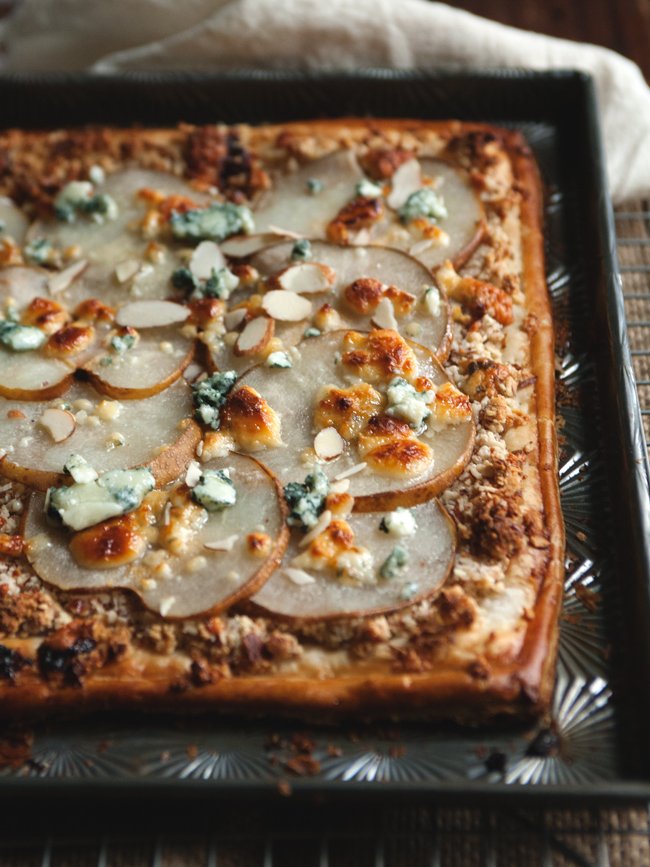
I made this pear and blue cheese tart a couple weeks ago. Chris gobbled it up, although he removed every chunk of blue cheese in his mouth’s way. Without the blue cheese, the tart reminds me an awful lot of a bear claw. Which I find irresistible. I mean, pear-scented puff pastry covered with almonds? Am I right?
The blue cheese fancies up the tart. I’m not opposed to that at all. It becomes sweet and salty and, well, peculiar in the way that blue cheese makes everything a little peculiar. Delicious. And perfect for the fall.

PEAR AND BLUE CHEESE TART
Adapted from Leite’s Culinaria
Makes 1 square tart
Ingredients:
- 1 9-inch square frozen puff pastry, defrosted
- 1/2 pound blanched almonds
- 1/4 cup sugar
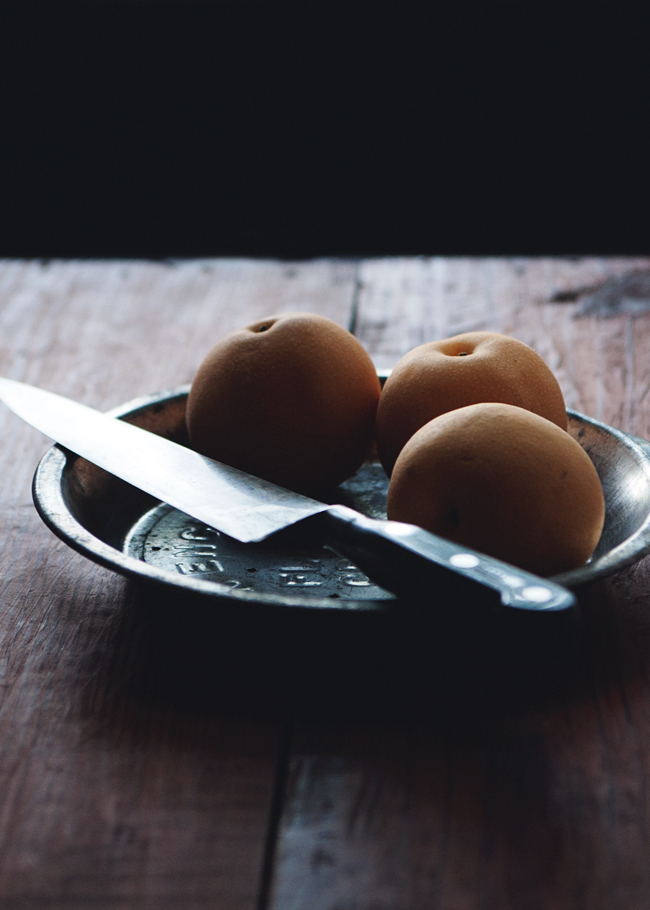
- 1 to 2 pears, unpeeled, stemmed and thinly sliced (I used Asian pears)
- Honey for drizzling
- 2 to 4 ounces blue cheese
- 1 egg white, beaten with a small drizzle of water
Directions:
Preheat the oven to 400° Fahrenheit. Use a pairing knife to score a line around the perimeter of the rectangle about 1/2 inch from the edge to make a border. Use a fork to poke holes inside the border so that the dough will remain flat as it cooks while the border will puff to create a lip for the tart.
Combine the almonds, sugar, and 1/2 tablespoon of water in a food processor and grind to a paste. Spread the paste over just the portion of the puff pastry inside the border. Arrange the pear slices over the almond paste. Drizzle with the honey and crumble the blue cheese over the top. Lightly brush the border with the egg and bake until the pastry is puffed and golden brown, 25 to 30 minutes. Let cool slightly before cutting into squares.
Related Posts
Subscribe for New Racipies
Get mental health tips, updates, and resources delivered to your inbox.
Honey Thyme Ice Cream, And A Countdown


If you follow me on Pinterest, you’ll have noticed that the activity on my Wedding board has increased lately (mostly because it used to consist of nothing).
Bouquets, dresses, venues, they’re kind of the topic du jour. Du année is more like it. Chris and I are supposedly getting married next summer.
I would understand if nobody believed us. After all, ‘we’re getting married… soon’ is becoming something of a party line, a slogan of sorts. It’s good for when our moms call, or when our friends inquire—although I have noticed that the asking of the question has trailed off as of late. See, nobody believes us anymore.
Though we got engaged last summer, we decided to postpone our wedding by a year because we knew that 2012 was going to be extremely tumultuous: we both quit our jobs, went on an extended backpacking trip, then moved across the country. Who has time for wedding planning among all of that action?
Anyway, we’ve agreed to start planning in September, a prospect I’m not really looking forward to. All the details and the spreadsheets (I’m a Type-A wannabe), the tracking of said details, the eventual arrival at the point where I realize I can’t stop thinking about the details. And there will be lists, and the honing of lists, and the further honing of lists. Finally, the horrifying realization that we’re probably going to spend more on this one day than the two of us did during the whole four months that we spent backpacking through South America. Times two. Or three. I won’t let it reach three, I promise.
Below is one last ice cream recipe to mark our loss of innocence. Before we become initiated to the world of on-site versus off-site catering, sweetheart versus wedding party table, sleek versus poofy (dress, of course), signature cocktail versus open bar, and much, much more. All to come, my friends, all to come… (don’t worry, I promise I won’t inundate you with wedding details.)
Or maybe this recipe just marks the end of the summer months, and a successful conclusion to our very first summer in New York City.
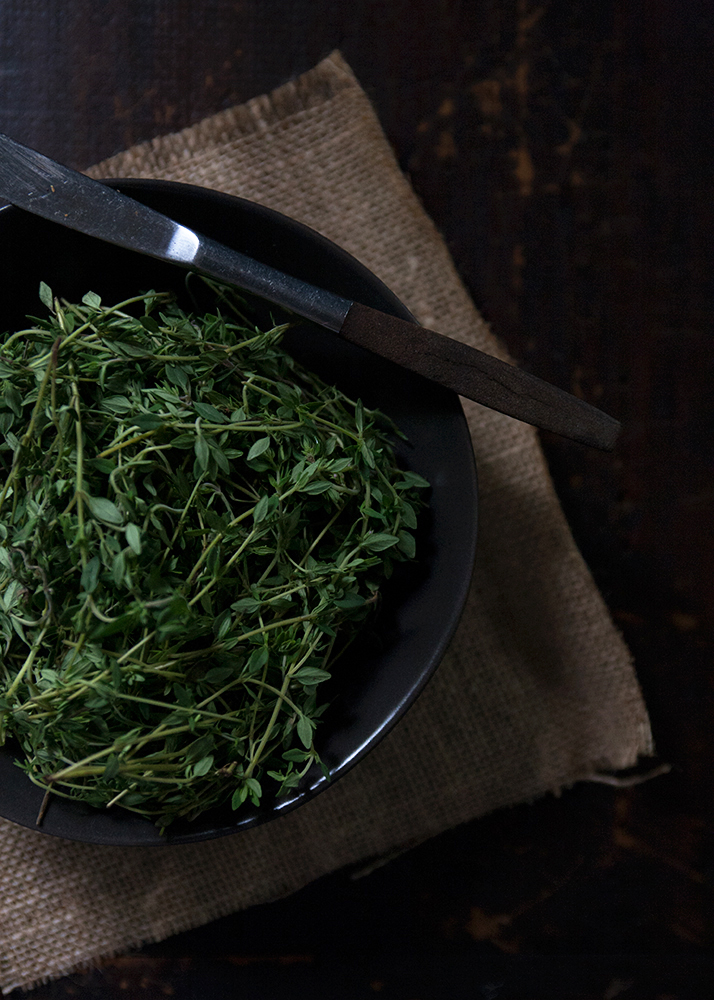
I love the interplay of sweet and savory and this ice cream is both subtle and satisfying. I can’t decide if the thyme amplifies the honey or the honey amplifies the thyme, but it has a very distinct flavor I enjoy very much. Honey ice cream on its own tastes so pure to me: it loses its super-concentrated sweetness, and becomes creamy and floral and light. Thyme is by no means heavy-tasting, but it adds just that touch of… darkness, moodiness, a slightly off-kilter note that’s therefore more complex. An olfactory play on chiarascuro?
Here’s to the end of August, and the beginning of a countdown. 12 months, 11, 10….until I get hitched!

HONEY THYME ICE CREAM
From The New York Times
Makes about 1 quart
Ingredients:
1 cup whole milk
2 cups heavy cream
6 large sprigs fresh thyme
4 egg yolks
3/4 cup honey
Directions:
Combine the milk and cream in a saucepan and add the thyme. Bring to a boil. Remove from the heat, cover and let stand for 20 minutes. Strain and return the mixture to the saucepan.
Meanwhile, whisk the egg yolks in a bowl. Slowly pour in the cream mixture a little bit at a time, whisking constantly. After adding a cup, whisk in the honey and add the rest of the cream. Pour the mixture back into the saucepan, cook over low heat and stir constantly until the mixture is thick enough to coat the back of a spoon. Cool, then refrigerate until cold, 2 hours to overnight. Freeze in an ice-cream machine according to manufacturer’s instructions.
Note: The type of honey you use probably matters very much because there are so few ingredients. Mine was light, kind of a general all-purpose honey. I wonder if the buckwheat honey I tried at the farmer’s market, which was a little too bitter for everyday use, might not work well in this recipe? Also, this ice cream melts quickly. Maybe the honey’s chemical composition lowers the frozen custard’s freezing point? I’m not sure, but if serving to a group, you might want to pass out the bowls as you scoop.
Related Posts

Subscribe for New Racipies
Get mental health tips, updates, and resources delivered to your inbox.