
5 Flour and Egg Recipes

Medically reviewed by Christiana George Updated Date: June 8, 2023

For many of us, the best part of breakfast is eggs and toast. And who can blame us? Eggs are a great source of protein, and bread is the perfect vehicle for soaking up your runny yolk. But what if you’re tired of eating the same thing day in and day out? Flour and egg recipes can be made any time with just these two ingredients.
In this article, we give you five different flour and egg recipes which will satisfy all your breakfast cravings: two savory dishes, two sweet dishes, and one dessert dish. So if you’re ready to take your breakfast game to the next level, keep reading!
5 Best Flour and Egg Recipes
Flour is an essential ingredient in most baked goods. It’s also used to make bread, pasta, and dumplings. Eggs are found in many recipes as well like cakes and cookies. The following recipes are some of the best flour and egg recipes that use basic cooking techniques like baking, frying, or grilling.
1. Cheese and Eggs
Cheese and eggs is an age-old combination that is still popular today. This recipe is simple to make and you can use any cheese you like. The only thing required to complete this dish is a pan or a griddle, so you can make this recipe any time, even when you’re out camping!
Ingredients: – 1-2 tbs butter or margarine – 2 slices of bread – 1 slice of cheese (any type) – Salt and pepper
Directions:
First, take one sheet of bread and place it on your pan or griddle. Then, put the cheese on top of the bread. You could also add some other toppings like cooked bacon bits if you want to experiment with your taste buds a bit.
Now, put the second piece of bread on top of the first piece; it doesn’t matter which side faces up as long as there’s enough butter or margarine in between them so that they don’t stick together. Finally, flip the sandwich over so that the second piece of bread faces down on your pan or griddle.
Your egg should be ready in about 3 minutes (or less if you want your egg more runny). Once it is, enjoy!
2. Pancakes
This recipe is great for when you want something sweet to start your day. Pancakes are great because they’re easy to make and can be eaten at any time of the day. The best part about this recipe is that you can even make it when you’re camping!
Ingredients: – 1 egg – 1/4 cup milk or water – 2 tsp sugar (or brown sugar) – 1/4 cup flour – 1 tsp baking powder (optional) – Butter or margarine
Directions:
First, start by mixing the egg, milk or water, sugar, and flour together in a bowl. Then, add in the baking powder and mix again until there are no lumps left. Next, heat up a frying pan on medium heat and add some butter or margarine to it. Now that your pan is hot enough, lower the heat slightly so that your pancakes don’t burn while they cook. Finally, pour out small circles of batter into the pan; as soon as bubbles form on top of these circles of batter then flip them over. Continue doing this until all the batter is gone, or until you’re ready to eat!
3. French Toast
This recipe is great for breakfast and it is simple to make. You can even make it on a hot plate or a griddle if you don’t have access to an oven. The best part about this recipe is that you can use any type of bread that you like and it’s easy to personalize if you want to spice things up!
Ingredients: – 2 eggs – 1/4 cup milk or water – 1/2 tsp cinnamon (optional) – 1/4 tsp vanilla extract (optional) – 4 slices of bread (any type)
Directions:
First, beat the eggs in a small bowl with the milk or water, cinnamon, and vanilla extract.
Then, dip each slice of bread into the egg mixture so that both sides are coated evenly.
Finally, put your pan on medium heat and add butter or margarine to the pan so that it will cook evenly without burning.
Once your pan is hot enough, place your slices of bread on top of it; flip them over when bubbles appear on top of each slice.
Continue doing this until all of the slices are done.
4. Omelette
An omelette is a great breakfast option because they can be customized to your liking. You can even make them on a hot plate or a griddle if you don’t have access to an oven. The best part about this recipe is that it’s easy to make and it’s very filling!
Ingredients:
– 3 eggs – 2 tsp oil or butter (optional) – 1/4 cup cheese (any type) (optional) – 1/4 cup sliced vegetables (any type) (optional) – Salt and pepper to taste
Directions:
Start by beating the eggs in a bowl, then add in the oil or butter and mix again until there are no lumps left.
Next, add in your sliced vegetables and cheese and mix again; season with salt and pepper as needed.
Finally, heat up a frying pan on medium heat; add some butter or margarine to it if you want.
Once your pan is hot enough, pour out the egg mixture into the pan so that it covers most of it; once bubbles form on top of the omelette then flip it over.
Continue doing this until the egg is completely cooked.
5. Waffles
Waffles are a great breakfast option because they can be made in many different ways and they are easy to make in a short amount of time. You can even make them on a hot plate or a griddle if you don’t have access to an oven. The best part about making waffles is that you can add any type of fruit that you like and it’s easy to personalize if you want to spice things up!
Ingredients: – 1 1/2 cups flour – 2 tbsp sugar – 2 tsp baking powder – 1/4 cup butter, melted (optional) – 3 eggs, beaten well – 1 1/2 cups milk
Directions:
Mix all of the dry ingredients together in a bowl. Then, beat the eggs in another bowl with the milk; add in your melted butter if desired.
Next, pour this mixture into your dry ingredients and stir until it is evenly mixed together; season with salt and pepper as needed.
Finally, heat up a frying pan on medium heat; add some butter or margarine to it if you want.
Once your pan is hot enough, pour out your batter into the pan so that it covers most of it; once bubbles form on top of the waffle then flip it over.
Continue doing this until the waffle is completely cooked.
Related Posts

Subscribe for New Racipies
Get mental health tips, updates, and resources delivered to your inbox.
Banana Bread, Or Why I Threw a Tantrum

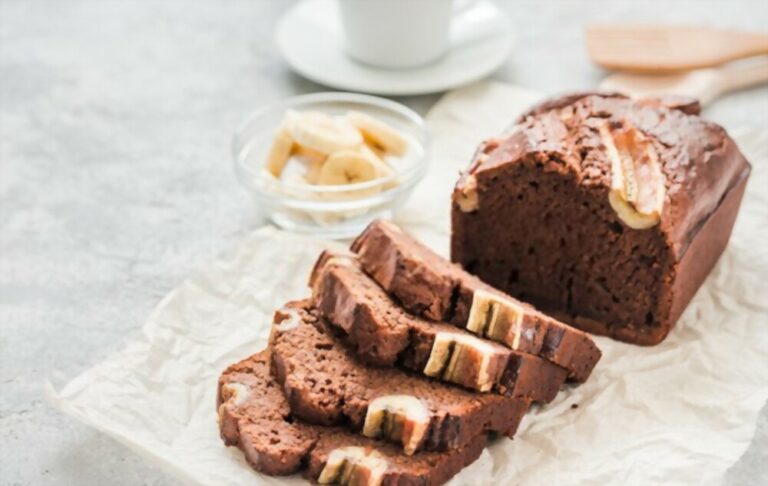
You know that scene in Julie & Julia when Julie has a meltdown because of aspic? Ha, that was me yesterday, and it wasn’t pretty.
“Why am I baking banana bread right now?” I cried, throwing things at the sink. I knocked over salad dressing instead. “I hate this recipe! I hate this kitchen! I hate the summer!”
“Stop, just stop,” said Chris. He circled me cautiously like an animal trainer. And I was the beast that had gone berserk, leaving a trail of flour and melted butter and ooey gooey banana in my wake. Balsamic vinegar’s pungent odor wafted through the kitchen.
I actually love banana bread, and I was eager to try the Cook’s Illustrated version for which I’d saved four withered bananas in the freezer. In hindsight, I should’ve left them there until September.
I’m also actually okay with our kitchen. Although have I ever complained to you about it before? No? Okay well, it’s very typical as far as New York kitchens go, except smaller. Tinier. More diminutive. It’s about 6 by 8 feet, with no window, no fan. And it’s warm, always warm, like the inside of a locker room. And when the oven’s on, it boils. But other than that, it’s cozy and it’s functional and I like what’s come out of it.
And summer? Well, I can’t say I love it. Of course, remembering what I left behind, I’m thankful that I get to experience it at all. San Francisco summers are lessons in delayed gratification and they’re very bad for morale. My morale improved considerably when I left them behind. Although my morale became very confused when I spent my entire winter south of the hemisphere—in essence, I’ve been living summer for the last year.
I really shouldn’t have turned on the oven.
But, I did. Silly, inexperienced me. I figured I could leave the front door open to let some of the cool air in (did I tell you that the front door opens right into the kitchen? And directly opposite is the bathroom? Yeah, awkward layout). Nope, that just sets off the hallway smoke detectors, which are hypersensitive. That’s a good thing in most cases. Not in this one.
In the end, tiny kitchens and summer heat can’t stop the most committed of bakers from baking. I don’t count myself as one of them. By the time I stuck the loaf in the oven, I’d disavowed baking. Forever. It was only going to be tiramisus and cheesecakes from now on.
45 minutes later, and considerably calmer, I took the banana bread out of the oven and let it cool. I sliced off the end piece and bit into it.
I think America’s Test Kitchen must be my Julia Child.
BANANA BREAD
Makes 1 9-inch loaf
From The New Best Recipe
Ingredients:
2 cups all-purpose flour
1-1/4 cups walnuts, coarsely chopped
1/2 cup semisweet chocolate chips, coarsely chopped
10 Tbsp sugar
3/4 tsp baking soda
1/2 tsp salt
3 very ripe bananas, mashed well
1/4 cup plain yogurt
2 large eggs, beaten lightly
6 Tbsp unsalted butter, melted and cooled
1 tsp vanilla extract
Directions:
Preheat oven to 350 degrees. Grease a 9-by-5-inch loaf pan.
Spread the walnuts on a baking sheet and toast until fragrant, 5 to 10 minutes. Set aside to cool.
Whisk the flour, sugar, baking soda, salt, and walnuts together in a large bowl. In a medium bowl, mix the mashed bananas, yogurt, eggs, butter, and vanilla. Lightly fold the banana mixture into the dry ingredients until just combined. Note: Lightly means lightly—the flour starts forming glutens when it’s mixed with water. Scrape the batter into the prepared pan.
Bake until the loaf is golden brown and a toothpick inserted in the middle comes out clean, about 55 minutes. Note: I used a longer, narrower loaf pan, so mine was slightly overdone after 45 minutes. Cool in the pan for 5 minutes, then transfer to a cooling rack. Make sure to wrap it tightly when storing.
Related Posts

Subscribe for New Racipies
Get mental health tips, updates, and resources delivered to your inbox.