
Strawberry Rhubarb Ginger Crumb Bars

Medically reviewed by Christiana George Updated Date: January 6, 2026
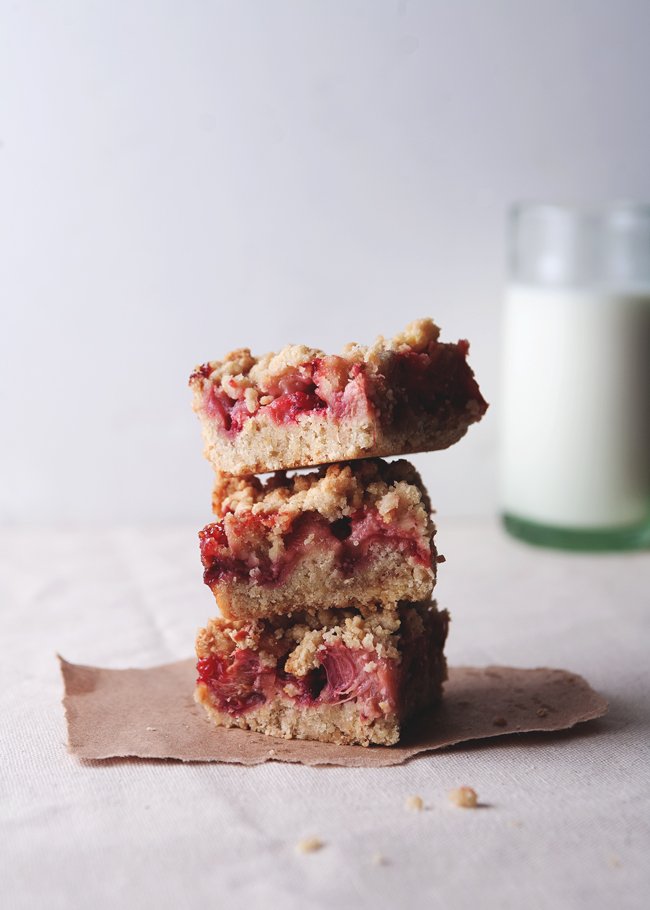
Is it still rhubarb season? I’d let a few stalks sit in the bottom drawer for so long that they turned rubbery, so I apologize if the season is over. The good news is, rhubarb can, evidently, be stored indefinitely in the vegetable compartment. As this recipe demonstrates; the glorious vegetable did not suffer in taste one bit.
I think I must’ve caught the rhubarb bug, because up until this year and Luzia’s rhubarb tiramisu, I’d never tasted it in my life. It’s another one of those foods Californians don’t go wild over because it doesn’t grow well in mild climates, at least not as far as I was aware, but Alanna proves otherwise. Her delicious array of rhubarb recipes clearly indicates that rhubarb appreciation is alive and well in the Golden State.
While I intended to make these much sooner, long weekends tend to throw me off schedule. Our Memorial Day weekend turned into more of a staycation, complete with the consumption of both vacation food and popcorn novels (I highly recommend Dark Places by Gillian Flynn—she’s actually a really good writer, don’t get me wrong) and a sunburn, despite the fact that most of the weekend was drab and rainy. What’s up with that anyway? I echo Amy’s thoughts—it’s extremely important, for my mental health, that the weather behaves the way it’s supposed to. It’s almost June, dammit! (I’m sitting here angrily typing away in an air-conditioned room. That might explain why I’m freezing.)
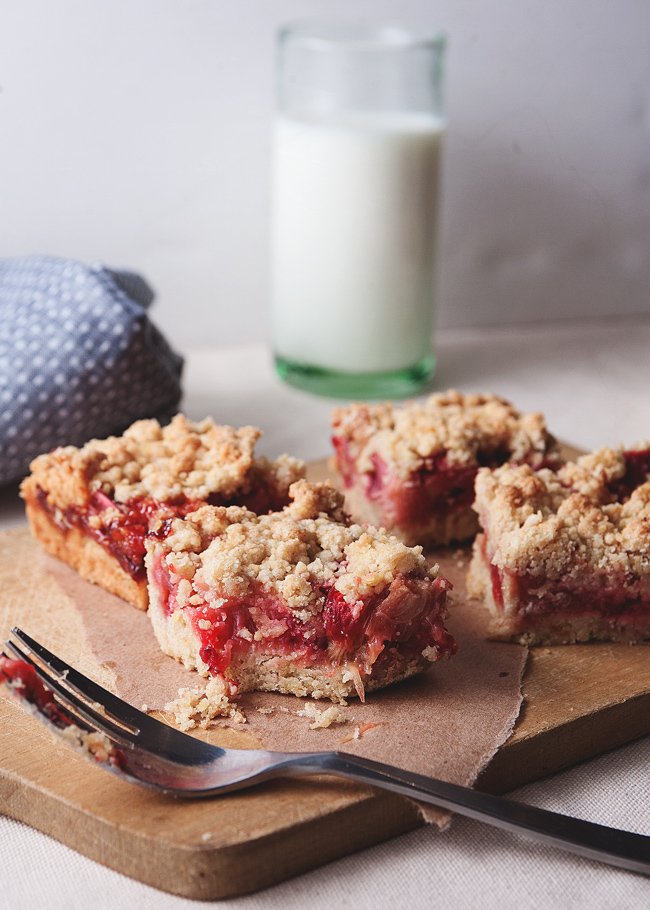
The recipe for these crumb bars has been passed around the web so many times, I’m not sure I can add too much to the collective wisdom. A few thoughts:
– The filling. I adapted the filling to include both strawberries and rhubarb. I loved the idea of adding a hint of ginger, but decided to go the crystallized route so you get the occasional nubbin of the stuff, bright zings, etc. I also added a little vanilla to contrast the rhubarb, and subbed out all the sugar for brown sugar. All in all, delicious! And that’s saying a lot because I don’t normally like fruit-based desserts.
– The crumb topping to these bars is reminiscent of streusel, so I decided to play that up by substituting some of the all-purpose flour for oat flour and regular sugar for brown. In addition, I second Jess’s recommendation of patting down a thicker base. It gives the bars a nice, solid base, a thinner crumb layer, and more room for the gooey filling in the middle to seep into nooks and crannies. Yum.
– I also adapted the entire recipe for a 9″ square pan as opposed to a 9×12″ pan, because do I really want that much good stuff sitting in the kitchen? No.
– Resist the urge to cut into these straight away. Well, feel free to because warm desserts really are the best, but be aware that you’ll get scraggly edges, smeared crumbs, and an overall jammy mess. But that’s fine. In fact, if you’re not planning on impressing anyone, these bars are really good warm from the oven. (See how I just completely reversed my opinion within a few sentences? It’s because the opposing sides of my personality—the calm and sensible vs. the twitchy and impatient—can’t come to a consensus. Just do what you think is best.)
– Finally, do keep the bars refrigerated once they’ve cooled. The humidity’s starting up in these parts, which causes the dough to lose its structure and become slightly soft. This is more a matter of texture than taste, but no one wants a bar that crumbles in their hands, do they?
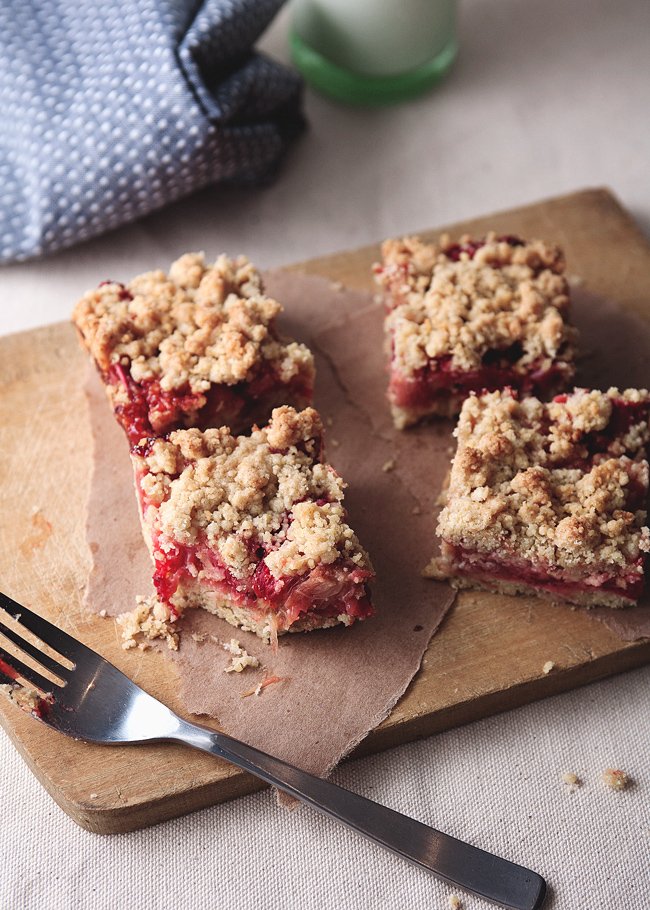
STRAWBERRY RHUBARB GINGER CRUMB BARS
Adapted from AllRecipes via Smitten Kitchen and Sweet Amandine
Makes 16 2-inch bars
Ingredients:
- 3/4 cup oat flour
- 1-1/2 cups all-purpose flour
- 1/2 cup sugar
- 1/4 cup brown sugar
- 3/4 tsp baking powder
- 1/4 tsp salt
- Zest of half a lemon
- 3/4 cup (1-1/2 sticks or 6 ounces) cold unsalted butter, cubed
- 1 large egg
For the filling:
- 2 cups ½-inch slices of rhubarb
- 2 cups sliced strawberries
- 2 Tbsp crystallized ginger
- Juice of half a lemon
- 1 tsp vanilla extract
- 1/2 cup brown sugar
- 4 tsp cornstarch
Directions:
Preheat oven to 375 degrees F and butter a 9″ square pan.
In a medium bowl, mix together the flours, sugars, baking powder, and salt. Stir in the lemon zest. Add the butter and egg, and work them into the mixture using your hands, a fork, or a pastry cutter. You want to end up with a crumbly, pebbly dough. Pat 2/3 of the dough into the prepared pan in an even layer.
Make the filling: In a medium bowl, mix the ginger, lemon juice, vanilla extract, brown sugar, and cornstarch. Gently mix in the rhubarb and strawberries.
Spoon the filling in an even layer over the patted-down dough. Sprinkle the remaining dough evenly over the top. Bake for 45 to 50 minutes until the crumb layer is golden-brown. If you’d like the bars to end up neatly-cut, wait for it to cool completely, overnight in the fridge if possible, before slicing it with a sharp knife.
Related Posts






Subscribe for New Racipies
Get mental health tips, updates, and resources delivered to your inbox.
Are Spinach Leaves Acidic? Spinach Leaves and Acid Reflux


Are Spinach Leaves Acidic? Spinach Leaves and Acid Reflux
Spinach is often hailed as a superfood due to its impressive nutrient profile and versatility in various dishes. But for individuals suffering from acid reflux or aiming to maintain a balanced pH in their diet, the question arises: are spinach leaves acidic? Understanding the pH properties of spinach leaves can help determine their role in managing acid reflux and overall digestive health. This leafy green is widely recognized for being rich in vitamins, minerals, and antioxidants, but does it contribute to acidity or alleviate it?
In this comprehensive guide, we’ll explore whether spinach leaves are acidic or alkaline, their benefits for acid reflux sufferers, and how they compare to other greens. Additionally, we’ll uncover the best ways to include spinach in a reflux-friendly diet and address common misconceptions about this nutrient-packed vegetable.
If you’re wondering whether spinach is the right choice for your digestive health, keep reading!
What Makes a Food Acidic or Alkaline?
Understanding pH and Its Role in Nutrition
The pH scale measures the acidity or alkalinity of substances on a scale of 0 to 14, with 7 being neutral. Foods below 7 are acidic, while those above 7 are alkaline. Spinach, like other leafy greens, has unique pH properties that make it a valuable addition to a balanced diet.
How Acid-Forming Foods Affect the Body
Acid-forming foods, such as fried items, processed sugars, and caffeine, can increase stomach acidity and trigger acid reflux. Conversely, alkaline foods help neutralize stomach acid, reducing irritation and promoting better digestive health.
Importance of Alkaline Foods for Acid Reflux
For individuals with acid reflux, incorporating more alkaline foods into their diet can alleviate symptoms by reducing acid production in the stomach. Spinach, as we’ll see, plays a significant role in this dietary adjustment.
Are Spinach Leaves Acidic or Alkaline?
Natural pH of Spinach Leaves
Raw spinach leaves are considered mildly alkaline, with a pH value that typically falls between 7.0 and 7.5. When cooked, spinach may become slightly acidic due to the breakdown of its natural compounds, but it still retains alkalizing properties in the body.
Spinach’s Alkalizing Effect on the Body
Although spinach contains oxalic acid, which is naturally acidic, it metabolizes as alkaline in the body. This means it helps balance the body’s pH by neutralizing excess acid, making it an excellent choice for those managing acid reflux.
Does Spinach Trigger Acid Reflux?
Spinach is unlikely to trigger acid reflux in most people. In fact, its high water content and fiber promote better digestion, making it a reflux-friendly food. However, individuals with sensitivities to oxalates may need to moderate their intake.
Related to Read: Are Baby Spinach Acidic?
Nutritional Benefits of Spinach Leaves
Rich in Essential Vitamins and Minerals
Spinach is a nutritional powerhouse, providing vitamins A, C, K, and folate, along with minerals like iron, magnesium, and potassium. These nutrients support overall health, from boosting immunity to maintaining strong bones.
High in Antioxidants
Spinach contains antioxidants such as lutein, zeaxanthin, and beta-carotene, which combat free radicals and reduce inflammation. This makes spinach beneficial not only for digestive health but also for preventing chronic diseases.
Fiber Content and Digestive Health
Spinach’s high fiber content aids in digestion by promoting regular bowel movements and reducing the likelihood of constipation—one of the factors that can exacerbate acid reflux.
Spinach and Acid Reflux: What You Need to Know
How Spinach Eases Acid Reflux Symptoms
Spinach helps soothe the digestive tract by neutralizing stomach acid. Its natural water content also keeps the esophagus hydrated, reducing irritation caused by acid reflux episodes.
Comparing Spinach to Other Leafy Greens
Spinach stands out among leafy greens for its alkalizing properties and nutrient density. While kale, lettuce, and arugula are also excellent choices for acid reflux sufferers, spinach offers a unique blend of vitamins, minerals, and antioxidants that make it a top contender.
Potential Concerns for Spinach Consumption
For individuals prone to kidney stones, spinach’s oxalate content may pose a concern. Moderation and pairing spinach with calcium-rich foods, like yogurt or cheese, can reduce oxalate absorption and its associated risks.
Best Ways to Incorporate Spinach Into a Reflux-Friendly Diet
Raw Spinach in Salads
Raw spinach leaves make an excellent base for salads. Combine them with alkaline vegetables like cucumbers, carrots, and avocado for a refreshing, nutrient-packed dish.
Spinach in Smoothies
Blend spinach with bananas, almond milk, and a dash of honey to create a delicious, reflux-friendly smoothie. Its mild flavor pairs well with a variety of fruits.
Cooked Spinach Recipes
Steamed or sautéed spinach retains its alkalizing properties while becoming easier to digest. Avoid cooking spinach with acidic ingredients like tomatoes or vinegar to keep it reflux-friendly.
Author Tip: 7-Day Meal Plan For Gastritis
Spinach vs. Acid-Forming Foods
Spinach vs. High-Acid Vegetables
Unlike acidic vegetables like tomatoes and peppers, spinach helps neutralize stomach acid. Its alkalizing effect makes it a safer choice for those with acid reflux.
Spinach as a Low-Acid Alternative
For recipes that call for acidic greens, such as mustard greens or sorrel, spinach can be used as a milder, more alkaline substitute.
How Spinach Balances Acidic Meals?
Adding spinach to dishes with acidic components, like pasta sauces or curries, helps balance the pH of the meal, making it gentler on the stomach.
Author Tip: 7 Kinds of Foods to Avoid with GERD
Common Myths About Spinach and Acidity
Does Spinach Cause Bloating or Gas?
Raw spinach contains insoluble fiber, which may cause bloating in some individuals. Cooking spinach reduces its fiber content, making it easier to digest.
Is Spinach Too Acidic for People with Reflux?
While spinach contains oxalic acid, it metabolizes as alkaline in the body. For most people, it’s a beneficial addition to a reflux-friendly diet.
Can Spinach Be Eaten Daily?
Yes, spinach can be consumed daily in moderation. Its health benefits far outweigh its oxalate content, especially when balanced with other alkaline foods.
Spinach Recipes: Ricotta, Spinach, and Mushroom filled Crepe
Lamb’s Quarters Frittata, Or Spinach’s Hillbilly Cousin
Final Thoughts on Spinach Leaves and Acid Reflux
Spinach leaves are not only mildly alkaline but also packed with nutrients that promote digestive health and reduce acid reflux symptoms. Their fiber, antioxidants, and alkalizing properties make them an excellent choice for individuals managing acid reflux. Whether consumed raw, cooked, or blended into smoothies, spinach is a versatile and nutritious addition to any diet. While moderation is key for individuals with oxalate sensitivity, spinach remains one of the best greens for maintaining a balanced pH and supporting overall well-being.
FAQs
- Are spinach leaves acidic?
No, spinach leaves are mildly alkaline and help neutralize stomach acid. - Is spinach good for acid reflux?
Yes, spinach is excellent for acid reflux due to its alkalizing properties and high water content. - Does spinach contain oxalic acid?
Yes, spinach contains oxalic acid, but it metabolizes as alkaline in the body and is generally safe for most people. - What are other alkaline greens like spinach?
Kale, lettuce, arugula, and Swiss chard are also alkaline greens suitable for acid reflux sufferers. - Can cooked spinach lose its alkalizing properties?
Cooked spinach may become slightly acidic, but it retains alkalizing effects when metabolized in the body.
Related Posts




Subscribe for New Racipies
Get mental health tips, updates, and resources delivered to your inbox.