
Churro Macarons

Medically reviewed by Christiana George Updated Date: June 10, 2023


Who else but me would combine Spanish and French desserts into one tasty treat. Ever since I made my Conversation Heart Macarons, I have been thinking up other crazy macaron flavors. With Cinco de Mayo around the corner, I thought a churro flavor would be appropriate. I’ve made Churro Cupcakes, Churro Crepes, Churro Donuts, Churro Puff Pastry, so why not in a French macaron form. Trust me, you are going to like these.
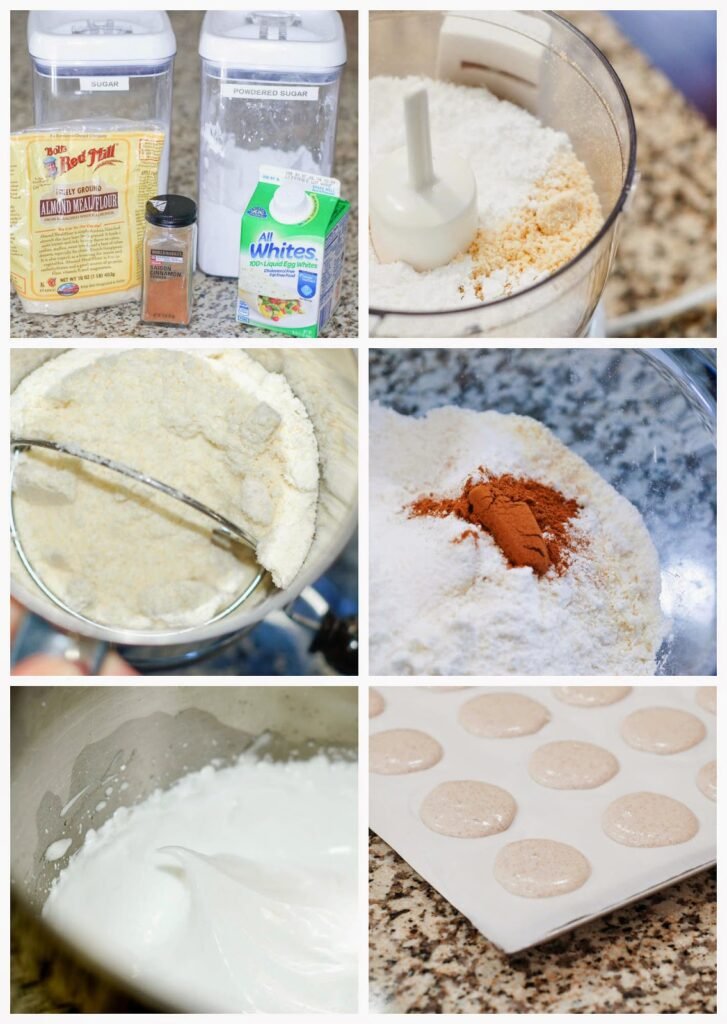
There are really not a lot of ingredients for these macarons, but they do take a bit of time and patience to make. You have to measure, sift, whip, and let sit 30 minutes before you even put them in the oven. They are not an everyday treat, but are great for special occasions. They can be made ahead of time and kept in the fridge.
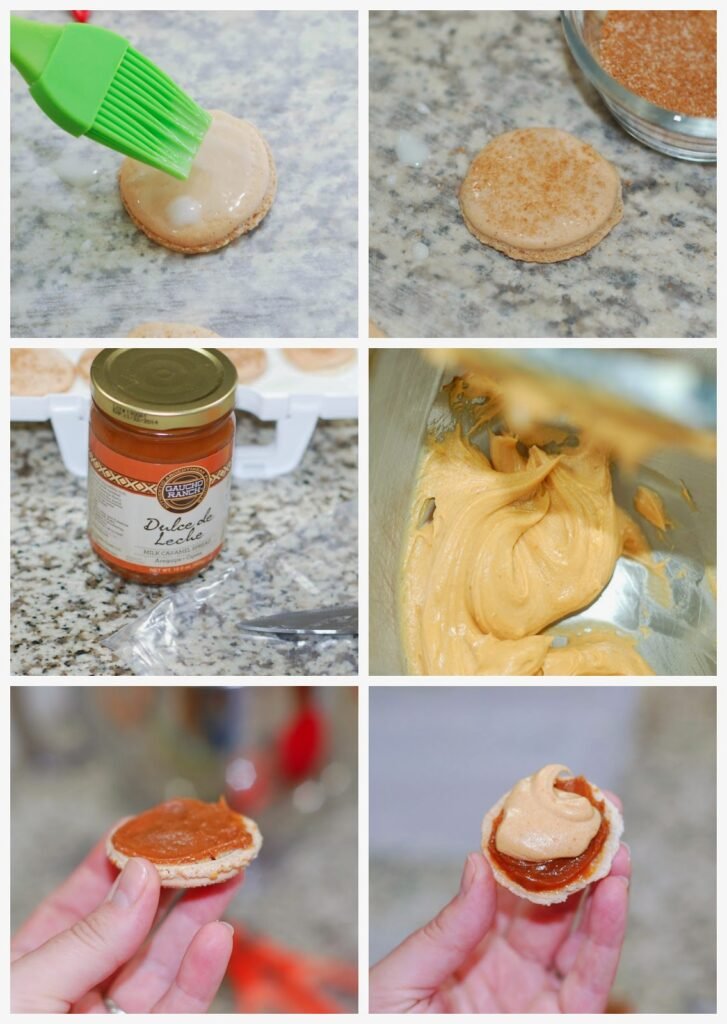
Even though it has cinnamon on the inside, I wanted the macaron to have a coat of cinnamon sugar on the outside. To adhere the sugar, I used a simple glaze. For the filling I was going to do just dulce de leche, but it was a little to rich for me, so I had to come up with another idea. I found a recipe for dulce de leche buttercream that worked out well. It is so good, I just wanted to eat it with a spoon. Of course that wasn’t enough. I still wanted the taste of pure dulce de leche in the macaron so I first added a thin coat of dulce de leche, then topped it with some buttercream before smooshing the two macarons together.
Now I know at this point all you want to do is eat one, but again you have to wait. These Churro Macarons need to sit in the fridge at least 24 hours to acquire their delicious flavor. I tried one on the day I made them and they were a bit hard, but by day 2-3 they were just right. The shell was crunchy and full of cinnamon sugar flavor. The inside of the shell was soft and chewy and the filling was amazing. I will say they are on the sweet side, but these are to be savored not chowed down like a pack of cookies. These are perfect with a cup of coffee, espresso, or cappuccino. Each bite is to be eaten slowly and enjoyed thoroughly. I just ate another one while writing this post and it still tastes phenomenal on day 5. These macarons were totally worth the effort.
Churro Macarons
by The Sweet Chick
Prep Time: 2 hours
Cook Time: 10-13 minutes
Keywords: bake dessert snack cinnamon dulce de leche egg whites almond flour Cinco de Mayo macarons French Mexican spring
Ingredients (30 macarons)
For the macaron
- 7 oz. powdered sugar,divided
- 4 oz. almond flour/meal, sifted
- 1/2 teaspoon cinnamon
- 4 large ( 4 oz.) egg whites, room temperature (I used 4 oz. egg whites in a carton)
- 3 1/2 oz. granulated sugar
For the topping
- 1/2 cup powdered sugar
- 1-2 tablespoons milk
- 3 1/2 teaspoons cinnamon sugar (store bought or homemade)
For the filling
- 1/2 cup unsalted butter, room temperature
- 1 cup powdered sugar
- 1/4 teaspoon salt
- 1/4 cup + 5 tablespoons dulce de leche
Instructions
For the macaron
Prepare circle templates (1 1/2 inch circle, 1/2 inch apart) and line baking sheets with parchment paper, placing template under parchment.
In a food processor, pulse 1/3 of the powdered sugar and all the almond flour to form a fine powder. Then sift sugar mixture 2 times.
Sift remaining powdered sugar 2 times also. In a large bowl combine almond flour mixture, remaining powdered sugar and cinnamon.
Add egg whites to stand mixer bowl with whisk attachment. Whisk whites on medium speed until foamy. Then gradually add the granulated sugar. Once all sugar is added, scrape down the sides of the bowl. Increase mixer speed to high and whisking until stiff, firm, glossy peaks form.
Next sift the powdered sugar mixture 1/3 at a time over the egg white mixture and carefully fold using a large silicone spatula until mixture is smooth and shiny. Repeat process for the remaining 2/3 of the powdered sugar mixture.
Place the macaron mixture into a piping bag with a round tip ( I used Ateco # 804). With piping tip 1/2 inch above the template , pipe 1 1/2 inch circles onto parchment paper lined baking sheets. Once finished gently tap baking sheet on your work surface to release and air bubbles and help form the “feet” of the macarons.
Let macarons stand at room temperature for 30 minutes. (Go read a book or surf the web.)
During this time, preheat oven to 375°F. Macarons will be ready to bake when they no longer stick to your finger when lightly touched. (Do not forget to remove the template paper before baking.)
When ready, bake the macarons at 375°F for 10-13 minutes (Keep an eye on them so they don’t burn). Rotate baking sheets halfway through to promote consistent baking. Macarons will be ready when they are crisp and firm.
Remove from oven and let cool for 2-3 minutes. Then carefully remove the macarons from parchment paper and place on a wire rack to cool completely.
For the topping
In a small bowl, whisk together the powdered sugar and milk to a thin spreadable consistency.
Brush the tops of each macaron with a light coat of glaze and sprinkle with about an 1/8 teaspoon or less of cinnamon sugar each.
Set aside and let the glaze dry.
For the filling
In a stand mixer, beat the butter until fluffy.
Add the powdered sugar and salt and mix until well combined.
Then add 1/4 cup dulce de leche and mix until fully incorporated. Place the mixture in a piping bag or Ziplock bag with the tip cut off.
Using the remaining dulce de leche, spread on thin layer (about a teaspoon or less) on half the macarons.
Then over that, pipe on a bit of the dulce de leche buttercream.
Place the remaining macarons over the filled ones and carefully sandwich together.
Place macarons in the fridge and wait 24 hours before eating. (I know it’s torture, but you can go lick the bowl of buttercream instead.)
Notes
Macarons can be kept sealed in an airtight container up to 1 week in the fridge.
McCormicks does sell a premade cinnamon sugar mix, but if you want to make your own, you can find my recipe here.
For the dulce de leche, I used Gaucho Ranch brand that I found at World Market. I like it because it is thick.
Macaron recipe adapted from Sur La Table Mango Macarons
Dulce de Leche Buttercream Frosting by Cupcake Project
This recipe may be shared at these fabulous link parties.
Related Posts





Subscribe for New Racipies
Get mental health tips, updates, and resources delivered to your inbox.
Are Lychees Acidic? pH of the Sweet Asian Fruit

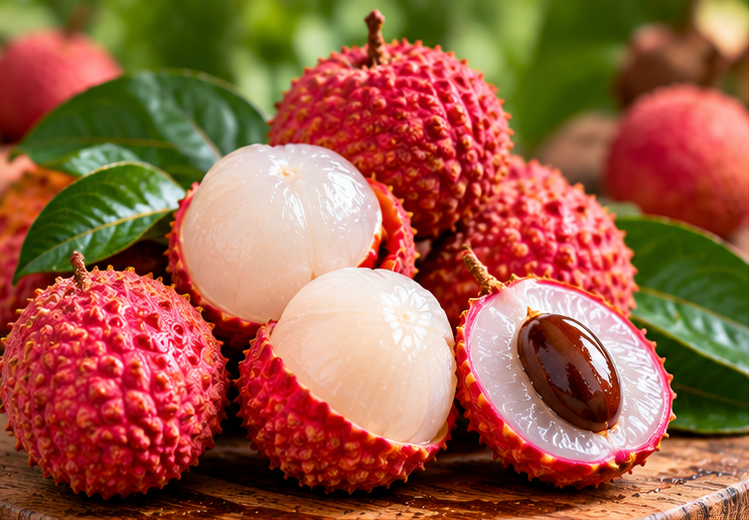
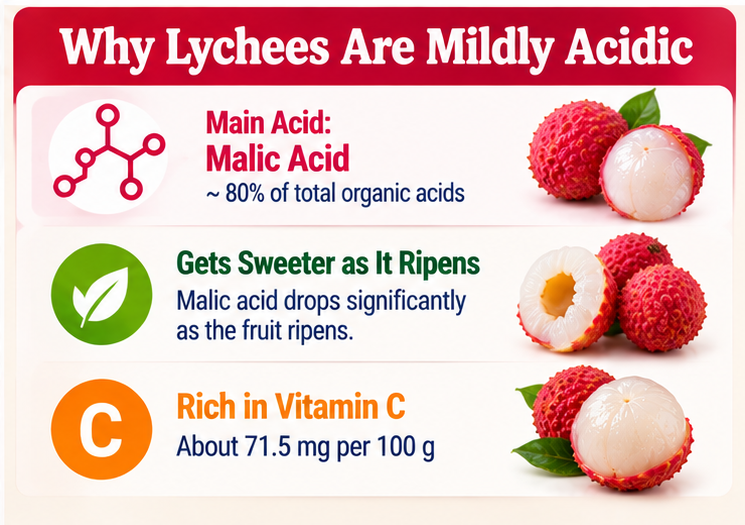
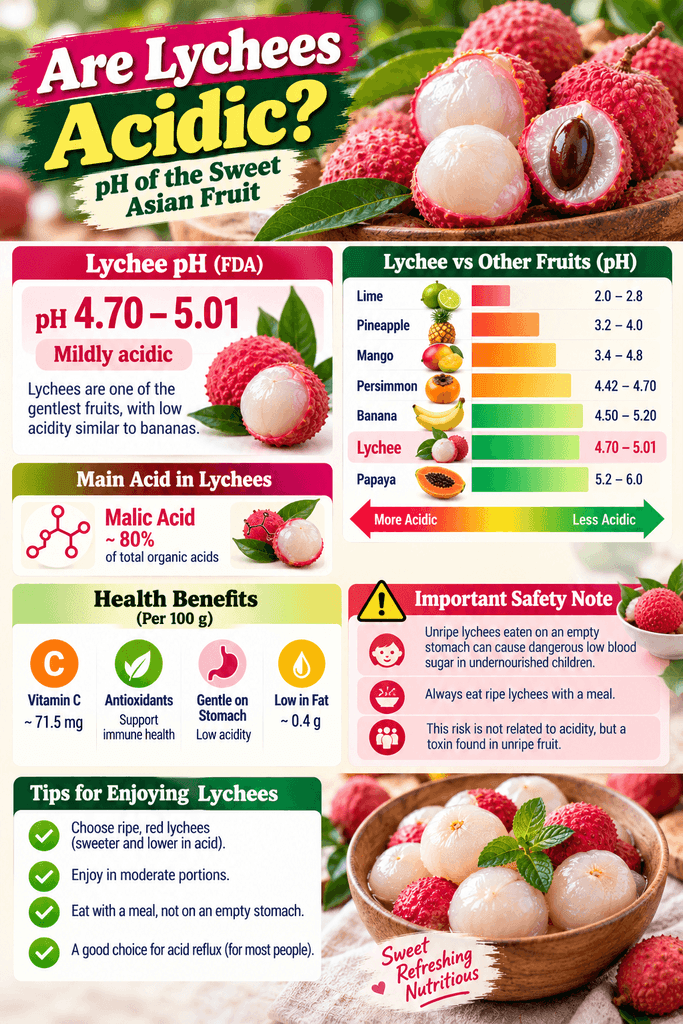
Lychees are only mildly acidic, and they’re one of the gentlest fruits you can eat. The FDA lists lychee at a pH of about 4.70 to 5.01 (FDA). That’s less acidic than apples, pineapple, mangoes, and most berries, and close to bananas. The small amount of acid lychees do have is mostly malic acid, and it drops sharply as the fruit ripens. That’s why ripe lychees taste so sweet and floral rather than tangy.
Lychees do come with one important safety note that has nothing to do with acidity: unripe lychees eaten on an empty stomach have been linked to dangerous low blood sugar in undernourished children. This guide covers lychee pH, how lychees compare with other fruits, what they mean for acid reflux, and how to enjoy them safely.
Key Takeaways
- Lychees are mildly acidic, with an FDA pH range of 4.70 to 5.01, in the same low-acid group as bananas.
- Malic acid is the main acid, making up roughly 80% of lychee’s organic acids, and it falls sharply as the fruit ripens.
- They’re one of the better fruits for acid reflux, though their high sugar content means portions still matter.
- They’re rich in vitamin C, with about 71.5 mg per 100 g.
- Eat ripe lychees with a meal, not on an empty stomach. A 2014 outbreak in India linked lychee eating and skipped meals to severe low blood sugar and brain illness in children
Are Lychees Acidic? The Short Answer
Technically, yes. Anything below pH 7 is acidic, and lychees sit just under pH 5. But compared with most fruits, they’re on the mild end. Here’s how the FDA lists lychee next to other popular fruits (FDA):
| Fruit | Approximate pH (FDA) |
| Lime | 2.00–2.80 |
| Grapes, seedless | 2.90–3.82 |
| Pineapple | 3.20–4.00 |
| Apples, eating | 3.30–4.00 |
| Mangoes, ripe | 3.40–4.80 |
| Persimmons | 4.42–4.70 |
| Bananas | 4.50–5.20 |
| Lychee | 4.70–5.01 |
| Jackfruit | 4.80–6.80 |
| Papaya | 5.20–6.00 |
| Cantaloupe | 6.13–6.58 |
| Avocados | 6.27–6.58 |
Source: FDA, Approximate pH of Foods and Food Products.
Lychee’s pH of 4.70 to 5.01 means it’s roughly 100 times less acidic than a lime at pH 2.8, since each step on the pH scale is a tenfold change. Among popular tropical and Asian fruits, only papaya, melons, coconut, and avocados are milder.
What Makes Lychees Taste So Sweet?
Lychees have a famously sweet, floral taste with just a hint of tang. Their chemistry explains why.
Malic acid leads, and it fades with ripening
A 2023 study of litchi fruit acidity reports that “the dominant acidity-related organic acid in litchi pulps is malate, followed in low levels by citrate and tartrate,” with malic acid making up about 80% of total organic acids (Jiang et al., 2023).
The same study found that malic acid drops dramatically as lychees ripen. In one cultivar it fell by about 91%, and in another by about 72%, between early development and the red ripe stage (Jiang et al., 2023). A separate study of the Indian cultivar ‘Rose Scented’ also found that titratable acidity decreased and pulp pH rose as the fruit matured (Singh et al., 2013).
Malic acid is the same main acid found in apples, including tart Granny Smith apples. In lychees, though, there’s far less of it by the time the fruit is ripe.
Lots of natural sugar
Lychees are also high in sugar. USDA lists 15.2 g of sugar per 100 g of raw lychees (USDA FDC 169086). In the ‘Rose Scented’ study, soluble solids reached about 18.7 °Brix at harvest, with a sugar-to-acid ratio above 23 (Singh et al., 2013).
University of Florida describes ripe lychee pulp as having an “excellent subacid flavor,” meaning only lightly acidic, and notes that “fruit picked while immature are not sweet and have poor flavor” (Crane et al., UF/IFAS HS6).
Are Lychees Good for Acid Reflux?
For most people, lychees are one of the friendlier fruit choices for reflux. They aren’t on the National Institute of Diabetes and Digestive and Kidney Diseases (NIDDK) list of foods that may make reflux worse, which includes citrus fruits, tomatoes, alcohol, chocolate, coffee and caffeine, high-fat foods, mint, and spicy foods (NIDDK). Their low acidity and almost-zero fat also work in their favor.
Reflux triggers do vary, though. The American College of Gastroenterology’s 2022 guideline recommends that people with GERD identify their own triggers and avoid eating within 2 to 3 hours of bedtime (Katz et al., 2022).
What to watch out for
- Large portions: Lychees are easy to eat by the handful. A cup (190 g) contains about 29 g of sugar (USDA FDC 169086). Big servings of any food can leave you feeling overly full.
- Lychee drinks and cocktails: Lychee martinis, sodas, and bubble teas may add alcohol, carbonation, caffeine, or citric acid. Check what else is in the glass.
- Canned lychees in syrup: These add extra sugar. Drain them or choose fruit packed in juice.
Tips for eating lychees with reflux
- Choose ripe, fresh lychees. Ripe fruit has the least acid.
- Start with a small handful and see how you feel.
- Pair them with low-acid foods, like oatmeal, Greek yogurt, coconut yogurt, or cottage cheese.
- Swap lychees in for sharper fruits like pineapple or citrus in fruit salads and smoothies.
- Eat them earlier in the day. NIDDK suggests eating meals at least 3 hours before lying down if you have nighttime symptoms (NIDDK).
For a broader list, see our guide to foods to avoid with GERD. If you have heartburn more than twice a week, trouble swallowing, or symptoms that don’t improve, talk with your doctor.
Safety Note: Don’t Eat Lychees on an Empty Stomach
This is the most important lychee safety fact, and it isn’t about acidity.
Lychees naturally contain two compounds, hypoglycin A and methylenecyclopropylglycine (MCPG), that researchers have linked to dangerously low blood sugar. In 2014, investigators studied an outbreak of acute brain illness among children in Muzaffarpur, India, the country’s largest lychee-growing region (Shrivastava et al., 2017):
- 390 children met the case definition, and 122 (31%) died.
- Eating lychees in the 24 hours before illness was strongly linked to getting sick.
- Skipping the evening meal was also linked to illness and made the lychee association stronger.
- 62% of children tested on admission had low blood sugar (70 mg/dL or less).
- Metabolites of hypoglycin A or MCPG were found in 66% of case urine samples and none of the controls. The lychee fruit itself contained both toxins.
The researchers recommended “minimising litchi consumption, ensuring receipt of an evening meal and implementing rapid glucose correction” for suspected cases (Shrivastava et al., 2017).
What this means for you
This outbreak happened in a major lychee-growing region, and skipping the evening meal made the risk greater. For most well-nourished people eating ripe lychees as a snack or dessert, the risk is very low. Still, these simple habits make sense:
- Eat lychees with or after a meal, not as a replacement for one.
- Choose ripe fruit. Avoid green or unripe lychees [VERIFY: unripe-fruit risk is widely reported; the Lancet study abstract tested litchi arils but did not compare ripe vs unripe].
- Keep portions reasonable, especially for children.
- Don’t let children fill up on lychees and skip dinner.
- Seek care immediately if anyone develops vomiting, confusion, drowsiness, or seizures after eating lychees, particularly a child who hasn’t eaten a proper meal.
Lychees, Teeth, and Gastritis
Teeth: Lychees are low in acid but high in sugar. The American Dental Association recommends eating acidic foods as part of a meal, rinsing with water or having milk or cheese afterward, and waiting about an hour before brushing (American Dental Association). The same habits help with sugary fruit snacks. Our article on whether apples are good for your teeth covers similar questions.
Gastritis: Mild, low-acid fruits like ripe lychees are often easier to tolerate than citrus or berries. Start with a few, eaten with food. Our 7-day meal plan for gastritis has more gentle meal ideas.
Lychee Nutrition
Per 100 grams, raw lychees provide (USDA FDC 169086; UF/IFAS HS6):
| Nutrient | Per 100 g | Per cup (190 g) |
| Water | 81.8 g | — |
| Calories | 66 | About 125 |
| Carbohydrates | 16.5 g | About 31 g |
| Fiber | 1.3 g | About 2 g |
| Sugars | 15.2 g | About 29 g |
| Vitamin C | 71.5 mg | About 136 mg |
| Potassium | 171 mg | About 325 mg |
A few highlights:
- Vitamin C: One cup provides about 136 mg, well above the adult Recommended Dietary Allowance of 75 to 90 mg per day (NIH Office of Dietary Supplements).
- Low fat, low calorie per piece: UF/IFAS describes lychees as “low in calories and a good source of potassium” (UF/IFAS HS6).
- High in sugar, low in fiber: With about 15 g of sugar and only 1.3 g of fiber per 100 g, lychees can add up quickly. If you’re managing blood sugar, keep portions small. Our guide on whether apples are good for diabetics covers how to think about fruit and blood sugar.
How Lychees Compare to Other Asian and Tropical Fruits
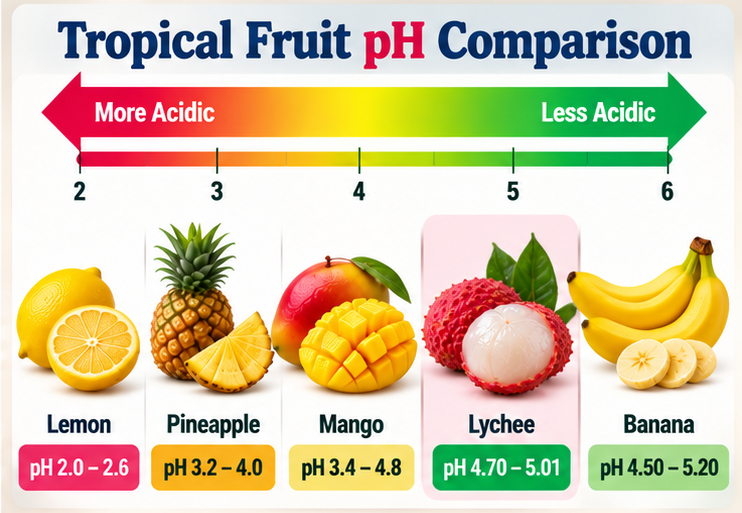
Here’s how lychee stacks up against the other tropical fruits we’ve covered:
| Fruit | Approximate pH | Acid level | Special note |
| Passion fruit | About 2.4–3.2 (studies) | Very high | Close to citrus |
| Pineapple | 3.20–4.00 (FDA) | High | Common reflux complaint |
| Guava | About 3.7–4.2 (studies) | Moderate | Very high vitamin C |
| Starfruit | About 3.9–4.6 (studies) | Moderate | Avoid with kidney disease |
| Mango | 3.40–4.80 (FDA) | Moderate | Varies with ripeness |
| Dragon fruit | About 4.3–5.5 (studies) | Low | Very mild flavor |
| Lychee | 4.70–5.01 (FDA) | Low | Eat ripe, with a meal |
| Banana | 4.50–5.20 (FDA) | Low | Classic gentle fruit |
| Papaya | 5.20–6.00 (FDA) | Very low | One of the mildest |
pH values from the FDA or from the studies cited in our individual fruit guides.
So among tropical fruits, lychees belong with dragon fruit, bananas, and papaya in the low-acid group. For the full picture, see our complete guide to acidic foods.
Acid-Smart Ways to Enjoy Lychees
Lychees are delicious on their own: just peel the thin shell, eat the translucent fruit, and discard the large brown seed. If you’d like to get creative, try these ideas:
- Smoothies: Blend peeled, seeded lychees into our fruit yogurt shake with banana for a floral, low-acid drink.
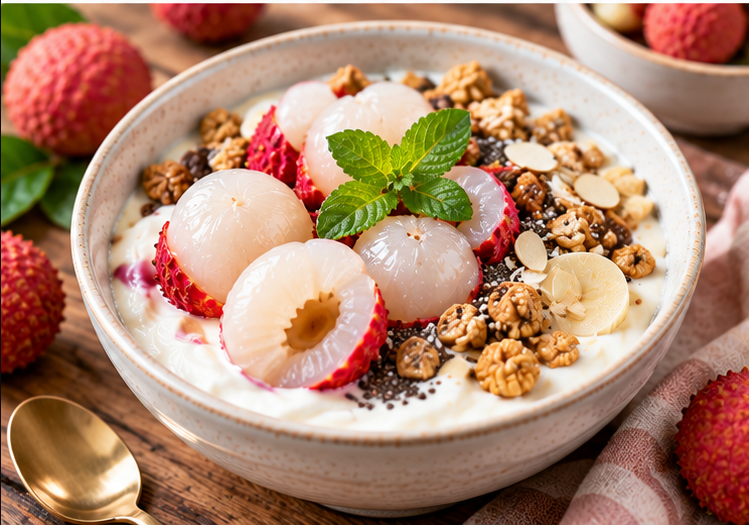
- Breakfast bowls: Top Greek yogurt or oatmeal with halved lychees and our pumpkin pie spice granola.
- Creamy desserts: Serve lychees with our whipped ricotta with mixed berries or alongside a scoop of ginger ice cream.
- Summer rolls: Add halved lychees to our avocado summer rolls for a sweet surprise.
- Treats: Chopped lychees make a fun addition to our tropical dream rice krispie treats.
The lychee swaps haven’t been tested in our kitchen, so adjust to taste.
Kitchen tip: Always remove the seed before serving lychees to young children, and cut the fruit into small pieces. Whole lychees are round and slippery, which can make them a choking risk for little ones [VERIFY: choking-hazard guidance is general pediatric advice; add a CDC or AAP citation if available].
Frequently Asked Questions
Are lychees acidic or alkaline?
Lychees are mildly acidic. The FDA lists lychee at pH 4.70 to 5.01, which makes it one of the least acidic common fruits, close to bananas.
Are lychees good for acid reflux?
For most people, yes. Lychees are low in acid and fat and aren’t on NIDDK’s list of common reflux triggers. Eat ripe fruit in moderate portions, ideally with a meal.
What acid is in lychee?
Malic acid is the main one, making up roughly 80% of lychee’s organic acids, with smaller amounts of citric and tartaric acid. Malic acid levels drop sharply as lychees ripen.
Are lychees more acidic than bananas?
They’re about the same. The FDA lists bananas at pH 4.50 to 5.20 and lychee at 4.70 to 5.01, so both are in the low-acid group.
Is it safe to eat lychees on an empty stomach?
It’s best not to. A 2014 outbreak in Muzaffarpur, India, linked eating lychees and skipping the evening meal to severe low blood sugar and brain illness in children. Eat ripe lychees with or after a meal.
Are canned lychees acidic?
The FDA table doesn’t list canned lychees separately. Canned lychees are usually packed in sugar syrup, which adds sugar. Check the label for added citric acid, and drain the syrup if you want less sugar.
Are lychees healthy?
Yes, in reasonable amounts. They’re rich in vitamin C, low in fat, and hydrating. But they’re high in natural sugar and low in fiber, so it’s easy to overeat them.
The Bottom Line
Lychees are only mildly acidic, with an FDA pH of 4.70 to 5.01. Their small amount of acid is mostly malic acid, which drops sharply as the fruit ripens, leaving that famously sweet, floral flavor. That puts lychees in the same gentle, low-acid group as bananas, dragon fruit, and papaya.
For most people with reflux or a sensitive stomach, ripe lychees are a good fruit choice. Just remember two things: lychees are high in sugar, so watch portions, and always eat them with or after a meal, never as a substitute for one, especially for children.
Keep exploring with Are Dragon Fruits Acidic?, Are Starfruits Acidic?, Are Persimmons Acidic?, or our complete guide to acidic foods.
Medical disclaimer: This article is for general information only and isn’t a substitute for professional medical advice. If you have frequent heartburn, GERD, diabetes, or any symptoms after eating lychees, talk with your doctor or a registered dietitian.
References
- U.S. FDA. Approximate pH of Foods and Food Products.
- Jiang Y, et al. (2023). Combined metabolome and transcriptome analyses unveil the molecular mechanisms of fruit acidity variation in litchi. Int J Mol Sci 24(3):1871. MDPI
- Singh A, Mishra DS, Kumar R, Kumar P (2013). Physico-chemical changes in litchi cv. Rose Scented during fruit development and maturation. Indian J. Hortic. 70(3):328–332. PDF
- Crane JH, Balerdi CF, Maguire I. Lychee Growing in the Florida Home Landscape (HS6/MG051). UF/IFAS.
- Shrivastava A, et al. (2017). Association of acute toxic encephalopathy with litchi consumption in an outbreak in Muzaffarpur, India, 2014: a case-control study. Lancet Glob Health 5(4):e458–e466. DOAJ
- USDA FoodData Central. Litchis, raw (FDC 169086).
- NIH Office of Dietary Supplements. Vitamin C Fact Sheet.
- NIDDK. Eating, Diet & Nutrition for GER & GERD.
- Katz PO, et al. (2022). ACG Clinical Guideline for GERD. doi:10.14309/ajg.0000000000001538
- American Dental Association. Dietary Acids and Your Teeth.
Related Posts




Subscribe for New Racipies
Get mental health tips, updates, and resources delivered to your inbox.