
Is Cereal a Soup? A Deep Dive Into the Internet’s Favorite Food Debate

Medically reviewed by Christiana George Updated Date: January 7, 2026
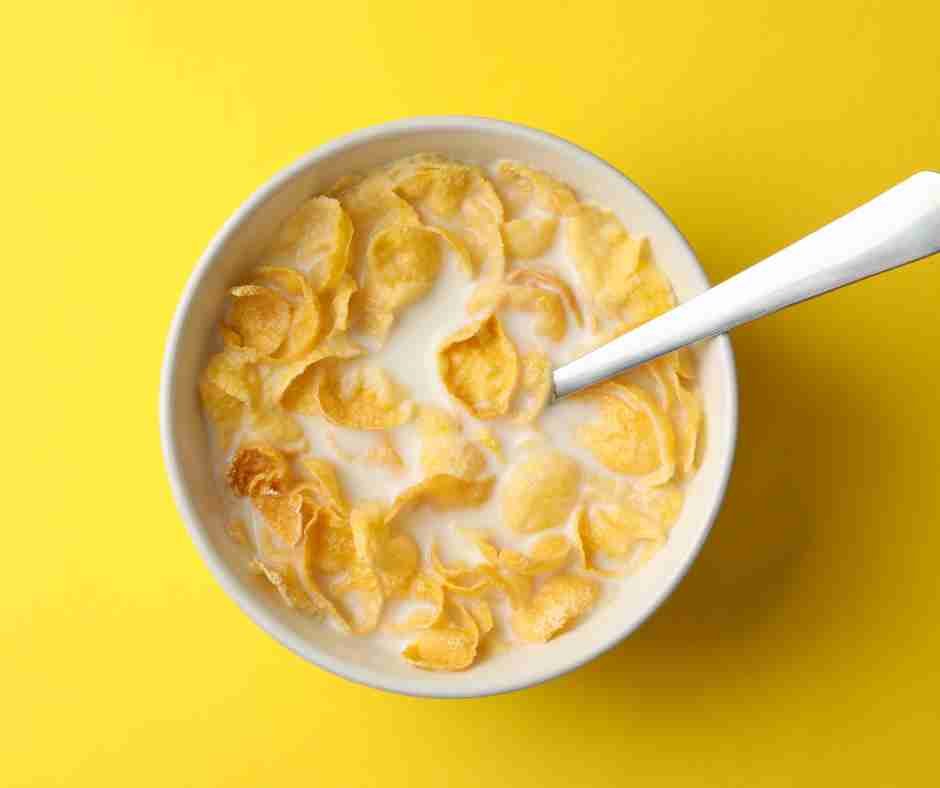
It happens late at night. You are standing in your kitchen, illuminated only by the refrigerator light. You pour a bowl of Cheerios. You add milk. You take a bite. And suddenly, a thought strikes you so profound, so earth-shattering, that you freeze mid-chew.
You are eating chunks of food floating in a liquid.
You are eating… soup.
Or are you?
The question “Is cereal a soup?” has torn families apart, ruined first dates, and fueled Reddit threads that stretch on for eternity. It belongs to the pantheon of great modern philosophical debates, sitting right alongside “Is a hot dog a sandwich?” and “Is a Pop-Tart a ravioli?”
On the surface, it seems silly. Of course, cereal isn’t soup. Soup is savory; cereal is sweet. Soup is dinner; cereal is breakfast. But when you strip away our cultural biases and look strictly at the definitions, the lines begin to blur. If gazpacho is a soup (cold, liquid, vegetable-based), why isn’t Corn Flakes in milk (cold, liquid, grain-based) a soup?
In this exhaustive guide, we will leave no stone unturned. We will consult dictionaries, culinary experts, and the darkest corners of the internet to answer the ultimate question: Is cereal considered a soup?
Why Do People Ask “Is Cereal a Soup?” (Cultural Context)
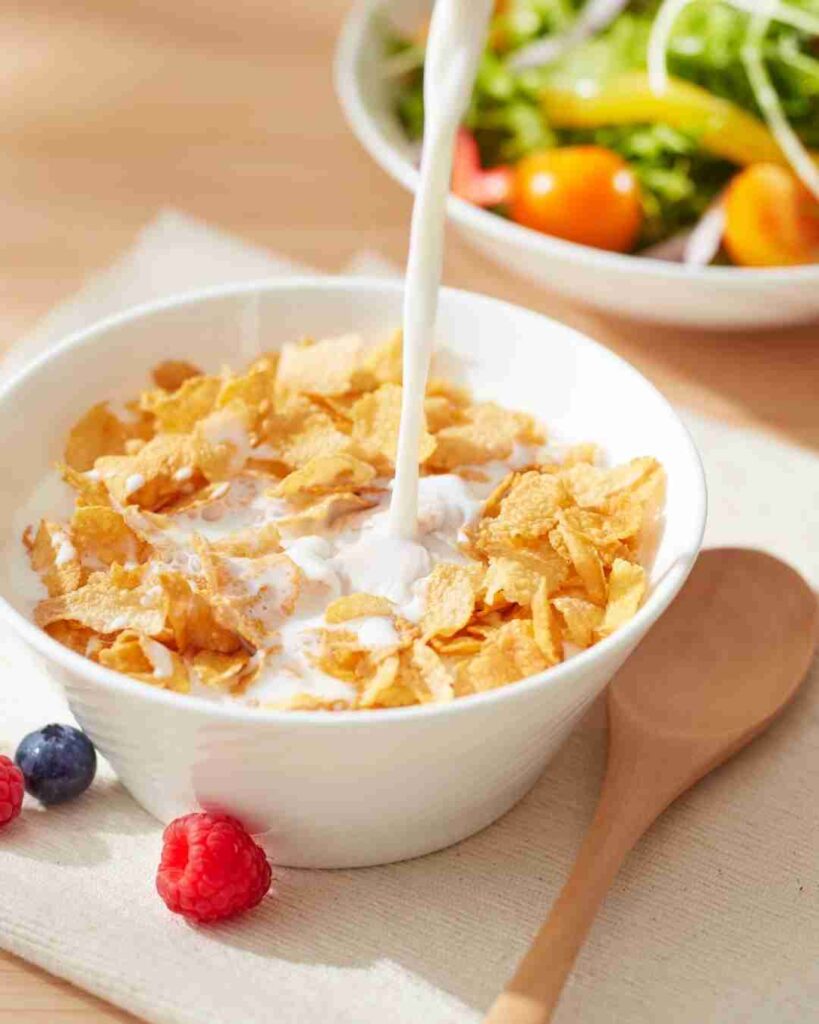
Before we dissect the anatomy of a bowl of Lucky Charms, we must ask: Why is cereal a soup even a question we are asking?
The Rise of Internet Philosophy
The internet loves a low-stakes argument. In a world full of complex, terrifying problems, debating the taxonomy of breakfast food provides a safe harbor for our argumentative energy. It is what internet historians call “recreational pedantry.”
The is cereal a soup meme gained traction in the early 2010s, coincidentally rising alongside the “Is a hot dog a sandwich?” debate. It represents a clash between two types of thinking:
- Descriptivists: People who define words based on how they are actually used. (e.g., “No one orders cereal at a soup kitchen, so it’s not soup.”)
- Prescriptivists: People who define words based on rigid technical rules. (e.g., “It meets the criteria of solid + liquid, therefore it is soup.”)
Reddit, TikTok, and the Viral Spiral
Platforms like Reddit and TikTok are engines for these debates. A user posts a video earnestly asking, “Guys, is cereal a soup?” and the engagement algorithm explodes.
- Reddit: Subreddits like r/ShowerThoughts regularly host threads titled “Cereal is just breakfast soup,” garnering thousands of upvotes.
- TikTok: The visual format allows users to present “evidence,” like pouring tomato soup into a mug vs. pouring milk into a bowl, challenging viewers to spot the difference.
- VSauce: The famous educational YouTuber Michael Stevens often tackles these kinds of categorical paradoxes (like “Is a chair a chair if no one sits on it?”), lending an air of pseudo-intellectual legitimacy to the question.
This debate persists because it exposes the fragility of language. If we can’t agree on what soup is, do we really know anything?
What Is Technically a Soup? (Definition Breakdown)
To determine if cereal fits the category, we must first define the category. What is technically a soup?
The Dictionary Definitions
Let’s look at the heavy hitters.
- Merriam-Webster: “A liquid food especially with a meat, fish, or vegetable stock as a base and often containing pieces of solid food.”
- Oxford English Dictionary: “A liquid dish, typically made by boiling meat, fish, or vegetables, etc., in stock or water.”
- Dictionary.com: “A liquid food made by boiling or simmering meat, fish, or vegetables with various added ingredients.”
The “Boiling” Clause
Notice a pattern? Most traditional definitions include the words “boiling,” “simmering,” or “stock.”
This is a major blow to the “Cereal is Soup” camp. Cereal is rarely boiled with milk. It is assembled cold.
However, if we strictly require boiling, then Gazpacho (a raw, blended vegetable soup) is not a soup. If Gazpacho is a soup, then the definition must be broader than just “boiled food.”
The Wikipedia Loophole
Wikipedia defines soup as “a primarily liquid food, generally served warm or hot (but may be cool or cold), that is made by combining ingredients of meat or vegetables with stock, milk, or water.”
Here, the inclusion of “milk” and “cool or cold” opens the door wide. If soup can be cold and made with milk, the only thing stopping cereal from being soup is the ingredient list (grains vs. vegetables). But wait—barley soup exists. Rice soup exists.
So, can soup be a cereal? Or rather, can cereal be a soup? If we remove the “meat/vegetable” requirement and focus on structure (solids in liquid), the definition fits.
What Is Cereal Classified As?
If it’s not a soup, what kind of food is cereal classified as?
The Definition of Cereal
Technically, the word “cereal” refers to the grain itself (wheat, oats, corn, rice), not the dish.
- Agricultural Definition: Any grass cultivated for the edible components of its grain.
- Breakfast Definition: A prepared foodstuff made from grain, typically eaten with milk for breakfast.
The “Stew” Argument
Some food taxonomists argue that if cereal is heated (like oatmeal), it is a porridge or a gruel.
If it is cold and suspended in liquid, is it a chowder?
The USDA categorizes “Ready-to-Eat Cereals” as its own distinct food group. They do not group them with soups, stews, or beverages. They exist on their own island.
Is Cereal Considered Soup Universally?
No. In almost every culinary school and grocery store database, “Cereal” and “Soup” are distinct categories.
- Aisle Logic: Soup is in the canned goods aisle. Cereal is in the breakfast aisle.
- Menu Logic: You will never find Froot Loops listed under “Soups & Salads” on a diner menu.
Culturally, cereal is not considered soup. But we aren’t here for culture; we are here for chaos. We want to know if it is technically soup.
Is Cereal a Soup or a Salad? (Comparison Analysis)
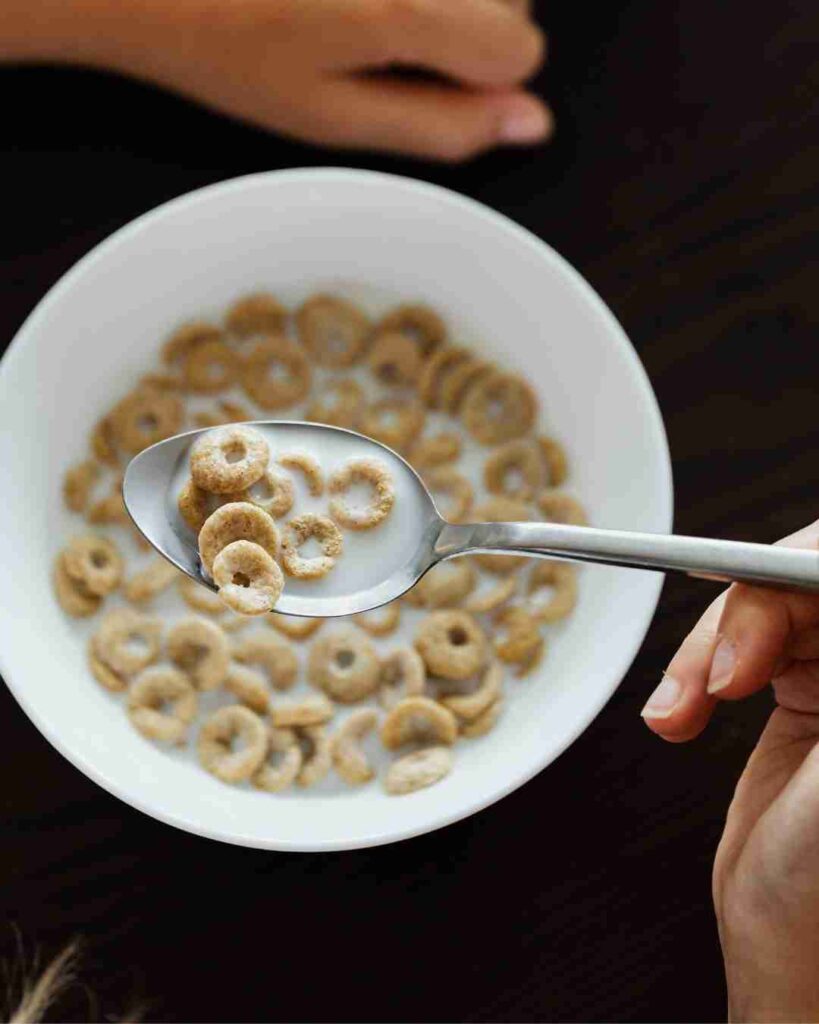
Just when you thought it was safe, a new challenger approaches. Is cereal a soup or a salad?
The Salad Theory
There is a rogue faction of the internet that argues cereal is actually a salad. Here is their logic:
- Structure: Salad is a mixture of cold, solid ingredients (lettuce, tomatoes, croutons) usually dressed with a liquid (vinaigrette, ranch).
- The Comparison:
- Cereal pieces = Croutons/Greens
- Milk = Dressing
- The Verdict: If you put a lot of dressing on a salad, does it become soup?
- If the liquid is the primary component, it’s soup.
- If the solid is the primary component, it’s a salad.
The “Wet Salad” Problem
Most people eat cereal by spoonfuls of solids coated in milk. By this metric, is cereal a salad?
A “fruit salad” often sits in its own juices. Cereal sits in milk.
However, the “Salad Theory” usually falls apart because of the volume of liquid. We drink the leftover milk. We do not (typically) drink the leftover Ranch dressing from the bottom of the bowl. (If you do, that is a separate issue.)
Therefore, cereal is closer to soup (where the liquid is consumed) than salad (where the liquid is a coating).
Is Cereal a Type of Soup? Arguments FOR
Let’s put on our lawyer wigs. Here are the strongest arguments for why cereal is a soup.
1. The “Liquid Suspension” Argument
At its most basic physics, soup is materials suspended in liquid.
- Chicken Noodle Soup = Noodles + Chicken + Broth.
- Cereal = Grain loops + Milk.
Structurally, they are identical. If you showed a diagram of both to an alien, they would categorize them as the same dish.
2. The Cold Soup Precedent
Critics say, “Soup is hot!”
We reply: “What about Gazpacho? What about Vichyssoise? What about Borscht (often served cold)?”
Culinary history is full of cold soups. There are even fruit soups (Scandinavian fruktsoppa or Hungarian hideg meggyleves—sour cherry soup).
If a bowl of cold cherry soup is soup, why isn’t a bowl of Berry Colossal Crunch?
3. The “Milk is Broth” Theory
Broth is just water flavored by meat or vegetables.
Milk is water flavored by fats, proteins, and sugars from a cow (or almond/oat).
In a savory chowder, we use milk or cream as the base.
- New England Clam Chowder = Clams + Potatoes + Milk/Cream base.
- Corn Pops = Corn + Sugar + Milk base.
If milk can be a soup base in chowder, it can be a soup base in cereal.
4. The Sweet Soup Existence
“Soup is savory!”
False. As mentioned, fruit soups exist. Dessert soups exist in French and Asian cuisine (like Cantonese tong sui). The sweetness of cereal does not disqualify it from the soup family.
Conclusion of the Affirmative:
Cereal is a cold, sweet, grain-based soup in a milk broth.
Why Cereal Is NOT a Soup: Arguments AGAINST
Now, the defense. Here is why cereal is not considered a soup.
1. The Preparation Method
Soup is defined by the process of cooking ingredients together to create a unified flavor profile.
- Soup: You simmer the broth with the carrots so the flavors meld. The broth takes on the essence of the solid.
- Cereal: You pour two distinct things (processed grain and raw milk) into a bowl immediately before eating. There is no cooking. There is no melding.
- The Test: If you leave cereal to “meld,” it becomes soggy garbage. If you leave soup to meld, it becomes better.
2. The “Broth” Distinction
In soup, the liquid is the point. You eat the chicken noodle soup for the broth as much as the noodles.
In cereal, the milk is a utility. It is a lubricant to make the dry grains palatable. Many people drain the milk or leave it behind. The milk is a condiment, not a broth.
3. The Ingredient Origin
Soup is typically vegetable, meat, or legume-based.
Cereal is grain-based.
While “grain soups” (like barley soup) exist, they are cooked. A raw suspension of baked grain products in dairy is technically closer to pudding or nachos (chips + sauce) than soup.
4. Cultural Intent (The “Menu” Argument)
Definitions are defined by usage. If you went to a restaurant, ordered the “Soup of the Day,” and the waiter brought you a bowl of Cap’n Crunch, you would send it back.
Language is a social contract. Society has agreed that cereal is not soup. To argue otherwise is to violate the social contract.
Difference Between Cereal and Soup (Side-by-Side Comparison)
Let’s break this down visually to settle the difference between cereal and soup.
| Feature | Soup | Cereal |
| Primary State | Liquid food | Solid food with liquid added |
| Preparation | Ingredients cooked/simmered in liquid | Assembled cold (Solid + Liquid) |
| Liquid Role | Broth (essential, flavored by solids) | Lubricant/Moistener (condiment) |
| Temperature | Usually Hot (sometimes cold) | Usually Cold (oatmeal is hot) |
| Flavor Profile | Usually Savory | Usually Sweet |
| Base Ingredients | Meat, Veggies, Stock, Water | Grains, Sugar, Milk |
| Is the Liquid Drunk? | Yes, almost always | Sometimes, but often discarded |
Key Takeaway: The biggest difference is the preparation. Soup requires the liquid and solid to interact chemically (cooking/steeping). Cereal requires them to interact physically (floating).
Is Cereal a Soup… Like a Hot Dog Is a Sandwich?
You cannot discuss is cereal a soup without mentioning its cousin: Is a hot dog a sandwich?
These questions fall under the umbrella of Structural Neutrality.
- The Sandwich Argument: A sandwich is a filling between two pieces of bread. A hot dog bun is one piece of bread hinged. Therefore, is it a taco? Or a sub sandwich?
- The Cereal Argument: A soup is solids in liquid. Cereal is solid in liquid.
The Cube Rule of Food
Internet theorist @Phosphatide created the “Cube Rule of Food Identification,” which categorizes food based on the location of the starch.
- Toast: Starch on the bottom.
- Sandwich: Starch on top and bottom.
- Taco: Starch on the bottom and two sides.
- Soup:?
Under strict structural rules, if you believe a hot dog is a sandwich (because structure defines identity), you must accept that cereal is a soup.
If you believe a hot dog is not a sandwich (because cultural intent defines identity), you can safely say cereal is not a soup.
Most people are Cultural Purists (“A hot dog is a hot dog”) but Structural Anarchists when they want to be funny (“Cereal is soup!”).
Is Cereal a Soup Alignment Chart (Chaotic to Lawful)
Where do you fall on the spectrum?
Lawful Good
“Cereal is Cereal.”
Believes in the USDA guidelines. Respects the grocery store aisle signs. Values order and society.
Neutral Good
“Cereal is a Breakfast Dish.”
Doesn’t care about the liquid/solid ratio. Focuses on the time of day and utility.
Chaotic Good
“Oatmeal is Soup, but Cheerios are not.
Acknowledges that cooked grains (porridge) share DNA with soup, but draws the line at cold, processed loops.
Lawful Neutral
“Cereal is a Salad.”
Strict adherence to the “dressed solids” theory. Milk is a dressing.
True Neutral
“It’s all Biomass.”
Food is food. Eat the loops.
Chaotic Neutral
“The Ocean is a Soup.”
It contains water, salt, vegetables (kelp), and meat (fish). If the ocean is soup, everything is soup.
Lawful Evil
“Cereal is a Soup.”
Adheres strictly to the dictionary definition of “solids in liquid” to annoy friends and family.
Chaotic Evil
“Tea is a Soup.”
It is leaf broth. Coffee is bean soup. Vanilla soy latte is a three-bean soup.
Is Cereal a Soup: Reddit, TikTok & Pop Culture Takes
The internet has fueled this debate with meme-worthy content.
The VSauce Take
In a famous video, Michael Stevens (VSauce) explores the definition of a chair and touches on categorization. The takeaway is that categories are artificial. Is cereal a soup? VSauce style answer? It is neither nor both. It is a “fuzzy set.”
Reddit Threads (r/ShowerThoughts)
- u/DeepThinker: “Cereal is just a soup made of domesticated grass bones bathed in cow juice.”
- u/ChefBoyardee: “If I crumble crackers into tomato soup, it’s still soup. If I put too much cereal in the bowl, it becomes a solid mass. Cereal is a casserole.”
The Sporkful Podcast
The food podcast The Sporkful often debates these granular details. They argue that intent matters. If you intend to slurp the liquid, it’s soup. If you intend to crunch the solid, it’s a snack with moisture.
TikTok Trends
A viral TikTok trend involved people putting soup ingredients (carrots, broth) into a cereal box to trick their parents. The reactions proved the point: culturally, we have a visceral reaction to mixing these categories.
Similar Questions: Is Cereal a Soup and Other Food Debates
If you enjoy the torture of the is cereal a soup question, try these on for size:
- Is a Pop-Tart a Ravioli?
- Premise: Fruit filling inside pasta/dough casing.
- Verdict: Structurally, yes. Culturally, no.
- Is Ketchup a Smoothie?
- Premise: It is blended fruit (tomatoes) and sugar.
- Verdict: No, it is a jam or a gastrique. Smoothie implies a beverage.
- Is a Vanilla Soy Latte a 3-Bean Soup?
- Premise: Vanilla bean + Soy bean + Coffee bean + Water.
- Verdict: This is the Chaotic Evil stance. Technically… It’s a broth.
- Is Lasagna a Cake?
- Premise: It involves layers of flour and filling.
- Verdict: Is it a savory parfait? No, it’s a casserole.
Essay-Style Deep Dive: Is Cereal a Soup? (Formal Argument)
For those who need to write an is cereal a soup essay or win a formal debate, here is the academic approach.
Thesis: While cereal shares structural similarities with soup (solids suspended in liquid), it fails to meet the criteria of culinary integration and preparation, rendering it a distinct food category.
The Argument for Distinction:
The classification of food relies on two pillars: Morphology (form) and Teleology (purpose).
Morphologically, cereal appears to be a soup. It is a heterogeneous mixture involving a liquid medium.
However, Teleologically, soup and cereal diverge. The purpose of soup is the infusion of flavor from solid to liquid through heat or time (maceration). The purpose of cereal is the maintenance of texture (crunch) in opposition to the liquid.
The “Soggy” Paradox:
In soup, a noodle that has absorbed broth is considered “flavorful.”
In cereal, a flake that has absorbed milk is considered “ruined” (soggy).
This fundamental opposition in desired texture proves that the relationship between liquid and solid in cereal is antagonistic, whereas in soup, it is symbiotic.
Conclusion:
Cereal is not a soup; it is a suspended crisp. The milk acts as a dynamic hydrating agent that must be battled against time. To classify it as soup is to ignore the fundamental culinary goal of the dish.
Is Cereal a Soup or Not? Final Logical Verdict
We have looked at the definitions. We have consulted the memes. We have analyzed the physics of soggy flakes. It is time for a verdict.
Is cereal a soup?
Technically? YES.
If you are a robot or an alien reading a dictionary, cereal fits the broad definition of “liquid food containing solid pieces.” It is a sweet, cold, milk-based soup.
Culturally and Practically? NO.
In the world of humans, “Soup” implies cooking, savory flavors, and a stock base. “Cereal” implies breakfast, sweetness, and cold preparation.
You cannot bring a box of Lucky Charms to a potluck when asked to bring a soup.
The Final Answer:
Cereal is Cereal.
It is a unique category of food invented by the industrialized world in the late 19th century. It does not need to be a soup, a salad, or a stew. It is its own glorious, sugary thing.
Frequently Asked Questions
Is cereal considered a soup?
Taxonomically, yes, it fits the loose definition of soup (solids in liquid). However, culinarily and culturally, it is considered a distinct breakfast category and not a soup due to the lack of boiling or stock.
Can soup be a cereal?
No. Cereal refers to the grain (oats, wheat). Soup is the dish. However, a soup can be made of cereal grains (like oatmeal or barley soup).15+1
Is cereal a salad?
Some argue cereal is a “wet salad” (milk = dressing). However, the volume of liquid in cereal is much higher than a salad dressing, making it closer to soup than salad.
What is technically a soup?
Technically, a soup is any liquid food, usually served warm, made by combining ingredients (meat, veg) with stock or water. But cold soups (Gazpacho) and sweet soups (Tong Sui) exist, blurring the lines.
Is cereal a soup or a salad?
It is neither. It is a distinct category called “Breakfast Cereal.” But if forced to choose, it is closer to a cold, sweet soup (like a dessert soup) than a salad.
Final Thoughts: Why This Question Won’t Go Away
Why do we care? Why did you just read 3,500 words about is cereal a soup?
Because we love to categorize the world. We crave order. And when something as simple as breakfast defies our categories, it itches our brains.
The “Is Cereal a Soup” debate is a reminder that language is messy, definitions are fluid, and sometimes, a bowl of milk and grain is just a bowl of milk and grain.
Next time someone asks you this question, look them in the eye and say: “No. It’s a Gazpacho.” And walk away.
References & Further Reading
1. Dictionary & Etymological Definitions
- Merriam-Webster (Definition of Soup): Defines soup as a liquid food with meat/fish/vegetable stock.
- Merriam-Webster (Definition of Cereal): Defines cereal as a prepared foodstuff of grain.
- Etymonline (Etymology of Soup): Explains the root “sup” (to take liquid) and “sopp” (bread soaked in broth).
2. Viral Debates & Cultural Analysis
- Is Cereal Soup? Let’s Look At The Evidence: A deep dive into the “Schrödinger’s Breakfast” theory and the wet salad argument.
- Twisted Food: People Are Debating Whether Cereal Is Soup – Yes, Really. Covers the “Stew vs. Soup” angle and the viral nature of the question.
- The Chimes (Biola University): Opinion: Cereal Is a Soup. A popular student newspaper opinion piece is often cited in this debate regarding the “Milk as Broth” theory.
3. Food Theory & Logic (The “Cube Rule” & VSauce)
- The Cube Rule of Food Identification: The viral theory classifying food by the location of its starch (e.g., Toast, Sandwich, Taco, Soup). (WikiHow Explanation)
- VSauce (Michael Stevens): Is Cereal Soup? (via Laughing Squid/YouTube). Discusses the limitations of language and “fuzzy sets” in categorization.
4. Supporting Arguments (For & Against)
- WikiHow: Is Cereal a Soup? A Close Look at This Iconic Debate. Breakdowns of the arguments regarding temperature, preparation, and cultural intent.
- Medium (Justin Bledsaw): Cereal Is Soup: A Definitive Argument Backed by Real Sources. Arguments focused on pasteurization as a form of “cooking” the milk broth.
Related Posts


Subscribe for New Racipies
Get mental health tips, updates, and resources delivered to your inbox.
Biscoff Butternut Squash Oatmeal Cookies

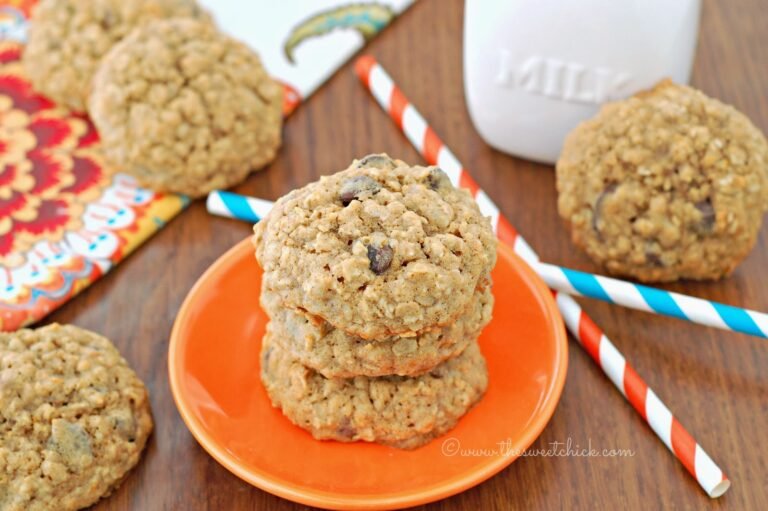
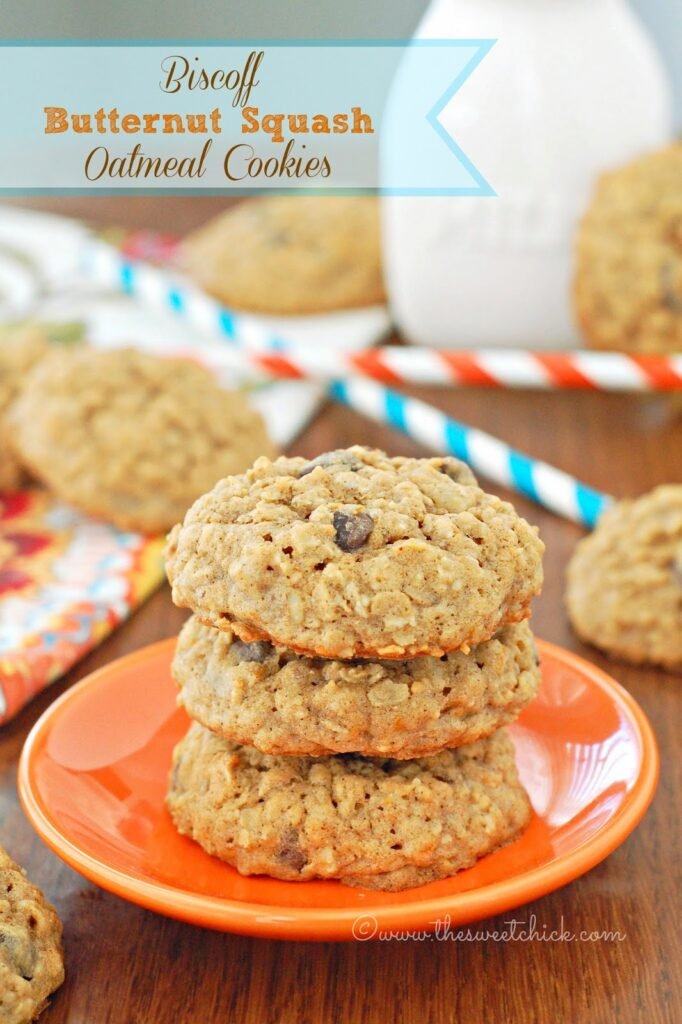
So I signed up for a neighborhood cookie exchange. I gotta say, I am really liking this new neighborhood. There’s a monthly get together of mom’s where I learned how to play Bunco. At Halloween everyone was sending out Boo-Baskets. Now we are exchanging cookies. It’s a very friendly atmosphere. I am currently testing out new cookie recipes for the exchange. Since I have been on a butternut squash trend, I thought I’d start there. I wanted to see what other flavorsI could mix with the squash. I found some Biscoff, dark chocolate chips, and some quick oats in the pantry. I am always up for something new.
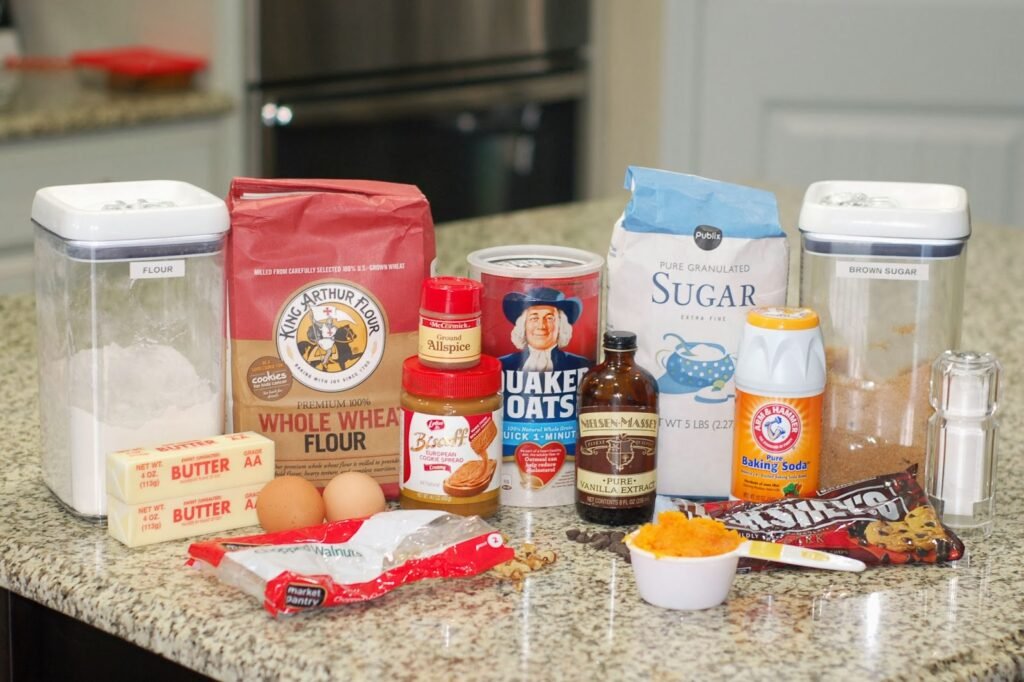
I’ll admit, I was a little skeptical about the combination of flavors myself. I was really just winging it. But hey, I am not going to know if it works, unless I try it.
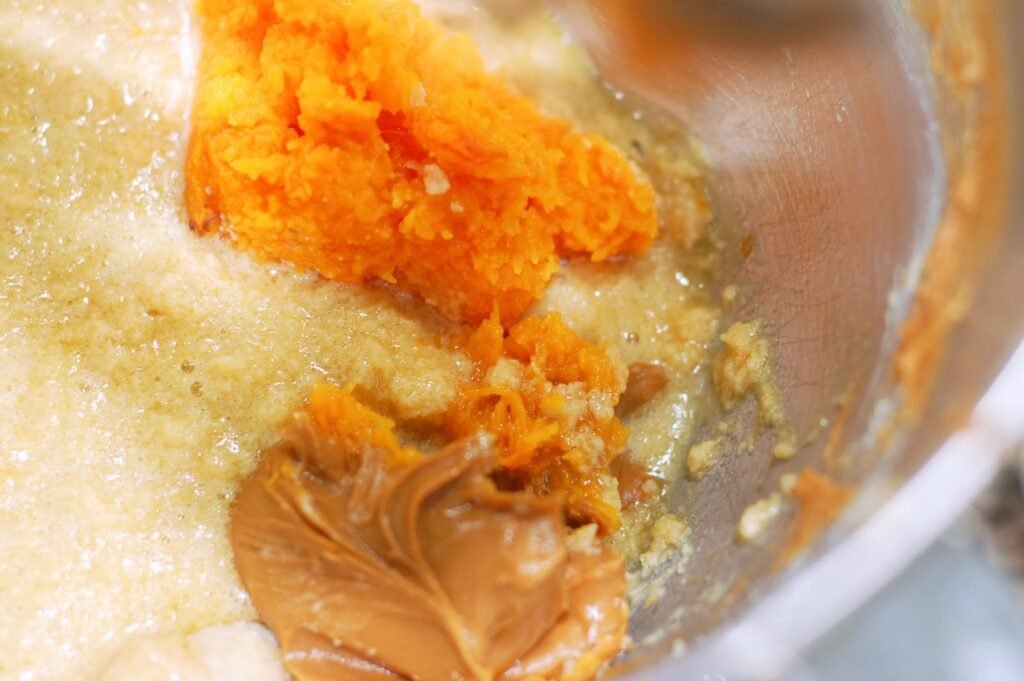
Butternut squash does have a little bit of sweetness in it when cooked, so I wanted to pair it with something else sweet, but something other than maple syrup. Thank goodness I had some Biscoff.

The walnuts are optional, but the chocolate chips are not. You gotta have them. You can use semi-sweet ones if you like, but I am a dark chocolate kinda gal.

I know it’s not safe to eat raw cookie dough, but I just had to have a nibble. It smelled so good.

The cookies came out soft and chewy, just like an oatmeal cookie should. And let me tell ya, Biscoff and butternut squash are fantabulous together.
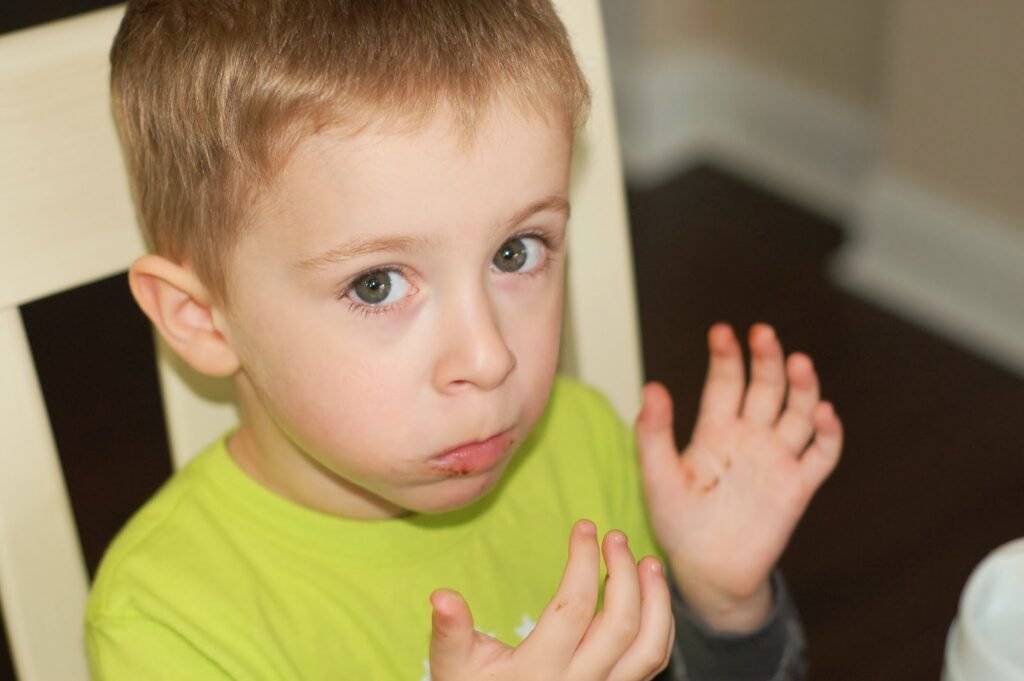
If you don’t believe me, ask this guy. He is my picky eater. He doesn’t eat vegetables and if he doesn’t like the texture of a particular food, he gags on it. Much to the dismay of the rest of us eating next to him. He did not however have any problems shoving a whole cookie in his mouth and asking for another one. If that is not a measure of success, I don’t know what its.
I think my neighbors will be pleased with these Biscoff Butternut Squash Cookies also. I can’t wait for our cookie exchange.

Biscoff Butternut Squash Cookies
by The Sweet Chick
Prep Time: 15 minutes
Cook Time: 10-12 minutes
Keywords: bake dessert snack butternut squash biscoff dark chocolate chips quick oats cookie American fall
Ingredients (36 cookies)
- 1/2 cup + 2 tablespoons butter, softened
- 3/4 cups brown sugar
- 1/2 cup granulated sugar
- 2 eggs, beaten
- 1 teaspoon vanilla
- 1/2 cup butternut squash puree
- 1/3 cup Biscoff Spread
- 1 cup whole wheat flour
- 1/2 cup all purpose flour
- 1 teaspoon baking soda
- 2 teaspoons ground allspice
- 1/2 teaspoon salt
- 3 cups quick oats
- 1 cup dark chocolate chips
- 1/2 cup chopped walnuts
Instructions
Preheat oven to 350º F.
In a stand mixer cream together the butter and the sugars on medium speed.
Add eggs, vanilla, butternut squash and Biscoff and mix well.
In a medium bowl combine the flours, baking soda, allspice and salt until well blended, then slowly add to the wet ingredients.
Next add the quick oats and mix on low until all incorporated.
Then add the walnuts and chocolate chips and continue to mix on low until completely incorporated.
With a medium cookie scoop, drop by scoopful onto a greased cookie sheet at least 2 inches apart.
Bake at 350º for 10-12 minutes or until the tops are a golden brown.
Remove from oven and let cool for 2 minutes, then move to a cooling rack to completely cool.
Bet you can’t eat just one!
Related Posts
Subscribe for New Racipies
Get mental health tips, updates, and resources delivered to your inbox.