
Caponata, And the Rainstorm of Rainstorms

Medically reviewed by Christiana George Updated Date: June 8, 2023

Remember how I said that I’d rekindled my love for eggplant? Well, part of that was helped along by some amazing caponata—an Italian eggplant appetizer—I had one tempestuous evening at a little Italian restaurant close to Lincoln Center.
There’s something so glamorous about dining al fresco during a storm. While many restaurant patrons made for drier parts, namely indoors, our table staunchly remained, seated at the threshold of getting absolutely drenched. Lightning streaked spectacularly across the sky, sideways(!), followed by the low rumbling of thunder. And the light of passing cars, refracted by the rain, shimmered like mirages, except their honking sounded all too real. I will never tire of these dramatic shows.
But back to that caponata. There we were, seated outside during a thrilling thunderstorm, sheets of rain spraying at us at oblique angles, and I was downing eggplant like there was no tomorrow. It was so flavorful, so moist! I forgot my manners. I was the only un-glamorous element of the whole setup. At least everyone was distracted by the lightning around us and a leak above one of our heads.
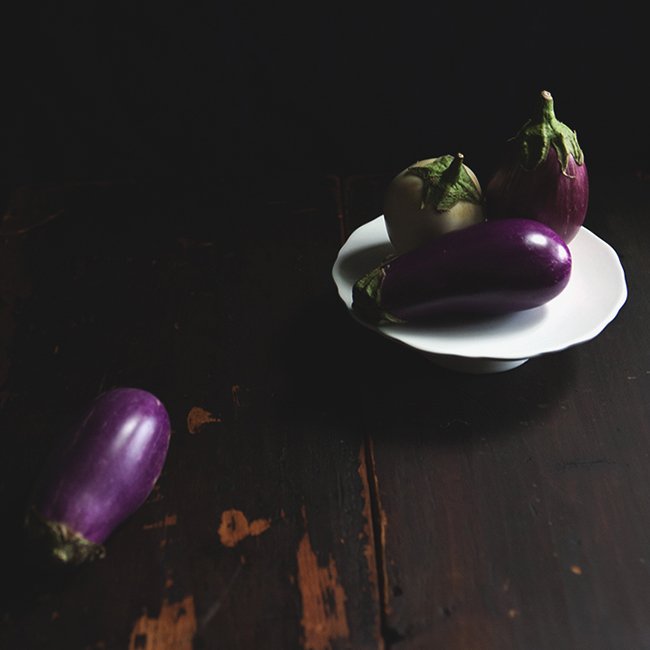
Back at home, I tried to replicate the dish, starting with choice eggplant from the Union Square Greenmarket. I will never tire of the Greenmarket. (But I can’t wait for the damn F train to get fixed so I’m not trudging 12 blocks back to the subway with quickly-wilting plant matter.)

It turns out, there’s no one recipe for caponata. At its base, it’s eggplant cooked until it’s really soft, in a tomato-y sauce. But beyond that, well, just as there are thousands of regional cuisines in Italy, there are endless variations of this classic antipasto.
I stuck with good old pantry staples.

I realize it doesn’t appear wholly appetizing, but please try not to judge it harshly. It does its best. Eggplant just sort of, well, does that wilting thing, where it turns grayish-brown and flaccid, but that doesn’t make it any less lovable. Not to me at least.
And its taste? Well, it’s not the same as what I remember. This caponata didn’t turn out as flavorful or as moist. It’s kind of a different food altogether. Less tang, more… something. I wasn’t sure what to think. But then my friend came over the other night, and we shoveled most of it down. As if there was no tomorrow. I forgot my manners. And I must’ve looked so un-glamorous. But I looked up and saw that she wasn’t noticing, because she was doing the same.

CAPONATA
Serves 6 to 8
From Bon Appetit
Ingredients:
5 Tbsp olive oil
1-1/2 pound eggplant, unpeeled, cut into 1/2 inch cubes
1 medium onion, cubed
4 large garlic cloves, chopped
1 14-1/2 ounce can diced tomatoes with Italian seasonings in juice
3 Tbsp red wine vinegar
2 Tbsp drained capers
1/3 cup chopped fresh basil
Toasted pine nuts
Directions:
Heat oil in heavy large pot over medium heat. Add eggplant, onion, and garlic cloves. Saute until eggplant is soft and brown, about 15 minutes. Add diced tomatoes with juice, then red wine vinegar and capers. Cover and simmer until eggplant and onion are very tender, stirring occasionally, about 12 minutes. Season caponata to taste with salt and pepper. Mix in fresh basil. Transfer caponata to serving bowl. Sprinkle with toasted pine nuts.
Related Posts

Subscribe for New Racipies
Get mental health tips, updates, and resources delivered to your inbox.
Blue Raspberry Rice Krispie Treats



I’m in a blue mood, but that’s a good thing. These Blue Raspberry Rice Krispie Treats were super easy and fun to make. The blue color is so pretty for Easter, but could work for other parties as well. I can’t believe Easter is almost here. This will be our first Easter without family around. We will probably get together with some friends to celebrate. My daughter is looking forward to the Easter Egg Hunt and her basket of treats.

I found these Blue Raspberry Campfire Mallow Bursts at Walmart and had to give them a try. Last year I had found Lemon Meringue ones and made Lemon Meringue Rice Krispie Treats with them. So why not Blue Raspberry Rice Krispie Treats. For added flavor I found Duncan Hines Frosting Creations Flavor Mixes in Blue Raspberry.
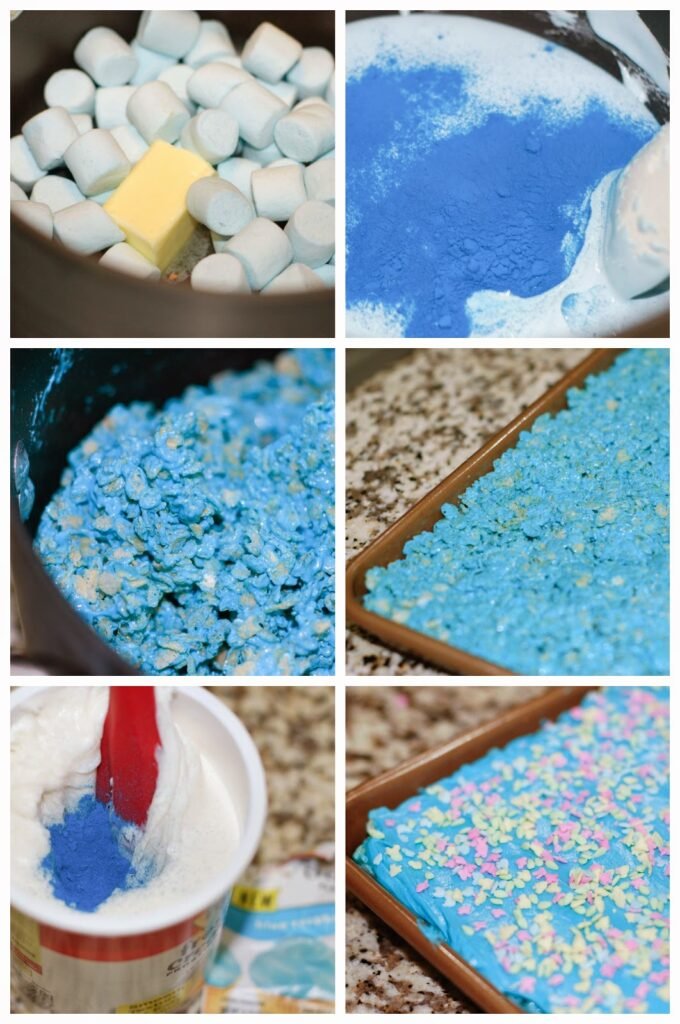
I used one packet of flavoring mix with the cereal mixture and one packet with the frosting starter. So it’s double the blue raspberry flavor. I added some sprinkles for decorations and cut them into squares.

Now if you are feeling a little more creative or looking for something to do with the kids, you can grab some cookie cutters and make different shapes.

I find it easier to cut out the shape first, then frost the treats. For the bunny face, I used mini marshmallows, Wilton candy eyes, and Wilton Cookie Icing in black to decorate. I cut a pink mini marshmallow in half to make the nose. Then I cut another mini marshmallow on the diagonal lengthwise to make the inside of the ears. You just cut, then smoosh and stretch it a little by hand to shape it. I know, so technical, huh? I used black icing to make the whiskers and mouth. I used my cake decorating brush to paint on the lines. You could probably use a toothpick also. Although if you can find black licorice strings, I am sure that would work out better.

What kid doesn’t like a fluffy blue bunny treat? Especially one that turns your tongue blue when you eat it. My son thought it was pretty funny that his tongue was blue.

Or you can just cut out and frost an Easter egg shape and add some sprinkles. Less work and just as cute. Whichever way you choose to decorate your treats, they will all taste the same.
Now I must say, these treats are pretty sweet. They taste like blue raspberry candy. Which is good, but I am not a big candy fan. I prefer some dark chocolate. My daughter loves candy and she couldn’t wait to eat one of these after I was done taking photos. I also gave some to the neighbor’s boys who loved them. These are definitely kid friendly.
Blue Raspberry Rice Krispie Treats
by The Sweet Chick
Prep Time: 15 minutes
Cook Time: 5 minutes
Keywords: no bake dessert snack rice krispies Blue Raspberry Mallow Bursts Duncan Hines Frosting Creations Easter rice krispie treats American spring
Ingredients (24 squares)
For the treats
- 3 tablespoons butter
- 1 bag (8 oz.) Campfire Blue Raspberry Mallow Bursts
- 1 packet Duncan Hines Frosting Creations Blue Raspberry Flavor Mix
- 5 cups crispy rice cereal
For the topping
- 1 container (16 oz.) Duncan Hines Frosting Creations Frosting Starter
- 1 packet Duncan Hines Frosting Creations Blue Raspberry Flavor Mix
Instructions
For the treats
In a large sauce pan, melt butter and marshmallows over low heat. Stir until completely melted.
Remove from heat and add 1 packet of flavor mix. Stir until completely mixed.
Then add the crispy rice cereal. Mix until all is well incorporated.
Then pour the mixture into a greased 9 x 13 pan or a cookie sheet and spread it evenly with a piece of waxed paper.
Place in fridge to cool and set.
For the frosting
Mix the remaining flavor mix packet with the frosting starter according to directions on the container.
Then spread the blue raspberry frosting over the cooled treats and add sprinkles if desired.
Place in fridge until frosting sets, then cut into squares and enjoy.
Related Posts



Subscribe for New Racipies
Get mental health tips, updates, and resources delivered to your inbox.