
Are Pretzels Healthy? – Pros, Cons and Healthy Alternative

Medically reviewed by Christiana George Updated Date: January 6, 2026

Is pretzel with cream cheese your favorite breakfast item? Or, are those crunchy, sweet-salty pretzels your go-to snack? Pretzels are everyone’s guilty pleasure, mine too! But are pretzels healthy?
Pretzels are one of the most delicious snacks, but let me be clear- they are not completely healthy. They have way more salt than you’d expect. They are high in refined carbohydrates as well. However, pretzels have ‘zero’ cholesterol and are lower in calories and saturated fats than other snacks!
Read out below to know why exactly I gave pretzels the tag of a ‘balanced snack’ and suggested some healthy ways to add pretzels to your diet.
Are Pretzels Healthy?
Pretzels are popular snack food items in the US and have been enjoyed since around the 19th century when they were first introduced into German bakeries.
Despite their popularity, you might be surprised to find out that pretzels are not actually all that healthy in themselves.
Here are some reasons why pretzels may or may not stead their place in your grocery basket.
Reasons to Avoid Pretzels
1. They Provide Empty Calories To Your Diet.
A lot of the calories in pretzels come from refined flour and sugar. These are empty calories; they provide your body with very little to no nutrition.
When you consume pretzels, you’re not getting any nutritional value for your body. All you’re getting is a lot of empty calories that can quickly add up and lead to weight gain.
Because the empty calories with lack of fiber (less than 1 gram/ ounce) do not keep you full for a long time; hence, you keep binge eating these salty and sugary snacks repeatedly.
2. They Are High In Sodium
Pretzels also contain a lot of sodium, and too much consumption can lead to high blood pressure, bloating, and a risk factor for heart disease. An average one ounce of hard pretzel contains around 359 mg and a small soft pretzel 340 mg of salt.
Therefore, consuming this much pretzel or even less can contribute to a fair amount of sodium intake of an average adult’s daily nutritional value.
3. Carries Less Nutritional Value.
A pretzel is made up of white flour, water, salt, and yeast. That’s it! There are little to no vitamins, minerals, and just a mere amount of fiber in a pretzel. In fact, a large part of a pretzel’s carbohydrate comes from sugar.
Per ounce of hard pretzels contain 5% protein, 2% magnesium, and 7% iron of your daily value. This amount does not justify its healthiness.
4. Made From Refined Carbs.
Pretzels are also made with refined flour, the main source of refined carbs here. Consuming too much of it can cause a spike in blood sugar levels due to the higher glycemic index. As a result, it can cause cravings and energy crashes.
Refined carbs have been linked to weight gain and an increased risk of obesity. Also, eating too many refined carbs (like pretzels) can increase your risk for heart disease because they’re made with white flour high in simple sugars, damaging the heart muscle.
Reasons to Love Pretzels
While there are many valid reasons to avoid or lower consumption of pretzels, there are a few reasons that make pretzels a better choice than other similar snacks.
1. Low In Saturated Fats.
Saturated fats are the most unhealthy fat type, which increase bad cholesterol and decrease good cholesterol resulting in an increased risk for heart disease. With a saturated fat of only 0.1 – 0.7 gram per ounce serving (for hard pretzels) or pieces (for soft pretzels), pretzels are healthier snacks compared to a bag full of potato chips containing almost 3.1 grams of saturated fat per ounce.
But does this make pretzels any healthier? Not really, because pretzels do not contain any good fats either.
2. No Cholesterol
Both soft and hard pretzels hardly have any cholesterol. While a large size soft (bread) pretzel has 4.3 mg cholesterol at most, hard pretzels have no cholesterol at all. It may sound like a ‘healthy’ sign to eat pretzels limitlessly. However, their high carb and sodium content outweigh this healthy factor.
3. Low Calories
If you compare the calorie of pretzels with other irresistible snacks like potato chips, these knotted German snacks are lower in calories. Although the difference is not significant, it is still acceptable. It can be beneficial for those who follow a strict diet but want too much on some low-calorie snacks in the evening.
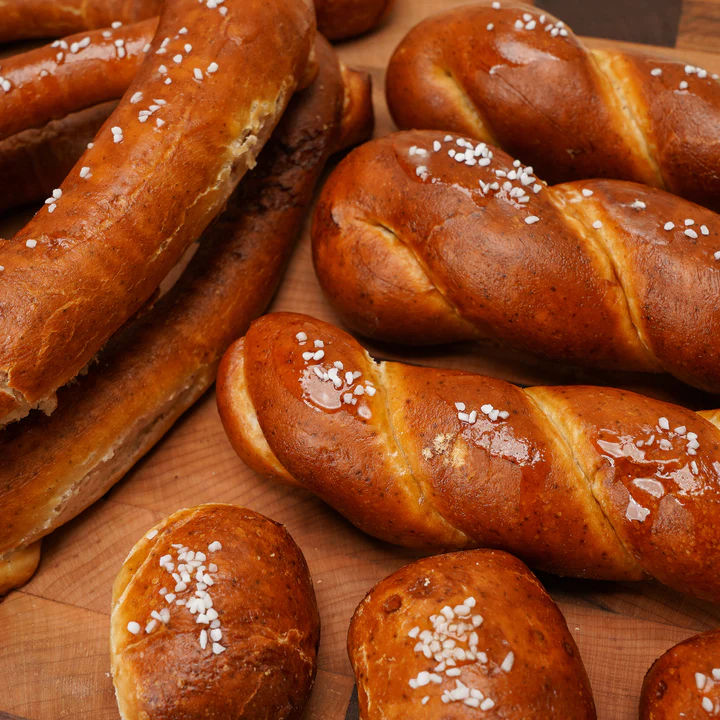
Soft Pretzels vs Hard Pretzels: Which One is Healthier?
Let’s look at the nutritional comparison between soft vs hard pretzels of equal quantity.
| Nutritional Factors | Soft Pretzel 1 small (62 gram) | Hard Pretzel- 10 twists (60 gram) |
| Calories | 210 | 228 |
| Total fat | 1.9 gram | 1.6 gram |
| Saturated fat | 0.4 gram | 0.3 gram |
| Cholesterol | 1.9 mg | 0 mg |
| Sodium | 499.1 mg | 759.6 mg |
| Dietary fiber | 1.1 gram | 1.8 gram |
| Total carbs | 43 gram | 48 gram |
| Sugar | 0.2 gram | 1.7 gram |
| Protein | 5 gram | 6 gram |
| Iron. | 2.4 mg. | 3.1 mg. |
When it comes to pretzels, most people think that the harder, the better. However, this is not always the case when it comes to health.
As we can see from the chart above, while hard pretzels may be low in fat and calories, they are also extremely high in sodium and a tad bit high in total carbs. Soft pretzels, on the other hand, while still being high in salt, are much lower in dietary fiber than their hard counterparts.
And while both types of pretzels are packed with carbohydrates, soft pretzels contain less sugar which means that they do not spike blood sugar levels as quickly as hard ones.
Therefore, which one is healthier? With all these factors considered, soft pretzels seem to be the healthier choice over hard pretzels.
Healthier Alternatives of Pretzels
If you are wondering what to substitute pretzels with, you have several options. Well, I have quite a few healthy alternatives to these salty and glutinous snacks that will not add up extra calories, sodium, or carbs and are rich in fiber and wholesome nutrients (and scrumptious too).
- Air-popped popcorn.
- Baked whole wheat pita chips.
- Oven roasted kale chips.
- Baked tortilla chips and black beans
- Brown rice crackers
- Raw veggies and hummus
- Whole grain crackers
- Homemade vegetable sticks
- Chickpea salad
- Roasted chickpeas
- Canned beans
- Coconut flakes
- Roasted nuts and seeds
- Dry cereal Fruits
- Whole grain Nuts
If you aren’t still convinced to get over pretzels, you can try the better versions of pretzels, which are:
- Unsalted or low-sodium pretzels
- Whole wheat pretzels
Who Should Avoid Pretzels
Although pretzels are not harmful to your health if consumed in moderation, a group of people should switch to the healthy alternatives mentioned above. Because pretzels might not support their system.
- Those with gluten sensitivities or celiac disease should avoid pretzels, as they are made with wheat flour.
- People with high blood pressure may want to limit their intake of pretzels, as they are high in sodium.
- People who are obese can easily fall into the trap of the empty calories of pretzels and overeat them. Because obese people cannot easily satiate their craving for unhealthy carbs, which are in pretzels.
Nonetheless, it is essential to note that the amount and shape of a pretzel can make it more or less unhealthy depending on how much fat and salt is added during the baking process. Smaller-shaped pretzels often contain fewer calories than larger-shaped ones.
FAQs
Are pretzels healthier than chips?
Compared to your traditional potato chips and other packaged chips, pretzels are healthier because they have minimal cholesterol and saturated fat. However, they’re pretty much the same when it comes to nutrition. Both pretzels and chips are high in carbs and low in fiber and protein.
So, what makes pretzels unhealthy? The most obvious reason is that they have a lot of salt – close to half of your daily allowance is found in one small serving of hard pretzels.
Are pretzels healthy for diabetics?
The classic pretzel recipe requires refined carbohydrates in the form of white flour to make the dough. It results in pretzels being high in the glycemic index, which raises blood sugar levels if consumed in uncontrolled proportion. Therefore, these don’t help people with diabetes.
Are pretzels bad for your heart?
Although Pretzels are low in saturated fats, they are high in sodium, which can contribute to heart disease. Additionally, studies have shown that eating too many salty foods can increase your blood pressure, which is a risk factor for heart disease.
Final Thought
So, are pretzels healthy?
Well, pretzels aren’t healthy but won’t harm your health if you control your proportions. However, in most cases should be avoided by extremely health-conscious individuals because they are high in carbs and sodium. Plus, they offer little in the way of nutritional value.
Now whether and how many pretzels you should consume depends on your choice. I recommend that you avoid eating too many pretzels or any other type of salty snack to maintain your health in the long run.
Related Posts



Subscribe for New Racipies
Get mental health tips, updates, and resources delivered to your inbox.
Dark Chocolate Guinness Donuts

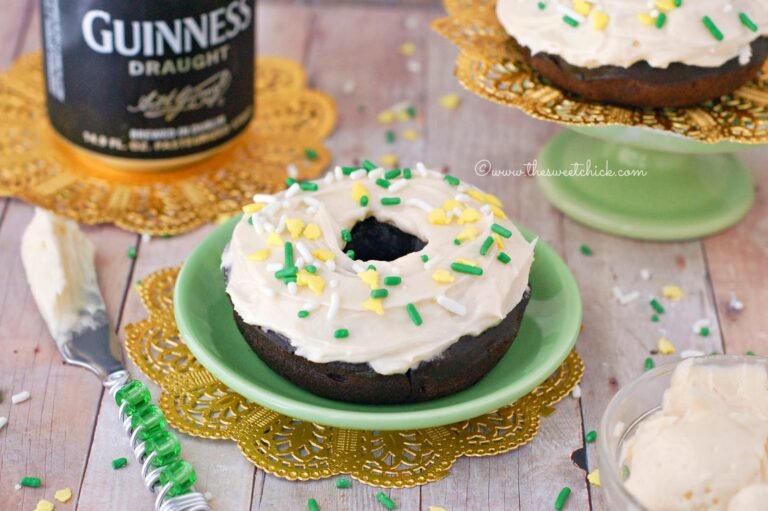
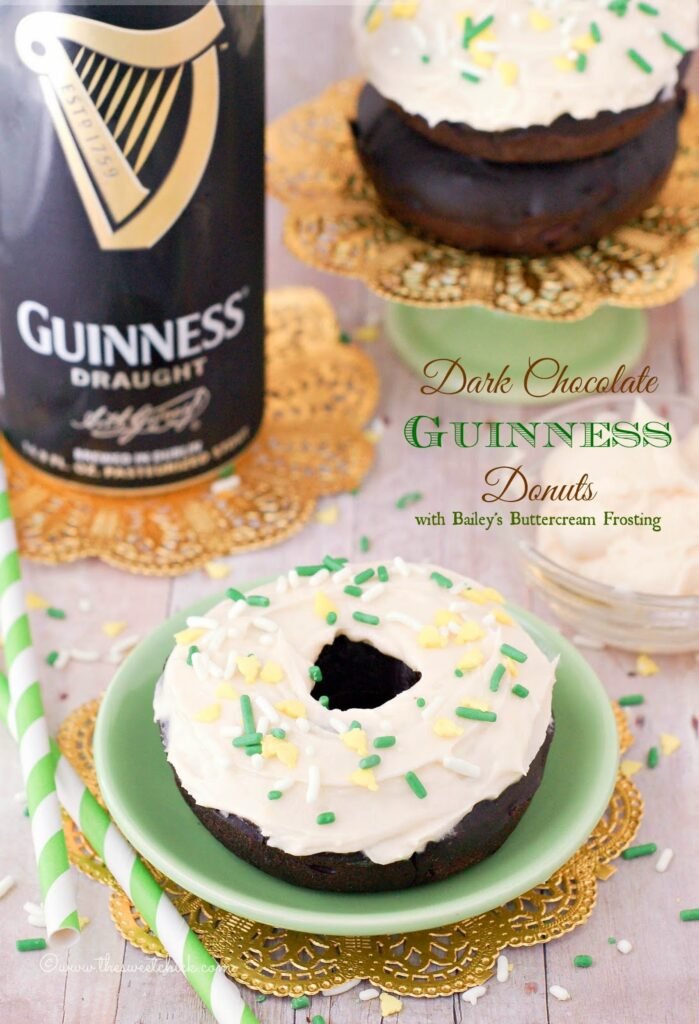
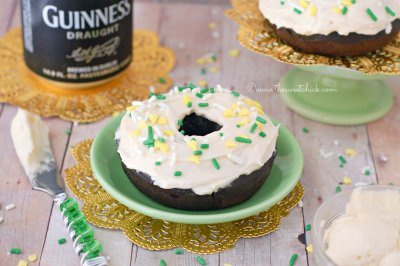
I have found my pot of gold at the end of the rainbow. Inside were these fabulous donuts. They are full of dark chocolate flavors and Guinness beer made even more decadent by being topped with a light, creamy buttercream frosting made with Bailey’s Irish Cream. The combination of all the flavors takes me straight over the rainbow. They are out of this world. I really worked hard on not eating them all myself. Instead, I was kind enough to share these with my neighbors. They are so helpful when it’s time for taste testing.
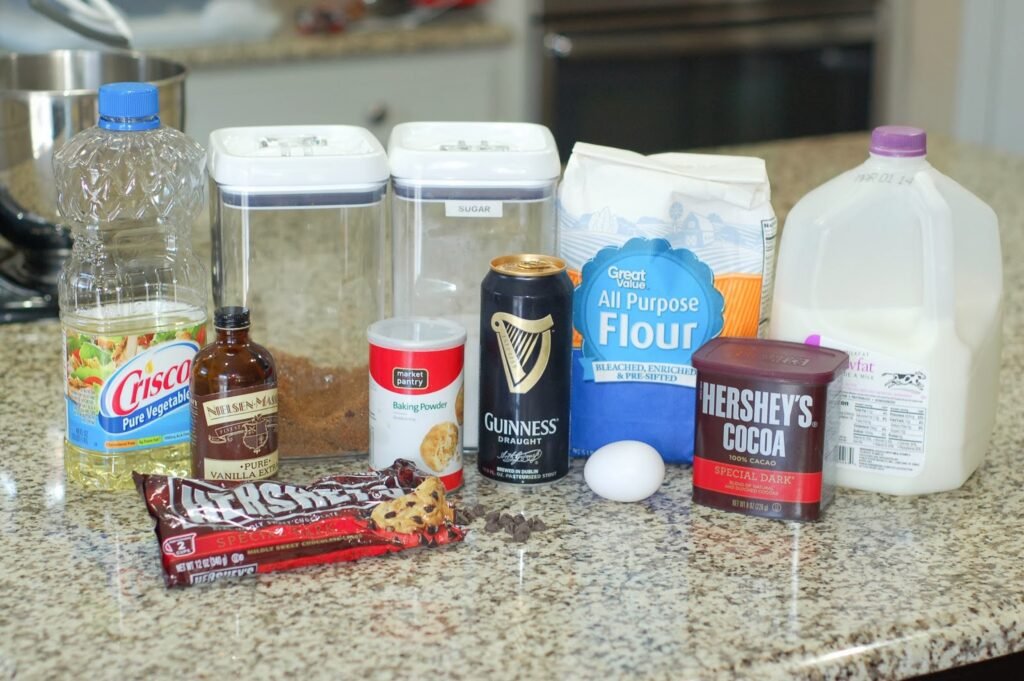
I baked these donuts in the oven using my Wilton donut pans. They are the regular sized donuts, not the mini ones. I actually adapted my recipe for Mini Chocolate Oreo Donuts to make these.

Like the Dark Chocolate Guinness Cookies I made the other day, I used dark brown sugar, dark cocoa, and dark chocolate chips. Dark chocolate and Guinness are just the best of friends.

The frosting was super easy to make and it had the most delicious flavor without being too sweet. It paired well with the moist chocolate donuts.
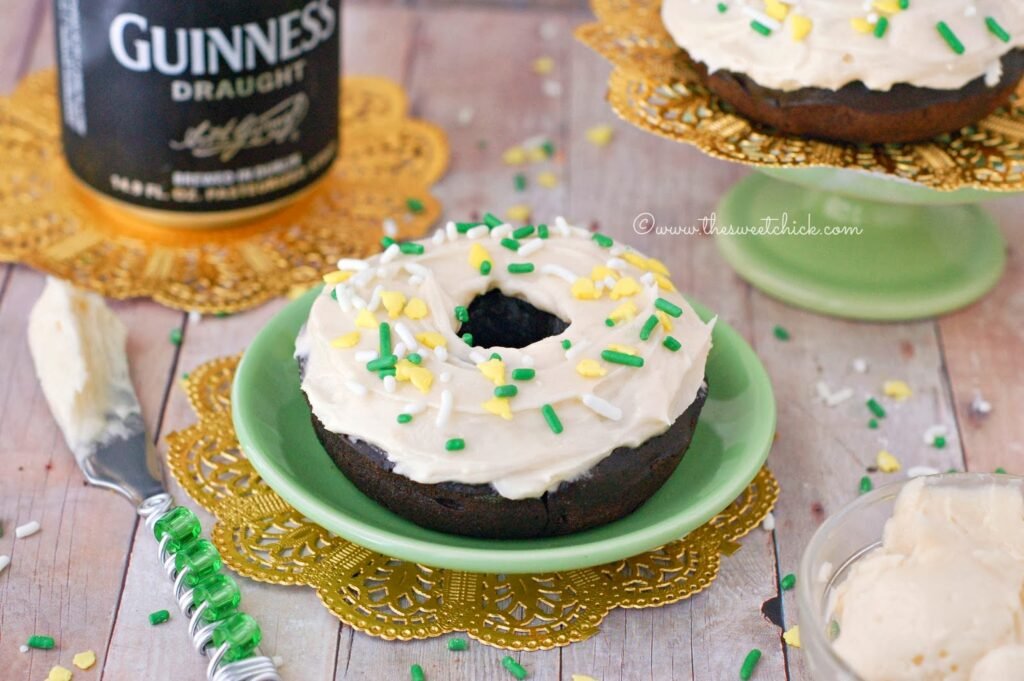
I got a lot of great compliments from my neighbors on these Dark Chocolate Guinness Donuts. The only ones that were not happy were the kids. They couldn’t eat the donuts because of the alcohol content. But I usually sugar up the neighborhood kids with my other treats, so now it was time for the adults to enjoy. What kind of treats are you making for St. Patrick’s Day?
Dark Chocolate Guinness Donuts
by The Sweet Chick
Prep Time: 20 minutes
Cook Time: 5-7 minutes
Keywords: bake dessert snack guinness beer dark chocolate chips dark cocoa Bailey’s Irish Cream St. Patrick’s Day donuts American
Ingredients (14 donuts)
For the donuts
- 1 3/4 cups all purpose flour
- 1/2 cup Hershey’s Special Dark cocoa
- 1/2 cup dark brown sugar
- 1/4 cup granulated sugar
- 1 tablespoon baking powder
- 1 egg, beaten
- 3/4 cup Guinness beer
- 1/2 cup milk
- 1/4 cup vegetable oil
- 1 teaspoon vanilla extract
- 1 cup Hershey’s Special Dark chocolate chips
For the frosting
- 1/2 cup vegetable shortening (Crisco)
- 1/2 cup butter, room temperature
- 3 cups powdered sugar
- 4 tablespoons Bailey’s Irish Cream
- 1 teaspoon vanilla extract
Instructions
For the donuts
Preheat oven to 425° F.
In a stand mixture combine the flour, cocoa, sugars, and baking powder. Mix on low until well blended.
Add egg and beer, mix on low until completely mixed, scraping down sides of bowl as needed.
Then add milk, oil, and vanilla extract and continue mixing until fully incorporated.
Finally, add chocolate chips and mix just until well distributed.
With a spoon or a Ziplock bag with the tip cut off, fill each well of your greased donut pan with the batter. You want to fill it just a slight bit less than flush.
Place pans in the oven and bake for 5-7 minutes or until a toothpick inserted in the center comes out clean.
Remove from the oven and place donuts on a cooling rack and cool completely before adding frosting.
For the frosting
In a stand mixer, cream together the shortening and butter. Then add sugar and mix on low until well blended.
Next add the Bailey’s and vanilla extract. Mix on medium speed until smooth.
Frost each donut with a spatula and add sprinkles if you want.
Note
Donuts can be left at room temperature in an airtight container. I placed mine in the fridge because it was a very hot day here today, but I left them out at room temperature for a while before eating. They taste better at room temperature.
Related Posts



Subscribe for New Racipies
Get mental health tips, updates, and resources delivered to your inbox.