
Can You Eat Hail? Safety Tips and Risks

Medically reviewed by Christiana George Updated Date: January 2, 2026
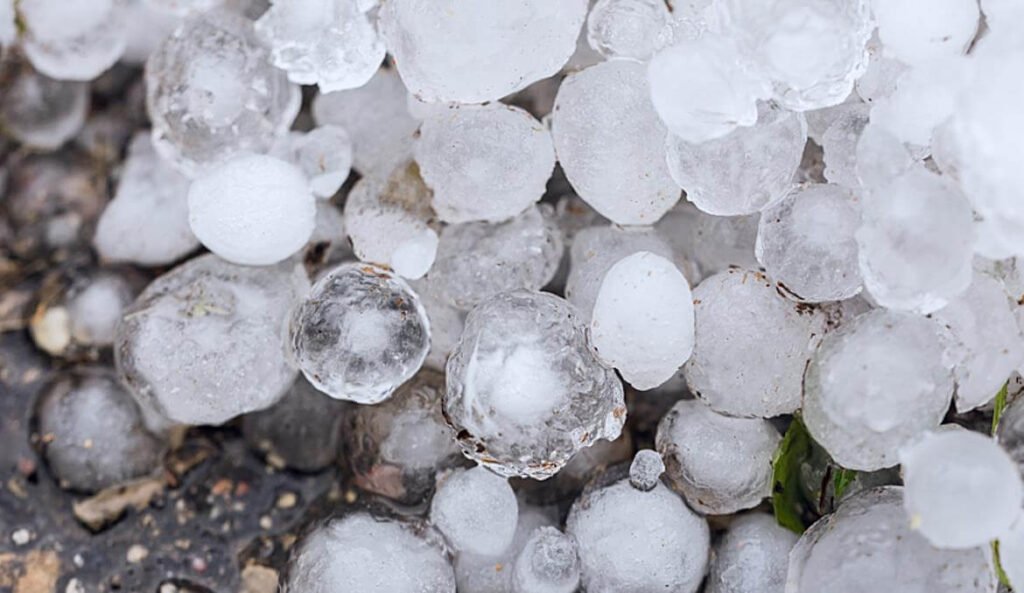
We are no strangers to hail falling during thunderstorms. And some of you might even be tempted to taste those tiny little ice pebbles. But not sure if eating those is possible.
So, here we resolve your question: can you eat hail?
Yes, you can eat hail. No serious harm is likely to happen when hail is consumed. However, it’s not recommended. Because during the formation hail gathers many dirt, bacteria, and pollution from the atmosphere. Often, there might be traces of toxic gas; you never know. So, it’s safer not to eat them.
Not sure yet? Do not sweat! Because, in this guide, we will answer all your questions and explain everything to you! You might not have any more confusion about eating hail after this.
So, just keep scrolling to find out!
Can You Eat Hail?
Hail may fall with violent force, yet it looks like these tiny ice cubes. Simply spreading on the ground. Some of you wonder whether hails are as safe as they look. Also, if it is edible.
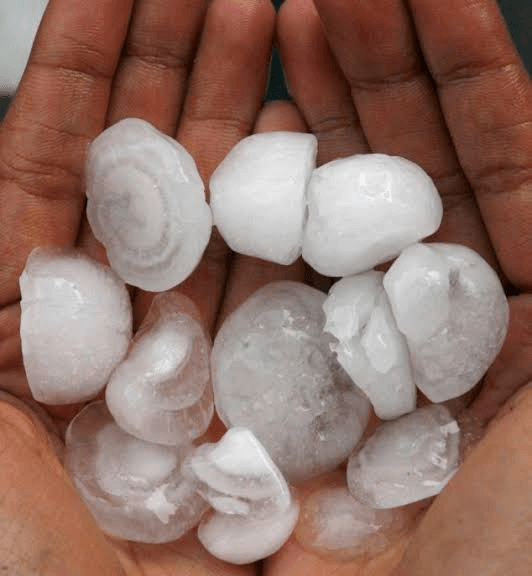
Yes, hail is edible. You can totally eat them.
They are mainly just layers of ice. However, it may contain traces of pollution, dirt, and bacteria.
You are not likely to get sick if you consume it. Nevertheless, it is generally not recommended.
But, wait! Do not go into a panic mode now if you have already eaten hail.
But it will be useful if we take a deeper look into it.
There has been much research conducted surrounding hail. And it has been found that hail possesses thousands of varied chemicals. Also, various strains of bacteria.
It is reported that there are more than 3,000 compounds found in certain hailstones. Along with the 7 species of bacteria.
But these are some rare cases.
And it is no news that the atmosphere is not completely clean. Plus, precipitation can collect pollutants as well as microbes on the way to the ground.
It is also revealed that if the air in a certain area is too toxic. Such as, filled with excess amounts of sulfur dioxide, nitrogen dioxide, as well as carbon monoxide.
Then, in those areas, when hail falls, it may contain a slight amount of all those emission gases. Or at least some traces of these gases. However, not a very big amount to be too dangerous.
Hail most often does not include anything harmful in a very large amount.
Nevertheless, it is still something that you might like to be aware of. At least before putting it into the mouth.
Related Article: Can You Eat Coral? Exploring Edibility, Risks, and Environmental Impact
What Does Hail Taste Like?
Yes, sure, it is just ice falling from the sky. However, we tend to get more concerned about what hail tastes like.
Hail usually tastes similar to your regular ice cubes. However, the taste may vary a little based on what the hail masses during its formation process.
Here, let us give an example so you can understand better. Don’t waters from different sources slightly vary in taste? And it varies based on the various minerals present in it. The same goes for hail.
Most hail tastes similar. Yet there are certain areas where there are higher salt particles in the atmosphere. Or you can even find ash in the air.
These differences in atmosphere slightly change the taste of hail.
Nevertheless, there can be extreme circumstances. Such as when a thunderstorm comes upon in the form of a huge plume of smoke from fire.
Then it may form black hail because of the smoke blending with the vapor in the clouds.
It is a rare case, however. But you can safely assume that it might have a hint of ash-y flavour.
And otherwise, in an area with comparatively cleaner air, hail just tastes like normal ice cubes.
What Is Hail Made of?
Has it ever made you wonder if there are any other components in hail other than ice? Let us take a glance at what hail is made of.
Hail is usually made of the moisture from clouds. These are the clouds that became cold enough to freeze into ice layers.
Though hail is wholly pure ice, it may pick up scraps of chemicals. And hail does it when forming and on its way down.
The original form of hail is the rain itself. And water vapor certainly requires the help of dust particles available in the atmosphere. This is to form rain droplets.
It is very easy for vapor to stick onto dirt, salt crystals, or ash. Rather than sticking to other vapor molecules.
That being it, the rainwater is mostly considered relatively safer to drink. Nonetheless, hail may grow a lot bigger, which leads it to contain more contamination.
Does Hail Contain Salt?
As you know, there is salt in the atmosphere. It might make you wonder if salt is also found in hail.
Yes, salt crystals are found in hail. Along with that, they are found in rain and snow as well. Because they actually help the rain droplets form. This is most generally found near an ocean.
It seems that the salt crystals are very easy for the water vapor to hook onto. And when combined, they develop a droplet. So, yes, there are salt particles in hail.
How Is Hail Formed?
Now you are getting deep into the topic of hail. So, you might be interested to learn how hail is made or formed.
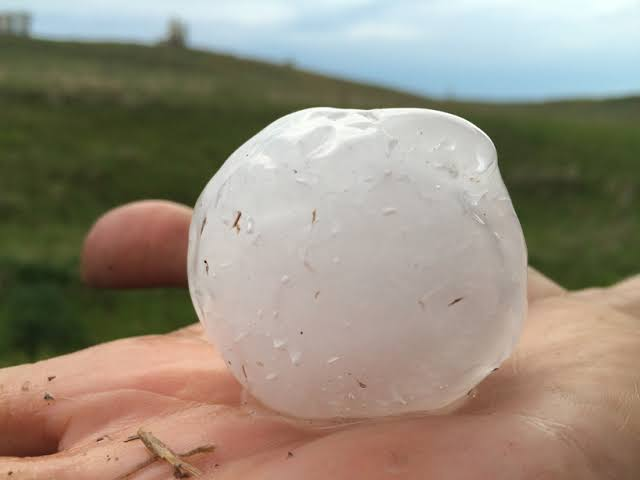
Hail is usually formed when the raindrops freeze. Then they fall, yet are instantly forced back to the clouds by powerful updrafts. It takes place within a thunderstorm cloud.
When the ice is thrust back into the clouds, it clashes with even more moisture. Thus, it amasses in frozen layers.
Strong down and updrafts tend to keep the cycle running for some time. That is still a bigger hailstone that has formed.
The hails would then make their way to the ground. Just when they gather sufficient weight in ice. The weight should be enough to enable gravity to dominate the strength of updrafts.
With super-strong updrafts, the hails can be launched very high. They can even clash and freeze concurrently with the other chunks of hail.
The biggest hail ever reported was estimated to possess a diameter of about 8 inches. That is nearly the exact size of a regular coconut.
Just think about the kind of damage one hailstone of that size can cause. Also, hail that big can even hit the surface at a speed of 100 miles per hour.
So, this is your reason not to try catching it with your tongue. It can cause some serious damage.
Related Article: Can You Eat Triggerfish? Exploring Safe and Delicious Options
Can Hail Kill You?
Most of you might have felt the effect of at least a little piece of hail. Or perhaps you have even nibbled on some.
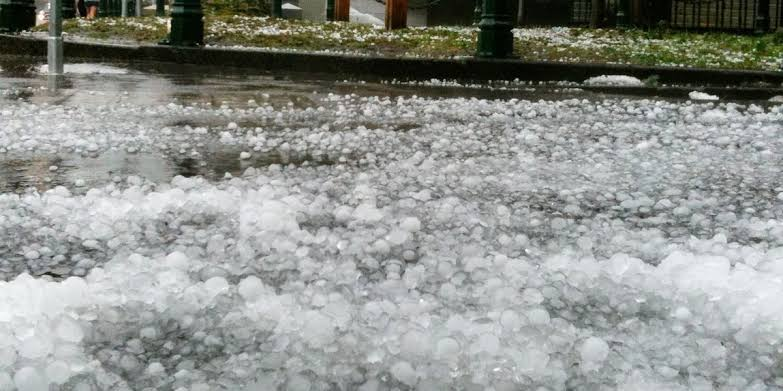
Nevertheless, is it possible for people to really die from it? Or how deadly is hail exactly?
Yes, there are reports of people being killed by falling hail. However, the hail is not likely to kill you if you consume it.
Catastrophes from hail are not common. Because it is very rare where hail to get big enough to inflict actual physical harm.
But it is better if you do not eat it.
Now it’s time to move on to the FAQ section.
FAQs
Is hail healthy to eat?
No, it is not healthy to eat hail. It is reported that there are more than 3,000 compounds found in hailstones. Along with the 7 species of bacteria. Plus, it may gather various dirt elements from the air the time it is forming. And after formation, they never go away. So, it is a bad idea to eat them.
Is hail polluted?
Yes, hail can be polluted. As during the formation of rain forms, it gathers different dirt and chemicals from the atmosphere. Plus, some toxic gases from the air as well. And all of them combined turn into hail, often making it polluted.
Does hail melt?
Yes, hail being ice starts to melt quickly as soon as it tumbles into the ground. Here, the temperatures are above the freezing level. It quite be seen as settling a blow dryer on the ice. Warm temperatures can cause it to melt from the hailstone.
Wrapping Up
Hope we have resolved your question about whether you can eat hail.
Now you know the answer from reading this guide. So from now on, however tempting hail seems, try not to put them in your mouth. It is safer that way. Because, though very rare, you do not know what type of components it is carrying. So, it is better not to risk it and avoid consuming them.
That is all for now. Have an amazing day!
Related Posts






Subscribe for New Racipies
Get mental health tips, updates, and resources delivered to your inbox.
Homemade Yeasted Apple Cider Doughnuts (Fluffy & Fried)

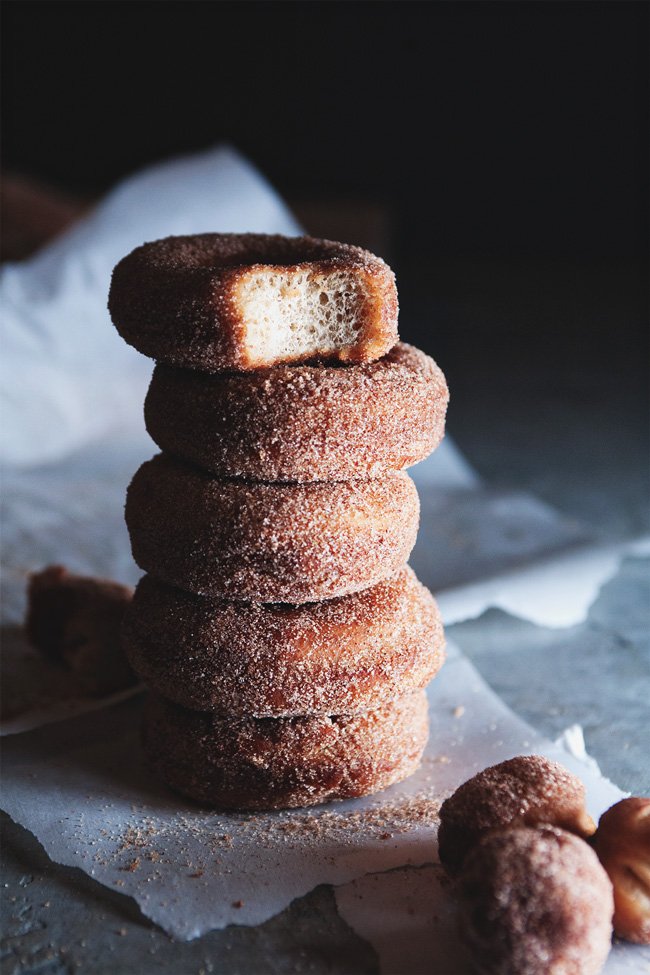
These soft, fluffy yeasted apple cider doughnuts are the perfect autumn treat. Infused with fresh apple cider and rolled in cinnamon sugar, this recipe brings the best of the farmers’ market right to your kitchen.
Capturing the Flavors of Fall
The last couple of weeks: Full of visitors, mostly conversation, and good food too. The three always happen to coincide, don’t they?
Earnest walks, feet pounding pavement to the tune of miles of city blocks, great big swathes of condensation disappearing into the air as we talk, scarves up to our ears, gloved hands stuffed into pockets. The cold is omnipotent and inescapable.
The couch served double-duty as a bed, throws unfolded and refolded, and finally heaped together over the rip in the couch. Towels bunched up on the rack, foreign toothbrushes and contacts, and creams on the counter.
Squished together like sardines around the table. Plates and bowls cycled over and over. Coffee and coffee and coffee and coffee. The twice-daily sauna turns us into captives of the heat, shedding layers as if on cue as the radiator whistles on.

And then there was Thanksgiving…
And then there was Thanksgiving. I can’t even think about it. So much food. My role as the preparer of brussels sprouts, though, thankfully, not much else. Watching as the guys prepared the turkey, standing on tiptoes with my cameraphone poised above the headless carcass.
It was salted, backbone cut out, pushed down hard until its breastbone cracked. Piercing it with a meat thermometer a million and one times, unsure why its internal body temperature kept vacillating. As a result, dry white meat but done in 90 minutes.
For dessert, a pumpkin pie. There was also homemade cinnamon ice cream—thanks, Alanna, for implanting the idea in my mind! It tasted just like Cinnamon Toast Crunch.
Discovering the Perfect Apple Cider Doughnut
The return to normalcy. Decompression. Time once again ours. Sleeping in and in and in. Leftovers. Sitting on the couch, which was once again a couch, and streaming Breaking Bad until Walt started getting annoying.
Christmas tree shops set up on street corners, and wreaths, big ones and decorated ones and plain ones too. I cracked open my computer for the first time in what felt like weeks. Black Friday emails are days late, but overflowing my inbox nonetheless. I also ate my first apple cider doughnut.
And then I had to make them.
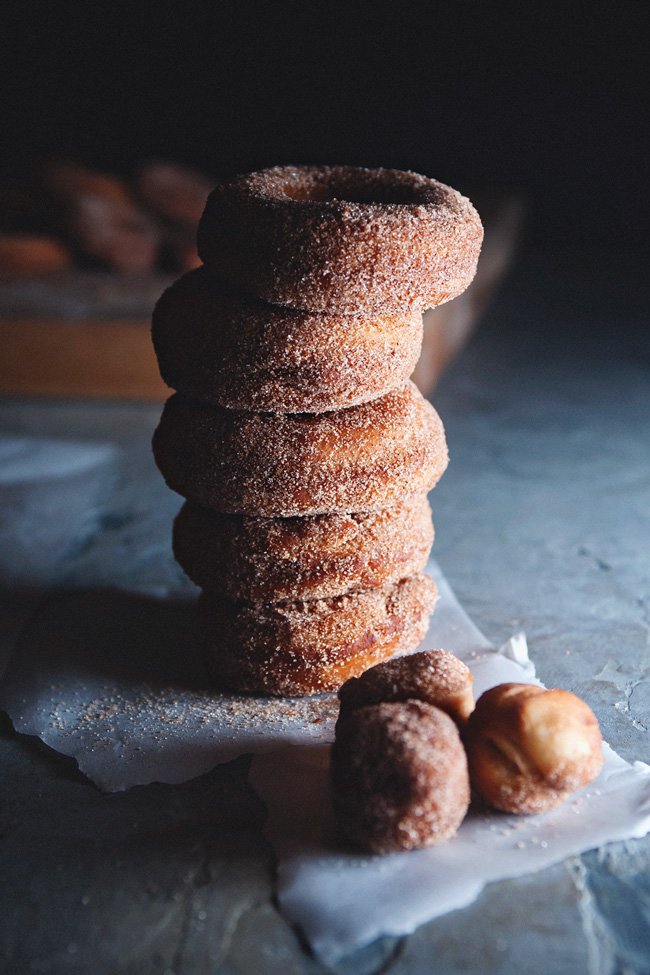
Because what I ate was cushiony and soft, full of air pockets, a real treat for gluten-vores. It was also heady with autumn spices and dusted with coarse sugar, really underscoring the apple cider flavor just like they should. In short, it was completely unlike anything I’d expected, and it was amazing.
Yeast vs. Cake Doughnuts: Why Yeast Wins
I’m not usually a fan of cake doughnuts. In fact, I’m not sure the doughnut I had on Saturday was a cake doughnut – it was far too luscious and fluffy. But I love anything apple cider flavored, so I decided to make my own version with yeast.
This recipe is close. It’s not fluffy enough in my opinion, but then again, I wonder if the doughnut of my dreams is exactly that: not real. Nevertheless, there’s something really exciting about making doughnuts at home (another one of those look-what-I-made! foods), and these taste delicious when they’re fresh out of the, um, fryer?
Is that what you call your pot when you’re using it for deep-frying? Not every person is ready to spend a lot of money at an online casino, and it is okay. For those of you who want to play slot machines with a small deposit, our friends from Fancasinos.com have created a rating of minimum deposit casinos in 2023. People are able to play there with $10 and get a bonus.
Tips for Frying Homemade Doughnuts
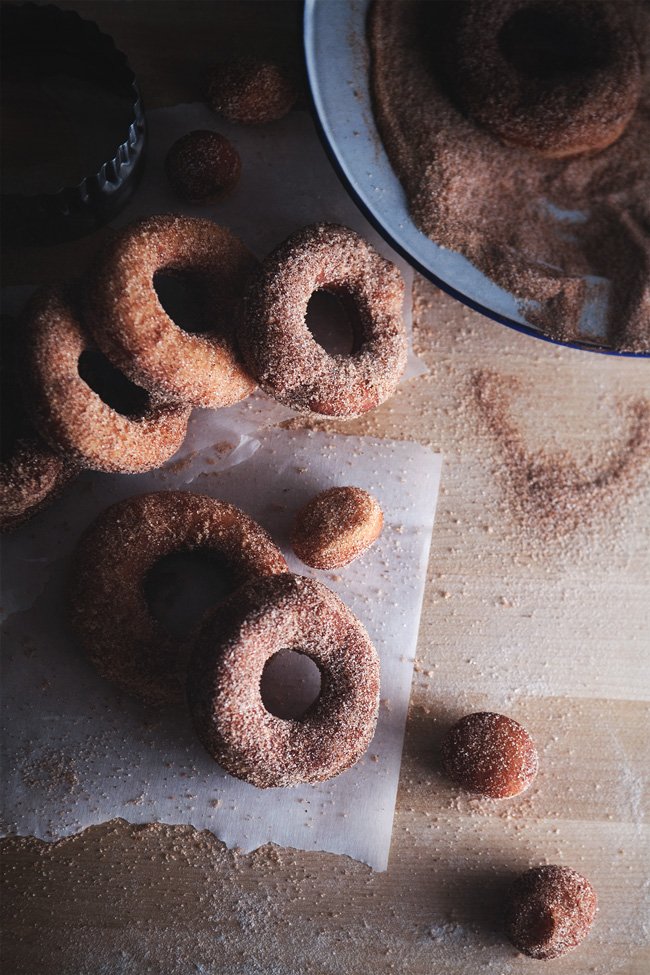
Monitor the Heat: Use a candy thermometer to keep oil at 360°F.
Don’t Overcrowd: Fry 2-3 doughnuts at a time to maintain oil temperature.
The Flip: Use chopsticks for an easy, gentle flip.
YEASTED APPLE CIDER DOUGHNUTS
Makes 12 doughnuts plus 12+ doughnut holes
Adapted from Chow
Ingredients:
- 2-1/2 cups all-purpose flour, plus extra for rolling out
- 1-1/2 tsp ground cinnamon
- 1/2 tsp freshly grated nutmeg
- 1/2 tsp fine salt
- 2-1/4 tsp active dry yeast
- 1/4 cup plus 1 tsp granulated sugar
- 3/4 cup apple cider
- 2 large egg yolks
- 1 Tsp vegetable oil
- 1 tsp vanilla extract
- 1 Tsp unsalted butter, room temperature
Neutral oil for frying
1/2 cup sugar (optional)
1 Tbsp ground cinnamon (optional)
Directions:
Whisk the flour, cinnamon, nutmeg, and salt in a large bowl to combine, and set aside.
In a medium bowl, mix the yeast and 1 tsp of sugar. Heat 1/2 cup of the apple cider until it’s warm but not hot, and add it to the yeast mixture. Stir to combine. Let it sit until it’s foamy, about 5 minutes.
Then, add the remaining 1/4 cup sugar, remaining 1/4 cup apple cider, egg yolks, oil, and vanilla and whisk to combine. Add this mixture to the flour mixture and stir with a wooden spoon until the dough comes together and begins to form a ball.
Transfer the dough to a lightly floured work surface. Scatter the butter pieces over the dough and knead until the butter is fully incorporated and the dough is smooth and elastic, about 6 to 8 minutes. You might need to add up to 1/4 cup of additional flour to keep the dough from being too sticky.
Oil the sides of a large bowl. Form the dough into a ball, and place it in, turning to coat. Cover the bowl and let the dough rise in a warm place until doubled in size, about 2 hours.
Line a baking sheet with parchment paper. Punch down the dough, transfer it to a lightly floured work surface, and roll it out until it’s about 1/2 inch thick. Using a 3-inch round cutter, stamp out as many dough rounds as you can.
Use a 1-inch round cutter to make the inner hole (or, in my case, an icing tip that was about 1.5″ in diameter) and place the doughnuts and doughnut holes on the prepared baking sheet. Gather the dough scraps and repeat.
Discard any remaining dough scraps. Cover the doughnuts and let them proof until they’re about 3/4 inches in height, 30 minutes to an hour.
Fill a heavy-bottomed pot with about 2 inches of neutral oil. Clap a candy thermometer on the side. Heat the oil on medium heat until it reaches 360°F.
It should take a little while, so in the meantime, prepare a rack where the doughnuts will drain by laying over it a few sheets of paper towels. If you’re planning on topping the doughnuts, prepare the cinnamon sugar in a large plate and set it close by.
Once the oil is ready, add the first doughnut. Fry until golden brown, about 30 seconds, then flip it over (I used chopsticks). Add the second doughnut and repeat. Move the first one to the rack when it’s ready, and continue frying the rest.
I was able to balance frying three at a time. Once the doughnut has cooled a little, dip it in the cinnamon sugar until it’s generously covered. Move on to the doughnut holes.
Related Posts






Subscribe for New Racipies
Get mental health tips, updates, and resources delivered to your inbox.