
Are Cranberries Acidic? Cranberries and Acid Reflux

Medically reviewed by Aneeza Pervez Updated Date: January 7, 2026
Cranberries, known for their tart flavor and vibrant red color, are often enjoyed as juices, sauces, dried snacks, and in baked goods. While cranberries are packed with nutrients and offer numerous health benefits, their acidity raises concerns for individuals with acid reflux or GERD (gastroesophageal reflux disease). Understanding the acidity of cranberries and how they impact acid reflux is crucial for incorporating them safely into a diet.
In this article, we’ll explore whether cranberries are acidic, how they affect acid reflux, and tips for consuming them without discomfort.
Nutritional Profile of Cranberries
Cranberries are low in calories and rich in essential vitamins, minerals, and antioxidants. Here’s what you get in a 1-cup serving (about 100 grams) of fresh cranberries:
- Calories: 46
- Carbohydrates: 12 grams (mostly natural sugars)
- Fiber: 4 grams, supporting digestion and gut health.
- Vitamin C: 22% of the daily recommended intake, boosting immunity and skin health.
- Vitamin E: An antioxidant that protects cells from damage.
- Manganese: Supports bone health and metabolism.
- Polyphenols: Potent antioxidants that help combat inflammation.
Despite their health benefits, cranberries’ acidity can pose a challenge for those with sensitive stomachs.
Understanding the Acidity of Cranberries
Are Cranberries Acidic or Alkaline?
According to the research, cranberries are highly acidic, with a pH ranging from 2.3 to 2.5. This places them among the most acidic fruits, comparable to lemons and limes.
Their acidity is due to the presence of organic acids like citric acid and malic acid, which give cranberries their signature tartness.
How Cranberries’ Acidity Affects the Body
While the acidity of cranberries contributes to their antimicrobial properties and ability to support urinary tract health, it may irritate the stomach lining or esophagus in individuals prone to acid reflux.
Cranberries and Acid Reflux
Do Cranberries Trigger Acid Reflux?
Cranberries, due to their high acidity, are a potential trigger for acid reflux and GERD symptoms. Consuming cranberries, especially in large amounts or as juice, may lead to heartburn, chest discomfort, and a sour taste in the mouth.
Why Cranberries May Worsen Acid Reflux?
- High Acidity: Cranberries can increase stomach acid production, which may lead to acid reflux symptoms.
- Added Sugars in Cranberry Products: Sweetened cranberry juices or dried cranberries often contain added sugars, which can exacerbate reflux symptoms.
- Concentrated Forms: Cranberry juice and extracts are more acidic than fresh or dried cranberries, making them more likely to irritate the digestive system.
Related to Read: Is Watermelon Juice Acidic?
Health Benefits of Cranberries for Digestive and Overall Health
Despite their acidity, cranberries offer numerous health benefits when consumed in moderation:
- Supports Urinary Tract Health: Cranberries contain compounds called proanthocyanidins, which help prevent bacteria from adhering to the urinary tract lining.
- Rich in Antioxidants: Protects cells from damage caused by free radicals.
- Boosts Immunity: High levels of vitamin C strengthen the immune system.
- Promotes Heart Health: Polyphenols in cranberries may improve cholesterol levels and reduce blood pressure.
- Aids in Gut Health: Cranberries contain fiber, which supports healthy digestion and regular bowel movements.
How to Safely Consume Cranberries with Acid Reflux?
If you enjoy cranberries but are concerned about acid reflux, follow these tips to minimize discomfort:
Choose Fresh or Dried Cranberries
Fresh or unsweetened dried cranberries are less likely to cause reflux than highly concentrated cranberry juices or sauces.
Dilute Cranberry Juice
Mix cranberry juice with water or an alkaline beverage like almond milk to reduce its acidity before drinking.
Pair with Low-Acid Foods
Combine cranberries with alkaline or neutral foods, such as oatmeal, leafy greens, or yogurt, to balance the overall meal acidity.
Opt for Smaller Portions
Stick to small servings of cranberries—about 1/4 to 1/2 cup per meal—to avoid overloading your stomach with acidic content.
Avoid Consuming Cranberries on an Empty Stomach
Eating cranberries as part of a meal can buffer their acidity and reduce the likelihood of acid reflux.
Cranberry Alternatives for Acid Reflux Sufferers
If cranberries consistently trigger reflux symptoms, consider these less acidic alternatives:
- Bananas: Alkaline and gentle on the stomach.
- Melons: Hydrating and low in acid.
- Papaya: Contains digestive enzymes and is low in acidity.
- Blueberries: Less acidic than cranberries and rich in antioxidants.
Author Tip: 7 Kinds of Foods to Avoid with GERD
Cranberry Recipes for Reflux-Friendly Diets
Spinach and Cranberry Salad
- Ingredients: Fresh spinach, a handful of dried cranberries, sliced almonds, and a light olive oil dressing.
- Preparation: Toss the ingredients for a nutritious, low-acid meal.
Cranberry Oatmeal
- Ingredients: Cooked oatmeal, a sprinkle of dried cranberries, and a drizzle of honey.
- Preparation: Add cranberries to your oatmeal for a fiber-rich breakfast.
Diluted Cranberry Juice
- Ingredients: 1 part cranberry juice, 2 parts water or almond milk.
- Preparation: Mix and serve over ice for a milder, reflux-friendly beverage.
Tips for Managing Acid Reflux
Incorporating cranberries into your diet is possible with careful moderation, but managing acid reflux often requires additional lifestyle changes:
- Eat Smaller Meals: Large meals can increase stomach pressure and worsen reflux symptoms.
- Stay Upright After Eating: Wait at least 2–3 hours before lying down to prevent acid backflow.
- Avoid Common Triggers: Limit spicy, fried, or highly acidic foods like citrus and tomatoes.
- Elevate Your Bed: Use a wedge pillow or elevate the head of your bed to reduce nighttime reflux.
- Drink Plenty of Water: Staying hydrated helps dilute stomach acid, reducing reflux risk.
Author Tip: 7-Day Meal Plan For Gastritis
Conclusion
Cranberries are highly acidic and can be a potential trigger for acid reflux in some individuals. While they offer impressive health benefits, such as supporting urinary tract health and boosting immunity, their acidity should be managed carefully for those prone to reflux.
By consuming cranberries in moderation, diluting juices, and pairing them with low-acid foods, you can enjoy their nutritional benefits without discomfort.
FAQs
Are cranberries acidic or alkaline?
Cranberries are highly acidic, with a pH range of 2.3 to 2.5.
Can cranberries trigger acid reflux?
Yes, their high acidity can trigger acid reflux symptoms, especially if consumed in large amounts or as concentrated juice.
How can I reduce the acidity of cranberries?
Dilute cranberry juice with water, pair cranberries with low-acid foods, or consume them in small portions.
Are dried cranberries less acidic than fresh ones?
Dried cranberries are slightly less acidic but may contain added sugars, which can still trigger reflux symptoms.
What are good alternatives to cranberries for acid reflux sufferers?
Bananas, melons, papaya, and blueberries are low-acid fruits that can replace cranberries in a reflux-friendly diet.
Related Posts



Subscribe for New Racipies
Get mental health tips, updates, and resources delivered to your inbox.
Salted Pumpkin Caramels

One of my biggest motives for food blogging is to fulfill these long-built-up desires to make foods I’ve never made before. What I mean is, it, the blog that is, and wanting to keep it reasonably interesting, becomes the impetus to try new things.
Take marshmallows for instance. Oh my gosh, I’ve been wanting to make them for years. Years! But what compelled me to finally go for it was this, my little online space, and wanting to share the results with all of you.
Which leads me to these caramels. Do you know how intimidating candy-making has always seemed to me? What with the scalding, spattering liquid, and the weird chemical properties of sugar that make it do wacky things at high temperatures, and the fact that I didn’t have a candy thermometer, it seemed too daunting.
But I did it. It may have taken two tries, but I did it. (I was really hoping it wouldn’t take three.)

There’s nothing that can quite prepare you for the execution of caramel-making. I mean, I know it’s not as exciting as sky diving, nor as important as, I don’t know, heart surgery or hostage negotiation, but the thrill you get out of it can be just as exhilarating. Should I switch from second-person to first? I don’t think many people would describe caramel-making as exhilarating, haha.
Let’s stick with second.
You start off with a huge vat of disparate ingredients, that you stir, stir, stir. It begins to foam and hiss, jump up and spatter onto the sides of the pot. And all the while, it’s slowly changing color, changing in aroma. Reaching bona fide caramel takes awhile, but you know you’re on to something when you begin to recognize the smell, and when it hits you full in the face, it’s as heavenly as it is familiar. You’ve smelled it before. It’s caramel.
It’s so affirming, the feeling that you’ve created something, like really created something, out of scratch, out of the simplest of ingredients. I felt this way the first time I made chocolate chip cookies successfully (we’ve all overbaked them, admit it!), the first time a loaf of yeasted bread came out of the oven with actual air pockets in it. Cooking and baking are incredibly positive experiences for me.

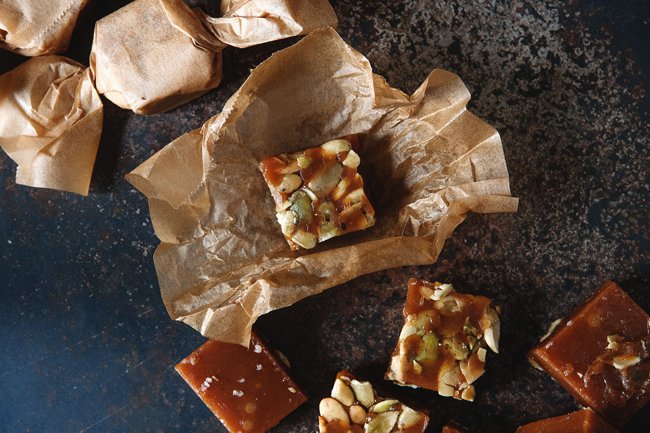
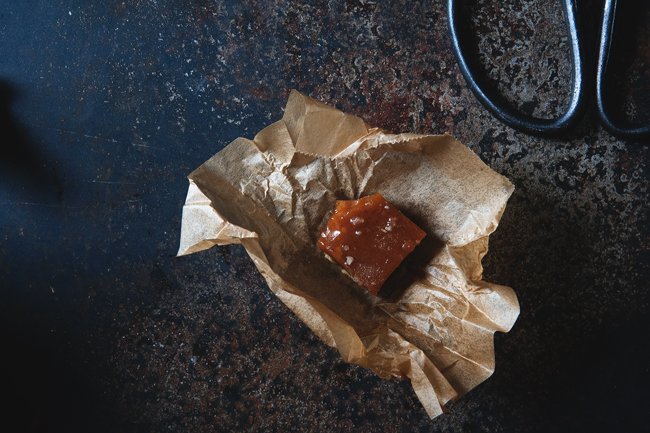
But before I get too ahead of myself, waxing poetic on the spiritual aspects of caramel-making, I should tell you, I don’t think mine came out quite right. They’re a bit too hard, so that you feel like you’re getting a jaw workout chewing on them. But they’re delicious nonetheless, with the taste of the pumpkin really complementing the caramel perfectly. Add to that roasted pumpkin seeds and the final flourish of sea salt, these candies are not cloyingly sweet at all. But they are perfectly suited for the season, or rather, the amalgam of two seasons, because we are at a crossroads right now, are we not?
On my first try, the hot sugar and cream mixture wound up turning into toffee, so at least I managed to avoid doing that again. The failure also taught me how important it is to calibrate your candy thermometer, because a couple degrees can make a huge difference. Mine is apparently off by four degrees, meaning it registers the temperature of boiling water as 216 degrees Fahrenheit rather than 212.
If you do decide to make these—and you should because they’re wonderful—I hope you feel as triumphant as I did, even if it’s your 87th time making caramel. And then give them away as fast as possible, because what’s a person to do with 81 pieces?!

SALTED PUMPKIN CARAMELS
From Food52
Makes 81 1-inch caramels
Ingredients:
- 3/4 to 1 cup roasted pumpkin seeds
- 1-1/2 cups heavy cream
- 2/3 cup pumpkin puree
- 1 tsp pumpkin pie spice (1/2 tsp cinnamon, 1/4 tsp ground ginger, 1/4 tsp nutmeg, pinch allspice)
- 2 cups white sugar
- 1/2 cup light corn syrup
- 1/3 cup maple syrup
- 1/4 cup water
- 4 Tbsp unsalted butter, cut in chunks
- 1 tsp lemon juice
- 3/4 tsp sea salt
Tools:
Candy thermometer
Directions
Line the bottom and the sides of a 9-inch square baking pan with parchment paper. Butter the parchment on all the sides. Evenly spread out the pumpkin seeds on the bottom of the pan.
In a saucepan, combine heavy cream, pumpkin puree and spices. You want the mixture to be warm and foamy, but not boiling. Set aside.
In a second heavy bottomed pan, with sides at least 4 inches high, combine the sugar, both syrups, and water. Stir until the sugars are melted, Then let it boil until it reaches 244 degrees F. Then very carefully add the cream and pumpkin mixture, and slowly bring this mixture to 240 degrees F as registered on a candy thermometer. This will take awhile (around 30 minutes), but watch it and stir occasionally. You’ll want to stir more frequently once it hits 230 degrees to keep it from burning on the bottom of the pan.
As soon as it reaches 240 degrees, pull it off the heat and stir in the butter and lemon juice. Stir vigorously so that the butter is fully incorporated.
Pour the mixture into the prepared pan. Let cool 30 minutes, then sprinkle the salt on top. Let the caramels fully set (at least 2 hours) before cutting them into 1-inch squares. Wrap in wax paper.
Related Posts




Subscribe for New Racipies
Get mental health tips, updates, and resources delivered to your inbox.