
Are Quesadillas Healthy? [5 Surprising Reasons]

Medically reviewed by Christiana George Updated Date: January 5, 2026
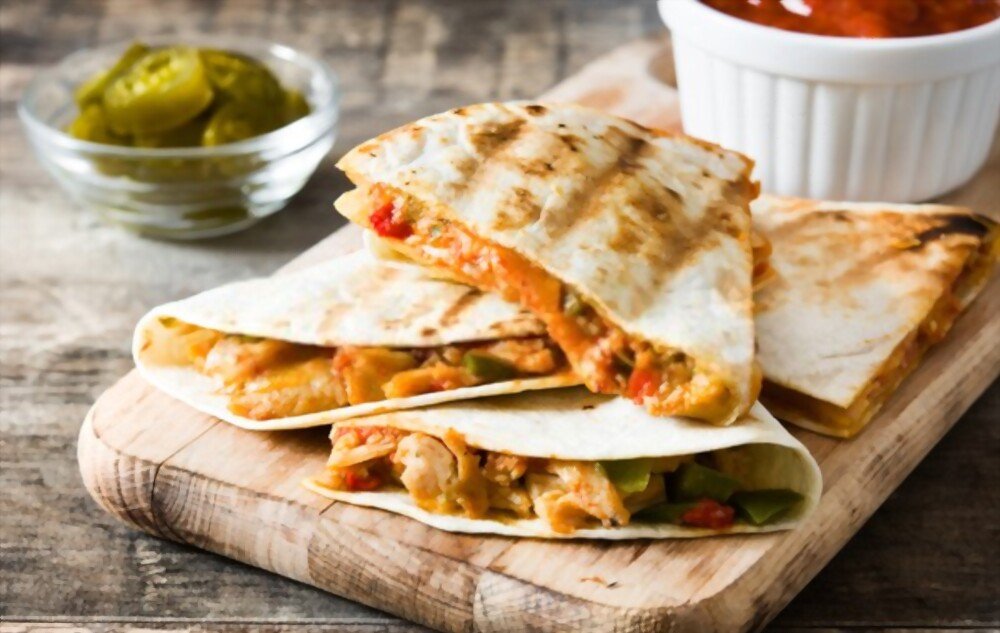
A quesadilla is a mouthwatering Mexican dish with tasty stuffing wrapped in a soft tortilla shell. It’s found in most restaurants and easy to make at home as well. It’s understandably a popular appetizer.
But, you might be wondering, are quesadillas healthy?
The simple answer is, yes. Quesadillas are healthy if you make them with healthy elements. It’s the ingredients like flour tortilla and cheddar cheese that make them unhealthy in the first place. So, choose all the healthy goodness to stuff inside it instead of the unhealthy ingredients.
However, there’s a reason they’re considered unhealthy by most people. Keep reading as we covered all about the benefits and risks of eating quesadillas in this article.
Are Quesadillas Healthy For You?
Yes, quesadillas are healthy for you. They contain veggies, proteins, and some fats too. However, you need to make the choice to make them healthy with the right ingredients. So, unless you go wild on the fat and sugar loaded condiments, it should be fine.
No matter what kind of quesadillas you like, they’re all the same at the core. So, unsurprisingly, the health factors remain more or less the same for a regular quesadilla.
Related Article: Is Mac and Cheese Healthy? Calories, Nutrition, and a Awesome Recipe
Nutrient Values Of Quesadillas
Here’s the nutritional content of a regular quesadilla (180g) found in restaurants –
| Nutrients | Amount |
| Calories | 528 |
| Total Carbohydrates | 43g |
| Total Fats | 27g |
| Saturated Fats | 11g |
| Cholesterol | 66mg |
| Protein | 27g |
| Sodium | 1.34g |
| Potassium | 329mg |
| Calcium | 269mg |
These macro and micronutrients all come from different kinds of food which compose a quesadilla.
Now let’s talk about the elements of quesadilla. The following are the elements which make up a quesadilla-
The Tortilla
The tortilla is what wraps up all of your ingredients and completes the quesadilla. They’re rich in carbs and fiber.
Corn and flour tortillas are the most preferred options among the tortillas.
The Stuffing
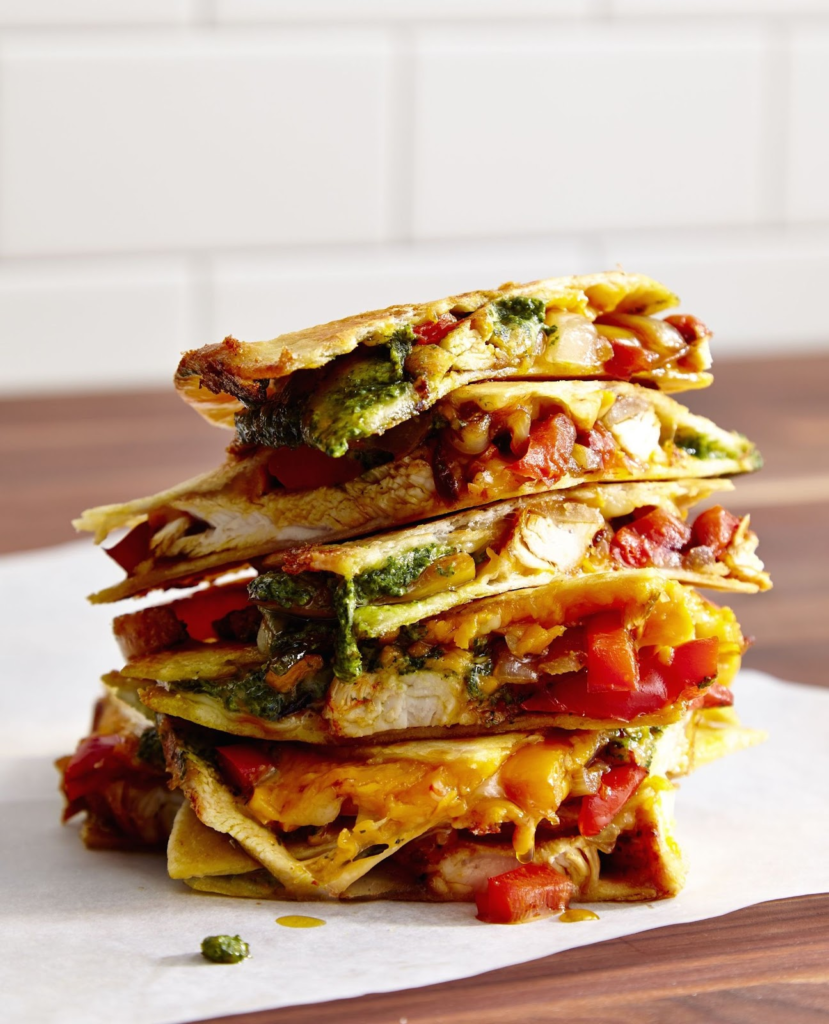
There is a wide range of options you can choose from to fill up your quesadilla.
Carbohydrates
Most of the carbs in a quesadilla come from the tortilla. However, some of it also comes from vegetables. You can put in tomatoes, onions, spinach, or any vegetable you prefer.
Fats
You can’t just make a quesadilla without any cheese in it. Cheese is full of fats, saturated or unsaturated depending on what cheese it is. It makes up most of the fat content in your quesadilla.
Proteins
Your quesadilla protein can come from a variety of sources. Chicken, beef and sausages are the most popular meat options. You can go for beans or soy if you don’t eat meat.
Now that you know about the contents of quesadillas, let’s see if you should be eating it.
Related Article: Are Fish Sticks Healthy – 10 Healthy And Unhealthy Facts
5 Quesadillas Health Benefits
The versatility of the stuffings make it easier to get a lot of nutritional benefits from quesadillas. These are some health benefits you can get from your quesadilla-
Full of Fiber
Tortillas are made of wheat, either processed or whole grain. And, that makes them high in fiber. Fiber is really important for your gut health. It prevents constipation and softens your stool.
Keeps You Full
Quesadillas are packed with macronutrients. It makes a hearty meal that can keep you full longer. Which means, less cravings and less calories.
Contains a Lot of Calcium
Cheese is an integral part of quesadillas. And, it’s full of calcium. Calcium is essential for your bone health. It also helps your heart and muscles function properly.
Packed with Protein
You can’t just have a quesadilla without any protein. You can put eggs, chicken, beans- anything at all. It can have protein to meet your daily demand. That also makes quesadillas good for bulking.
Filled with Vegetables
Vegetables are your best friend when it comes to healthiness. And since quesadillas are filled with vegetables, they’re full of nutrients. The nutrients can range from vitamin C to minerals essential for your overall health.
5 Downsides of Quesadillas
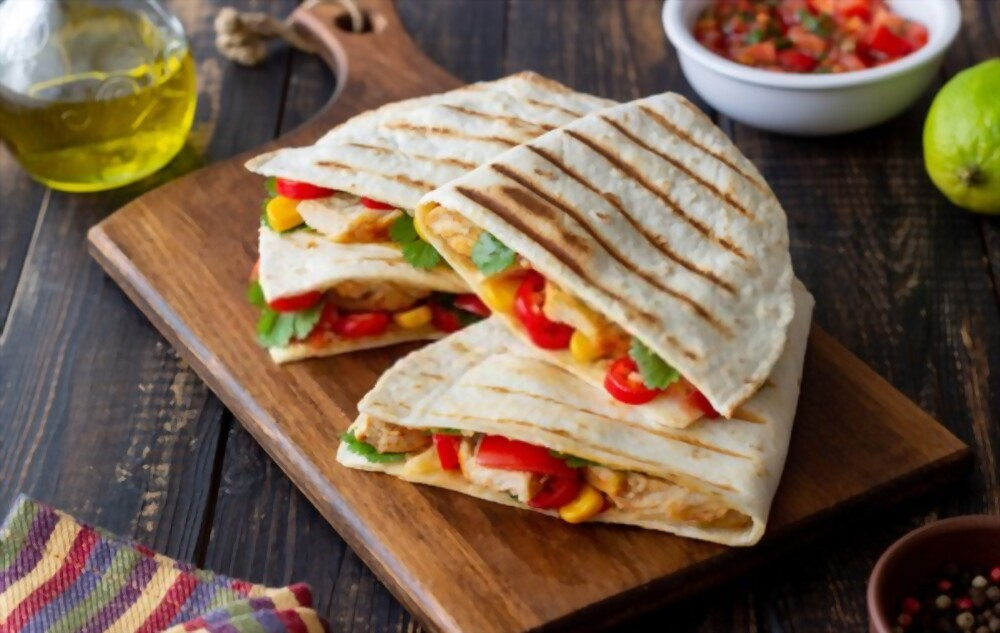
Despite having healthy ingredients, it still has some limitations. So, you should watch how much you’re eating them. These are some health risks you should look out for-
High in Calories
The main ingredients of a quesadilla- the cheese and the tortilla, are both high in calories. Too many calories are bad for a number of reasons. They can cause unwanted weight gain and they’re bad for your heart.
Contains Saturated Fats
The cheese normally used in quesadillas are high in fats. Cheddar contains 104% saturated fats of the daily value. That’s way too much to consume in one meal. It increases bad cholesterol and may cause cardiovascular diseases.
Can Cause Indigestion
Quesadillas can contain beans, onions, garlic, fatty meat- all of which can trigger indigestion. Beans, especially, can make you gassy if you eat too much.
Full of Carbs
Tortilla has a lot of carbs and there’s more inside the quesadilla. That’s bad if you’re trying to lose weight or have diabetes.
Contains Excess Sodium
Quesadillas contain a lot of sodium in them. That much sodium can raise your blood pressure and make you bloated. It also increases risk of stomach cancer.
Who Should Avoid Quesadillas?
As tasty and nutritious as quesadillas are, it’s not really good for everyone. People with certain health conditions should skip this appetizer. Avoid eating quesadillas if you fall under these segments-
Diabetic Patients
Quesadillas are full of starchy ingredients. And, you know what’s bad for diabetes? Starch. It causes the sugar levels in your blood to suddenly spike.
You can still eat quesadillas if you cut down on the extra carbs. But, avoid them if you have type-2 diabetes.
Heart Patient
Quesadillas being loaded with cheese is honestly the best part of them. But, that might not be such great news for people with heart problems.
Cheese contains saturated fats. These raise your cholesterol levels and increase risks of premature heart attacks.
Obese or Overweight People
If you’re trying to lose weight, then maybe ditch the quesadillas. Quesadillas are fattening because of their high calorie and fat content.
You should watch how much calories you eat when you’re obese. Quesadillas will ruin your calorie deficit diet and put you in surplus instead.
Gastric Problems Patient
Quesadillas contain irritating ingredients for your stomach. If you’re already suffering from gastric problems, it will worsen your symptoms.
Beans contain a type of indigestible sugar that’ll cause acid reflux. Onions and garlic also cause gas because they have soluble fibers.
Lactose Intolerant People
Cheese and sour creams are staples in making quesadillas. Guess what they both have in common? Lactose. That makes it bad for you if you’re lactose intolerant .
Eating quesadillas with lactose intolerance means you’re looking forward to gas, loose bowel, and bloating. The severity may vary from person to person. But, it’s uncomfortable for everyone regardless.
Gluten Intolerant People
Most flour tortillas used for quesadillas contain gluten. If you’re allergic to gluten, then keep an eye out for your quesadilla shells.
When you eat gluten with gluten intolerance, the symptoms will be similar to that of lactose intolerance. Constipation, diarrhea, fatigue are some of the common symptoms you’ll be facing.
Pregnant People
You don’t really need to avoid quesadillas if you’re pregnant. Just look out for unpasteurized and uncooked soft cheese in them.
Soft cheese can increase your chances of getting foodborne infections. They contain a type of bacteria called listeria which can potentially harm your unborn child.
Now you know all about how healthy quesadillas are for you. So, let’s move on to how you can turn your unhealthy quesadillas into a nutritious meal.
Related Article: Are Burritos Healthy? [Benefits and Risks]
How to Make Your Quesadilla Healthy?
Now, the good news about quesadillas is that you can choose to make them healthy. Ditch that greasy quesadilla from your favorite Mexican restaurant and go for homemade ones instead.
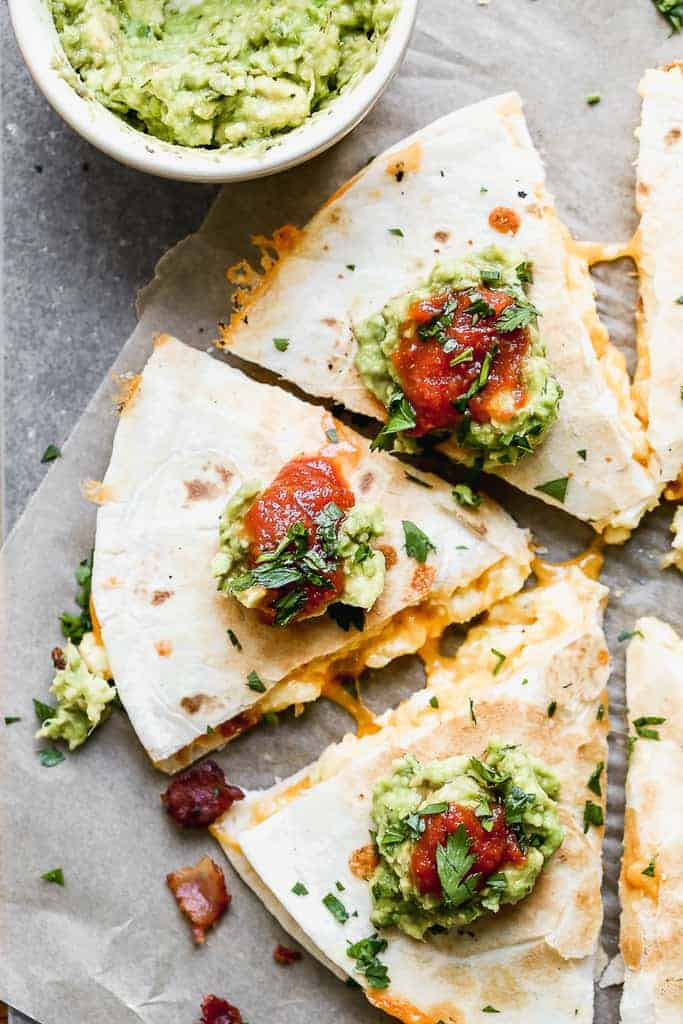
Here are some healthy ingredients you can use to swap out the unhealthy ones-
- Go for whole grain tortillas made from whole wheat, quinoa, millet or brown rice flour. Try to avoid hydrogenated oils and preservatives as well. This ensures you get more fiber than just refined carbs.
The best tortilla alternative is making the tortilla yourself. You can choose what goes in it that way.
- Avoid high-fat cheese and try low-fat options. Part-skim mozzarella, feta, ricotta- all are great options which are low in saturated fats.
We picked out the best low fat cheese options which will be perfect for your quesadillas-
| Sargento Off The Block Reduced Fat 4 Cheese Mexican | Check details |
| Good Culture Cottage Cheese 2% Low-Fat Classic | Check details |
- Go wild with the vegetables. The more the merrier. You can get your nutrients by filling up your quesadilla with vegetables instead of sauce and cheese.
- Swap out that high calorie sour cream for greek yogurt, fresh cream, soy cream, etc. You can also make some homemade mayonnaise to avoid the preservatives.
- Be careful with what kind of protein you put inside your quesadilla. Red meat doesn’t really have a lot of health benefits.
Opt for lean meat or plant protein instead. Chicken, eggs, beans, tofu- these are all better options than red meats like beef.
- Try incorporating healthy fats instead of saturated fats. Use olive oil to cook your ingredients. Put some guacamole instead of stuffing it with cheese. Get better versions of cheese and cream.
These are some simple ways you can make your very own healthy quesadillas at home. So, try them out and see if you still think they’re tasty.
Related Article: Are Burgers Healthy? 6 Tips to Turn Burgers Healthier
FAQs
Are Quesadillas Good After A Workout?
Yes, quesadillas can make perfect post-workout meals. Fill it up with berries and bananas. Use plant butter instead of those high-fat cheeses. This will give you a sweet, crunchy snack to get you back on your feet.
Can You Eat Quesadillas Cold?
Yes, you can eat quesadillas cold. Most people prefer them straight out of the stove, all warm and fresh. But, if you want to eat it cold, that’s completely fine too. You can have them cold or warm them up in the microwave.
What Kind of Oil Do You Use For Quesadillas?
Lighter oils like Canola oil are better for cooking quesadillas. They’re not too strong and make the crust nice and crunchy. Whereas, olive oil can be too flavorful and butter will make it soggy and flat.
Conclusion
Hope we answered all your queries about the question “are quesadillas healthy?” Now you know that their healthiness depends on what goes inside them.
Do you think quesadillas still fit into your diet?
Feel free to share your opinions on them. Till next time!
Related Posts

Subscribe for New Racipies
Get mental health tips, updates, and resources delivered to your inbox.
Pepe’s Cafe Key Lime Pie

Until Chris met me, he had never eaten a cherry tomato. Astounded upon learning this fact, I felt the need to remedy it immediately–he didn’t know what he was missing out on!—so I took him to the nearest Safeway where we bought a little prepackaged bagful. When we got back, I insisted he eat one straight away, right out of the package. I didn’t think one unwashed tomato would kill him, and I was sure he would fall in love straight away. Instead, he got food poisoning.
He has since let this incident go, which I think is very gracious of him considering the fact that I continue to guilt him into eating foods he has no interest in trying. I guess I have this underlying belief that I know better than him, at least in matters of the palate. That my refined tastebuds trump his any old day, that his will become elevated through my influence. Bombastic, sure, but we’re talking about a guy who didn’t eat his first cherry tomato until he was in college. Enough said, right?

I think I’ve mentioned that I dislike citrus-flavored baked goods, right? Besides this (like I said, Meyer lemons are in a league of their own), I’ve never met a citrus-y dessert that didn’t taste like a cough drop.
But last week, a bag of key limes fell in my lap, and I took it as a sign that it was finally time to tackle a classic that I’d never before tried: key lime pie. If you’d seen the limes, you, too, might have wanted to do something with them right away. They are so cute! Like toy dog versions of regular limes, except I know a lot of you don’t like toy dogs, and I normally can’t stand them either except I watched Seven Psychopaths recently and Bonny the shih tzu stole my heart.
I knew I was taking a major risk, but sometimes denial gets the better of me. After all, isn’t key lime pie a thing? Aren’t people fanatical about it? Maybe there was something more amazing than amazing about it that would sway my food prejudices.
Chris, on the other hand, took the realistic approach. “Don’t make it. You won’t like it, and I don’t want you to force it on me.”
I plowed ahead anyway. An afternoon later, the pie was ready.
I took it out of the fridge. It looked lemon-y. I smelled it. It smelled lemon-y. I started feeling uneasy.
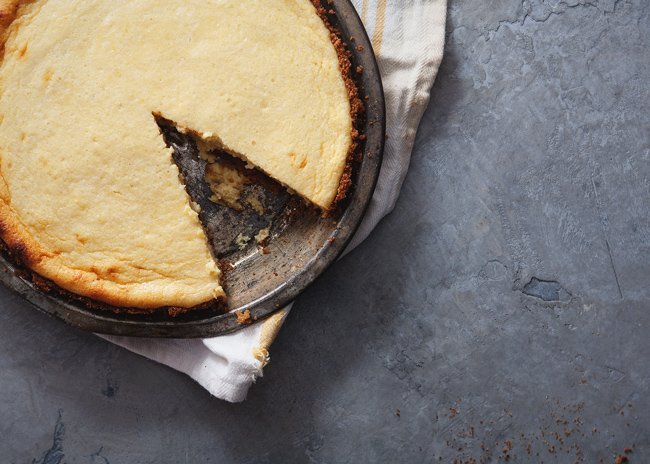
In the end, with great hesitation, I ate a slice. It was… disappointingly citrus-y, tasting like every other citrus dessert I’ve ever eaten. But then, the flavor sort of, I don’t know, mellowed out, and distinguished itself. The lime emerged, cool, invigorating. It went fantastically with the graham cracker crust, a pairing that legitimized its taste. With whipped cream for the finishing touch, the whole experience was luscious but understated. The sugary-tart foretaste never diminished, unfortunately, but for a lot of you, that’s a good thing.
Chris’s turn. I showed him a bite to try, and his face twisted into simultaneous disgust, fear, and suspicion. It’s so hard to get one past him these days, I tell you! But he relented, and took a tentative bite.
“Do you like it?” I asked. “It’s not bad, right?”
“I don’t like it,” he said. And that was that.
In the end, even in the face of Chris’s rejection, I ate way more slices than I care to admit. I’m pretty sure you’d call that a breakthrough!
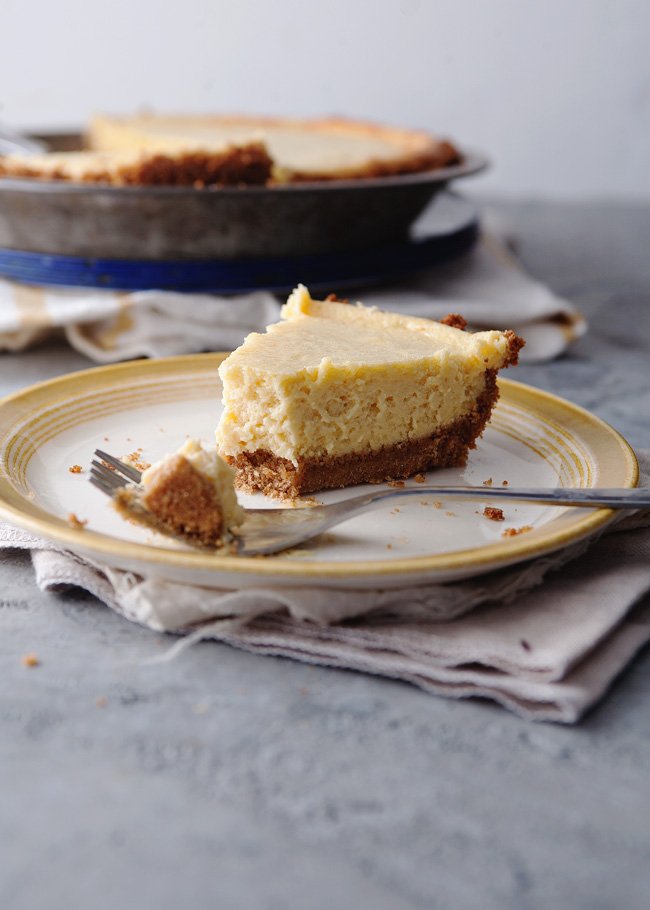
PEPE’S CAFE KEY LIME PIE
Adapted from Epicurious
Makes one 9-inch pie
Another reason I wanted to make this pie was because of this article. It’s fascinating! I love food history! Also, in case you’re wondering, Pepe’s Cafe is a cafe in the Florida Keys, quite an establishment I take it, that serves a very classic version of this pie. It’s always good to start with the classics.
Ingredients:
1-1/2 cups graham cracker crumbs
1/4 cup sugar
3/4 tsp ground cinnamon
1/4 tsp ground cardamom
5 tablespoons unsalted butter, melted
2 large egg whites
4 large egg yolks
1 (14-ounce) can sweetened condensed milk
1/2 cup Key lime juice (I must’ve squeezed 20 of these suckers)
Whipped cream to serve
Directions:
Preheat oven to 350 degrees F.
Make the graham cracker crust: Combine the graham cracker crumbs, sugar, cinnamon, and cardamom in a medium bowl. Stir in the melted butter until well-combined. Press the mixture evenly in a 9-inch pie tin. Bake for about 10 minutes, until golden brown. Let cool and set aside.
Make the filling: In the bowl of a stand mixer with the whisk attachment, beat the egg whites until stiff peaks form. In a large mixing bowl, whisk together the yolks and condensed milk. Add the lime juice and whisk until combined. Gently fold in about half of the whipped egg whites, then fold in the other half, stirring until just evenly combined.
Pour the mixture into the graham cracker crust and bake until set, about 20 minutes. Remove from oven, cool, then let cool further in the fridge for about 2 hours.
Serve with whipped cream if desired (whip together about 1 cup heavy cream, a few Tbsp powdered sugar, and a dribble of vanilla extract).
Related Posts



Subscribe for New Racipies
Get mental health tips, updates, and resources delivered to your inbox.