
Are Burgers Healthy? 6 Tips to Turn Burgers Healthier

Medically reviewed by Christiana George Updated Date: September 16, 2022

Everyone, more or less, loves to binge on burgers. The blast of amazing flavors and juicy meat make it a favorite snack choice.
But the real question is: Are burgers healthy?
No, burgers are not healthy. Especially when we are having it from fast food restaurants. They are usually loaded with extra cheese and sauce. Not to forget the huge bun. Definitely not a balanced, nutritious meal. However, you can make your own healthy burgers by simply bringing some modifications.
Still unsure? Well, do not sweat! Because here I am gonna clear all the queries and confusion you might have. Plus, I will be providing how to make a healthy burger on your own.
Read on!
The Problems With Burgers
Let’s be clear about one thing: burgers aren’t usually healthy.
Burgers are stuffed with extra cheese and special sauce and served on a huge bun. These aren’t exactly the ideal example of a balanced, nutrient-dense meal.

Especially when they are served by a fast-food restaurant.
The typical patty contains roughly 25 grams of fat. And 10 of which are saturated, from the cuts of beef, used.
A Big Mac burger has 494 calories, of which its fat content is responsible for half.
Additionally, one serving of sauce on a burger contains about 10 grams of sugar. Which is higher than the typical chocolate chip cookie.
The majority of burger toppings, like tomato sauce and barbeque, contain at least 25 percent sugar.
The buns come next. Refined white flour, which has minimal nutritional value and immediately raises blood sugar levels.
A burger is almost as unhealthy as eating a large piece of cake when it comes to high-fat meat and high-sugar sauce.
Related Post: Is Mac and Cheese Healthy? Calories, Nutrition, and a Awesome Recipe
What Happens When You Eat Burgers?
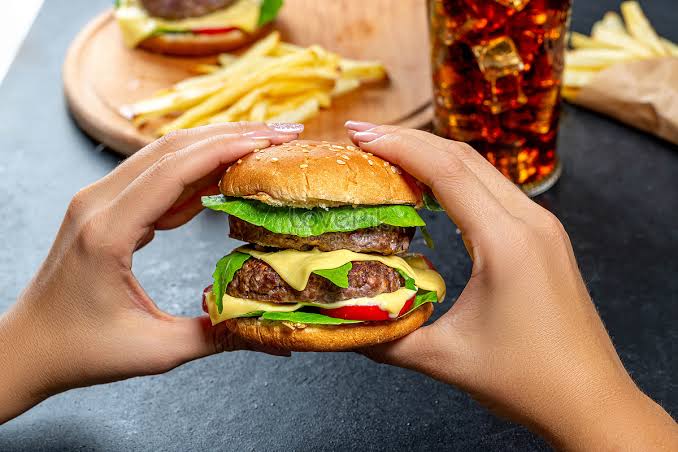
According to science, eating junk food even occasionally can be harmful to your health. Because it is bombed in fat, calories, as well as sodium.
One single hamburger, for instance, contains 500 Cal. Along with the fat of 25 grams and 40 grams of carbs.
Also, it contains 10 grams of sugar and 1,000 milligrams of sodium. All of these might be damaging to your health.
After taking your first bite of a burger, you will see a significant spike in glucose after 15 minutes.
As an outcome, insulin is discharged. And it provokes you to become hungry again shortly after.
The chance of developing diabetes can rise if this practice is continued. According to science, eating too many calories at once causes oxidative stress in the cells.
Consuming a meal high in saturated fat might be detrimental to your health.
It was shown that a group of healthy men’s arteries was severely damaged. And also didn’t dilate after they depleted foods high in saturated fat.
Later in adulthood, heart illness may result from this blood flow limitation.
The blood vessel may suffer because of the excessive sodium content.
Hence, the next time you’re dying to have a burger, you gotta resist the impulse!
Related Post: Are Crackers Healthy? Should you avoid or eat crackers
How to Prepare a Healthy Burger
This is for when you are gonna attempt to eat healthily. Burgers do not necessarily have to be totally off-limits.
In fact, research demonstrates that red meat may be a fantastic source of high-quality protein. Plus, vital elements such as iron, zinc, and vitamin B12 are there. But only when incorporated into a wholesome, varied diet.
Besides, poultry, for example, chicken as well as turkey, maybe one outstanding addition to nutrition.
Then where is it going wrong, exactly?
The answer would be the big bun, fatty toppings, as well as the size of your patties.
Burgers happen to be generally a fast food that is reserved for your cheat days.

However, handmade ones are actually flavorsome and nutritious.
Related Post: Are Fish Sticks Healthy – 10 Healthy And Unhealthy Facts
Keep It Juicy And Trim the Fat Off
Reduce the saturated fat content in burgers by selecting lean meat. Such as ground beef, turkey, or chicken.
Lean food, as per USDA, is illustrated as containing lower than 11 grams of fat. Plus, the saturated fat content is about 4.5 grams.
Less than about 2 g of saturated fat per 100 grams is deemed extra lean.
In order to quickly narrow down your choices when meat shopping, aim for cuts that are between 90 and 95 percent lean.
Just remember that while leaner alternatives reduce fat and calories, they can also make your burger dreadfully dry.
Also, When you are gonna shape those patties, handle the meat as little as you can. This will make the thing as juicy as possible.
Avoid pushing the burgers with a spatula after they are on the grill or in the skillet as this can cause them to release more juice.
Trim the Meat
Even while lean meat isn’t bad in moderation, handmade burgers are a terrific way to sneak in lots of vegetables. Even if the burger isn’t vegetarian.
In addition to adding delicious flavors, chopped mushrooms, green onions, and carrots. Plus, the shredded sweet potatoes, carrots, and zucchini give the burger some extra fluids.
Try black beans, lentils, quinoa, or rice. Grains, beans, and pulses can also appear.
Before making your patties, put in these components into that raw meat mix. Cook the patties as usual afterward.
Add a Healthy Binding Agent
The most widely used ingredient for binding ground meat is bread crumbs. But I suggest that you can use oats instead because they are high in fiber.
For every pound (lb) of ground beef, use 14 cups of oats.
You can use chia seeds as a binder instead. As they work really nicely as a binder. And also contribute important fiber and omega-3 fatty acids.
To make chia seeds into a binder, combine them with water.
Mix about 2 tbsp of water with 1 tbsp of chia seeds. After that, you can utilize your chia seeds. Also, it is integral to let the seeds soak in the water.
At least for about ten minutes. Soak it in the water, they take a little while to gelatinize.
I recommend flax “egg” as a third choice, which also has fiber and omega-3 fatty acids.
Use 3 tbsp of lukewarm water with 1 tbsp of powdered flaxseed.
The flax egg should stay for a few minutes. It is gonna gelatinize this way. Then it can be utilized as your binder.
Spice Your Burger Up
In addition to adding a ton of flavor to burgers, spices, and herbs. Also include antioxidant substances like polyphenols.
Some of the highest quantities are found in oregano, thyme, sage, rosemary, and saffron. Particularly, when they’re dried.
Before you fry those patties, you need to stir a few of those dried spices. Incorporate them into that meat or vegetable mix.
Add fresh or chopped herbs to the top of your burger just before serving it to give it a little more flavor.
Size It Properly
Have you ever had a burger that was almost as big as your face at a restaurant?
It could seem like a fun challenge to finish it all, but if you do, you’ll probably end up in a major food coma.
You can regulate the patty size to something more acceptable and nutritious while creating burgers at home.
A 4-ounce protein patty, about the size of a deck of cards, constitutes one serving; during cooking, the burger should reduce to about three ounces.
Make judicious topping selections.
The simplest way to ruin a healthy burger is to cover it with a heavy coating of fattening, sugary, and salty toppings.
Salsa is a way more nutritious substitute for sweet ketchup. Or you could consider preparing your own.
And instead of mayo, choose guacamole for a little richness. Put as much fresh or grilled vegetables as you can on top of the burger. That can include tomatoes, peppers, onions, greens, and mushrooms.
You won’t miss that enigmatic unique sauce mixture with all the flavor and texture this offers.
Related Post: Is Potato Salad Healthy? [ 3 Best Potatoes for Potato Salad]
Think Alternatives to the Bun
While avoiding the bun altogether (going bare) is always an option. There are other healthy options that offer a more genuine burger-eating experience.
Consider low-carb alternatives like cloud bread. Two slices only have 94 calories and 9 grams of protein, plus it’s simple to cook.
Alternatively, you may place your burger between two large portobello mushroom caps, rounds of sweet potato or eggplant, or lettuce leaves.
So, there you go! That is how you can make a healthy burger all by yourself!
FAQs
Are hamburgers really unhealthy?
Yes, consuming junk food even sometimes is gonna be harmful to health. The reason is the increased sodium, calories, and fat. One hamburger, for instance, retains 500 cal, g of fat. Plus 40 gms of carbs, 10 grams of sugar, and mg of sodium. All of these might be harmful to health.
Do burgers increase weight?
Yes, Burgers can be heavy in calories. And in case you consume more calories than you burn, you are gonna gain weight. A hamburger and mayonnaise contain about 942 calories. If you order it along with a regular soft drink, your meal may be even higher in calories.
How much fast food can I eat?
Eating fast food very frequently is tied to an elevated risk of obesity. As per the various studies done on junk food intake. If you consume it more often than 2 times a week, you are at a higher risk of metabolic syndrome. Also, you might suffer from type 2 diabetes, as well as coronary heart disease.
Wrapping Up
Hope I have cleared your question about are burgers healthy?
Now you know the answer. So, if you want to eat healthily, I suggest cutting down on burgers a little. Particularly the ones from local fast food eateries. And consider making a healthier burger following the instructions I provided.
That is it for today. Remain healthy!
Related Posts



Subscribe for New Racipies
Get mental health tips, updates, and resources delivered to your inbox.
Are Rotisserie Chickens Healthy? – Let’s Find Out!


Rotisserie chicken is one popular food among people of all ages. Being incredibly flavorful, they are a pleasure to your taste buds.
However, it is quite natural to have one question coming to mind: are rotisserie chickens healthy?
Yes rotisserie chicken is healthy. It is packed with vitamins and minerals. It also contains a high amount of protein and vitamin B complex. From the creation of blood cells to the operation of the nervous system, it benefits all. It also improves skin health, mental function, and energy generation.
Still confused? Do not sweat! Because in this article, I have explained it all. And also provided tips to make it even healthier.
Read on!
Are Rotisserie Chicken Healthy to Eat?
For those searching for a lean source of protein, this rotisserie chicken is a wonderful option. And also, who either lack the time, inclination, or cooking ability.

A variety of dishes can be made with chicken using this low-fat cooking technique.
In addition to helping the body create and maintain muscle, protein also helps the body regulate hormones and blood sugar.
Getting enough protein at a meal helps you feel satisfied for a longer period of time since it is processed more slowly than carbohydrates.
Rotisserie chicken supplies a variety of other crucial elements in addition to being a lean protein.
Rotisserie chicken has vitamins and minerals that are important for everything.
From the production of blood cells to the function of your nervous system. Plus, facilitates skin health, mental function, and energy generation.
A quick dinner starter is typically how people prefer it. Additionally, rotisserie chicken is a great way to increase your consumption of other nutrient-dense meals. For example, whole grains, veggies, and healthy fats.
Is It Okay to Eat the Skin of Rotisserie Chickens?
It’s likely that someone has advised you to avoid the skin of any fowl, and in general, it is sound advice. Despite the fact that the skin may be tasty, I usually tell people to avoid it because it contains saturated fat.

In fact, if you’re eating the breast, removing the skin can reduce the saturated fat by half, and if you’re eating dark meat, it can reduce it by a third.
It has been demonstrated that consuming saturated fat raises LDL cholesterol, which may increase the chance of developing cardiovascular disease.
However, it’s acceptable to eat some skin if you genuinely appreciate it and can’t imagine eating rotisserie chicken without it.
Just remember to include it in the amount of saturated fat you consume overall each day.
The American Heart Association advises limiting saturated fat consumption to 5 to 6% of total calories, or around 13 grams per day for people consuming 2,000 calories or less.
Health Benefits of Consuming Rotisserie Chicken
Rotisserie chickens are nutritious and low in fat. Particularly when you’re consuming white meat, unlike crispy or any other types of meat.
Rotisserie is cooked on a direct heat source, for example, an oven, fire, or perhaps a campfire.
Additionally, these hens can feed a whole family for a reasonable price. There is something for everyone between the breasts, drumsticks, legs, and thighs!
Let’s go over the top health advantages of rotisserie chicken.
Suitable Protein Source with Minimal Saturated Fats
There are many different sources of protein, but many people receive it from the meat and dairy they eat.
However, meats like pork, beef, and lamb that are high in protein also frequently have high levels of saturated fats.
On the other hand, chicken is a fantastic protein source and contains lower quantities of saturated fats.
Remove any skin or discernible fat before eating to make your rotisserie chicken even healthier.
Additionally, be mindful of your meal amounts since most people require 6-7 ounces of protein each day. Typically, half a chicken breast weighs about 3 ounces.
Plenty of B-Complex Vitamins in This Food
Despite the fact that chicken is typically connected with protein, it also contains a variety of other vital nutrients, such as niacin, and vitamins B3, B6, and B12.
These vitamins are necessary for the metabolism of fats and sugars as well as for the preservation of healthy cells.
Along with the B complex vitamins, this chicken is a satisfactory source of magnesium, potassium, and zinc.
The best part is that, as long as the skin is removed, you can consume all of these nutrients without gaining additional fat or cholesterol.
The chicken breast has the least amount of fat, and you can shred it for salads and soups to make it last longer while reducing the amount you eat.
Promotes Weight Loss
Every balanced meal needs some chicken on it.
Yet why?
Lean meat, such as that found in chicken, has little to no fat. Additionally, choosing grilled chicken results in the loss of harmful fats.
Consequently, eating chicken frequently will aid in your efforts to lose weight.
Maintains Body Muscle Mass
Rotisserie chicken, which is high in protein, aids in maintaining lean muscle mass, which is beneficial as you age.
Only a few reports have demonstrated a connection between mortality as well as muscle mass loss.
Reduces the Risk Of Cardiovascular Illnesses
Selenium, a mineral found in foods like chicken, guards against damage to cell membranes and prevents platelets from getting sticky, lowering the risk of cardiovascular diseases over time.
Side Effects of Rotisserie Chicken Consumption
However, there are some downsides, as well. Let us take a glimpse at those.
Possible Presence of Sodium
Since rotisserie chicken is packed with valuable minerals and high-quality protein, it is not the issue in and of itself.
However, the chicken may be extraordinarily heavy in sodium depending on how it is seasoned.
In addition to potassium and chloride, sodium is a vital electrolyte that aids in the delivery of water to your body’s cells.
Nonetheless, consuming too much salt might be harmful. If available, choose an unseasoned version to reduce potential salt.
Juicy, and seasoned just perfectly, this type of chicken possesses a near-flawless texture. plus, it provides a pleasing savor profile to boot.
Nonetheless, is this sort of cooking technique the healthiest for you?
Possible Addition of Sugar
Again, there is one main drawback of purchasing rotisserie chicken. That is, except for the visible delicate meat, you really have no idea what’s hiding beneath that crispy brown exterior.
But according to Consumer Reports, every rotisserie chicken is injected with a solution to keep it moist and flavorful. For instance, sugar could be a component of this solution.
Consider this: Would you sprinkle sugar on the chicken breast you are pan-frying?
Most likely not.
Some Unfavorable Additives
This item also brings a few other disagreeable elements. That includes additives such as carrageenan, natural flavors, as well as gums.
Take the (Hot) Freshness Guaranteed Garlic-Flavored Rotisserie Chicken from Walmart as an illustration.
Consider purchasing a rotisserie chicken from Whole Foods if you’re concerned about contaminants because organic chicken is the only ingredient.
More Tips for Making Rotisserie Chicken Healthier
Here I am including some more ways you can make the rotisserie chicken even healthier. Let us see what those are!
Choose the White Meat
Aim for White Flesh Rotisserie chicken from your local supermarket will have both white and black meat. Usually, dark meat contains more fat. The healthiest option is the white flesh from the chicken breast.
Are They Organic?
Although chicken raised more ethically is likely to be healthier and have a better quality of life, it is not a guarantee that it will taste better.
Try to stay away from any additives, including antibiotics, for the healthiest possible chicken.
When reading the nutrition label, anything you find difficult to pronounce is probably an addition or preservative. That reduces the nutritional value of the chicken.
Try to choose a bird that is USDA-certified organic in place of any that have ingredients like bromelain, ficin, monosodium glutamate, or papin on the label.
Add to It Later
Eating chicken with other foods rich in vitamins and nutrients is one method to make it healthier and better for you.
Your rotisserie chicken can be chopped up and added to a soup or diced and added to a power bowl with rice, lettuce, and other greens.
Portion Size to Watch
Half a chicken breast typically contains 3 ounces of protein, which is the recommended daily intake of protein according to the American Heart Association.
Even though chicken is healthy, eating too much of it is not good for you.
Now let’s go learn some FAQs on this topic.
FAQs
Is rotisserie chicken a good way to lose weight?
Yes, they are. Rotisserie poultry is typically protein-rich. Chicken that is high in protein can increase satiety. They also boost your post-meal calorie burn by as much as 35%!
Is rotisserie chicken good for your heart?
Even while rotisserie chicken is a convenient and delicious supper alternative, it can harm your heart. Chicken from a rotisserie is high in saturated fats and salt. Saturated fat consumption is one of the leading contributors to heart failure and cardiac illness.
Is rotisserie chicken processed meat?
Rotisserie chicken is typically processed, which means the meat is pre-seasoned in factories. That is before being delivered to stores. The tender meat frequently contains sodium and sugar. Also modified corn starch, as can be seen by a fast scan at the ingredient list.
Wrapping Up
Hope I have resolved your confusion of are rotisserie chickens healthy?
Now you know the answer. So, from now on you can add it to your meal without any hesitation. Just make sure you are following the right instructions and that is all.
This is all for now. Have an awesome day!
Related Posts






Subscribe for New Racipies
Get mental health tips, updates, and resources delivered to your inbox.