
Cotton Candy Mini Donuts

Medically reviewed by Christiana George Updated Date: December 19, 2022
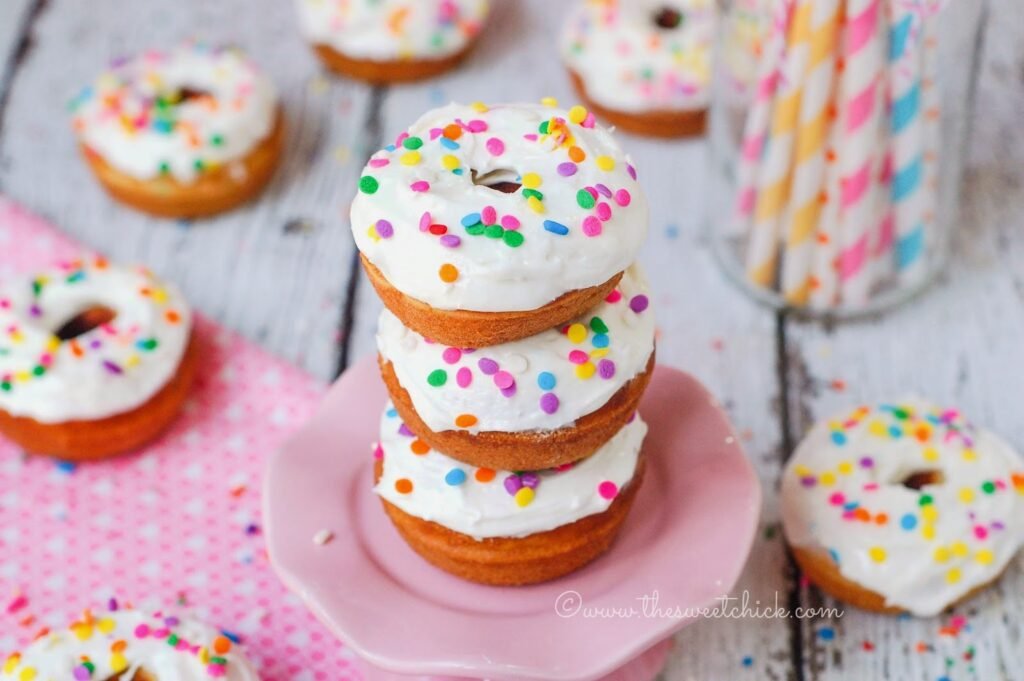
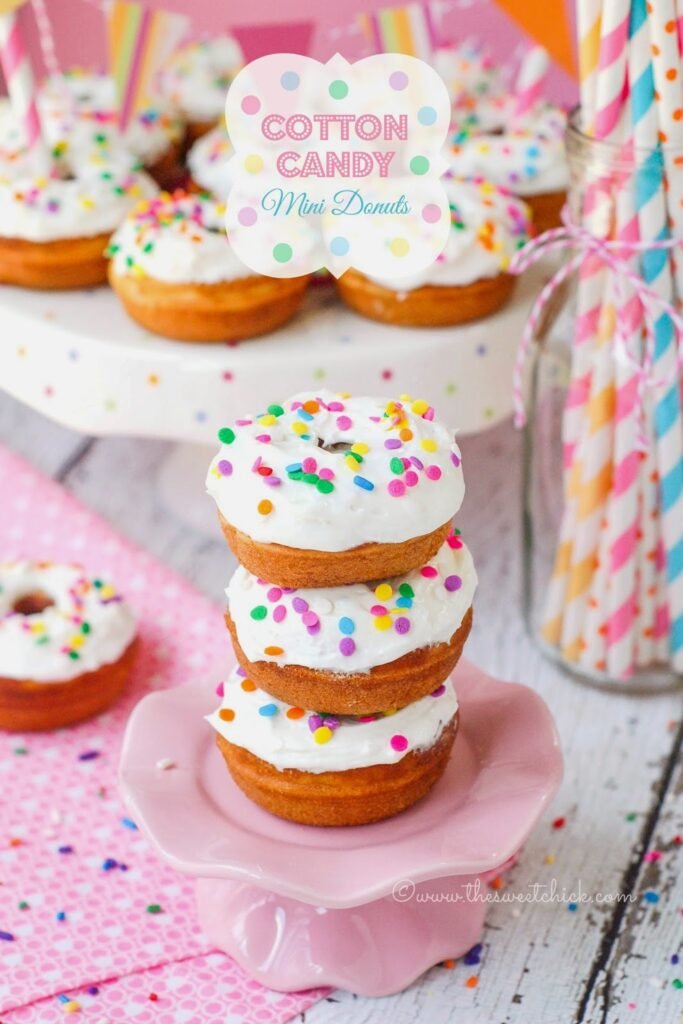
You know you are a food blogger when you spot a new dry cookie mix at the store and your first thought is not making cookies, but what you can make with the mix itself. Yep, I used cotton candy cookie mix to make these Cotton Candy Mini Donuts. And they do really taste like cotton candy. I made these along with Birthday Cake Oreo Mini Donuts for my daughter’s birthday party the other week. Kids and adults alike loved them.

Betty Crocker makes a Cotton Candy Cookie Mix. I have never made cookies with it, but it sure smells good and it has all these little bits of pink and blue sprinkles. I made this recipe just like I did for my Mini Sugar Cookie Donuts.
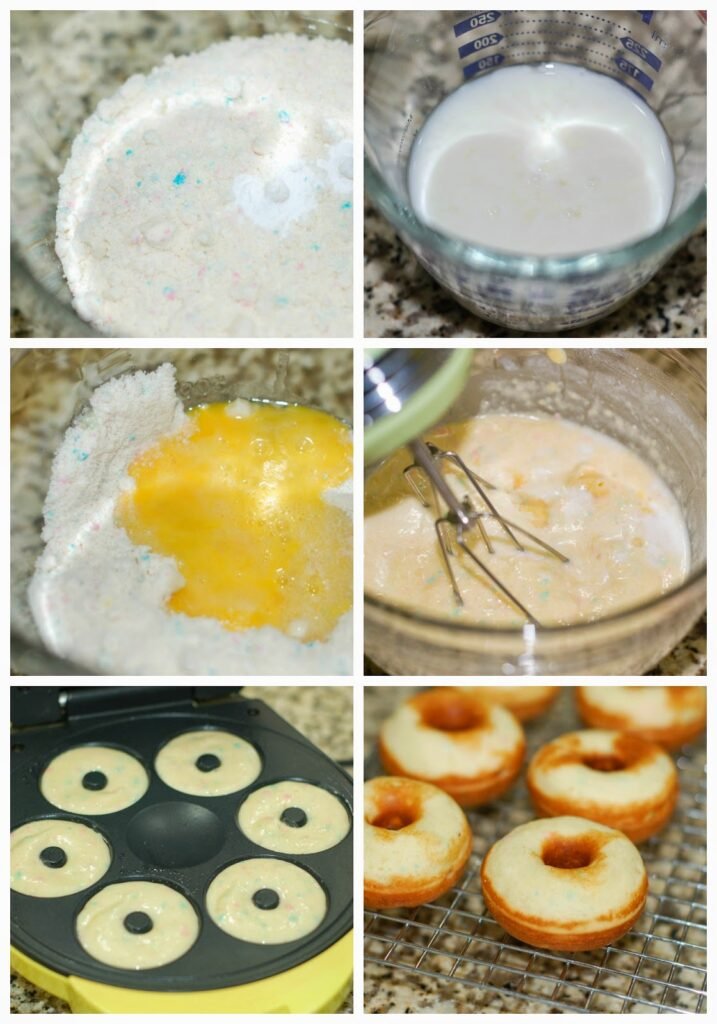
These donuts are super easy to make and you only bake them for 2 1/2 to 3 minutes each batch. How much easier can it get. I used my Babycakes Donut Maker machine, but you can bake them in the oven if you like. I just don’t like heating up the whole kitchen in the summer.
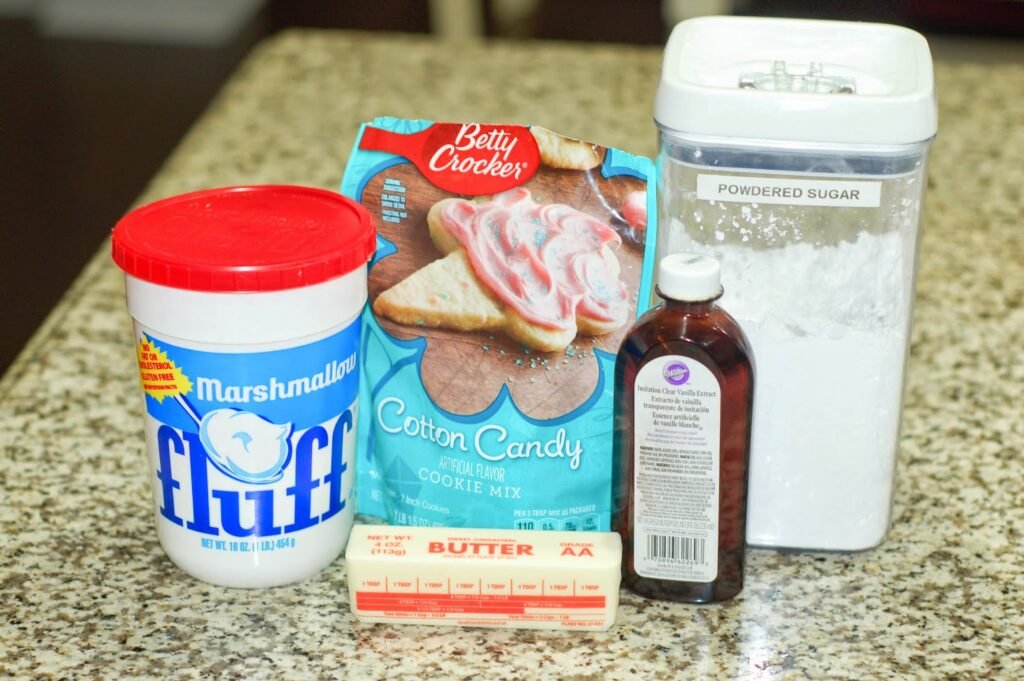
For the frosting, I choose to make my own with the remainder of the dry cookie mix. However, you do have other options. If you like pink, Betty Crocker makes Cotton Candy Frosting in a can. If you like blue, Duncan Hines Frosting Creations has a cotton candy flavor mix.
I just love making mini donuts. They are so darn cute and easy to eat. Bet you can’t eat just one.
Cotton Candy Mini Donuts
by The Sweet Chick
Prep Time: 15 minutes
Cook Time: 2 1/2- 3 minnutes
Keywords: bake dessert snack cotton candy cookie mix birthday donuts American
Ingredients (20 mini donuts)
For the donuts
- 2 cups Betty Crocker Cotton Candy dry cookie mix
- 1/4 teaspoon baking soda
- 1 egg, beaten
- 1 tablespoon butter, melted
- 1 tablespoon vegetable oil
- 1/2 cup milk
- 1 tablespoon vinegar (white or rice vinegar)
For the frosting
- 1/2 cup butter
- 1 cup marshmallow fluff
- 1 cup powdered sugar
- 2 tablespoons Betty Crocker Cotton Candy dry cookie mix
- 1 teaspoon vanilla extract
Instructions
For the donuts
Preheat your Babycakes Donut Maker.
Mix together milk and vinegar and set aside for a few minutes while it curdles (a replacement for buttermilk).
In a medium bowl, mix together the dry cookie mix, and baking soda.
Then add the egg , butter, oil, and curdled milk. Mix until completely blended.
Use a piping bag, a Ziplock bag with tip cut off, or a pancake pen, fill each donut reservoir with about 2 tablespoons of batter.
Bake for about 2 1/1- 3 minutes (do not use timer on machine) or until toothpick inserted in center of donut comes out clean.
Place hot donuts on cooling rack to cool completely.
For the frosting
In a stand mixer, cream together the butter and the powdered sugar.
Then add the marshmallow fluff and mix on medium until light and fluffy, scraping down the sides of the bowl as needed.
Add the dry cookie mix and mix until well blended.
Using a spatula, frost the cooled donuts and take a bite.
Or make them pretty with some sprinkles.
Notes
I used a clear vanilla extract to keep the frosting pure white.
If you are using a mini donut pan, bake your donuts in the oven at 425ºF for 2 1/2 to 3 minutes or until toothpick inserted in middle of donut comes out clean.
Frosting recipe adapted from ‘Lil Luna
This recipe may be shared at these fabulous parties.
Related Posts



Subscribe for New Racipies
Get mental health tips, updates, and resources delivered to your inbox.
Spiced Maple Pecan Pie Cheesecake Recipe

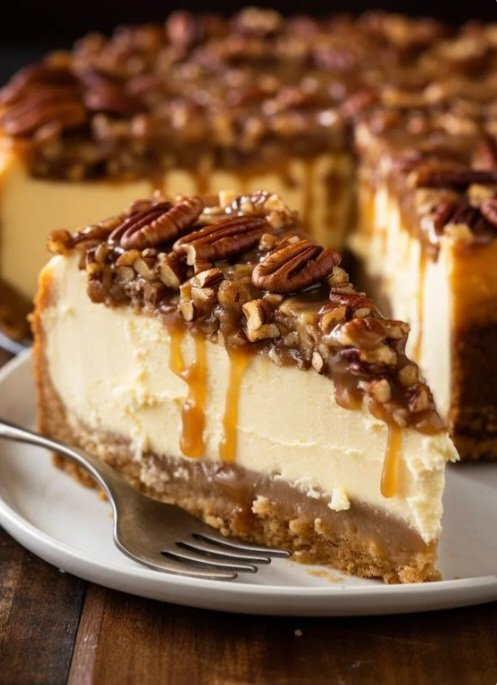
Calling all pecan lovers and cheesecake enthusiasts! National Pecan Day just got a whole lot more exciting with this showstopping Spiced Maple Pecan Pie Cheesecake.
Imagine the rich, creamy cheesecake filling infused with the warmth of maple syrup and a touch of spice, all nestled in a graham cracker crust studded with crunchy pecans.
But wait, there’s more! This masterpiece is crowned with a decadent praline pecan topping, a symphony of caramelized sugar, nuts, and pure deliciousness.
Forget choosing between pecan pie and cheesecake – this recipe lets you have the best of both worlds in one unforgettable dessert! Get ready to wow your family and friends with this unique and irresistible National Pecan Day creation.
Here’s a unique recipe for a Spiced Maple Pecan Pie Cheesecake that celebrates National Pecan Day with a twist:
Ingredients:
For the Crust:
- 1 ¾ cups graham cracker crumbs
- ¼ cup chopped pecans
- ¼ cup packed brown sugar
- ⅓ cup unsalted butter, melted
For the Spiced Maple Cheesecake Filling:
- 24 oz (3 blocks) full-fat cream cheese, softened
- ¾ cup maple syrup
- ½ cup granulated sugar
- 2 large eggs, room temperature
- 1 teaspoon vanilla extract
- ½ teaspoon ground cinnamon
- ¼ teaspoon ground ginger
For the Praline Pecan Topping:
- ½ cup chopped pecans
- ½ cup chopped walnuts
- ¼ cup unsalted butter
- ¼ cup packed brown sugar
- 2 tablespoons pure maple syrup
- ½ teaspoon vanilla extract
- Pinch of salt
Instructions:
- Make the Crust: Preheat oven to 350°F (175°C). In a bowl, combine graham cracker crumbs, chopped pecans, and brown sugar. Stir in melted butter until well incorporated. Press the mixture evenly into the bottom and slightly up the sides of a greased 9-inch springform pan. Bake for 10 minutes, then let cool completely.
- Make the Spiced Maple Cheesecake Filling: In a large bowl, beat cream cheese until smooth and creamy. Gradually add maple syrup and granulated sugar, beating until light and fluffy. Beat in eggs one at a time, then stir in vanilla extract, cinnamon, and ginger. Pour the filling over the cooled crust.
- Bake the Cheesecake: Place the springform pan on a baking sheet. Bake for 50-60 minutes, or until the center is slightly set but still has a slight jiggle. Turn off the oven and leave the cheesecake inside with the door cracked for 1 hour. Then, remove the cheesecake and let it cool completely at room temperature. Once cool, refrigerate for at least 4 hours, or overnight for best results.
- Make the Praline Pecan Topping: In a small saucepan over medium heat, melt butter. Add brown sugar and maple syrup, whisking constantly until the sugar dissolves and the mixture comes to a simmer. Cook for 2-3 minutes, or until slightly thickened. Remove from heat and stir in vanilla extract and salt. Add the chopped pecans and walnuts, and fold them gently into the caramel mixture. Let the praline cool slightly.
- Assemble and Serve: Once the cheesecake is chilled, spread the cooled praline pecan topping evenly over the top. Garnish with additional pecan halves or chopped walnuts, if desired. Slice and serve cold.
Tips:
- For a richer flavor, use dark brown sugar in the crust and topping.
- To prevent the crust from getting soggy, wrap the bottom of the springform pan with aluminum foil before placing it in the water bath.
- You can substitute all pecans for the chopped nuts in the praline topping.
- This cheesecake can be stored in the refrigerator for up to 5 days.
Enjoy this unique twist on the classic pecan pie and cheesecake combination!
Related Posts



Subscribe for New Racipies
Get mental health tips, updates, and resources delivered to your inbox.