
Ham, Cheese, and Vegetable Pie

Medically reviewed by Christiana George Updated Date: December 15, 2022

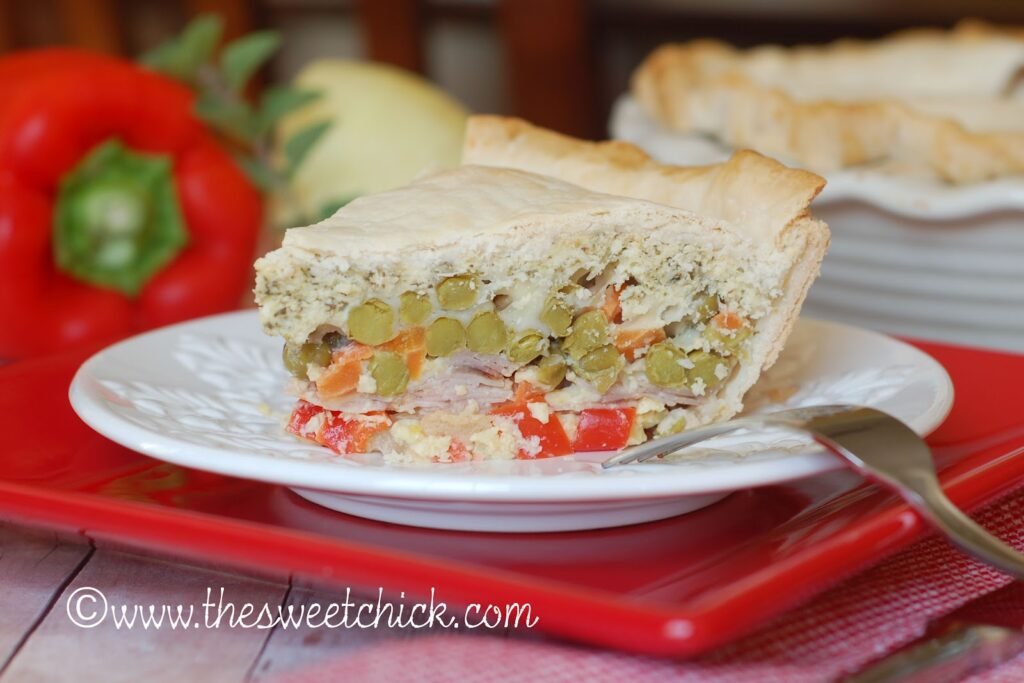
When I started dating my husband, he was going to college and living with his family. I usually went to see him after work, which was around the time his mother was serving dinner. I of course am not the kind of person to refuse a delicious meal, so I partook of his mother’s culinary delights. A lot of what she cooked was not anything I grew up eating, so it was an interesting endeavor.
This particular pie was one of my husband’s favorite, so after we were married and living together, I asked his mom for the recipe. I had no idea what I was doing in the kitchen, so I needed all the help I could get. This pie was simple and pretty much no fail.
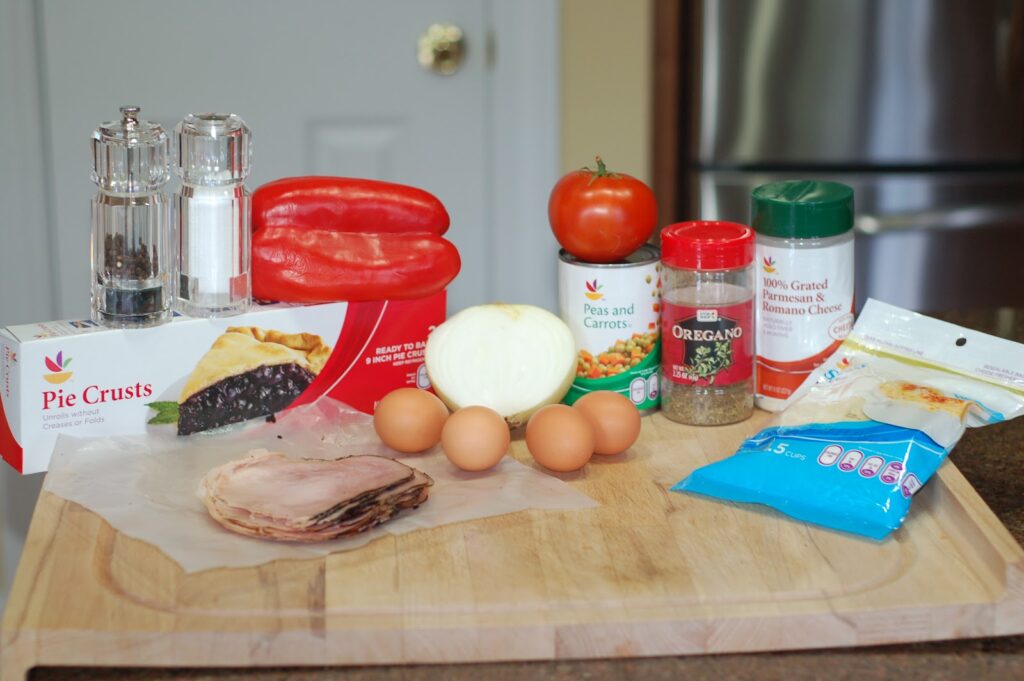

The ready made pie crust saves a lot of time. The rest of the ingredients, you basically do a quick prep and throw them in the pie shell. It doesn’t take much time to put together and you can go do some laundry while it bakes.


I just used a cookie cutter to cut a shape in the top pie crust, but you can also just make some slits to let the steam out. My crimping is not the best, but I wasn’t trying to win any contests.

My mother-in-law brushes her pie crust with milk and sugar to get a nice golden color. It really does come out picture perfect. I baked this in my Pampered Chef Stoneware pie dish, but I have also done it my Pyrex glass pie dish and have gotten the same results.


I hadn’t made this pie in quite a while so hubby was happy to have some. My cooking has gotten a little better than when we were first married. It helps when I cook something he likes.
Ham, Cheese, and Vegetable Pie
by The Sweet Chick
Prep Time: 20 minutes
Cook Time: 30-35 minutes
Keywords: bake entree ham cheese vegetables
Ingredients (serves 8)
- 1 cup chopped onion
- 1 cup chopped red pepper
- 1 cup chopped tomato
- 1/2 lb. deli ham, sliced thin
- 1 can peas and carrots
- 1 cup shredded cheese (mozarella, swiss, or Italian blend)
- 1 tablespoon dried oregano
- 1 cup grated parmesan cheese
- 4 eggs
- salt and pepper to taste
- 1 box ready to bake pie crusts
- 1/4 cup milk
- 1 teaspoon sugar
Instructions
Preheat oven to 350º F
Place one pie crust at the bottom of pie dish.
Spread the onions, peppers, and tomatoes evenly on the pie crust.
Slice deli ham into short strips and spread evenly oven the veggies. Then cover with peas and carrots.
Next add a layer of shredded cheese.
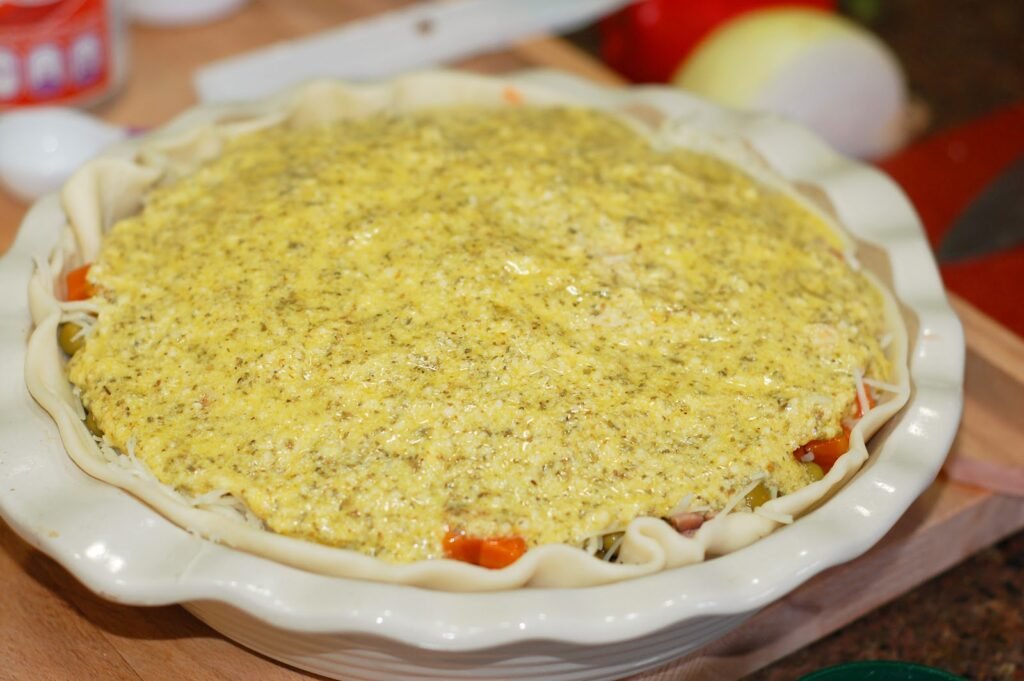
In a small bowl whisk together the eggs, oregano, and parmesan cheese. Add salt and pepper to taste.
Pour the egg mixture over the entire contents of the pie.
Cut slits or a small hole in the second pie crust and place on top of the pie. Crimp the edges by hand to form a seal.
Mix together the milk and the sugar. With a pastry brush, brush the top pie crust with a thin coat of the mixture.
Place pie in the oven and bake at 350º F for 30-35 minutes until the crust is a golden color.
Related Posts





Subscribe for New Racipies
Get mental health tips, updates, and resources delivered to your inbox.
Brioche Hamburger Buns, Or Let’s Get That Grill Fired Up


I don’t know about you, but I’ve always viewed hamburger buns as purely functional things. They’re receptacles, carb-wrappers, so you don’t get your hands dirty while eating the truly desirable bits within. Cheese, for instance, and grilled onions, and sauteed mushrooms. Oh right, and the patty too.
Buns are integral to the entire structure of the burger, yet they’ve done little to niggle my desire, warrant my enthusiasm, or raise lustful thoughts (and shouldn’t they? Given their namesake and all). Until now, that is.
These buns—blogged about by Deb and later Sara—are dreamy: as in, they bake like a dream, come together in a cinch, and their ingredients can be found in most anyone’s pantry. They’re also versatile: I chose all-purpose, whole wheat, and rye flour to go in mine, and they came out hearty but light, soft but complex. But most importantly, they raise the hamburger bun to a higher echelon, one that will no longer be left until the end as an afterthought. And is there anything worse than forcing yourself to eat afterthoughts?
You’ll be ready to fire up your grill after making these.
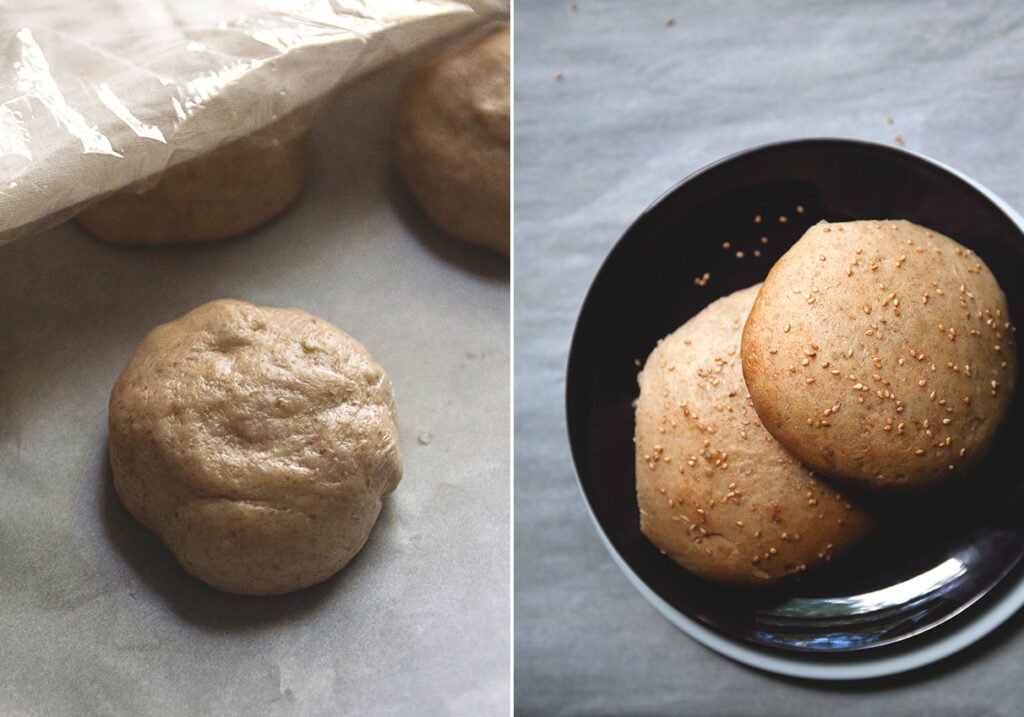
BRIOCHE HAMBURGER BUNS
Adapted from Smitten Kitchen and Sprouted Kitchen
Makes 8 regular-sized buns
Ingredients:
3 Tbsp warm milk
2 tsp active dry yeast
2-1/2 Tbsp sugar
2 large eggs
1/2 cup whole wheat flour
1/2 cup rye flour
2-1/3 cups all-purpose flour
1-1/2 tsp salt
2-1/2 Tbsp unsalted butter, softened
sesame seeds (if desired)
Directions:
In a glass measuring cup, combine one cup warm water, milk, yeast and sugar. Let stand until foamy, about five minutes. Meanwhile, beat one egg.
In a large bowl, whisk the flours with the salt. Add the butter by rubbing it into the flour between your fingers, making crumbs. Stir in the yeast mixture and beaten egg until a dough forms. Scrape onto a clean, well-floured counter and knead (by scooping it, slapping it onto the counter, and turning) until smooth and elastic (8 to 10 minutes). It should be sticky, so try not to knead in too much flour.
Shape the dough into a ball and return it to the bowl. Cover it with plastic wrap and let it rise until doubled (1 to 2 hours).
Line a baking sheet with parchment paper. Divide the dough into 8 equal balls. Gently roll each ball and arrange them 2 to 3 inches apart. Cover the baking sheet loosely and let the dough rise until doubled (1 to 2 hours).
Set a shallow pan with water in it on your oven floor or lower rack. Preheat the oven to 400 degrees Fahrenheit. Beat the other egg with 1 Tbsp of water and brush the egg wash onto the buns. Sprinkle sesame seeds on top, if using. Put the baking sheet in the oven and bake for about 15 minutes (turning halfway through), until the buns are golden-brown. Transfer to a rack and cool.
Note: I kept them in the fridge for about a week after I baked them and they still tasted good. Just heat them up on the grill or toast them right before eating.
Related Posts
Subscribe for New Racipies
Get mental health tips, updates, and resources delivered to your inbox.