
Matchstick Fries, and Lately I’ve Been Loving, Part 2

Medically reviewed by Christiana George Updated Date: June 8, 2023

Apologies to those who want me to get straight to the food commentary. (Although it’s becoming apparent that I’m always kind of long-winded when it comes to writing about food, isn’t it?) Feel free to jump past this section, of course.
To all you others, lately I’ve been loving…
– Jeni’s Splendid Ice Cream, lemon and blueberry fro-yo to be exact. I had the pleasure of trying the salted caramel flavor this weekend, and while it was delicious and pleasantly salty, the lemon was stunning. Luckily the recipe can be found online.
– Niagara grapes, a replacement to the Muscats I can’t get on this coast.
– The perfect wedding ring has been found. It was love at first sight; I was mesmerized by the shine and didn’t want to take it off.
– The Book Thief may fall in the YA category, but it was so creative and lovingly written. Apparently, 1,249 people agreed, yowza.
– Fashion Week street style. I can’t help loving the grand display those fashion insiders put on twice a year.
– Jeanne Damas. Specifically, I love her hair. So much so, I was inspired to carve out a set of bangs for myself the other day. It soon became clear that I’m rusty in the bangs-cutting department. They turned out shorter than I would’ve liked. A LOT shorter, and crooked too. This is why there are professionals to do this sort of thing—but surely I’m not the only person in the world staunchly opposed to forking over money simply to get my bangs cut?
And the latest Pinterest love:
– This photo pretty much captures love, don’t you think?
– The perfect wedding takes place in the forests of Northern California. (I want a forest wedding!)
– This wedding veil is utterly romantic. I must get it.
– One of my favorite food photos as of late. It is so moody and evocative.

On to today’s recipe. Chris and I got home famished, after an afternoon rummaging through the Brooklyn Flea. I remembered that we had been given a bunch of potatoes, big dusty Idahos, that had been sitting on the counter for awhile. We hardly ever have potatoes in the house, because neither of us really like them except when they’re deep-fried.
So that’s what I decided to do. I whipped up a batch of these matchstick fries in no time, doused them in salt, pulled out a couple beers from the fridge, and suddenly, happy hour had been transported home with us. Minus the lack of seats.

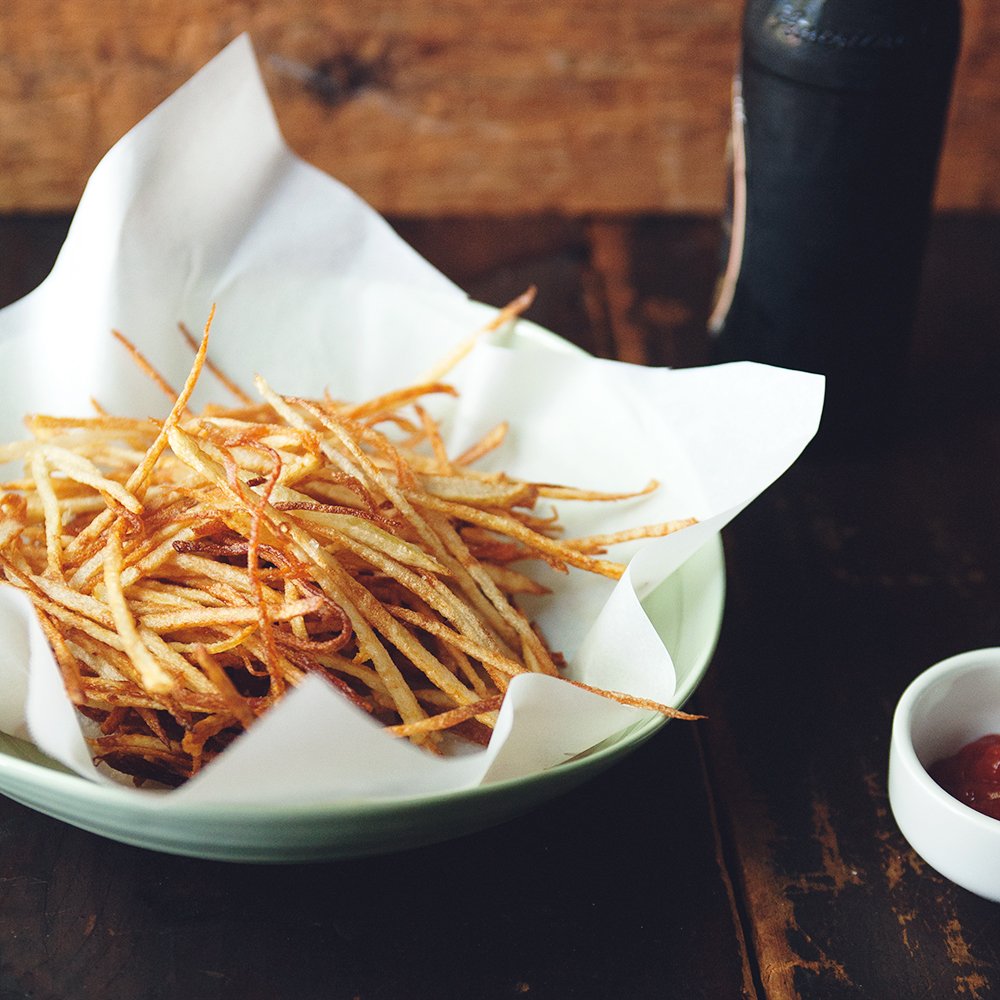
MATCHSTICK FRIES
Recipe adapted from Barefoot Contessa
Serves 2
Ingredients:
Vegetable oil
1 Idaho potato, peeled
Salt
Directions:
Slice the potato into matchsticks of about 1/8″ thick. You can use a mandoline, but I just hand-sliced without too much difficulty.
Heat about 1/2-inch of oil on medium heat in a medium saucepan with steep sides.
When the oil starts to shimmer, gently drop enough potatoes in the pan so it’s full but not overcrowded (overcrowding will cause the potatoes to stick together). Cook until they turn golden brown, about 5 minutes. Remove them with a slotted spoon and drain them on a paper towel. Continue cooking batches until you run out of potatoes.
Serve with your favorite condiments. Chris likes them as simple as can be, amply salted, and I like them with ketchup.

Related Posts

Subscribe for New Racipies
Get mental health tips, updates, and resources delivered to your inbox.
Are Kumquats Acidic? Tiny Citrus, Big pH

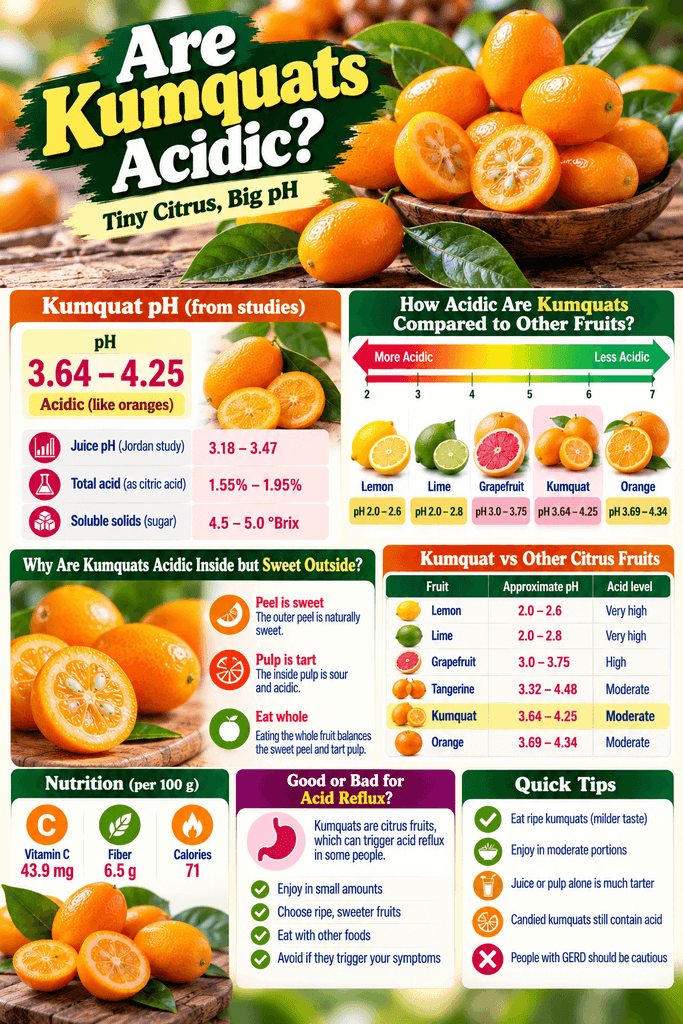
Yes, kumquats are acidic. They’re citrus fruits, after all. The FDA lists Florida kumquats at a pH of about 3.64 to 4.25 (FDA), almost exactly the same as Florida oranges. But kumquats are unusual: you eat them whole, peel and all. The peel is sweet while the pulp inside is tart, so a single bite mixes sweetness with a sharp citrus tang.
If you have acid reflux, sensitive teeth, or mouth sores, kumquats deserve some caution, like other citrus fruits. This guide explains how acidic kumquats really are, how they compare with lemons, limes, and oranges, what that means for reflux, and how to enjoy them more gently.
Key Takeaways
- Kumquats are acidic, with an FDA pH of about 3.64 to 4.25, close to oranges.
- Their juice can be quite tart. One study measured pH 3.18 to 3.47 and 1.55% to 1.95% total acid, as citric acid.
- The peel is sweet and the pulp is sour, so eating them whole balances the flavor.
- They’re far less acidic than lemons and limes, which measure about pH 2.0 to 2.8.
- Kumquats are citrus, a common reflux trigger, so people with GERD should start small.
- They’re surprisingly nutritious, with 6.5 g of fiber and 43.9 mg of vitamin C per 100 g.
Are Kumquats Acidic? The Short Answer
Yes. Kumquats are citrus fruits, and citrus is naturally acidic. Here’s what the main sources report:
| Kumquat sample | pH | Titratable acidity | Source |
| Kumquat, Florida | 3.64–4.25 | Not given | FDA |
| Kumquat, Irbid region (Jordan) | 3.18 | 1.95% (as citric acid) | Pérez, 2022 |
| Kumquat, Ghor Valley (Jordan) | 3.47 | 1.55% (as citric acid) | Pérez, 2022 |
Values vary with variety, growing region, ripeness, and whether the whole fruit or just the juice is tested.
The two sources don’t use the same samples or methods, and the Jordanian pulp samples came out noticeably sharper. Either way, kumquats sit firmly in the acidic range, alongside other citrus fruits like limes and oranges.
Why Are Kumquats Acidic Inside but Sweet Outside?
Kumquats are the citrus fruit you can pop in your mouth whole. University of Florida notes that “the fruits may be eaten whole” and that “both the pulp and the rind are edible” (Andreu et al., UF/IFAS FR368).
The flavor comes from a sweet-sour contrast. A UF/IFAS article citing the Florida Department of Agriculture and Consumer Services explains that “the inside of the fruit is tart, while the outside is sweet” (UF/IFAS Extension blog).
That’s why kumquats taste different depending on how you eat them:
- Whole fruit: The sweet peel softens the sour pulp.
- Juice or pulp alone: Much tarter, because you lose the sweet peel.
- Candied or preserved: Added sugar masks much of the tartness, but the acid is still there.
The Jordanian study also found low soluble solids (sugar) in kumquat pulp, just 4.5 to 5.0 °Brix, alongside 1.55% to 1.95% total acid (Pérez, 2022). Low sugar plus moderate acid explains why kumquat pulp on its own tastes so sharp.
How Acidic Are Kumquats Compared With Lemons and Limes?
Kumquats are much less acidic than the sourest citrus fruits:
| Citrus fruit | Approximate pH (FDA) |
| Lemon juice | 2.00–2.60 |
| Lime | 2.00–2.80 |
| Grapefruit | 3.00–3.75 |
| Tangerine | 3.32–4.48 |
| Kumquat, Florida | 3.64–4.25 |
| Oranges, Florida | 3.69–4.34 |
Source: FDA, Approximate pH of Foods and Food Products.
A kumquat at pH 3.8 is roughly 15 to 60 times less acidic than lemon juice or a lime, since each step on the pH scale is a tenfold change. In total acid, the 1.55% to 1.95% measured in kumquat pulp is also well above a tart Granny Smith apple at 0.7% to 1.0% (Good Fruit Grower). (Different studies and methods, so treat that as a general comparison.)
Are Kumquats More Acidic Than Oranges?
They’re about the same. The FDA lists Florida kumquats at pH 3.64 to 4.25 and Florida oranges at pH 3.69 to 4.34 (FDA). Those ranges almost completely overlap.
The big difference is how you eat them. You peel an orange and eat only the sweet, juicy segments. With a kumquat, you eat the peel and the tart pulp together. That gives kumquats a more intense, sweet-sour flavor than an orange, even though their pH is similar.
How Acidic Are Kumquats Compared to Other Fruits?
Here’s where kumquats fall next to other fruits we’ve covered (FDA):
| Fruit | Approximate pH |
| Lemon juice | 2.00–2.60 |
| Passion fruit pulp (studies) | About 2.4–3.2 |
| Pineapple | 3.20–4.00 |
| Mangoes, ripe | 3.40–4.80 |
| Kumquat, Florida | 3.64–4.25 |
| Guava, fresh (studies) | About 3.7–4.2 |
| Starfruit (studies) | About 3.9–4.6 |
| Mangosteen (UC Davis) | 4.5–5.0 |
| Bananas | 4.50–5.20 |
| Lychee | 4.70–5.01 |
| Longan (UC Davis) | About 6.2–6.7 |
Source: FDA, Approximate pH of Foods and Food Products; passion fruit, guava, starfruit, mangosteen, and longan from the studies and fact sheets cited in our individual fruit guides.
A few takeaways:
- Kumquats are less acidic than lemons, limes, and passion fruit.
- They’re in a similar range to pineapple, mangoes, guava, and starfruit.
- They’re more acidic than mild Asian fruits like mangosteens, lychees, rambutans, and especially longans.
- Bananas, persimmons, and dragon fruit are gentler choices if you’re acid-sensitive.
For the full list, see our complete guide to acidic foods.
Are Kumquats Too Acidic for Acid Reflux?
For many people with reflux, they can be. The National Institute of Diabetes and Digestive and Kidney Diseases (NIDDK) lists citrus fruits among the foods that may make reflux worse, along with tomatoes, alcohol, chocolate, coffee and caffeine, high-fat foods, mint, and spicy foods (NIDDK). Kumquats are citrus fruits, so they fall into that group.
Still, triggers differ from person to person. The American College of Gastroenterology’s 2022 guideline recommends that people with GERD identify their own triggers rather than avoiding every possible food, and avoid eating within 2 to 3 hours of bedtime (Katz et al., 2022). Some people tolerate a few kumquats with a meal; others notice them right away.
Tips for Eating Kumquats With Reflux
- Start with one or two kumquats and see how you feel.
- Eat them whole. The sweet peel balances the tart pulp better than juice or pulp alone.
- Eat them with a meal, not on an empty stomach.
- Pair them with gentle foods, like oatmeal, Greek yogurt, or cottage cheese.
- Avoid stacking triggers. Kumquats in cocktails or with chocolate add up quickly.
- Don’t eat them late at night. NIDDK suggests eating meals at least 3 hours before lying down if you have nighttime symptoms (NIDDK).
If kumquats bother you, try lower-acid fruits like bananas, longans, or lychees. See our list of foods to avoid with GERD for more. If you have heartburn more than twice a week, trouble swallowing, or symptoms that don’t improve, talk with your doctor.
Are Kumquats Acidic Enough to Harm Your Teeth?
Like other citrus, kumquats can contribute to enamel wear if you eat them often. The American Dental Association says how often and how long your teeth are exposed to acid matters. It recommends eating acidic foods as part of a meal, rinsing with water or having milk or cheese afterward, and waiting about an hour before brushing (American Dental Association). Snacking on kumquats one after another throughout the day is harder on enamel than eating a few with lunch. Our article on whether apples are good for your teeth covers similar questions.
Mouth sores: Mayo Clinic lists spicy or acidic foods among those that can trigger canker sores in some people (Mayo Clinic). Tart kumquat pulp can sting an open sore, so skip them until it heals.
Kumquats and Gastritis
Citrus fruits are often uncomfortable for people with gastritis. If you have gastritis, consider avoiding kumquats until symptoms settle, and choose milder fruits like bananas instead. Our 7-day meal plan for gastritis has gentler ideas.
Kumquat Nutrition
Kumquats pack a lot of nutrition into a tiny fruit, partly because you eat the peel. Per 100 grams of raw kumquats, USDA lists (USDA FDC 168154):
| Nutrient | Per 100 g |
| Water | 80.8 g |
| Calories | 71 |
| Carbohydrates | 15.9 g |
| Fiber | 6.5 g |
| Sugars | 9.36 g |
| Vitamin C | 43.9 mg |
| Calcium | 62 mg |
| Potassium | 186 mg |
A few highlights:
- Fiber: At 6.5 g per 100 g, kumquats are high in fiber for a fruit. A UF/IFAS article describes them as “an excellent source of fiber” (UF/IFAS Extension blog).
- Vitamin C: 43.9 mg per 100 g, about half to most of the adult daily recommendation of 75 to 90 mg (NIH Office of Dietary Supplements). UF/IFAS notes that kumquats, like other citrus, contain “large amounts of vitamin C” (UF/IFAS FR368).
- Calcium: 62 mg per 100 g, more than many fruits.
- Sugar: 9.36 g per 100 g. If you’re managing blood sugar, see our guide on whether apples are good for diabetics for general fruit guidance.
Acid-Smart Ways to Enjoy Kumquats
Kumquats are easy to eat: rinse them and eat them whole or sliced (remove any seeds). If you enjoy their sweet-tart flavor, try these ideas:
- Fruit salads: Slice kumquats thinly into our citrus salad.
- Candied kumquats: Use our candied citrus peel method as a starting point for candied kumquat slices.
- Creamy desserts: Serve sliced kumquats with our whipped ricotta with mixed berries to soften the tang.
- Baking: Swap chopped kumquats for some of the citrus in our lemon cranberry scones.
- Curd: Replace some of the fruit in our blood orange curd with kumquat purée. This one is very acidic, so save it for good stomach days.
The kumquat swaps haven’t been tested in our kitchen, so adjust to taste.
Kitchen tip: Rolling a kumquat between your fingers before eating helps release the sweet oils in the pee.
Frequently Asked Questions
Are kumquats acidic or alkaline?
Kumquats are acidic. The FDA lists Florida kumquats at pH 3.64 to 4.25, and one study measured kumquat pulp at pH 3.18 to 3.47.
Are kumquats good for acid reflux?
They can trigger symptoms in some people because they’re citrus fruits, which NIDDK lists as possible reflux triggers. Start with one or two whole kumquats with a meal, and avoid them if they bother you.
Are kumquats more acidic than lemons?
No. Lemon juice measures pH 2.00 to 2.60, while kumquats are about 3.64 to 4.25, so lemons are much more acidic.
Can you eat the kumquat peel?
Yes. University of Florida notes that both the pulp and the rind are edible. The peel is actually the sweet part, while the inside is tart.
Are candied kumquats less acidic?
We couldn’t find published pH data for candied kumquats. The added sugar masks the tartness, but the fruit’s natural acid is still there, and candied versions are much higher in sugar.
Are kumquats healthy?
Yes. Per 100 g, they provide 6.5 g of fiber, 43.9 mg of vitamin C, and 62 mg of calcium. Their acidity is the main thing to watch if you have reflux or sensitive teeth.
The Bottom Line: Are Kumquats Acidic?
Kumquats are acidic, with an FDA pH of about 3.64 to 4.25, about the same as oranges. Their tart pulp is balanced by a sweet, edible peel, which is why they taste so different from other citrus. They’re far less acidic than lemons and limes, but more acidic than mild fruits like bananas, lychees, and longans.
For most people, kumquats are a nutritious, fiber-rich snack. If you have acid reflux, sensitive teeth, or gastritis, start small, eat them whole with a meal, and switch to gentler fruits if they bother you.
Keep exploring with Are Limes Acidic?, Are Mangosteens Acidic?, Are Passion Fruits Acidic?, or our complete guide to acidic foods.
Medical disclaimer: This article is for general information only and isn’t a substitute for professional medical advice. If you have frequent heartburn, GERD, gastritis, or mouth sores that don’t heal, talk with your doctor or a registered dietitian.
References
- U.S. Food and Drug Administration. Approximate pH of Foods and Food Products. https://riverstonehealth.org/wp-content/uploads/FDA-Approximate-pH-of-Foods.pdf
- Pérez et al. (2022). Physicochemical profile of kumquat from two regions of Jordan. Journal of Ecological Engineering, 23(2), 196–203. https://yadda.icm.edu.pl/baztech/element/bwmeta1.element.baztech-3a926e5b-1f56-4c74-9e6e-93842e64a641/c/25_perez_profile_jee_2_2022.pdf
- Andreu, M.G., et al. Fortunella spp., Kumquat. UF/IFAS FR368. https://ask.ifas.ufl.edu/publication/FR368
- UF/IFAS Extension. All About Kumquats (2015). https://blogs.ifas.ufl.edu/global/2015/12/21/all-about-kumquats
- USDA FoodData Central. Kumquats, raw (FDC 168154). https://fdc.nal.usda.gov/fdc-app.html#/food-details/168154/nutrients
- NIH Office of Dietary Supplements. Vitamin C fact sheet. https://ods.od.nih.gov/factsheets/VitaminC-HealthProfessional/
- NIDDK. Eating, Diet, & Nutrition for GER & GERD. https://www.niddk.nih.gov/health-information/digestive-diseases/acid-reflux-ger-gerd-adults/eating-diet-nutrition
- Katz, P.O., et al. (2022). ACG Clinical Guideline for the Diagnosis and Management of GERD. Am J Gastroenterol, 117(1), 27–56. https://doi.org/10.14309/ajg.0000000000001538
- American Dental Association (MouthHealthy). Dietary Acids and Your Teeth. https://www.mouthhealthy.org/all-topics-a-z/dietary-acids-and-your-teeth
- Mayo Clinic. Canker sore: Symptoms & causes. https://www.mayoclinic.org/diseases-conditions/canker-sore/symptoms-causes/syc-20370615
- Good Fruit Grower. How to measure Honeycrisp qualities. https://goodfruit.com/how-to-measure-honeycrisp-qualities
Related Posts

Subscribe for New Racipies
Get mental health tips, updates, and resources delivered to your inbox.