
Arizona Tea Caffeine Content: How Much Is in Each Can and Flavor

Medically reviewed by Dr. Aris Thorne Updated Date: May 14, 2026
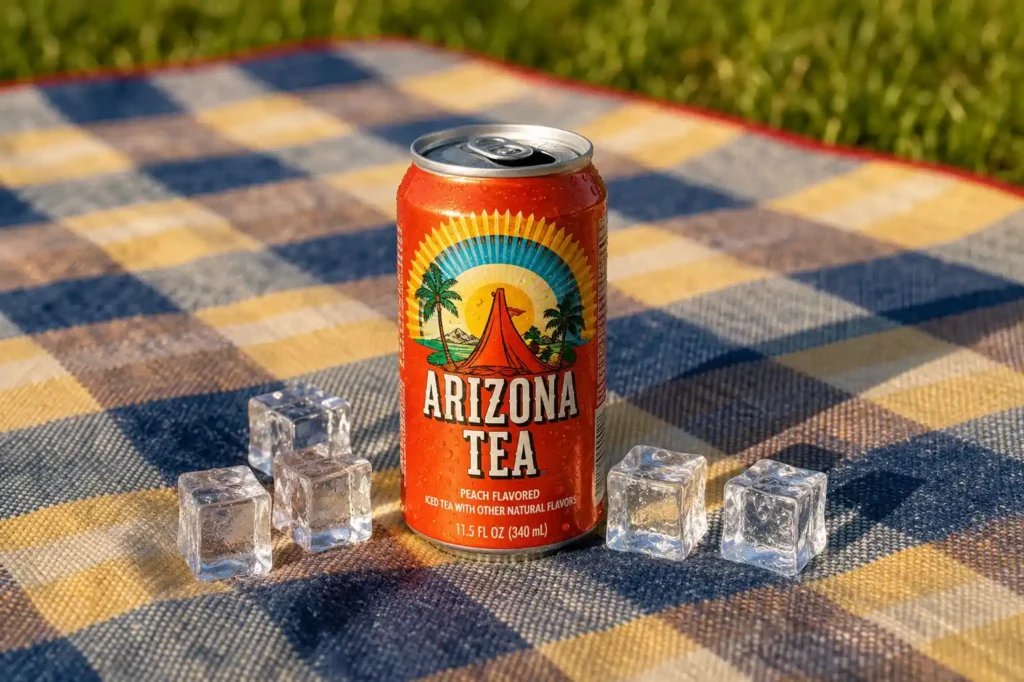
If you have ever wondered, does Arizona Tea have caffeine, you are not alone. Walk into almost any gas station or grocery store in America, and you will instantly recognize those tall, brightly colored cans stacked inside the cooler like miniature tropical billboards. Since 1992, Arizona Tea has become a staple of American beverage culture, helped by its famous 99-cent price tag and massive variety of flavors. But despite how familiar these drinks feel, most people rarely stop to ask what is actually inside the can — especially when it comes to caffeine and sugar.
Many consumers see iced tea as a lighter, more harmless option compared to soda or energy drinks. In reality, the answer is more complicated. Some Arizona Tea flavors contain surprisingly meaningful amounts of caffeine, while others are loaded with added sugar that can rival soft drinks. Understanding the difference takes only a few minutes, but it can completely change how you think about these popular beverages.
In this article, we will break down the caffeine content in Arizona Tea’s most popular flavors, explain how tea caffeine affects the body differently than coffee, examine the hidden sugar levels inside each can, and help you make a smarter choice the next time you reach into that cooler.
TLDR: Quick Summary
Most Arizona Tea products contain caffeine because they are brewed from real tea leaves. Green tea varieties deliver roughly 15 to 22 milligrams per full 23-ounce can. Black tea and sweet tea varieties deliver approximately 30 to 45 milligrams. Fruit-based drinks like Mucho Mango and lemonade contain zero caffeine. The bigger health concern for most people is not the caffeine — it is the 51 to 72 grams of added sugar packed into each sweetened can.
Is Arizona Iced Tea Caffeinated?
Whether a specific Arizona product contains caffeine comes down to one thing: whether it uses brewed tea leaves.
Black, green, and white tea leaves all naturally contain caffeine. The tea plant produces it as a biological defense compound against insects. When manufacturers brew beverages from those leaves, caffeine transfers directly into the liquid. No step in the commercial process removes it. Chilling the tea, adding sweeteners, mixing in fruit flavors, or blending in botanical extracts like ginseng does nothing to degrade or neutralize the caffeine already extracted during brewing.
Arizona also produces a wide line of fruit punch drinks, lemonades, and juice cocktails that contain no brewed tea at all. Those products are genuinely caffeine-free. The single most reliable way to know which you are dealing with is checking whether the words “brewed tea” appear in the ingredient list. If they do, caffeine is present. Full stop.
While comparing ready-to-drink options, it is also worth reading about how Brisk Tea compares in caffeine content — the difference in how each brand formulates its tea turns out to be more significant than most people expect.
How Much Caffeine Is in Arizona Green Tea?
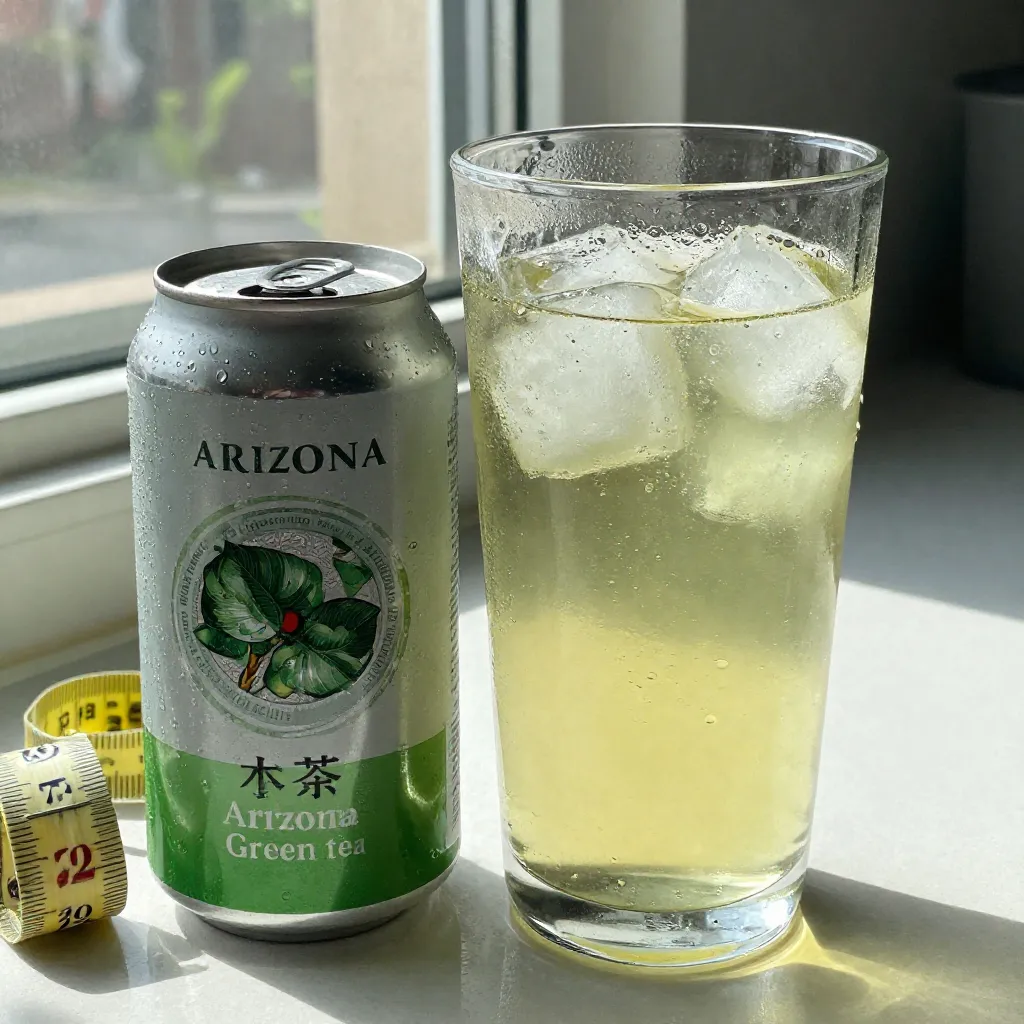
Arizona Green Tea is the brand’s most recognizable product. The pastel green can is found in virtually every cooler across the country. But the caffeine question trips people up here more than almost anywhere else, largely because green tea carries a reputation as a light, wellness-forward drink.
A standard eight-ounce serving of Arizona Green Tea contains approximately 7.5 milligrams of caffeine. That number sounds very modest — until you consider that almost nobody stops at eight ounces.
Most people drink the full 23-ounce can in a single sitting. At that volume, you are consuming roughly 15 to 22 milligrams of caffeine in one session. Some variation exists depending on brewing batch and leaf concentration, but that range is consistent with what independent lab testing has found.
That is still considerably lower than a standard cup of coffee, which typically delivers 80 to 100 milligrams. For people who are caffeine-sensitive, however, even 15 to 22 milligrams consumed late in the afternoon can nudge sleep onset later than expected.
Green tea leaves also naturally contain an amino acid called L-theanine. Research published in peer-reviewed nutrition journals consistently shows that L-theanine works alongside caffeine to produce a smoother, more sustained energy effect rather than the jittery spike commonly associated with coffee. That synergy explains why green tea often feels so different from espresso even when the caffeine dose is comparable.
Arizona Green Tea with Ginseng and Honey Caffeine Breakdown
This is the variety that built the brand’s cultural footprint. The ginseng-and-honey green tea blend has a devoted following — and with that following comes a persistent set of nutritional myths worth clearing up.
The biggest one is that ginseng somehow cancels or neutralizes the caffeine. It does not. Ginseng is a botanical adaptogen, meaning it may support stress response and energy regulation through its own physiological pathways. It carries no known mechanism for reducing caffeine’s effect on adenosine receptors in the brain.
Does Arizona green tea with ginseng and honey have caffeine? Yes — it carries essentially the same caffeine profile as the standard green tea. That is approximately 7.5 milligrams per eight ounces, or 15 to 22 milligrams across a full 23-ounce can.
The energy lift many people feel after drinking this specific product comes from two sources working together: the caffeine from the brewed green tea leaves, and a significant sugar load. A single 23-ounce can contains around 51 grams of added sugar. The American Heart Association recommends no more than 25 grams of added sugar daily for women and 36 grams for men — meaning one can alone can blow past that threshold before dinner.
Understanding both the caffeine and the sugar contribution gives you a far more complete picture of what this drink is actually doing to your daily intake.
Arizona Sweet Tea Caffeine Content
Southern-style sweet tea has a devoted following across the US, and Arizona’s version taps directly into that cultural affection. This variety is brewed from black tea leaves, which undergo full oxidation during processing.
Full oxidation produces a bolder, richer flavor — and extracts a higher concentration of caffeine from the leaf compared to minimally processed green tea. As a result, Arizona Sweet Tea delivers a noticeably more substantial caffeine dose than the green tea varieties.
A full 23-ounce can of Arizona Sweet Tea contains approximately 30 to 45 milligrams of caffeine. That puts it closer to the range of a weak cup of home-brewed black coffee. It is more than enough to be felt, particularly for people who do not consume caffeine on a regular basis.
The sugar content here is equally worth knowing. A large can can contain anywhere from 60 to 72 grams of added sugar depending on the specific product. The FDA’s guidance on nutrition labeling makes clear that this level of liquid sugar in a single beverage deserves a place in any honest conversation about daily dietary choices.
Parents may want to pay particular attention here. Children are considerably more sensitive to both caffeine and blood sugar fluctuations, and a large can of sweet tea is not a neutral hydration choice for young people.
Arizona Unsweetened Tea Caffeine
Switching to unsweetened Arizona Tea is a genuinely smart move for reducing sugar intake. Many health-conscious consumers make this swap and feel good about the change immediately. There is, however, one thing that switch does not change at all.
Caffeine in Arizona Tea comes from the brewed tea leaves. Sugar is a separate ingredient added after brewing. Removing the sugar has absolutely zero effect on the caffeine that was already extracted during the brewing process.
Arizona unsweetened tea caffeine levels are essentially identical to the sweetened versions of the same flavor. An unsweetened black tea variety still delivers 30 to 45 milligrams per full 23-ounce can. An unsweetened green tea still carries 15 to 22 milligrams.
This is great news if you want a clean, low-calorie source of mild, focused energy. It is equally important to understand if you are trying to cut caffeine from your evening routine. Sugar-free and stimulant-free are two entirely different things — and that distinction matters significantly for anyone managing sleep quality or caffeine sensitivity.
For a practical way to understand your personal caffeine threshold, this caffeine calculator can help you figure out what a reasonable daily ceiling looks like for your body.
Arizona Tea Flavors and Caffeine Levels
Different products across the Arizona lineup carry meaningfully different caffeine profiles. The table below outlines approximate caffeine content across the most popular varieties, measured per full 23-ounce can — the size most people actually finish in one sitting.
| Beverage Flavor | Contains Caffeine | Approx. Caffeine Per 23 oz Can |
|---|---|---|
| Green Tea with Ginseng & Honey | Yes | 15–22 mg |
| Classic Green Tea | Yes | 15–22 mg |
| Southern Sweet Tea | Yes | 30–45 mg |
| Lemon Tea | Yes | 30–45 mg |
| Half & Half Arnold Palmer | Yes | 15–30 mg |
| Black Tea | Yes | 30–45 mg |
| Mucho Mango | No | 0 mg |
| Watermelon | No | 0 mg |
| Fruit Punch | No | 0 mg |
| Lemonade | No | 0 mg |
Tea-based drinks consistently deliver caffeine at mild to moderate levels. Purely fruit-based products contain none at all. When in doubt, the ingredient panel is always the most reliable source of truth.
Putting these numbers in broader context is helpful too. Understanding how much caffeine Mountain Dew contains or whether Pepsi carries caffeine is useful for anyone keeping track of cumulative daily intake across multiple beverages.
Do All Arizona Drinks Have Caffeine?
No — and this is one of the most widespread misconceptions about the brand. Arizona produces a genuinely wide variety of products, and a significant portion of them contain zero caffeine.
The confusion is understandable. The branding and packaging look visually consistent across the entire lineup. Someone who drinks Arizona Green Tea every afternoon might reasonably assume the Mucho Mango or Watermelon version behaves the same way metabolically. It does not.
Fruit-based Arizona drinks — lemonades, fruit punches, and juice cocktails — do not use brewed tea leaves in their formulation at all. They rely on fruit concentrates, water, and sweeteners. There is no tea extract present, which means no caffeine and no L-theanine.
If you are avoiding caffeine for medical reasons, pregnancy, medication interactions, or personal preference, these fruit-based varieties are a reliable option. The only way to be certain is to check the ingredient list for the phrase “brewed tea.” Its absence confirms you are in the clear.
It is also worth checking whether Peace Tea contains caffeine if you are comparing similar ready-to-drink products side by side.
Does Arizona Tea Have Alcohol?
This question comes up more often than you might expect. The rapid growth of hard iced teas from other brands — some packaged in cans that look almost identical to standard soft drinks — has created genuine consumer confusion in the beverage aisle.
Standard Arizona Tea products sold in grocery stores and convenience store coolers are completely non-alcoholic. No fermentation occurs at any point during manufacturing. There is no ethanol present in any form. They are appropriate for consumers of all ages.
The concerns worth paying attention to with Arizona Tea are caffeine content in the tea-based varieties and added sugar across most of the sweetened lineup — not alcohol. Anyone who has heard otherwise has likely confused Arizona’s standard products with unrelated hard tea brands that happen to use similar packaging aesthetics.
Arizona Tea vs. Brisk Tea: Caffeine Comparison
Arizona and Brisk are two of the most recognizable commercial iced tea brands in the US. They are frequently purchased interchangeably by consumers who assume the products are essentially the same. Their caffeine profiles tell a different story.
| Beverage Brand | Caffeine Per 12 oz | Formulation Style |
|---|---|---|
| Arizona | 7.5–15 mg | Brewed from real tea leaves |
| Brisk | 5–7 mg | Processed tea concentrate |
Arizona uses real brewed tea as its base ingredient, producing a more consistent and slightly higher caffeine extraction per ounce. Brisk relies more heavily on processed tea concentrates, which typically yield a lower caffeine dose per serving.
Both brands load their sweetened varieties with substantial amounts of added sugar. From a purely nutritional standpoint, neither qualifies as a health beverage when consumed in large quantities on a daily basis. The full Brisk Tea caffeine breakdown explores this formulation difference in more detail.
How Caffeine from Tea Works in the Body
Understanding what caffeine actually does once it enters the body explains why both timing and total quantity matter more than most people appreciate.
Caffeine is a central nervous system stimulant that works by occupying adenosine receptors in the brain. Adenosine is a naturally occurring compound that builds up throughout the day, progressively signaling fatigue. Caffeine fits into those same receptor sites without activating them — essentially blocking the tired signal without resolving the underlying fatigue that has been accumulating.
Research published in peer-reviewed nutrition science journals shows that caffeine from tea reaches peak concentration in the bloodstream within 30 to 60 minutes of consumption. The effect typically lasts several hours, with a half-life in the body of approximately five to six hours for most healthy adults.
Tea caffeine also behaves somewhat differently from coffee caffeine because of L-theanine. This amino acid, naturally present in tea leaves, modulates caffeine absorption and softens some of its more activating effects. The result for many people is a gentler, more sustained energy curve rather than the sharp spike-and-crash that coffee sometimes produces.
Sugar Content in Arizona Tea: The Bigger Picture
Caffeine tends to dominate conversations about Arizona Tea. From a long-term health perspective, however, the sugar content in the sweetened varieties deserves equal — and arguably greater — attention.
A single 23-ounce can of Arizona Sweet Tea or the Ginseng Honey Green Tea can contain between 51 and 72 grams of added sugar. The World Health Organization recommends limiting free sugars to less than 10 percent of total daily energy intake — roughly 50 grams for an average adult on a 2,000-calorie diet. One large can can exceed that entire daily recommendation in a single sitting.
Liquid sugar carries a specific metabolic concern that solid food does not trigger in quite the same way. Research published in major peer-reviewed nutrition journals consistently links regular consumption of sugar-sweetened beverages to increased risk of weight gain, insulin resistance, and type 2 diabetes over time. The fructose fraction in these beverages is metabolized primarily in the liver, contributing to visceral fat accumulation and changes in blood lipid profiles with repeated daily exposure.
The unsweetened varieties sidestep this concern entirely. If you enjoy the flavor profile of Arizona Tea but want to avoid the metabolic impact of its sugar load, the unsweetened options are a considerably smarter daily choice.
For anyone who also manages digestive sensitivity, whether tea is acidic is worth exploring — particularly if acid reflux is part of your health picture.
Benefits of Moderate Tea Caffeine Intake
Caffeine from tea is not inherently a problem. At moderate doses, it carries meaningful evidence-backed benefits that make it a sensible daily choice for most healthy adults.
Research from Harvard T.H. Chan School of Public Health associates regular tea consumption with improved cognitive function, sustained alertness, and reduced risk of certain chronic conditions when consumed in reasonable quantities over time.
Green tea leaves are also rich in polyphenols and catechins — plant-based antioxidants that work by neutralizing free radicals in the body. Free radicals are unstable molecules linked to cellular damage, chronic inflammation, and accelerated aging. Peer-reviewed cardiovascular reviews highlight the potential benefits of green tea catechins, particularly a compound called EGCG, which has been shown to support healthy lipid profiles and reduce markers of oxidative stress across multiple clinical studies.
The challenge with commercial products like Arizona Tea is that dilution, heat processing, and heavy sugar loads reduce the net health benefit considerably compared to freshly brewed, unsweetened green tea. The antioxidants are still present — just in lower concentrations, and wrapped in a sugar delivery system that partially offsets those gains.
Safe Daily Caffeine Intake Guidelines
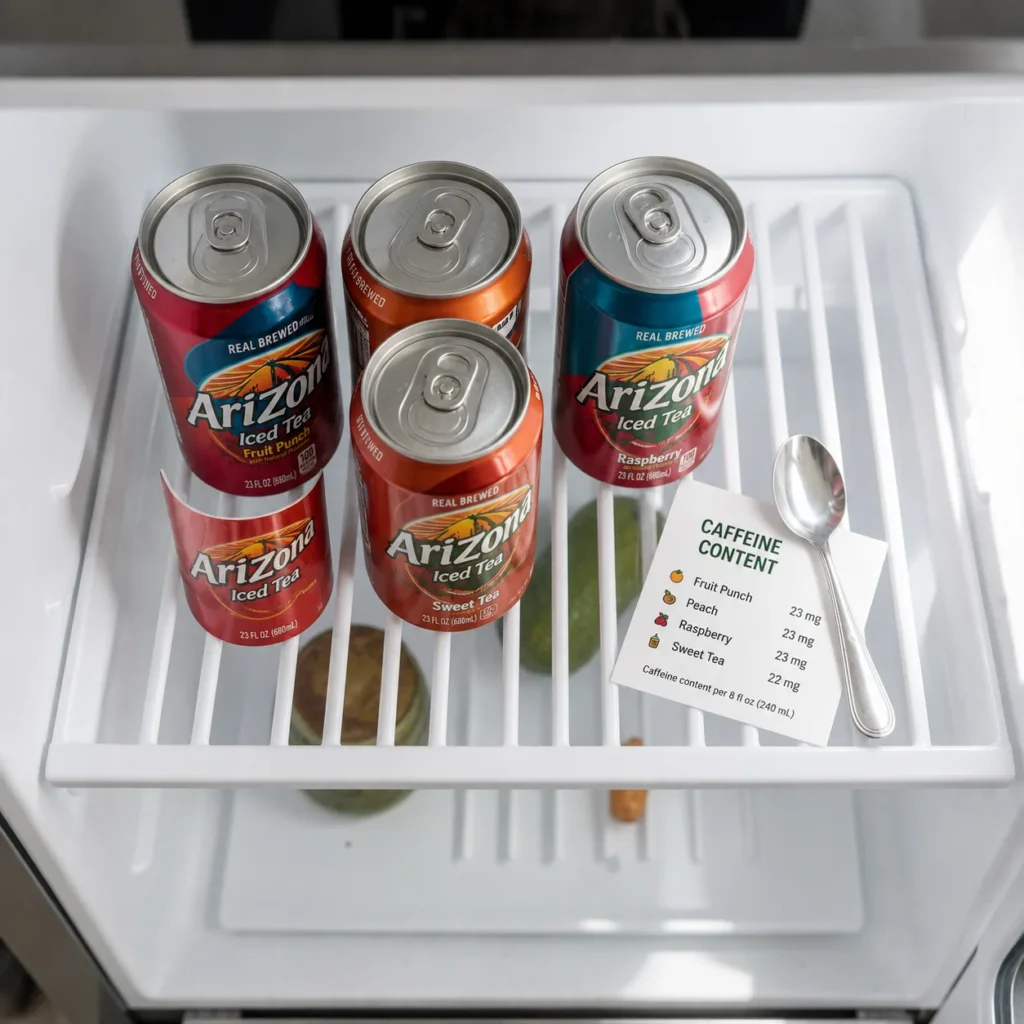
Knowing exactly where Arizona Tea sits within your total daily caffeine picture is practical, useful information. The US Food and Drug Administration recognizes up to 400 milligrams of caffeine per day as generally safe for healthy adults.
To approach that threshold through Arizona Green Tea alone, you would need to drink roughly 18 full 23-ounce cans in a day. With Arizona Sweet Tea, you would need around nine. Neither scenario is realistic, which means Arizona Tea is unlikely to push most healthy adults anywhere near the safety ceiling on its own.
That said, 400 milligrams is a maximum safety threshold — not a daily target or a recommendation. Caffeine sensitivity varies considerably from person to person based on genetics, body weight, medication use, and habitual consumption patterns. Many people experience noticeable symptoms at doses well below 200 milligrams.
Signs that you may be exceeding your personal tolerance include difficulty falling asleep at your normal time, heart palpitations, restlessness, or heightened anxiety after consuming caffeine. When those symptoms appear consistently, calculating total daily caffeine across all sources — coffee, tea, energy drinks, chocolate, and certain medications — is the right starting point.
A caffeine calculator based on weight and age can give you a personalized sense of where your reasonable daily threshold likely sits.
Vulnerable Groups Who Should Limit Consumption
Certain populations should approach even the relatively modest caffeine levels in Arizona Tea with additional care.
Children and adolescents are particularly sensitive to caffeine’s effects on the developing nervous system. Many health organizations recommend against caffeine for young children entirely, and suggest adolescents stay well below 100 milligrams of total daily caffeine. A large can of Arizona Sweet Tea provides a meaningful portion of that limit for a teenager who may also be consuming caffeine through other sources throughout the day.
Pregnant individuals are generally advised to limit total caffeine intake to 200 milligrams per day. A single can of Arizona Tea falls comfortably within that range on its own, but it should always be counted as part of total daily intake alongside coffee, chocolate, and any supplements that may contain caffeine.
People managing anxiety disorders may find that even mild caffeine doses amplify symptoms in ways that feel disproportionate to the dose. If you notice a consistent pattern between afternoon iced tea and evening restlessness or racing thoughts, adjusting timing or eliminating the product is a simple, low-cost experiment worth trying first.
Anyone managing diabetes or insulin resistance should be especially cautious with the sweetened varieties. The sugar load in a single large can is substantial enough to create meaningful blood glucose impact entirely separate from any caffeine consideration.
Common Misconceptions About Arizona Tea
Many consumers genuinely believe that because a drink looks fruity, features botanical wellness ingredients like ginseng, or carries nature-inspired packaging, it must be caffeine-free and metabolically neutral.
This misconception has real consequences. Someone drinking two or three large cans of Arizona Green Tea each afternoon may be consuming 45 to 65 milligrams of caffeine during hours that directly affect sleep onset. They may also be consuming well over 100 grams of added sugar daily without registering it as sugar at all — because it comes in a drink rather than solid food.
The bright, botanical-looking packaging creates a health halo that is worth consciously questioning. The information you need is always printed right on the can. Building the habit of reading the ingredient list and the added sugar line on the nutrition facts panel takes less than 30 seconds and fundamentally changes your relationship with what you are putting into your body.
Putting Arizona Tea in perspective alongside other popular drinks is also useful. Reading about Bang Energy caffeine content and Red Bull caffeine levels gives a clear sense of exactly where iced tea sits on the broader stimulant spectrum.
Frequently Asked Questions
Does Arizona Tea Have Caffeine?
Yes, most Arizona Tea products contain caffeine because they are brewed from real tea leaves — black, green, or white. The caffeine content varies by flavor and container size. Fruit-based Arizona drinks like Mucho Mango and lemonades contain no tea leaves and therefore no caffeine. Always check the ingredient list for the phrase brewed tea to confirm whether caffeine is present in any specific variety you are considering.
How Much Caffeine Is in Arizona Green Tea?
A full 23-ounce can of Arizona Green Tea contains approximately 15 to 22 milligrams of caffeine. Per eight-ounce serving, that is roughly 7.5 milligrams. This is considerably less than a standard cup of coffee but still enough to affect sensitive individuals, especially when consumed in the afternoon or evening close to your typical sleep window.
Does Arizona Green Tea with Ginseng and Honey Have Caffeine?
Yes. The ginseng and honey formulation contains the same caffeine level as standard Arizona Green Tea — approximately 15 to 22 milligrams per full 23-ounce can. Ginseng is an adaptogen and does not neutralize caffeine. The energy lift many people associate with this product comes from both the brewed green tea caffeine and the significant amount of added sugar present in the formulation.
Does Arizona Tea Have Alcohol?
No. Standard Arizona Tea products sold in grocery and convenience stores are completely non-alcoholic. No fermentation occurs during their manufacturing process. They are appropriate for all ages from an alcohol standpoint. The main nutritional considerations are caffeine in the tea-based varieties and added sugar across most of the sweetened products in the lineup.
Are All Arizona Drinks Caffeinated?
No. Arizona produces a wide range of fruit-based drinks, lemonades, and juice cocktails that contain no brewed tea and therefore no caffeine. Varieties like Mucho Mango, Watermelon, and Fruit Punch are entirely caffeine-free. Only products brewed from actual tea leaves contain caffeine. Checking the ingredient list for the words brewed tea is the most reliable confirmation for any specific variety.
Conclusion
Does Arizona tea have caffeine? For the core tea-based lineup, yes — it does. The caffeine content ranges from a mild 15 to 22 milligrams in green tea varieties to a more moderate 30 to 45 milligrams in black tea and sweet tea products. That is meaningful, practical information, especially if you are monitoring total daily caffeine intake, managing sleep quality, or simply trying to understand what your afternoon drink is actually doing to your body.
What makes Arizona Tea worth paying closer attention to goes beyond the caffeine. The sugar content in the sweetened varieties is a more significant long-term consideration for most people, and it is one that the bright, nature-inspired packaging does not exactly highlight. The unsweetened options change that equation considerably — offering the mild energy and antioxidant benefits of real brewed tea without the metabolic cost of 50 to 70 grams of added sugar per can.
The most useful habit you can build around any commercially prepared beverage is reading the label before you drink it. The ingredient list and nutrition facts panel tell you exactly what you need to know. Small decisions made with accurate information add up to meaningfully better health outcomes over time. If you have specific questions about how caffeine or sugar fits your individual health picture, a registered dietitian can help you build a practical strategy tailored to your actual goals.
References
- U.S. Food and Drug Administration — Spilling the Beans: How Much Caffeine is Too Much — https://www.fda.gov/consumers/consumer-updates/spilling-beans-how-much-caffeine-too-much
- U.S. Food and Drug Administration — Added Sugars on the Nutrition Facts Label — https://www.fda.gov/food/nutrition-facts-label/added-sugars-nutrition-facts-label
- Harvard T.H. Chan School of Public Health — The Nutrition Source: Tea — https://www.hsph.harvard.edu/nutritionsource/food-features/tea/
- World Health Organization — Healthy Diet Fact Sheet — https://www.who.int/news-room/fact-sheets/detail/healthy-diet
- American Heart Association — Added Sugars — https://www.heart.org/en/healthy-living/healthy-eating/eat-smart/sugar/added-sugars
- PubMed — Acute Effects of Tea Constituents L-Theanine, Caffeine, and EGCG on Cognitive Function and Mood — https://pubmed.ncbi.nlm.nih.gov/24946991/
- PMC — Green Tea Catechins and Cardiovascular Health: An Update — https://pmc.ncbi.nlm.nih.gov/articles/PMC2748751/
- PMC — Sugar-Sweetened Beverages and Risk of Metabolic Syndrome and Type 2 Diabetes — https://pmc.ncbi.nlm.nih.gov/articles/PMC2963518/
- PMC — Sugar Sweetened Beverages, Obesity, Type 2 Diabetes and Cardiovascular Disease Risk — https://pmc.ncbi.nlm.nih.gov/articles/PMC2862465/
- American College of Obstetricians and Gynecologists — Nutrition During Pregnancy — https://www.acog.org/womens-health/faqs/nutrition-during-pregnancy
Related Posts






Subscribe for New Racipies
Get mental health tips, updates, and resources delivered to your inbox.
Melty Chai Ice Cream With Honeycomb

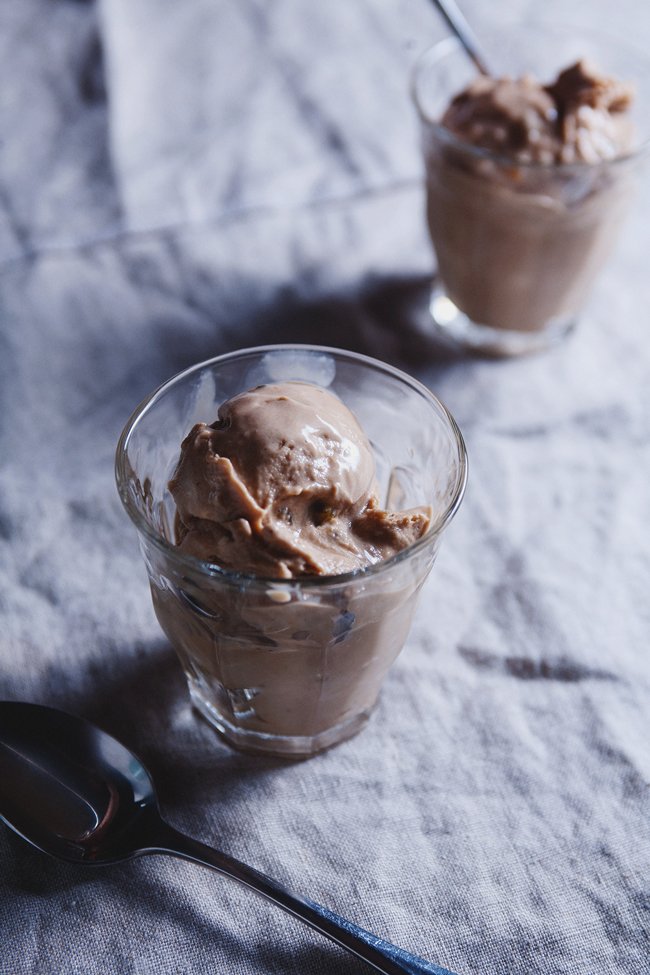
I am long overdue with a post, yet would you believe me if I told you that nothing I’ve cooked lately has turned out well?
There was a cauliflower gratin that drowned in too much cheese sauce, there was a papaya lassi that in theory sounded great, but in practice turned out bland and nothing, nothing, could fix it. There were blueberry scones that confirmed what I already knew: I don’t like scones. There was carnitas, which actually turned out wonderfully, but since I didn’t take any pictures, it’s like it never happened. Remind me to share it with you some time.
Do you ever have weeks like this? Weeks where all your efforts seem in vain, where you can’t even make a batch of banana bread muffins without botching it somehow? (I forgot to mix the butter in until the very last minute. Oops.) These have been discouraging times.
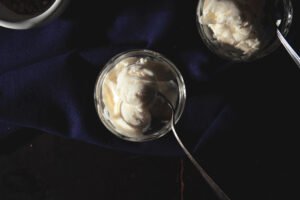
I’ve finally hit upon a recipe that I like, a lot. It came out tasting the way I imagined, pretty much perfect, and I’m actually excited that there’s quite a bit left over in the fridge. Most importantly, it feels true to me. The only negative is that it’s really melty. But c’mon guys, it’s chai ice cream! And there’s honeycomb in it! Melty or not, it tastes pretty spectacular.
I thought I’d share. I need to share. I’m so tired of keeping all this frustration to myself, and I’m pretty sure you all understand. So with that caveat, plow ahead. I’m sure that with a little bit of tinkering, I’ll get it right. Plus, I think where I went wrong is that I didn’t freeze it long enough before churning it (try to refrigerate the custard overnight if you can).
Here’s the honeycomb. It hardens in the ice cream to about the consistency of cookie dough.

MELTY CHAI ICE CREAM WITH HONEYCOMB
Makes about 1 quart
Ingredients:
- 1-1/2 cups whole milk
- 1-1/2 cups heavy cream
- 2 Tbsp loose black tea leaves (such as assam)
- 3/8 to 1/2 tsp chai masala (recipe below)
- 1/2 cup + 2 Tbsp sugar
- 6 egg yolks
- about 1/2 pound honeycomb, cut into bite-sized pieces
- 1/2 tsp vanilla
Directions:
In a medium saucepan, bring milk and heavy cream to a simmer. Remove from heat. Place an infuser with the loose tea leaves and spices in the milk mixture and steep for about 20 minutes.
In a separate medium bowl, whisk the yolks and sugar until combined. Slowly add the milk mixture, whisking all the while. Return the mixture to the medium saucepan and turn the heat on to medium-low. Heat, stirring frequently, until the mixture coats the back of the spoon and swiping a finger through leaves a line. Stir in the vanilla and transfer to a container, covered with saran wrap. Store in fridge at least 4 hours, although overnight is optimal.
The next day, churn the ice cream according to your manufacturer’s instructions, adding the honeycomb towards the end. Freeze until the ice cream is at the consistency you like.
CHAI MASALA
Adapted from The Hathi Cooks
Will make more than you need, but you can keep it around and make chai whenever you feel like it. A little goes a long way.
Ingredients:
4 tsp ground black pepper
3 tsp ground ginger
1 tsp ground cinnamon
1 tsp ground cardamom
pinch nutmeg
Directions:
Combine and store in an airtight container.
Related Posts

Subscribe for New Racipies
Get mental health tips, updates, and resources delivered to your inbox.