
Red Bull Caffeine Content: How Much Is in Each Can, Bottle & Size?

Medically reviewed by Dr. Aris Thorne Updated Date: May 13, 2026
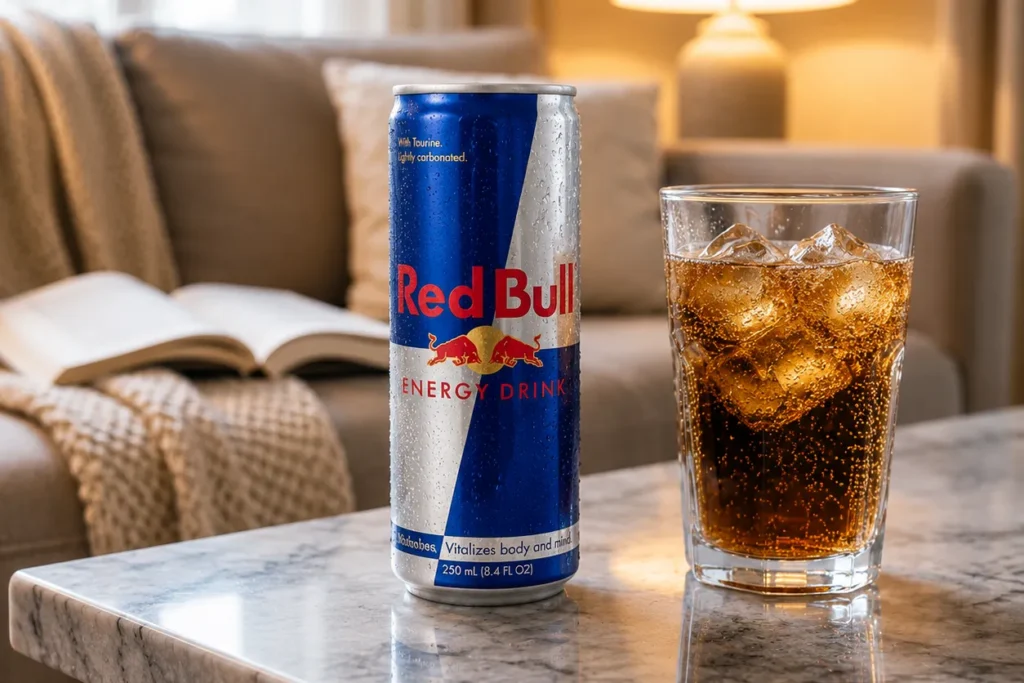
As Dr. Amelia Vance, I frequently speak with patients who rely on energy drinks to push through exhausting workdays, workouts, or afternoon fatigue. One of the most common questions I hear is about Red Bull caffeine, especially from people who consume it regularly without fully understanding its stimulant content.
Many patients assume a single can is harmless, but they often forget to account for additional caffeine from coffee, soda, pre-workout supplements, or tea throughout the day. These hidden sources can quickly push total intake higher than expected.
According to the FDA’s caffeine safety guidelines, up to 400 milligrams per day is generally considered safe for most healthy adults, though individual sensitivity varies widely.
In my clinic, I regularly treat individuals dealing with insomnia, anxiety, rapid heartbeat, and energy crashes linked to excessive stimulant consumption. Red Bull remains one of the most popular energy drinks in the world, yet many consumers don’t know how caffeine levels vary by can size and flavor.
Understanding what you’re putting into your body is essential for protecting your sleep quality, cardiovascular health, and daily energy balance. Research from the Sleep Foundation confirms that even moderate caffeine intake consumed late in the day can significantly disrupt sleep architecture.
In this guide, I’ll break down Red Bull caffeine levels by size and variety, compare it to coffee, and help you understand how it fits into a healthier lifestyle. You can also compare Red Bull to other popular options in our caffeine calculator tool.
TL;DR: Quick Overview
- Standard 8.4 oz (250 ml) can: Exactly 80 mg caffeine—a moderate dose for most adults.
- Per 100 ml baseline: ~32 mg globally, useful for calculating custom portions.
- Larger sizes scale up: 16 oz can contains ~151 mg; a 20 oz can delivers ~189 mg.
- Vs. coffee: Contains slightly less caffeine than a standard 8-oz cup of brewed coffee (~95 mg).
- Sugar-free versions: Maintain identical caffeine content (~80 mg per 8.4 oz).
- Clinical takeaway: Track cumulative caffeine from all sources to protect sleep and cardiovascular health.
How Much Stimulant Is in a Standard Can?
Most people start their energy drink journey with the classic, small silver can. If you want to know the Red Bull caffeine content, look at this baseline. A traditional 8.4 oz (250 ml) serving contains exactly 80 milligrams of the active compound, per USDA FoodData Central nutritional databases. This amount provides a very noticeable, rapid boost in mental alertness.
In my clinical practice, I often explain that 80 mg acts as a moderate dose. It is enough to block sleep receptors but usually not enough to cause severe jitters, according to the Mayo Clinic.
However, your personal metabolic rate heavily dictates how this amount affects you. Some patients feel this 80 mg for hours, while others process it very quickly.
Therefore, treating this baseline measurement with respect is highly recommended for your nervous system. For personalized tracking, try our caffeine calculator by weight and age.
Analyzing the Milligrams Per 100ml
When comparing different beverages, medical professionals always look at the standard 100ml concentration. This metric allows us to evaluate the liquid’s true strength fairly.
If you are wondering about the Red Bull caffeine per 100ml, it sits at 32 mg. This specific concentration remains highly consistent across the original and diet formulas, according to manufacturer disclosures reviewed by the European Food Safety Authority.
Why is this 32 mg number so important for your daily health? It helps you calculate your exact intake if you pour a partial glass.
Furthermore, European and UK nutritional labels rely heavily on this standard measurement. By knowing this baseline, you can safely navigate beverage choices anywhere in the world. Consequently, you can easily compare this drink against sodas or bottled teas at the grocery store.
Content Variations by US Ounce Sizes
The total amount of stimulation you consume depends entirely on the package size you purchase. This section requires detailed attention because the numbers scale up quite dramatically.
Let us start with the 8.4 oz Red Bull caffeine amount, which is exactly 80 mg. Moving up, the 12-oz Red Bull caffeine levels reach approximately 114 mg.
This 12-oz size remains incredibly popular at convenience stores across the United States. Furthermore, many consumers regularly reach for the much larger 16-oz Red Bull caffeine option.
A 16 oz can delivers a very potent 151 mg directly to your bloodstream. This dose acts as a significant central nervous system stimulant for most average adults. Finally, we must discuss the massive 20 oz Red Bull caffeine content. This giant container holds roughly 189 mg of the active ingredient.
Consuming this 20-oz size delivers nearly half of the FDA’s maximum daily recommended limit. Therefore, you must treat these larger sizes with extreme caution to avoid uncomfortable side effects.
| Size | Approximate Amount |
|---|---|
| 8.4 oz (250 ml) | 80 mg |
| 12 oz (355 ml) | ~114 mg |
| 16 oz (473 ml) | ~151 mg |
| 20 oz (591 ml) | ~189 mg |
Source: Manufacturer nutritional data; values may vary by region and formulation.
Understanding Metric Size Differences
International travelers and consumers outside the US often rely entirely on metric measurements. Let us break down these specific metric sizes for complete clarity and safety. First, how much caffeine is in Red Bull 250 ml? As established, this standard size holds 80 mg.
Next, you might wonder how much caffeine is in Red Bull 330 ml cans. These slightly taller cans contain approximately 106 mg of the stimulant.
This 330ml size perfectly mirrors standard soda cans found in Europe and Australia. Finally, we frequently see patients asking how much caffeine is in Red Bull 500 ml bottles. A 500ml container packs a massive 160 mg punch. Drinking an entire 500ml can equates to drinking two classic 8.4 oz cans simultaneously.
| Size | Approximate Amount |
|---|---|
| 250 ml | 80 mg |
| 330 ml | ~106 mg |
| 500 ml | ~160 mg |
Comparing the Energy Drink to Brewed Coffee
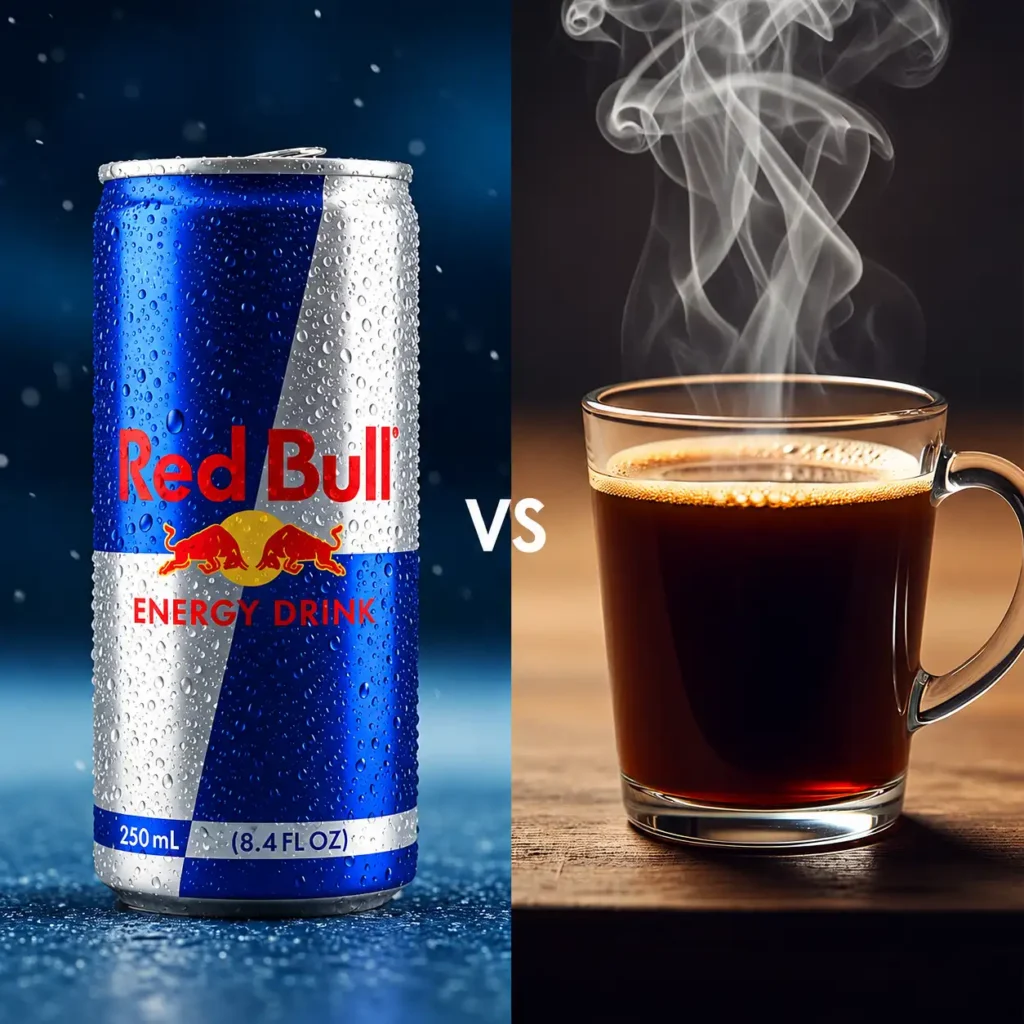
Many patients use these modern beverages to entirely replace their morning coffee routine. Therefore, a direct clinical comparison between the two remains absolutely essential.
When evaluating Red Bull caffeine vs coffee, people often assume the energy drink is stronger. Surprisingly, a standard 8 oz cup of home-brewed coffee usually contains more stimulants, per Harvard T.H. Chan School of Public Health.
A classic 8 oz coffee typically delivers roughly 95 mg of the active compound. In contrast, the standard 8.4 oz energy drink delivers only 80 mg.
| Beverage | Approximate Amount |
|---|---|
| Standard Can (250 ml) | 80 mg |
| Brewed Coffee (8 oz) | ~95 mg |
However, the energy beverage often feels significantly more intense to the consumer. This happens because the carbonation and liquid format allow your stomach to absorb it faster. For more on coffee’s properties, see our discussion on whether coffee is acidic.
Additionally, you usually drink cold beverages much faster than hot, freshly brewed coffee. Consequently, the stimulant hits your bloodstream in a sudden, powerful wave.
The Mechanism Behind the Intense Energy Surge
Why does this specific drink make you feel so incredibly weird? Recently, I interviewed a patient who felt jittery after just one small can. We discussed how the beverage uses a powerful synergy of multiple active ingredients. It combines the central nervous stimulant with massive amounts of simple sugars.
This combination spikes your blood glucose rapidly while simultaneously blocking adenosine receptors in your brain. Adenosine is the natural chemical that makes you feel tired, as explained by the Mayo Clinic.
Furthermore, the formula includes taurine and synthetic B vitamins to enhance metabolic function. The Food and Drug Administration notes that these fast-acting liquid ingredients peak quickly.
As a result, your body experiences a sharp spike in adrenaline and heart rate. While effective for short-term alertness, this rapid spike often leads to a severe afternoon crash.
Does the Sugar-Free Version Change the Boost?
Health-conscious individuals frequently switch to diet options to save on daily calories. You might wonder about the sugar-free Red Bull caffeine concentration.
The manufacturer keeps the stimulant profile exactly the same across these diet versions. Therefore, a standard 8.4 oz diet can still deliver exactly 80 mg, according to manufacturer disclosures.
You will still experience the exact same neurological alertness and blocked sleep receptors. However, you completely avoid the rapid blood sugar spike and the subsequent glucose crash.
For my patients who insist on drinking these beverages, I strongly recommend the sugar-free option. It provides a much cleaner energy lift without disrupting your vital insulin levels. For patients managing blood sugar concerns, the American Diabetes Association offers additional guidance on caffeine and glucose management.
Seeking a Completely Stimulant-Free Option
Sometimes you just want the unique, tart flavor without the severe nervous system stimulation. Many consumers actively search for a completely Red Bull caffeine-free product.
Currently, the manufacturer does not produce a mainstream, completely stimulant-free version of their classic drink. This causes significant confusion at the grocery store.
Many people accidentally buy the sugar-free version, mistakenly believing it lacks stimulants entirely. Always remember that “sugar-free” absolutely does not mean “stimulant-free.”
If you suffer from severe anxiety or insomnia, you must avoid this brand entirely. You cannot get the classic flavor without consuming at least 80 mg of the active chemical.
Evaluating the Calories and Sweeteners
Beyond the stimulants, we must seriously evaluate the overall nutritional profile of these drinks. The caloric density plays a massive role in your long-term metabolic health.
A regular 8.4 oz can contains approximately 110 calories and 27 grams of added sugar. This massive sugar load acts identically to eating a large candy bar.
| Type | Sugar | Calories |
|---|---|---|
| Regular (8.4 oz) | ~27g | ~110 kcal |
| Sugar-Free (8.4 oz) | 0g | ~10 kcal |
Conversely, the diet versions utilize artificial sweeteners like aspartame and acesulfame potassium. These alternative sweeteners bring the total count down to a mere 10 calories.
While artificial sweeteners carry their own minor controversies, they are usually better for weight management. Thus, choosing the diet version helps protect your daily caloric limits significantly.
Do Different Flavors Alter the Chemical Profile?
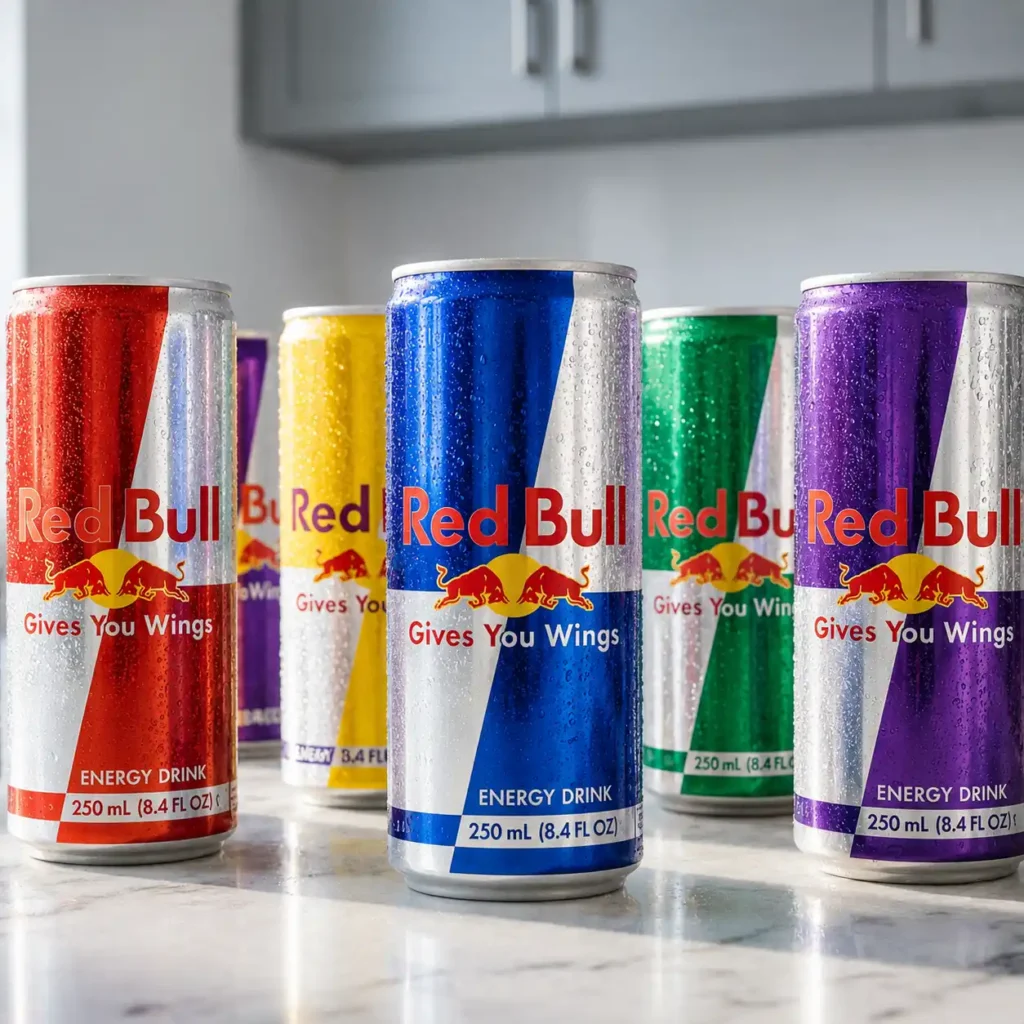
The modern beverage aisle features a massive rainbow of different flavored editions. Patients often ask if these fruity flavors contain different chemical profiles.
Whether you choose watermelon, tropical, or blueberry, the core formula remains highly stable. The various flavors do not significantly alter the primary stimulant concentration at all.
A flavored 8.4 oz can will still deliver the standard 80 mg to your system. The company simply swaps out the aromatic compounds to create a new taste experience.
Therefore, you can freely rotate between your favorite colors without recalculating your daily intake limits. Just remember to check whether your chosen flavor contains full sugar or zero sugar.
Clinical Safety Guidelines for Daily Consumption
As a public health specialist, establishing safe consumption boundaries is my top priority. The FDA provides very clear guidelines regarding safe daily limits for healthy adults.
Generally, consuming up to 400 mg per day remains perfectly safe for most people. This means drinking one or two standard 8.4 oz cans fits easily within safe parameters.
However, personal metabolic tolerance varies wildly from person to person. Genetic variations in the CYP1A2 liver enzyme dictate how fast you clear caffeine from your system, per NIH genetic research. A young athlete might process two cans easily, while an older adult might experience severe palpitations.
The Centers for Disease Control and Prevention strongly recommends monitoring your individual physical reactions. If one can makes you feel slightly uncomfortable, you have officially reached your biological limit.
Recognizing Uncomfortable Side Effects
Overstepping your metabolic boundaries leads to highly uncomfortable and sometimes dangerous physical symptoms. Recognizing these warning signs early can prevent a trip to the emergency room.
The most common side effect is severe, rapid-onset anxiety and a racing heart. You might feel your heart pounding aggressively against your chest wall, according to the American Heart Association.
Furthermore, excessive consumption late in the day almost guarantees profound insomnia. Your brain simply cannot transition into deep, restorative sleep while blocked by these chemicals.
Other notable symptoms include hand tremors, digestive distress, and extreme mental irritability. If you experience any of these red flags, stop drinking the beverage immediately and hydrate with water.
High-Risk Groups Who Should Avoid Consumption
While perfectly healthy adults can enjoy these drinks moderately, certain groups must abstain completely. Teenagers and young children should never consume these highly concentrated liquids.
Their developing neurological and cardiovascular systems simply cannot handle sudden chemical spikes safely. Furthermore, pregnant individuals must strictly avoid these high-potency beverages entirely. The American College of Obstetricians and Gynecologists recommends that pregnant individuals limit caffeine to less than 200 mg per day.
The active compounds easily cross the placental barrier, potentially elevating the fetal heart rate. Additionally, anyone with a history of cardiac arrhythmias or high blood pressure must exercise extreme caution.
For these sensitive groups, the risk of a dangerous cardiac event vastly outweighs the temporary energy benefits. Always consult your primary care physician if you have underlying health concerns.
Establishing a Healthy Personal Limit
How much is actually too much for a normal, healthy workday? Building a sustainable daily habit requires total honesty about your other dietary sources.
If you drink absolutely no other stimulants, two standard cans remain perfectly acceptable. However, if you also drink coffee or tea, you must combine those numbers. For additional guidance on timing and tolerance, consult our does Pepsi have caffeine guide.
In my clinic, I use a simple rule: never exceed three standard beverages daily. Once you hit that third can, you are actively pushing toward the 400 mg danger zone.
Moreover, I strongly advise my patients to enforce a strict 2:00 PM cutoff time. This allows your liver roughly ten hours to clear the chemicals before your bedtime. For patients with acid reflux or GERD concerns, certain caffeinated beverages may exacerbate symptoms. Review our guide on foods to avoid with GERD for personalized dietary strategies.
FAQs
How much caffeine is in a 12 oz Red Bull?
A 12-oz Red Bull contains approximately 114 mg caffeine. That’s a solid boost—stronger than a standard home-brewed coffee cup. But remember: this size isn’t the classic can. Always check the label before sipping. Track your total daily intake across all sources. Small awareness prevents jitters, anxiety, or sleep trouble. Your body deserves mindful fueling.
Is Red Bull stronger than coffee?
Generally, no. An 8.4-oz Red Bull has 80 mg caffeine. A standard 8-oz coffee cup packs ~95 mg. But energy drinks hit faster due to carbonation and added ingredients. Strength isn’t just about milligrams—it’s about timing, tolerance, and total intake. Choose based on your goals. Your nervous system will thank you.
Does sugar-free Red Bull have caffeine?
Yes—Sugar-Free Red Bull contains the exact same 80 mg caffeine per 8.4-oz can as the regular version. Removing sugar doesn’t remove stimulation. If you’re watching calories but want energy, it fits. But if you’re avoiding caffeine entirely, this isn’t your pick. Read labels. Know your limits. Small choices create big comfort.
How much caffeine is in Red Bull 500ml?
A 500ml Red Bull bottle delivers roughly 160 mg caffeine. That’s equivalent to two standard cans—and nearly half the FDA’s daily limit. Sip slowly to avoid jitters or crashes. If you’re sensitive, consider splitting it. High caffeine isn’t always better. Balance fuel with calm. Your long-term health matters more than short-term energy.
Do the flavored editions have different stimulant levels?
No—Red Bull’s flavored editions (tropical, peach, watermelon, etc.) maintain the same 80 mg caffeine per 8.4-oz can. Flavor changes don’t alter the stimulant profile. Enjoy your favorite taste without worrying about hidden spikes. Just track your total daily intake across all beverages. Mindful sipping supports steady, calm energy throughout your day.
Is Red Bull safe during pregnancy?
The American College of Obstetricians and Gynecologists (ACOG) recommends that pregnant individuals limit caffeine to less than 200 mg per day. Since a standard Red Bull can contains 80 mg, moderate consumption may fit within this threshold—but always consult your OB-GYN first. Individual health factors and total daily intake from all sources matter most.
Conclusion
In conclusion, understanding exactly how much Red Bull caffeine you consume is vital for your long-term health. As we have thoroughly explored, a standard 8.4 oz can delivers a very precise 80 mg of stimulation.
This amount is generally safe, acting similarly to a small cup of morning coffee. However, the danger usually lies in the incredibly popular larger sizes.
Gulping down a 16 oz or 20 oz can drastically increases your chemical intake in mere minutes. As a medical professional, I constantly urge my patients to read these nutritional labels very carefully.
Treat these popular beverages exactly like you would treat an over-the-counter medication. Use them sparingly, respect their potency, and never mix them with other heavy stimulants.
By choosing the sugar-free options and strictly limiting your portion sizes, you can safely enjoy the boost. Always listen to your body, stop drinking by mid-afternoon, and prioritize your natural, restorative sleep above everything else.
For ongoing updates on beverage safety and nutrition science, bookmark our food and nutrition resource center. For additional personalized health guidance, consult resources like the National Coffee Association’s health research or speak with your healthcare provider about your individual caffeine tolerance and cardiovascular risk factors.
Evidence-Based References:
- FDA: Caffeine Safety Guidelines. https://www.fda.gov/consumers/consumer-updates/spilling-beans-how-much-caffeine-too-much
- Harvard T.H. Chan School of Public Health: Caffeine & Health. https://nutritionsource.hsph.harvard.edu/caffeine/
- USDA FoodData Central. https://fdc.nal.usda.gov/
- Sleep Foundation: Caffeine & Sleep. https://www.sleepfoundation.org/nutrition/caffeine-and-sleep
- Mayo Clinic: Caffeine Safety Limits. https://www.mayoclinic.org/healthy-lifestyle/nutrition-and-healthy-eating/in-depth/caffeine/art-20045678
- American Heart Association: Energy Drinks & Heart Health. https://www.heart.org/en/news/2019/05/29/energy-drinks-may-provide-jolt-to-heart-function-blood-pressure
- American Diabetes Association: Caffeine & Blood Sugar. https://diabetes.org/health-wellness/fitness/sports-drinks-impact-on-glucose-blood-sugar
- NIH PMC: CYP1A2 Genetic Variability Study. https://pmc.ncbi.nlm.nih.gov/articles/PMC2784188/
- ACOG: Caffeine During Pregnancy. https://www.acog.org/clinical/clinical-guidance/committee-opinion/articles/2010/08/moderate-caffeine-consumption-during-pregnancy
- CDC: Caffeine & Youth Nutrition. https://blogs.cdc.gov/nchs/2014/02/19/2035/
- National Coffee Association: Coffee & Health Research. https://www.ncausa.org/About-Coffee/Coffee-Health-Research
Related Posts

Subscribe for New Racipies
Get mental health tips, updates, and resources delivered to your inbox.
Melty Chai Ice Cream With Honeycomb

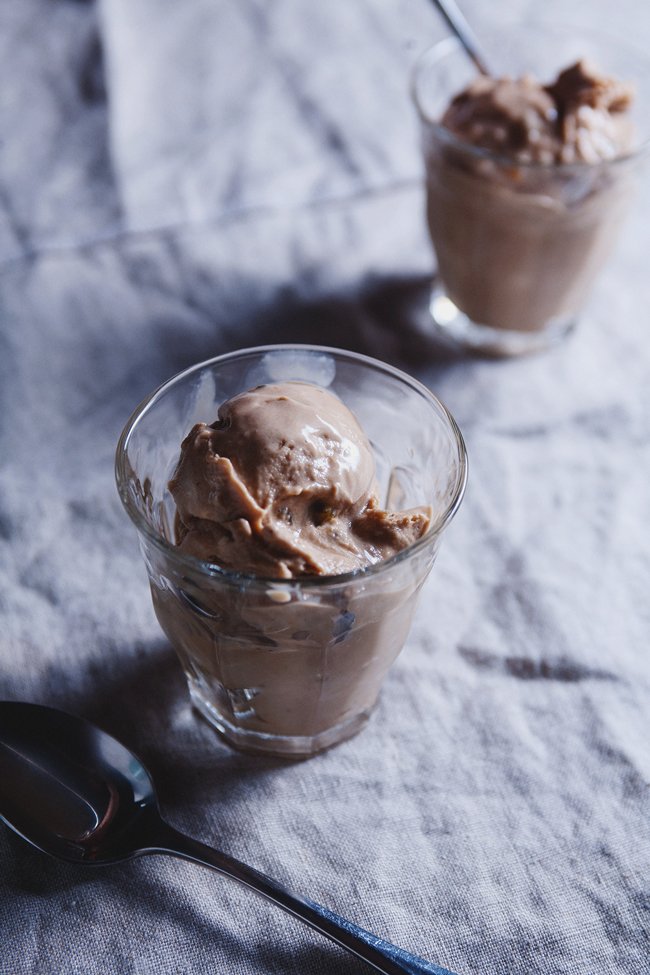
I am long overdue with a post, yet would you believe me if I told you that nothing I’ve cooked lately has turned out well?
There was a cauliflower gratin that drowned in too much cheese sauce, there was a papaya lassi that in theory sounded great, but in practice turned out bland and nothing, nothing, could fix it. There were blueberry scones that confirmed what I already knew: I don’t like scones. There was carnitas, which actually turned out wonderfully, but since I didn’t take any pictures, it’s like it never happened. Remind me to share it with you some time.
Do you ever have weeks like this? Weeks where all your efforts seem in vain, where you can’t even make a batch of banana bread muffins without botching it somehow? (I forgot to mix the butter in until the very last minute. Oops.) These have been discouraging times.
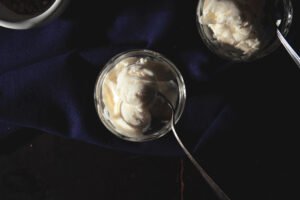
I’ve finally hit upon a recipe that I like, a lot. It came out tasting the way I imagined, pretty much perfect, and I’m actually excited that there’s quite a bit left over in the fridge. Most importantly, it feels true to me. The only negative is that it’s really melty. But c’mon guys, it’s chai ice cream! And there’s honeycomb in it! Melty or not, it tastes pretty spectacular.
I thought I’d share. I need to share. I’m so tired of keeping all this frustration to myself, and I’m pretty sure you all understand. So with that caveat, plow ahead. I’m sure that with a little bit of tinkering, I’ll get it right. Plus, I think where I went wrong is that I didn’t freeze it long enough before churning it (try to refrigerate the custard overnight if you can).
Here’s the honeycomb. It hardens in the ice cream to about the consistency of cookie dough.

MELTY CHAI ICE CREAM WITH HONEYCOMB
Makes about 1 quart
Ingredients:
- 1-1/2 cups whole milk
- 1-1/2 cups heavy cream
- 2 Tbsp loose black tea leaves (such as assam)
- 3/8 to 1/2 tsp chai masala (recipe below)
- 1/2 cup + 2 Tbsp sugar
- 6 egg yolks
- about 1/2 pound honeycomb, cut into bite-sized pieces
- 1/2 tsp vanilla
Directions:
In a medium saucepan, bring milk and heavy cream to a simmer. Remove from heat. Place an infuser with the loose tea leaves and spices in the milk mixture and steep for about 20 minutes.
In a separate medium bowl, whisk the yolks and sugar until combined. Slowly add the milk mixture, whisking all the while. Return the mixture to the medium saucepan and turn the heat on to medium-low. Heat, stirring frequently, until the mixture coats the back of the spoon and swiping a finger through leaves a line. Stir in the vanilla and transfer to a container, covered with saran wrap. Store in fridge at least 4 hours, although overnight is optimal.
The next day, churn the ice cream according to your manufacturer’s instructions, adding the honeycomb towards the end. Freeze until the ice cream is at the consistency you like.
CHAI MASALA
Adapted from The Hathi Cooks
Will make more than you need, but you can keep it around and make chai whenever you feel like it. A little goes a long way.
Ingredients:
4 tsp ground black pepper
3 tsp ground ginger
1 tsp ground cinnamon
1 tsp ground cardamom
pinch nutmeg
Directions:
Combine and store in an airtight container.
Related Posts
Subscribe for New Racipies
Get mental health tips, updates, and resources delivered to your inbox.