
Are Pineapples Acidic? Pineapple and Acid Reflux [Good or Bad]

Medically reviewed by Aneeza Pervez Updated Date: January 5, 2026
Pineapple is a tropical delight enjoyed worldwide for its sweet and tangy flavor. But if you’re prone to acid reflux, you might be wondering, “Are pineapples acidic?”
The short answer is yes. But the relationship between pineapple and acid reflux is more nuanced than a simple yes or no.
This article dives deep into the acidity of pineapples, their potential effects on acid reflux, and how you can enjoy this tropical fruit responsibly.
What is Acid Reflux?
Acid reflux, also known as heartburn or gastroesophageal reflux (GER), occurs when stomach acid flows back up into the esophagus.
This backflow irritates the esophageal lining, causing a burning sensation in the chest. Frequent or severe acid reflux can lead to gastroesophageal reflux disease (GERD), a more serious condition.
The Acidity of Pineapples: The pH Factor
pH is a scale that measures how acidic or alkaline a substance is. The scale ranges from 0 to 14, with 0 being the most acidic, 7 being neutral, and 14 being the most alkaline. Pineapples typically have a pH between 3.3 and 3.6, making them quite acidic. For comparison:
| Food | Approximate pH |
| Lemon Juice | 2.0-2.4 |
| Pineapple | 3.3-3.6 |
| Tomatoes | 4.3-4.9 |
| Bananas | 4.5-5.2 |
| Water | 7.0 (Neutral) |
This acidity is primarily due to citric acid and other organic acids present in the fruit.
Pineapple and Acid Reflux: The Potential Problems
Because of their acidity, pineapples can potentially trigger or worsen acid reflux symptoms in some individuals. The high acid content can irritate the already inflamed esophageal lining.
Bromelain: A Double-Edged Sword
Pineapples contain bromelain, an enzyme with anti-inflammatory properties. Some studies suggest bromelain may actually help with certain digestive issues. However, in the context of acid reflux, the potential irritating effect of the fruit’s acidity might outweigh the benefits of bromelain for some.
Who is Most Likely to Experience Acid Reflux from Pineapple?
- Individuals with pre-existing GERD: Those with a history of frequent or severe acid reflux are more susceptible.
- Those with sensitive stomachs: Some people naturally have more sensitive digestive systems.
- Eating large quantities of pineapple: Consuming a large amount of pineapple at once can increase the likelihood of experiencing discomfort.
- Eating unripe pineapple: Unripe pineapples tend to be even more acidic.
Related to Read: Are Pineapple Juices Acidic
Tips for Enjoying Pineapple with Acid Reflux (If You Can)
If you love pineapple but are concerned about acid reflux, here are some tips:
- Eat pineapple in moderation: A small portion is less likely to cause problems than a large serving.
- Choose ripe pineapple: Ripe pineapples are generally less acidic than unripe ones.
- Eat pineapple with other foods: Combining pineapple with less acidic foods can help buffer its acidity.
- Avoid eating pineapple on an empty stomach: Eating it after a meal can help reduce its impact.
- Pay attention to your body: If you notice heartburn or other symptoms after eating pineapple, it’s best to avoid it or consume it very sparingly.
- Consider taking antacids: If you occasionally want to enjoy pineapple, taking an antacid beforehand may help prevent symptoms.
Author Tip: 7-Day Meal Plan For Gastritis
When to See a Doctor
If you experience frequent or severe acid reflux, regardless of pineapple consumption, it’s essential to consult a doctor. They can diagnose the underlying cause and recommend appropriate treatment.
FAQs
Is pineapple juice bad for acid reflux?
Yes, pineapple juice is also acidic and can have similar effects as eating the fruit itself.
Can pineapple help with digestion?
Bromelain in pineapple can aid in digestion, but this doesn’t negate the potential for acid reflux in susceptible individuals.
Are there any less acidic fruits I can eat instead?
Melons (cantaloupe, honeydew), bananas, and pears are generally less acidic.
Does cooking pineapple reduce its acidity?
Cooking can slightly reduce acidity, but it won’t eliminate it.
Conclusion
Pineapples are indeed acidic, and they can potentially trigger or worsen acid reflux in some people. However, by following the tips outlined in this article, many individuals can still enjoy this delicious fruit in moderation. If you have concerns about acid reflux, it’s always best to consult with a healthcare professional.
Related Posts



Subscribe for New Racipies
Get mental health tips, updates, and resources delivered to your inbox.
Pumpkin Spice Marshmallow Puffs

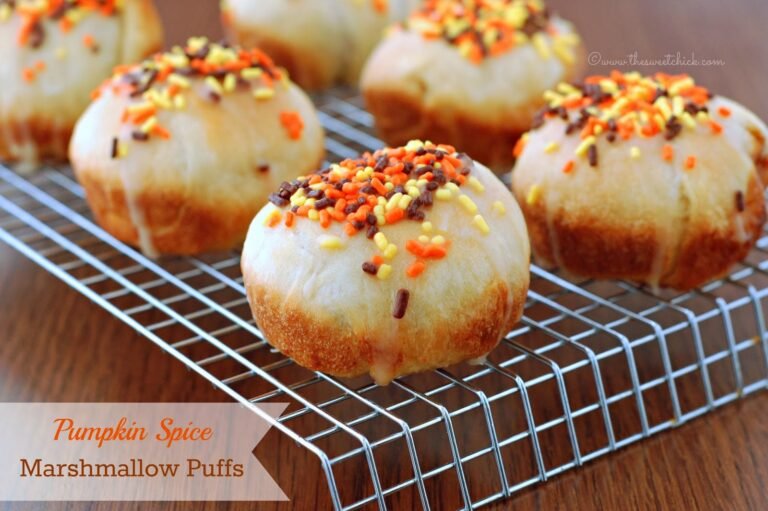
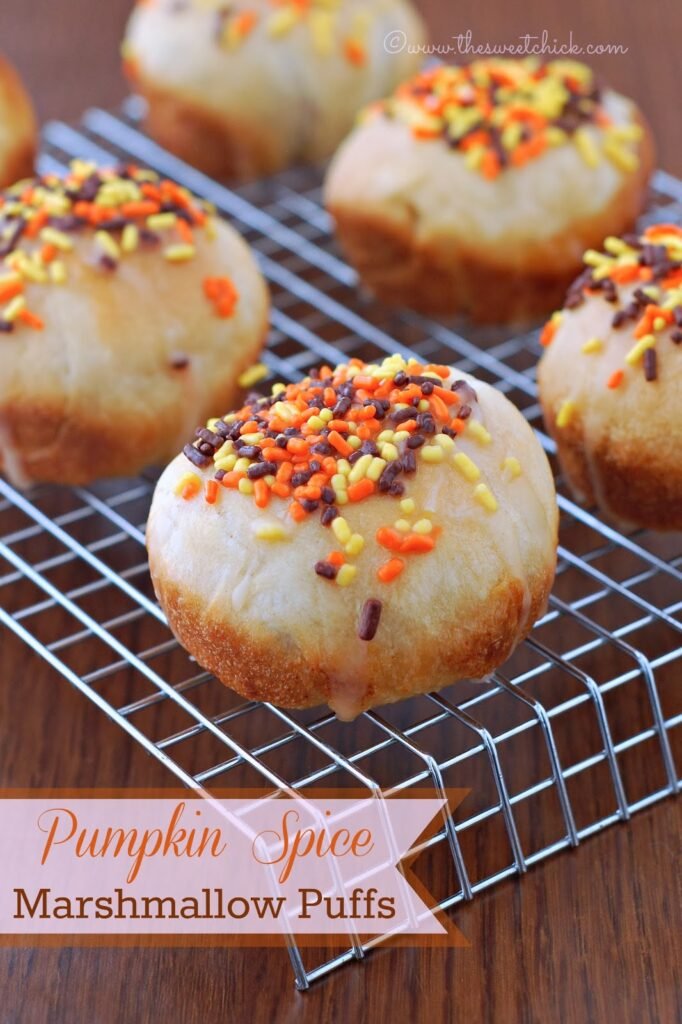
I was watching the Pillsbury Bake-off Contest 2013 all weekend via Instagram. There were a lot of my favorite bloggers in attendance. The whole event looked a lot of fun from their media perspective, but I couldn’t imagine how much pressure the contestants were feeling trying to win $1 million dollars. That’s just crazy. I don’t think I could perform under that kind of pressure. But I would love to know how it feels to win. Perhaps someday I will enter. In the meantime, I was inspired to whip up these little treats for the family this weekend.
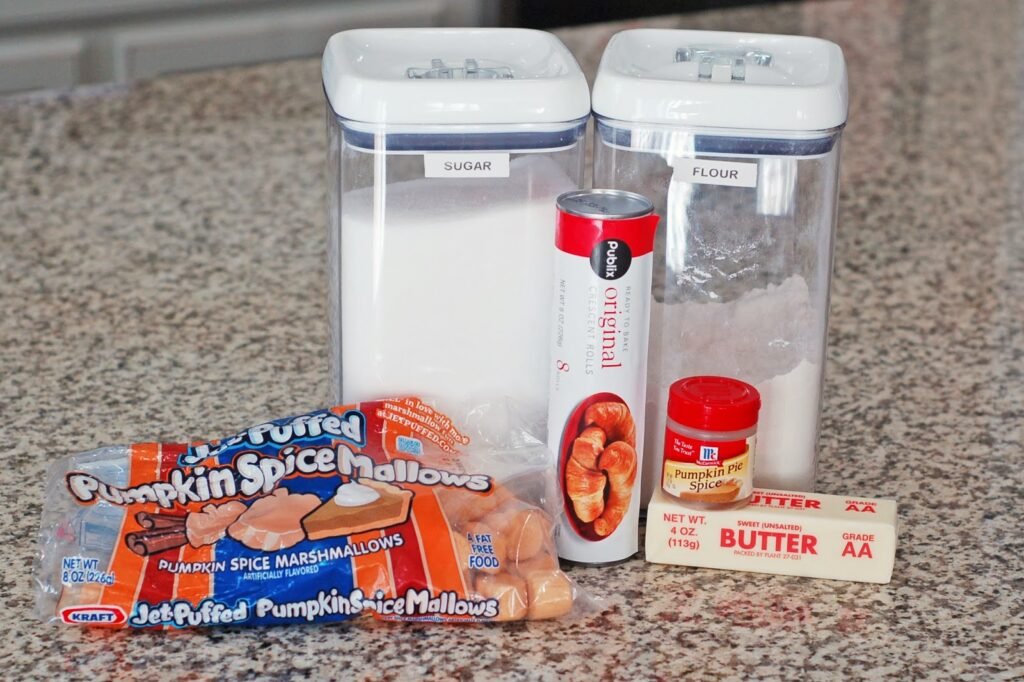
This recipe is adapted from the 1969 Pillsbury Bake-Off Contest winning recipe, the Magic Marshmallow Crescent Puffs. I had some leftover Jet-Puffed Pumpkin Spice Mallows in the pantry and didn’t want them to go to waste. I actually never made the marshmallow puffs before.

My daughter had a blast helping out. They are easy enough for a 7 year old to put them together.

Just dip the marshmallows in the butter and in the sugar mixture. Then roll them up in the crescent. Since the Pumpkin Spice Mallows are smaller than a regular marshmallow, I used two. And I rolled them up from the wide end of the crescent instead of the narrow end. I just folded the sides in over the marshmallows and then rolled them up.

Then you need to make sure all the edges are sealed. I just pinched them a little with my fingers.

Don’t forget to dip the bottoms in the remaining butter. This helps a lot if the crescents leak and makes a sticky mess.

I did have a couple of the puffs leak out a little filling, but since I had greased my pan well and with the added butter, they came out of the pan easily.
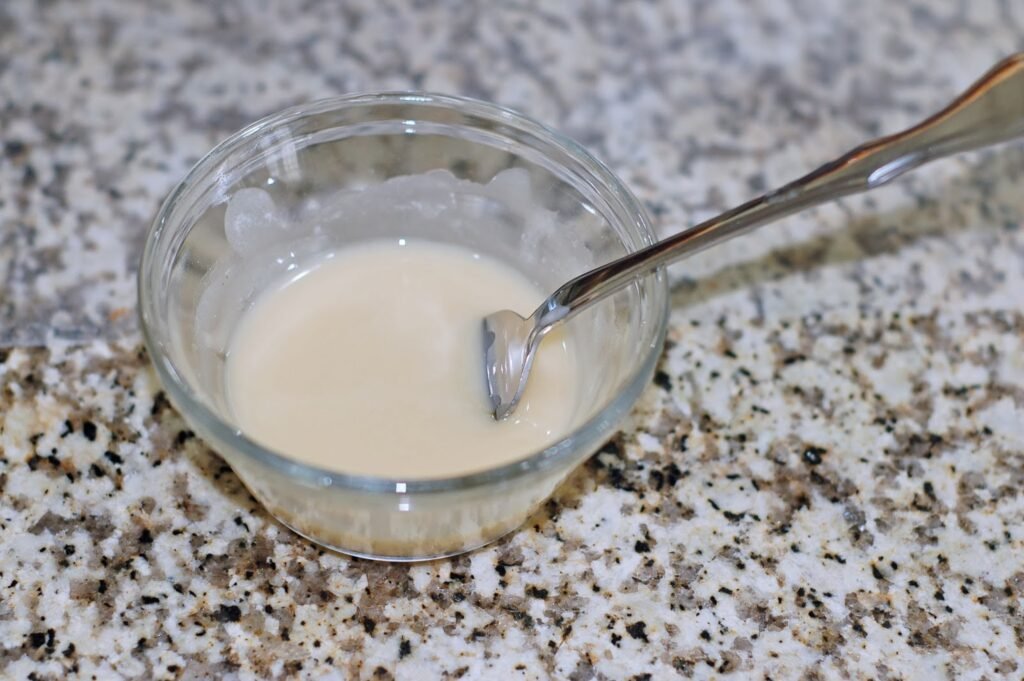
I added a little maple syrup to the glaze for a some extra flavor. And for fun, I added some sprinkles. I like how the marshmallows melt away and leave behind a sweet, gooey filling. The maple glaze topped it off just right.
hese are a great after school treat for the kids or you can double up the recipe for a party. Enjoy!
Pumpkin Spice Marshmallow Puffs
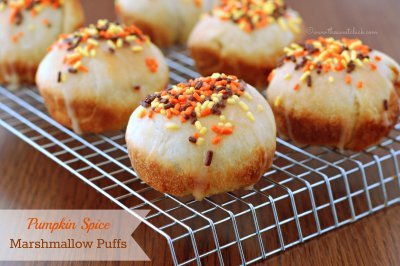
by The Sweet Chick
Prep Time: 15-20 minutes
Cook Time: 12-15 minutes
Keywords: bake dessert snack crescent rolls pumpkin spice pumpkin spice marshmallows maple syrup crescent rolls American fall
Ingredients (8 servings)
For the puffs
- 2 tablespoons sugar
- 1 tablespoon all purpose flour
- 1/2 teaspoon pumpkin pie spice
- 1 can (8 oz.) ready to bake crescent rolls
- 16 Jet-Puffed Pumpkin Spice Mallows
- 2 tablespoons butter, melted
For the glaze
- 1/4 cup powdered sugar
- 1 teaspoon pure maple syrup
- 1 tablespoon milk
Optional toppings
- sprinkles
Instructions
For the puffs
Preheat oven to 375º F.
In a small bowl, mix together the sugar, flour and spice.
Separate crescent rolls into 8 triangles and lay on a flat surface.
First dip each marshmallow in the melted butter, then dip each in the sugar mixture and coat evenly.
Place 2 marshmallows side by side at the widest end of the crescent roll. Wrap the side inwards over the marshmallows then roll until marshmallows are completely covered.
Pinch all seam with fingers to make sure they are sealed. Repeat process for all marshmallows until all crescent rolls are filled.
Dip bottoms of each filled crescent roll in the remaining butter and place buttered side down into a greased muffin pan. You may place muffin pan on a cookie sheet in case of spillage.
Bake at 375ºF for 12-15 minutes or until tops are golden.
Remove from oven and let the crescent puffs cool for 1-2 minutes.
Then remove them from the pan and place them on a cooling rack with a wax paper underneath and prepare the glaze.
For the glaze
in a small bowl mix together the sugar, syrup, and milk until smooth.
Then drizzle evenly over the crescent rolls with a spoon and let the glaze set.
For the toppings
If you want to add sprinkles, add them before the glaze sets.
You can serve these warm or at room temperature. Either way they are just as tasty. And they still taste good the second day if placed in an airtight container.
Related Posts



Subscribe for New Racipies
Get mental health tips, updates, and resources delivered to your inbox.