
Are Starfruits Acidic? Carambola pH and Kidney Warning

Medically reviewed by Jaclyn Weiner, RD, RDN, MEd, MS Updated Date: October 14, 2026
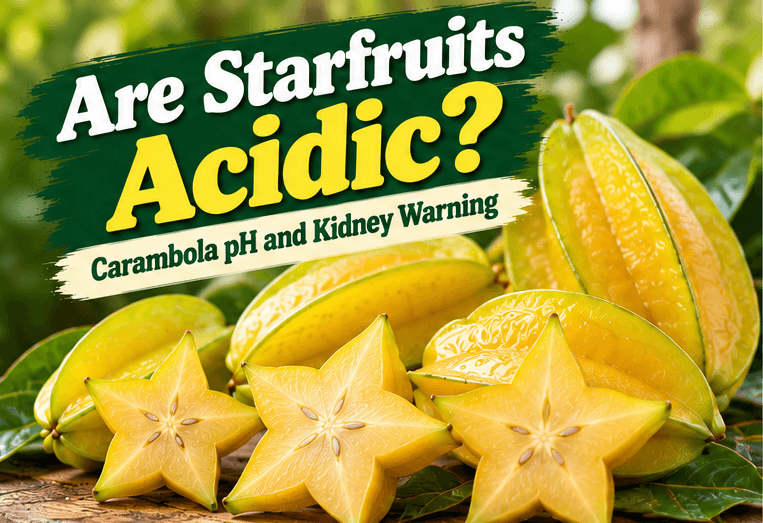
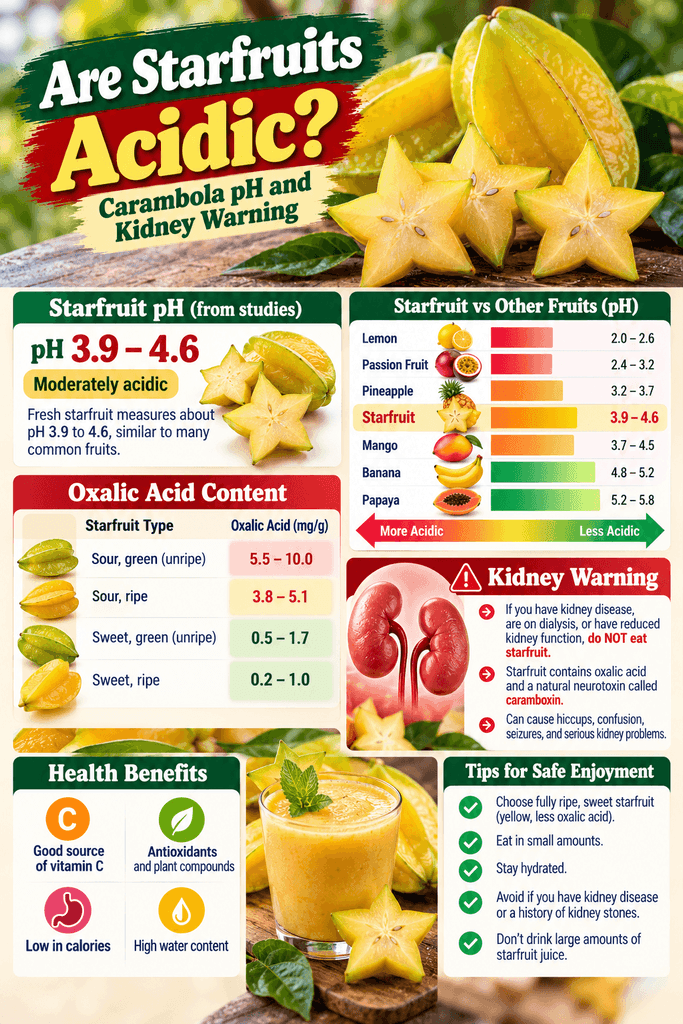
Yes, starfruit is moderately acidic. Limited lab studies have measured fresh starfruit (carambola) at a pH of about 3.9 to 4.6 (Dilrukshi et al., 2024; Etape et al., 2022), similar to many common fruits. But acidity is not the most important thing to know about starfruit. Starfruit contains oxalic acid and a natural neurotoxin called caramboxin. That’s why the National Kidney Foundation tells anyone with kidney disease to avoid it completely (National Kidney Foundation).
⚠️ Kidney warning: If you have chronic kidney disease, are on dialysis, or have reduced kidney function, do not eat starfruit or drink starfruit juice unless your doctor has told you it’s safe. Starfruit poisoning can cause hiccups, confusion, seizures, and, in serious cases, death (National Kidney Foundation). Even people with normal kidneys have developed acute kidney injury after eating starfruit, especially on an empty stomach or when dehydrated (Wijayaratne et al., 2018).
This guide covers starfruit’s pH, the difference between sweet and sour varieties, how starfruit compares with other fruits for acid reflux, and, most importantly, who should avoid it and why.
Key Takeaways
- Starfruit is moderately acidic, with fresh fruit measuring about pH 3.9 to 4.6 in the few studies available.
- Oxalic acid is the big issue, not pH. Starfruit is unusually high in oxalic acid, especially sour varieties and unripe fruit.
- People with kidney disease should never eat starfruit. Its neurotoxin, caramboxin, builds up when the kidneys can’t clear it.
- Even healthy kidneys can be harmed in rare cases, particularly with large amounts, juice, an empty stomach, or dehydration.
- Sweet, fully ripe starfruit has far less oxalic acid than sour or green fruit.
- For acid reflux, starfruit is middle-of-the-road. It’s not on the main trigger lists, but the kidney risks matter more for most readers.
Are Starfruits Acidic? The Short Answer
Yes. Starfruit has a pH below 7, so it’s acidic. The FDA’s widely used pH table doesn’t list starfruit (FDA), and published pH data are limited. Here’s what we found:
| Starfruit sample | pH | Titratable acidity | Source |
| Fresh starfruit (Sri Lanka) | 3.87 | 0.40% | Dilrukshi et al., 2024 |
| Bottled starfruit (Sri Lanka) | 3.93 | 0.36% | Dilrukshi et al., 2024 |
| Fresh starfruit juice (Cameroon) | 4.58 | Not reported for juice | Etape et al., 2022 |
| 20 genotypes (Nagaland, India) | Not reported | 0.13%–0.58% (mean 0.29%) | Pongener et al., 2022 |
Results vary by variety, ripeness, and growing region. We couldn’t find a published pH for sour varieties, but a 1991 study found sour starfruit had higher total acid than sweet starfruit (Joseph & Mendonca, 1991).
Based on these studies, ripe starfruit sits in the moderately acidic range, around the same zone as mangoes and guavas. Its total titratable acidity (about 0.1% to 0.6%) is also modest, lower than a tart Granny Smith apple’s 0.7% to 1.0% (Good Fruit Grower).
Why Oxalic Acid Matters More Than pH
Here’s what makes starfruit different from almost every other fruit we’ve covered. Its standout acid is oxalic acid, and the amount can be very high.
A pH reading doesn’t tell you how much oxalic acid a food contains. That matters because oxalate can form crystals in the kidneys. In the case reports discussed below, kidney biopsies showed oxalate crystal deposits.
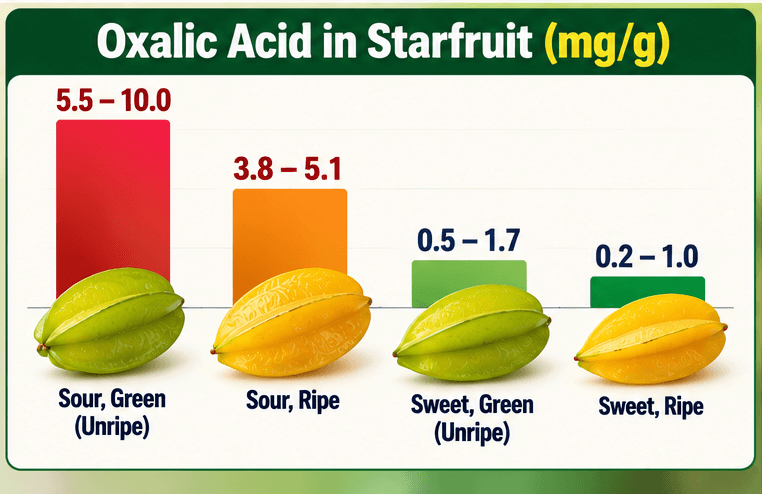
How much oxalic acid is in starfruit?
| Starfruit type | Oxalic acid (wet weight) | Source |
| Sour, green (unripe) | 5.5–10.0 mg/g | Joseph & Mendonca, 1991 |
| Sour, ripe | 3.8–5.1 mg/g | Joseph & Mendonca, 1991 |
| Sweet, green (unripe) | 0.5–1.7 mg/g | Joseph & Mendonca, 1991 |
| Sweet, ripe | 0.2–1.0 mg/g | Joseph & Mendonca, 1991 |
| 20 genotypes (India) | 0.76%–1.84% | Pongener et al., 2022 |
| Fresh juice (Cameroon) | 9.25 mg/mL | Etape et al., 2022 |
Studies used different methods and units, so compare within each study rather than across them.
Two clear patterns stand out from the Joseph and Mendonca study:
- Sour starfruit has several times more oxalic acid than sweet starfruit.
- Oxalic acid drops as the fruit ripens, in both sweet and sour types (Joseph & Mendonca, 1991).
For context, leafy greens like spinach and Swiss chard are also known for oxalate. But starfruit carries an extra risk those vegetables don’t: the neurotoxin caramboxin.
The Kidney Warning: Who Should Avoid Starfruit?
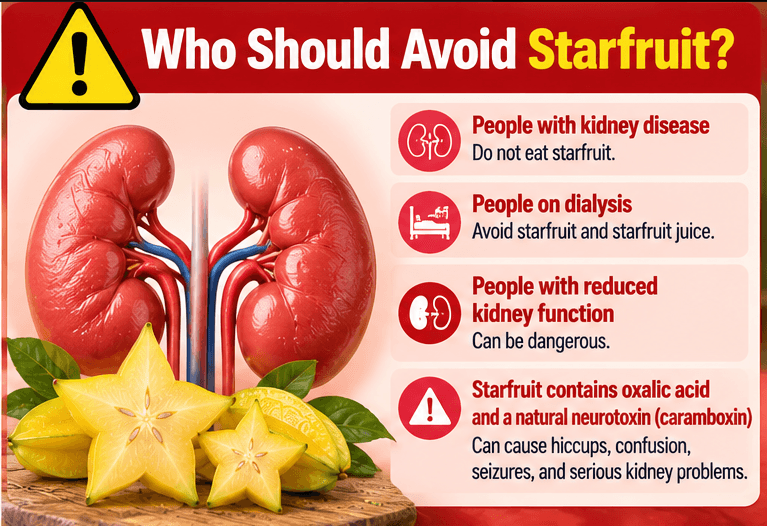
People with kidney disease: avoid it completely
The National Kidney Foundation is direct: “If you have kidney disease, it is important to avoid starfruit.” Starfruit contains a neurotoxin that healthy kidneys can filter out. When kidneys aren’t working well, the toxin “stays in the body and causes serious illness” (National Kidney Foundation).
According to the NKF, symptoms of starfruit poisoning include:
- Hiccups
- Mental confusion
- Seizures
- Death, in serious cases
What is caramboxin?
For years, researchers blamed starfruit’s toxicity on oxalate alone. More recent research points to a separate compound. A 2015 review in the Brazilian Journal of Nephrology explains that “recent findings show that the neurotoxic effect of the toxin is by caramboxin,” a compound believed to interfere with the brain’s main calming (inhibitory) signaling system (de Oliveira & de Aguiar, 2015). The review recommends that people with chronic kidney disease be warned to avoid starfruit.
People with normal kidneys: be careful too
Starfruit isn’t only a problem for people with known kidney disease. A 2018 case series from Sri Lanka described three people who developed acute kidney injury after eating starfruit. Two had known normal kidney function beforehand. Kidney biopsies showed oxalate crystal deposits in two of them. All three recovered, but two needed short-term dialysis (Wijayaratne et al., 2018).
The authors noted that eating starfruit “especially on an empty stomach or in a state of dehydration may precipitate acute kidney injury.” All three patients had diabetes, and the authors specifically said that using starfruit as a therapy for diabetes should be discouraged (Wijayaratne et al., 2018).
University of Florida’s carambola growing guide gives a similar warning: the fruit “may contain enough oxalic acid to cause a rapid decline in renal function,” and people diagnosed with kidney disease should not eat carambola unless their doctor says it’s safe (Crane, UF/IFAS HS12).
Safer-use tips for people with healthy kidneys
If your kidneys are healthy and you enjoy starfruit, these steps lower your risk. They’re based on the risk factors noted in the research above:
- Choose sweet, fully ripe starfruit, which has much less oxalic acid than sour or green fruit.
- Eat it as part of a meal, not on an empty stomach.
- Stay well hydrated, especially in hot weather or after exercise.
- Keep portions small. Have a few slices, not several whole fruits at once.
- Avoid starfruit juice and “juice cleanses.” Juice concentrates the fruit, and one study measured 9.25 mg/mL of oxalate in fresh juice (Etape et al., 2022).
- Don’t use starfruit as a home remedy for diabetes or other conditions.
Seek medical care right away if you develop hiccups that won’t stop, confusion, vomiting, weakness, reduced urination, or seizures after eating starfruit, and tell the doctor what you ate.
Sweet vs Sour Starfruit
Starfruit comes in sweet and tart (sour) types. University of Florida lists popular cultivars by flavor (Crane, UF/IFAS HS12):
| Cultivar | Flavor type | Notes (UF/IFAS) |
| Arkin | Sweet | “Good quality and flavor” |
| Kary | Sweet | “Very good quality and flavor” |
| Golden Star | Tart | “Tart unless picked fully ripe” |
UF/IFAS recommends sweet types for eating fresh, while both sweet and tart types are used for processing and recipes. Fruit ripened on the tree is the sweetest.
Why it matters: Sour starfruit is both tangier and much higher in oxalic acid. If you eat starfruit, sweet and fully ripe is the safer choice. Grocery stores rarely label starfruit by cultivar, so if you’re unsure, ask the seller whether it’s a sweet type, and choose fully ripe fruit.
How Starfruit Compares to Other Fruits
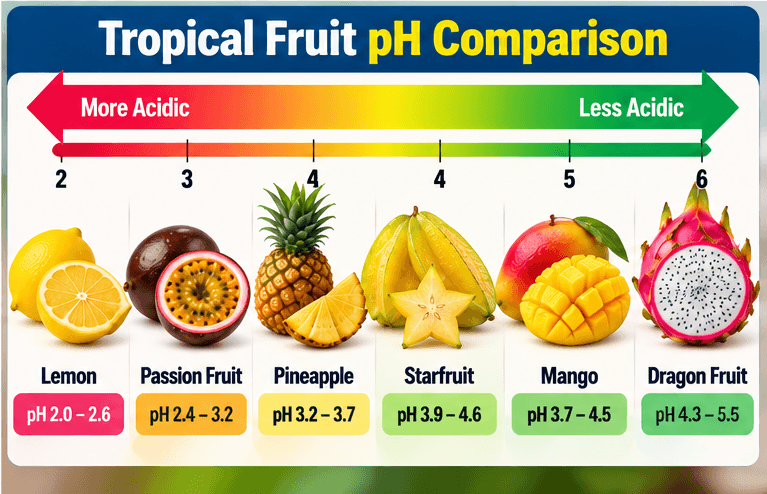
Here’s where starfruit lands next to other fruits in the FDA’s pH table (FDA):
| Fruit | Approximate pH |
| Lemon juice | 2.00–2.60 |
| Passion fruit pulp (studies) | About 2.4–3.2 |
| Pineapple | 3.20–4.00 |
| Mangoes, ripe | 3.40–4.80 |
| Guava, fresh (studies) | About 3.7–4.2 |
| Starfruit (studies) | About 3.9–4.6 |
| Persimmons | 4.42–4.70 |
| Dragon fruit (studies) | About 4.3–5.5 |
| Bananas | 4.50–5.20 |
| Papaya | 5.20–6.00 |
Source: FDA, Approximate pH of Foods and Food Products; starfruit, passion fruit, guava, and dragon fruit from published studies.
A few takeaways:
- Starfruit is less acidic than citrus and passion fruit by pH.
- It’s in the same moderate range as mangoes, guavas, and pineapple at its higher end.
- Dragon fruit, persimmons, and bananas are milder choices, and none of them carries starfruit’s kidney warning.
For the full list, see our complete guide to acidic foods.
Is Starfruit Bad for Acid Reflux?
Starfruit isn’t on the National Institute of Diabetes and Digestive and Kidney Diseases (NIDDK) list of foods that may worsen reflux, which includes citrus fruits, tomatoes, alcohol, chocolate, coffee and caffeine, high-fat foods, mint, and spicy foods (NIDDK). Its moderate acidity means some people with reflux may tolerate a few slices, while others may notice it, especially with sour varieties.
The American College of Gastroenterology’s 2022 guideline recommends that people with GERD identify their own triggers and avoid eating within 2 to 3 hours of bedtime (Katz et al., 2022).
But here’s the honest advice: if you’re looking for a reflux-friendly tropical fruit, there are better options. Dragon fruit, bananas, and papaya are lower in acid and don’t carry starfruit’s oxalate and kidney concerns.
If your kidneys are healthy and you want to try starfruit with reflux:
- Choose sweet, ripe fruit and eat a few slices with a meal.
- Pair it with low-acid foods like oatmeal, Greek yogurt, or cottage cheese.
- Skip starfruit juice, for both reflux and kidney reasons.
- Avoid eating it late at night.
For more guidance, see our list of foods to avoid with GERD.
Starfruit, Teeth, and Gastritis
Teeth: Starfruit’s moderate acidity is less harsh on enamel than citrus, but the usual advice still applies. The American Dental Association recommends eating acidic foods as part of a meal, rinsing with water or having milk or cheese afterward, and waiting about an hour before brushing (American Dental Association).
Gastritis: If you have gastritis, mild, low-acid fruits are usually easier to tolerate. Bananas, papaya, or dragon fruit are gentler starting points than starfruit. Our 7-day meal plan for gastritis has more gentle ideas.
Starfruit Nutrition
For people with healthy kidneys, starfruit is a light, low-calorie fruit. Per 100 grams of raw starfruit, USDA lists (USDA FDC 171715):
| Nutrient | Per 100 g |
| Water | 91.4 g |
| Calories | 31 |
| Carbohydrates | 6.73 g |
| Fiber | 2.8 g |
| Sugars | 3.98 g |
| Vitamin C | 34.4 mg |
| Potassium | 133 mg |
| Folate | 12 mcg |
A few highlights:
- Low in calories and sugar: At 31 calories and about 4 g of sugar per 100 g, starfruit is one of the lighter fruits.
- Good source of vitamin C: About 34 mg per 100 g. A study of Indian genotypes measured 13.8 to 37.9 mg per 100 g (Pongener et al., 2022).
- High water content: More than 91% water.
Important: None of these benefits outweighs the kidney risk for people with kidney disease. If you have diabetes, take note: all three patients in the Sri Lankan case series had diabetes (Wijayaratne et al., 2018), and diabetes is a common cause of kidney disease. Talk with your doctor before adding starfruit to your diet. For general guidance on fruit and blood sugar, see are apples good for diabetics.
Safer Ways to Enjoy Starfruit (Healthy Kidneys Only)
If your doctor hasn’t told you to avoid starfruit and your kidneys are healthy, use it as a garnish rather than a main ingredient:
- Fruit salads: Add a few star-shaped slices to our citrus salad for color.
- Smoothies: Blend one or two slices into our fruit yogurt shake with banana.
- Summer rolls: Tuck a thin slice into our avocado summer rolls.
- Dessert garnish: Top our whipped ricotta with mixed berries with a single starfruit slice.
These swaps haven’t been tested in our kitchen. Keep portions small, eat starfruit with food, and skip it entirely if you have any kidney condition.
Need a starfruit substitute? For a similar tropical, lightly tangy look and taste without the kidney concerns, try sliced kiwifruit, dragon fruit, or mango.
Frequently Asked Questions
Are starfruits acidic or alkaline?
Starfruit is acidic. Limited studies have measured fresh starfruit at about pH 3.9 to 4.6. It’s also unusually high in oxalic acid, especially in sour and unripe fruit.
Why is starfruit dangerous for people with kidney disease?
Starfruit contains a neurotoxin, identified in research as caramboxin, plus a lot of oxalic acid. Healthy kidneys remove the toxin, but damaged kidneys can’t. The National Kidney Foundation says people with kidney disease should avoid starfruit completely.
Can starfruit hurt people with healthy kidneys?
Rarely, yes. Case reports describe acute kidney injury from oxalate crystals in people with previously normal kidney function, especially after eating starfruit on an empty stomach or while dehydrated. Most recovered, but some needed temporary dialysis.
What are the symptoms of starfruit poisoning?
The National Kidney Foundation lists hiccups, mental confusion, seizures, and death in serious cases. Get medical help right away if you have these symptoms after eating starfruit.
Is sweet starfruit safer than sour starfruit?
Sweet starfruit has much less oxalic acid than sour starfruit, and ripe fruit has less than green fruit. But people with kidney disease should avoid all types.
Is starfruit bad for acid reflux?
It’s moderately acidic and isn’t on NIDDK’s reflux trigger list, so some people tolerate small amounts. Lower-acid fruits like bananas, papaya, and dragon fruit are gentler and carry no kidney warning.
Is starfruit juice safe?
Juice concentrates starfruit, and one study measured 9.25 mg/mL of oxalate in fresh juice. People with kidney disease should never drink it, and others should avoid large amounts, especially on an empty stomach.
The Bottom Line
Starfruit is moderately acidic, with fresh fruit measuring about pH 3.9 to 4.6. But its pH is the least important part of the story. Starfruit is high in oxalic acid and contains caramboxin, a neurotoxin that builds up when the kidneys can’t clear it.
If you have kidney disease, don’t eat starfruit or drink its juice. If your kidneys are healthy, choose sweet, fully ripe fruit, eat small amounts with a meal, stay hydrated, and avoid juice. And if you’re simply looking for a gentle tropical fruit for reflux or a sensitive stomach, dragon fruit, bananas, or papaya are better choices.
Keep exploring with Are Dragon Fruits Acidic?, Are Passion Fruits Acidic?, Are Guavas Acidic?, or our complete guide to acidic foods.
Medical disclaimer: This article is for general information only and isn’t a substitute for professional medical advice. If you have kidney disease, diabetes, a history of kidney stones, GERD, or any symptoms after eating starfruit, talk with your doctor or a registered dietitian.
References
- National Kidney Foundation. Why You Should Avoid Eating Starfruit.
- de Oliveira ESM, de Aguiar AS (2015). Why eating star fruit is prohibited for patients with chronic kidney disease? J Bras Nefrol 37(2):241–247. doi:10.5935/0101-2800.20150037. PubMed
- Wijayaratne DR, et al. (2018). Star fruit nephrotoxicity: a case series and literature review. BMC Nephrology 19:288. doi:10.1186/s12882-018-1084-1
- Crane JH. Carambola Growing in the Florida Home Landscape (HS12/MG269). UF/IFAS Extension.
- Joseph J, Mendonca G (1991). Oxalic Acid Content of Carambola and Bilimbi. University of Guyana (via Rare Fruit Council of Australia archives).
- Dilrukshi DMT, et al. (2024). Evaluation of physicochemical and sensory characteristics of bottled star fruit. ICST-2024, South Eastern University of Sri Lanka.
- Etape EP, et al. (2022). Oxalate free Averrhoa carambola fruit juice and wine. IJSBAR 63(2):42–53. PDF
- Pongener M, Sarkar A, Humtsoe L (2022). Studies on biodiversity and physico-chemical properties of carambola in Nagaland. IJBSM 13(9):906–913. PDF
- USDA FoodData Central. Carambola (starfruit), raw (FDC 171715).
- U.S. FDA. Approximate pH of Foods and Food Products.
- Good Fruit Grower. How to measure Honeycrisp qualities.
- NIDDK. Eating, Diet & Nutrition for GER & GERD.
- Katz PO, et al. (2022). ACG Clinical Guideline for GERD. doi:10.14309/ajg.0000000000001538
- American Dental Association. Dietary Acids and Your Teeth.
Related Posts



Subscribe for New Racipies
Get mental health tips, updates, and resources delivered to your inbox.
Radish Greens: Superfood or Acid Reflux Trigger?

The Hidden Star of Radishes—Radish Greens
When we think of radishes, our minds often picture the crunchy, peppery root that brightens up salads and garnishes dishes. But did you know that the leafy tops of radishes, commonly discarded, are a nutritional powerhouse? Radish greens are quickly gaining attention as a superfood packed with vitamins, minerals, and antioxidants. Yet, for those dealing with acid reflux, these greens pose a pressing question: are they safe to eat, or could they exacerbate symptoms?
Understanding the acidity or alkalinity of foods is crucial for acid reflux sufferers, as diet plays a pivotal role in managing this condition. In this article, we’ll uncover whether radish greens are acidic, their health benefits, and how they interact with acid reflux. By the end, you’ll know how to make an informed decision about including them in your diet.
Radish Greens 101: What Makes Them Special?
What Are Radish Greens? A Nutritional Powerhouse
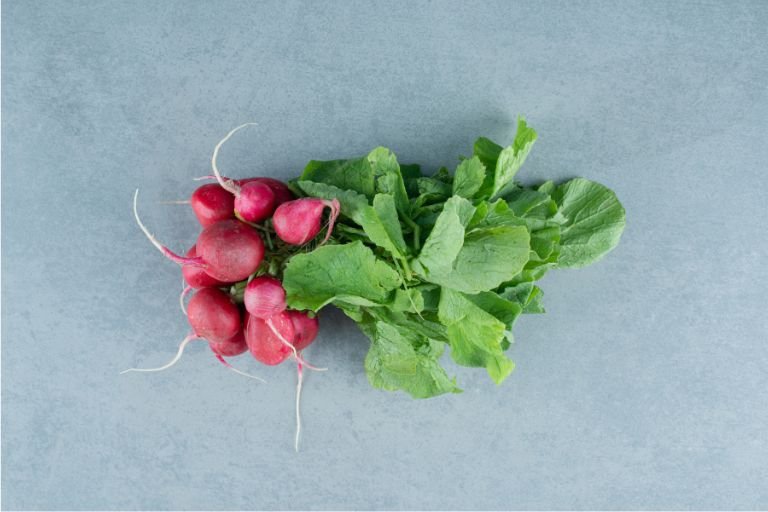
Radish greens are the leafy tops of the radish plant, often overlooked and discarded despite their exceptional nutritional value. Unlike the root, the greens boast a slightly peppery, earthy flavor, making them a versatile ingredient for soups, salads, and stir-fries.
These greens are not only edible but highly nutritious. They belong to the cruciferous vegetable family, which includes other superfoods like kale, broccoli, and cauliflower. Historically, radish greens have been used in traditional cuisines and even for their medicinal properties. Their rising popularity in the culinary world has encouraged more people to appreciate their health benefits and experiment with creative ways to use them.
Whether you sauté, blend, or eat them raw, radish greens bring a burst of flavor and nutrition to your plate. But how do they fit into a diet designed to manage acid reflux? Let’s explore.
Nutritional Profile of Radish Greens
Radish greens are nutrient-dense, meaning they pack a ton of vitamins and minerals into every bite. Some of the key nutrients include:
- Vitamin C: Boosts immunity, promotes healthy skin, and acts as a powerful antioxidant.
- Iron: Supports healthy blood production and combats fatigue.
- Calcium: Strengthens bones and teeth.
- Fiber: Aids digestion and supports gut health.
- Vitamin A: Essential for vision and skin health.
In addition to these nutrients, radish greens are low in calories and rich in phytochemicals, which help fight inflammation and oxidative stress. Their high fiber content makes them excellent for digestion, which could have indirect benefits for acid reflux management.
Acidity in Focus: Are Radish Greens Acidic or Alkaline?
The pH Level of Radish Greens Explained
Radish greens are considered to be mildly alkaline. The pH level of food determines whether it’s acidic, neutral, or alkaline. Foods with a pH above 7 are alkaline, while those below 7 are acidic. Radish greens typically have a pH closer to neutral or slightly alkaline, making them less likely to trigger acid reflux in comparison to highly acidic foods.
However, the pH of radish greens can be influenced by how they’re prepared. For instance, cooking methods like steaming or boiling can alter their chemical composition slightly. It’s worth noting that the alkalinity of radish greens may help balance the acidic environment in the stomach, potentially reducing reflux symptoms for some people.
Acidic Foods vs. Alkaline Foods: Why It Matters for Acid Reflux
Acid reflux occurs when stomach acid flows back into the esophagus, causing uncomfortable symptoms like heartburn, regurgitation, and a sour taste. It is therefore very important to take care of acidity of food you are eating.
Acidic foods, such as citrus fruits and tomatoes, can aggravate reflux symptoms by relaxing the lower esophageal sphincter (LES) or irritating the esophagus.
On the other hand, alkaline foods can help neutralize stomach acid and soothe the digestive tract. This is why understanding the pH of radish greens is crucial for acid reflux sufferers. While they are not as alkaline as spinach or cucumbers, their mildly alkaline nature makes them a better choice than highly acidic foods.
Author Tip: 7 Kinds of Foods to Avoid with GERD
Radish Greens and Acid Reflux: Friend or Foe?
How Radish Greens May Help Manage Acid Reflux?
Radish greens can be a great addition to a reflux-friendly diet due to their nutrient profile. The high fiber content in radish greens promotes healthy digestion by regulating bowel movements and preventing constipation, which can reduce pressure on the LES. This, in turn, lowers the risk of acid reflux episodes.
Additionally, radish greens contain antioxidants and anti-inflammatory compounds that may soothe irritation in the esophagus and stomach lining. For some individuals, these properties may help minimize the discomfort associated with acid reflux. However, this is highly individualized and depends on how the greens are prepared and consumed.
When Radish Greens Could Worsen Symptoms?
Despite their health benefits, radish greens may not be suitable for everyone. Some factors that could make radish greens aggravate acid reflux include:
- Raw Consumption: Eating raw radish greens may be harsh on the stomach, especially for those with sensitive digestive systems.
- Large Portions: Overeating, even with healthy foods, can increase abdominal pressure and trigger reflux.
- Individual Sensitivity: Some people are sensitive to cruciferous vegetables, which may lead to bloating or indigestion, potentially worsening reflux symptoms.
Smart Ways to Add Radish Greens to a Reflux-Friendly Diet
Cooked vs. Raw: Which Is Better for Acid Reflux?
Cooking radish greens can make them easier to digest and reduce their potential to trigger reflux. Steaming or sautéing the greens not only softens their texture but also makes their nutrients more bioavailable. Cooking also minimizes the sharp, peppery flavor, which can sometimes irritate the stomach.
Raw radish greens, while nutritious, might be too harsh for individuals with severe reflux. If you enjoy them raw, consider blending them into smoothies with alkaline fruits like bananas or pairing them with a creamy, low-fat dressing to balance their acidity.
Pairing Radish Greens with Alkaline Foods
Combining radish greens with other alkaline or reflux-friendly foods can help mitigate any potential irritation. Here are some ideas:
- Pair them with roasted sweet potatoes or quinoa for a balanced meal.
- Add them to soups with alkaline vegetables like zucchini and carrots.
- Top them on a baked potato with low-fat Greek yogurt.
These combinations not only enhance the flavor but also ensure that your meal is easier on the stomach.
Portion Control: Keep It Gentle on Your Stomach
As with any food, moderation is key. Start with a small portion of radish greens (e.g., a handful cooked) to gauge how your body reacts. Avoid eating large amounts in one sitting, as this can increase abdominal pressure and exacerbate reflux symptoms.
Alternatives to Radish Greens for Acid Reflux Sufferers
Alkaline Leafy Greens to Consider
If radish greens don’t sit well with you, there are other leafy greens that are gentler on the stomach:
- Spinach: Highly alkaline and easy to digest.
- Swiss Chard: A versatile, nutrient-packed alternative.
- Kale: Packed with vitamins but milder in flavor.
Author Tip: Are Salads Healthy?
Mild, Reflux-Friendly Veggies
For those who prefer non-leafy options, consider these reflux-friendly vegetables:
- Cucumbers: Hydrating and soothing.
- Zucchini: Mild in flavor and highly digestible.
Author Tip: Are Cucumbers Acidic?
Lifestyle Tweaks to Manage Acid Reflux Effectively
Mindful Eating Habits for Better Digestion
- Chew your food thoroughly to aid digestion.
- Avoid overeating by having smaller, more frequent meals throughout the day.
Avoiding Common Triggers Beyond Food
- Minimize stress, as it can worsen reflux.
- Avoid lying down immediately after meals to prevent acid from flowing back into the esophagus.
Incorporating Exercise for Acid Reflux Relief
Regular physical activity can improve digestion and help maintain a healthy weight, reducing the likelihood of reflux symptoms.
Conclusion: Are Radish Greens a Good Choice for Acid Reflux Sufferers?
Radish greens are a nutrient-dense, mildly alkaline food that can offer numerous health benefits. However, their impact on acid reflux varies from person to person. For some, they may soothe digestive issues, while for others, they could be a trigger.
Cooking them, controlling portion sizes, and pairing them with alkaline foods can make radish greens a reflux-friendly option. As always, listen to your body and consult a healthcare professional for personalized advice.
FAQs: Radish Greens, Acidity, and Acid Reflux
Q1: Are radish greens acidic or alkaline?
Radish greens are mildly alkaline, making them a better choice than acidic foods for reflux sufferers.
Q2: Can I eat radish greens raw if I have acid reflux?
Raw radish greens may be too harsh for some individuals; cooking is recommended to reduce their impact.
Q3: Are radish greens healthier than spinach or kale for acid reflux?
It depends on individual tolerance. Spinach and kale are also excellent choices for reflux-friendly diets.
Q4: How should I prepare radish greens to avoid acid reflux?
Steam or sauté radish greens and pair them with alkaline foods for optimal results.
Q5: What other leafy greens can I eat if radish greens trigger my reflux?
Spinach, Swiss chard, and arugula are great alternatives.
Related Posts

Subscribe for New Racipies
Get mental health tips, updates, and resources delivered to your inbox.