
Are Dragon Fruits Acidic? Pitaya pH Explained

Medically reviewed by Jaclyn Weiner, RD, RDN, MEd, MS Updated Date: October 14, 2026
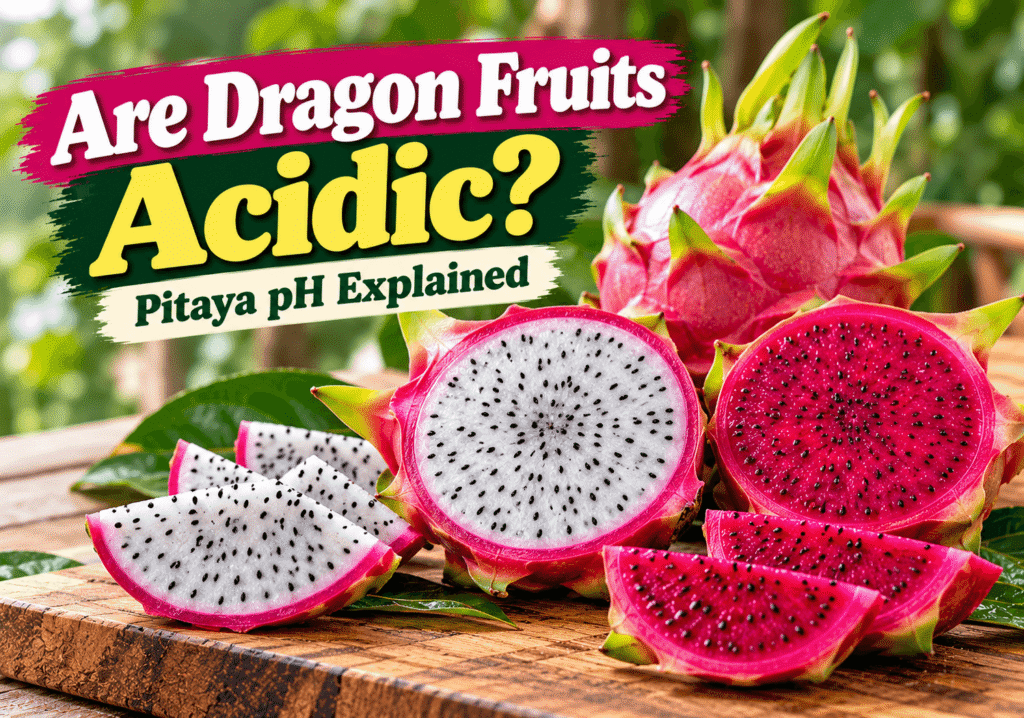
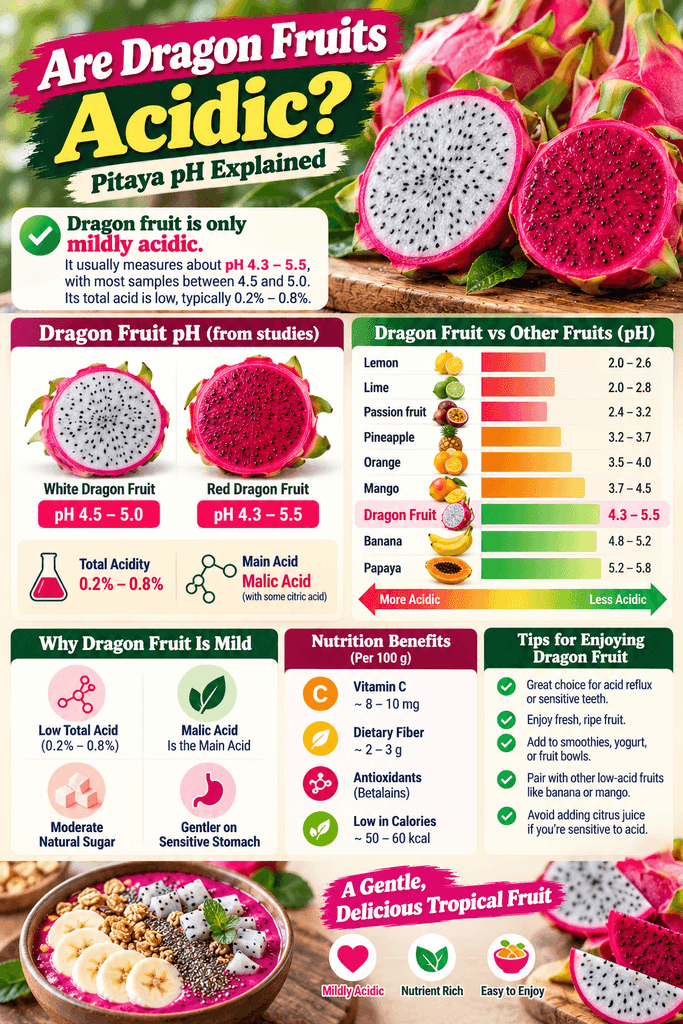
Dragon fruit is only mildly acidic. It’s one of the gentlest tropical fruits you can eat. Studies of dragon fruit (pitaya) pulp have measured a pH of about 4.3 to 5.5, with most samples between 4.5 and 5.0 (Esquivel et al., 2007; Chik et al., 2011; Budhathoki, 2023). Its total acid is low too, usually well under 1%. That puts dragon fruit closer to bananas than to pineapple or passion fruit.
So if you’re looking for a tropical fruit that’s easier on reflux, sensitive teeth, or a touchy stomach, dragon fruit is one of the better choices. This guide explains dragon fruit’s pH, compares white-flesh and red-flesh types, shows where pitaya ranks among other fruits, and covers what to know before you eat it.
Key Takeaways
- Dragon fruit is mildly acidic, with pulp measuring about pH 4.3 to 5.5 in studies, and most samples around 4.5 to 5.0.
- It has little total acid, about 0.2% to 0.8% titratable acidity, compared with 3% to 6% in passion fruit.
- Malic acid is the main acid, with smaller amounts of citric acid.
- White and red dragon fruit are similar in acidity. Studies don’t show a consistent winner.
- It’s one of the gentler tropical fruits for acid reflux, in the same range as bananas and persimmons.
- Its mild, lightly sweet taste reflects its chemistry: lower acid and modest sugar.
Are Dragon Fruits Acidic? The Short Answer
Technically, yes. Anything below pH 7 is acidic, and dragon fruit falls a little below 5. But compared with most fruits, it’s on the mild end. The FDA’s widely used pH table doesn’t list dragon fruit (FDA), so the best numbers come from published studies:
| Dragon fruit sample | pH | Titratable acidity | Source |
| Five genotypes (Costa Rica) | 4.26–4.98 | 3.15–6.85 g/L (about 0.3%–0.7%) | Esquivel et al., 2007 |
| Red pitaya, H. polyrhizus (Malaysia) | 4.7 | 0.19% | Chik et al., 2011 |
| White pitaya, H. undatus (Malaysia) | 4.7 | 0.26% | Chik et al., 2011 |
| Red pitaya (India) | 4.58 | 0.42% | Ghorband et al., 2023 |
| Red pitaya, four regions (Nepal) | 4.50–5.47 | 0.57%–0.79% | Budhathoki, 2023 |
| White ‘Vietnam White’ (Turkey) | Not in abstract | 0.39% | Pepe et al., 2024 |
Values vary by species, variety, growing region, and ripeness.
The takeaway: across countries and varieties, dragon fruit pulp stays in a narrow, mildly acidic band, mostly around pH 4.5 to 5.0.
What Makes Dragon Fruit Taste So Mild?
Many people describe dragon fruit as mild or subtly sweet rather than tangy. Its chemistry explains why.
Low total acid
pH tells you how strong the acidity is. Titratable acidity tells you how much acid the fruit contains overall. Dragon fruit has very little:
- Dragon fruit: about 0.2% to 0.8% in the studies above.
- Granny Smith apples: about 0.7% to 1.0% at harvest (Good Fruit Grower).
- Passion fruit: about 3% to 6% (Dantas et al., 2018).
So dragon fruit has, at most, about as much total acid as a tart apple, and often much less. It carries a small fraction of the acid in passion fruit. (These figures come from different studies, so treat them as a general comparison.)
Malic acid leads
In the Costa Rican study, malic acid was the main acid in every genotype, at about 6 to 8 g/L, with citric acid at only about 1 to 2 g/L (Esquivel et al., 2007). Malic acid is the same acid found in apples, including Granny Smith apples. Citric acid, by contrast, is the main acid in limes and lemons, and dragon fruit has relatively little of it.
Modest sugar
Dragon fruit isn’t especially sugary either. Soluble solids (mostly sugar) measured about 7.5 to 12.9 g per 100 g in Costa Rica and 8.2 to 8.7 °Brix in Malaysia (Esquivel et al., 2007; Chik et al., 2011). Low acid plus moderate sugar gives that gentle, refreshing taste.
White vs Red Dragon Fruit: Which Is More Acidic?
Dragon fruit comes in several types. The pulp can be white, red, or magenta depending on the species (Crane & Balerdi, UF/IFAS HS1068). The two you’ll see most often are:
- White-flesh dragon fruit (Hylocereus undatus): pink-red skin with white pulp and black seeds.
- Red-flesh dragon fruit (H. polyrhizus and related species): pink-red skin with deep red or magenta pulp.
| White-flesh | Red-flesh | |
| pH (Malaysian study) | 4.7 | 4.7 |
| Titratable acidity (Malaysian study) | 0.26% | 0.19% |
| Soluble solids (Malaysian study) | 8.7 °Brix | 8.2 °Brix |
| Vitamin C (UF/IFAS table) | 25 mg/100 g (H. undatus) | Varies; 21.4 mg/100 g in one Indian study |
Sources: Chik et al., 2011; UF/IFAS HS1068; Ghorband et al., 2023.
In the one study that tested both side by side, white and red dragon fruit had the same pH (4.7). White had slightly more total acid (0.26% vs 0.19%), but the difference was small (Chik et al., 2011). Other studies of red pitaya found a range of acidity depending on where the fruit was grown.
The bottom line: Both types are mildly acidic. Choose whichever you enjoy. Flesh color affects appearance and pigments far more than acidity.
A note on red dragon fruit and color
Red and magenta dragon fruit pulp is intensely colored and can stain hands, cutting boards, and clothing. Some people also report pink or reddish urine or stool after eating a lot of red dragon fruit . A similar, well-documented effect happens with beets, where the red pigments can tint urine, and McGill University’s Office for Science and Society describes that beet effect as “not a matter of concern” (McGill OSS). If you notice red urine or stool and haven’t eaten red-pigmented foods, or the color doesn’t go away, check with your doctor.
How Dragon Fruit Compares to Other Fruits
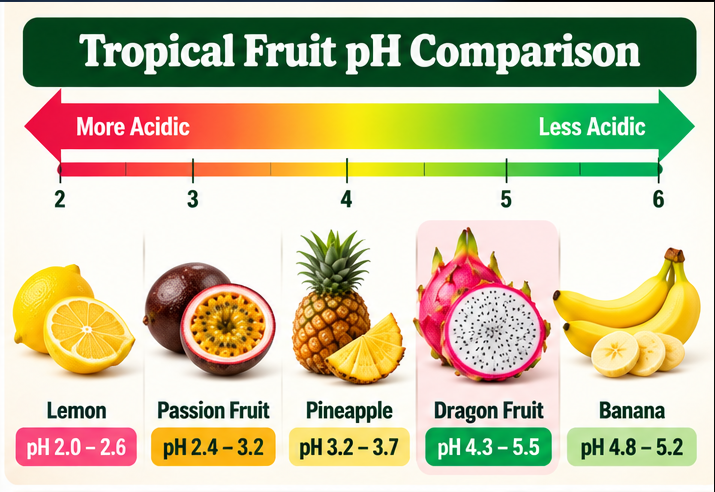
Here’s where dragon fruit lands next to other fruits in the FDA’s pH table (FDA):
| Fruit | Approximate pH |
| Lemon juice | 2.00–2.60 |
| Passion fruit pulp (studies) | About 2.4–3.2 |
| Pineapple | 3.20–4.00 |
| Mangoes, ripe | 3.40–4.80 |
| Guava, fresh (studies) | About 3.7–4.2 |
| Persimmons | 4.42–4.70 |
| Dragon fruit (studies) | About 4.3–5.5 |
| Bananas | 4.50–5.20 |
| Lychee | 4.70–5.01 |
| Papaya | 5.20–6.00 |
| Cantaloupe | 6.13–6.58 |
| Avocados | 6.27–6.58 |
Source: FDA, Approximate pH of Foods and Food Products; dragon fruit, passion fruit, and fresh guava from published studies.
A few takeaways:
- Dragon fruit is far less acidic than citrus and passion fruit. Lemon juice and passion fruit sit about 1.5 to 2.5 pH units lower, which means dozens to hundreds of times more acidic by pH.
- It’s gentler than most tropical favorites, including pineapple, mangoes, and guavas.
- It’s in the same low-acid group as bananas and persimmons.
- Only a few fruits are milder, such as papaya, cantaloupe, and avocados.
For the full list, see our complete guide to acidic foods.
Is Dragon Fruit Good for Acid Reflux?
For most people, dragon fruit is one of the friendlier fruit choices for reflux. It isn’t on the National Institute of Diabetes and Digestive and Kidney Diseases (NIDDK) list of foods that may worsen reflux, which includes citrus fruits, tomatoes, alcohol, chocolate, coffee and caffeine, high-fat foods, mint, and spicy foods (NIDDK). It’s also low in acid and fat.
Still, everyone’s triggers are different. The American College of Gastroenterology’s 2022 guideline recommends that people with GERD identify their own triggers rather than avoiding long lists of foods, and avoid eating within 2 to 3 hours of bedtime (Katz et al., 2022).
Watch what you pair it with
Dragon fruit itself is mild, but it often shows up in drinks and bowls with more acidic or rich ingredients:
- Smoothie bowls often mix dragon fruit with pineapple, berries, or citrus juice.
- Bottled “dragon fruit” drinks may be flavored with other fruit juices and contain added citric acid. Check the label.
- Cocktails combine it with alcohol and lime, both possible triggers.
Tips for eating dragon fruit with reflux
- Eat it plain or with low-acid foods, like oatmeal, Greek yogurt, coconut yogurt, or cottage cheese.
- Use it to replace sharper fruits in smoothies, swapping it in for pineapple or orange juice.
- Pair it with banana or papaya for an extra-gentle tropical bowl.
- Keep portions moderate at first, and see how you feel.
- Don’t eat right before bed. NIDDK suggests eating meals at least 3 hours before lying down if you have nighttime symptoms (NIDDK).
For more guidance, see our list of foods to avoid with GERD. If you have heartburn more than twice a week, trouble swallowing, or symptoms that don’t improve, talk with your doctor.
Dragon Fruit, Teeth, and Gastritis
Teeth: Dragon fruit is far less acidic than citrus or passion fruit, so it’s a gentler choice for enamel. The American Dental Association still recommends eating acidic foods as part of a meal, rinsing with water or having milk or cheese afterward, and waiting about an hour before brushing (American Dental Association). Those habits matter most for sweetened dragon fruit drinks and smoothies.
Gastritis: Mild, low-acid fruits are often easier to tolerate with gastritis. Ripe dragon fruit may be a good option to try in small amounts. Our 7-day meal plan for gastritis has more gentle meal ideas.
Dragon Fruit Nutrition
USDA FoodData Central’s standard reference tables don’t include a fresh dragon fruit entry, and published values vary by species. University of Florida’s pitaya guide lists these values per 100 g of fresh pulp, based on older food composition data (Crane & Balerdi, UF/IFAS HS1068):
| Nutrient (per 100 g) | H. undatus (white flesh) | H. guatemalensis |
| Water | 89% | 83% |
| Protein | 0.5 g | 0.16–0.23 g |
| Fat | 0.1 g | 0.21–0.61 g |
| Fiber | 0.3 g | 0.7–0.9 g |
| Calcium | 6.0 mg | 6.3–8.8 mg |
| Phosphorus | 19.0 mg | 30.2–36.1 mg |
| Iron | 0.4 mg | 0.55–0.65 mg |
| Vitamin C | 25 mg | 8–9 mg |
Source: UF/IFAS HS1068, Table 3, citing Morton (1987), Fruits of Warm Climates.
A few highlights:
- High water content: At 83% to 89% water, dragon fruit is hydrating and low in calories.
- Vitamin C: Levels vary widely, from about 4 to 25 mg per 100 g depending on the species, per the UF table. One Indian study measured 21.4 mg in red pitaya (Ghorband et al., 2023).
- Seeds: The tiny black seeds are edible. UF/IFAS notes that pitaya seeds contain an oil that acts as a mild laxative (UF/IFAS HS1068).
Note: Fiber values for dragon fruit differ a lot between sources, likely because of differences in species, seeds, and testing methods. Check product labels for packaged dragon fruit.
Acid-Smart Ways to Enjoy Dragon Fruit
Dragon fruit’s mild flavor and bright color make it easy to use. Try these ideas:
- Smoothies: Blend it into our fruit yogurt shake or blueberry yum yum smoothie for color without much added acid.
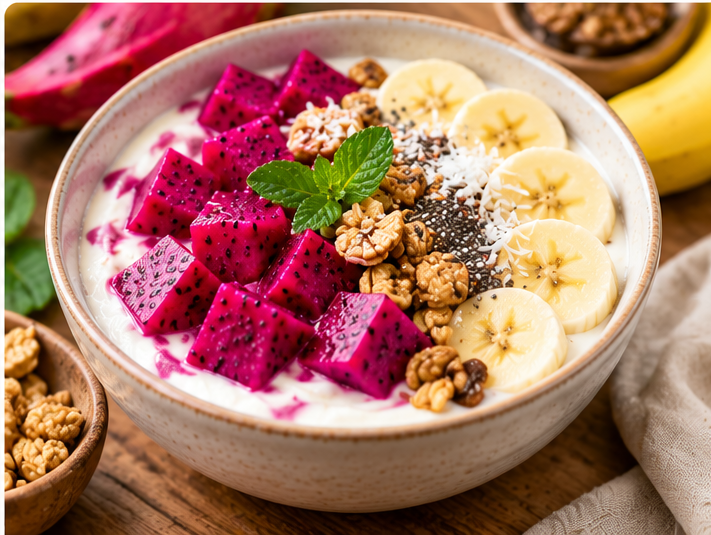
- Breakfast bowls: Top Greek yogurt with cubed dragon fruit, banana, and our pumpkin pie spice granola.
- Creamy desserts: Serve dragon fruit alongside our whipped ricotta with mixed berries, or use it in place of some of the berries.
- Summer rolls: Add thin slices to our avocado summer rolls for sweetness and color.
- Salads: Toss cubes into our kale avocado salad with a mild dressing.
- Treats: Red dragon fruit puree can add natural pink color to our tropical dream rice krispie treats.
The dragon fruit swaps haven’t been tested in our kitchen, so adjust to taste.
Kitchen tip: Cut the fruit in half lengthwise and scoop out the flesh with a spoon, or peel back the skin and slice. Red-flesh varieties can stain, so use a cutting board you don’t mind getting pink.
Frequently Asked Questions
Are dragon fruits acidic or alkaline?
Dragon fruit is mildly acidic. Studies of the pulp have measured pH values of about 4.3 to 5.5, with most around 4.5 to 5.0. It’s one of the least acidic tropical fruits.
Is red dragon fruit more acidic than white dragon fruit?
Not really. In a study that tested both, red and white dragon fruit had the same pH (4.7), and white had only slightly more total acid. Both are mildly acidic.
Is dragon fruit good for acid reflux?
For most people, yes. It’s low in acid and fat and isn’t on NIDDK’s list of common reflux triggers. Just watch out for smoothies and drinks that mix it with citrus or pineapple.
Is dragon fruit more acidic than pineapple?
No. The FDA lists pineapple at pH 3.20 to 4.00, while dragon fruit pulp usually measures about 4.5 to 5.0, so pineapple is much more acidic.
Is dragon fruit less acidic than passion fruit?
Yes, by a wide margin. Passion fruit pulp measures about pH 2.4 to 3.2 and has about 3% to 6% total acid. Dragon fruit is closer to pH 4.5 to 5.0, with well under 1% acid.
Can you eat dragon fruit seeds?
Yes. The small black seeds are eaten along with the flesh. UF/IFAS notes that pitaya seeds contain an oil with a mild laxative effect.
Why does dragon fruit taste so mild?
Dragon fruit has little acid and only moderate sugar. Its main acid is malic acid, with less citric acid, so it lacks the sharp tang of citrus or passion fruit.
The Bottom Line
Dragon fruit is only mildly acidic, with pulp measuring about pH 4.3 to 5.5 and most samples around 4.5 to 5.0. It contains little total acid, mostly malic acid, which is why it tastes mild rather than tangy. White and red varieties have similar acidity.
That makes dragon fruit one of the gentlest tropical fruits, in the same low-acid group as bananas and persimmons. For most people with reflux or sensitive teeth, it’s a refreshing, hydrating option. Enjoy it plain or with creamy, low-acid foods, and watch out for blends that add citrus, pineapple, or alcohol.
Keep exploring with Are Passion Fruits Acidic?, Are Guavas Acidic?, Are Bananas Acidic?, or our complete guide to acidic foods.
Medical disclaimer: This article is for general information only and isn’t a substitute for professional medical advice. If you have frequent heartburn, GERD, gastritis, or ongoing digestive symptoms, talk with your doctor or a registered dietitian.
References
- Esquivel P, Stintzing FC, Carle R (2007). Comparison of morphological and chemical fruit traits from different pitaya genotypes grown in Costa Rica. J. Appl. Bot. Food Qual. 81:7–14. Link
- Chik CT, et al. (2011). Quality characteristics and acceptability of three types of pitaya fruits in a consumer acceptance test. J. Tourism, Hospitality & Culinary Arts 3(1):89–98. PDF
- Ghorband AS, Joshi BH, Bhatt HG (2023). Studies on physicochemical and nutritional properties of dragon fruit (H. polyrhizus). J Pharmacogn Phytochem 12(6):223–226. PDF
- Budhathoki R (2023). Nutritional diversity of dragon fruit H. polyrhizus from different locations of Nepal. 2nd Int. Conf. on Horticulture, Nepal Horticulture Society. PDF
- Pepe AV, et al. (2024). Comparing physico-chemical and antioxidant properties of white-fleshed and red-fleshed pitaya cultivars. Applied Fruit Science 66(3):797–802. doi:10.1007/s10341-024-01062-3. Record
- Crane JH, Balerdi CF. Pitaya (Dragonfruit) Growing in the Florida Home Landscape (HS1068). UF/IFAS.
- Dantas AMT, et al. (2018). Bioscience Journal 34(6). DOAJ
- Good Fruit Grower. How to measure Honeycrisp qualities.
- Schwarcz J. Beets and Urine. McGill Office for Science and Society.
- U.S. FDA. Approximate pH of Foods and Food Products.
- NIDDK. Eating, Diet & Nutrition for GER & GERD.
- Katz PO, et al. (2022). ACG Clinical Guideline for GERD. doi:10.14309/ajg.0000000000001538
- American Dental Association. Dietary Acids and Your Teeth.
Related Posts

Subscribe for New Racipies
Get mental health tips, updates, and resources delivered to your inbox.
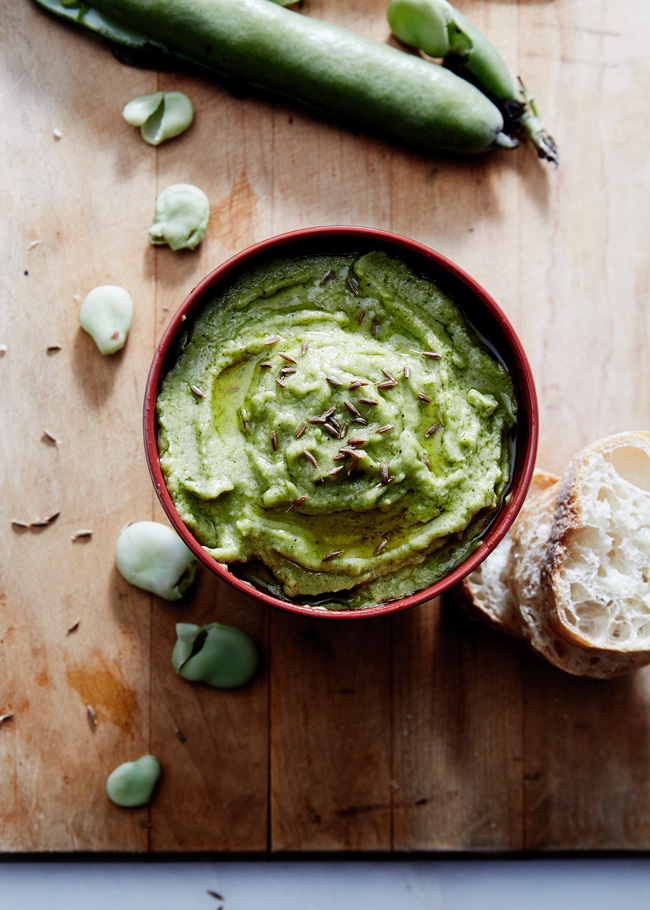
Fava Bean Hummus

A day in the life of my pet scoby: It floats. It burps bubbles. It makes faces at me from behind the glass of the half-gallon jar I keep it in. It’s fascinating. And I could sit there all day, gazing into its moldy-looking depths.
Meanwhile, 2 pounds of fava beans need to be shelled, 4 ears of corn await shucking, 10 perfectly-formed squash blossoms lie in limbo, and 5 pounds of peaches sitting on the counter are being eyed by a small army of fruit flies.
In other words, I wanted to tell you about my first batch of homemade kombucha today, but the scoby got attacked by fruit flies and, ugh, I won’t go into the details. Let’s just say, baby fruit flies, aka MAGGOTS!!!!!!!!!
Enough. You’ll find me crying in the corner.
(Not really. But still…)
(And this hummus is really good.)
(Sorry for the short post. I’ve got deadlines, yo!)
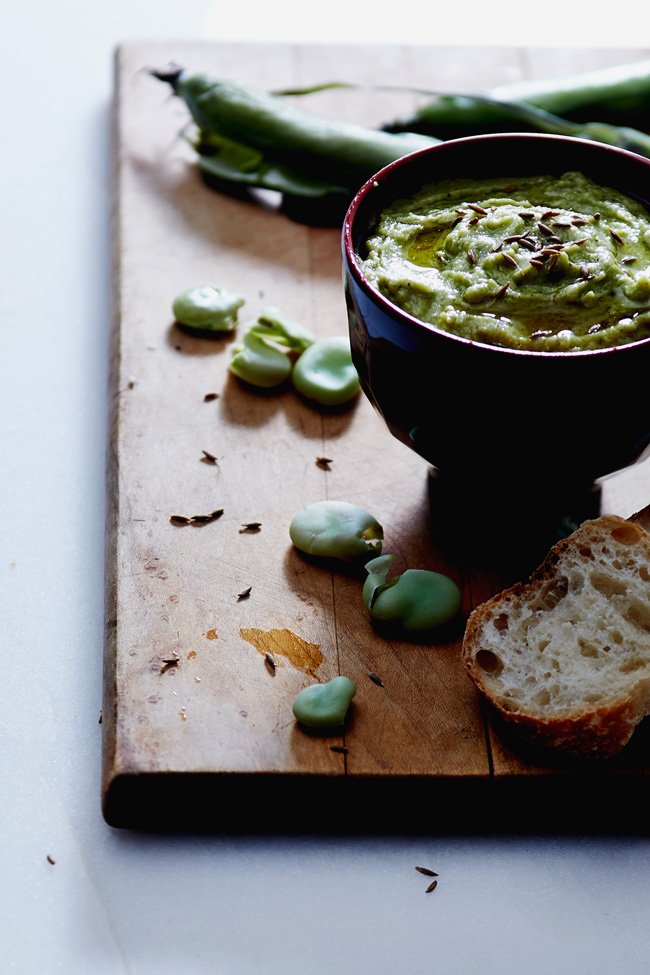
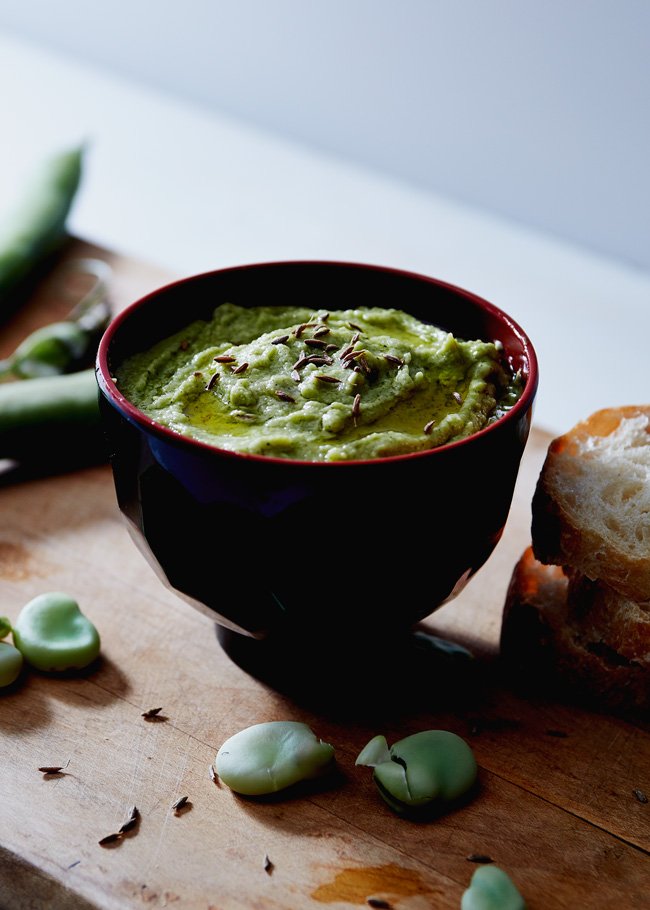
FAVA BEAN HUMMUS
Adapted from Vegetable Literacy
- Makes 1 cup
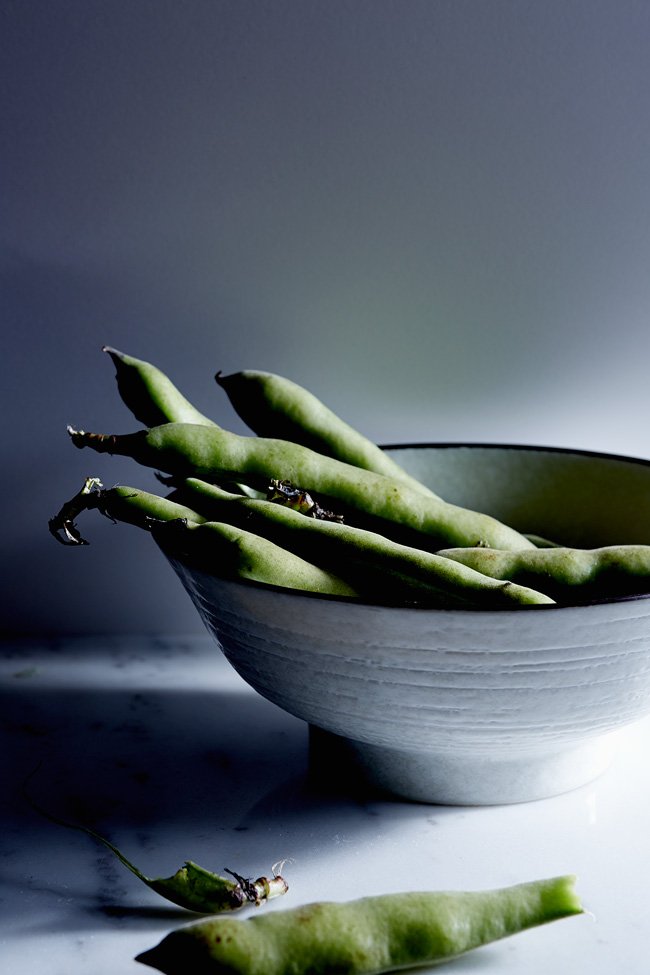
- About 2 cups shelled fava beans
- 1/2 cup olive oil
- 3 to 4 garlic cloves, chopped
- 1 tsp ground cumin
- 1/2 tsp salt
- 1 tsp lemon juice
Bring a pot of water to boil and immerse the beans for a minute. Drain the pot and refresh the beans in cold water. Remove their skins (they should come off easily).
In a food processor (or with an immersion blender), combine the fava beans, olive oil, garlic, cumin, and salt. Puree until smooth. Add the lemon juice and puree until combined.
Scrape out the hummus and serve it in a bowl, drizzled with a little extra olive oil and some cumin seeds if you’d like.
Related Posts



Subscribe for New Racipies
Get mental health tips, updates, and resources delivered to your inbox.