
Tomato Soup

Medically reviewed by Christiana George Updated Date: June 8, 2023
Yesterday, I was working at Starbucks (Freelancers Central) when a lady standing by the doors tipped over into a drug-induced trance.
The baristas immediately called 9-1-1, but the woman sitting next to me, the one who’d seen the whole incident go down because she’d been standing outside making a phone call when it happened, just shook her head and informed me that the lady was ‘as high as a kite.’
Now that’s a feeling I can relate to. That world-weariness. After all, I had gone to school in the most psychedelic college town in the country (Berkeley), and lived in what is probably the most homeless-friendly big city in the WORLD (San Francisco). I’ve seen it all—so what if I’m only 26?—all the different variations of drug-induced catatonia and rants and everything in between.
This old man with white hair, he’s a regular who just hangs out in the cafe all day chatting with other regulars (except me, because I avoid eye contact with strangers, much in the style of Amelie Poulain), leapt up from his seat and raced outside, wanting to take charge of the situation. He reminded me of one of those alert guard dogs, the kind that’s been bred to inspect signs of disorder, and cleared aside the small crowd that had gathered around the woman to get a closer look.
He re-entered the cafe a few minutes later. “She’s on drugs,” he said disgustedly.
A few minutes later, the lady dizzily pushed herself up and teetered away. “She’s only on drugs,” Mr. Regular repeated, shaking his head.
This was when the firemen rushed onto the scene. They pulled up in their shiny truck with their sirens blaring, and parked gracefully into the empty space in front of the building that just happened to be big enough for one regular-sized fire truck.
“Did they need to bring so many men?” the woman beside me asked. Sure enough, five firemen stepped out, clad in their heavy protective gear. Men who meant business. Men who looked like they were ready to put out a fire.
“She doesn’t need firemen,” said Regular Man. “She needs to be slapped in the face and drenched with tomato soup!”
Tomato soup, now that’s an idea.
Did he mean what he said sadistically? Was he implying that the lady should be burned with a hot, acidic liquid as a sort of punishment? Or maybe he thought it would revivify her, the equivalent of pushing her into a molten pool. Or maybe he just wanted tomato soup for dinner and had made a Freudian slip.
Whatever the case, guessing does not change the fact: these are the kinds of moments that can inspire meals. I’m very easily persuaded, and I happen to really like tomato soup.
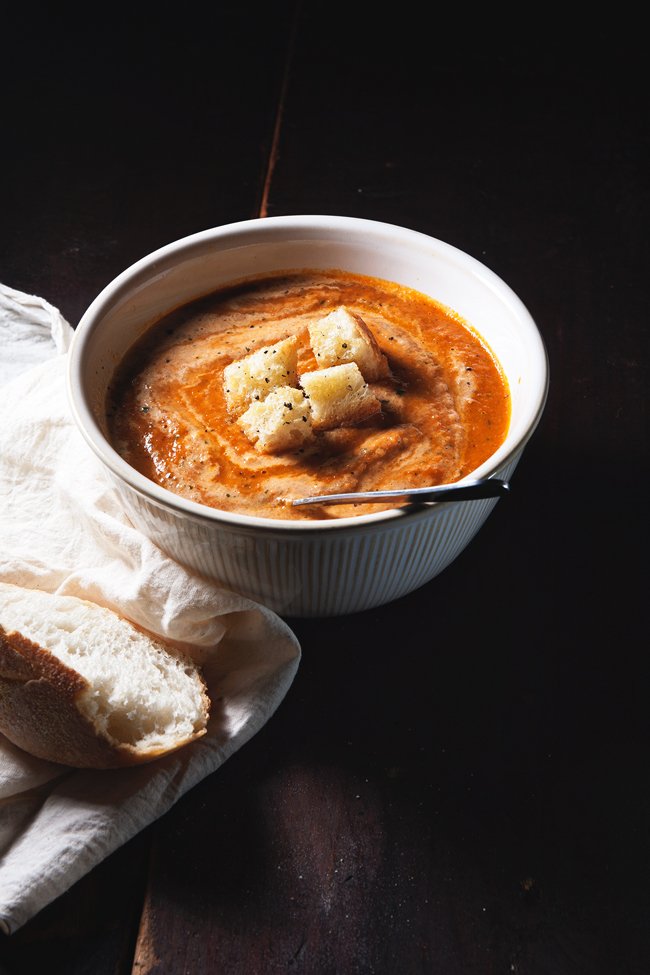
This recipe is one I’ve been making since my student days, so you can be sure that it’s low-maintenance. And it came in handy during my time in San Francisco, a city whose 365-days-per-year fog and gloom is enough to drive a person mad. You see, you need a soup as heartening as this to keep your spirits up, lest you succumb to drastic measures. Like quitting your job and chasing summer in the Southern Hemisphere. Well, that latter part was unintentional.
I don’t remember how I came upon this recipe anymore. I copied it long ago into a little pocket notebook that I have on me at all times—we all have one of these, I suspect—and have been faithfully following the same set of directions for a long time. I’m sure its source is not as obscure as I make it seem, but I prefer to keep it a mystery, for the sake of having a “family recipe” that I can pass down for generations. Or not. I don’t think that far ahead. (But it would be cool nonetheless.)
TOMATO SOUP
Serves 4
Ingredients:
- 1 28-ounce can of chopped tomatoes
- 1/4 cup olive oil
- salt & ground pepper to taste
- 2 stalks celery, diced
- 2 small carrots, diced
- 1 large yellow onion, diced
- 4 cloves garlic, minced
- 2 cups chicken broth
- 2 bay leaves
- 1/2 cup chopped basil
- 1/4 cup cream or milk, optional
Directions:
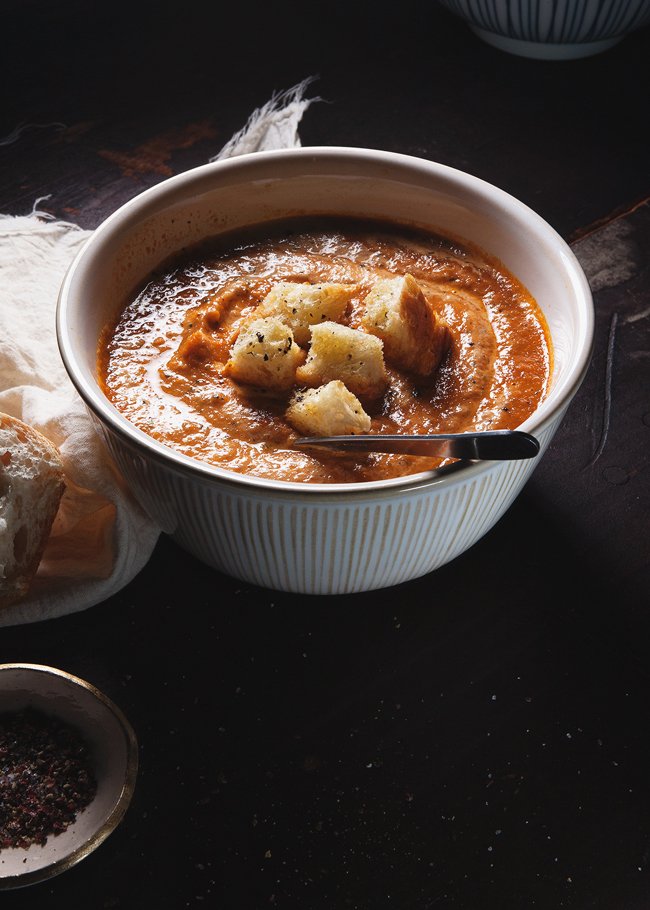
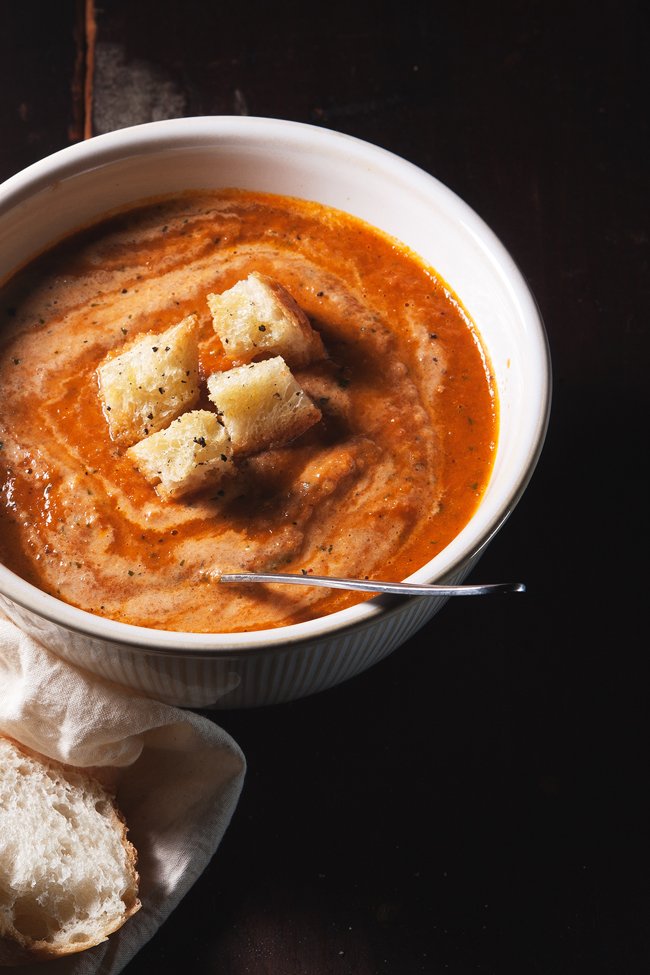
Preheat oven to 450 degrees F. Strain tomatoes, reserving the juices, and spread onto baking sheet. Season with salt and pepper, and drizzle with about 1 Tbsp olive oil. Roast until caramelized, about 15 minutes.
In a saucepan, heat the rest of the oil on medium-low heat. Add celery, carrots, onion, and garlic. Cook until softened, about 10 minutes. Add the roasted tomatoes, reserved juices, chicken broth, and bay leaves. Simmer until vegetables are tender, 15 to 20 minutes. Add basil and cream if using. Puree with an immersion blender.
Related Posts





Subscribe for New Racipies
Get mental health tips, updates, and resources delivered to your inbox.
Homemade Yeasted Apple Cider Doughnuts (Fluffy & Fried)

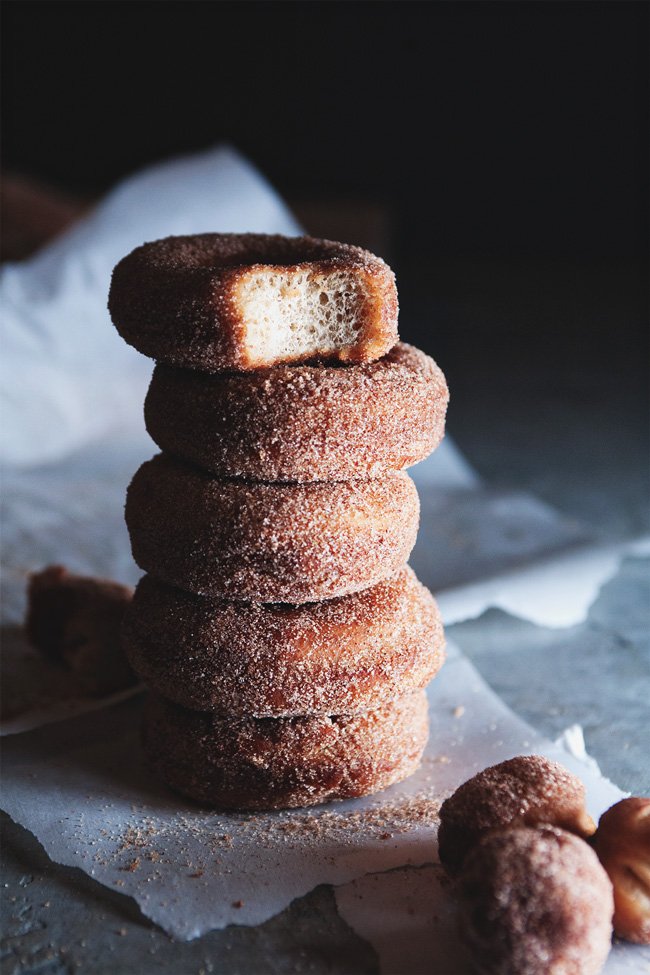
These soft, fluffy yeasted apple cider doughnuts are the perfect autumn treat. Infused with fresh apple cider and rolled in cinnamon sugar, this recipe brings the best of the farmers’ market right to your kitchen.
Capturing the Flavors of Fall
The last couple of weeks: Full of visitors, mostly conversation, and good food too. The three always happen to coincide, don’t they?
Earnest walks, feet pounding pavement to the tune of miles of city blocks, great big swathes of condensation disappearing into the air as we talk, scarves up to our ears, gloved hands stuffed into pockets. The cold is omnipotent and inescapable.
The couch served double-duty as a bed, throws unfolded and refolded, and finally heaped together over the rip in the couch. Towels bunched up on the rack, foreign toothbrushes and contacts, and creams on the counter.
Squished together like sardines around the table. Plates and bowls cycled over and over. Coffee and coffee and coffee and coffee. The twice-daily sauna turns us into captives of the heat, shedding layers as if on cue as the radiator whistles on.

And then there was Thanksgiving…
And then there was Thanksgiving. I can’t even think about it. So much food. My role as the preparer of brussels sprouts, though, thankfully, not much else. Watching as the guys prepared the turkey, standing on tiptoes with my cameraphone poised above the headless carcass.
It was salted, backbone cut out, pushed down hard until its breastbone cracked. Piercing it with a meat thermometer a million and one times, unsure why its internal body temperature kept vacillating. As a result, dry white meat but done in 90 minutes.
For dessert, a pumpkin pie. There was also homemade cinnamon ice cream—thanks, Alanna, for implanting the idea in my mind! It tasted just like Cinnamon Toast Crunch.
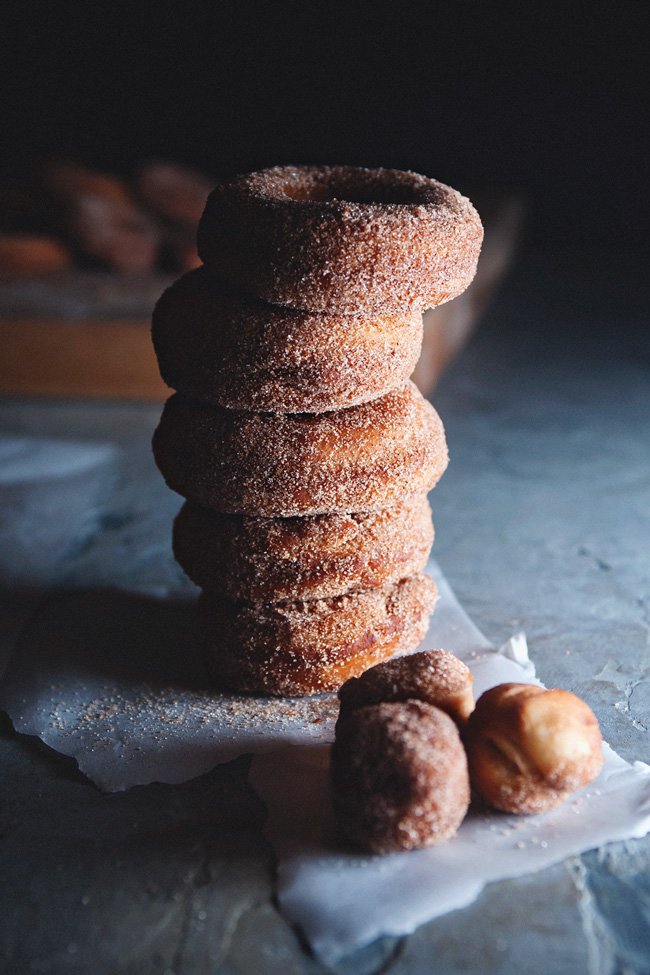
Discovering the Perfect Apple Cider Doughnut
The return to normalcy. Decompression. Time once again ours. Sleeping in and in and in. Leftovers. Sitting on the couch, which was once again a couch, and streaming Breaking Bad until Walt started getting annoying.
Christmas tree shops set up on street corners, and wreaths, big ones and decorated ones and plain ones too. I cracked open my computer for the first time in what felt like weeks. Black Friday emails are days late, but overflowing my inbox nonetheless. I also ate my first apple cider doughnut.
And then I had to make them.
Because what I ate was cushiony and soft, full of air pockets, a real treat for gluten-vores. It was also heady with autumn spices and dusted with coarse sugar, really underscoring the apple cider flavor just like they should. In short, it was completely unlike anything I’d expected, and it was amazing.
Yeast vs. Cake Doughnuts: Why Yeast Wins
I’m not usually a fan of cake doughnuts. In fact, I’m not sure the doughnut I had on Saturday was a cake doughnut – it was far too luscious and fluffy. But I love anything apple cider flavored, so I decided to make my own version with yeast.
This recipe is close. It’s not fluffy enough in my opinion, but then again, I wonder if the doughnut of my dreams is exactly that: not real. Nevertheless, there’s something really exciting about making doughnuts at home (another one of those look-what-I-made! foods), and these taste delicious when they’re fresh out of the, um, fryer?
Is that what you call your pot when you’re using it for deep-frying? Not every person is ready to spend a lot of money at an online casino, and it is okay. For those of you who want to play slot machines with a small deposit, our friends from Fancasinos.com have created a rating of minimum deposit casinos in 2023. People are able to play there with $10 and get a bonus.
Tips for Frying Homemade Doughnuts
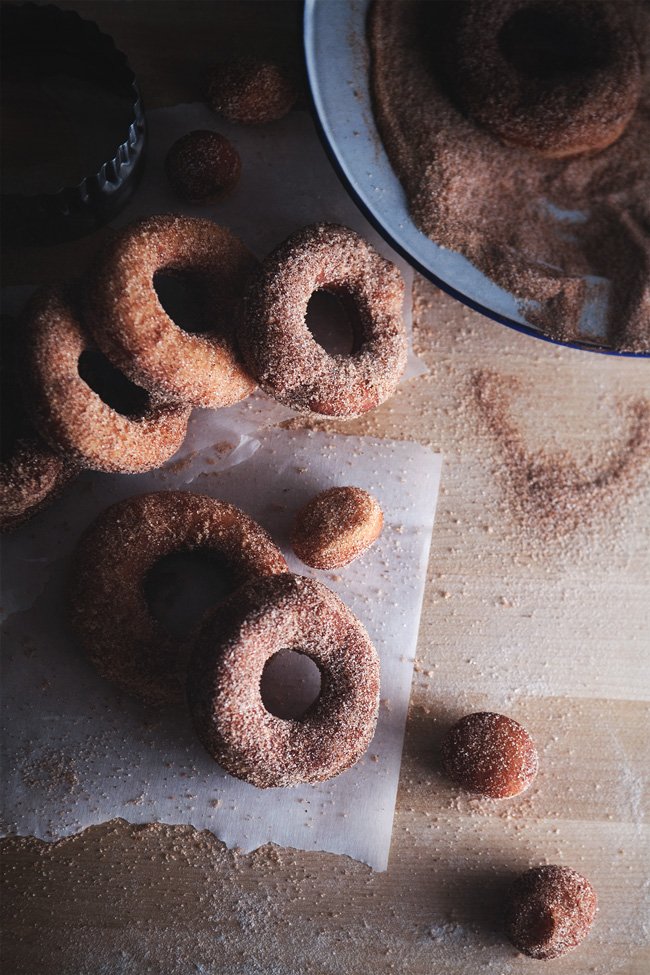
Monitor the Heat: Use a candy thermometer to keep oil at 360°F.
Don’t Overcrowd: Fry 2-3 doughnuts at a time to maintain oil temperature.
The Flip: Use chopsticks for an easy, gentle flip.
YEASTED APPLE CIDER DOUGHNUTS
Makes 12 doughnuts plus 12+ doughnut holes
Adapted from Chow
Ingredients:
- 2-1/2 cups all-purpose flour, plus extra for rolling out
- 1-1/2 tsp ground cinnamon
- 1/2 tsp freshly grated nutmeg
- 1/2 tsp fine salt
- 2-1/4 tsp active dry yeast
- 1/4 cup plus 1 tsp granulated sugar
- 3/4 cup apple cider
- 2 large egg yolks
- 1 Tsp vegetable oil
- 1 tsp vanilla extract
- 1 Tsp unsalted butter, room temperature
Neutral oil for frying
1/2 cup sugar (optional)
1 Tbsp ground cinnamon (optional)
Directions:
Whisk the flour, cinnamon, nutmeg, and salt in a large bowl to combine, and set aside.
In a medium bowl, mix the yeast and 1 tsp of sugar. Heat 1/2 cup of the apple cider until it’s warm but not hot, and add it to the yeast mixture. Stir to combine. Let it sit until it’s foamy, about 5 minutes.
Then, add the remaining 1/4 cup sugar, remaining 1/4 cup apple cider, egg yolks, oil, and vanilla and whisk to combine. Add this mixture to the flour mixture and stir with a wooden spoon until the dough comes together and begins to form a ball.
Transfer the dough to a lightly floured work surface. Scatter the butter pieces over the dough and knead until the butter is fully incorporated and the dough is smooth and elastic, about 6 to 8 minutes. You might need to add up to 1/4 cup of additional flour to keep the dough from being too sticky.
Oil the sides of a large bowl. Form the dough into a ball, and place it in, turning to coat. Cover the bowl and let the dough rise in a warm place until doubled in size, about 2 hours.
Line a baking sheet with parchment paper. Punch down the dough, transfer it to a lightly floured work surface, and roll it out until it’s about 1/2 inch thick. Using a 3-inch round cutter, stamp out as many dough rounds as you can.
Use a 1-inch round cutter to make the inner hole (or, in my case, an icing tip that was about 1.5″ in diameter) and place the doughnuts and doughnut holes on the prepared baking sheet. Gather the dough scraps and repeat.
Discard any remaining dough scraps. Cover the doughnuts and let them proof until they’re about 3/4 inches in height, 30 minutes to an hour.
Fill a heavy-bottomed pot with about 2 inches of neutral oil. Clap a candy thermometer on the side. Heat the oil on medium heat until it reaches 360°F.
It should take a little while, so in the meantime, prepare a rack where the doughnuts will drain by laying over it a few sheets of paper towels. If you’re planning on topping the doughnuts, prepare the cinnamon sugar in a large plate and set it close by.
Once the oil is ready, add the first doughnut. Fry until golden brown, about 30 seconds, then flip it over (I used chopsticks). Add the second doughnut and repeat. Move the first one to the rack when it’s ready, and continue frying the rest.
I was able to balance frying three at a time. Once the doughnut has cooled a little, dip it in the cinnamon sugar until it’s generously covered. Move on to the doughnut holes.
Related Posts






Subscribe for New Racipies
Get mental health tips, updates, and resources delivered to your inbox.