
Can You Eat Eel Skin? Exploring the Delicacy and Health Benefits

Medically reviewed by Christiana George Updated Date: January 2, 2026

As a food enthusiast, it is fine for you to want to explore different food items. If this crosses your mind that can you consume eel skin, that is perfectly fine.
Now, we all know that the eel is consumed by a lot of people. But there is still this argument that if eel skin can be consumed or not.
So, the confusion is that can you eat eel skin?
The answer is yes. You can use eel skin though there are limitations Sometimes eel skin can be dangerous and cause huge damage. However, if you prepare the eel skin properly and remove the toxins perfectly, it is safe. But you should never eat eel raw.
In this article, you’ll be able to know if you can eat eel skin or not. So, buckle up and dive in!
Is Eel Skin Safe to Eat?
So the ultimate question is, “Is eel skin safe to eat?”
Yes, eel is safe to eat as well as eel skin. But the eel blood is not safe at all. Eel’s blood contains dangerous toxins. These toxins can make the muscles and heart unstable. Even a single drop of eel blood is more than enough to kill a human being. So, you should just avoid eating eel raw. Then you’re good to go.
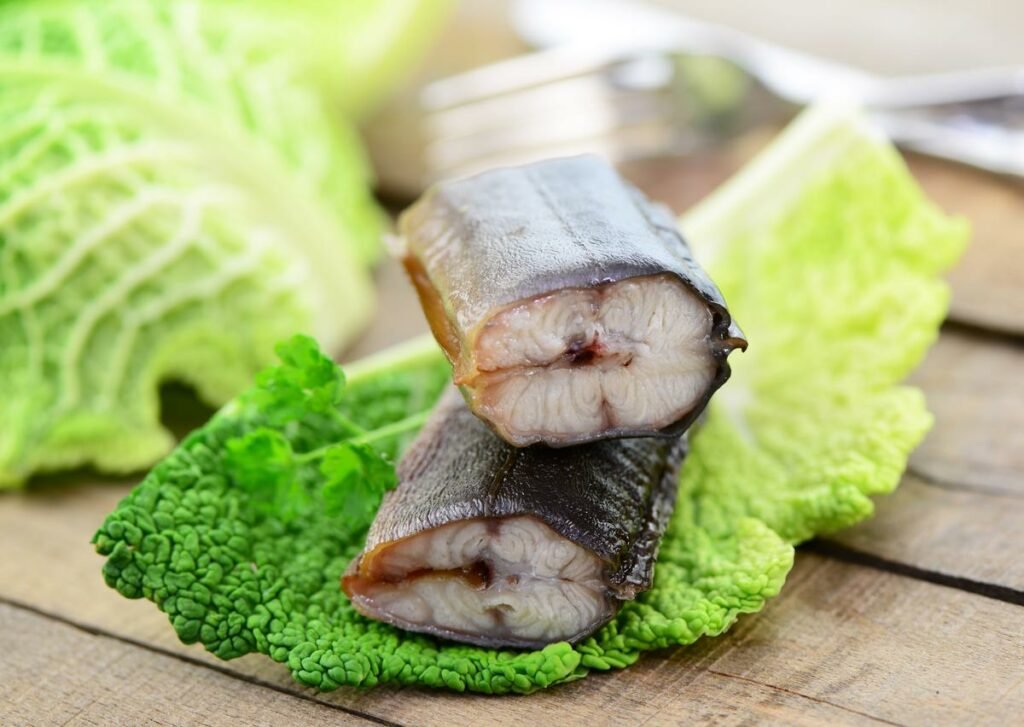
So, eel skin is definitely safe. You should just maintain the blood droplets from raw fish.
Related Article: Can You Eat Rock Bass? Things to Know About Rock Bass
3 Toxic Substances Found in Eel
Eel skin is only safe when you prepare and process the skin properly.
Because the scientists found some toxic substances in eel skin. And there are some good amount of reasons why you should avoid eating eel skin. Here get the list of the toxic substances with detail.
1. Hemagglutinin
A toxin names hemagglutinin is found in the eel skin. This is basically a glycoprotein. Hemagglutinin turns the red blood cells clumpy. If blood cells get clumped then they can’t move properly. And this can cause interrupted blood flow and oxygen levels in your body.
2. Haemolytic
Anot type of toxin is found in eel skin. This toxin is hemolytic. Hemolytic causes destruction in red blood cells. Destroying red blood cells lead to anemia. It also decreases the oxygen level in the blood.
3. Crinotoxin
Eel skin also produces conotoxins. Crinotoxins increase pain underneath and might cause internal bleeding. Also, allergic reactions can happen from conotoxins.
How to Prepare Eel: Without Toxins
Preparing an eel is not that difficult. It is kind of similar to other finishes. But eel skin is a little difficult to deal with.
As you already know that eel skin can contain toxins. So it is very important to peel off the skin. You have to remove the skin just after the eel is dead. Otherwise, the skin will get more attached to the muscles which will be more difficult.
But you can also consume eel without skinning. The eel can be prepared with 5 easy steps. Those steps are
Step 1: Cleaning
Before cooking your eel fish it is very important to clean the fish. As you know the skin has some toxin elements in it. So you should definitely clean the fish first. Just put the whole fish under running water. And it will get clean a little.
Step 2: Detaching the Head
Detaching the head of the eel fish is one of the important steps. This step is necessary because you need to make sure that the eel fish is dead.
If somehow the fish is not dead, then there are chances that the fish can attack. Because eel fishes do bite.
To detach the head, you’ve to choose a sharp and big knife. Then press the head with one hand and hit the head with the large knife. Then after hitting the head, you will be able to pull it off easily. And this will make sure that the eel fish is dead.
Now, you might have a hard time choosing the right knife to cut the eel’s head. You can check the knives below:
| Shun Classic Gokujo Fillet Knife | Buy on Amazon |
| Wüsthof Classic 7-Inch Fish Fillet Knife | Buy on Amazon |
Hopefully you chose the right one and made your task easier.
The next steps will be easier for you due to this.
Step 3: Cleaning the Head And Body
After detaching the head and the body this is a significant step. You’ll need to clean the head and body separately.
You can hold the body and the head under running water. With running water the eel will be cleaned properly.
Step 4: Applying Salt And Lime
Now, you can add some extra salt to the eel skin. You’ve to apply the salt properly on the skin. Applying salt will help to lessen the toxicity and toxins from the eel skin.
With salt, you can also squeeze lime juice on the skin. Lime juice has an acidic formula in it. The acidity will remove the toxins from the ell skin.
After applying salt and lime juice, you’ve to wait for like around 5 minutes. Then you can just rinse the whole body of the eel fish.
Step 5: Wiping And Cleaning For The Last Time
After applying salt and lime juice, there will be mucus on the eel skin. You’ll have to wipe that mucus from the skin properly. That mucus is the toxins from the skin.
After all the mucus wiping, it’s time for you to clean the eel fish for the last time. Just clean the eel fish under running water.
After this step, your eel fish is fully prepared for cooking. And you can now consume it with skin. And the heat from the cooking will ensure that there aren’t any toxins left.
What is the Best Way to Cook Eel?
Properly cooking an eel will allow you to consume the eel’s skin. Even though it’s toxic to some extent. But, following a few steps can make the skin safer. Hence, let’s see some of the cooking techniques of eel.
Roasted Eel
Roasted eel is very delicious. You need to preheat the oven to 375 F. Afterward on the inside and exterior, pat the eel dry. Season the eel with salt. Drizzle a substantial amount of oil over the eel in a pan or a cast-iron skillet.
Roast till the fish is roasted and the skin is crispy and golden. Leaving the eel inside the oven for 30 minutes can do the trick.
Fried Eel
You can fry the eel too. To do so, first, you need to properly clean the eel. Then, Combine 1 cup of wheat, herbs, butter, mustard, ginger, and cayenne in a large mixing basin. Add the eel to this mixture and marinate for 1 hour.
Using cornmeal, dredge the marinated eel. Caramelize the eel in a frying pan over medium heat until golden brown, about 7 minutes. You can add white wine for added flavor. You should cook the eel until the white wine remains half.
Lastly, take out the eel fries. For proper decoration, you can add butter on top of it. For a side dish, you may use different seasonings for salad. It enhances the taste and smell.
Side Effects Of Consuming Eel Skin
This can be a very common question if there are any side effects of eating eel.
Honestly, the eel can be very healthy and poisonous as well. If you cook the eel fish properly then eel is a very healthy diet for your daily life. Eel fish contains very rich nutritious elements. Some of those are Vitamin A, D, and B-12. Also, this is a very high-protein meal.
But if you somehow don’t cook the eel fish properly then there can be a few side effects. Undercooked eel fish can cause mild to serious
- Blindness
- Paralysis
- Allergy attack
- Heart attack
- Or even death
So, the bottom line is to cook your eel fish and skin properly.
FAQs
Are eels clean to eat?
Yes, eels are clean to eat. The eel’s flesh has a unique and extremely clear flavor. Eels are very easy to consume. Because they just have one bone running through the middle and aren’t picky eaters.
Does eel taste bland?
Eels are not bland, contrary to popular belief. It blends the sweetness of eel meat with a delicate but firm texture to create a delectable taste. It tastes like raw salmon, squid, or lobster in some way. They are also quite oily.
Is it good to eat eel every day?
Yes, it is definitely good to eat eel every day. Eating eel frequently in appropriate quantities may lower the risk of breast cancer. They also improve oxygen levels in the brain, memory, and concentration. Also, they reduce the risk of dementia.
Conclusion
We hope that you have the answer to can you eat eel skin
Just remember to clean eel skin properly with the above easy steps. And cook the eel fish properly. Don’t keep it undercooked or raw.
Good luck! Have a healthy feast with eel fish!
Related Posts






Subscribe for New Racipies
Get mental health tips, updates, and resources delivered to your inbox.
Meyer Lemon Budino


Budino is Italian for pudding, and I’m assuming this recipe is Italian in origin because it comes to us from Craig Stoll, owner of San Francisco’s Delfina. (Oh, SF, any mention of you sends prickles of homesickness down my spine.) What I can tell you is that it’s part souffle, part gooey lemon-y goodness. Especially if it’s countered with a mascarpone whipping cream, which rounds out its fruitiness.
I can also tell you that I love love love Meyer lemons, which I eat, raw, just like oranges, except I cut them in quarters and rip out their flesh with my teeth (kind of like how Chinese people eat oranges—or is this practice more international than I realize?).

I kind of realized along the way (the ‘way’ being the entire circuitous route I’ve taken to learning to bake) that I don’t really care for baked lemon desserts. I’m talking about tarts and pies, and those bar things that people always seem to make a huge fuss over. It’s probably a cultural thing. Chinese people don’t generally cook fruit into desserts, instead, preferring to eat it on its own, so it feels incongruous to pair its freshness and natural-ness with butter, dough, and high temperatures.
But Meyer lemon desserts, they’re in a league of their own. Meyer lemons possess a whole other dimension of floral-ness, a fragrance that reminds me of Asian dessert flavors like green tea and red bean and black sesame. It’s quieter, sweeter, less in-your-face. In fact, I’m rethinking my stance on lemon-y desserts, as long as they’re made with Meyer lemons. I would probably like Meyer-lemon lemon bars, and Meyer-lemon lemon meringue pie, and Meyer-lemon lemon shortbread. I know I like it in this budino.
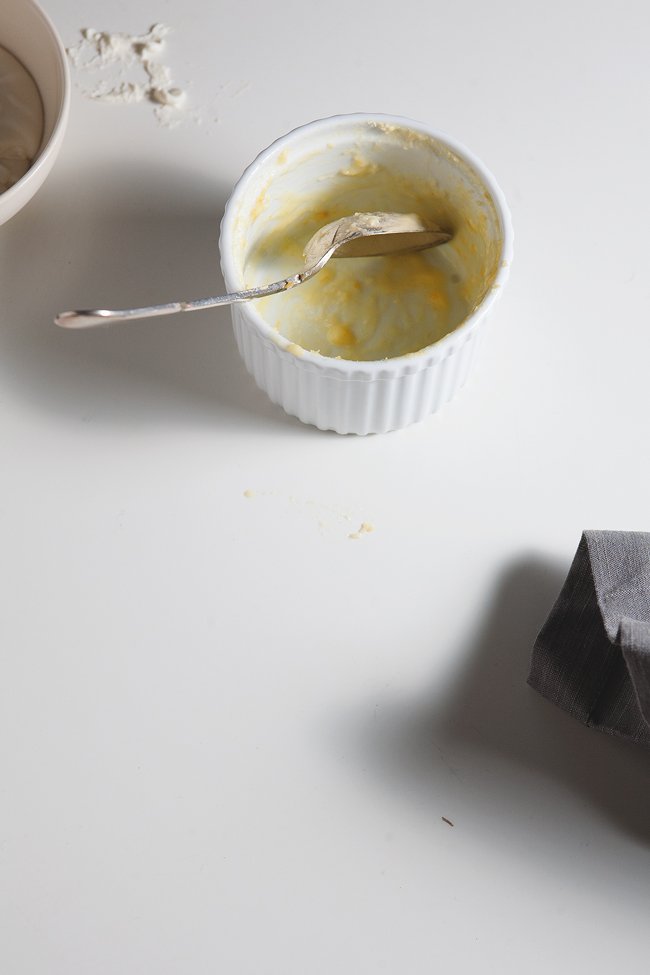
Hint: it’s wonderful warm and fresh out of the oven, BUT if you give it a chance to sit in the fridge overnight, it is even better the next day. By then, three distinct layers will have formed: the dreamy pudding on the bottom, the feathery sponge cake layer on top, and an incredibly lush cheesecake-like layer in between. It is excellent. Excellent!

MEYER LEMON BUDINO
Adapted from Delfina, courtesy of Bon Appétit
Serves 4 to 6
Ingredients:
1/2 cup plus 2 Tbsp sugar
3 large eggs, separated
1/4 cup all purpose flour
1/4 cup + 2 Tbsp fresh Meyer lemon juice
2 Tbsp finely grated Meyer lemon peel
3/4 cup plus 2 tablespoons whole milk
1/4 teaspoon salt
For the mascarpone whipped cream:
1/2 cup chilled mascarpone cheese
1/2 cup chilled whipping cream
2 Tbsp sugar
1/2 tsp vanilla extract
Directions:
Preheat oven to 350 degrees F. Butter 4 to 6 ramekins. Combine 1/2 cup sugar, egg yolks, flour, lemon juice, and lemon peel in large bowl; whisk until well blended. Whisk in milk.
Using an electric mixer, beat egg whites and salt in medium bowl until frothy. Gradually add remaining 2 Tbsp sugar and beat until soft peaks form. Fold beaten egg whites into lemon mixture in 2 additions. Divide mixture among prepared custard cups. Place custard cups in roasting pan. Pour enough hot water into roasting pan to come halfway up sides of custard cups. Bake puddings until tops are golden and spring back when lightly touched, about 25 to 30 minutes (keep an eye on them—in some ovens, they’ll bake faster). Remove cups from water and let cool. Serve warm or cold with mascarpone whipped cream, recipe below.
For the mascarpone whipped cream:
Combine the mascarpone, whipping cream, sugar, and vanilla extract. Whisk until thick soft peaks form. Refrigerate for a few hours.
Related Posts






Subscribe for New Racipies
Get mental health tips, updates, and resources delivered to your inbox.