
Coke Zero Caffeine: Complete Content Chart, Health Facts & Comparisons

Medically reviewed by Dr. Aris Thorne Updated Date: May 13, 2026
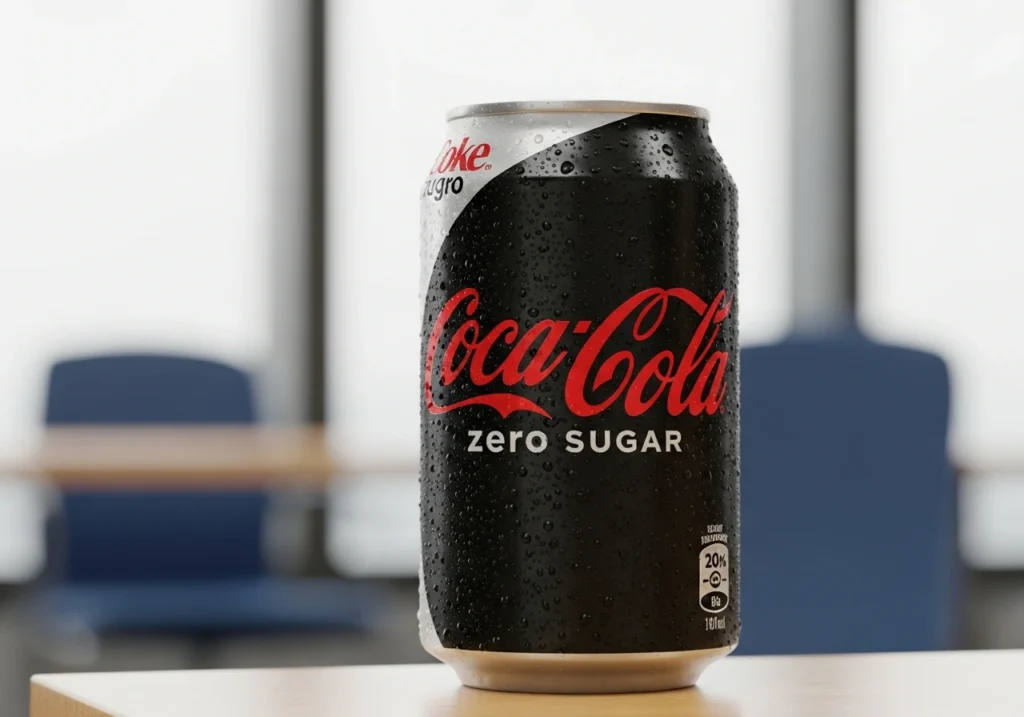
As Dr. Amelia Vance, I frequently see patients who rely on diet sodas to manage afternoon fatigue without thinking carefully about stimulant intake. One of the most common questions I hear is about Coke Zero caffeine, especially from people who assume that “zero sugar” automatically means it has no effect on sleep, anxiety, or heart rate.
For detailed breakdowns of various beverage caffeine levels, you can also reference our comprehensive Coke Zero caffeine guide.
In reality, many patients drink Coke Zero daily as part of their routine, especially during mid-afternoon energy dips. However, they are often surprised to learn that caffeine is still present and can contribute to insomnia, restlessness, or late-night sleep disruption—particularly when combined with coffee, tea, or energy drinks.
According to the FDA’s caffeine safety guidelines, up to 400 milligrams per day is generally considered safe for most healthy adults, though individual sensitivity varies widely.
Every day in my clinic, I work with individuals trying to balance stable energy levels while avoiding blood sugar spikes. Many don’t realize that even sugar-free beverages can influence their nervous system and sleep quality.
Understanding what is actually in your drink is essential for long-term metabolic health and proper sleep hygiene. Small sources of caffeine can add up quickly throughout the day.
In this guide, I’ll break down Coke Zero caffeine content, compare it with other common beverages like coffee, and help you understand how it fits into a balanced, health-conscious lifestyle. You can also compare Coke Zero to other popular options in our caffeine calculator tool.
TL;DR: Quick Overview
- Standard Coke Zero is not caffeine-free: Contains ~34 mg per 12 oz can.
- Flavor comparison: Diet Coke has slightly more caffeine (~46 mg) than Coke Zero (~34 mg).
- Vs. coffee: A standard cup of brewed coffee (~95 mg) has nearly three times the caffeine of a Coke Zero can.
- Daily safety: One can fits well within the FDA’s 400 mg daily limit for healthy adults.
- Caffeine-free option: Explicitly labeled caffeine-free versions are available for sensitive consumers.
- Clinical takeaway: Track cumulative caffeine from all sources—soda, coffee, tea, chocolate—to protect sleep and cardiovascular health.
How Much Caffeine Is in Coke Zero?
Many people assume that zero sugar also means zero stimulants. However, that is not the case with this classic beverage. Exactly how much caffeine Coke Zero contains depends entirely on the size of your drink. Therefore, checking the label is always a smart move, per USDA FoodData Central nutritional databases.
| Serving Size | Caffeine Content |
|---|---|
| 12 oz (355 ml) | ~34 mg |
| 20 oz bottle | ~57 mg |
| 330 ml | ~32 mg |
| 500 ml | ~48 mg |
| Per 100 ml | ~9–10 mg |
If you grab a standard can from the fridge, you get about 34 mg. In contrast, upgrading to a 20 oz bottle pushes that number closer to 57 mg. As a result, you need to track your total ounces if you drink multiple sodas daily. Portion control is essential. For personalized tracking, try our caffeine calculator by weight and age.
Is Coke Zero Caffeine-Free?
The short answer is no. Standard Coca-Cola Zero Sugar definitely contains a mild dose of caffeine to give it that classic cola bite. So, if you are asking if Coke Zero is caffeine-free, you have to look closely at the packaging.
Furthermore, the company adds caffeine intentionally as a flavoring agent. While it provides a slight energy lift, it is primarily there to enhance the overall taste profile. It helps recreate the original soda experience, as noted in manufacturer disclosures reviewed by the European Food Safety Authority.
Fortunately, if you need to avoid stimulants entirely, there are great options. You just have to hunt down the specific caffeine-free Coca-Cola Zero variants at your local grocery store. They exist specifically for sensitive consumers.
Coke Zero vs Coffee: A Stimulant Comparison
How does your afternoon soda compare to your morning brew? Patients frequently ask me to compare coke zero caffeine vs coffee. Most of all, they want to know which one will cause a bigger energy crash later in the day.
| Beverage | Caffeine Content |
|---|---|
| Coke Zero (12 oz) | ~34 mg |
| Brewed Coffee (8 oz) | ~80–100 mg |
As you can see, coffee packs a much bigger punch. In fact, an average cup of coffee has nearly three times the stimulant level of a 12-oz soda, according to the Harvard T.H. Chan School of Public Health.
Therefore, the soda provides a much gentler physiological lift. For more on coffee’s properties, see our discussion on whether coffee is acidic.
Diet Coke vs Coke Zero: Which Has More Caffeine?
These two drinks look incredibly similar, but they have distinct chemical profiles. When we evaluate Diet Coke vs. Coke Zero caffeine, there is a clear winner in the stimulant category.
Diet Coke was formulated decades ago with a completely different flavor profile. Consequently, it contains about 46 mg of caffeine per standard 12-oz can. It has a slightly sharper, more distinct bite.
On the other hand, the newer zero-sugar formulation has only 34 mg for the exact same size. Thus, if you want slightly less stimulation in your afternoon, the newer black can is the better choice for your nervous system.
Caffeine Content by Serving Size
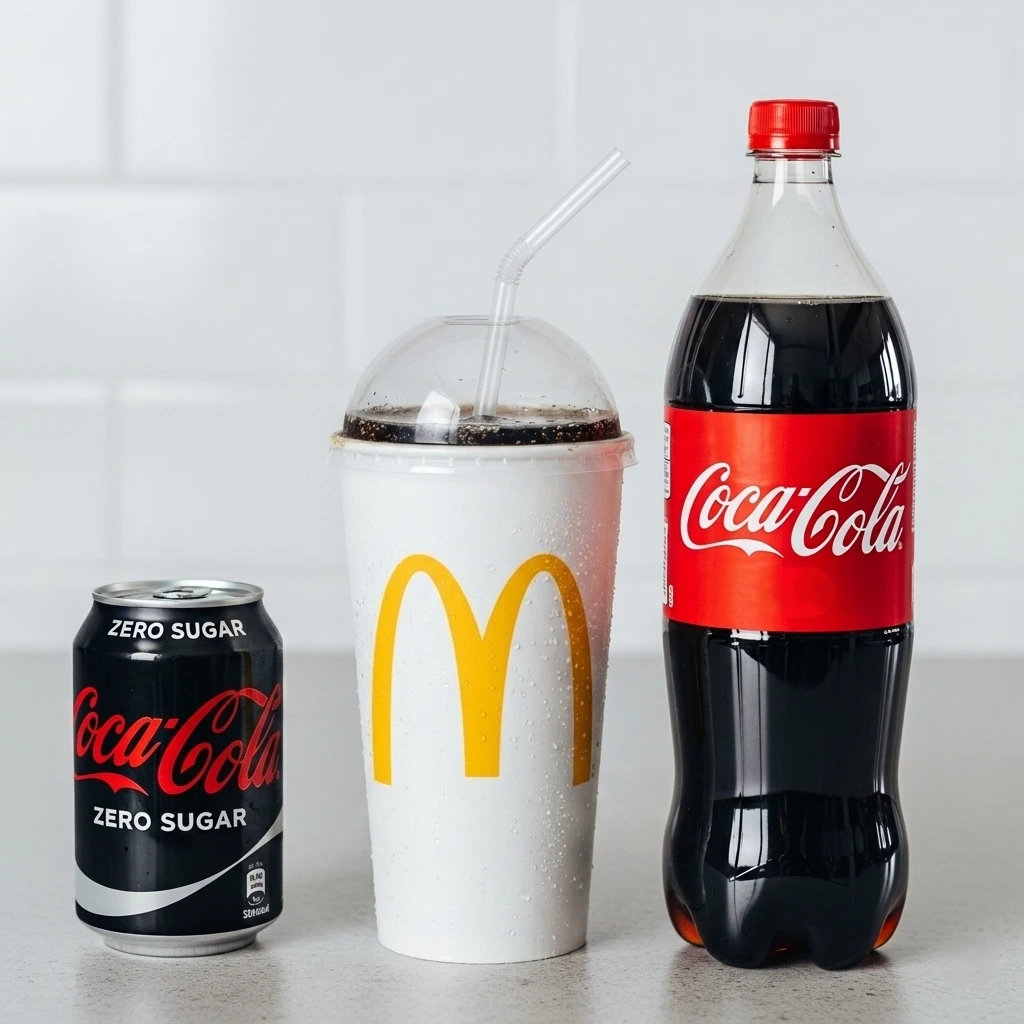
Portion control matters greatly when tracking your macros and your daily stimulants. The Coke Zero caffeine content per can is easy to remember, but fountain drinks completely change the math.
For example, a large fast-food cup can easily hold 30 ounces or more. Suddenly, your mild 34 mg dose doubles or triples. Ultimately, you are consuming the equivalent of a very strong cup of coffee in one sitting.
Similarly, the Coke Zero caffeine content in 500 ml bottles popular in Europe carries about 48 mg. Always calculate your intake based on the actual fluid ounces you consume. Do not just count the number of drinks.
How the Stimulants in Cola Affect Your Body
As a physician, I look closely at how daily chemicals interact with your nervous system. Caffeine acts as an adenosine receptor antagonist in your brain. Specifically, it blocks the chemical that makes you naturally feel sleepy, as explained by the Mayo Clinic.
Recently, I treated a patient in my clinic who complained of racing thoughts at bedtime. During our clinical consultation, we realized she was drinking three 20 oz bottles of zero-sugar cola every single evening.
Because she did not realize the cumulative caffeine in Coke Zero sugar, her central nervous system remained highly stimulated. Once we switched her to plain water after 5 PM, her sleep architecture improved dramatically, per research from the Sleep Foundation.
Benefits of Moderate Caffeine Intake
Not all stimulant news is bad. In fact, when consumed reasonably, these beverages offer documented physiological perks. Most noteworthy, they can help you power through a sluggish afternoon at the office.
| Benefit | Evidence Level |
|---|---|
| Increased alertness | High |
| Improved focus | High |
| Enhanced physical performance | Moderate |
Due to the quick absorption rate in liquids, you will usually feel these benefits within twenty to thirty minutes. Furthermore, the total lack of sugar means you completely avoid the subsequent glycemic crash.
Risks and Side Effects of High Consumption
Even though the dose is relatively small per can, it adds up quickly over the day. Drinking excessive amounts of caffeinated soda can easily trigger several unpleasant biological responses.
First of all, you might experience generalized anxiety or a noticeably jittery feeling. Similarly, an elevated heart rate is a common medical complaint among heavy daily consumers, according to the American Heart Association.
Also, chronic consumption late in the day will almost certainly disrupt your natural circadian rhythm. Consequently, you may develop a mild physical dependence if you rely on it every single morning to wake up.
Safe Daily Caffeine Limits Explained
The FDA provides very clear guidelines regarding stimulant safety for Americans. For most healthy adults, consuming up to 400 mg per day is considered perfectly safe.
To put that into perspective, you would have to drink nearly twelve standard cans of this soda to hit that limit. However, everyone metabolizes these complex compounds differently based on their genetics, per NIH genetic research.
Meanwhile, pregnant individuals are strongly advised to keep their intake under 200 mg per day, according to ACOG pregnancy guidelines. Therefore, you must factor in all dietary sources, including tea and chocolate, not just your daily soda habit.
Caffeine-Free Coke Zero Sugar Options

If you love the taste but absolutely hate the jitters, you are in luck. The manufacturer produces a specific Coke Zero sugar caffeine-free version exactly for sensitive consumers.
You can usually spot these on the store shelves by looking for distinctive gold accents on the packaging. Specifically, the words “caffeine-free” will be printed clearly on the cardboard box and the cans.
Buying a Coke Zero Caffeine-Free 24 Pack is a brilliant strategy for late-evening enjoyment. As a result, you get the sweet, highly carbonated experience without sacrificing your deep restorative sleep phases.
Cherry Cola and Flavor Variants
The modern beverage aisle is packed with exciting flavor variations today. Many patients specifically ask me about the Cherry Coke Zero caffeine levels compared to the original formula.
Generally speaking, adding cherry or vanilla flavoring does not alter the baseline stimulant profile. You are still looking at roughly 34 mg per standard 12-oz can across the board.
Unless the label explicitly states that it is stimulant-free, assume the base formula remains exactly the same. Thus, your favorite fruity soda will still keep you awake if consumed late at night.
Who Should Limit or Avoid This Beverage
While generally safe, some individuals need to exercise strict caution. Because this drink contains active central nervous system stimulants, it is not suitable for everyone’s unique medical profile.
People with diagnosed anxiety disorders often find that even small doses exacerbate their anxious symptoms. Similarly, those with severe hypertension might experience temporary, unwanted blood pressure spikes after consumption.
Furthermore, patients dealing with chronic insomnia must cut off their intake by early afternoon. For patients with acid reflux or GERD concerns, certain caffeinated beverages may exacerbate symptoms. Review our guide on foods to avoid with GERD for personalized dietary strategies.
Finally, anyone struggling with clinical insomnia should enforce a strict afternoon cut-off time. In addition, always consult your primary care doctor if you have lingering concerns about your heart health. The CDC strongly advises against youth consumption of caffeinated beverages due to developing nervous systems.
Frequently Asked Questions
How much caffeine is in Coke Zero per can?
A standard 12-oz Coke Zero can contains approximately 34 mg caffeine. That’s a gentle lift—far milder than coffee or energy drinks. Perfect if you want fizz without jitters. But remember: caffeine adds up across all beverages. Track your total daily intake. Small awareness prevents sleep trouble or anxiety. Your body deserves mindful fueling.
Is Coke Zero caffeine-free?
Standard Coke Zero is not caffeine-free—it contains about 34 mg per can. However, Coca-Cola does offer a caffeine-free version. Look for gold labeling or “caffeine-free” printed clearly on the packaging. If you’re avoiding stimulants entirely, double-check before buying. When in doubt, ask store staff. Small label checks create big peace of mind.
Is Coke Zero healthier than coffee?
It depends on your goals. Coffee offers natural antioxidants and zero artificial sweeteners. Coke Zero provides minimal caffeine and zero sugar—but uses artificial sweeteners. Neither is “bad.” Both fit balanced diets in moderation. Choose based on your taste, tolerance, and health priorities. Your care team can help personalize your picks. For blood sugar management guidance, see the American Diabetes Association.
How much caffeine is safe daily?
For most healthy adults, the FDA suggests staying under 400 mg daily. That’s roughly 12 cans of Coke Zero—or two large coffees. Pregnant individuals should limit intake to 200 mg. Sensitivity varies. If you notice anxiety, palpitations, or poor sleep, scale back. Listen to your body. Moderation—not elimination—supports sustainable wellness.
Does the cherry flavor have more caffeine?
No—Coke Zero Cherry contains the same 34 mg of caffeine as the original. Flavor changes don’t alter the stimulant profile. Vanilla, cherry, or classic—the caffeine load stays consistent. Enjoy your favorite taste without worrying about hidden spikes. Just track your total daily intake across all beverages. Mindful sipping supports steady, calm energy.
Is Coke Zero safe during pregnancy?
The American College of Obstetricians and Gynecologists (ACOG) recommends that pregnant individuals limit caffeine to less than 200 mg per day. Since a standard Coke Zero can contains ~34 mg, moderate consumption may fit within this threshold—but always consult your OB-GYN first. Individual health factors and total daily intake from all sources matter most.
Conclusion
In conclusion, understanding exactly what you are putting into your body is the absolute foundation of excellent metabolic health. We have thoroughly explored the coke zero caffeine profile today, and the numbers are quite clear. At roughly 34 mg per standard 12 oz can, it offers a mild, highly manageable energy boost.
Most of all, it provides significantly less stimulation than your typical morning cup of brewed coffee. However, it still contains enough of a chemical kick to disrupt your sleep if you drink it right before bed. As a physician, my clinical advice is always moderation above everything else.
You can absolutely enjoy this popular zero-sugar beverage as part of a well-balanced lifestyle. Just be highly mindful of your overall daily limit, especially if you also consume green tea, iced coffee, or pre-workout supplements. If you find yourself feeling randomly jittery or anxious, try switching to the explicitly labeled caffeine-free Coca-Cola Zero versions instead.
Ultimately, your long-term health is all about making smart, informed choices every day. Now that you truly know the facts, you can enjoy your favorite cold beverage without any lingering anxiety or guesswork. Keep tracking those milligrams, stay properly hydrated with plenty of plain water, and always prioritize your nightly rest.
For ongoing updates on beverage safety and nutrition science, bookmark our food and nutrition resource center. For additional personalized health guidance, consult resources like the National Coffee Association’s health research or speak with your healthcare provider about your individual caffeine tolerance and cardiovascular risk factors.
Evidence-Based References:
- FDA: Caffeine Safety Guidelines. https://www.fda.gov/consumers/consumer-updates/spilling-beans-how-much-caffeine-too-much
- Harvard T.H. Chan School of Public Health: Caffeine & Health. https://nutritionsource.hsph.harvard.edu/caffeine/
- USDA FoodData Central. https://fdc.nal.usda.gov/
- Sleep Foundation: Caffeine & Sleep. https://www.sleepfoundation.org/nutrition/caffeine-and-sleep
- Mayo Clinic: Caffeine Safety Limits. https://www.mayoclinic.org/healthy-lifestyle/nutrition-and-healthy-eating/in-depth/caffeine/art-20045678
- American Heart Association: Energy Drinks & Heart Health. https://www.heart.org/en/news/2019/05/29/energy-drinks-may-provide-jolt-to-heart-function-blood-pressure
- American Diabetes Association: Caffeine & Blood Sugar. https://diabetes.org/health-wellness/fitness/sports-drinks-impact-on-glucose-blood-sugar
- NIH PMC: CYP1A2 Genetic Variability Study. https://pmc.ncbi.nlm.nih.gov/articles/PMC2784188/
- ACOG: Caffeine During Pregnancy. https://www.acog.org/clinical/clinical-guidance/committee-opinion/articles/2010/08/moderate-caffeine-consumption-during-pregnancy
- CDC: Caffeine & Youth Nutrition. https://blogs.cdc.gov/nchs/2014/02/19/2035/
- National Coffee Association: Coffee & Health Research. https://www.ncausa.org/About-Coffee/Coffee-Health-Research
Related Posts



Subscribe for New Racipies
Get mental health tips, updates, and resources delivered to your inbox.
Biscoff Butternut Squash Oatmeal Cookies

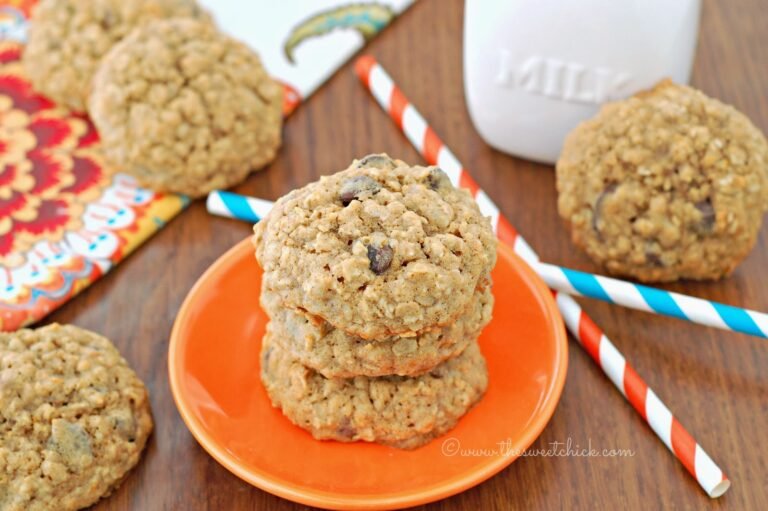
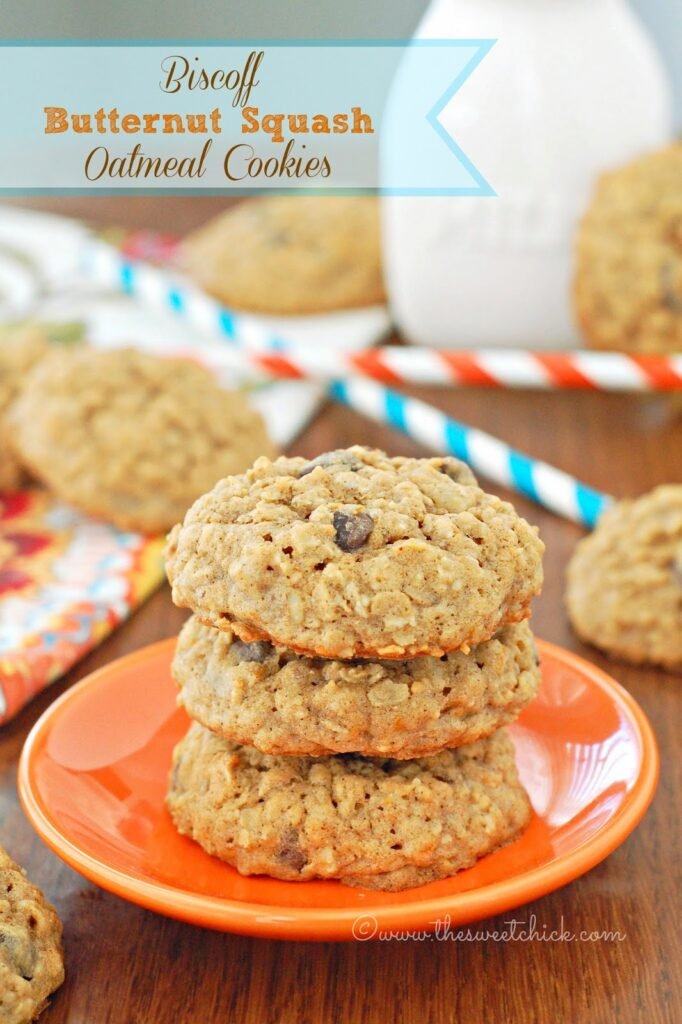
So I signed up for a neighborhood cookie exchange. I gotta say, I am really liking this new neighborhood. There’s a monthly get together of mom’s where I learned how to play Bunco. At Halloween everyone was sending out Boo-Baskets. Now we are exchanging cookies. It’s a very friendly atmosphere. I am currently testing out new cookie recipes for the exchange. Since I have been on a butternut squash trend, I thought I’d start there. I wanted to see what other flavorsI could mix with the squash. I found some Biscoff, dark chocolate chips, and some quick oats in the pantry. I am always up for something new.
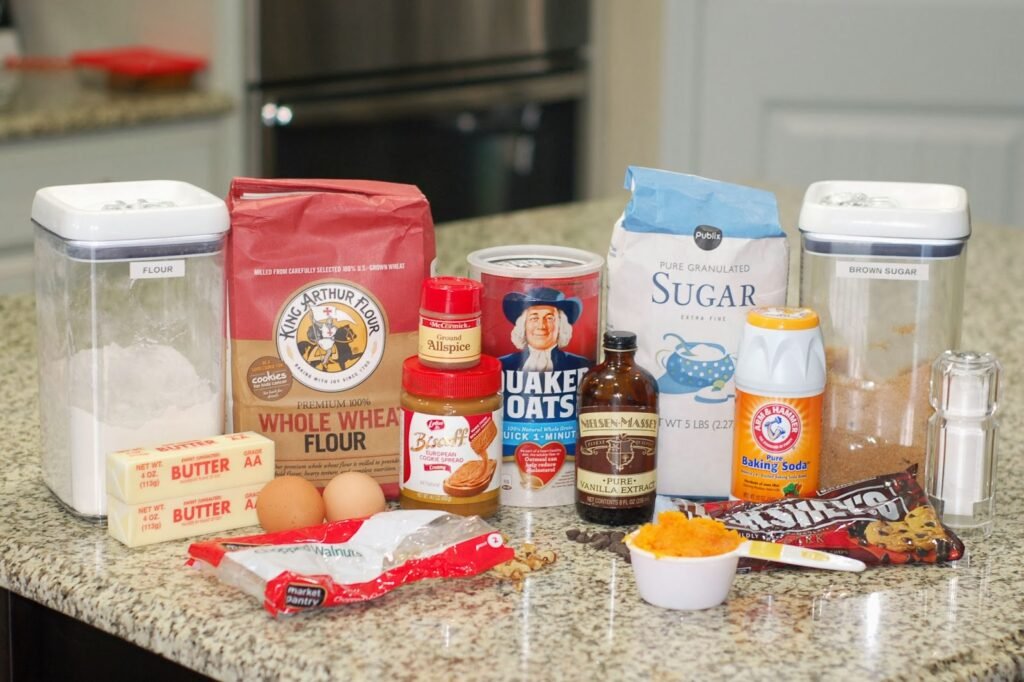
I’ll admit, I was a little skeptical about the combination of flavors myself. I was really just winging it. But hey, I am not going to know if it works, unless I try it.
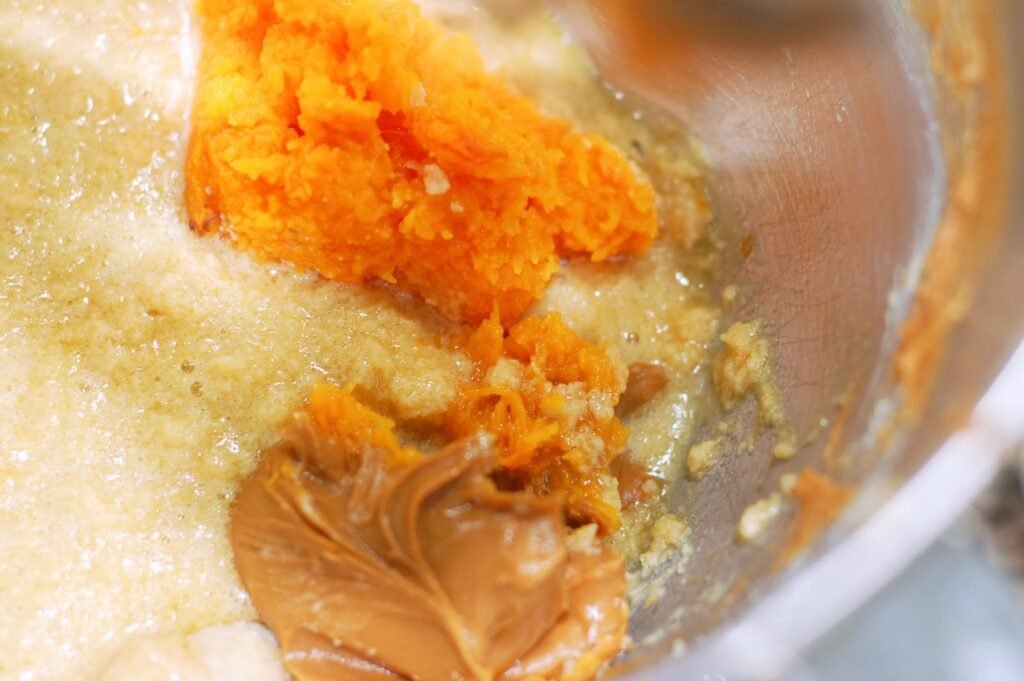
Butternut squash does have a little bit of sweetness in it when cooked, so I wanted to pair it with something else sweet, but something other than maple syrup. Thank goodness I had some Biscoff.

The walnuts are optional, but the chocolate chips are not. You gotta have them. You can use semi-sweet ones if you like, but I am a dark chocolate kinda gal.

I know it’s not safe to eat raw cookie dough, but I just had to have a nibble. It smelled so good.

The cookies came out soft and chewy, just like an oatmeal cookie should. And let me tell ya, Biscoff and butternut squash are fantabulous together.

If you don’t believe me, ask this guy. He is my picky eater. He doesn’t eat vegetables and if he doesn’t like the texture of a particular food, he gags on it. Much to the dismay of the rest of us eating next to him. He did not however have any problems shoving a whole cookie in his mouth and asking for another one. If that is not a measure of success, I don’t know what its.
I think my neighbors will be pleased with these Biscoff Butternut Squash Cookies also. I can’t wait for our cookie exchange.

Biscoff Butternut Squash Cookies
by The Sweet Chick
Prep Time: 15 minutes
Cook Time: 10-12 minutes
Keywords: bake dessert snack butternut squash biscoff dark chocolate chips quick oats cookie American fall
Ingredients (36 cookies)
- 1/2 cup + 2 tablespoons butter, softened
- 3/4 cups brown sugar
- 1/2 cup granulated sugar
- 2 eggs, beaten
- 1 teaspoon vanilla
- 1/2 cup butternut squash puree
- 1/3 cup Biscoff Spread
- 1 cup whole wheat flour
- 1/2 cup all purpose flour
- 1 teaspoon baking soda
- 2 teaspoons ground allspice
- 1/2 teaspoon salt
- 3 cups quick oats
- 1 cup dark chocolate chips
- 1/2 cup chopped walnuts
Instructions
Preheat oven to 350º F.
In a stand mixer cream together the butter and the sugars on medium speed.
Add eggs, vanilla, butternut squash and Biscoff and mix well.
In a medium bowl combine the flours, baking soda, allspice and salt until well blended, then slowly add to the wet ingredients.
Next add the quick oats and mix on low until all incorporated.
Then add the walnuts and chocolate chips and continue to mix on low until completely incorporated.
With a medium cookie scoop, drop by scoopful onto a greased cookie sheet at least 2 inches apart.
Bake at 350º for 10-12 minutes or until the tops are a golden brown.
Remove from oven and let cool for 2 minutes, then move to a cooling rack to completely cool.
Bet you can’t eat just one!
Related Posts




Subscribe for New Racipies
Get mental health tips, updates, and resources delivered to your inbox.