
Are Crackers Healthy? Should you avoid or eat crackers

Medically reviewed by Christiana George Updated Date: January 6, 2026

Crackers are our best friends when it comes to snacking. Be it with tea or cheese, crackers are a must. However, crackers can be our enemies at times.
That’s why you want to know are crackers healthy?
No. Crackers are high both in calories and sodium. These can lead your body to put on some extra weight. Also, crackers contain low fiber and protein that lessen the health benefits. But you can maximize the nutritional value of crackers. You have to eat in moderation with poultry, dairy, and nuts.
In this article, we explain the downsides of crackers to determine whether they are unhealthy. Also, figure out the specific components that make crackers healthy. So, spare a few minutes and read along.
Let’s go –
Are Crackers a Healthy Snack?
Well, crackers are not as healthy as you think. Crackers are a convenient and tasty snack. That’s why they are loved by children and adults. Since crackers are delicious snacks, you want to make them as healthy as possible.
But crackers have high calories and sodium, which aren’t healthy properties. Also, they don’t provide all the essential nutrients to make food healthy.
Crackers are made with white flour, coarse salt, shortening, and yeast or baking soda. These ingredients make crackers crispy, dry-textured and have distinctive holes. So, they are snappable and enjoyable.

The crackers are marketed as a healthy, easy, busy snack to eat cereal grain and staple food. But this claim is not necessarily a fact. Also, whole grain crispbreads are being produced to market as crackers.
They are actually mouth-watering snacks when you eat them with butter, nut, and jam jelly. And you can’t live without them as your midnight snack.
Nevertheless, it is important to look into these crackers’ nutritional profiles.
Related Post: Is Potato Salad Healthy? [ 3 Best Potatoes for Potato Salad]
What Are the Nutrients Factors of Crackers?
You’re obviously feeling an emergency to know the nutritional factors of your darling snack. So, we’re providing you with details with all the nutrition facts of crackers.
First, let’s have a look at the ingredients of those holy crackers-
- Enriched flour (wheat flour, niacin, reduced iron, thiamin, mononitrate, riboflavin, folic acid)
- Sunflower and/or canola oil (contains ascorbic acid and rosemary extract for freshness)
- Yeast
- Malt barley flour
- Ammonium bicarbonate
- Sodium metabisulfite
- Cracked wheat
- Salt
- Whey power
- Sodium bicarbonate
- Monocalcium phosphate
- And Enzymes
Now, let’s get to shed light on the nutritional factors of crackers. USDA says the per 100g crackers contain the following –
| Nutrients factors | Amount per portion |
| Calories | 433g |
| Total fat | 10g |
| Saturated fat | 4g |
| Sodium | 100mg |
| Total Carbohydrate | 73g |
| Dietary fiber | 6.7g |
| Sugar, Calcium | 0g |
| Protein | 13g |
| Iron | 4.8mg |
The table shows how many vitamins, and minerals 100g crackers contain. It contributes 13% of total fat to your regular diet. Whooping 43% of sodium and 26% of protein are also gained from such amounts.
Now, let’s have a look at what makes a yummy packet of crackers unhealthy.
5 Reasons Crackers are Unhealthy for you
Even though these crackers have passed quality control, they still have health issues. Let’s move to the discussion.
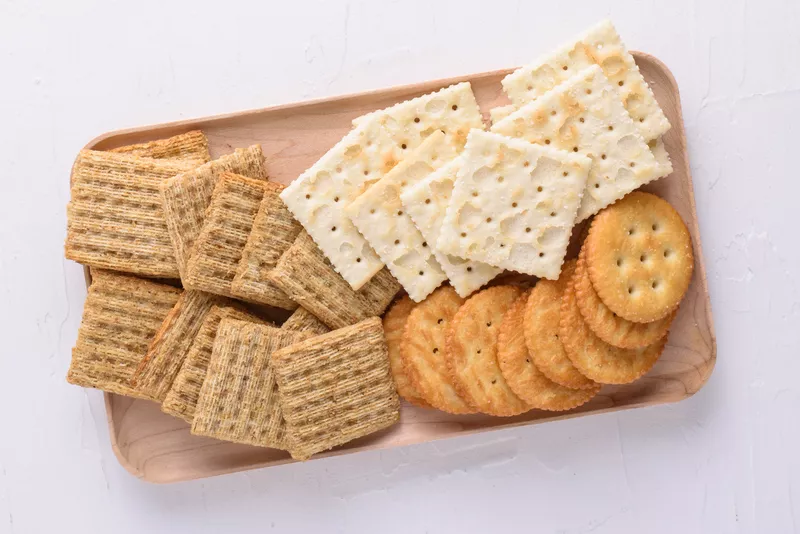
Reason 1 of 5: High in Sodium
One serving of 100grams of regular whole wheat saltine crackers provides 43% of the DV of sodium. This is an alarming portion of sodium that adds to your diet.
Well, this amount of salt intake can severely increase your blood pressure and heart disease.
According to research, intaking too much salt can reduce the blood vessels under the tongue. That alters the taste perception lately. And, you’ll be surprised to know that it increases a tendency to consume more salt.
Consequently, you’ve earned a risk of experiencing high blood pressure. But you can eat them minding the portion if you’re in love with them.
Reason 2 of 5: Heavy Calories
One of the reasons why crackers are unhealthy is they are massively processed. So, they contain too many calories, leading you to gain some unwanted weight.
Well, if you’d hate to put some extra weight, then your kitchen cabinet should be free of them. The enriched and refined flour, sodium, and harmful fats may lead your perfect and healthy body to obesity.
Though the nutrition chart doesn’t show any sugar, they contain hidden sugar, which is in the form of calories. So, consuming a high level of calories invites unhealthy circumstances in your life.
Nevertheless, crackers are yummy and small in size, you can consume a vast amount of them in one sitting. That increases your sodium and calorie intake, which may increase weight.
Reason 3 of 5: Upset Stomach
The saltiness and low fiber nature of crackers can upset your stomach frequently.
If you’re a patient with gastroparesis (delayed emptying of food from the stomach), make sure you’re avoiding crackers with too much salt. Because it increases the symptoms of nausea, vomiting, acid reflux, bloating, and burping.
A study shows that 50 people with gastroparesis have an excessive risk of experiencing those systems. So, make sure you’re not eating crackers on an empty stomach.
Reason 4 of 5: Loaded with Chemicals
The brands play mischievous tactics for product labeling. They include high fiber in the packet of crackers which is the main source of dietary fiber. But in reality, they don’t meet half of the daily needs of an adult.
Actually, they don’t contain an adequate amount of fiber. Also, the mystery of crackers being so tasty is using too many chemicals. They contain glycidol or acrylamide, which increases carcinogenic risks.
In fact, acrylamide and glycidol are dangerous chemicals since they generate from palm oil. And palm oil can be a nightmare for you because it’s being refined at high temperatures.
Try to avoid these flavored crackers instead, and eat a cup of unsalted oven-roasted nuts.
Reason 5 of 5: Sugar-free Labeling is Alarming
Though the marketed crackers claim that they contain zero added sugar. This actually indicates that they collect so much sugar from all the ingredients.
So, they don’t need to add any artificial sweeteners. Other ingredients combined with an exceptional sugar level can be alarming for your health.
Related Post: Are Burritos Healthy? [Benefits and Risks]
Is There Any Positive Side of Crackers?
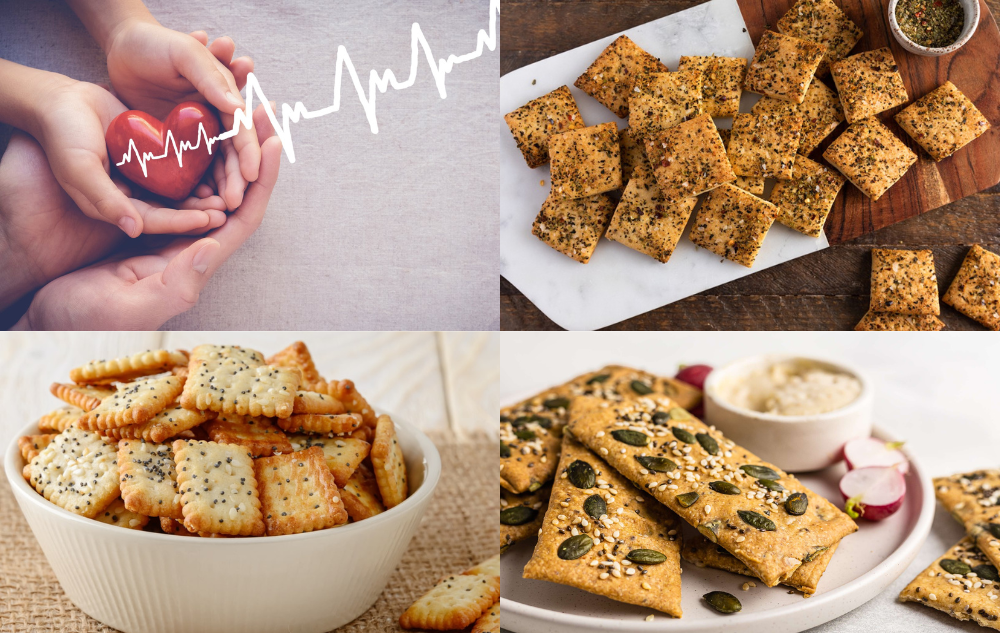
Make sure you’re buying crackers if they have the following ingredients. Because these components are considered healthy.
Whole and Minimally Refined Grains
Well, crackers with whole grains are standard. Make sure you’re buying crackers that are made with whole grain oat flour and whole grain quinoa. Also, fruit, chia, and flax seeds containing crackers are healthy enough.
On the other hand, avoid overly processed grains. Because they have less fiber and no phenolic lipids.
Through refining the grains, phenolic lipids are being ripped off.
This decreases the nutritional value of grains. So, make sure your crackers are made with whole and minimally refined grains.
No Added Starch and Sugar
Added starches are converted into sugar when you consume them. So, you should choose malt syrup-free crackers. In fact, modified starch can cause heart disease and other chronic diseases. So, try to avoid these added starches.
Just avoid excessive added sugar while buying crackers. Any type of added sugar is horrible for your health. Added sugar causes to increase in calorie levels. So, consume crackers with low fructose corn syrup.
No Artificial Colors and Preservatives
As we all know that any type of preservative and artificial color is bad for a healthy diet. So, you need to consume those crackers which have no artificial colors and preservatives.
In fact, too much use of them is risky for human health.
No Unhealthy Vegetable Oils
The crackers with sunflower oil, vegetable oils, and soybean oil are not healthy fat. These oils contribute to increasing calories which is a culprit in gaining weight.
Also, try to avoid crackers made with hydrogenated cottonseed oil.
How Can You Make Your Crackers Healthy?
Well, you’re being too stubborn about your darling crackers. And want to continue eating them. So, you can pair them up with high dietary fiber, protein, and low sodium foods.
Some foods you can pair with crackers are
- Peanut and almond butter
- Greek yogurt and low sodium cheese
- Tuna fish, chicken, and roast beef slices
- Also, you can pair them with lentil soup and hummus dip.
So, you can eat them paired up with these foods. But always enjoy your favorite food in moderation. Nothing can make your crackers healthy if you eat them excessively.
If you’re still not ready to give up on crackers, we’ve got some healthy alternatives for you.
| PLANTERS Deluxe Lightly Salted Mixed Nuts | Check details |
| Rhythm Superfoods Kale Chips | Check details |
FAQs
Are Crackers Good for Weight Loss?
Well, not really. But, if you eat crackers made from whole grains, it may support weight loss. Although only crackers can’t help you in your weight loss journey.
Is Eating Crackers like Eating Bread?
Crackers can play a substitute for bread. Actually, they share similar kinds of ingredients. But crackers don’t consider bread. If you want to cut off your bread love, crackers can be a great option.
Are Crackers Good for Diabetes?
If you have diabetes, crackers with no added sugar can be a good snack for them. Crackers are high in carbs and fiber, which can prevent impaling blood sugar.
Final Words
Hopefully, you got light about are crackers healthy.
Crackers don’t offer you too much nutrition. So, you can’t add them to your diet as a healthy snack.
But, you can eat crackers with nut butter, legumes, meat, and fish. These can make your crackers healthy. Also, remember to control your temptations. And eat in moderation, like one luxury day in a week. We’re wrapping up here. Have a great day and healthy food.
Related Posts
Subscribe for New Racipies
Get mental health tips, updates, and resources delivered to your inbox.
Blueberry Yum Yum Smoothie

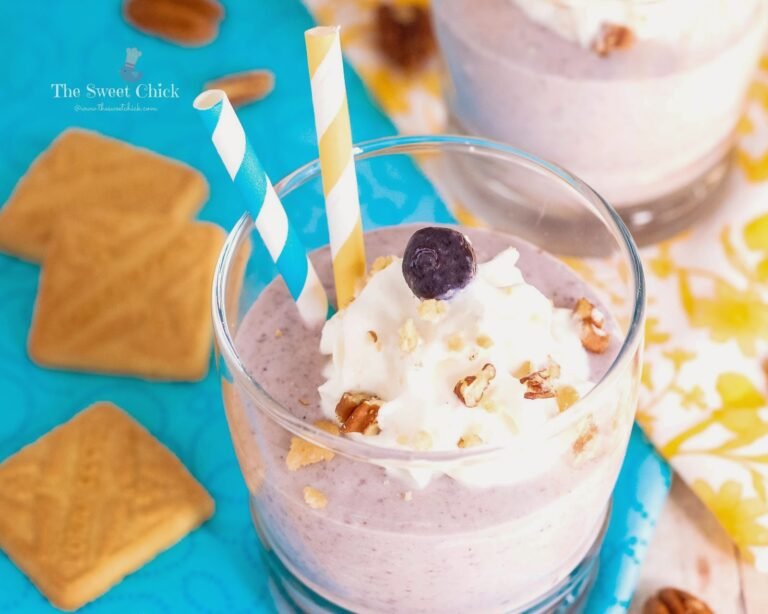

I had never heard of a Blueberry Yum Yum dessert until one of my neighbors suggested I make it. Of course I did. It’s super easy and oh my, it is so delectable. It’s a no bake layer cake made with crushed Lorna Doone shortbread cookies, blueberry pie filling, whipped topping, cream cheese, powdered sugar, and pecans. What’s not to like about that? I thought it would be perfect to make as a dessert smoothie. Yeah, I know it’s not a healthy smoothie, but sometimes you have to be bad. You can use low fat whipped topping and cream cheese if it makes you feel better. Me, I’m sticking to the good stuff.

Williams-Sonoma contacted me to be a part of their Smoothie Week with their first installment being “Not Your Typical Smoothie”. I think this fits the bill. I am a dessert girl, so of course I had to make a dessert smoothie.

I used my Blentec to make this, but in all fairness it should work in any blender. If you don’t have a blender you should check out Williams-Sonoma, they have a sale on blenders and free shipping going on right now.
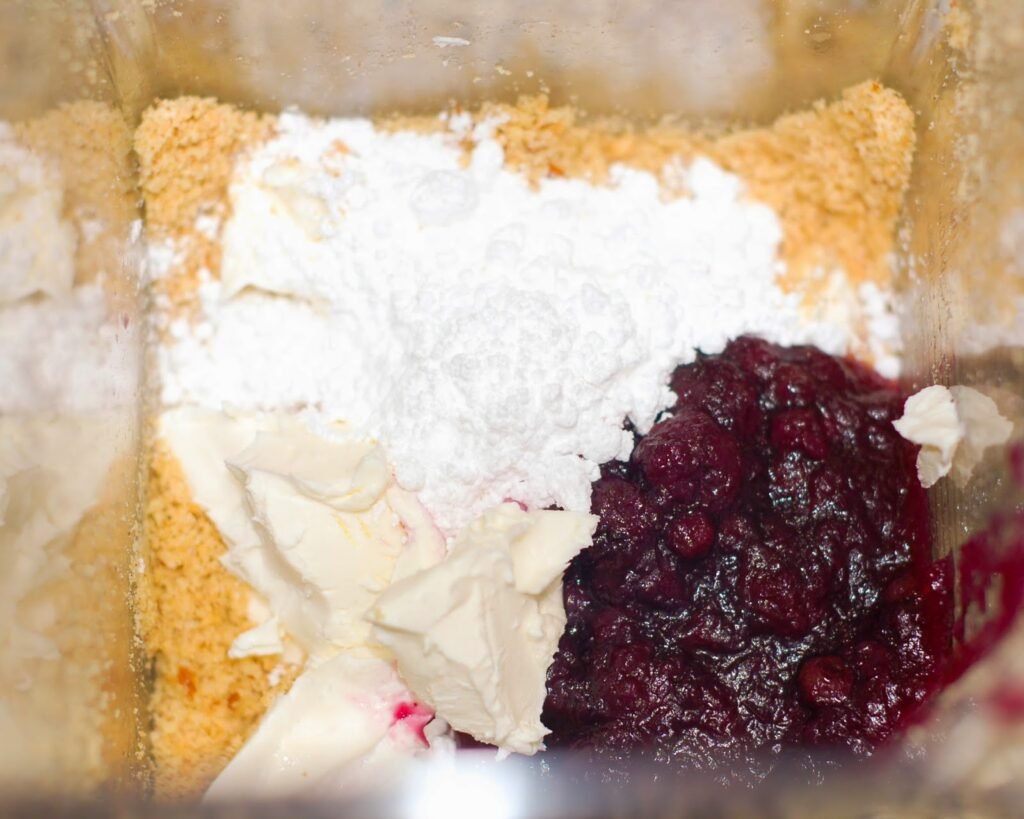
The cookies crumble fairly easy and I had pre-chopped the nuts, so it all worked smoothly. As for the pie filling, my neighbor had given me an industrial sized can of blueberry pie filling that I ended up freezing because I hadn’t used it all. Now, I had a good excuse to use it.

I left the frozen whipped topping for last and the milk. I added 1/4 cup because I like my smoothies thick, but you can add more if you like.

And that’s it. You can add more cookie crumbles or pecans to the top if you want. It makes one 12 oz. serving or two 6 oz. servings. Depends how greedy you are. It is really good though, so I would keep it all to myself. It tastes just like the dessert, except in a drinkable form. Enjoy!
Blueberry Yum Yum Smoothie
by The Sweet Chick
Prep Time: 10 minutes
Keywords: blender dessert snack beverage blueberry pie filling Lorna Doone Cookies whipped topping shake American
Ingredients (2 servings)
- 10 Lorna Doone shortbread cookies
- 1/4 cup chopped pecans
- 1/3 cup blueberry pie filling
- 2 oz. cream cheese
- 1/4 cup powdered sugar
- 1 cup frozen whipped topping
- 1/2 cup milk (or less, if you want a thicker smoothie)
Instructions
Add the cookies and pecans to your blender and pulse until cookies become crumbs.
Then add pie filling, cream cheese, and powdered sugar. Pulse until smooth.
Lastly, put in the whipped topping and milk. Pulse until well blended.
Pour and serve immediately.
Notes
This recipe makes one 12 oz. serving or two 6 oz. servings.
Although Williams-Sonoma contacted me to participate in their Smoothie Week, this is not a sponsored post. All thoughts and opinions are my own.
Related Posts


Subscribe for New Racipies
Get mental health tips, updates, and resources delivered to your inbox.