
Gin Thyme Lemonade

Medically reviewed by Christiana George Updated Date: June 8, 2023
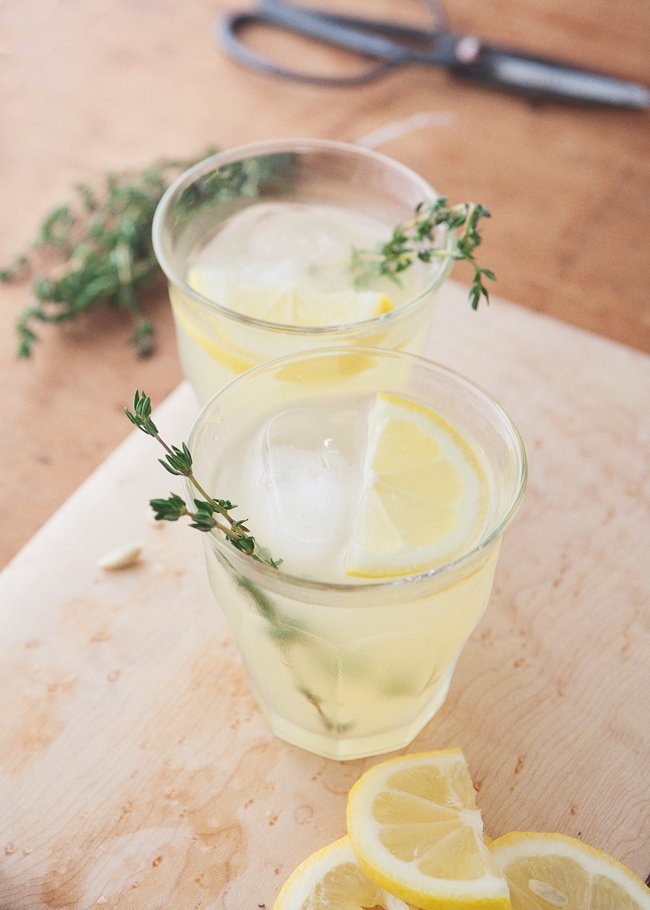
To understand my feelings about alcohol, I need to tell you a story.
One 4th of July when I was in college, I went to an Independence Day party thrown by a bunch of frat guy friends. There were hamburgers, there were hot dogs, there were chicken wings and other barbecue-ish food items. The only things missing were beer and dessert.
In the middle of the party, one of the guys made an announcement.
“They’re bringing the cake!” he said.
“The cake?!” I squealed. “Yes! All right! Awesome! That is great to hear!”
“No,” (he rolled his eyes. Okay, maybe he didn’t, but he probably did inwardly.) “the keg,” he corrected.
A cheer went up in the room. I felt crestfallen.
Chris finds this story oh-so-amusing, and to this day, makes fun of me for it. But you know what? I’m not ashamed to admit it: I’d choose cake over liquor any day. I’m just that kind of woman. (What kind of woman, you ask? The kind that dreams about petting dogs, no joke. Chris thinks I’m repressing something.)

That being said, you will notice that today’s post features a very awesome alcoholic beverage. With the amazing weather we’ve been having—and the fact that Chris and I celebrated our move-to-New-York anniversary recently (thanks for the comments, guys!)—it seemed that kind of day. The kick-off-your-shoes-and-expose-your-very-pale-feet kind of day.
And anyway, I’ve evolved. I actually enjoy alcohol now. Although I have to admit, I’m a girly drink type of person. I’ll have none of that neat-scotch, thanks, but give me something fruity, ideally something that masks much of the taste of the alcohol, and I am down. I mean, let’s face it, I’m presenting you spiked lemonade. It doesn’t get more gentle than that. But it’s good stuff, and the subtle hint of thyme makes it doubly lovely. And even though it’s kind of early in the season for lemonade, I can definitely see it making its debut at your first barbecue of the year. It’ll be a smash hit, I promise, just don’t serve it to the kiddies (or alternatively, don’t add the gin).
Another confession: I made this lemonade with Meyer lemons, so I suppose it’s really a gin thyme Meyer lemonade. I had a bunch lying around that were starting to shrivel, so I decided to juice them. (I’ve also been on a grapefruit juicing spree lately—Greyhounds!) I encourage you to try this drink with Meyer lemon juice sometime. Think extra floral notes!
Anyway, I’m starting to feel really red around my ears (the unfortunate side effect of being Asian I’m afraid), so I’m going to stop now and go finish my drink. Cheers, and have a great weekend everybody.


GIN THYME LEMONADE
Adapted from Martha Stewart
Serves 4 (makes about 8 cups)
Feel free to omit the alcohol.
Ingredients:
1-1/3 to 1-1/2 cups sugar (according to your sweetness preference)
5 cups cold water
1 small bunch of thyme (10 to 15 sprigs or so)
2 cups lemon juice
1 cup gin
Directions:
In a medium saucepan, bring the sugar, 1 cup of water, and thyme to a boil, and stir until the sugar melts completely. Turn off the stove and add the remaining 4 cups of water, lemon juice, and gin. Stir, then refrigerate. Serve cold, preferably with ice.
Related Posts



Subscribe for New Racipies
Get mental health tips, updates, and resources delivered to your inbox.
Eating For Myself, Or Indulging in Simple Pleasures

Last week, Chris’s dad, a fanatical triathlete, was competing in the bike portion of a competition in Santa Barbara when he got hit by a car. When his mom called, absolutely panic-stricken, we were horrified. Luckily, the doctors determined that he would suffer no lasting damage, but Chris still decided to fly out to help take care of his parents.
I made the most of this unexpected autonomy. For starters, I swept, straightened, rearranged, and scrubbed… what? Are these not enjoyable activities to you people? No? Well, they aren’t to me either, but for some reason, there’s never time to get the chores out of the way when He’s around.
I also spent time with friends and caught up on the phone with ones I hadn’t talked to in awhile. And I went to the gym, multiple times! I also found myself lingering over meals, continuing to read long after I’d finished the physical act of eating. And finally, when it came to choosing what to eat, well, I had no one to think of but myself.
It’s not that I’m normally constrained in what I eat. Most of my meals are prepared for only myself—after all, for the majority of us, work and other obligations dictate our schedules, even when we work at home. But dinner, that’s always a shared affair. And when you’re preparing meals for more than yourself, you really ought to figure in the caloric needs of the other person, especially when that other person is a man (and is almost a foot taller than you). Yes, normally, dinners are a bit heavier than what I ended up making myself last week. And with meat.
Besides the times I ate out, dinners over the week can be broken into two categories, as follows:
Noodles. The ultimate comfort food. I would probably eat noodles every day if I could; the variations are endless.
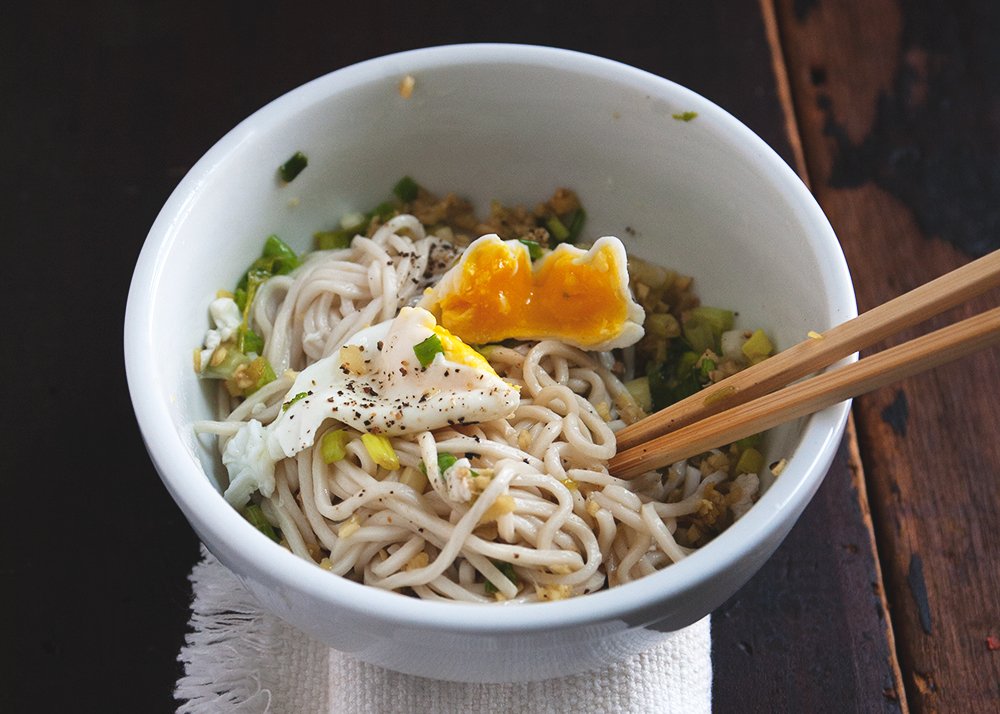
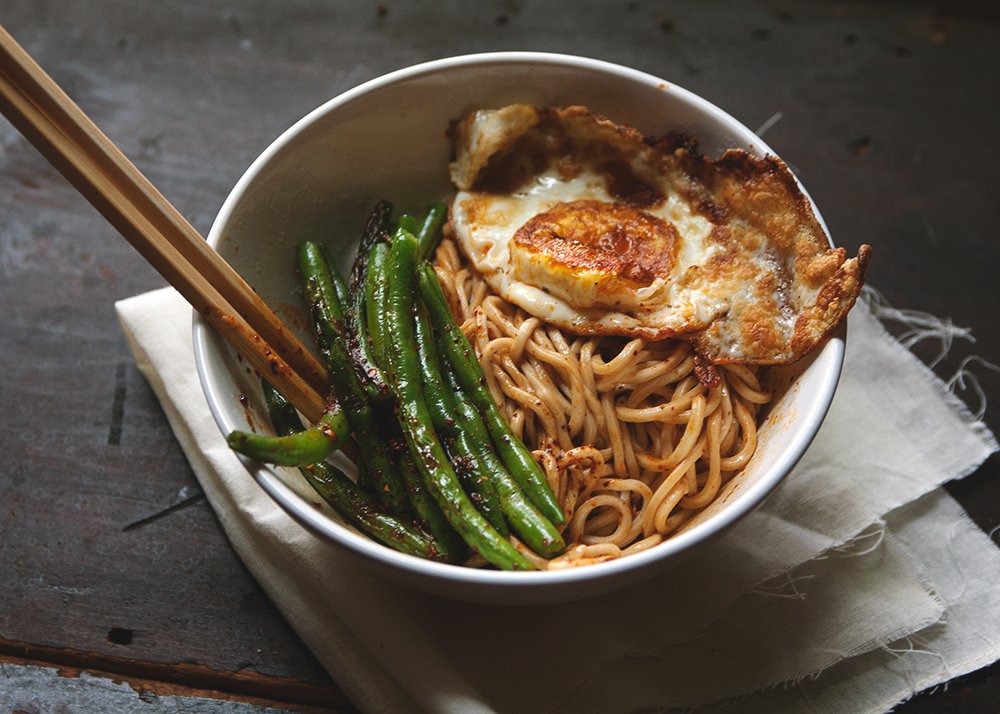
Spicy noodles with stir-fried green beans
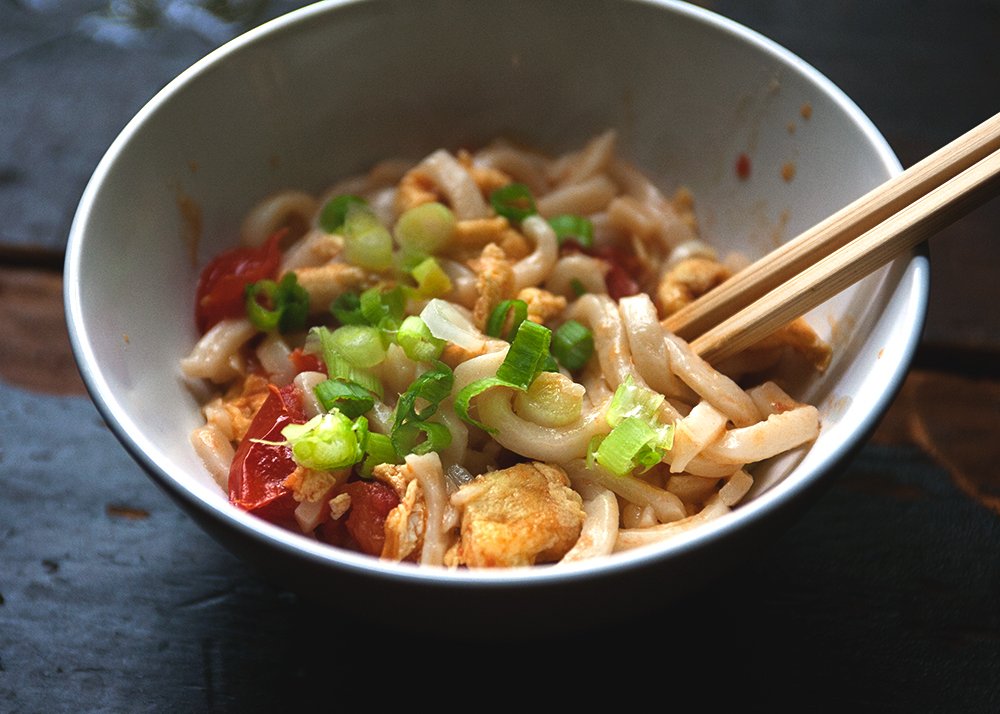
Udon noodles with eggs and tomatoes (For me, eggs and tomatoes is perhaps the ultimate comfort food.)
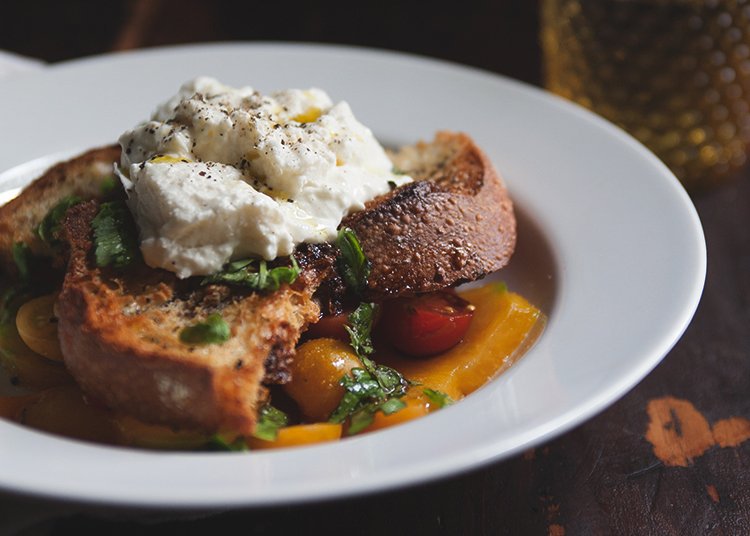
Burrata. I’d bought a container of burrata right before Chris left—and gleefully consumed all of it on my own. Renditions included:
Pizza with caponata and burrata
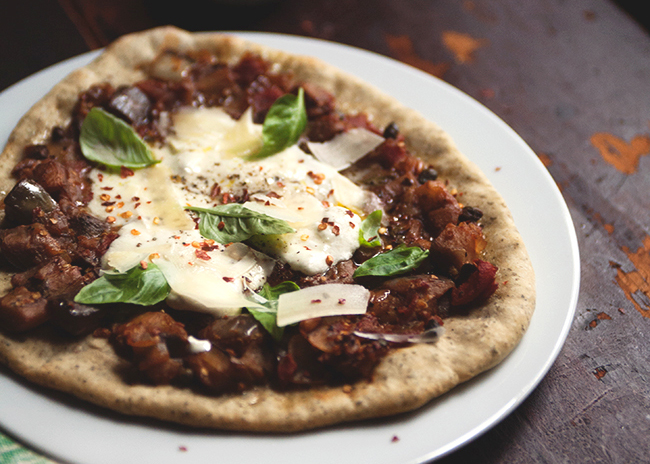
Apologies for the splatters and generally unruliness. These photos were taken impatiently, right before I tucked in.
What kinds of foods do you like to make for yourself?
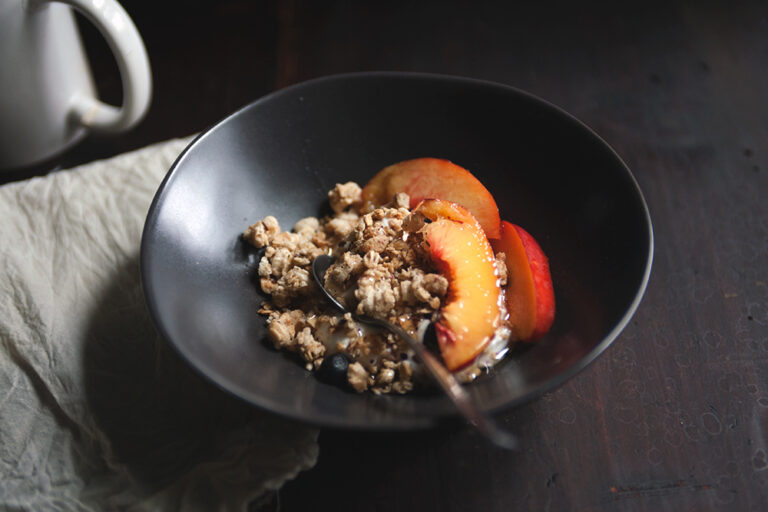
(Breakfast, by the way, nearly always consists of Greek yogurt with granola, a squirt of honey, and whatever fruit I’ve got on hand. Along with a generous mugful of coffee from the French press. I am a total creature of habit.)
Related Posts





Subscribe for New Racipies
Get mental health tips, updates, and resources delivered to your inbox.