
Pasta With Butternut Squash, Sage, And Pine Nuts

Medically reviewed by Christiana George Updated Date: June 8, 2023


As I write this, the branches outside are swirling, restless, dry leaves rustling together furiously. And then they stop. It’s kind of eerie. The whole day has been strange. We went to the supermarket in the morning to pick up emergency supplies, only to find that the entire neighborhood had turned out with the same idea. Lines curved haphazardly around the front of the store and the people working the cash registers were hustling like I’ve never seen them hustle before.
This Hurricane Sandy business is serious stuff. To be honest, since I don’t keep up with the news at all (like at all. I just found out on Wednesday that the Giants had made it to the World Series—and were playing their first game that night!), I had no idea that the forecasted stretch of rain I’d noticed on my weather app was going to turn into anything serious. And then the entire world, all at once, started flinging the fact in my face.
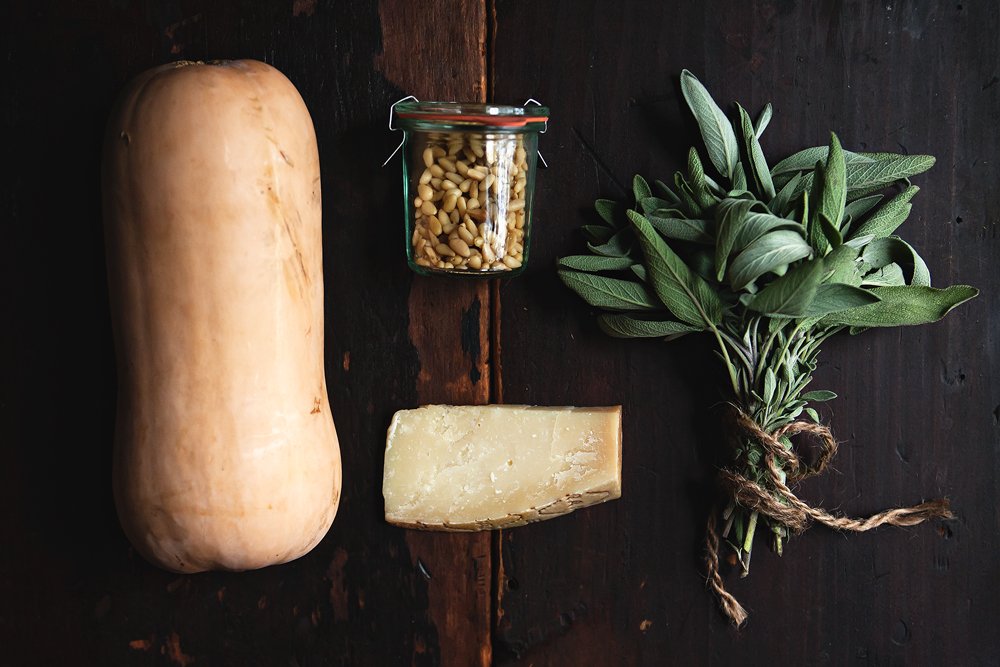

I decided to make pasta with a butternut squash that had been sitting around for a few weeks. With the unseasonably warm weather we’ve been having, it hadn’t quite felt like the right time to crack it open. But I figure, if we’re about to be blown to Oz, I might as well have something hearty prepared.
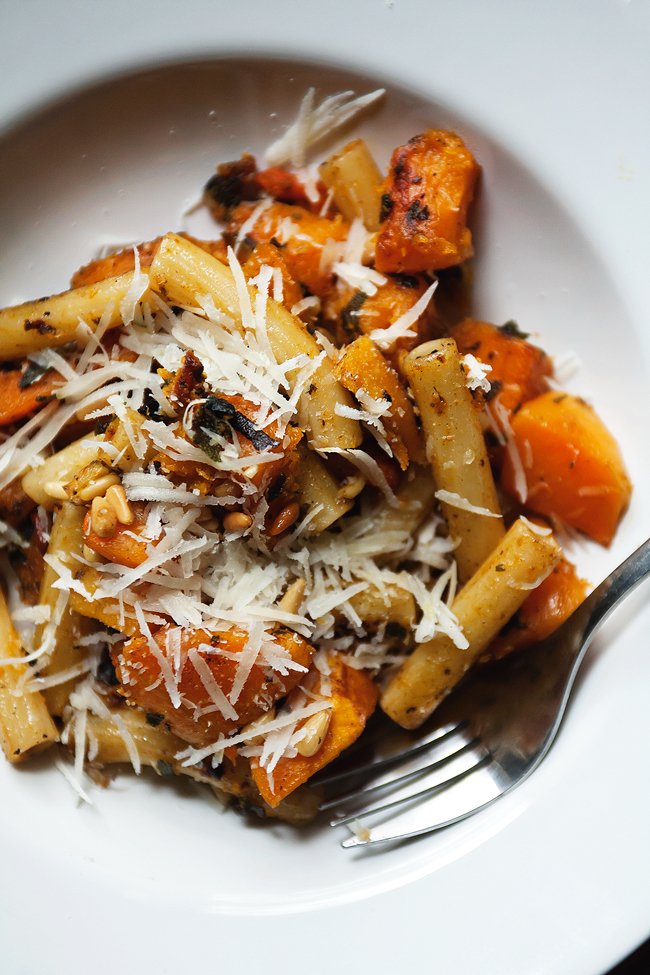
And so, in the eerie light of an afternoon going on night, I photographed the dish. You might not be able to tell, but the light is all askew. It’s dim and oblique, uncooperative. It’s alright though. The city’s about to go into lockdown!
Let’s call this Eye of the Storm rigatoni, an oasis in the form of baked butternut squash, toasted pine nuts, velvety sage, and heaps of freshly-shaven parmesan. It even gets a quick toss in a cast-iron so that the pasta crisps, and the squash chars. Is healthy comfort food an oxymoron?
PASTA WITH BUTTERNUT SQUASH, SAGE, AND PINE NUTS
Adapted from The Kitchn
Serves 4
Ingredients:
1 butternut squash, about 2 pounds
1 small onion, peeled and diced
3 cloves garlic, minced
olive oil
salt
pepper
1/2 cup fresh sage leaves
Enough rigatoni for 4 people (about 12 oz.)
1/3 – 1/2 cup toasted pine nuts
Freshly-grated parmesan
Directions:
Heat oven to 375 degrees F. Cut, peel, and seed the squash, then cut it into 1-inch cubes. Toss with the onion, garlic, a drizzle of olive oil and salt and pepper. Mince about half of the fresh sage leaves and toss with the squash. Spread the mixture evenly on a large baking sheet and bake for about 50 minutes, or until squash is soft. Rotate the pan halfway through.
About halfway through baking, make the pasta. Once it’s ready, drain thoroughly and set aside.
A few minutes before taking the squash out of the oven, heat a couple Tbsp of olive oil in a large skillet. When the oil is hot, lay in the sage leaves and heat them until they become crisp, about a minute. Remove them with a slotted spoon, lightly salt them, and crush them.
Once the squash is ready, pour the pasta and squash mixture into the skillet and cook for a few minutes, until the pasta begins to crisp. Stir in the crumbled sage and pine nuts. Serve with parmesan on the side.
Related Posts



Subscribe for New Racipies
Get mental health tips, updates, and resources delivered to your inbox.
Are Bananas Acidic? Bananas for Acid Reflux [Good or Bad]

Bananas are considered the most beneficial fruit for acid reflux, but is it that efficient? To know that, you must dig into the inner facts about whether bananas are acidic or alkaline.
Banana is considered an alkaline food because of their high potassium content. While the pH fluctuates with the ripeness and species, the perfectly ripe, creamy bananas are alkaline. The unripe bananas are acidic as they have a pH of around 5.6. However, ripe bananas have a pH of about 6.5, which is less acidic.
However, there is much more to it! Read on to find out if you should consume bananas when suffering from acid reflux.
Why Are Bananas Acidic or Alkaline?
To understand the basis of the alkalinity of bananas, you first need to know the basics of the pH scale. Anything on a pH scale less than 7 is acidic, and above 7 is alkaline.
The ripe banana’s pH is 6.5, which is mildly acidic. But due to high potassium, ripe bananas show alkalinity in nature.
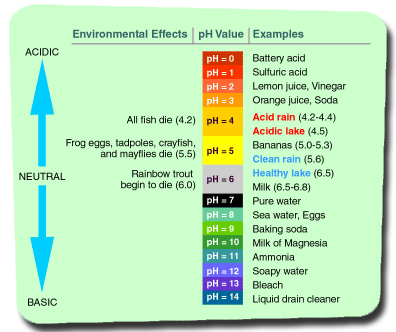
Also, most banana species are non-acidic, but a few, such as green bananas, may show a certain level of acidity.
| Banana species | pH |
| Red banana | 6.2 |
| Cavendish banana | 5.5 |
| Burro banana | 7.6 |
| Baby banana | 7.3 |
| Apple banana | 5.8 |
Also Read: Are Mangoes Acidic? [Mango And Acid Reflux Good Or Bad]
Bananas for acid reflux [good or bad]
Unripe bananas contain the highest concentrations of oxalic, malic, and citric acid. So, if you suffer from acid reflux, it might intensify your stomach acidity after eating.
On the other side, in ripe bananas, the concentration of oxalic acid drops, leading to alkalinity in the fruit. Due to the alkalinity of ripe bananas, it works as a natural antacid, significantly reducing acid reflux.
But how does it work?
The banana’s high potassium content contributes to pH, making it alkaline. Also, ripe bananas contain probiotics, minerals, and vitamins, which help reduce symptoms of acid reflux. However, since your stomach already has an acidic pH, you need foods that do not amplify it. And ripe bananas are exactly what you need!
Low acidic and alkaline ripe bananas prevent acid reflux by shielding the stomach lining from the acids.
Also, ripe bananas contain beneficial digestive enzymes amylases and glucosidases. These enzymes help to strengthen your gut and esophagus and prevent acid reflux.
However, remember that it works when taken in moderation, so do not overeat it.
Are Bananas Bad for Acid Reflux?
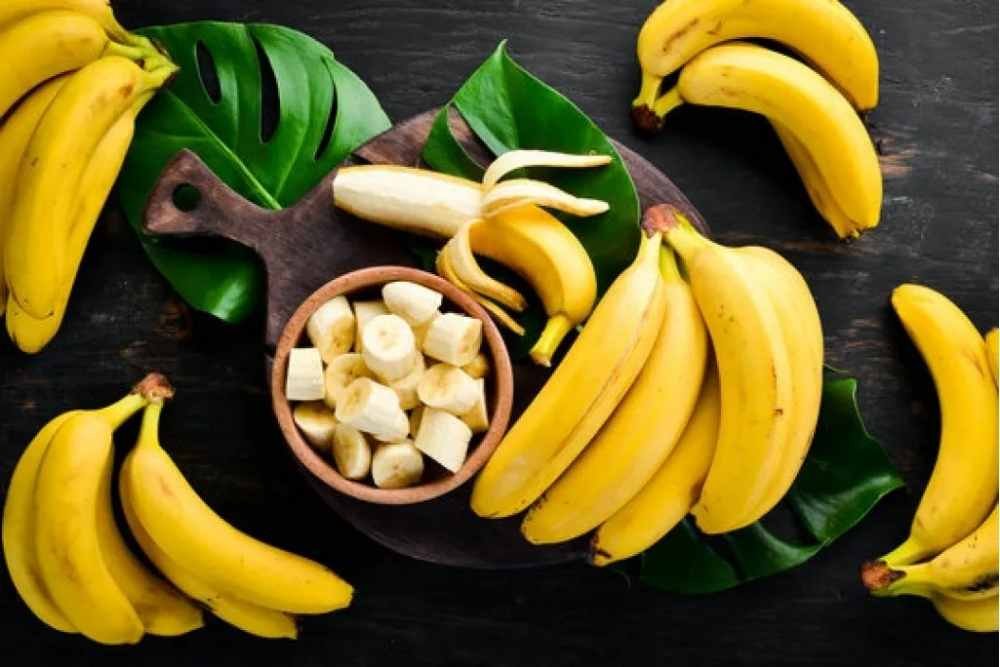
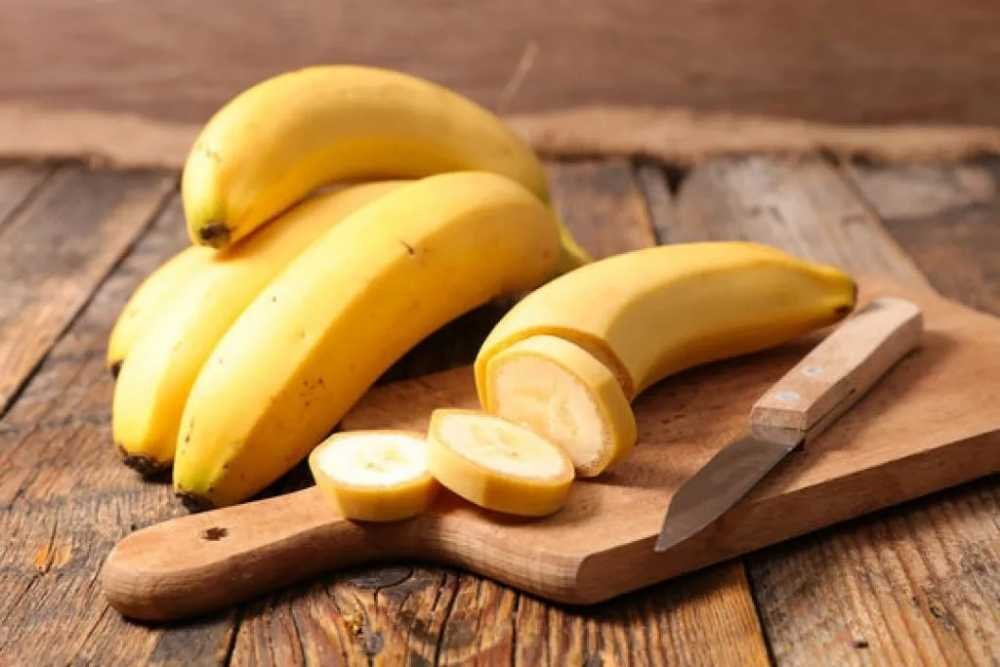
Bananas are one of the safest foods to consume for chronic cases of acid reflux and GERD. The high alkalizing properties help reduce the acidity in the stomach and promote the growth of mucous around the stomach. Furthermore, it also ensures proper functioning of the esophageal sphincter, thus, preventing reflux.
Why Do Bananas Give Me Heartburn?
Is it possible that instead of preventing acid reflux, bananas trigger it for some people? Unfortunately, yes! But this is no reason to consider bananas among foods to avoid with acid reflux .
There could be two reasons if bananas are not working for you. Let’s have a closer look.
Some people have an exceptionally low tolerance for acidic food. Thus, you must closely monitor your diet for any signs of discomfort to rule out if bananas are triggering heartburn.
But wait, there is one more reason! You might be eating unripe bananas, causing acid reflux. Why does that happen? Do bananas cause acid reflux? Unlike ripe bananas, unripe ones have a higher percentage of potassium nitrate, making them comparatively more acidic.
Besides, a few species of bananas are naturally less alkaline, owing to higher starch content. A higher starch content thus contributes to higher gut fermentation, leading to bloating and heartburn.
What Kind of Banana Is Good for Acid Reflux?
Essentially, all kinds of bananas work well for acid reflux. However, a few species are comparatively more alkaline and have a better chance of relieving symptoms. This includes the “Burro bananas” and the “Baby bananas.”
With a pH of 7.6 and 7.3, these species promote mucous formation around the stomach and the proper functioning of LES (Lower Esophageal Sphincter).
Are Ripe Bananas Acidic?
Are bananas alkaline or acidic? Well, ripe bananas are alkaline, with a maximum pH of 7.6. But here’s the catch! Some species of bananas, namely the cavendish and red bananas, are acidic even when perfectly ripe.
This is because of their natural starch content, resulting in a lower pH. However, for the most part, ripe bananas are non-acidic, and patients suffering from acid reflux can easily consume them.
Are Green Bananas Acidic?
Have you noticed a tangy, grassy taste in unripe or green bananas? This is due to a greater starch content in unripe bananas, leading to higher acidity.
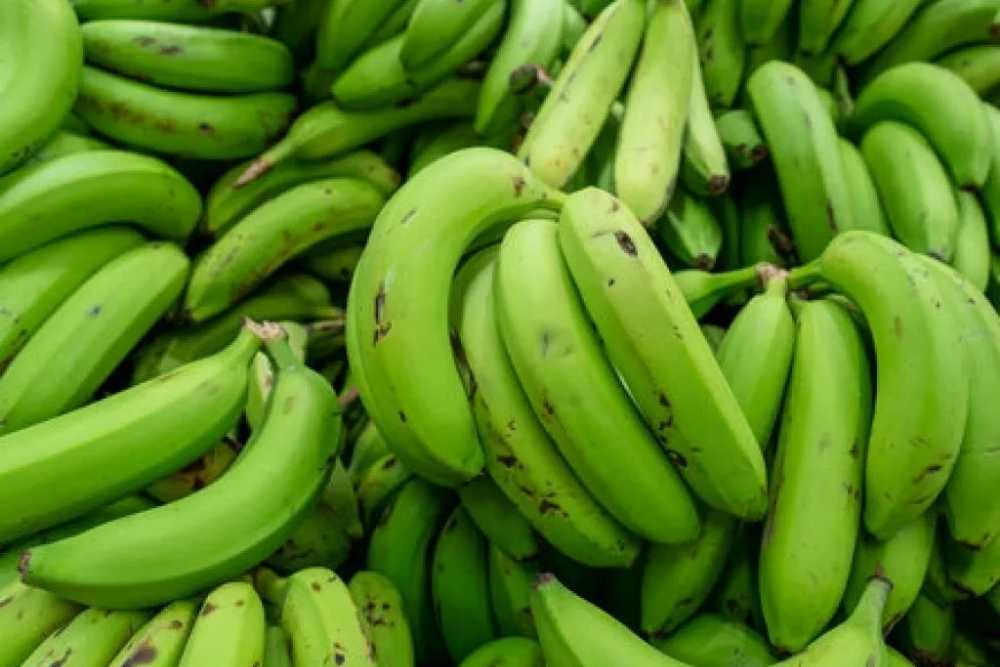
While it essentially depends on how ripe the bananas are and the species, unripe bananas usually have a pH ranging from 4.5 to 5.2. The level of enzymes and oxalic acid also affect the pH balance, making green bananas acidic compared to ripe ones.
Are Overripe Bananas Acidic?
Just as unripe bananas are acidic, overripe bananas are also acidic, although for completely different reasons. Hence, it is important you choose perfectly ripe bananas to ensure optimum alkalinity and help with gastric problems. An overripe banana means breaking down more carbs and producing alcohol. This affects the pH, making them acidic.
| Ripeness | Alkalinity |
| Unripe | Acidic |
| Ripe | Alkaline |
| Overripe | Acidic |
Are Cooked Bananas Acidic?
Cooking the bananas breaks down some of the starch, decreasing the alkalinity. This makes them slightly less alkaline than raw bananas; however, they are still not acidic. The alkalinity also depends on how you cook the bananas, whether you bake, boil, or fry them. Boiling or frying the bananas reduces the potassium content to 40%, resulting in a decline in alkalinity.
| Boiled bananas | Alkaline |
| Baked bananas | Slightly alkaline |
| Fried bananas | Least alkaline |

What Are the Benefits of Eating Bananas?
There are many health benefits of eating banana. Some of the core health benefits are described below.
High Nutritional Value
Bananas are capable of fulfilling your dietary needs while keeping your calories under control. You get a complete package without fat with a total calorie count of 112. From potassium and folate to vitamin C and fibers, it makes an ideal snack with high nutritional gains.
Better Digestion
Thanks to the prebiotics and fibers, such as pectin, your gut health stays top-notch. This prevents constipation and keeps your bowel movement in check to prevent risks of diverticulitis. The fibers also prevent chances of colon cancer, although more studies are required to attest to this observation.
Weight Loss
A medium-sized banana can easily keep your hunger at bay. The best part is that it keeps you full at only 126 calories. The fibers add bulk to your diet, which reduces the hunger pangs and helps maintain a steady weight. Dieticians around the world widely recommend the Banana diet due to its proven weight loss results.
Cardiovascular Health
Potassium has shown to significantly reduce the risk of cardiovascular disorders, such as blood pressure and stroke. What better way to incorporate potassium than the good old bananas? Additionally, the magnesium and folate in bananas contribute to the overall health benefits aiding their popularity.
Easily Accessible
Bananas are one fruit accessible throughout the year in almost all parts of the world. You can eat it as is, or add it to your smoothie, shake, or granola. Since it does not contain much protein, you might want to add it to yogurt or a high-protein source if you plan to add it to your diet.

FAQs
Is ripe banana good for acid reflux?
Ripe bananas are great for patients suffering from acid reflux, thanks to their 7.6 pH and high potassium levels. The alkaline nature of bananas helps against acidity by promoting mucous lining around the stomach. Besides, the natural probiotics and vitamins in bananas also help fight acid reflux symptoms.
Which foods neutralize stomach acid?
Foods that are high in alkalinity are good for neutralizing stomach acid. This includes bananas, apples, pears, avocados, and green vegetables. Ginger tea also helps tame down acidity with its anti-inflammatory properties.
What fruits have low acidity?
A few common fruits with low acidity include melons, bananas, avocados, olives, pears, and mangoes. Hence, people with acid reflux can consume these without fruits without any worries of triggering their symptoms.
What acid does a banana have in it?
Raw bananas have a high concentration of oxalic acid, malic acid, and citric acid. However, as the banana ripens, the level of oxalic acid falls, making it less acidic. Naturally cultivated bananas have more acids compared to treated ones.
Bottom Line
Now that you know the answer to “Are bananas acidic or alkaline?” you can incorporate these into your diet without any worries. However, do not consume them in excess as they can be triggering for some people with extremely low acidity tolerance.
Finding a high-alkalinity species such as the Burro bananas is better, but even the typical species in your local grocery stores work fine.
Related Posts
Subscribe for New Racipies
Get mental health tips, updates, and resources delivered to your inbox.