
Ming Ming Cupcakes

Medically reviewed by Christiana George Updated Date: December 17, 2022

Here is anther cupcake I did with my daughter when she loved the show Wonder Pets. This is Ming Ming the duck.

This recipe was also from Nick Jr com. And no it’s not as hard as it looks. If I can do it, anyone can. And there is lots for kids to do to help. I put my daughter in charges of unwrapping the Tootsie rolls and the Starbursts.

Then she had to go through all the M & M’s and take out the brown ones. She was happy, because she got to eat all the other colors.

Then she had to unroll the fruit roll ups. She was a very good helper. She was three years old at the time.
Ming-Ming Cupcakes
36 chocolate taffy candies (such as Tootsie Rolls®)
1 roll green apple taffy (such as Fruit by the Foot®)
24 pink taffy candies (such as Starburst®)
48 brown candy-coated sunflower seeds or mini candies (such as mini M&M’s®)
48 brown candy-coated chocolates (such as M&M’s®)
Toothpicks
2 plastic resealable bags
Ming-Ming Hat template
Preheat the oven to 350°F. Line 24 cupcake cups with paper liners. Prepare the cake mix according to package directions and divide the batter evenly between the prepared cupcake pans. Bake until golden and a toothpick inserted in the center comes out clean, about 18 to 21 minutes. Transfer the cupcake pans to a wire rack and cool for 5 minutes. Invert the cupcakes and cool completely.
Spoon 2 tablespoons of vanilla frosting into a resealable bag and set it aside. Tint the remaining vanilla frosting pale yellow. Spoon 1/2 cup of the yellow frosting into a resealable bag. Cover the tops of the cupcakes with the remaining yellow frosting.
Cut 12 of the chocolate taffies in half lengthwise. Soften them in the microwave for several seconds and roll them out flat. Use the hat templates to cut out Ming-Ming’s aviator hat. Arrange the two side flaps on each cupcake, and then place the top piece. Add the green apple taffy (soften in the microwave for a few seconds) to the bottom of the cupcake to make Ming-Ming’s scarf. Snip a small corner from the bag of yellow frosting and pipe a few feathers over the scarf.
Heat the pink taffy in the microwave for a few seconds to soften. Shape them into the beaks. Use a toothpick to make the nostrils. Press the beaks into the center of the cupcakes. Add the small brown candies to make the eyes. Snip a very small corner from the bag with the vanilla frosting and pipe white dots on the eyes. Pipe frosting dots on the hat and add the larger chocolate candies to make Ming-Ming’s goggles.
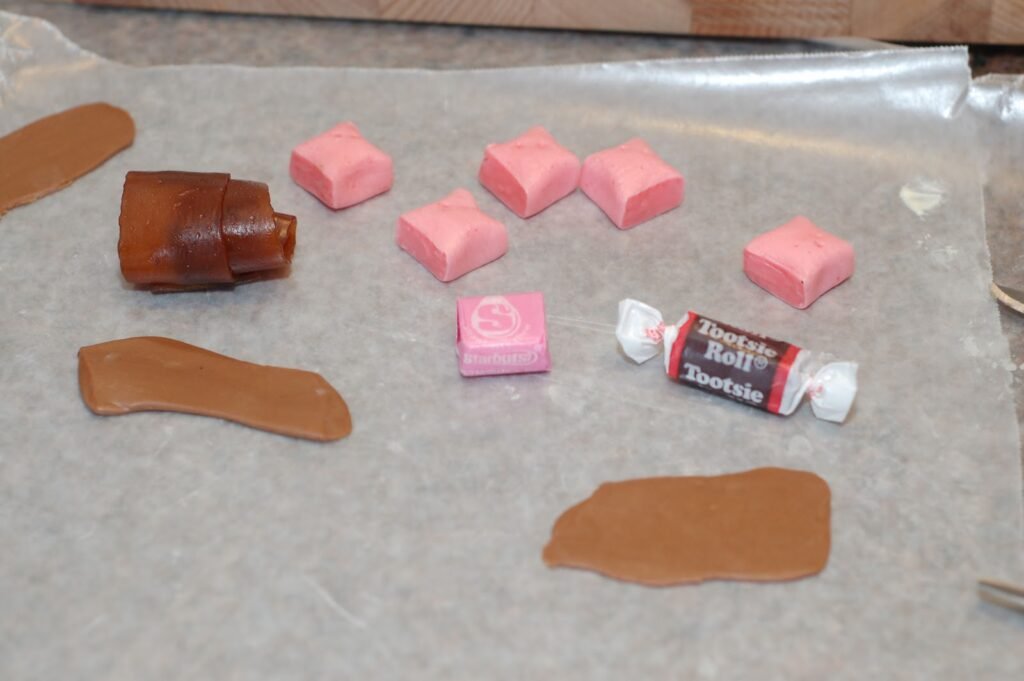
I didn’t find any green fruit roll up, so I used strawberry flavored. I didn’t find any chocolate covered sunflower seeds, so I used raisins. I also couldn’t get the nose to look like the one on the Nick Jr. website, but all in all , I was pretty impressed with myself and my daughter was delighted.

Gotta love that cheesy smile and the yellow frosting on her face.
Related Posts





Subscribe for New Racipies
Get mental health tips, updates, and resources delivered to your inbox.
Is Caesar Salad Healthy? The Definitive 2026 Guide to Calories, Weight Loss, and Risks

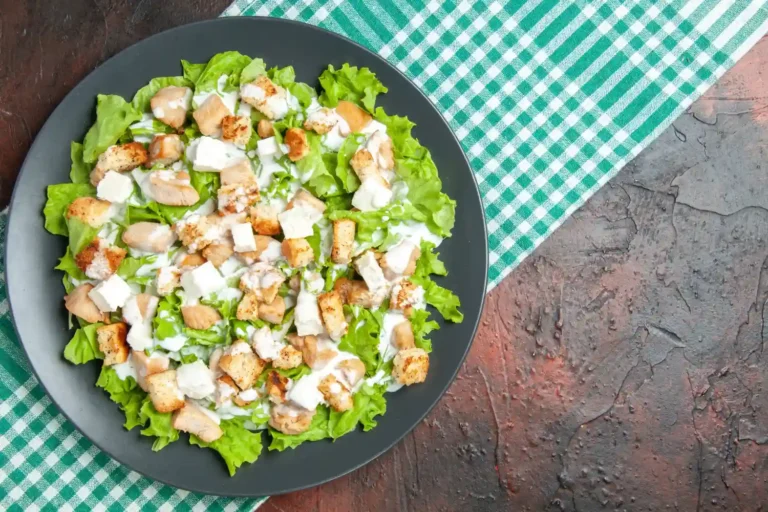
Caesar salad can be healthy with smart tweaks. Romaine offers vitamins A and K, and lean protein like grilled chicken adds satiety. However, traditional dressing is high in calories, saturated fat, and sodium, while croutons add refined carbs. Opt for light dressing, skip extra cheese, and load up on veggies to make it a nutritious, balanced meal.
I get asked all the time: “Is Caesar Salad Healthy?” The honest answer depends on how it’s made. While romaine lettuce naturally provides fiber, folate, and essential vitamins, traditional Caesar salads can quickly become calorie-heavy thanks to creamy dressing, oversized portions of Parmesan cheese, croutons, and processed proteins.
Recently, a reader shared that they had been ordering a chicken Caesar salad every day for lunch because they thought it was a “healthy” option. After taking a closer look at the nutrition facts, they were shocked to learn their salad contained nearly 1,100 calories and over 2,000 milligrams of sodium.
That’s why Caesar salad can be so misleading—it starts with healthy greens but can easily turn into a high-fat, high-sodium meal depending on the ingredients.
The good news? You don’t have to give it up. With lighter dressing, lean grilled protein, fewer croutons, and extra veggies, Caesar salad can absolutely fit into a balanced lifestyle.
TL;DR:
- Caesar salad isn’t automatically healthy—a restaurant version can pack 800+ calories, mostly from creamy dressing, cheese, and croutons.
- Weight loss? Proceed with caution: High saturated fat and sodium may hinder progress, but smart swaps make it viable.
- Risk factors: Key risks include hidden calories and excess sodium (up to 1,500 mg per serving)—especially concerning for heart health.
- Make it healthier: Request dressing on the side, add grilled chicken for protein, skip croutons, and boost greens with romaine or kale.
- Bottom line from an MD: Yes, Caesar salad can fit a balanced diet—but portion control and ingredient tweaks are non-negotiable for optimal health.
What Is a Caesar Salad?
At its core, a Caesar salad is a simple Italian-American creation. It traditionally consists of crisp romaine lettuce, a creamy emulsified dressing, toasted bread cubes known as croutons, and shaved Parmesan cheese.
The dressing is the defining feature, typically made from a blend of olive oil, egg yolks, anchovies, garlic, Dijon mustard, and lemon juice. While it sounds straightforward, the modern commercialization of these ingredients has turned the “standard” version into a very different beast than the original 1924 recipe.
Understanding the components is the first step in answering why its health profile is so volatile. Unlike a garden salad, which is mostly water-dense vegetables, the Caesar is a “fat-forward” dish. For more on healthy salad options, explore our kale avocado salad recipe.
Why Is Nutritional Awareness Important?

When patients like Robert choose a salad, they are often influenced by the “health halo”—the psychological tendency to overestimate the healthfulness of a food based on a single virtuous ingredient (in this case, lettuce), as discussed by the Harvard T.H. Chan School of Public Health.
Nutritional awareness is vital because the Caesar salad is a master of disguise. Because it is labeled a “salad,” many people do not realize it can be one of the highest-calorie items on a restaurant menu.
Without knowing the specifics of the dressing and portions, you may inadvertently consume a massive amount of saturated fat and sodium.
This can lead to weight plateaus, increased systemic inflammation, and elevated blood pressure, even while you believe you are making the “right” choice. Learn more about whether salads are healthy in our comprehensive guide.
The Anatomy of a Caesar: A Detailed Breakdown of Components
To truly understand if a Caesar salad is healthy, we must perform a “nutritional autopsy” on its parts. This section explores the ingredients in detail, which is where the health profile is truly decided.
Romaine Lettuce: More Than Just Water
Romaine is the unsung hero of the dish. While it may not have the superfood status of kale, it is nutrient-dense. It provides high levels of vitamin K, which is essential for bone health and blood clotting. It also contains significant vitamin A (in the form of beta-carotene) for vision and folate for cellular repair, according to the USDA FoodData Central database.
The Dressing: The Caloric Engine
Traditional Caesar dressing is a chemical masterpiece of emulsification. However, from a health perspective, it is the primary source of concern. Standard dressings are roughly 75-80% fat, as noted by the American Heart Association’s guidance on healthy fats.
In many 2026 commercial versions, expensive olive oil is replaced with cheaper, highly processed seed oils. These can be high in omega-6 fatty acids, which, when consumed in excess without enough omega-3s, may contribute to a pro-inflammatory state in the body.
Parmesan Cheese and Sodium Density
Parmesan is a hard, aged cheese. While it provides a punch of protein and calcium, its sodium-to-weight ratio is very high. Just two tablespoons can add 150mg of sodium. For those with salt sensitivity, this “dusting” of cheese is more impactful than it looks, according to the CDC’s sodium reduction resources.
Croutons: The Empty Calorie Trap
Croutons are almost always made from refined white flour. They are often deep-fried or heavily buttered and salted to stay crunchy amidst the dressing. They provide a rapid spike in blood glucose with almost zero fiber, making them the least nutritious part of the entire bowl.
Anchovies: The Secret Health Boost
If your salad uses real anchovies, you are actually getting a boost of omega-3 fatty acids and vitamin D. These small fish are low on the food chain, meaning they have lower mercury levels than larger fish like tuna, making them a high-quality protein source, as explained by the FDA’s advice on eating fish.
How Many Calories Are in a Caesar Salad?
The calorie count is where the “stealth bomb” occurs. A side Caesar salad at home might be 150-200 calories. However, a restaurant’s “Entrée Chicken Caesar” is a different story.
| Serving Type | Average Calories | Primary Source |
|---|---|---|
| Homemade (Light Dressing) | 250 – 350 | Romaine & Lean Protein |
| Standard Restaurant Entrée | 800 – 1,100 | Dressing & Croutons |
| Fast Food “Snack” Version | 450 – 600 | High-Fat Dressing |
The discrepancy is almost entirely due to the volume of dressing. Restaurants often use 4-6 tablespoons of dressing, which can account for 400-600 calories alone before you even take a bite of chicken or lettuce. For comparison, see our analysis of whether burgers are healthy.
Is Caesar Salad Healthy for Weight Loss?
If you are aiming for a caloric deficit, you must be incredibly cautious. Is Caesar salad healthy for weight loss? Only if you are the architect of the dish.
The high fat content in the dressing provides “satiety,” which means you might feel full for a while. However, the high caloric density means you are “paying” a lot in calories for a relatively small amount of actual food, according to research published in The American Journal of Clinical Nutrition.
To make it work for a diet, you must employ the “Fork Method.” Keep the dressing on the side and dip your fork into it before picking up the lettuce. This ensures you get the flavor in every bite while consuming up to 80% less dressing.
Potential Risks of Eating Caesar Salad Regularly
While many people assume Caesar salad is automatically healthy because it starts with leafy greens, there are several hidden risks that can quickly turn this popular dish into a nutritional setback. Understanding these concerns can help you make smarter choices when deciding is Caesar salad healthy for your personal goals.
Excess Calories Can Stall Weight Loss
One of the biggest risks is calorie overload. Traditional Caesar dressing is typically made with oil, egg yolks, cheese, and mayonnaise-based ingredients that significantly increase total calories. Add croutons, large portions of Parmesan, and fried chicken, and a single restaurant Caesar salad can easily exceed 800–1,200 calories.
For individuals trying to lose weight, these hidden calories may create a surplus without them realizing it.
Extremely High Sodium Levels
Restaurant Caesar salads often contain processed dressings, packaged croutons, and heavily seasoned proteins that can push sodium levels above daily recommended limits.
Excess sodium intake may contribute to:
- High blood pressure
- Water retention
- Increased cardiovascular strain
- Bloating
This becomes especially concerning for individuals with hypertension or heart disease risk factors.
Saturated Fat Overload
Traditional Caesar ingredients such as creamy dressing, bacon, excessive cheese, and fried proteins can raise saturated fat intake significantly.
Over time, excessive saturated fat consumption may negatively affect:
- Cholesterol levels
- Heart health
- Weight management efforts
Hidden Food Safety Concerns
Authentic Caesar dressing often contains raw or lightly cooked eggs, which may increase the risk of foodborne illness if improperly handled.
This risk is especially important for:
- Pregnant women
- Older adults
- People with weakened immune systems
Blood Sugar Concerns
While lettuce itself is low in carbohydrates, croutons and sugary dressings can create unnecessary blood sugar spikes for people managing diabetes or insulin resistance.
Portion Distortion
Many restaurant salads are marketed as healthy but are served in portions large enough for two people. Oversized servings can lead to accidental overeating.
Processed Add-On Ingredients
Common toppings like crispy chicken, bacon bits, packaged dressings, and flavored croutons may contain preservatives, unhealthy oils, and artificial additives.
How to Reduce These Risks
To make Caesar salad healthier:
- Ask for dressing on the side
- Use grilled chicken instead of fried
- Limit croutons
- Reduce cheese portions
- Add extra vegetables
- Watch serving sizes
Caesar salad can absolutely fit into a healthy diet—but only when you understand the hidden nutritional risks behind the classic recipe.
Medical Considerations: Diabetes, Cholesterol, and Pregnancy
As a clinician, I have to look beyond just weight. Specific populations must view the Caesar salad through a different lens.
Is Caesar Salad Healthy for Diabetics?
For those managing blood sugar, the Caesar salad is actually a decent choice if you remove the croutons. The high fat and protein content (from the chicken and dressing) actually slows down the digestion of the meal, preventing a sharp glucose spike, as explained by the American Diabetes Association.
However, watch out for “low-fat” dressings, which often add sugar to maintain flavor. For more on diabetic-friendly foods, see our guide on whether apples are good for diabetics.
Impact on Cholesterol and Heart Health
If your dressing is made with soybean or canola oil and heavy egg yolks, the saturated fat and omega-6 content could be a concern for LDL cholesterol. Additionally, the average Caesar salad contains nearly 1,000 mg of sodium.
For my patients with hypertension, I recommend a lemon-and-olive-oil version instead, consistent with Mayo Clinic’s heart-healthy diet recommendations.
Pregnancy Safety: The Raw Egg Risk
This is a vital point for expectant mothers. “Authentic” Caesar dressing uses raw or undercooked egg yolks. This carries a risk of Salmonella. Most bottled dressings use pasteurized eggs and are safe, but always ask at a restaurant if the dressing is “house-made with fresh eggs,” per the FDA’s food safety guidelines for pregnant women.
Is Chicken Caesar Salad Healthy?
Adding protein is the most effective clinical strategy to transform a side dish into a metabolically complete meal. In my 15 years as a nutritionist, I have observed that a plain Caesar salad is often a “bridge to nowhere” for blood sugar.
By adding grilled chicken, you introduce the essential amino acids necessary for lean muscle synthesis and metabolic repair. When I interviewed a marathon runner named Derek last spring, he was struggling with recovery. He ate Caesar salads for lunch but felt depleted.
I suggested he ensure a minimum of 6 to 8 ounces of grilled chicken was added. The result? His recovery times plummeted because he was finally giving his body the building blocks it required to repair tissue damage. For more protein-rich meal ideas, try our baked stuffed chicken breast recipe.
Is Caesar Salad Better Than a Burger?

This is the ultimate debate in restaurant dining. It depends entirely on your specific health goals—whether you are looking for low calories, low carbohydrates, or high micronutrient density. In many cases, the answer will surprise you.
In my clinic, I often tell patients that a “burger is a meal with an identity, while a Caesar salad is a meal wearing a mask.” A standard 4 oz hamburger on a bun contains roughly 250 to 350 calories. A fully loaded entrée Caesar salad from a chain restaurant often exceeds 1,000 calories.
Caloric Density vs. Volume
The “Health Halo” often leads people to believe that the salad is always the winner. However, if your goal is strict weight loss, a bunless burger might actually be the superior choice.
| Feature | Large Restaurant Caesar | Standard Hamburger |
|---|---|---|
| Total Calories | 800 – 1,200 | 250 – 450 |
| Sodium Content | 1,800mg – 2,500mg | 500mg – 900mg |
| Saturated Fat | High (Cheese/Dressing) | Moderate (Beef/Bun) |
| Fiber Content | Moderate (Romaine) | Very Low |
| Micronutrients | High (Vitamin K, A) | Low (Iron/B12) |
Data sourced from USDA Food Patterns.
The “Hidden” Refined Carbs
Many people avoid burgers because they fear the “bread.” However, the croutons in a standard Caesar salad often contain as many refined carbohydrates as a burger bun.
If you are a diabetic or looking to stay in ketosis, the croutons in the salad can trigger a blood glucose spike similar to that of a white flour bun. To make the salad the clear winner, you must eliminate the croutons and treat the dressing as a limited resource.
Micronutrient Density: Why the Salad Still Wins
While the burger may be lower in calories, it cannot compete with the micronutrient density of the salad. Romaine lettuce is an exceptional source of vitamin K and vitamin A.
A burger is largely a “macronutrient” meal (protein/fat/carbs), whereas a Caesar salad—if prepared with high-quality olive oil and fresh greens—is a “biochemical” meal that supports bone density, eye health, and cellular detoxification. For more nutrient-dense options, explore our honeycrisp apple salad.
How to Make Caesar Salad Healthier: Practical Swaps
You don’t have to give up Caesar salad to stay healthy. Small, strategic changes can transform this indulgent dish into a balanced meal.
- Use Greek yogurt-based dressing: Cuts saturated fat by up to 70% while maintaining creaminess, per Harvard Health’s healthy swaps guide.
- Skip or reduce croutons: Replace with toasted nuts or seeds for healthy fats and fiber.
- Add extra vegetables: Toss in cherry tomatoes, cucumbers, or bell peppers for added volume and nutrients. Try our caprese salad for inspiration.
- Choose grilled over fried protein: Grilled chicken adds lean protein without extra calories.
- Control portion size: Order a side salad instead of an entrée, or share with a friend.
Frequently Asked Questions
Is Caesar salad healthy for weight loss?
It can be—with smart tweaks. Skip croutons to cut refined carbs. Ask for dressing on the side, or use a light, Greek yogurt-based version. Romaine lettuce offers fiber and volume with minimal calories.
Watch portions: creamy dressings add up fast. Pair with grilled chicken for protein that keeps you full. Small swaps make this classic salad weight-loss friendly.
Can I eat Caesar salad if I have diabetes?
Yes—if you skip croutons and watch the dressing. The protein from chicken or Parmesan and healthy fats help blunt glucose spikes. But many bottled dressings hide added sugars.
Check labels or make your own with olive oil, lemon, and garlic. Load up on romaine for fiber. With mindful tweaks, Caesar salad fits a diabetes-friendly plate.
Is the dressing the most unhealthy part?
Usually, yes. Traditional Caesar dressing is rich in saturated fat and calories—often 70–80% of the salad’s total. One serving can derail a healthy meal. Try a lighter swap: Greek yogurt-based dressing cuts fat while keeping creaminess.
Or ask for it on the side and use just a tablespoon. Small changes create big nutritional wins without sacrificing flavor.
Is Caesar salad safe during pregnancy?
Most store-bought Caesar dressings use pasteurized eggs, making them safe. But “authentic” restaurant versions may contain raw egg yolks, which carry a Salmonella risk. When dining out, ask how the dressing is prepared.
If unsure, choose a different option. Also, wash romaine thoroughly to avoid foodborne illness. When in doubt, prioritize pasteurized, well-prepared ingredients for peace of mind.
Which is healthier: Caesar or Greek salad?
Greek salad generally wins. It features antioxidant-rich veggies like tomatoes, cucumbers, and peppers, plus heart-healthy olive oil and feta. Caesar salad relies on creamy dressing and often lacks vegetable diversity.
Both can fit a balanced diet—but Greek salad offers more fiber, vitamins, and anti-inflammatory compounds. Customize either: add lean protein, go light on dressing, and enjoy mindfully.
Conclusion
The final verdict on whether is Caesar salad healthy depends entirely on the hands that prepare it. In its standard restaurant form, it is a high-sodium, high-calorie indulgence that should be treated as a “cheat meal” rather than a health staple.
However, the Caesar salad is remarkably adaptable. By choosing grilled protein, using a micro-plane for a light dusting of cheese, and treating the dressing as a condiment rather than a soup, you can transform this “calorie bomb” into a nutrient-dense powerhouse.
As I told Robert, you don’t have to give up the flavors you love; you just have to give up the “auto-pilot” way of eating them. For more healthy eating inspiration, explore our quinoa with corn, mint & scallion salad.
Authoritative References
- Harvard T.H. Chan School of Public Health: Healthy Eating Plate https://nutritionsource.hsph.harvard.edu/healthy-eating-plate/
- USDA FoodData Central database https://fdc.nal.usda.gov/food-details/2346389/nutrients
- American Heart Association: Healthy Fats https://www.heart.org/en/healthy-living/healthy-eating/eat-smart/fats
- CDC: Sodium Reduction Resources https://www.cdc.gov/salt/about/index.html
- FDA: Advice About Eating Fish https://www.fda.gov/food/consumers/advice-about-eating-fish
- The American Journal of Clinical Nutrition https://academic.oup.com/jaoac/article-abstract/33/3/580/5738716?redirectedFrom=fulltext
- American Diabetes Association: Protein Food for Diabetes https://diabetes.org/food-nutrition/reading-food-labels/protein
- Mayo Clinic: Heart-Healthy Diet https://www.mayoclinic.org/diseases-conditions/heart-disease/in-depth/heart-healthy-diet/art-20047702
- USDA Dietary Guidelines https://www.dietaryguidelines.gov/
- Harvard Health: Healthy Swaps https://www.health.harvard.edu/blog/3-simple-swaps-for-better-heart-health-202209262812
Related Posts






Subscribe for New Racipies
Get mental health tips, updates, and resources delivered to your inbox.